Mom's Best Recipes
Recipe

Seafood Paella

Saffron rice, shrimp, mussels, and calamari with a crisp socarrat and a bright lemon finish.

Author By Matt Campbell
4.8
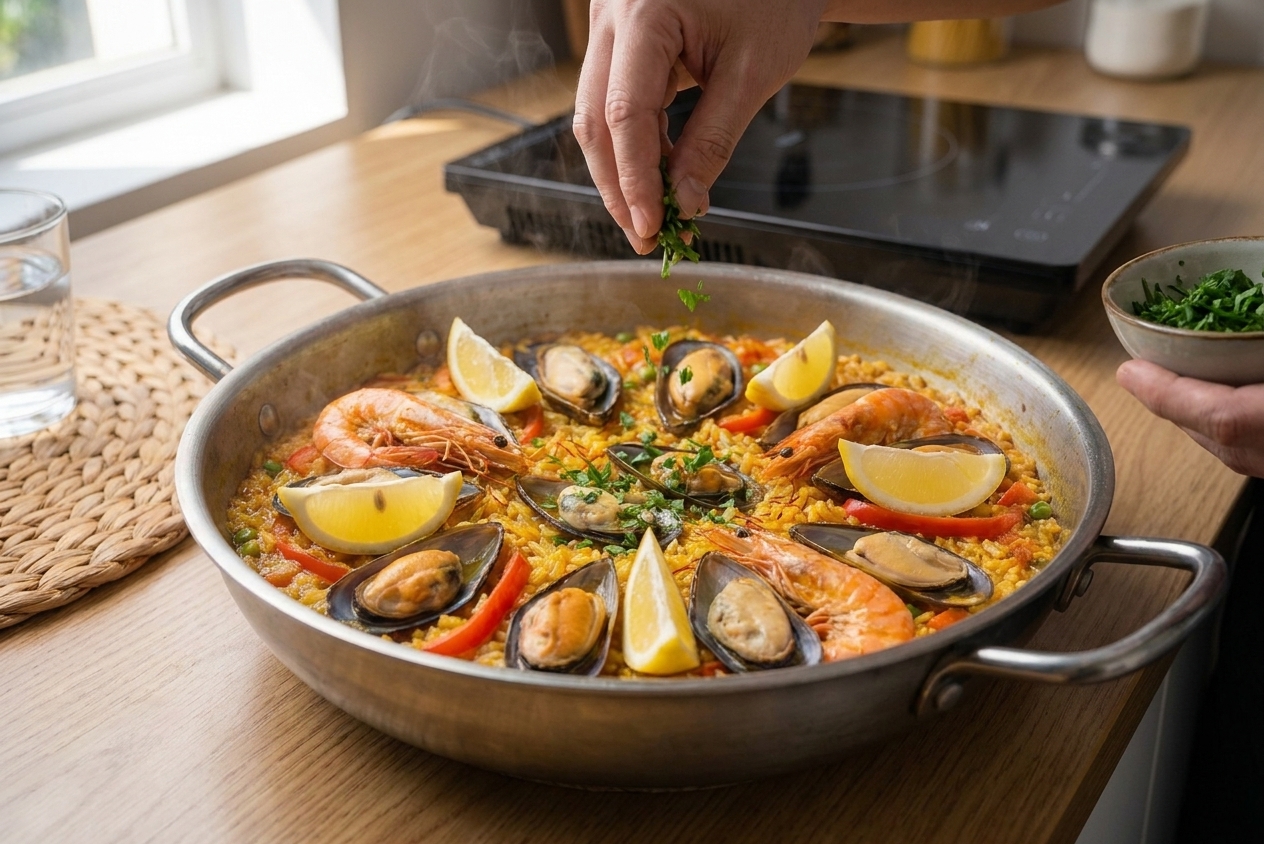
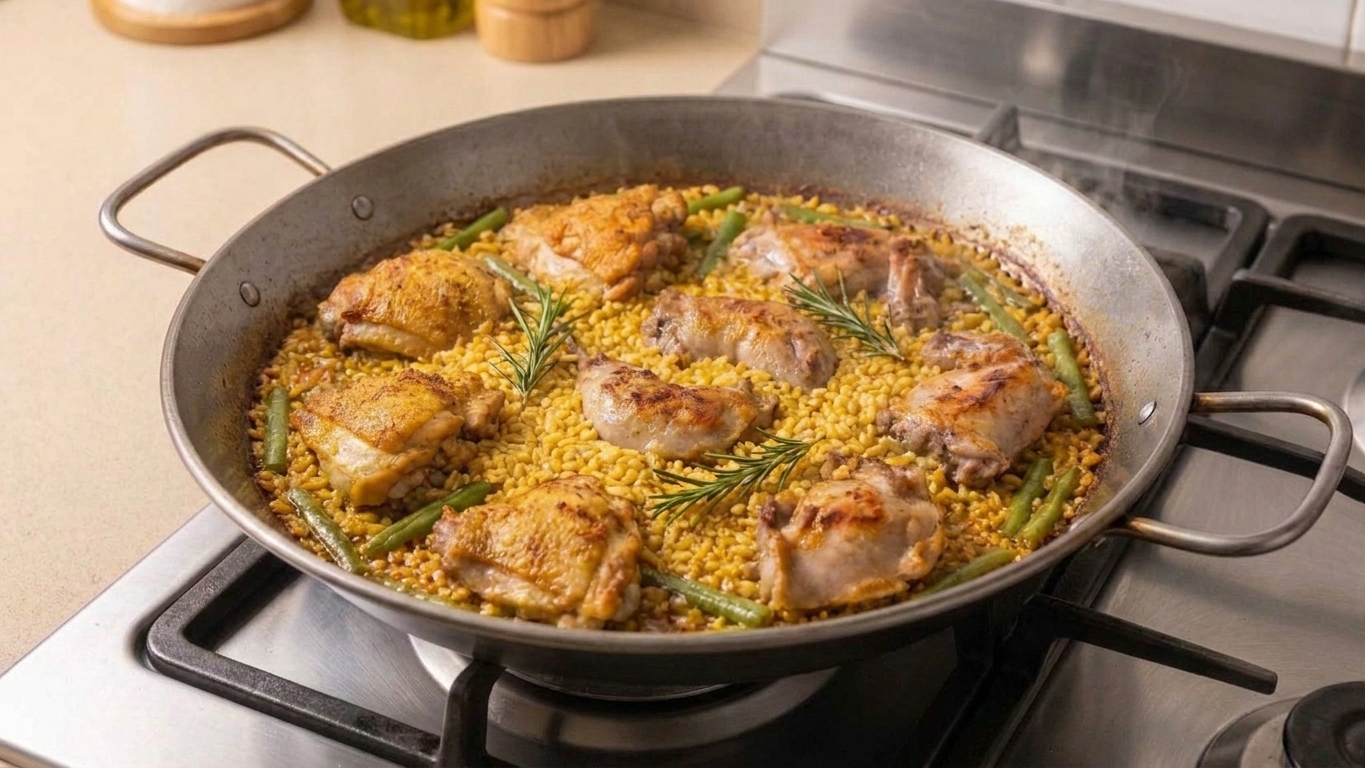
A golden seafood paella in a wide paella pan with shrimp, mussels, and lemon wedges on a warm kitchen table, natural window light

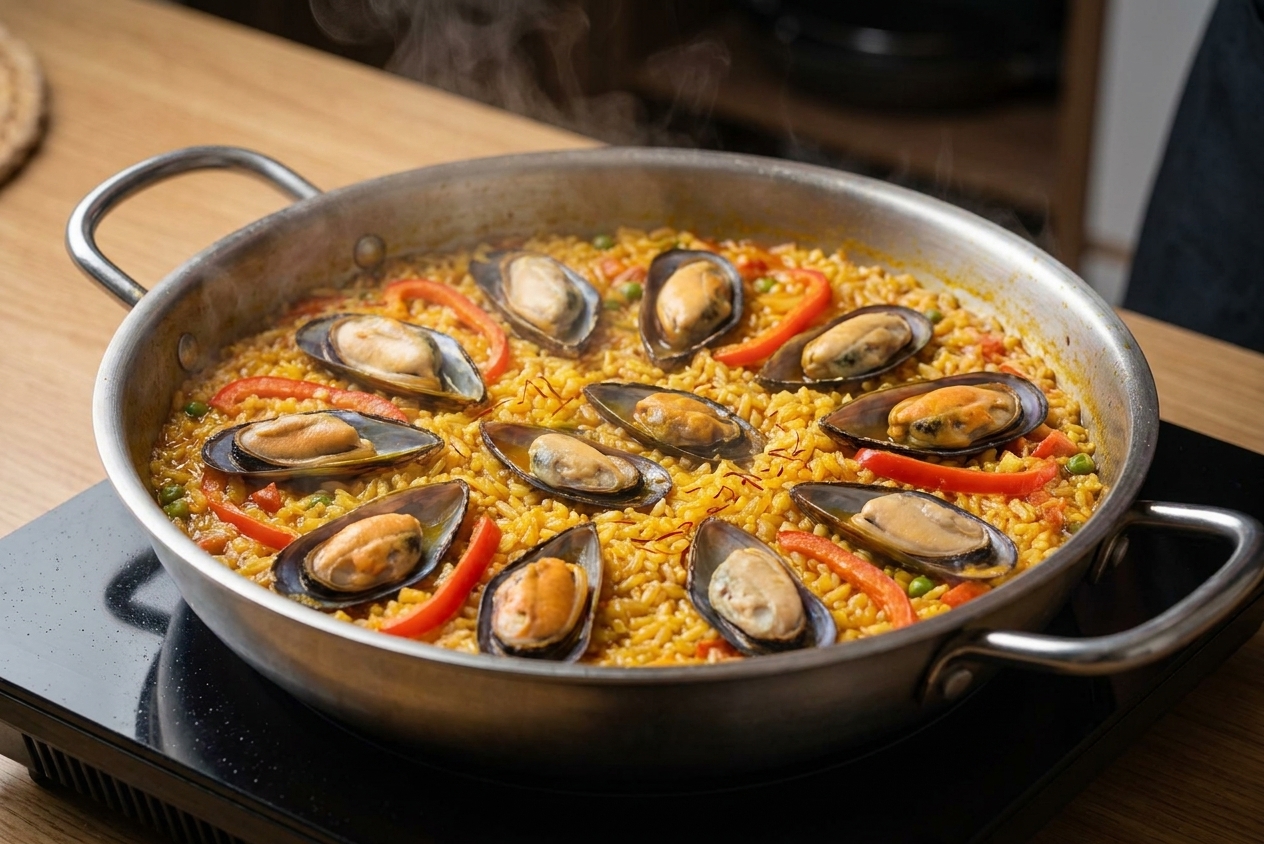
Paella is one of those dishes that looks like a restaurant flex but cooks like a very logical plan once you learn the rhythm. You build a bold base, you let the rice do its thing, and you stop touching it long enough for the bottom to get that crispy, toasty layer called socarrat. That is the part people remember.

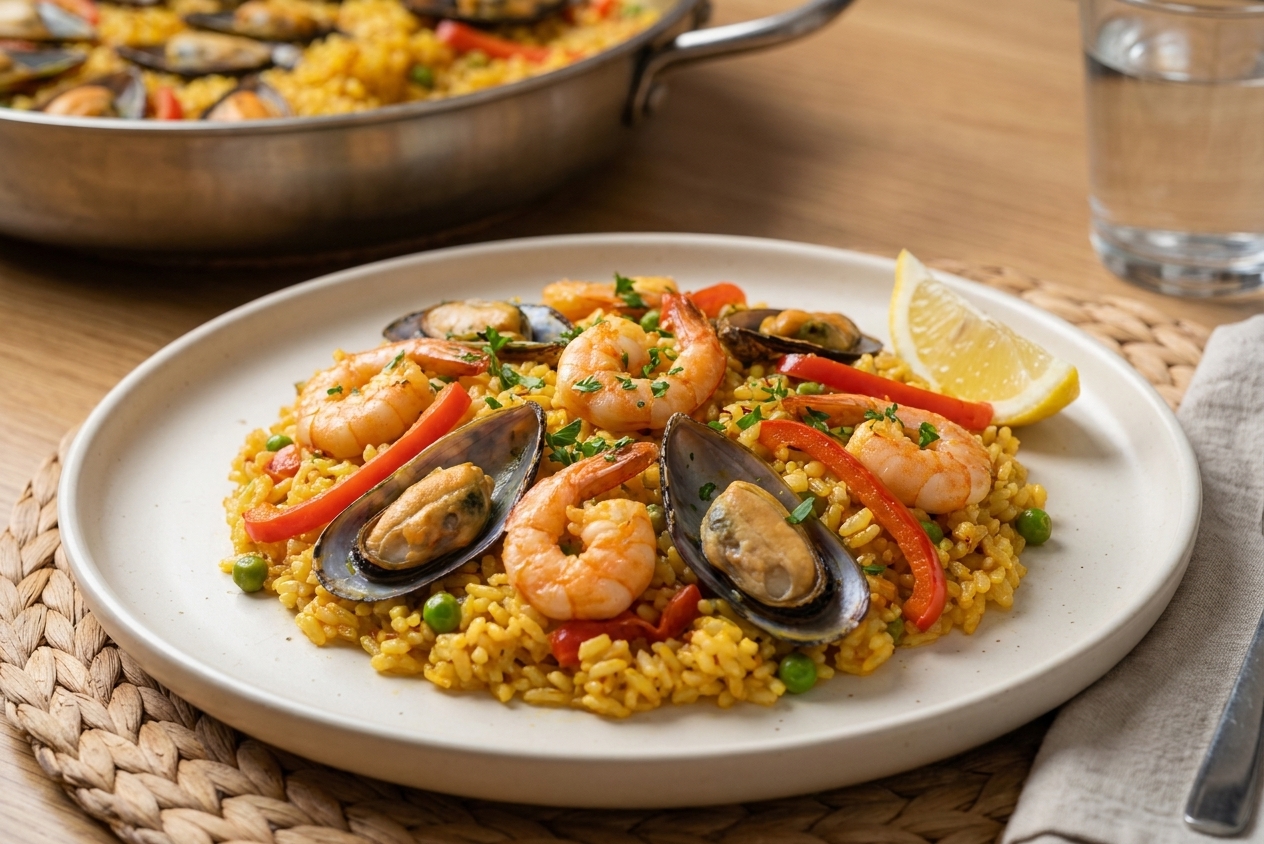
This seafood paella keeps the ingredients accessible and the steps low-drama. We use a quick homemade seafood stock (made from shrimp shells, because free flavor is my favorite kind), a pinch of saffron for that warm golden vibe (or skip it if you need to), and a mix of shrimp, mussels, and calamari that cooks right on top so it stays tender. The final move is lemon and parsley. Bright, briny, cozy, and just chaotic enough to be fun.
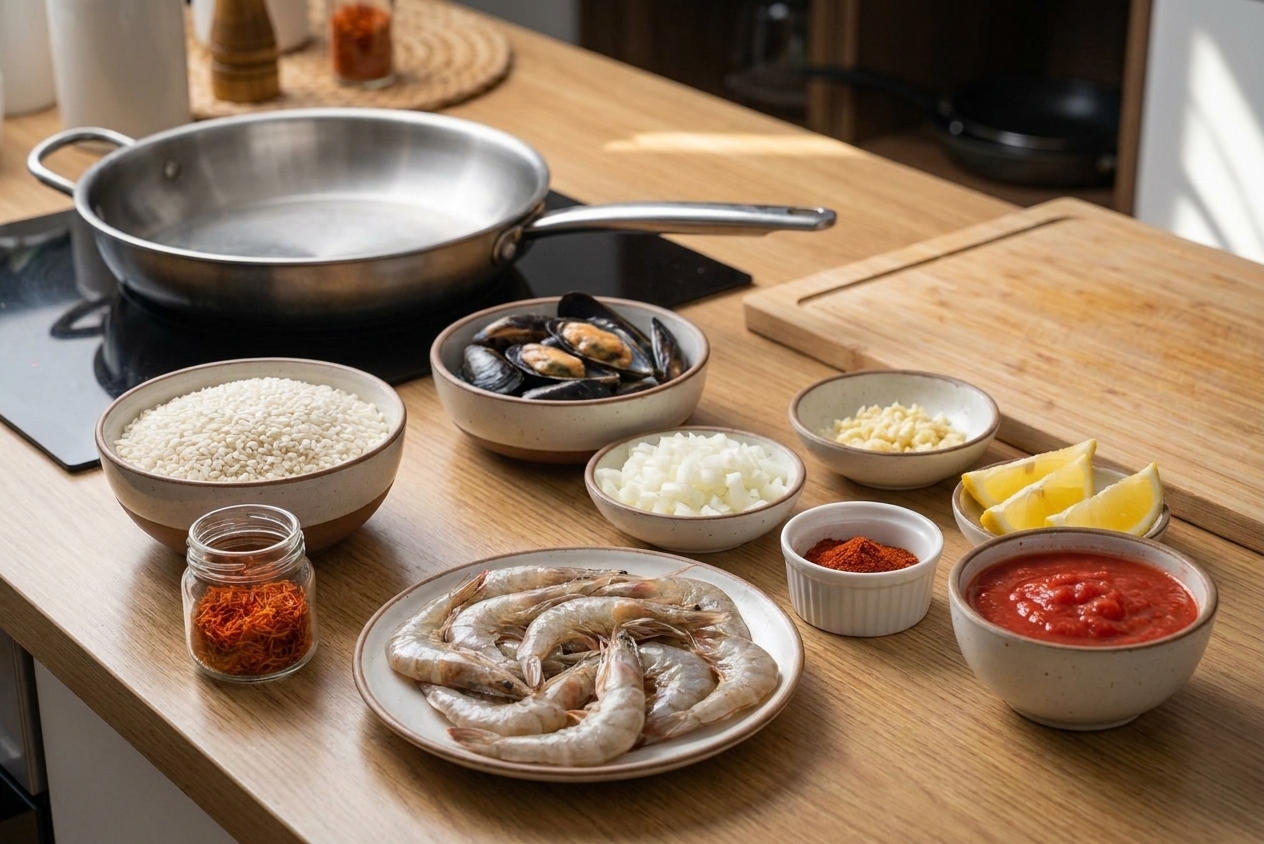
Bowls of paella ingredients on a kitchen counter including bomba rice, saffron, shrimp, mussels, diced onion, garlic, paprika, tomatoes, and lemon, arranged for cooking

Why It Works

  • Big flavor, not a million ingredients. Smoked paprika, a concentrated stock, and a few key items like bomba rice and saffron (optional, but special) give you that unmistakable paella depth without turning this into a scavenger hunt.
  • The seafood stays tender. Shrimp and calamari go in near the end so they cook gently from steam and residual heat.
  • Socarrat without stress. A short high-heat finish and one key rule, do not stir the rice, gets you crisp edges and a toasty bottom.
  • One-pan main that feels like a celebration. It is a table-in-the-middle dish. Everyone eats, talks, and secretly aims for the best crusty bits.
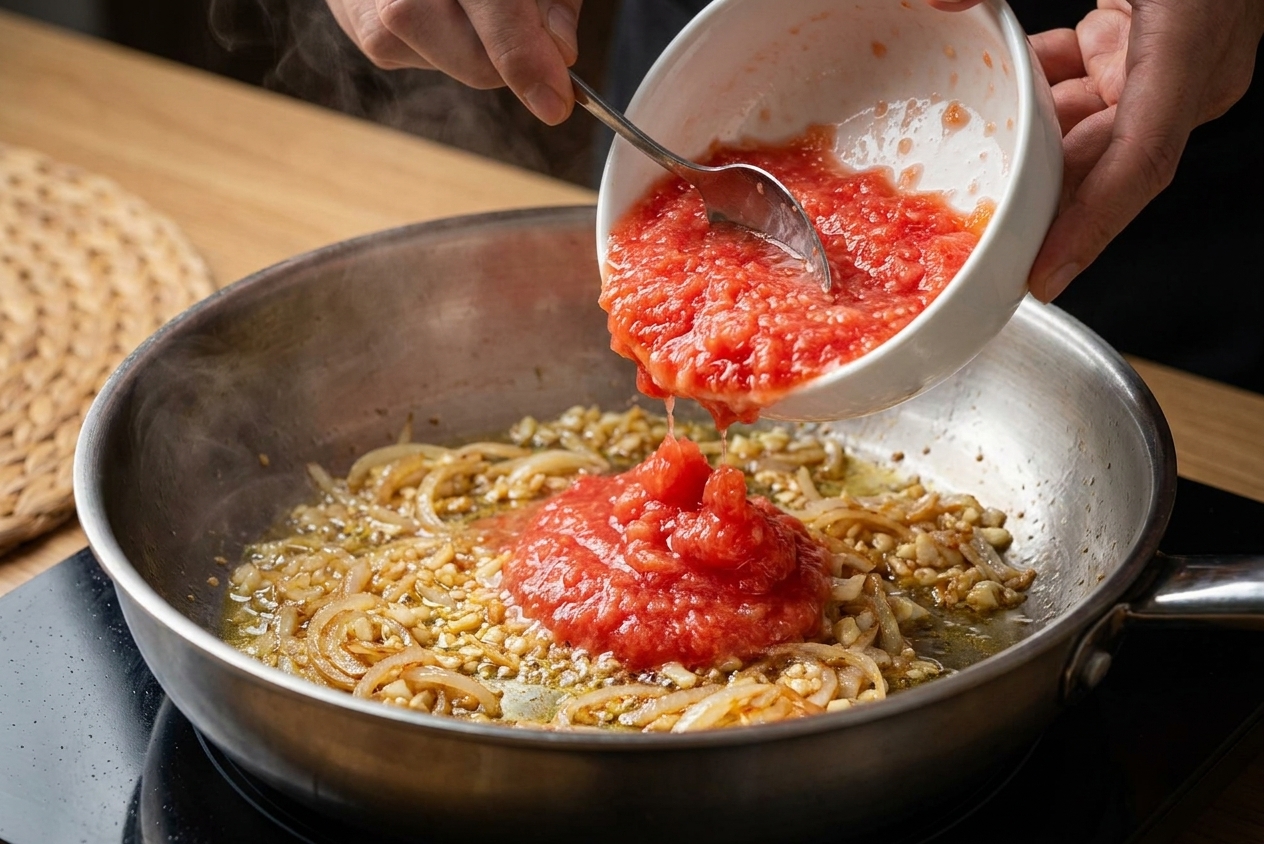
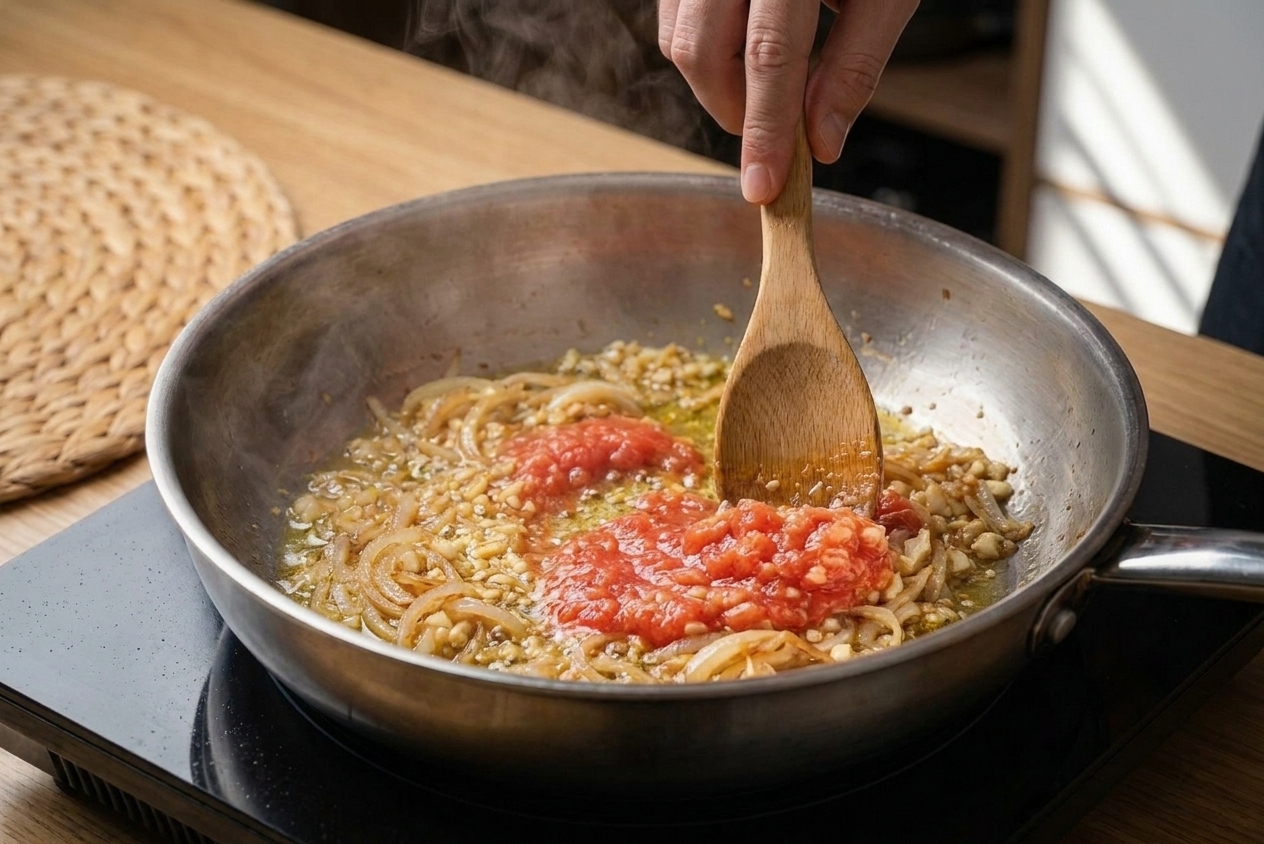
Onion, garlic, and grated tomato sofrito being stirred in a wide shallow pan on a stovetop

Pairs Well With

Storage Tips

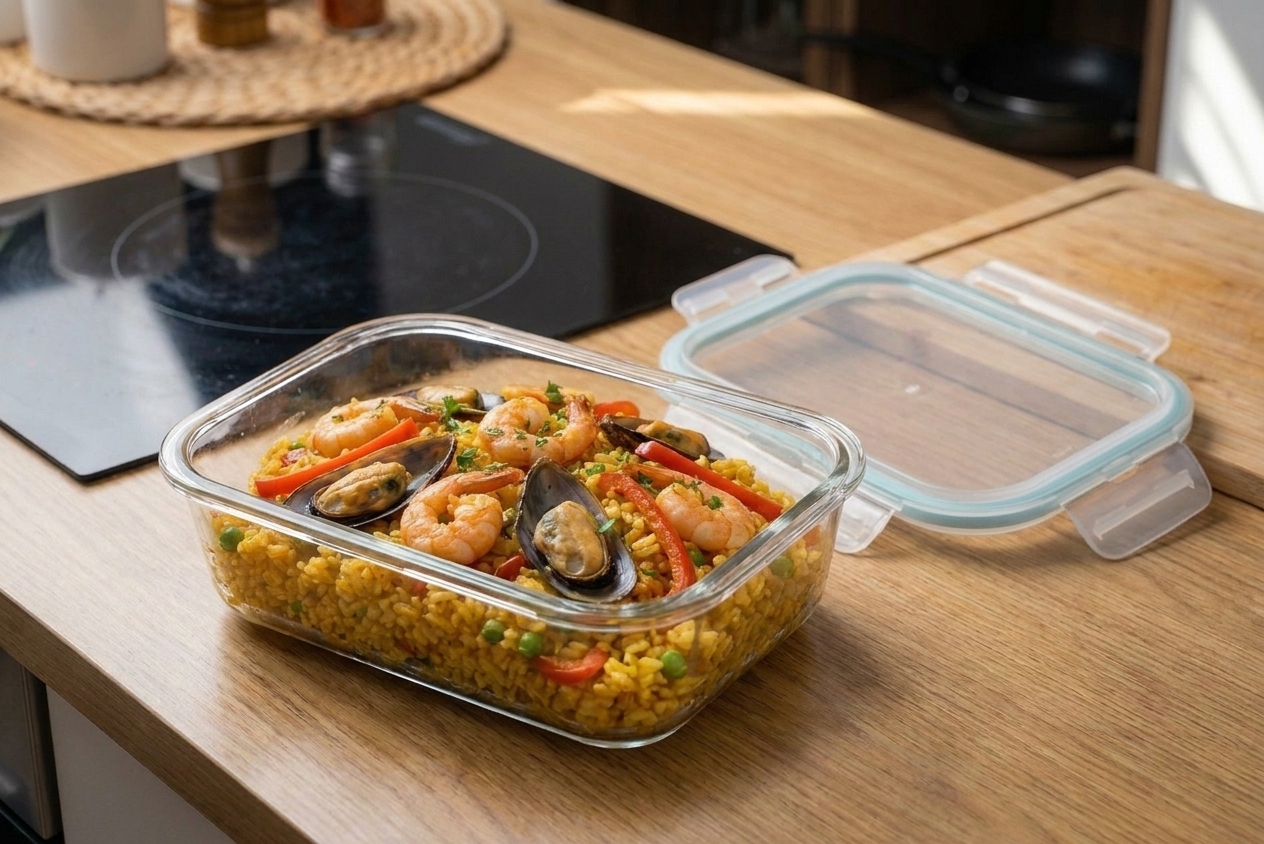
Cool fast: Spread leftovers in a shallow container so the rice cools quickly, then refrigerate.

Refrigerate: Store in an airtight container for up to 2 days. Seafood paella is best sooner rather than later.

Reheat (best method): Warm in a skillet with a splash of broth or water over medium heat, covered for 3 to 5 minutes. Uncover for the last minute to bring back a little crisp on the bottom.

Microwave method: Add a teaspoon of water, cover loosely, and microwave in 30-second bursts until hot.

Freezing: I do not love freezing seafood paella. The rice goes a bit chalky and the shellfish can get tough. If you must, freeze for up to 1 month and reheat gently.

A glass storage container filled with leftover seafood paella on a kitchen counter with a lid set beside it

Common Questions

Do I need a paella pan?

No, but it helps. A wide, shallow pan cooks the rice evenly and encourages socarrat. Use a 12 to 14 inch skillet or a wide sauté pan if that is what you have. Just avoid a deep pot.

What rice should I use for paella?

Best: bomba or Calasparra. They absorb liquid without turning mushy. If you cannot find them, use short-grain like arborio in a pinch. Do not use long-grain or parboiled.

Can I make it without saffron?

Yes. Saffron is unique, but paella is still delicious without it. Add a little extra smoked paprika and a strip of orange zest at the end for warmth. Turmeric will add color, but it is not the same flavor.

Why can’t I stir the rice?

Stirring releases starch and turns the texture creamy, which is great for risotto and not what we want here. Leaving it alone also lets the bottom set up and crisp.

How do I know when the socarrat is happening?

You will hear a gentle crackle and smell a nutty, toasty aroma. You may also see the edges darkening slightly and the rice looking like it is lightly frying at the bottom. If it smells sharply burnt, pull it off the heat right away. Toasty is the goal, not charcoal.

How do I know when the rice is done?

Taste a few grains from the center. You want tender rice with the tiniest bit of bite, not crunchy. If the liquid is gone and it is still firm, add hot stock 1/4 cup at a time around the edges and keep simmering. If the rice is done but there is still liquid, raise the heat for a minute or two to help it cook off.

My mussels didn’t open. What now?

Discard any mussels that stay tightly closed after cooking. Also discard any with cracked shells before cooking. If a mussel is slightly open before cooking, tap it on the counter. If it does not close, discard it.

The first time I tried to make paella, I treated it like a stir-friendly rice pilaf and wondered why it came out politely fine. The second time, I stopped fussing with it, trusted the simmer, and accidentally created that crunchy bottom layer that makes people go quiet for a second. Now it is my favorite kind of dinner-party magic trick, because it looks fancy, feeds a crowd, and still feels like you are just hanging out in the kitchen with good smells and a glass of something.