Mom's Best Recipes
Recipe

Seared Ahi Tuna

Sesame-crusted, lightning-fast seared tuna with a bright soy-lime dipping sauce, plus an optional cool, creamy sriracha-mayo drizzle if you want it.

Author By Matt Campbell
4.8
A sliced sesame-crusted seared ahi tuna steak fanned on a white plate with a small bowl of soy-lime dipping sauce on a wooden table

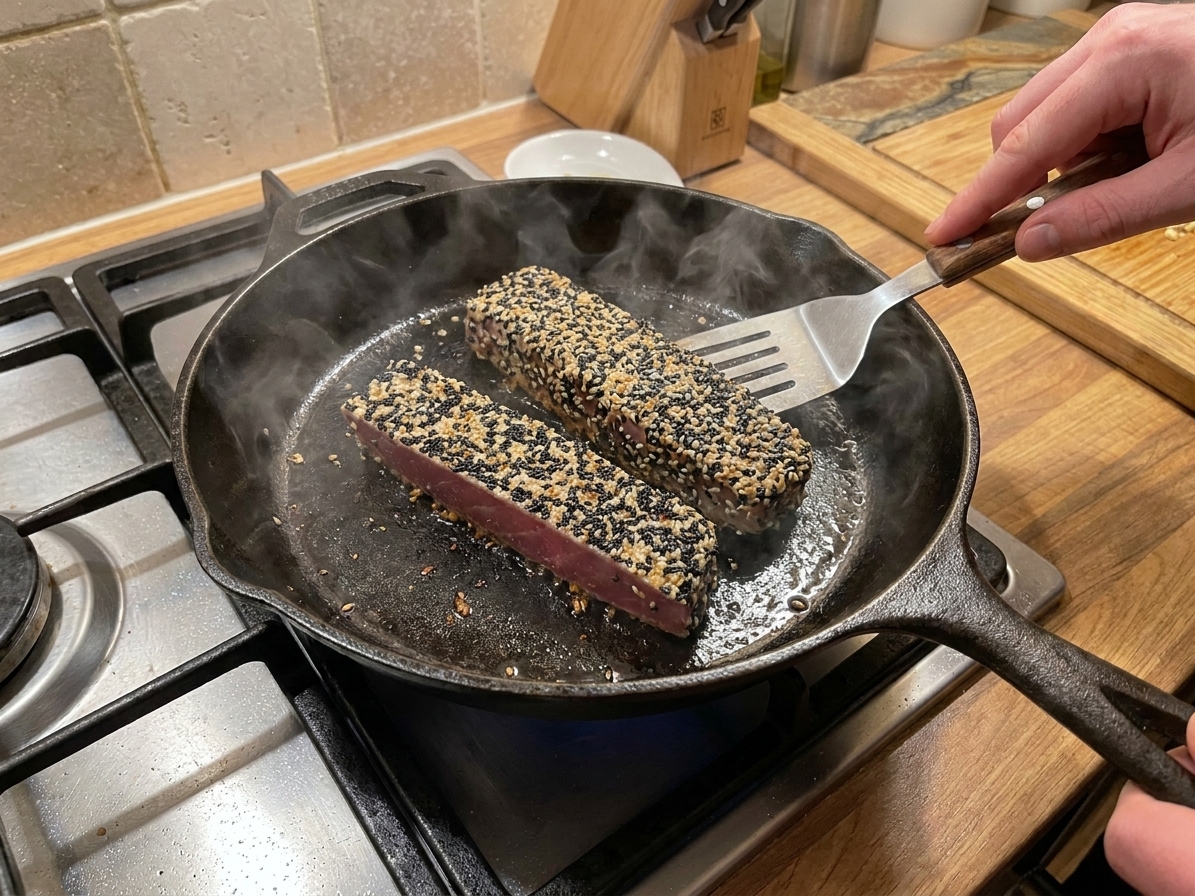
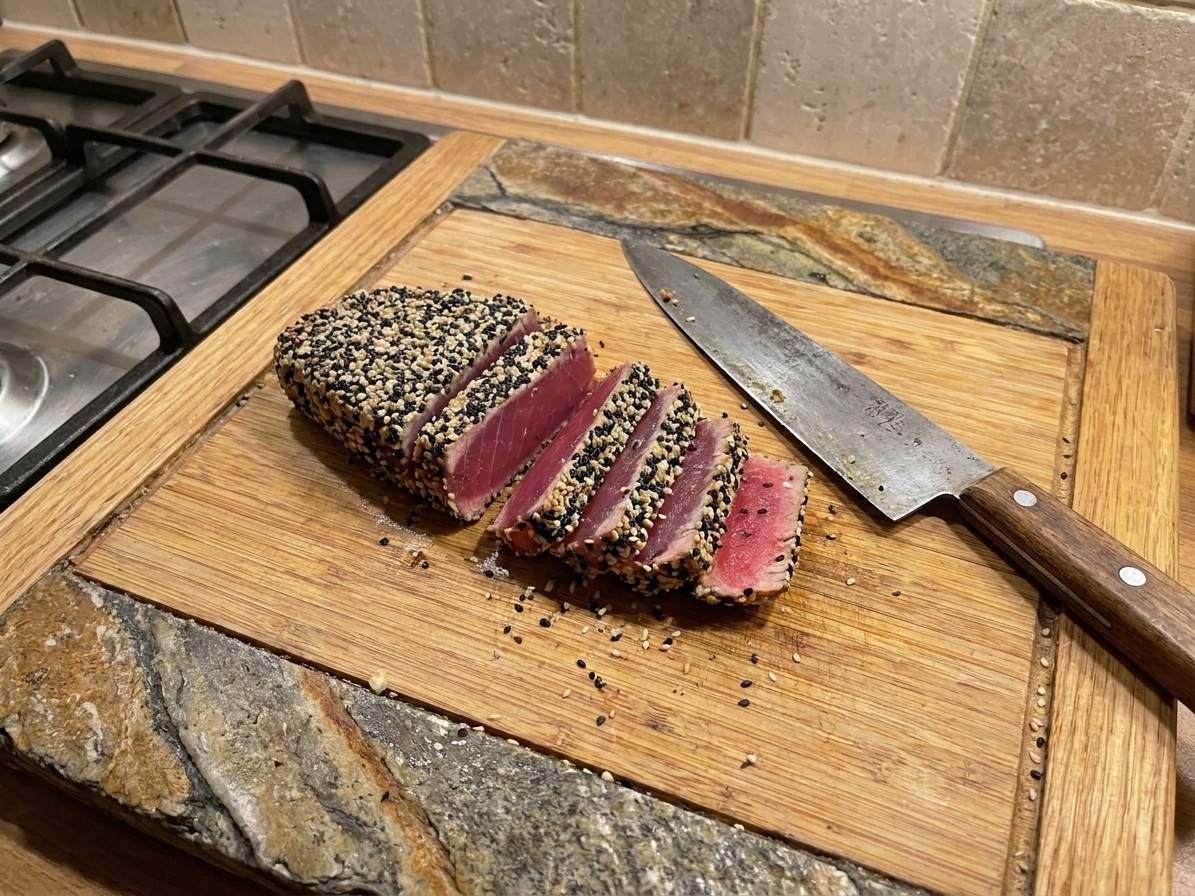
If you have ever paid restaurant prices for a plate of seared ahi and thought, I could absolutely do this at home, you are correct. This is one of those high-impact, low-drama meals where the entire trick is heat + timing. You want a ripping-hot pan, a quick sear, and a cool head. The tuna stays rare and silky in the center, while the outside gets those crisp edges that make you pause mid-bite like, okay wow.

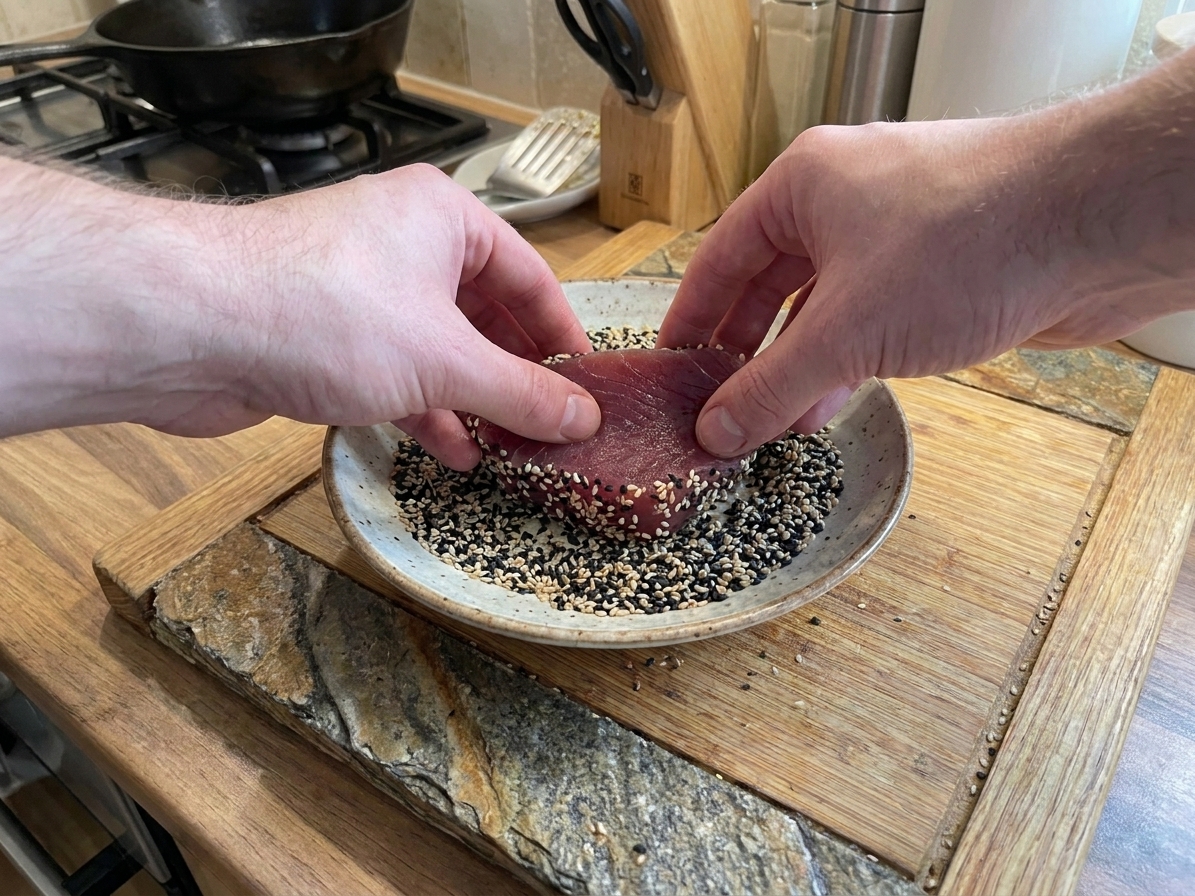
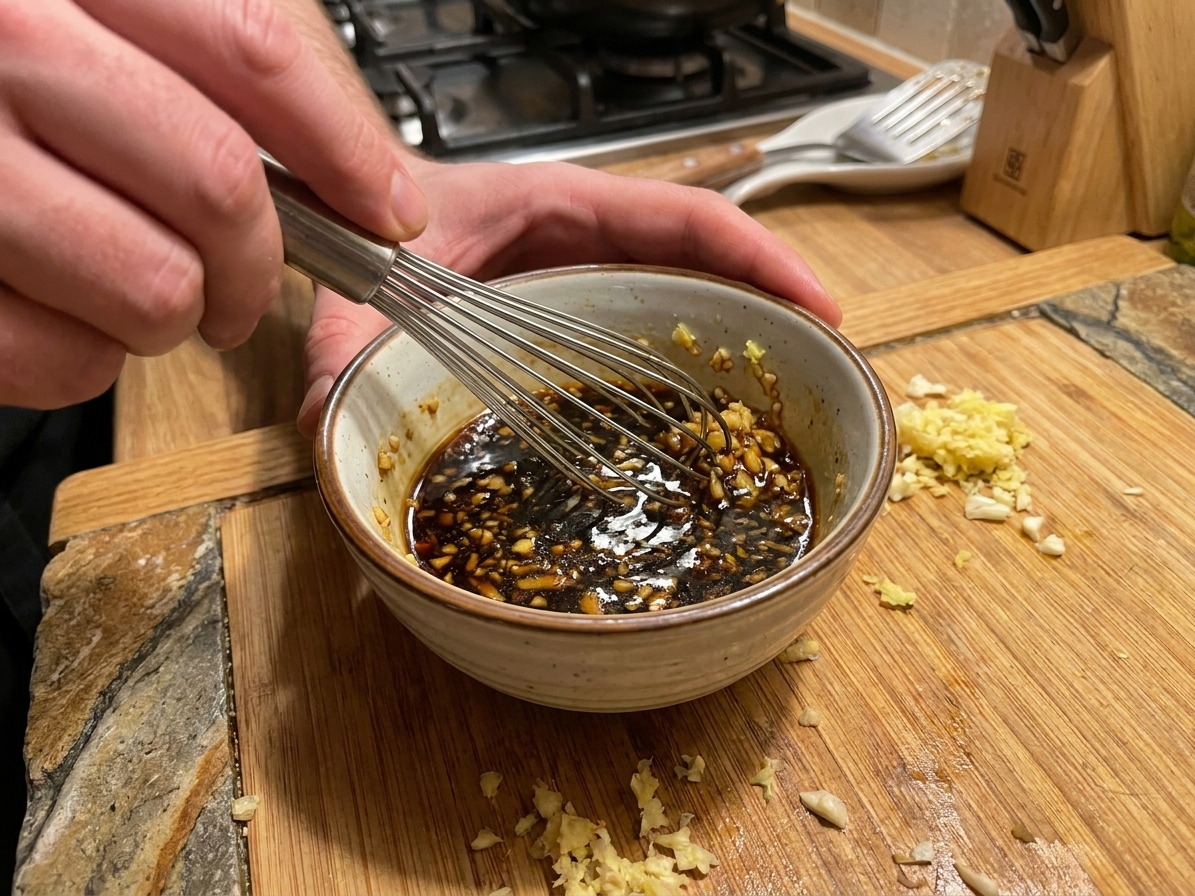
This version goes sesame-forward with a bright soy-lime sauce. It is salty, tangy, a little sweet, and it plays perfectly with the clean richness of tuna. And if you want a creamy moment, there is a quick sriracha-mayo drizzle that cools everything down in the best way. Make it for a weeknight that needs a win, or slice it up for a “look at me being fancy” dinner that secretly took about ten minutes.

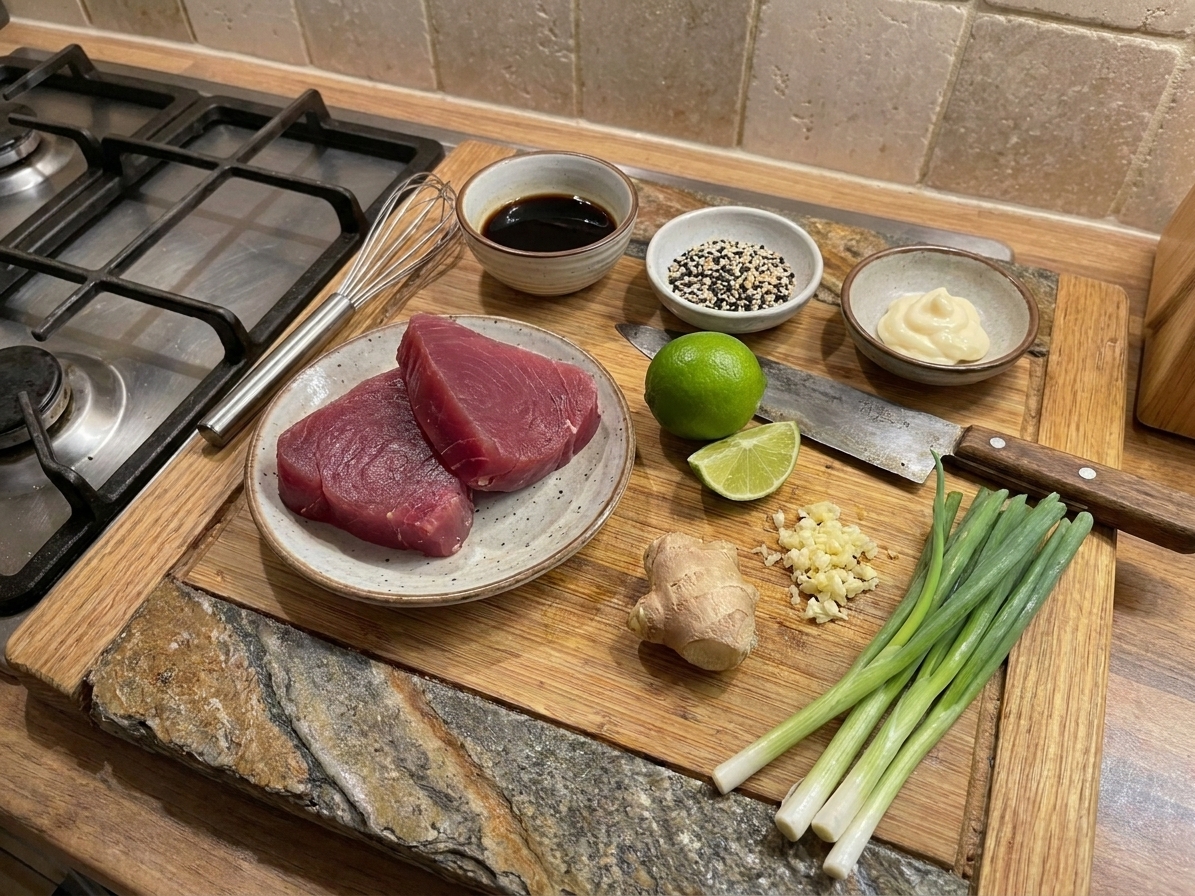
Raw ahi tuna steaks, soy sauce, sesame seeds, lime, ginger, garlic, scallions, and mayo arranged on a clean kitchen counter with a cutting board

Why It Works

  • Hot pan, short cook: You get a real sear without overcooking the center.
  • Sesame crust = instant texture: Crunchy edges plus nutty flavor with almost no effort.
  • Bright sauce, balanced bite: Soy, lime, and a touch of honey wake everything up and keep the tuna from tasting flat.
  • Optional creamy drizzle: A quick sriracha-mayo adds that cool, rich contrast in 30 seconds.
  • Flexible serving: Works as an appetizer, rice bowl protein, salad topper, or “I ate it standing at the counter” situation.

Pairs Well With

Storage Tips

Seared ahi tuna is best the day you cook it. If you do have leftovers, here is how to keep them as good as possible.

Refrigerate

  • Cool the tuna quickly, then store in an airtight container in the fridge for up to 1 day.
  • Store sauces separately so the tuna does not turn soggy and overly salty.

How to eat leftovers

  • Do not re-sear unless you are okay with it becoming well-done. Reheating is the fastest way to lose the magic.
  • Slice cold and add to a salad, tuck into a wrap, or build a quick rice bowl with cucumbers and avocado.

Freezing

I do not recommend freezing cooked seared tuna. The texture goes from silky to sad.

Common Questions

Do I need sushi-grade tuna for seared ahi?

If you plan to keep the center rare, buy the best-quality tuna you can from a reputable source and ask if it is intended for raw or rare preparation. “Sushi-grade” is not a legally regulated term in many places, so your best move is to ask the fishmonger about sourcing, handling, and whether the fish has been previously frozen (common for sushi-intended fish). Keep it cold and use it quickly.

Is it safe to eat ahi tuna rare?

Many people eat high-quality tuna rare, but food safety depends on sourcing and handling. Fully cooking fish reduces risk. Freezing practices can reduce parasite risk (tuna is generally lower risk than many other fish, but not zero). If you are pregnant, immunocompromised, or serving kids or older adults, consider cooking it through and follow healthcare guidance that applies to your situation.

How rare should seared ahi tuna be?

Typical seared ahi is rare in the center. Think cool to warm red center, with a browned crust. If you like a temperature cue, pull it around 110 to 115°F for rare (measured in the center). If you prefer medium, add 30 to 60 seconds per side, but the texture firms up fast.

What is the best pan for searing tuna?

A cast iron skillet is my favorite because it holds heat like a champ. A stainless steel pan also works great. Nonstick can work in a pinch, but you will usually get less aggressive browning.

Why is my tuna sticking?

Usually one of three things: the pan is not hot enough, the tuna surface is wet, or you tried to move it too soon. Pat the tuna very dry, preheat well, use a thin layer of high-heat oil, and let it sear untouched until it releases.

Can I do this on the grill?

Yes. Use a very clean, well-oiled grill grate and sear quickly over high heat. A grill basket or cast iron griddle plate makes it even easier.

Any allergy notes?

This recipe contains sesame and soy, which are common allergens. If needed, swap tamari for soy sauce (still soy), and skip sesame if you must, although the vibe will change.

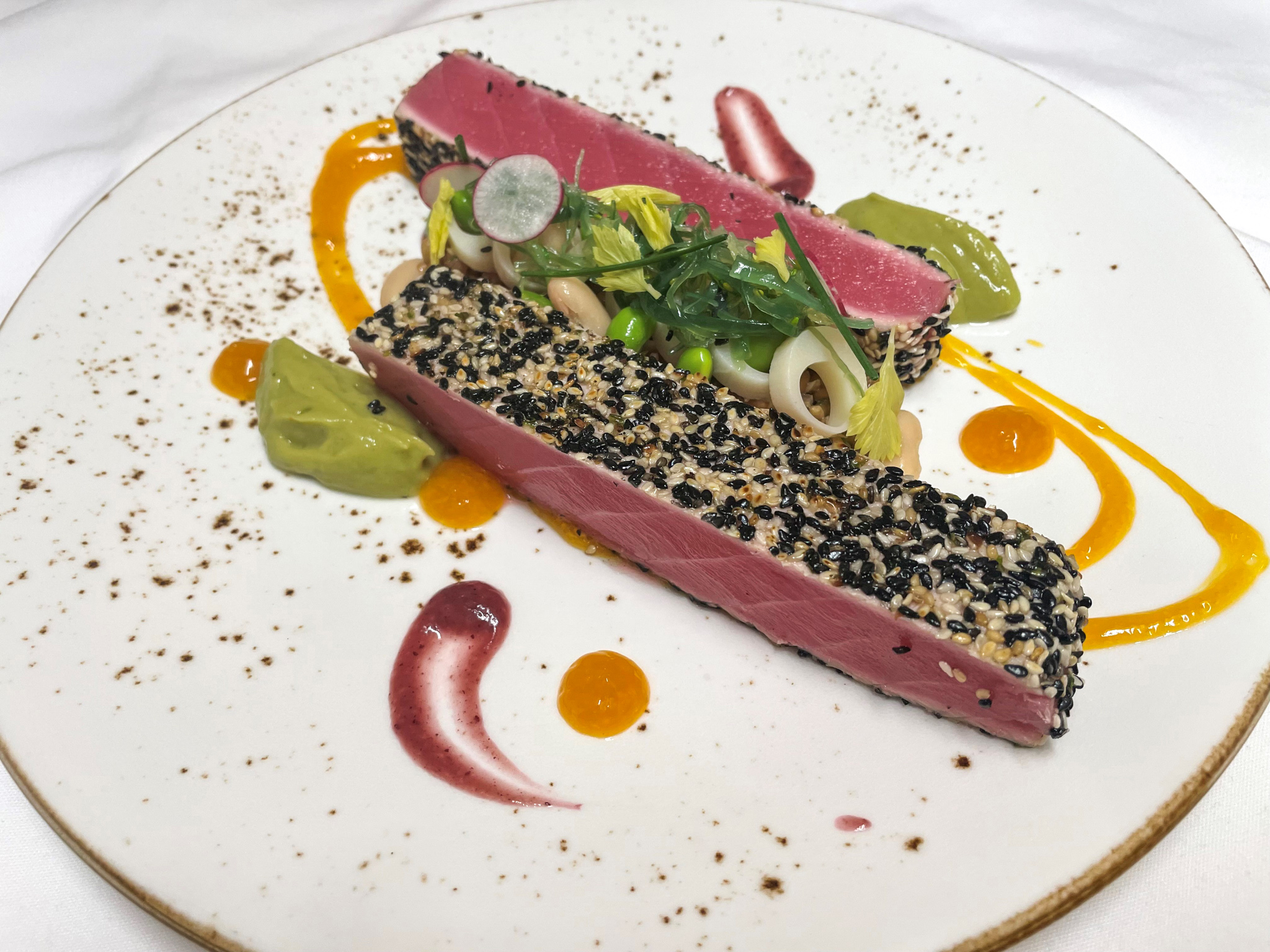
The first time I made seared ahi at home, I treated it like a chicken breast and cooked it until it was thoroughly “done.” The flavor was fine, but the texture was giving packed-lunch sadness. Once I finally trusted the hot-pan, quick-sear approach, it clicked. This is not a long-cook situation. This is a two-minute confidence exercise with a very tasty reward. Now it is one of my favorite “I want restaurant energy without restaurant effort” dinners.