
Mom's Best Recipes
Recipe

Sheet Pan Pork Tenderloin

My go-to sheet pan pork tenderloin dinner, plus 10 easy flavor variations I actually use so it never gets boring. Crisp edges, juicy slices, and a bright mustard herb sauce that makes the whole pan taste intentional.

Author By Matt Campbell
4.8
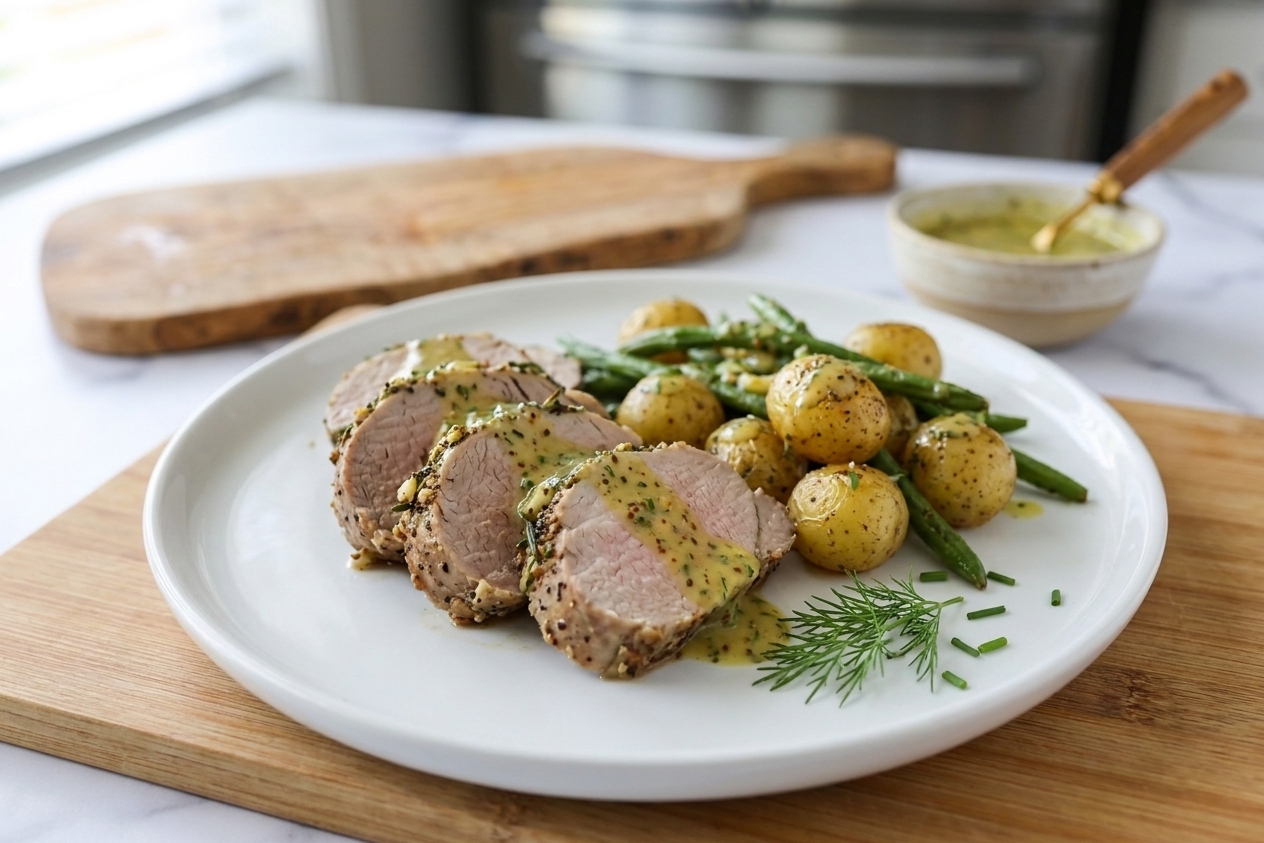
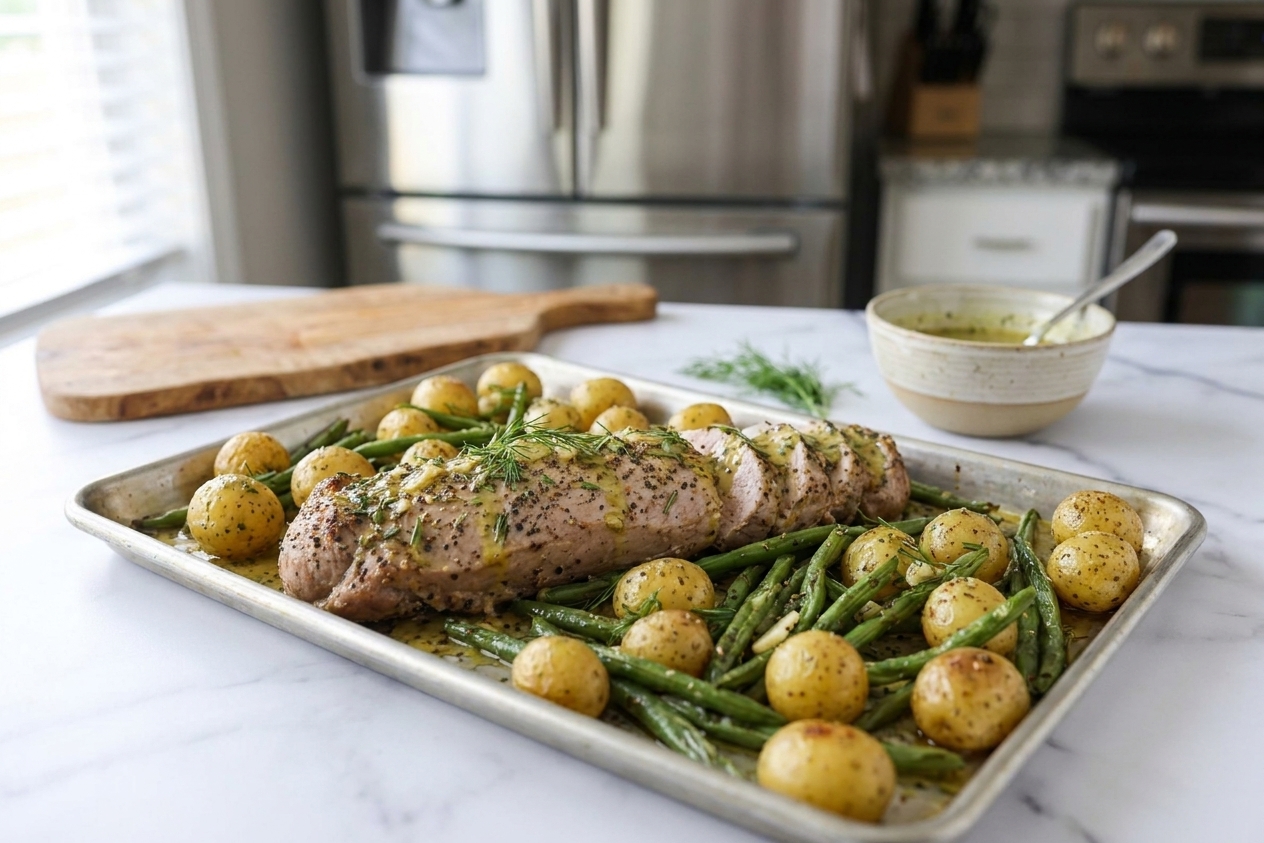
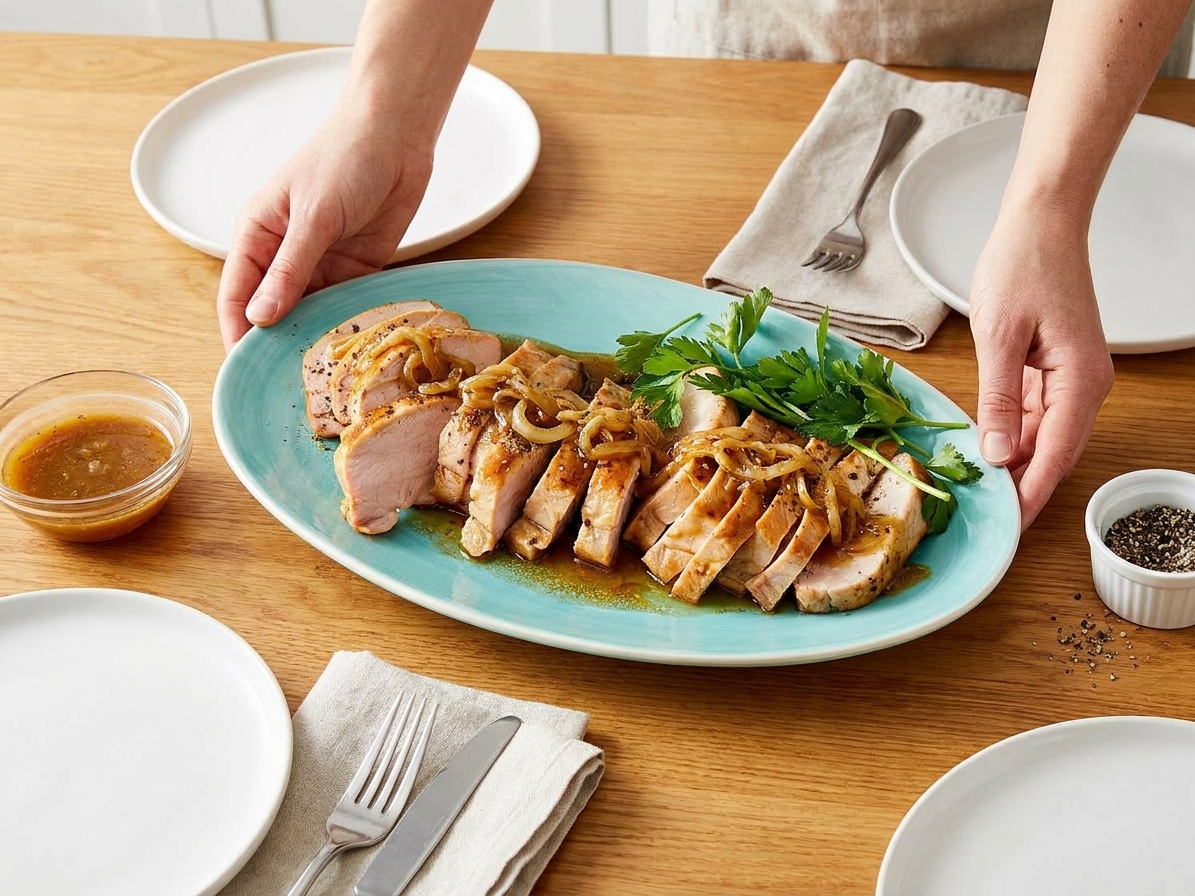
Sliced pork tenderloin on a sheet pan with roasted potatoes and green beans, finished with a glossy mustard herb sauce in a bright home kitchen

Pork tenderloin is one of those underrated weeknight heroes. It cooks fast, stays tender if you do not overthink it, and it plays well with basically every flavor mood you have: garlicky, citrusy, smoky, sweet and spicy, cozy and herby.

This post is built around my sheet pan pork tenderloin dinner, plus 10 flavor variations you can swap in whenever you want it to feel new without learning a whole new recipe. Same method, different vibe, no kitchen stress documentary.
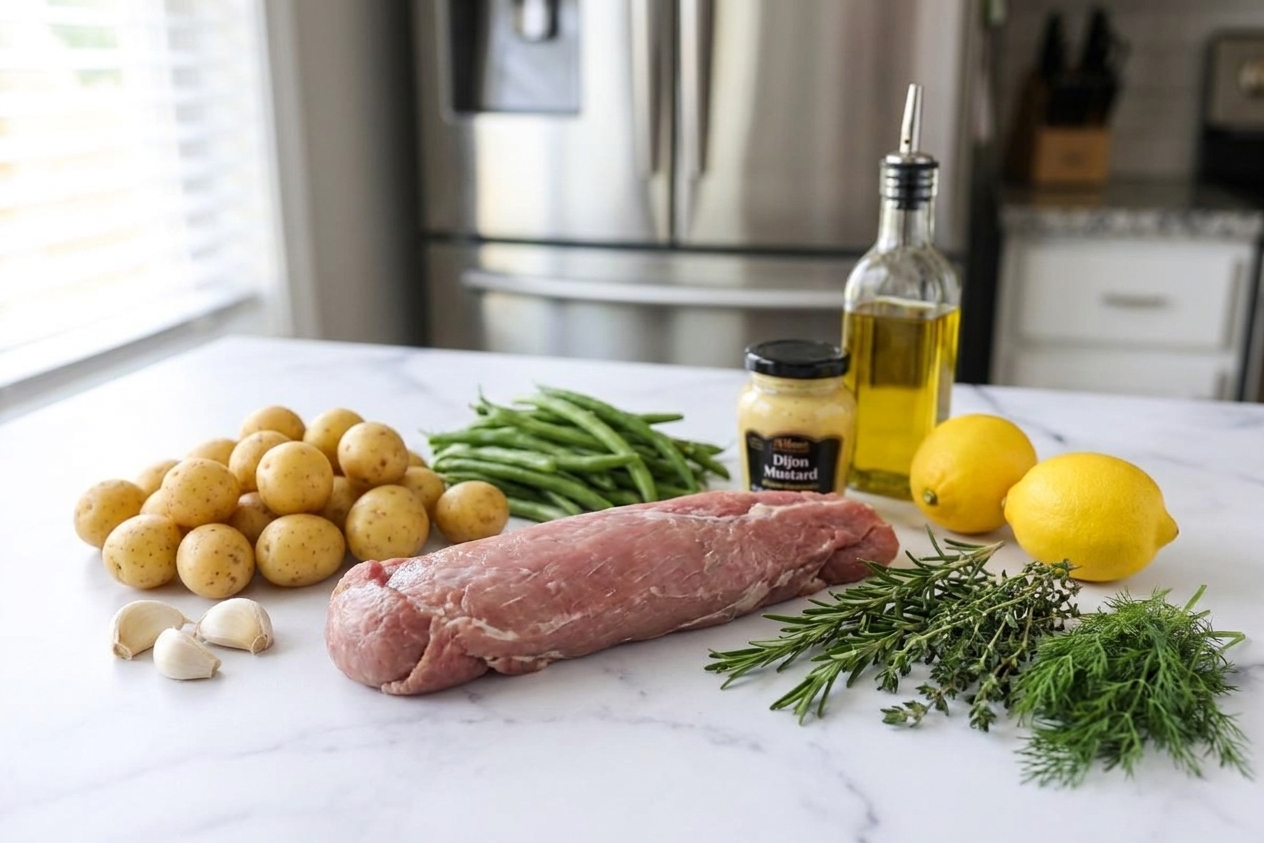
Raw pork tenderloin, baby potatoes, green beans, garlic, lemons, Dijon mustard, olive oil, and fresh herbs arranged on a light kitchen counter

10 Flavor Variations

How to use these: Keep the sheet pan method the same. Use the variation as the pork rub before roasting, or brush on a glaze in the last 5 minutes. If you marinate, pat the pork dry before roasting so you still get browning.

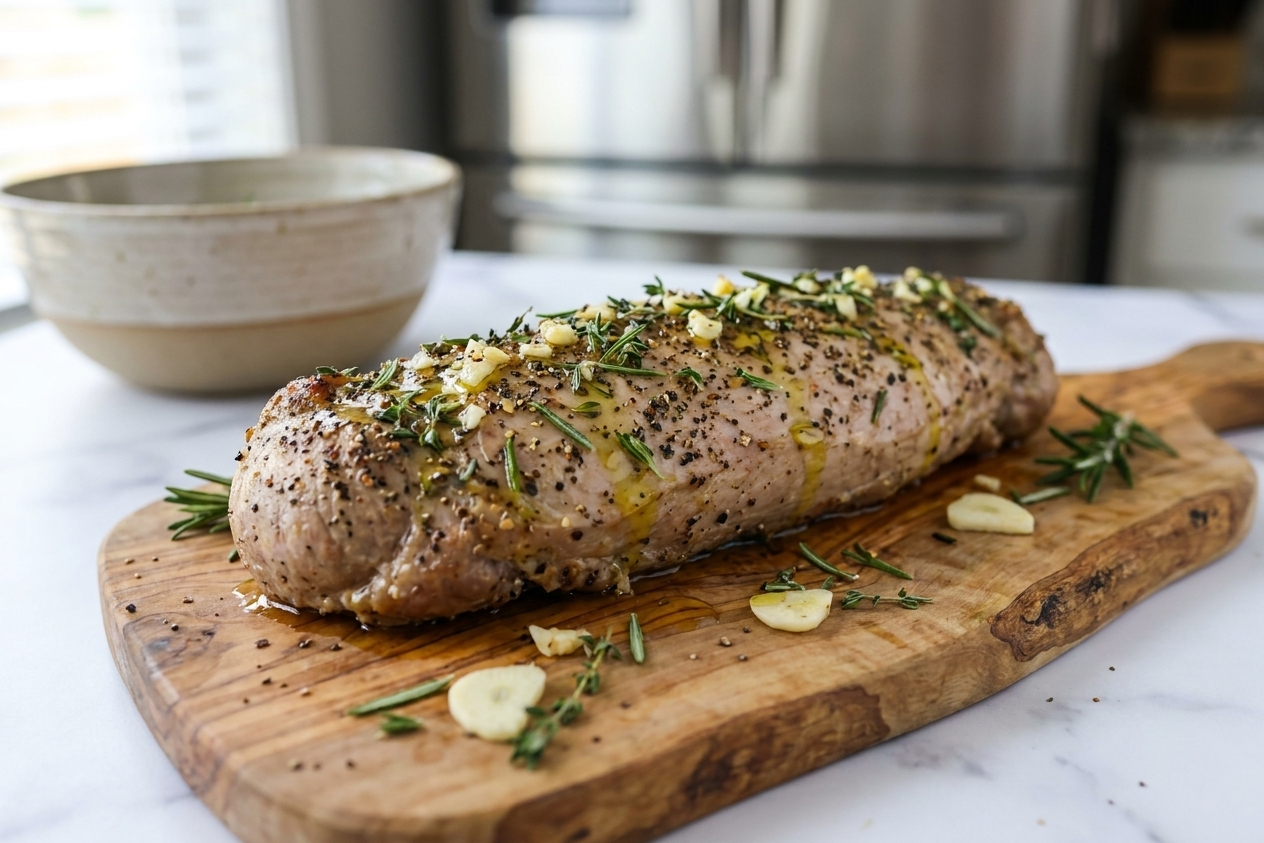
  • Garlic Herb: Rub pork with 1 tablespoon olive oil, 1 teaspoon minced garlic, 1 teaspoon chopped rosemary or thyme, and a pinch of salt and pepper. Finish with a small pat of butter right after it comes out.
  • Honey Mustard: Whisk 1 1/2 tablespoons Dijon + 1 tablespoon honey + 1 teaspoon apple cider vinegar. Brush on during the last 5 minutes, then broil 1 to 2 minutes if you want extra sticky edges.
  • Maple Chipotle: Mix 1 tablespoon maple syrup + 1 teaspoon chipotle powder (or 1 teaspoon minced chipotle in adobo) + 1 teaspoon lime juice. Brush on in the last 5 minutes.
  • Lemon Pepper: Season with 1 1/2 teaspoons lemon pepper + 1 teaspoon garlic powder. Add lemon zest to the sauce, or just squeeze lemon over everything at the end.
  • Teriyaki: Marinate 30 minutes to overnight in 1/4 cup teriyaki sauce. Pat dry, roast as written, then brush with a little more sauce and broil 1 to 2 minutes for that lacquered top.
  • Apple Cider Pan Sauce: Skip the mustard sauce. After roasting, pour 1/2 cup apple cider into a small skillet, simmer 3 to 5 minutes, whisk in 1 teaspoon Dijon and 1 tablespoon butter, then spoon over pork.
  • Italian Parmesan Crust: Press on 1/3 cup grated Parmesan mixed with 1/3 cup breadcrumbs and 1 teaspoon Italian seasoning before roasting. Add a squeeze of lemon at the end.
  • Cajun Spice: Rub with 1 1/2 to 2 teaspoons Cajun seasoning plus 1 tablespoon olive oil. Serve with a creamy slaw, rice, or extra sauce with a little hot sauce stirred in.
  • Greek Style: Rub with 1 teaspoon dried oregano + 1 teaspoon garlic + lemon zest. Serve with quick cucumber yogurt (Greek yogurt, grated cucumber, lemon, salt).
  • Balsamic Glaze: Simmer 1/2 cup balsamic vinegar with 1 tablespoon honey until syrupy, 5 to 8 minutes. Drizzle on after slicing (or in the last 2 to 3 minutes if you like it extra caramelized).

Now let’s make the one I recommend when you want maximum payoff with minimal babysitting.
Why It Works

This sheet pan pork tenderloin is built for real life cooking.

  • Juicy center, crisp edges: a hot oven gives you color without drying it out.
  • Everything cooks together: potatoes and green beans roast on the same pan, so dinner is one timeline.
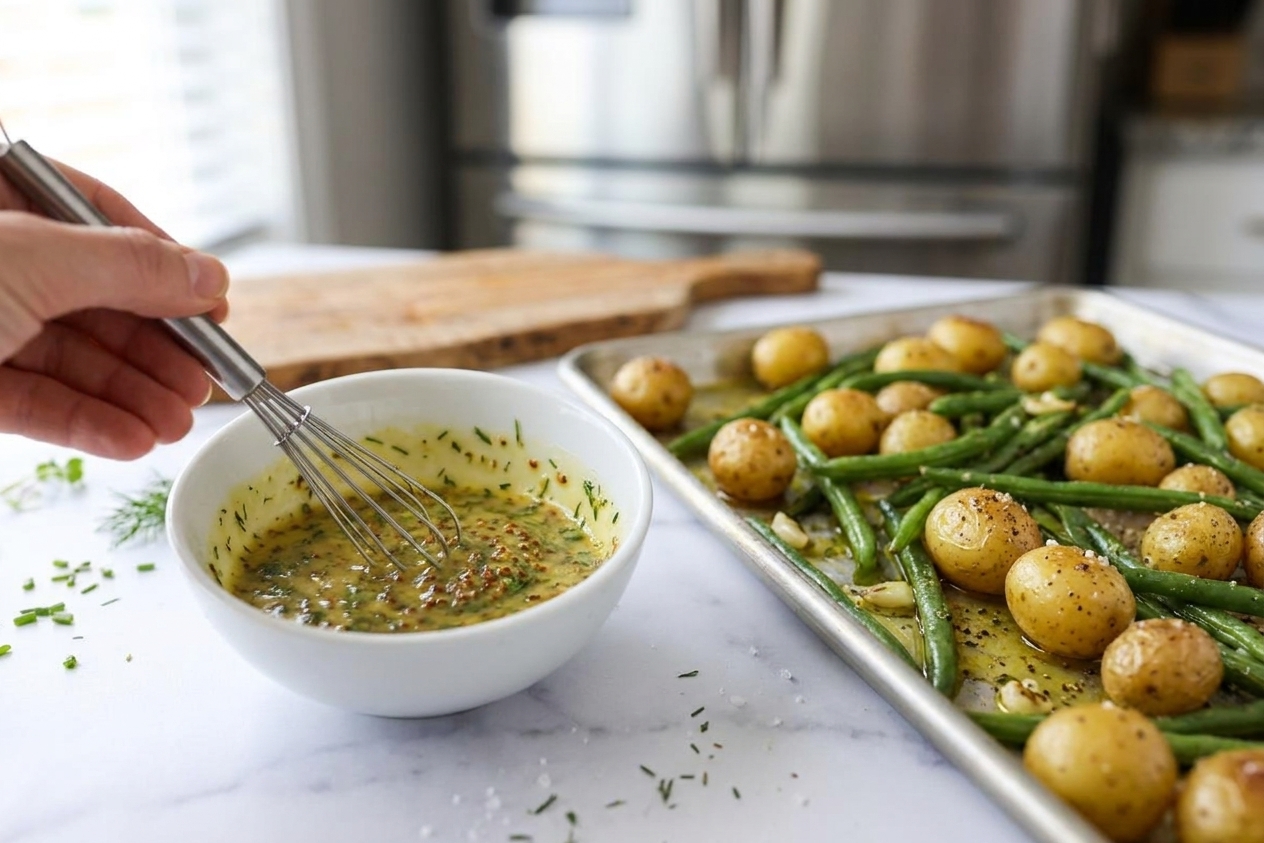
  • Bright sauce that fixes everything: Dijon, lemon, and herbs turn pan drippings into a tangy, glossy finish.
  • Forgiving: a thermometer plus a short rest covers a lot of sins.

Target temp: pull the pork at 145°F in the thickest part, then rest. It may rise a few degrees while resting, and it will stay tender and slice clean.

Pairs Well With

Storage Tips

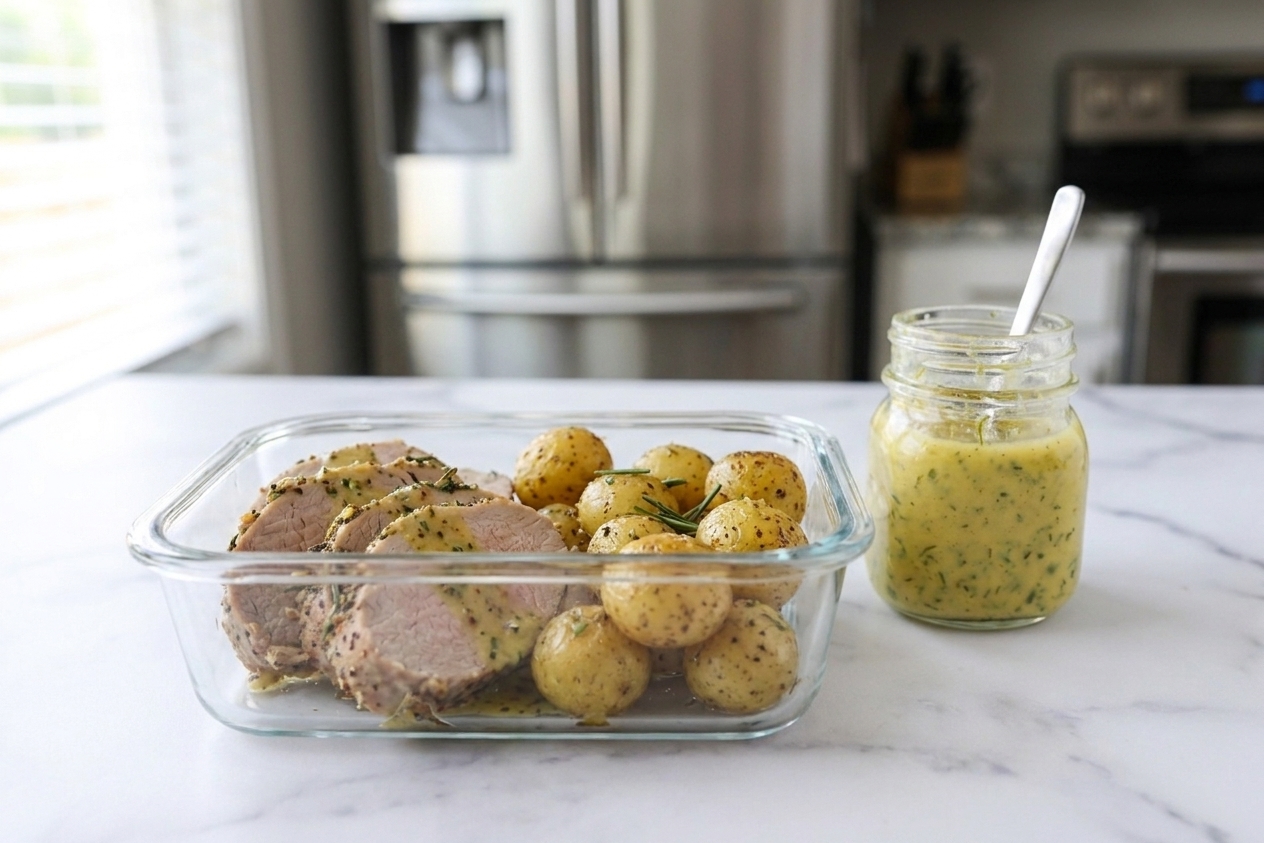
Fridge: Store sliced pork and vegetables in airtight containers for up to 3 to 4 days. Keep extra sauce separate if you can.

Freezer: Freeze sliced tenderloin (without the green beans, they get a little sad) for up to 2 months. Wrap tightly, then place in a freezer bag.

Reheat without drying out: Add a splash of broth or water, cover, and warm gently in a skillet over low heat, or microwave at 50 to 70% power. Spoon sauce over at the end.

Sliced pork tenderloin and roasted potatoes stored in a glass meal prep container on a kitchen counter with a small container of sauce beside it

Common Questions

Common Questions

What is the difference between pork tenderloin and pork loin?

Pork tenderloin is smaller, very lean, and cooks fast. Pork loin is thicker and larger and needs a longer cook time. They are not interchangeable without changing the timing.

What temperature should pork tenderloin be cooked to?

Cook to 145°F in the thickest part, then rest for 5 to 10 minutes. That rest matters for juicy slices. It may climb a few degrees as it rests, which is normal and helpful.

Should I sear pork tenderloin before roasting?

You can, but you do not have to. In this recipe, a hot oven and a well-oiled pan give you great browning. If you want extra color, do a quick 2 minute sear per side in a skillet first.

Why is my pork tenderloin dry?

Most of the time it is simply overcooked. Tenderloin has almost no fat. Use a thermometer and pull at 145°F, then rest.

Can I marinate pork tenderloin overnight?

Yes, but keep it balanced. Strong acids can toughen the exterior if left too long. For citrus-heavy marinades, I like 2 to 6 hours. For soy based marinades, overnight is great.

I used to treat pork tenderloin like a high stakes situation. Then I realized it is only dramatic if you make it dramatic. Once I started cooking it hot and fast, resting it like it deserves, and keeping a bright, punchy sauce in my back pocket, it became one of my favorite “I need dinner to work” proteins. This sheet pan version is the one I make when I want the kitchen to feel relaxed, but the plate to feel like I knew what I was doing.