What counts as “discard” for this coffee cake?
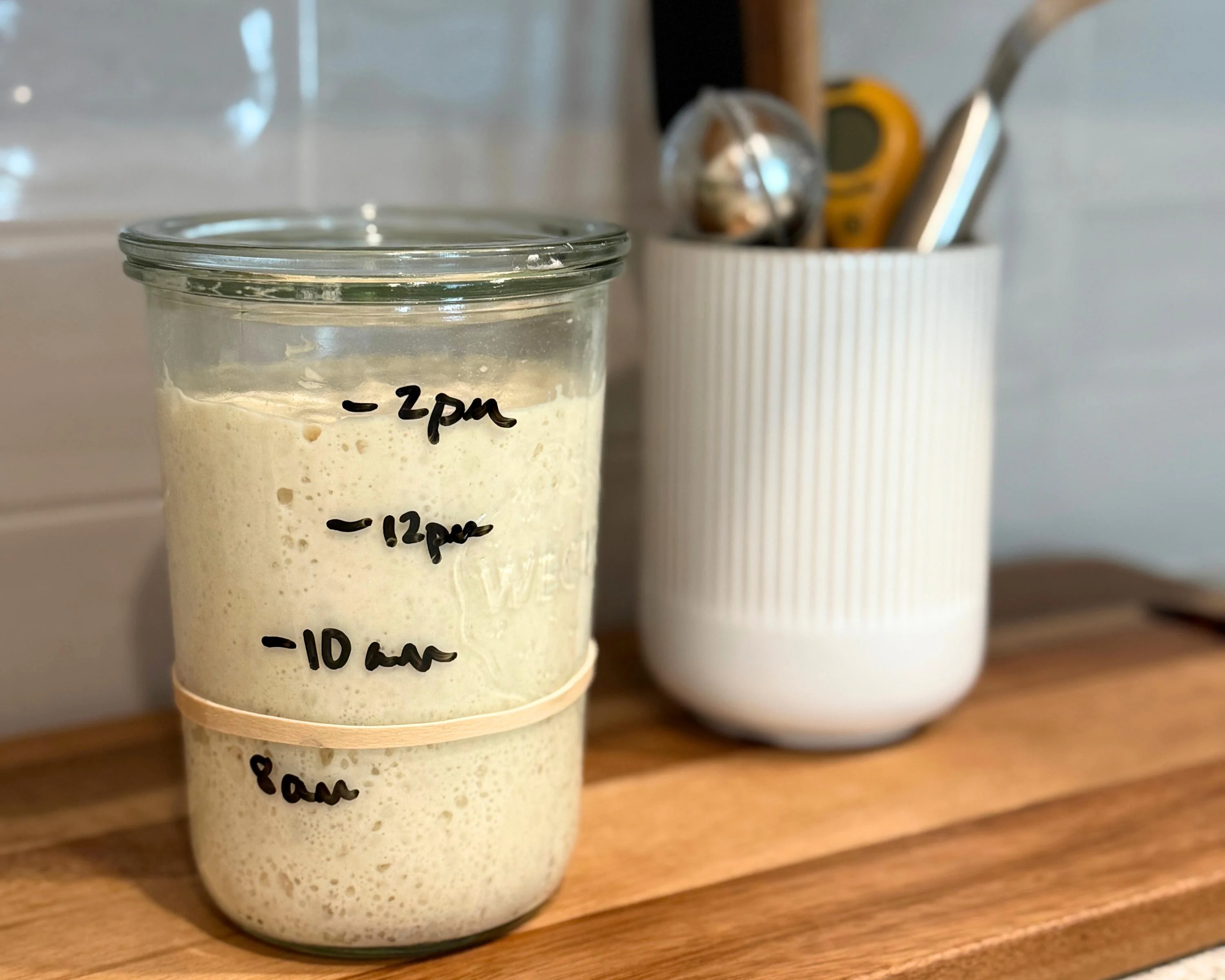
Any unfed starter you would normally remove before feeding works. It can be straight from the fridge. Avoid using discard with fuzzy mold, a pink or orange tint, or a strong rotten odor. A little hooch (grayish liquid on top) is normal. Just stir it in or pour it off, your call.
Do I need active, bubbly starter?
Nope. This recipe is designed for discard. The lift comes from baking powder and baking soda.
My starter is very thick. How do I adjust?
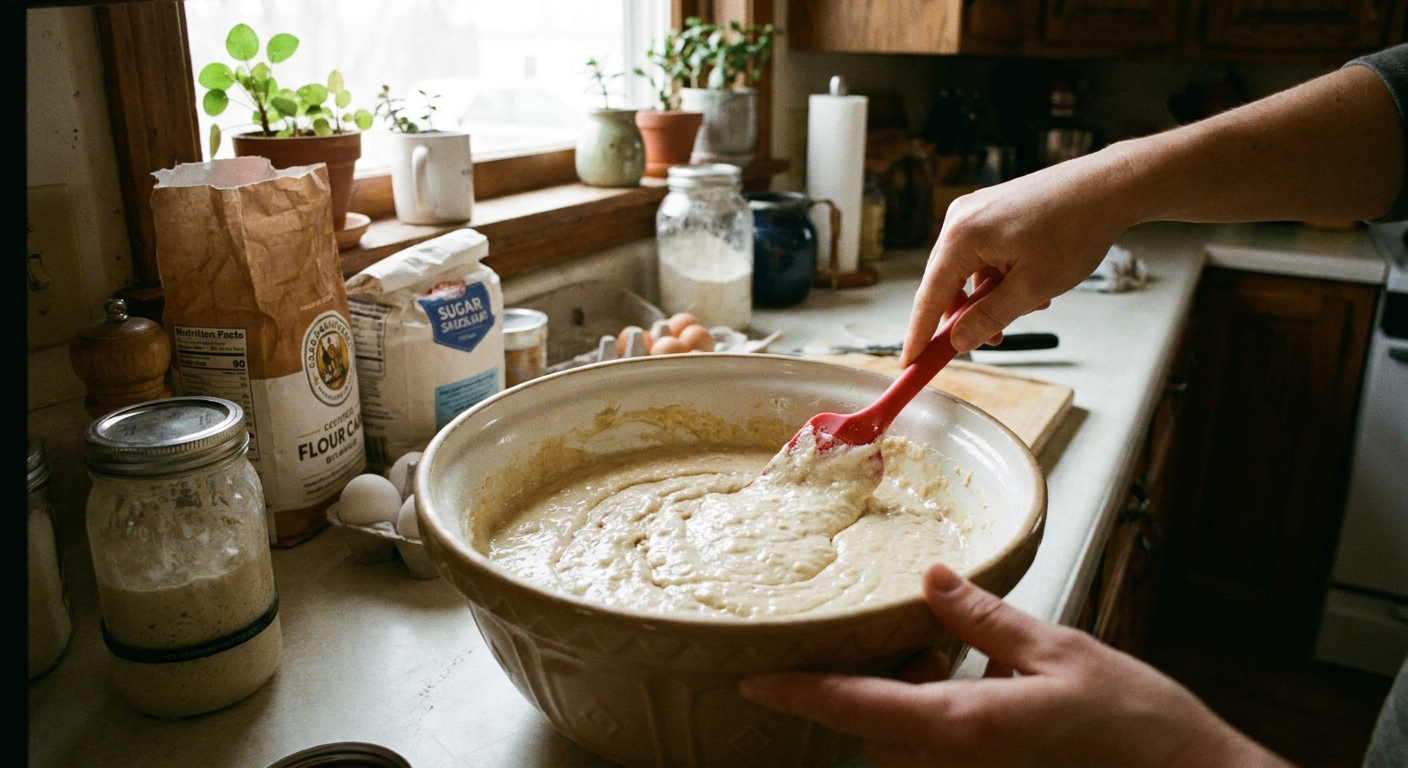
If your discard is thick like dough, add 2 to 4 tablespoons milk to the batter to loosen it. You want a thick, scoopable batter that slowly levels in the pan, not something pourable like pancake batter.
My starter is very runny. How do I adjust?
If your discard is runny, skip the optional milk. If the batter still looks thin after mixing, add 1 to 2 tablespoons flour (start with 1) and fold gently until it thickens. Batter should be scoopable, not sloshy.
Can I rest the batter overnight?
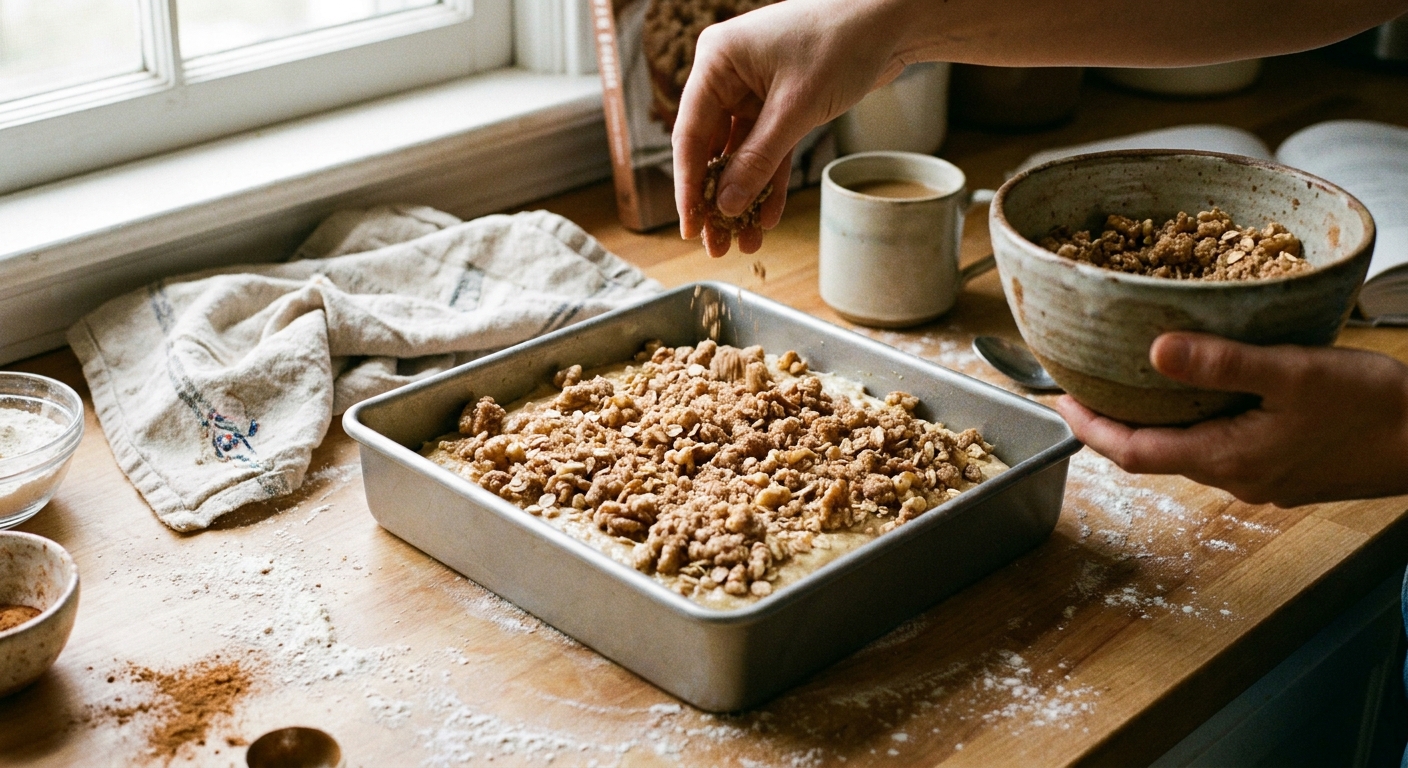
Yes, with a small note: mix the batter, spread it in the pan, cover and refrigerate. Add streusel right before baking in the morning for the best topping texture. Because the leaveners start working once mixed, an overnight rest can bake up slightly denser (still delicious). Double-acting baking powder helps here. Bake straight from the fridge and add a few minutes if needed.
How do I keep coffee cake moist without overmixing?
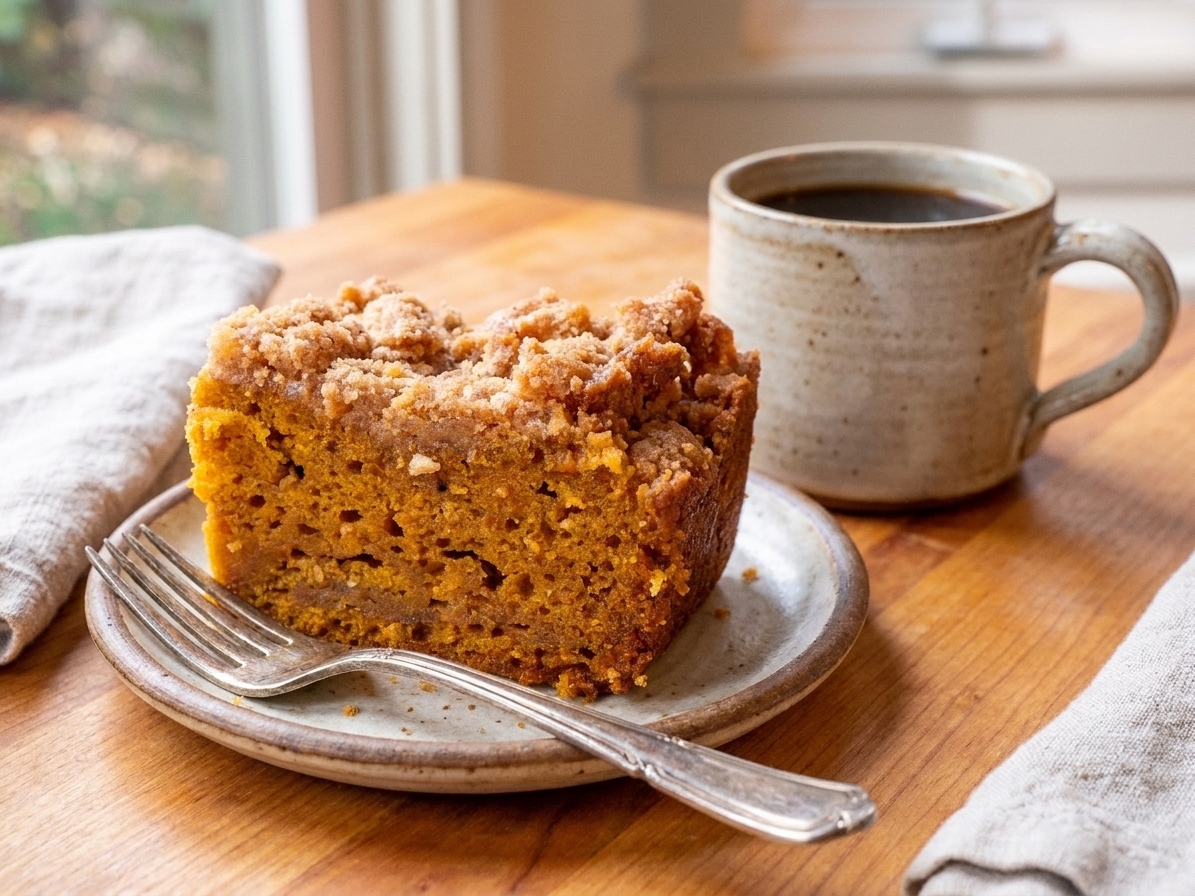
Use room temp ingredients if possible, whisk the dry ingredients separately, then stir or fold gently just until you stop seeing dry flour. A few small lumps are totally fine. Overmixing makes coffee cake tight and chewy.
Can I bake this in a different pan?
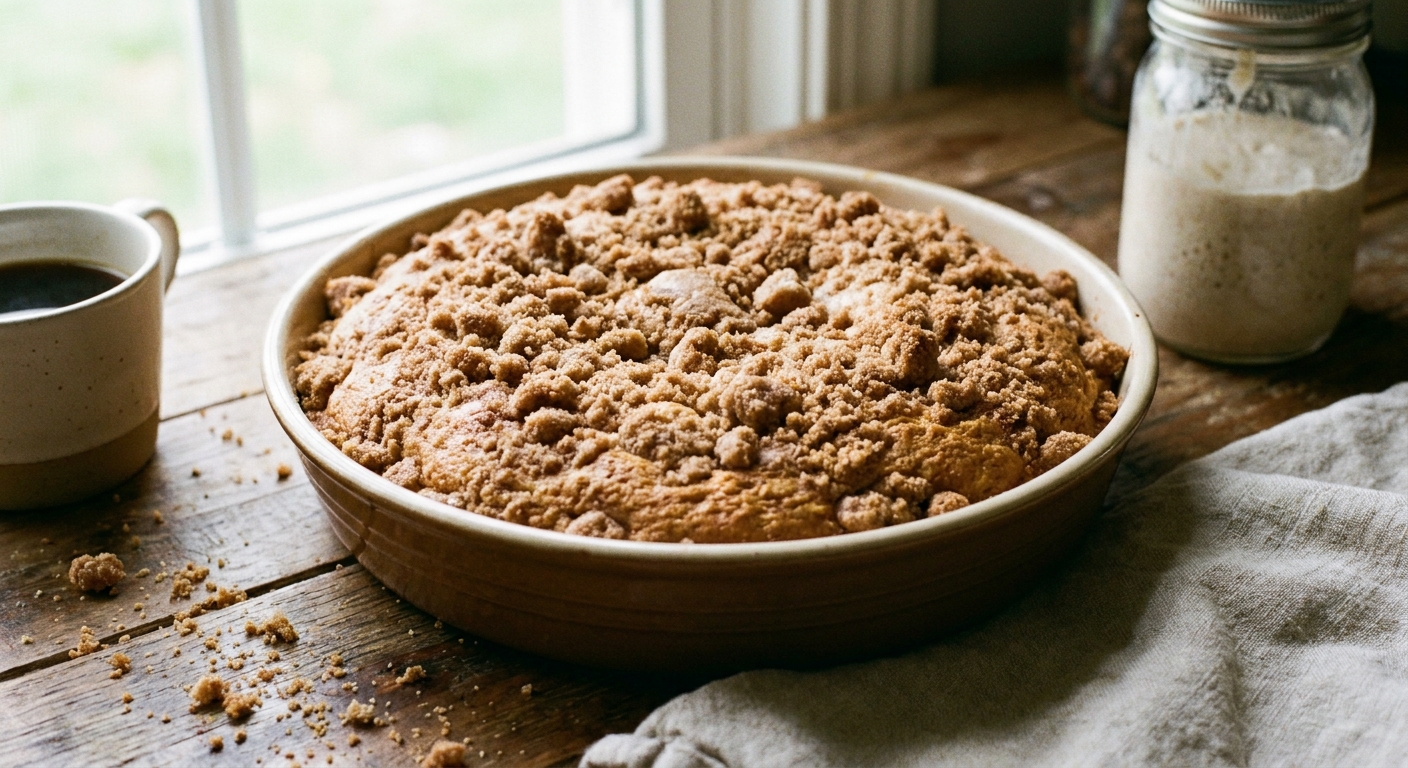
Yes. An 8x8 pan gives thicker slices and usually takes a little longer. An 9x9 pan bakes a bit faster. An 9-inch round pan works too. For muffins, bake at 350°F, fill liners about 2/3 full, and start checking around 18 minutes. You will get about 10 to 12 muffins depending on your liner size.