Mom's Best Recipes
Recipe

Southern-Style Braised Pig Feet

Low and slow, cozy and bold. These pig feet braise into tender, sticky bites with a bright vinegar pop and a glossy broth made for rice or grits.

Author By Matt Campbell
4.7
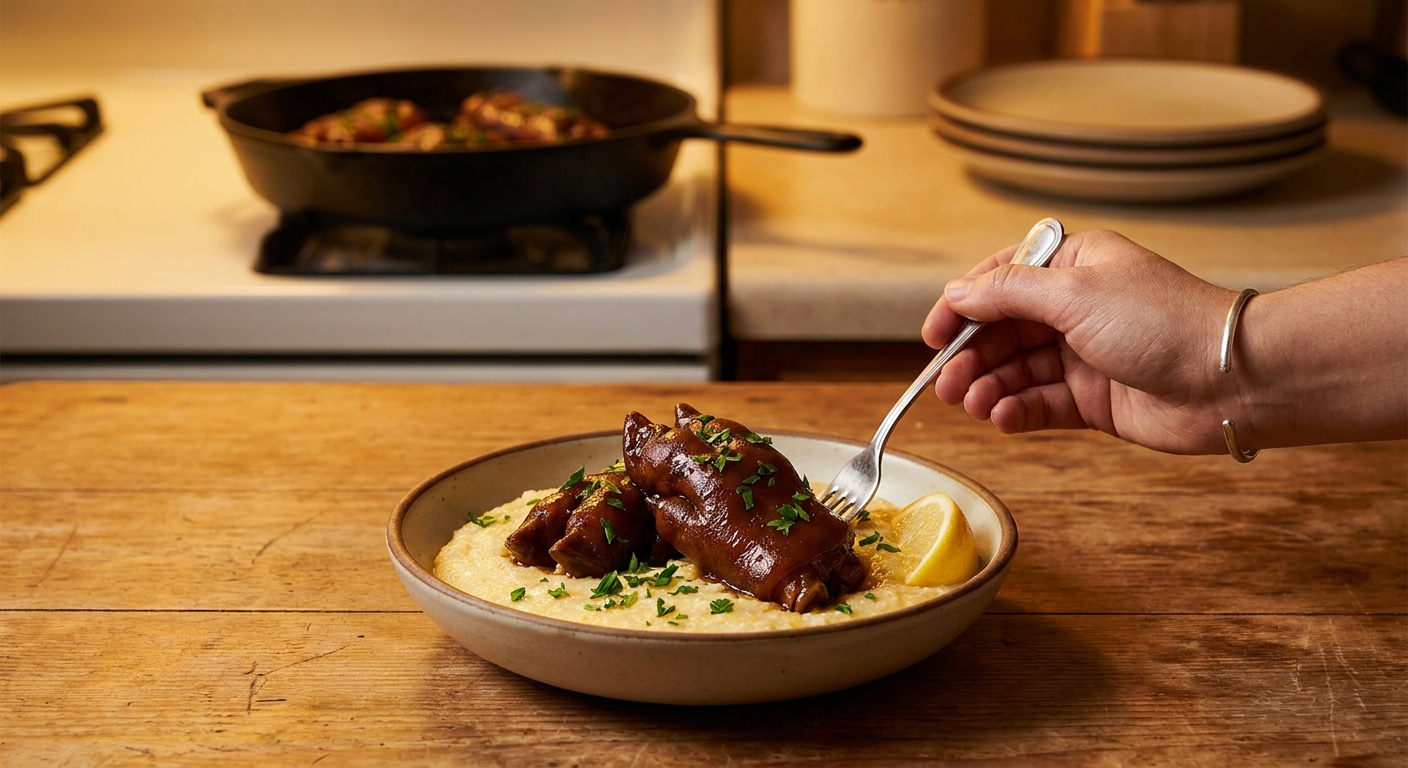
A shallow bowl of glossy, braised pig feet on creamy grits with chopped parsley and a lemon wedge on a wooden table, warm kitchen lighting

Pig feet are one of those ingredients that look intense until you realize what they really are: a collagen goldmine that turns into silky, sticky comfort if you treat it right. Think fall-apart tender bits, a broth that sets up like jelly in the fridge, and enough richness to make plain rice feel like a whole event.

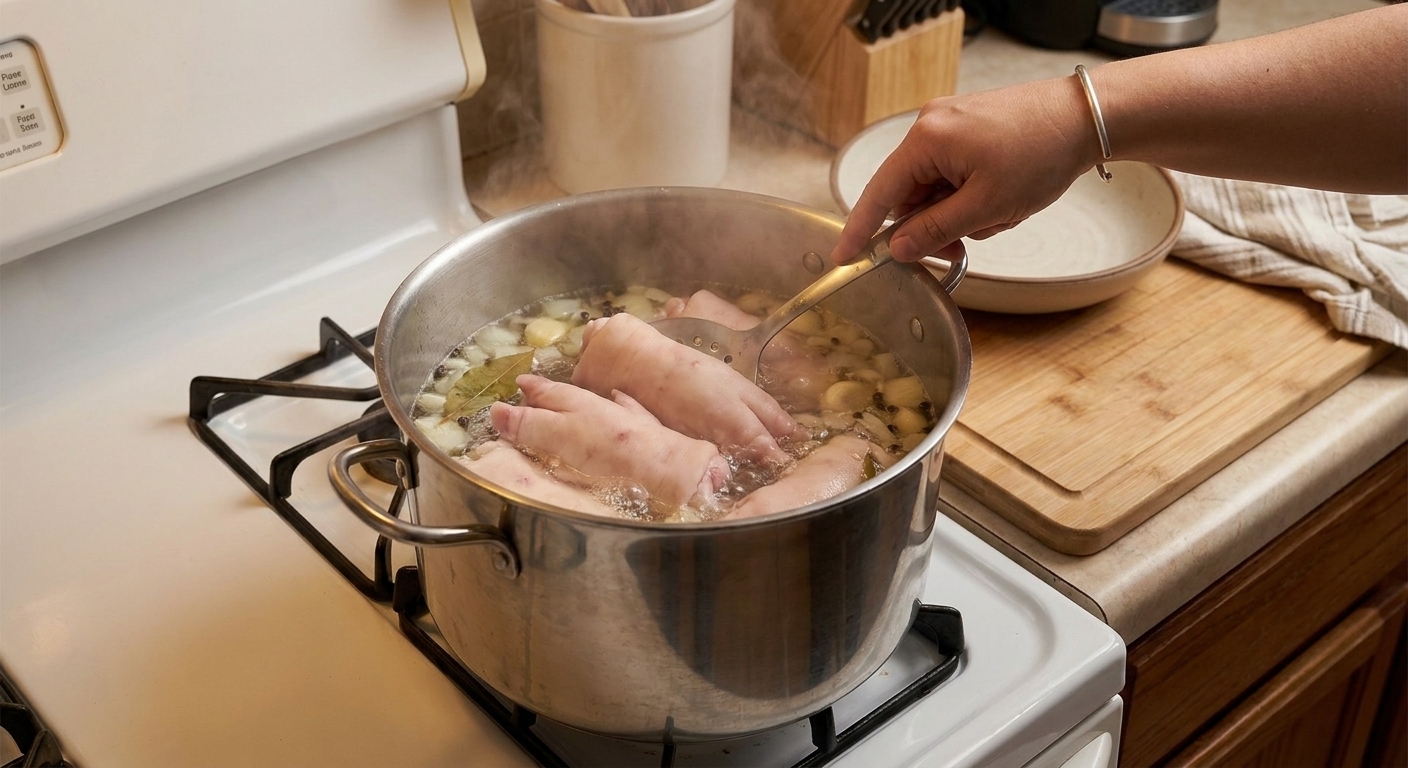
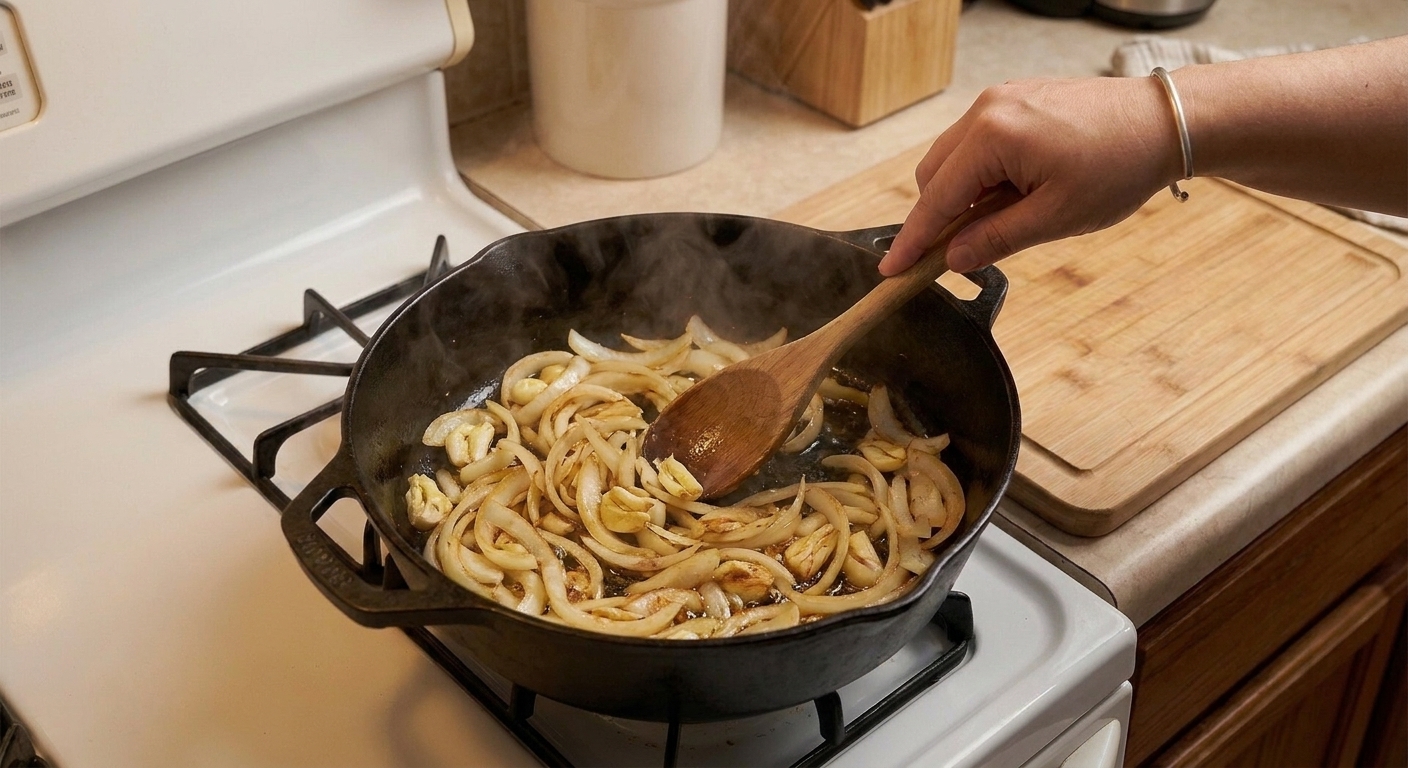
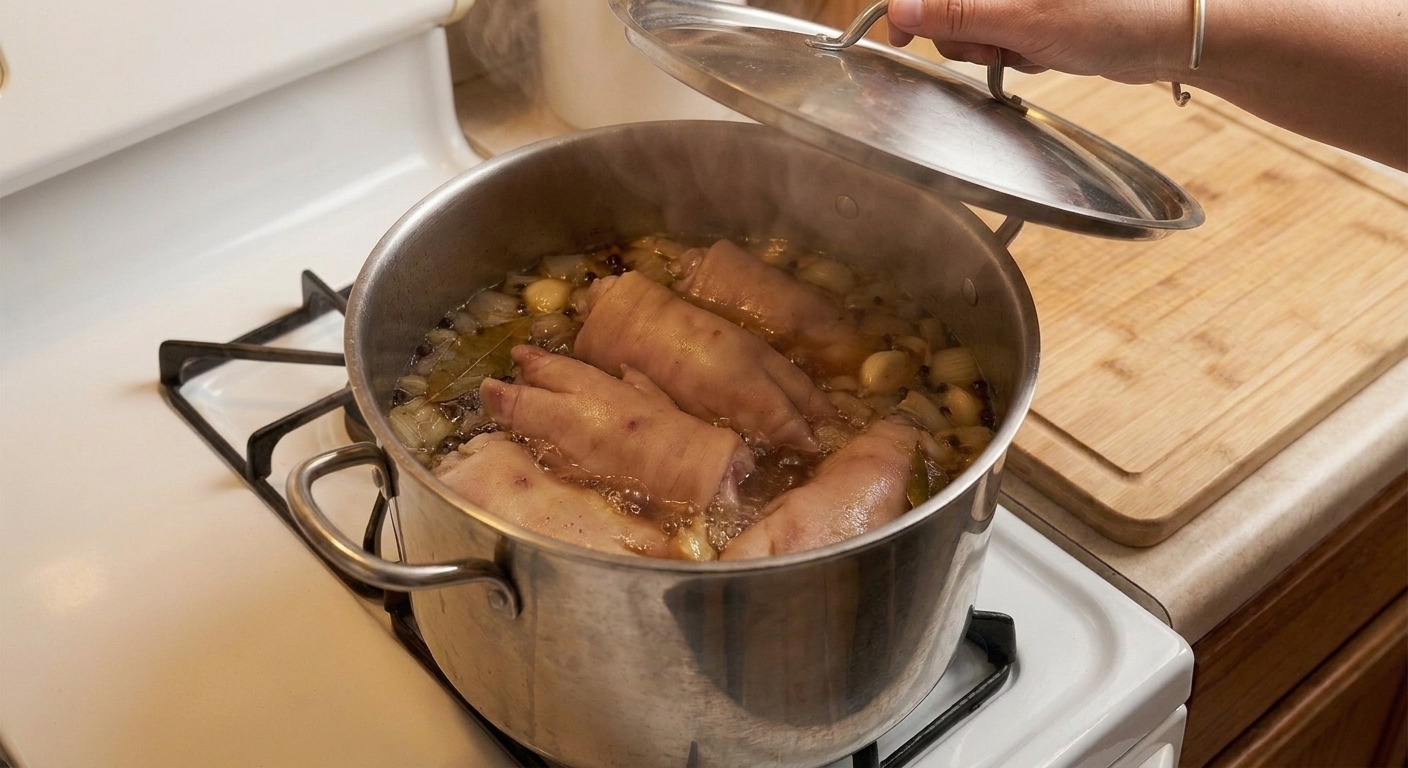
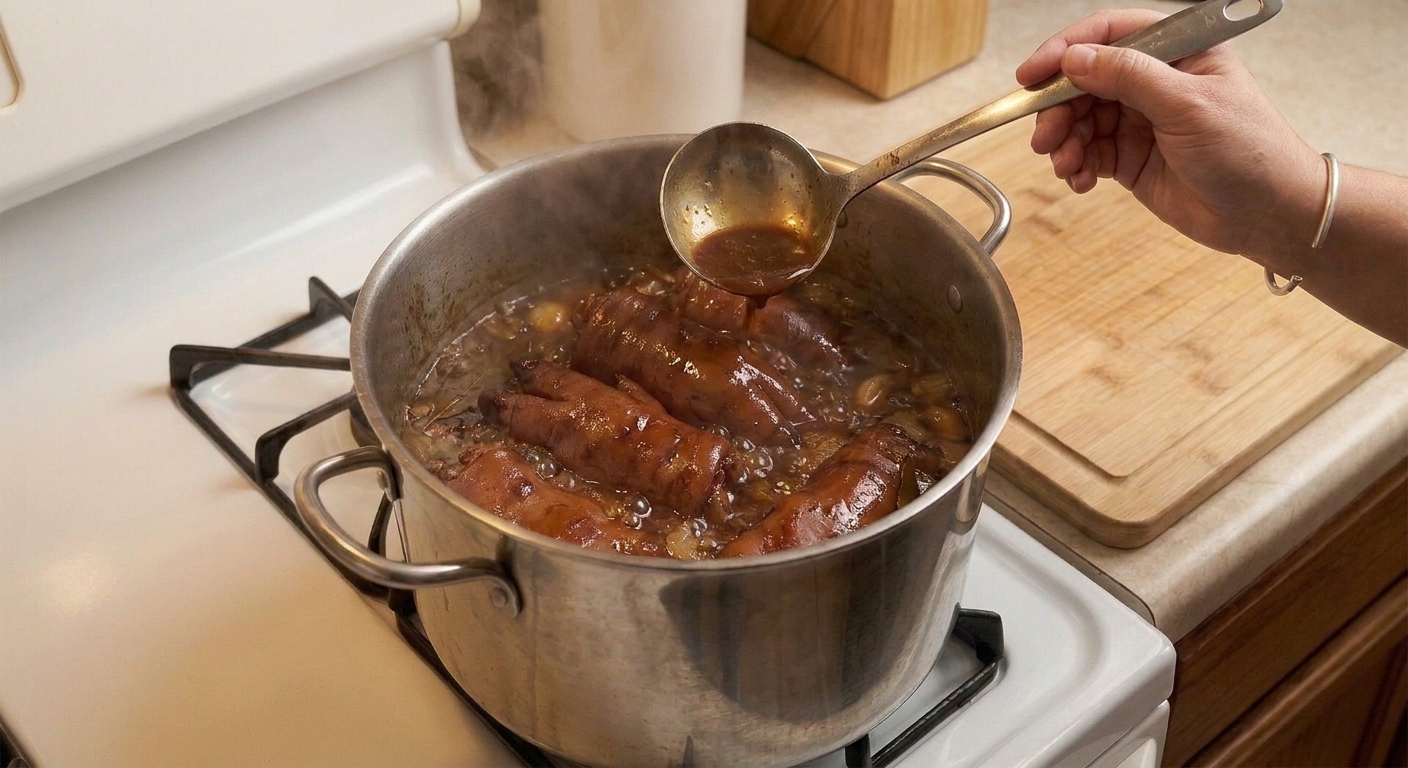
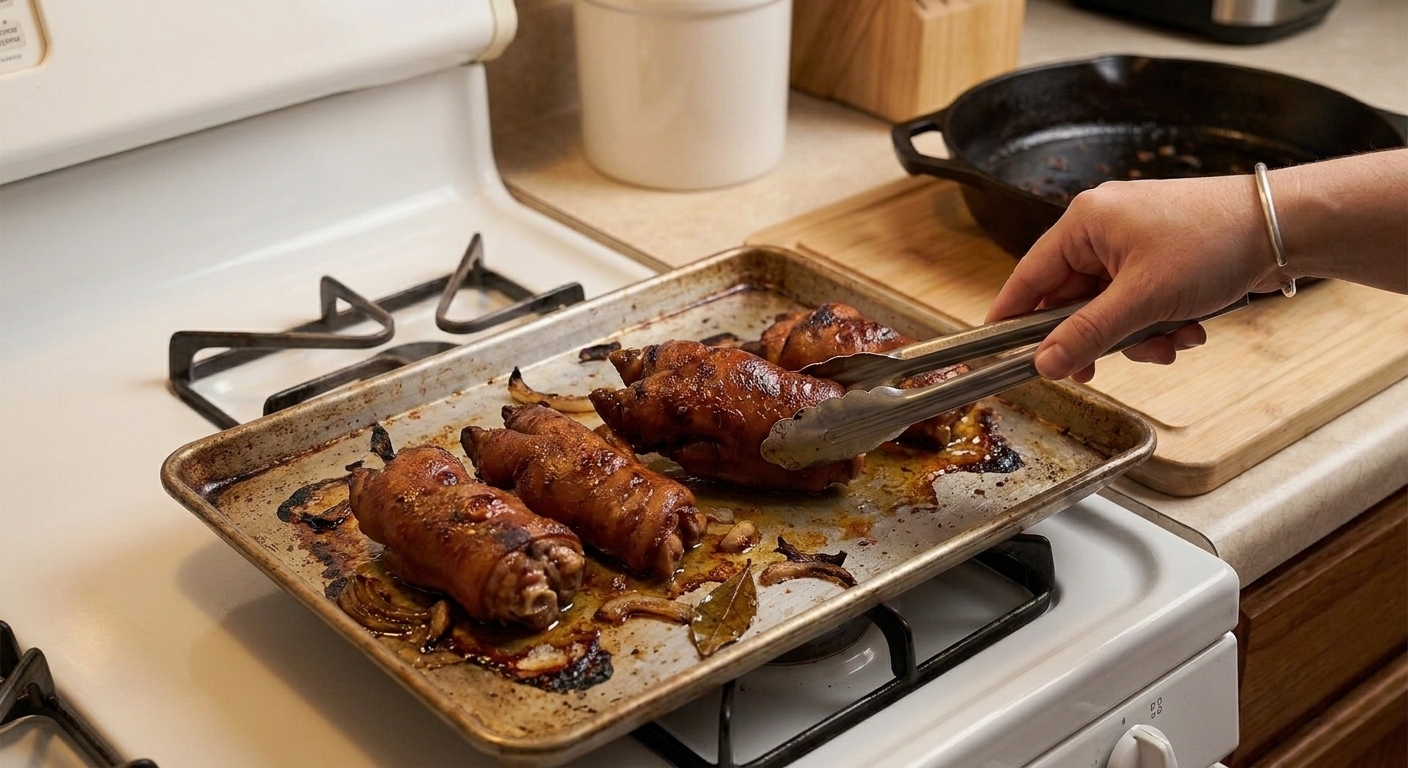
This is my mostly hands-off approach. We boil first to clean things up, then we braise low and slow with onion, garlic, a little vinegar for brightness, and warm spices that make the whole kitchen smell like something good is happening. If you want crisp edges, you finish them under the broiler for a few minutes and suddenly you are living your best life.

Sourcing tip: If you can, ask the butcher to split the feet. They cook more evenly and you get more of that glossy broth payoff.
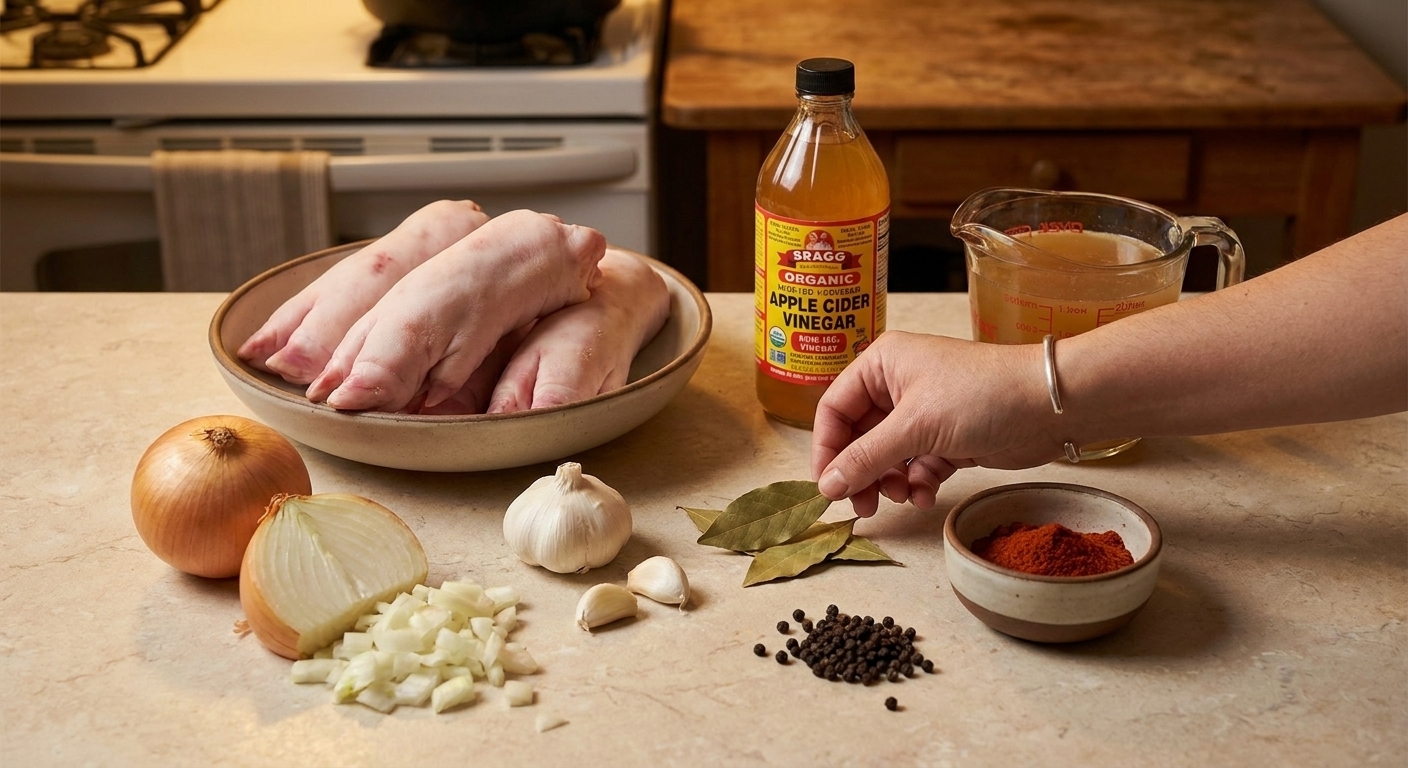
Raw cleaned pig feet, onion, garlic, apple cider vinegar, bay leaves, black peppercorns, paprika, and broth arranged on a light stone kitchen counter

Why It Works

  • Tender texture without mystery: A quick parboil plus a long braise keeps the pot liquor clean and the feet meltingly soft.
  • Big flavor from basic pantry stuff: Onion, garlic, bay, pepper, paprika, and vinegar do the heavy lifting.
  • Broth that turns into sauce: Collagen thickens everything naturally, so you get that glossy, lip-smacking finish.
  • Choose your vibe: Serve straight from the pot for cozy, or broil for crisp edges and drama.

Pairs Well With

Storage Tips

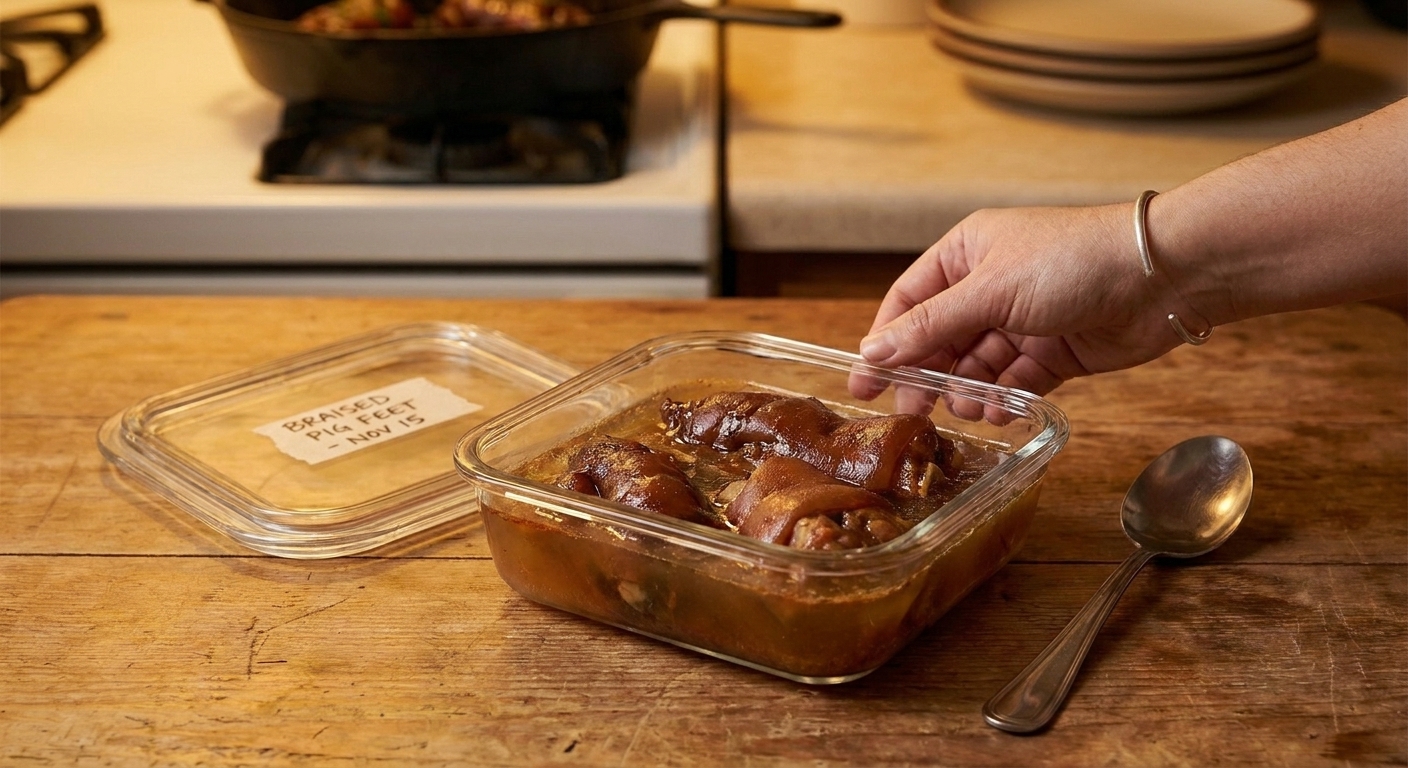
Refrigerate: Cool pig feet in the braising liquid, then store in an airtight container up to 4 days. For food safety, do not leave the pot sitting out. Get it into the fridge within about 2 hours.

Freeze: Freeze portions with enough liquid to cover for up to 3 months. Thaw overnight in the fridge.

Reheat: Warm gently in a covered saucepan with a splash of water or broth until the gel melts and everything is steaming hot. For crisp edges, broil the reheated feet on a sheet pan for 3 to 6 minutes, watching closely.

A glass meal prep container filled with braised pig feet and gelled broth on a kitchen counter next to a labeled lid and spoon

Common Questions

Do pig feet have meat on them?

Yes, but not like a pork chop. They have pockets of meat, skin, and lots of collagen-rich connective tissue. The payoff is texture and a broth that turns silky and thick.

How do I clean pig feet before cooking?

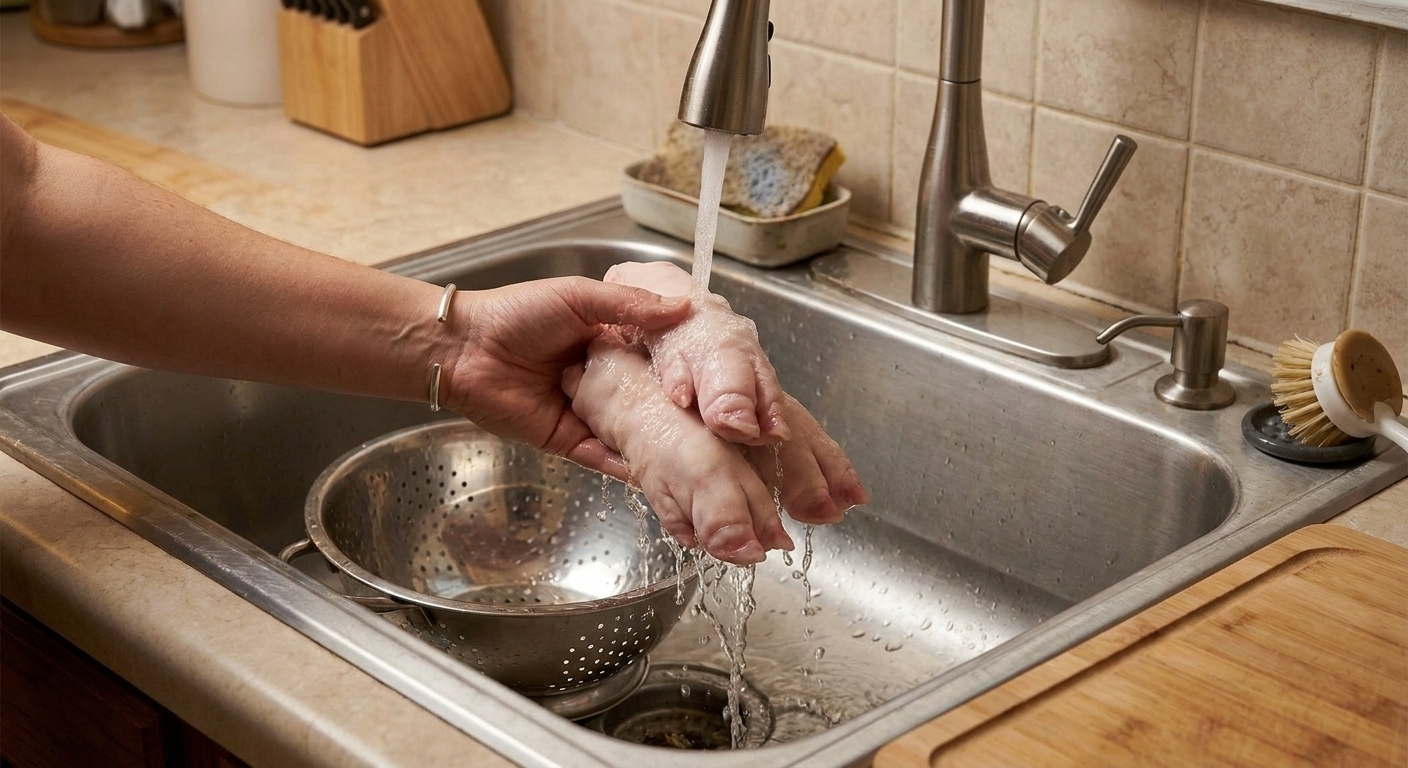
Most store-bought pig feet are already cleaned. I still rinse them well, check for any stray hairs (a quick scrape with a knife takes care of it), then do a quick parboil (10 minutes) and dump that water. It knocks out impurities and keeps the braise tasting clean.

Should pig feet be split?

Split feet cook more evenly and a little faster. If yours are not split, no stress. Just plan on the longer end of the simmering time and use the doneness cues in the instructions.

How long does it take for pig feet to get tender?

Plan on 2 1/2 to 3 hours of gentle simmering. You want them tender enough that a fork slides into the skin easily and the meat pulls away with tongs, but not so aggressive that everything falls apart into the pot.

Can I make pig feet in a pressure cooker?

Yes. After the parboil, pressure cook on High for 35 to 55 minutes (time depends on size and whether they are split), then let it naturally release. They are ready when the skin is very tender and the meat starts to pull from the bone. Simmer uncovered for 10 to 15 minutes to reduce the liquid and concentrate flavor.

What should I serve with braised pig feet?

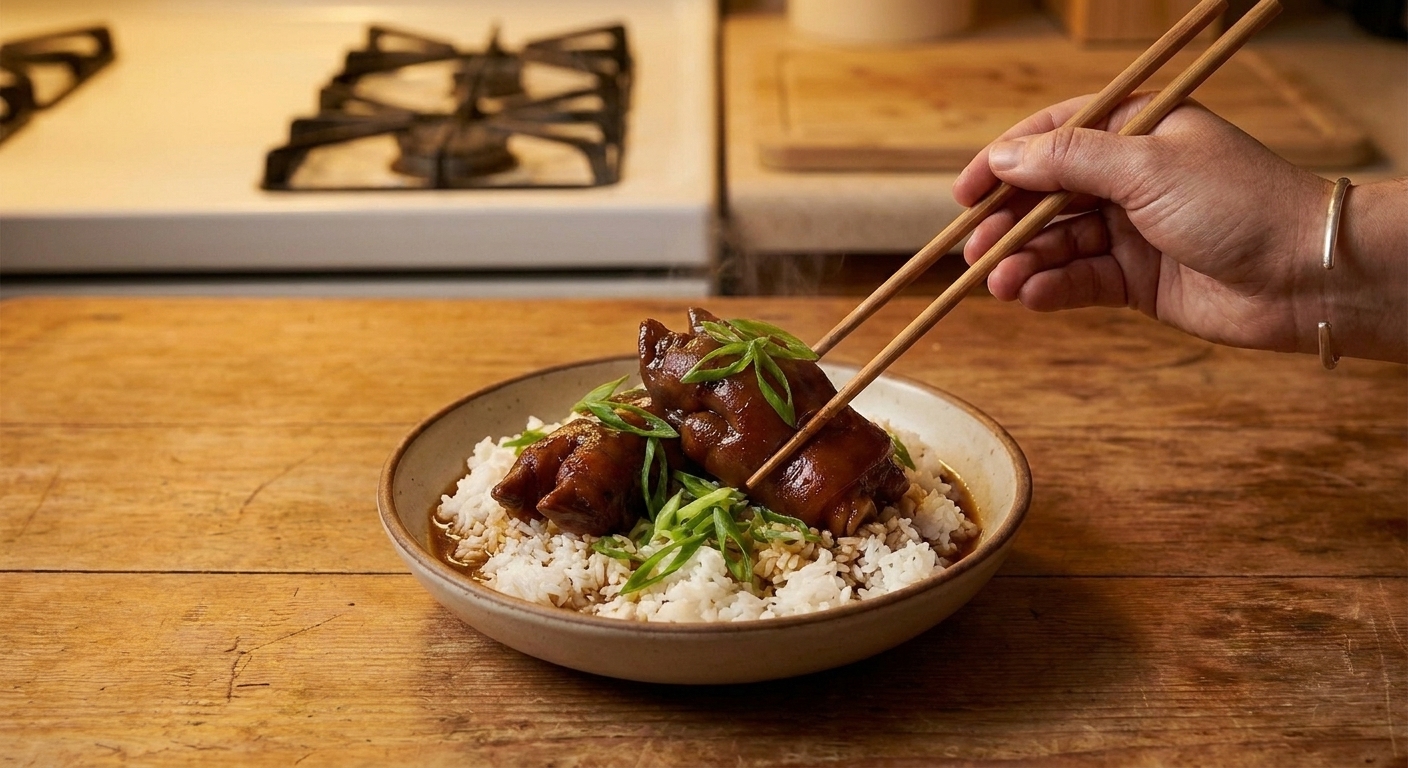
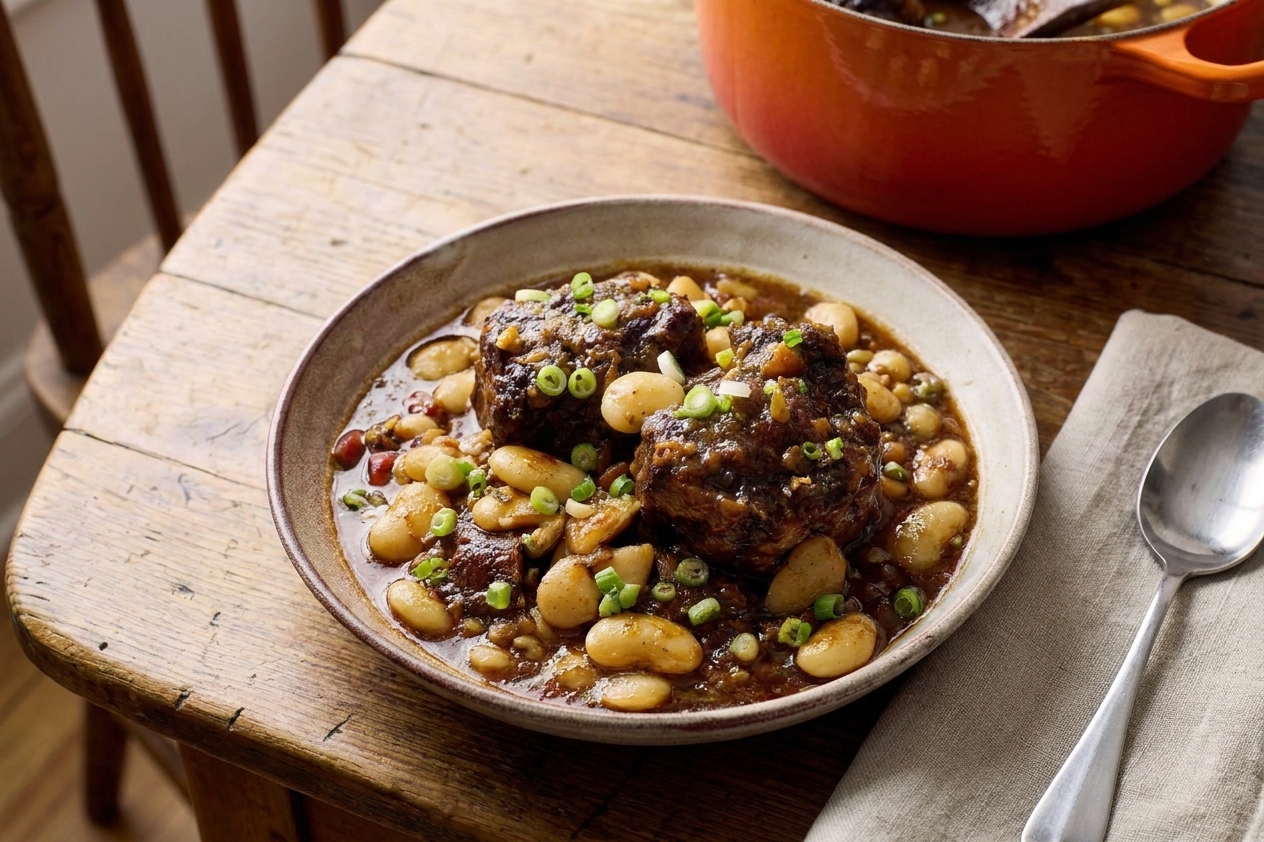
Rice, grits, mashed potatoes, or butter beans are perfect. Something starchy to catch the broth is the whole point.

The first time I cooked pig feet on purpose, I did the classic thing where you stare into the pot like it is going to judge you. But once the braise started doing its slow magic, the kitchen smelled like onions, pepper, and comfort, and I was sold. It is the kind of dish that rewards patience, not perfection. Also, the leftovers are ridiculous. That gelled broth the next day is basically a free flavor concentrate, and I will absolutely spoon it into anything that needs help.