Mom's Best Recipes
Recipe

Spicy Garlic Chinese Eggplant

Silky Chinese eggplant with crisp edges in a bold garlic-chili sauce. Weeknight-fast, rice-bowl perfect.

Author By Matt Campbell
4.8
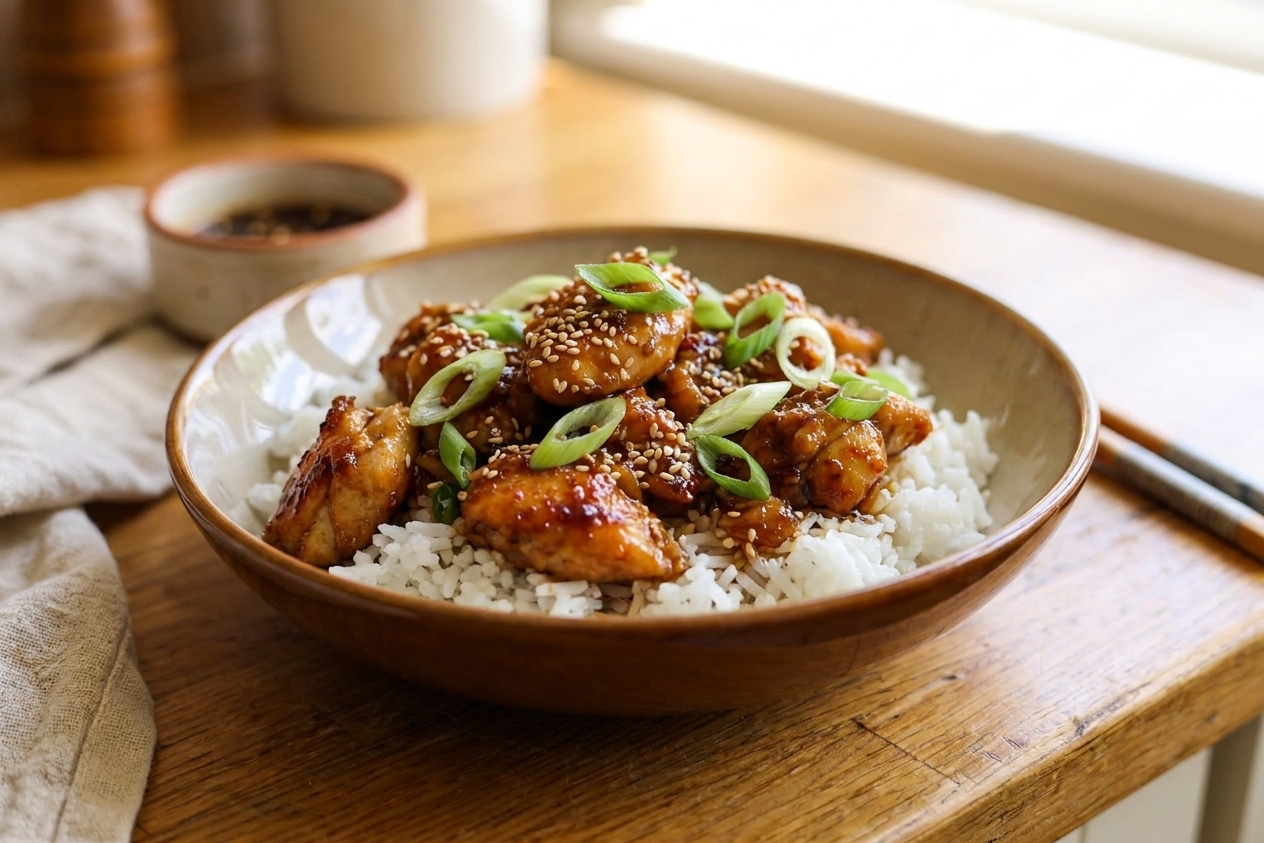
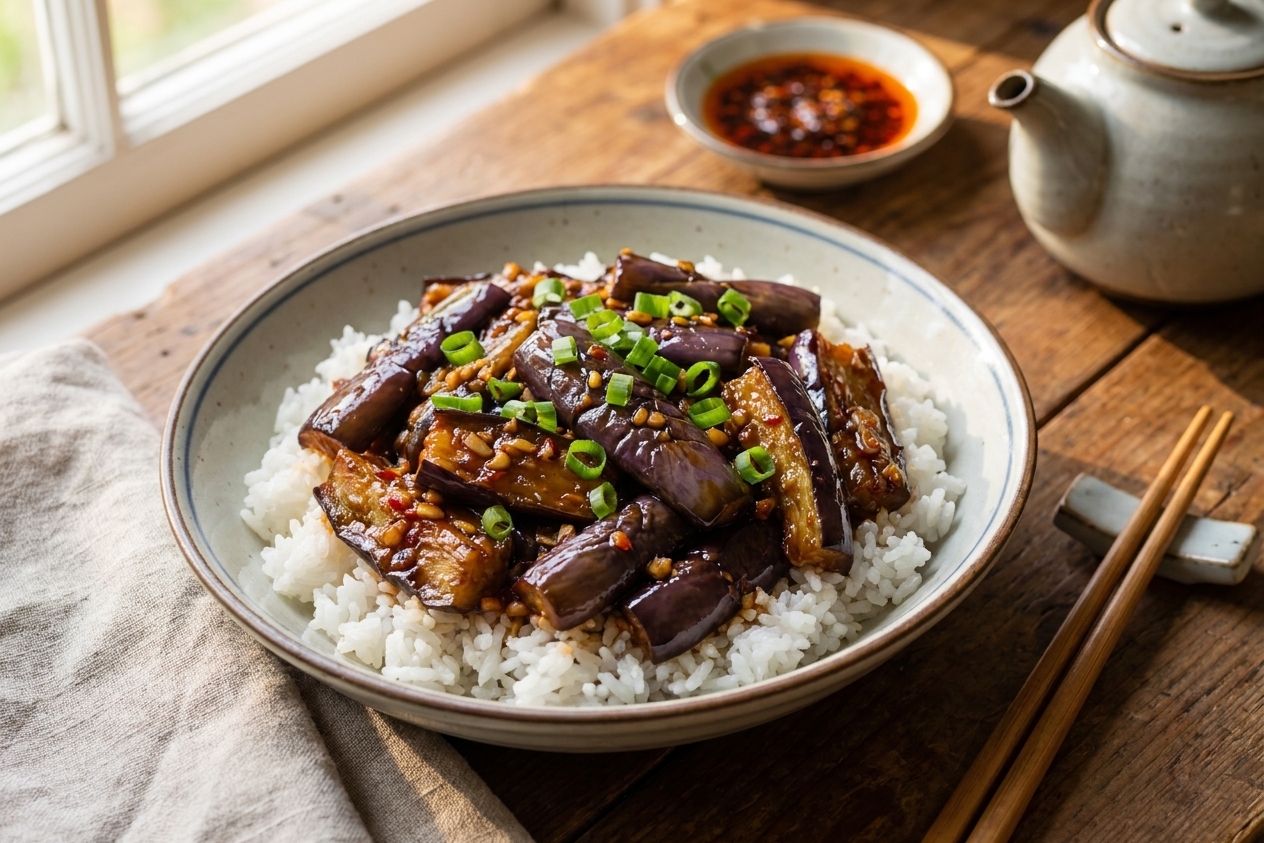
A shallow bowl of spicy garlic Chinese eggplant in a glossy reddish-brown sauce, topped with sliced scallions and sesame seeds, set on a warm, neutral-toned dinner table with chopsticks

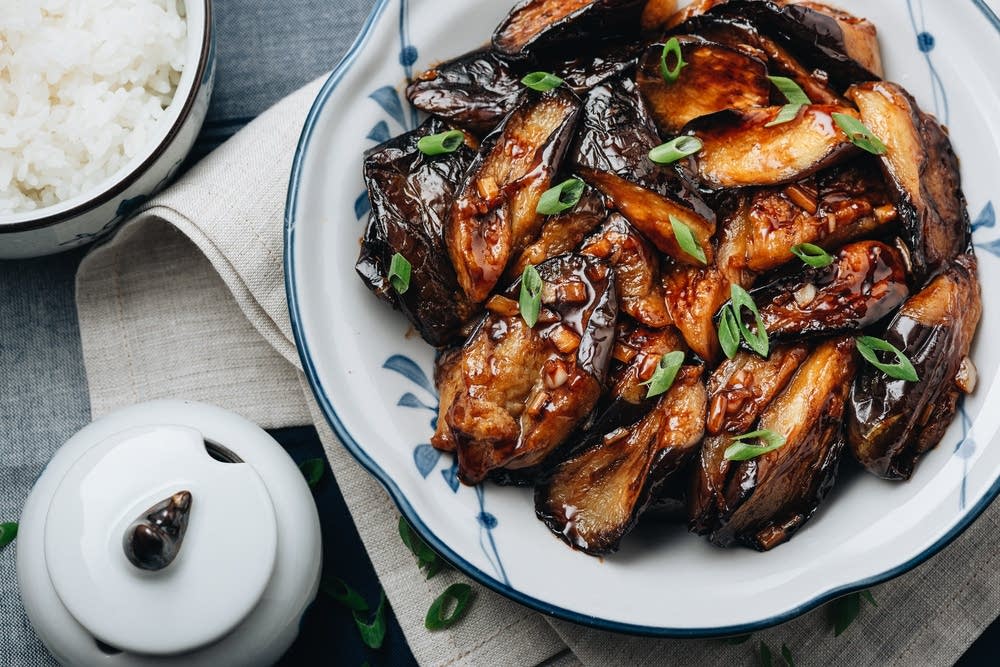
Chinese eggplant is the ingredient that makes you feel like you have restaurant powers at home. It cooks up silky, drinks up sauce like a sponge, and somehow stays light even when the flavors are loud.

This version is my favorite kind of weeknight chaos: quick sizzle, big garlic energy, a little heat, and a glossy sauce that begs for rice. You can keep it vegetarian, or add tofu or ground pork if you are feeling extra. Either way, you are about 20 minutes away from a bowl you will quietly guard from “just a bite” family members.
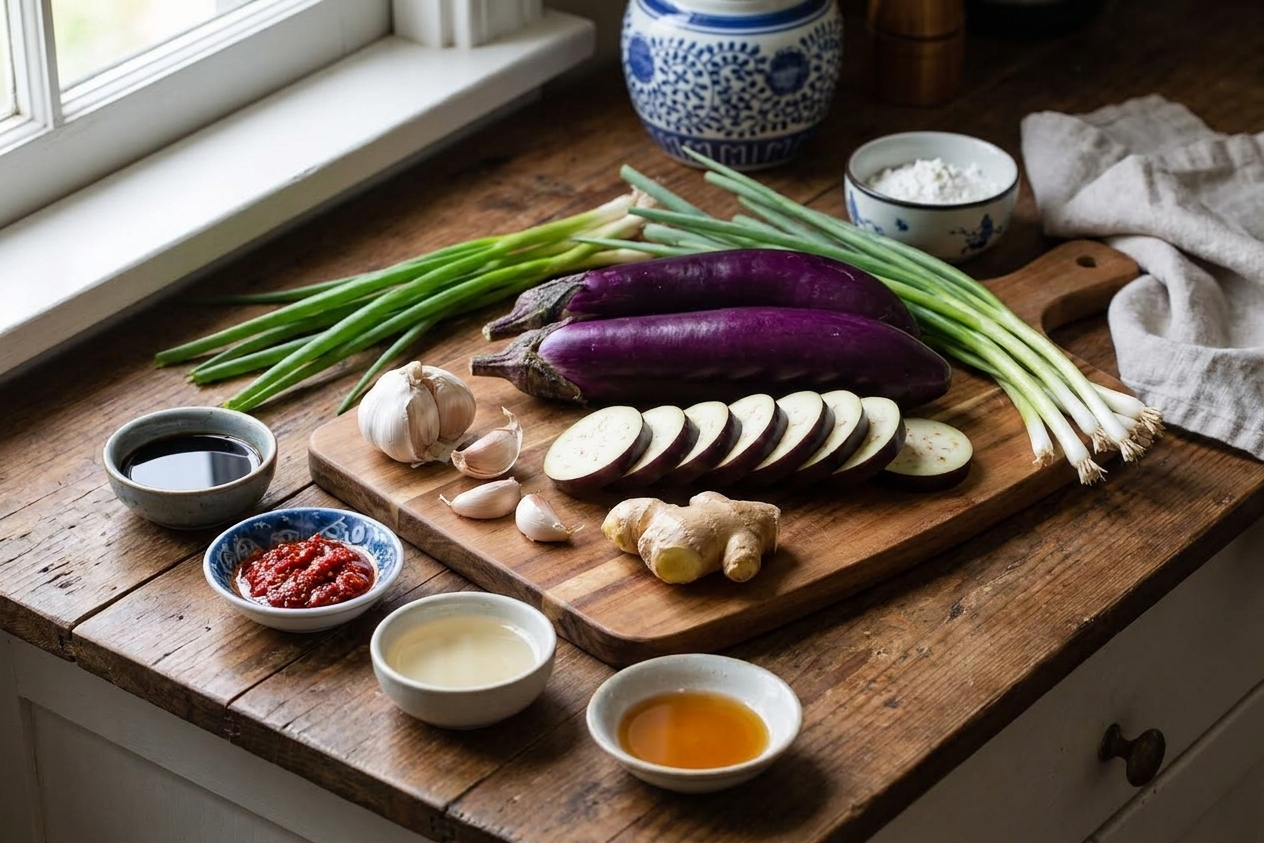
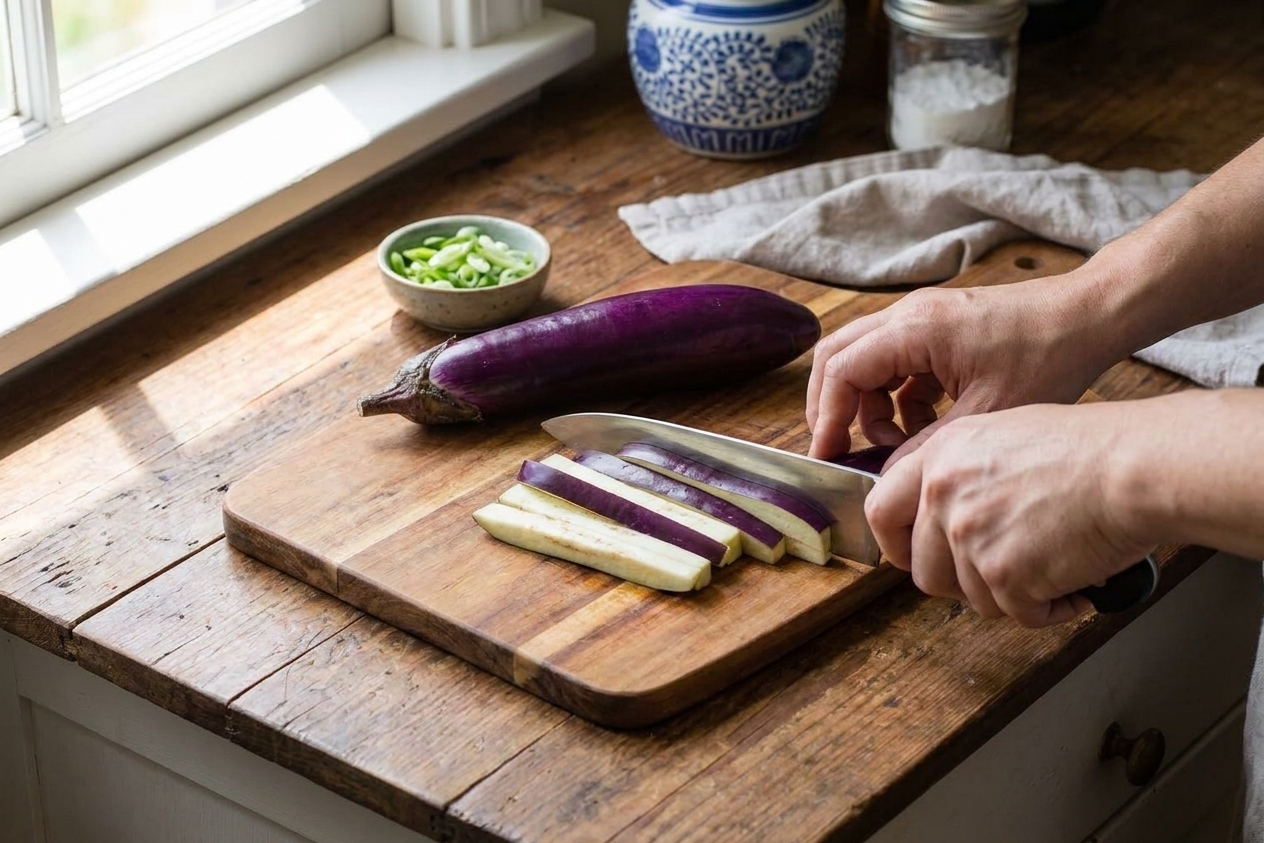
Chinese eggplant, garlic, ginger, scallions, soy sauce, chili paste, vinegar, cornstarch, and sesame oil arranged on a clean kitchen counter with a cutting board

Why It Works

  • Silky texture, not soggy. Chinese eggplant has thinner skin and a tender interior, so it turns custardy fast.
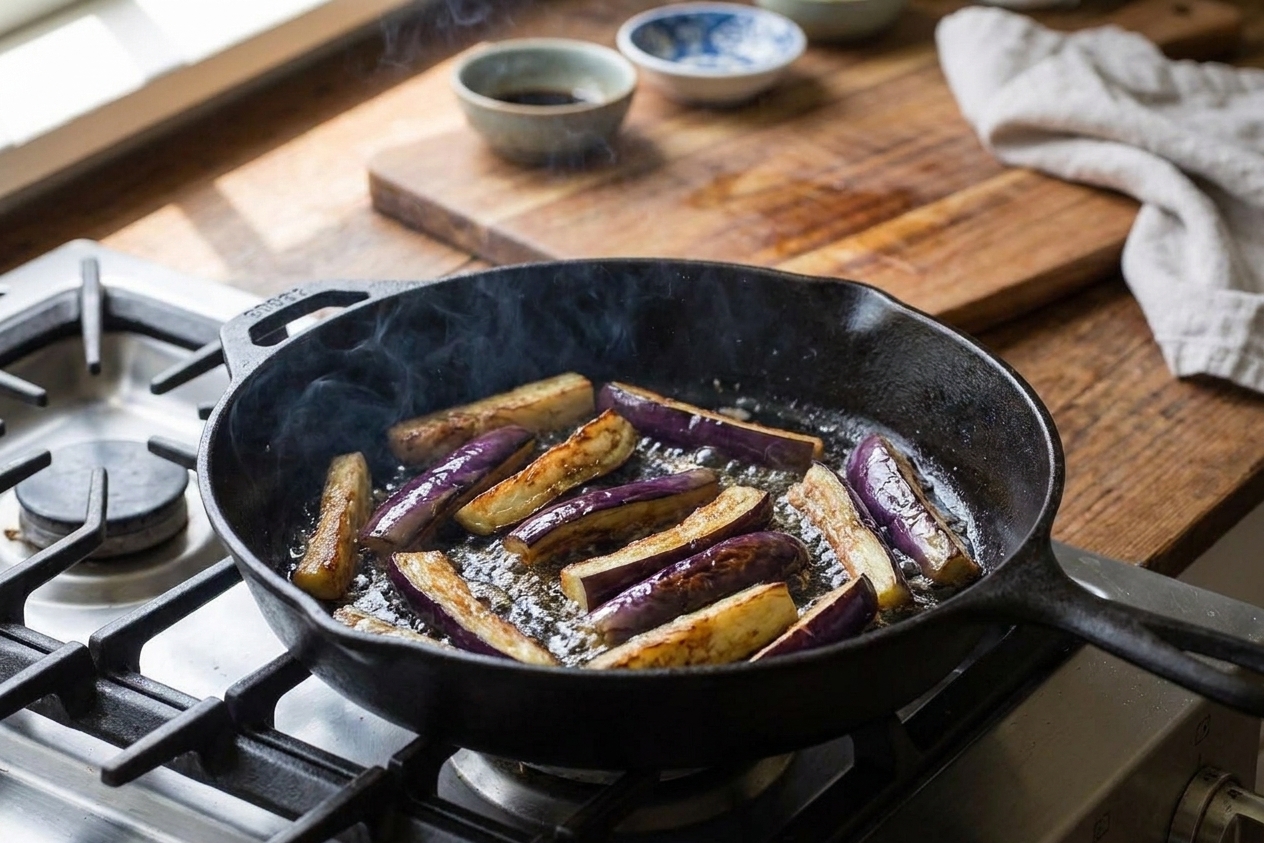
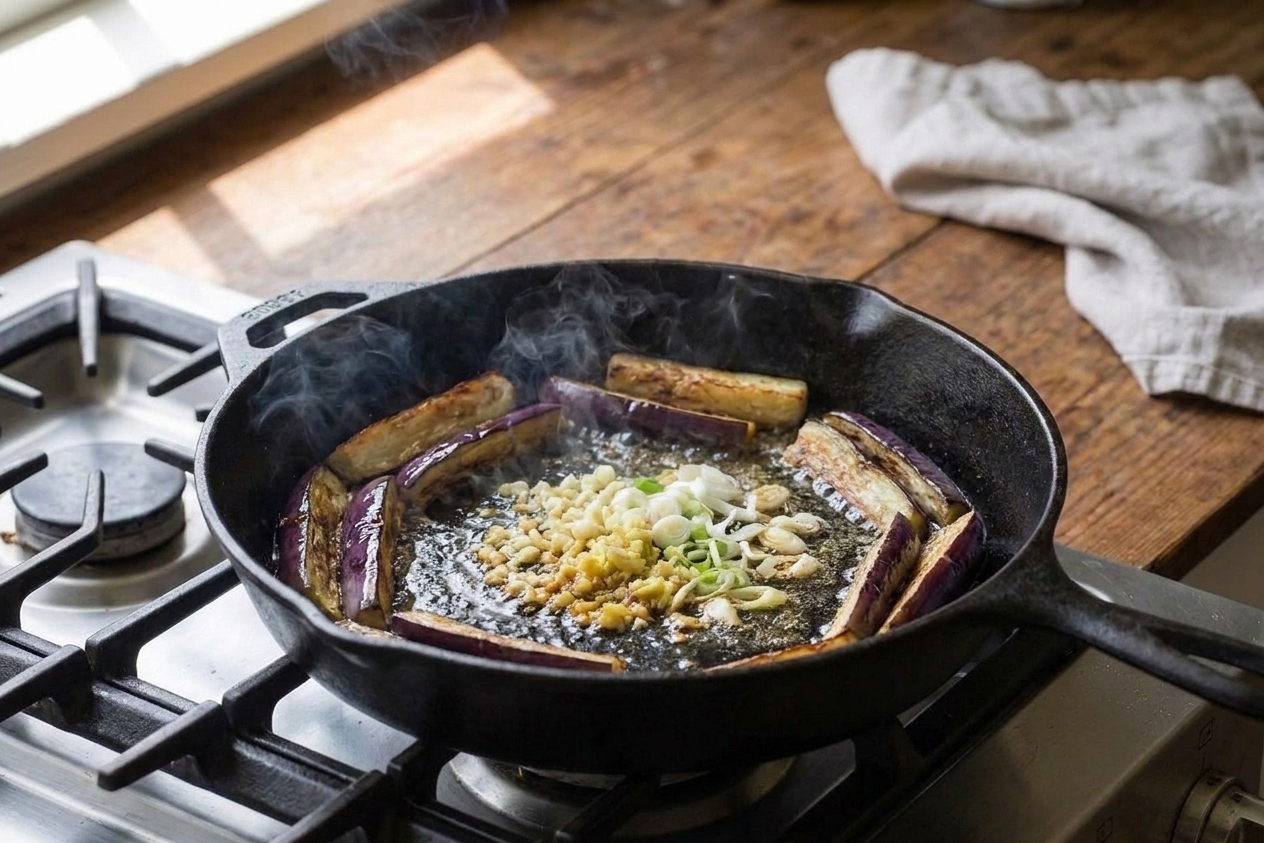
  • Crisp edges + glossy sauce. A hot skillet and a quick cornstarch slurry give you that takeout-style sheen. If your pan runs cool, just give it a minute longer and add a touch more oil as needed.
  • Big flavor with normal groceries. Soy sauce, garlic, ginger, and a punch of chili do the heavy lifting.
  • Flexible heat level. Make it mild for the kids or spicy enough to clear your sinuses in a good way.

Pairs Well With

Storage Tips

How to Store Leftovers

Fridge: Store in an airtight container for up to 3 days. The eggplant will soften more as it sits, but the flavor stays great.

Reheat: Warm in a skillet over medium heat with a splash of water to loosen the sauce, 3 to 5 minutes. Microwave works too, but the stovetop keeps the texture a little nicer.

Freezing: I do not love freezing this. Eggplant tends to go a bit watery and mushy after thawing.

Common Questions

Common Questions

What is Chinese eggplant, and how is it different?

Chinese eggplant is long and slender with thin skin and fewer seeds than globe eggplant. That means it cooks faster and turns silky without much bitterness.

Do I need to salt Chinese eggplant first?

Usually, no. Chinese eggplant is naturally less bitter. If yours tastes sharp or looks very seedy (it happens), you can salt the slices for 15 minutes, then pat dry before cooking.

Why is my eggplant oily?

Eggplant absorbs oil fast, especially if the pan is not hot enough. Keep the skillet hot, cook in a single layer when possible, and add oil in small amounts as needed.

Can I make this without chili paste?

Yes. Swap in sriracha, chili garlic sauce, gochujang (slightly sweeter), or even just crushed red pepper flakes. Start small, taste, then build.

Is this dish gluten-free?

It can be. Use certified gluten-free tamari or gluten-free soy sauce, and make sure your chili paste is labeled gluten-free. Shaoxing wine is often gluten-free, but labels vary, so check if you are cooking for someone with celiac.

The first time I cooked Chinese eggplant at home, I expected it to act like regular eggplant and fight me the whole way. Instead, it melted into the pan like it wanted to be there. That was the moment I became an eggplant believer. Now it is my go-to when I want something that feels like takeout, but I also want to eat in sweatpants and brag a little about how fast I made it.