What cut of steak is best for steak and eggs?
Go for quick-cooking cuts: ribeye, strip steak, sirloin, or flank. Ribeye is the most forgiving because the fat keeps it juicy. If you want budget-friendly, sirloin is a solid weeknight pick. For flank, keep it hot and fast, then slice very thin against the grain (and consider a quick marinade if you have time, since it is lean).
How do I keep the steak from getting tough?
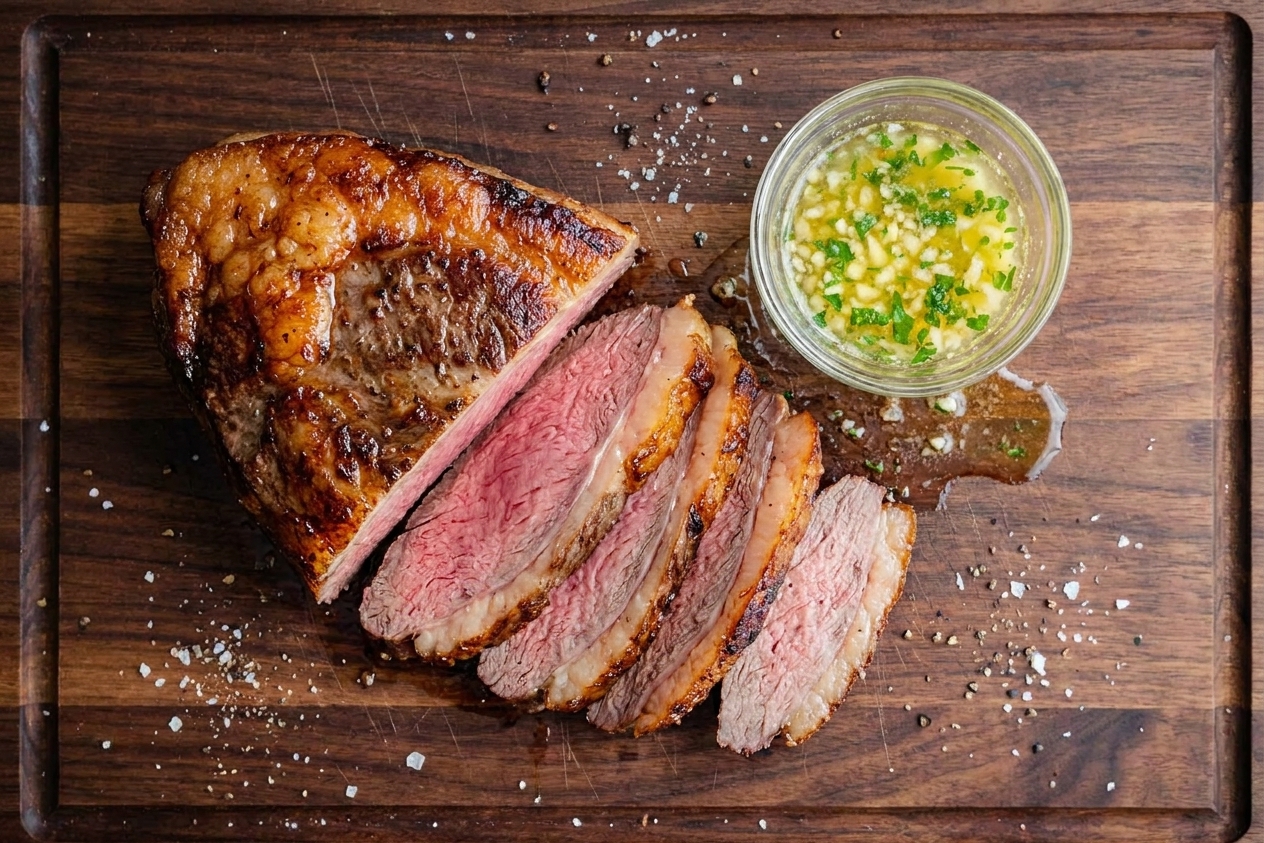
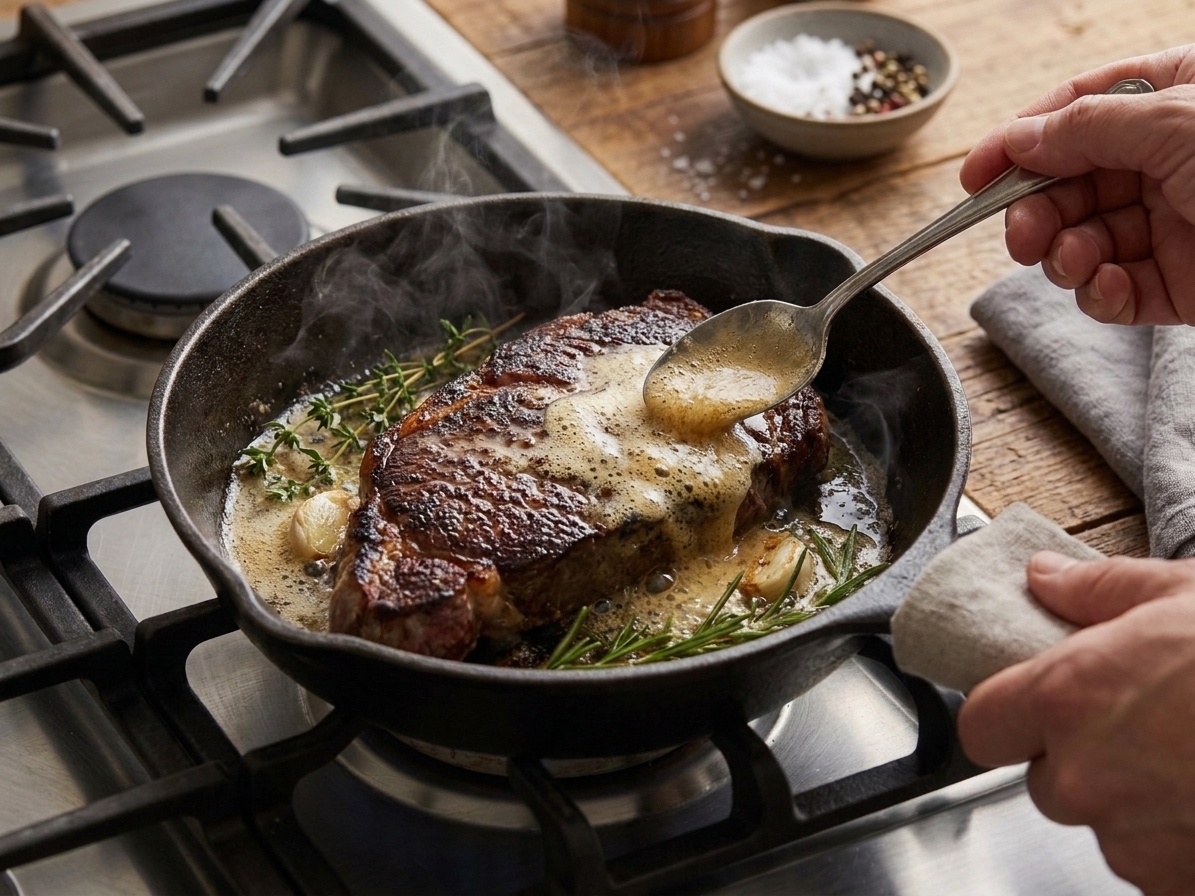
Three things: (1) do not overcook it, (2) let it rest 5 to 10 minutes, and (3) slice against the grain. Also, do not crank the heat for the entire cook. You want a hard sear, then you can lower heat to finish.
Can I cook the eggs in the same pan?
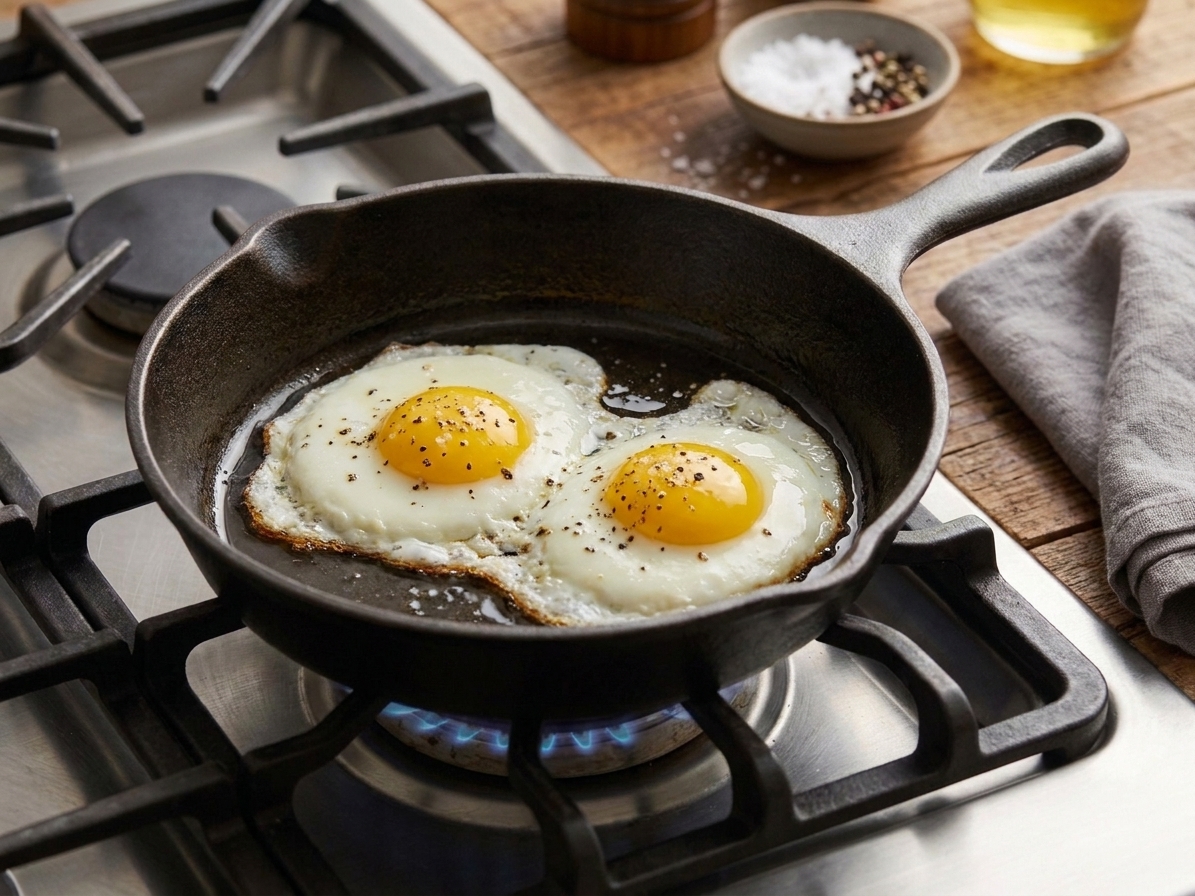
Yes, and you should. After the steak comes out, pour off excess fat if needed, then cook the eggs in the steak drippings and butter. If the pan is too smoky, lower the heat and add a small knob of butter.
What is the best egg style with steak?
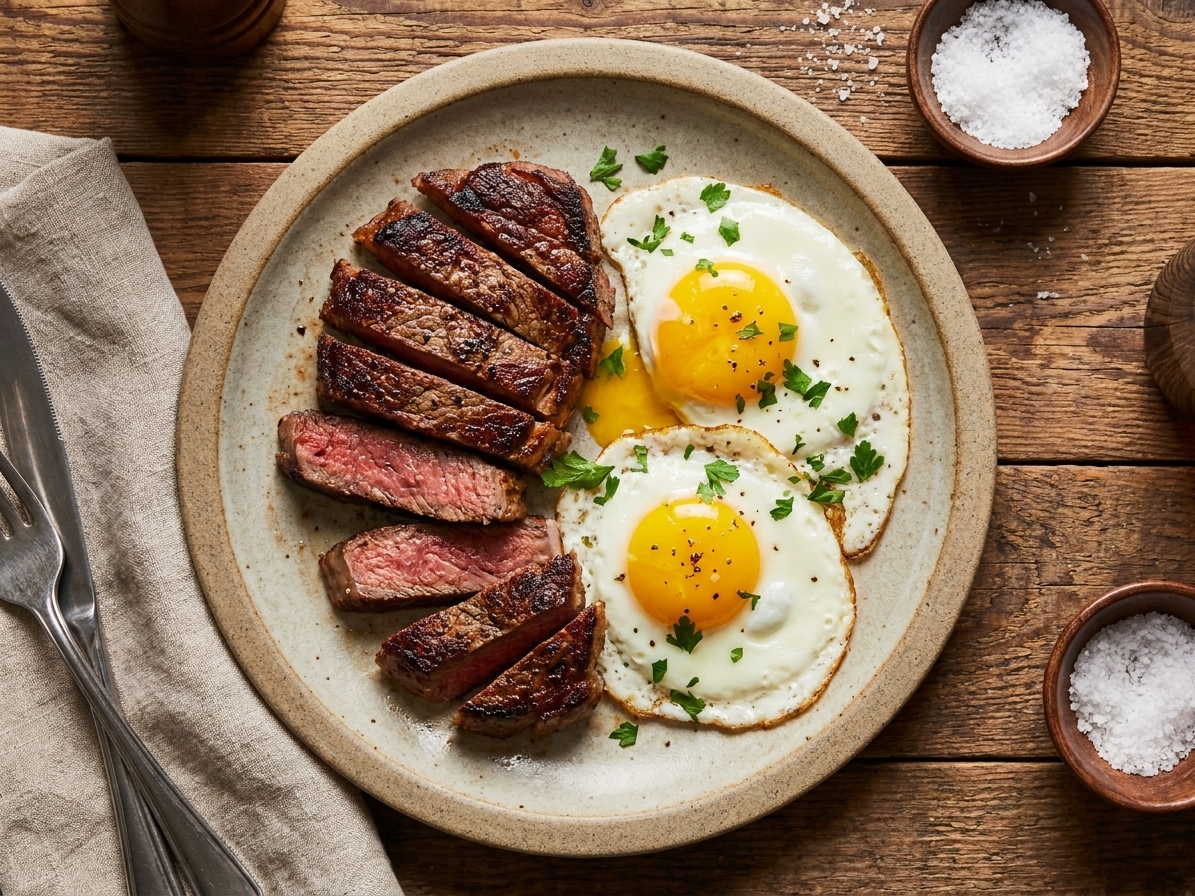
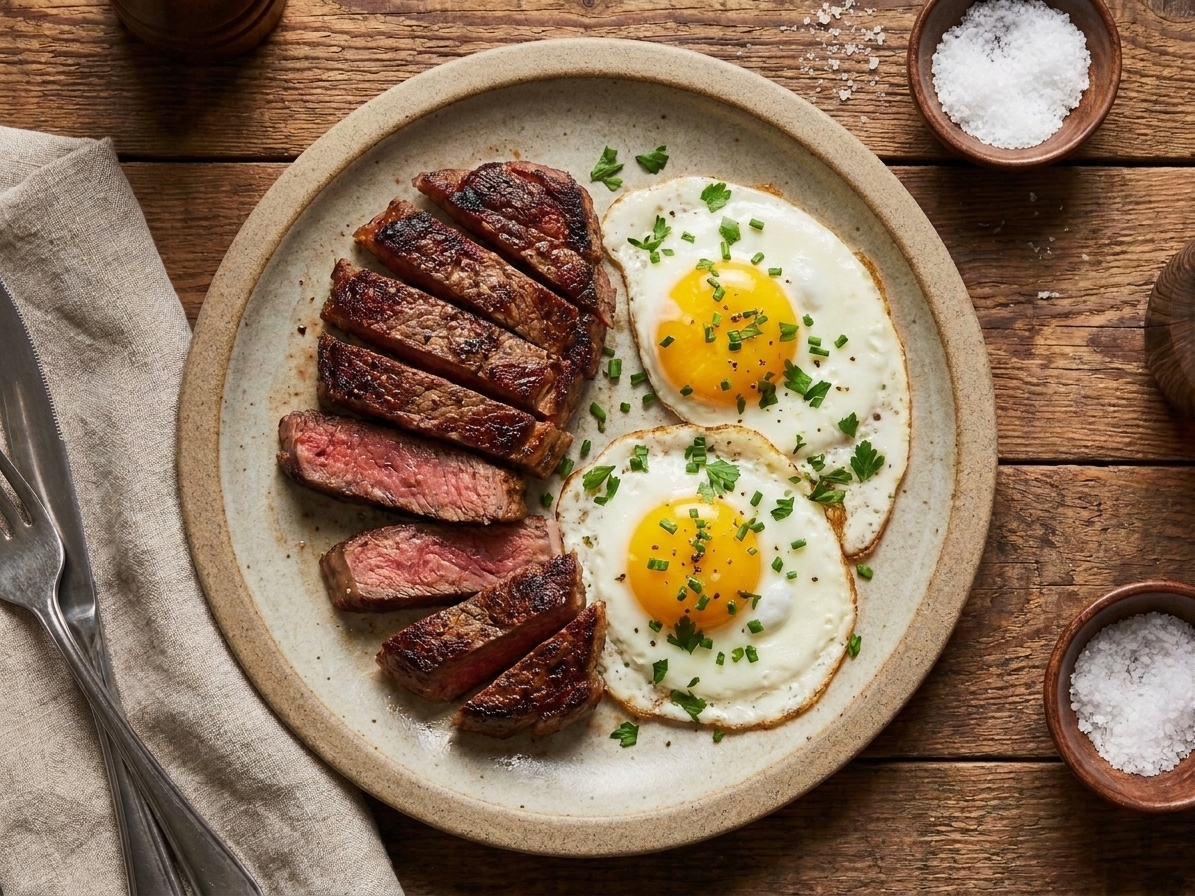
Sunny-side or over-easy if you want yolk-as-sauce. Scrambled if you want comfort and easy reheating. Over-hard if you are eating in the car or feeding toddlers who do not trust runny yolks.
What internal temperature should the steak be?
Think in pull temps (when you take it off the heat) because it keeps cooking while it rests. If you are aiming for a finished temp, add about 5°F.
- Rare: pull 120°F to 125°F (finish about 125°F to 130°F)
- Medium-rare: pull 130°F to 135°F (finish about 135°F to 140°F)
- Medium: pull 140°F to 145°F (finish about 145°F to 150°F)
- Medium-well: pull 150°F to 155°F (finish about 155°F to 160°F)
USDA guidance for whole cuts is 145°F with a 3-minute rest. Lots of people still prefer medium-rare for tenderness, but if you are cooking for higher-risk diners, stick with the USDA endpoint.