Mom's Best Recipes
Recipe

Sticky-Sweet Barbecue Chicken

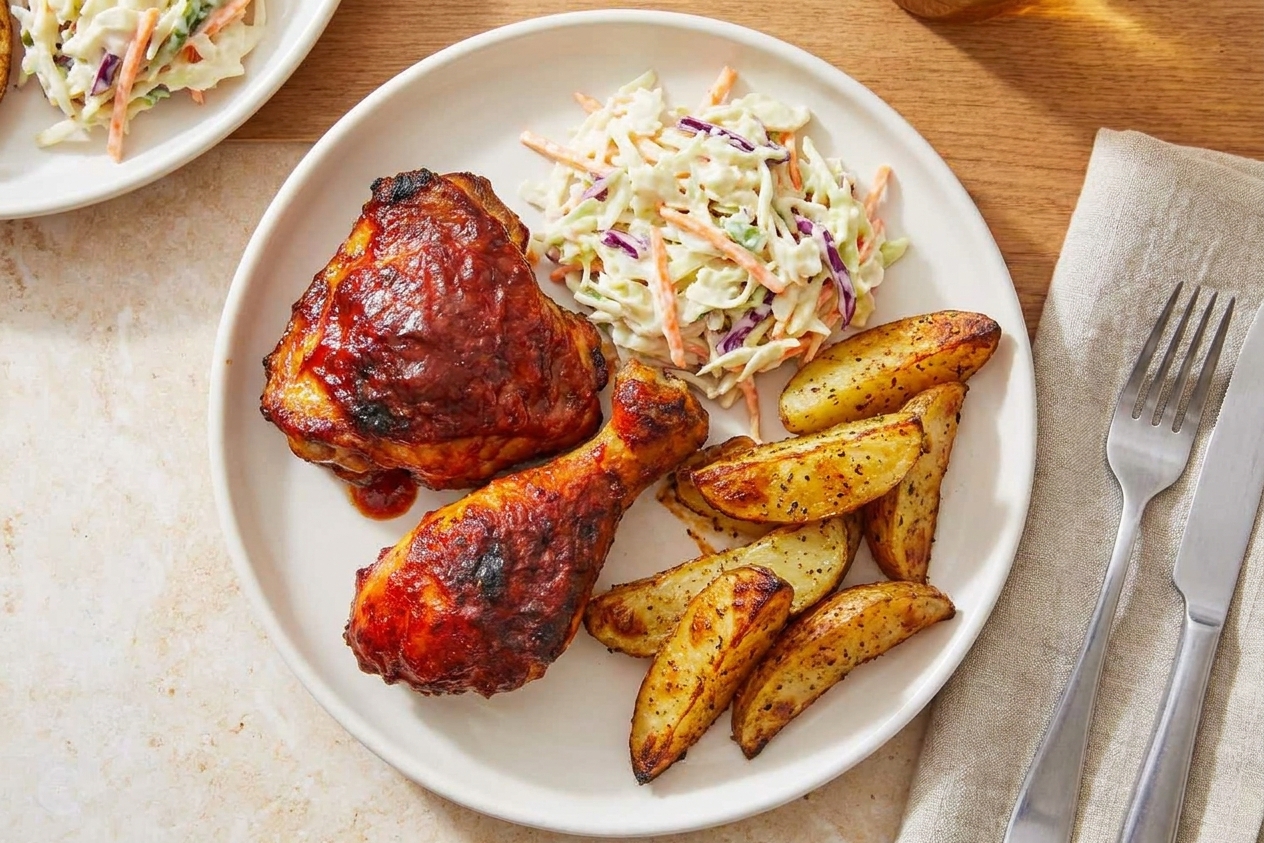
Juicy thighs or drumsticks with crisp edges and a glossy, tangy BBQ glaze that actually sticks (without burning).

Author By Matt Campbell
4.8
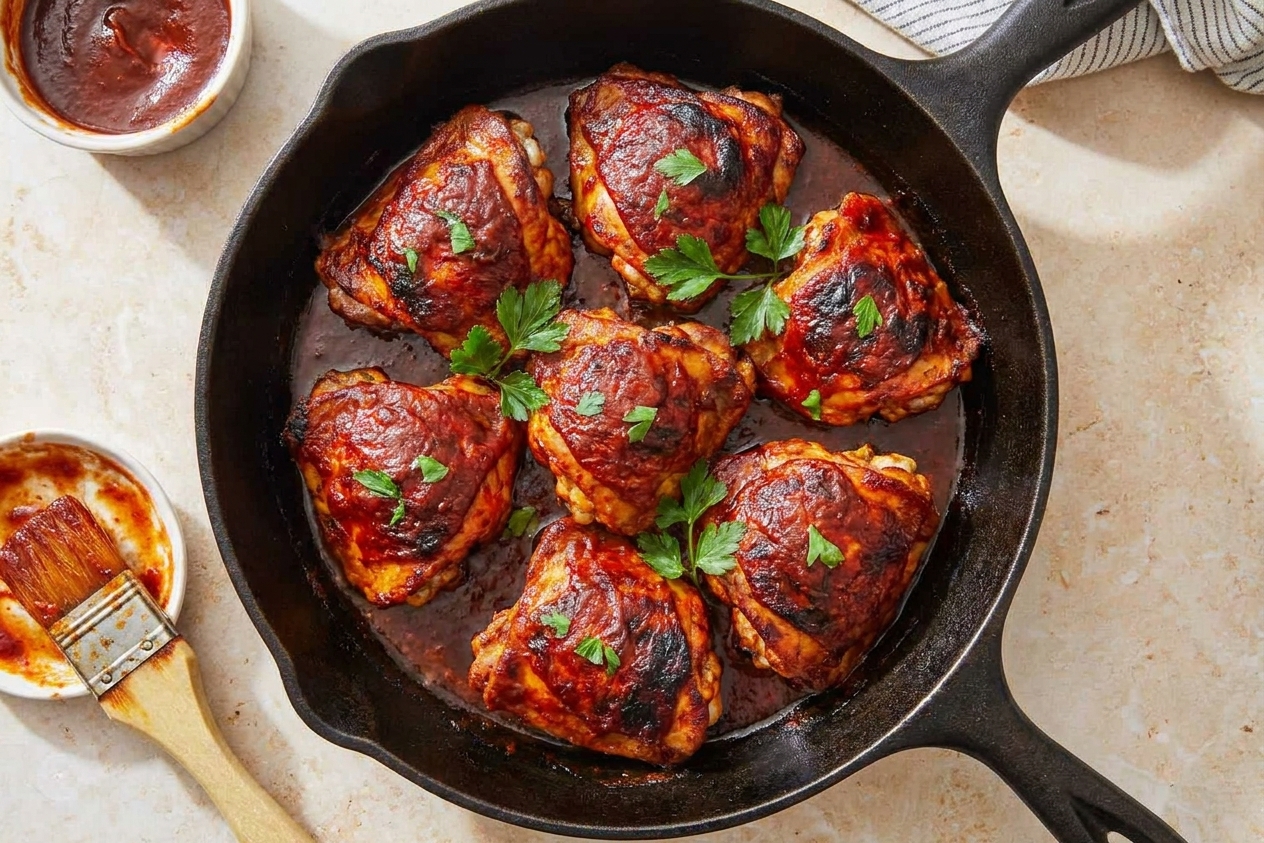
A cast iron skillet filled with glazed barbecue chicken thighs with caramelized edges, set on a warm kitchen counter with soft natural light

Barbecue chicken is one of those dishes that should be effortless, but somehow turns into a tiny stress test. The sauce wants to burn, the chicken wants to dry out, and everyone is hovering like, “Is it done yet?”

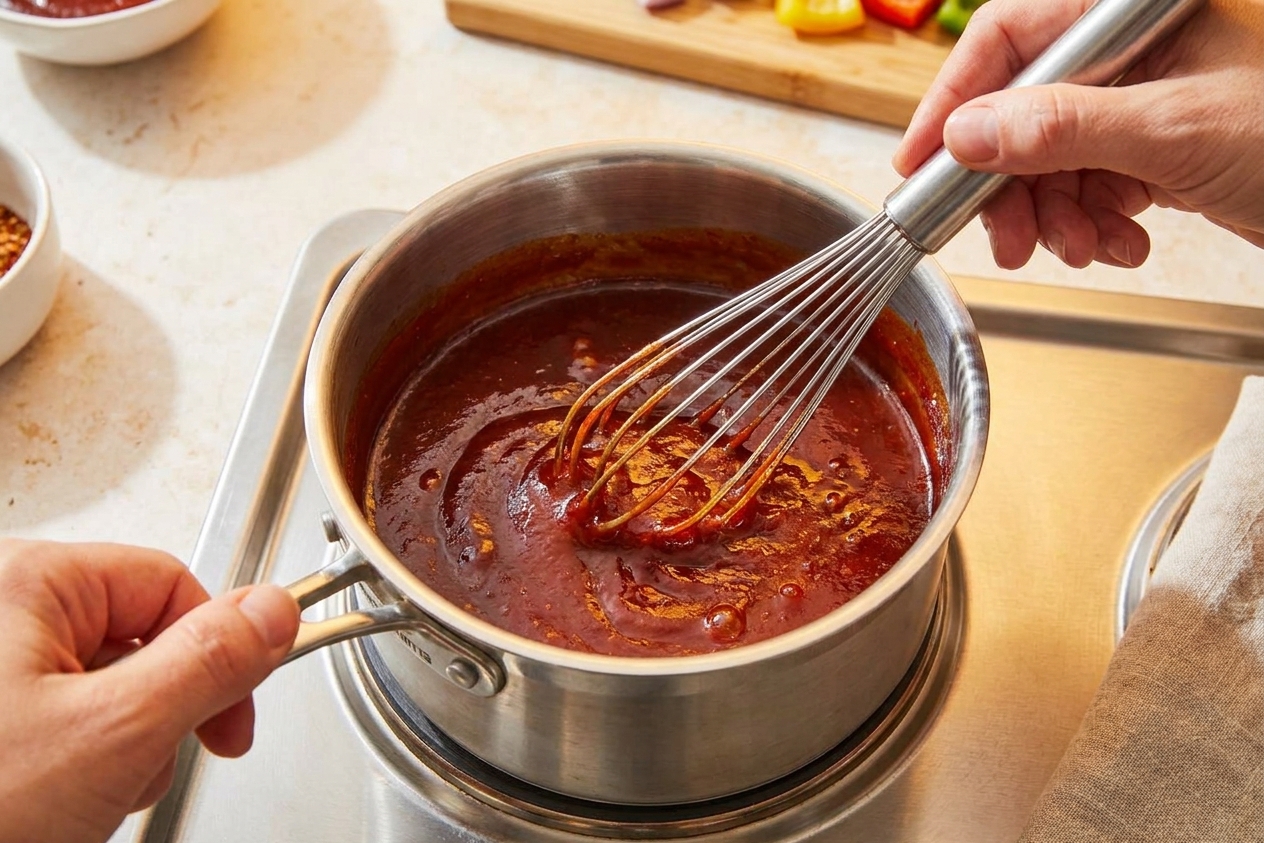
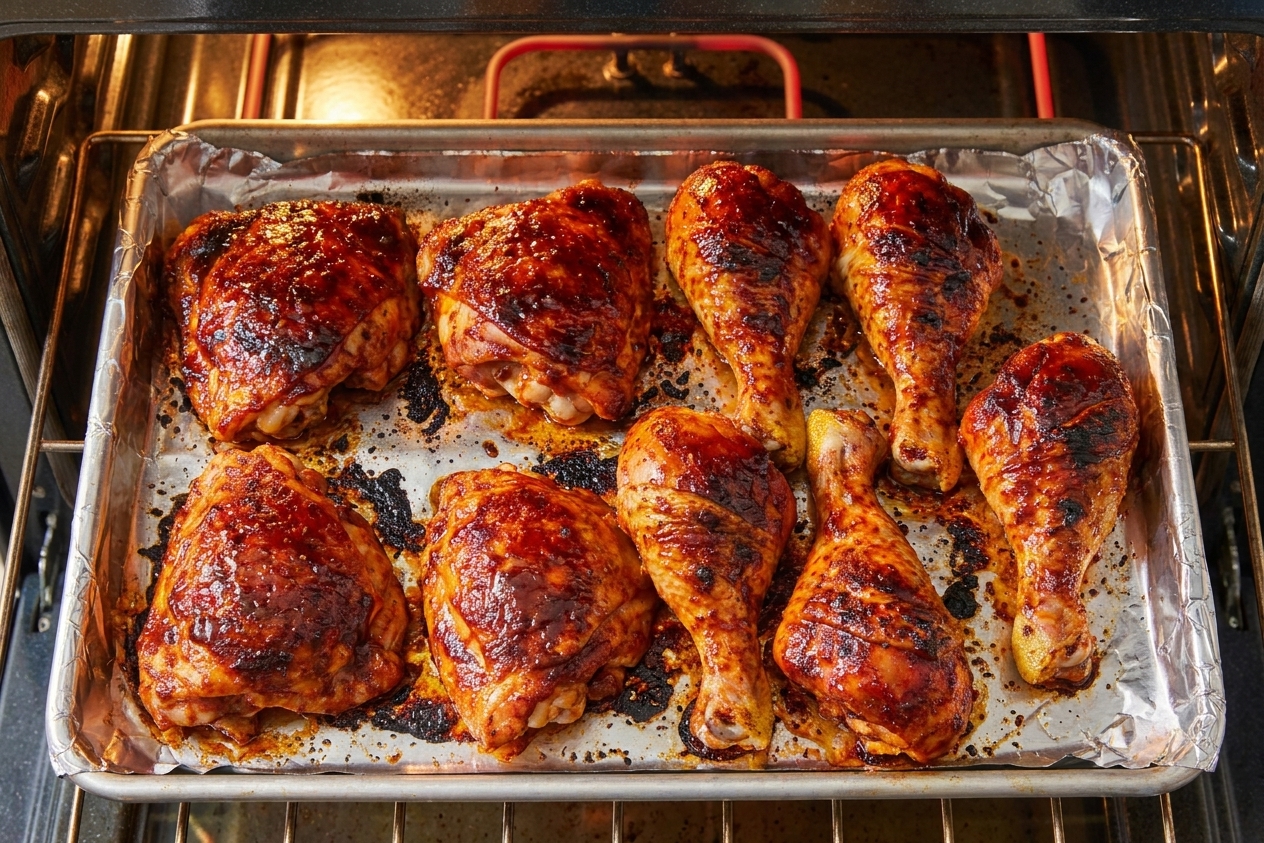
This is my low-drama, high-reward version: we cook the chicken most of the way first, then glaze it at the end so the sauce turns sticky and shiny instead of bitter and scorched. You get cozy, juicy meat plus those crisp, caramelized edges that make you go back for “just one more piece” and suddenly the platter is suspiciously empty.

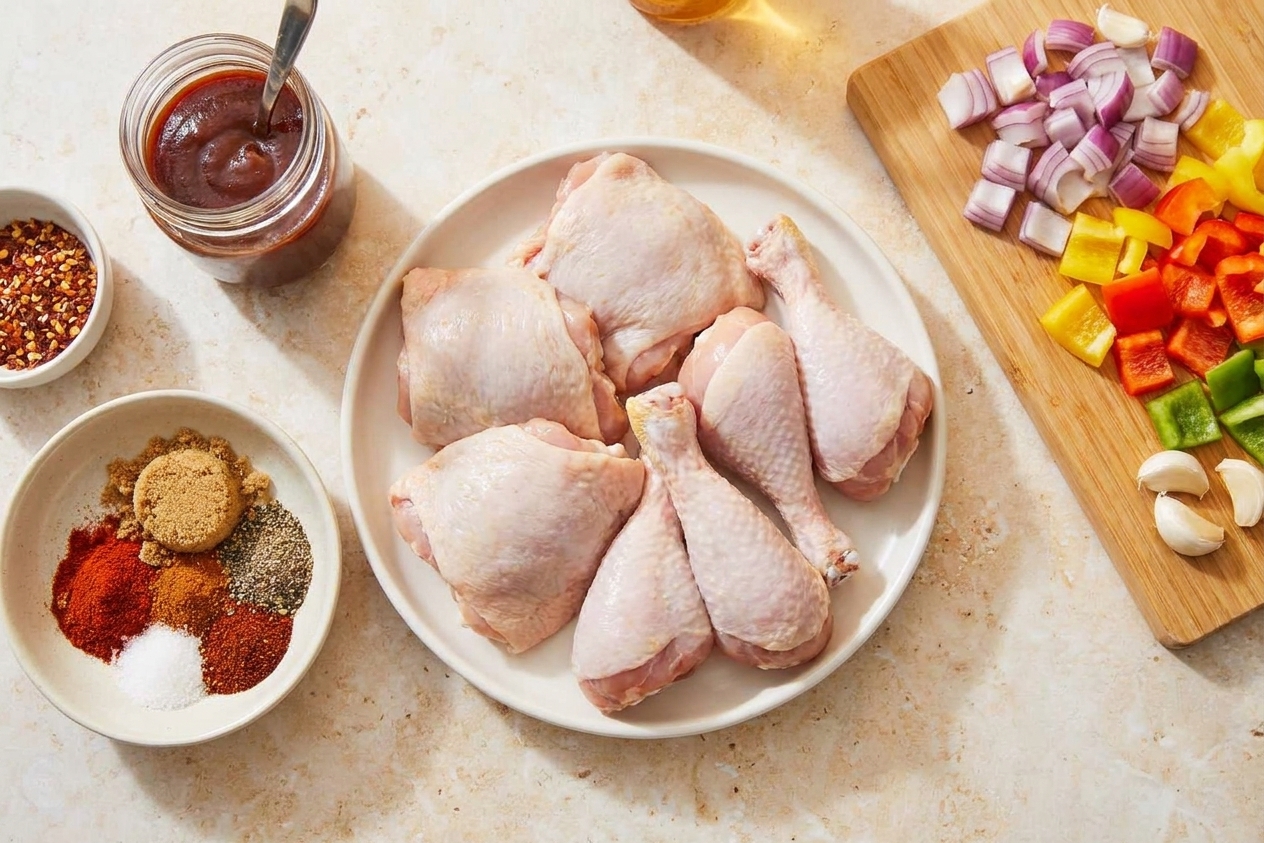
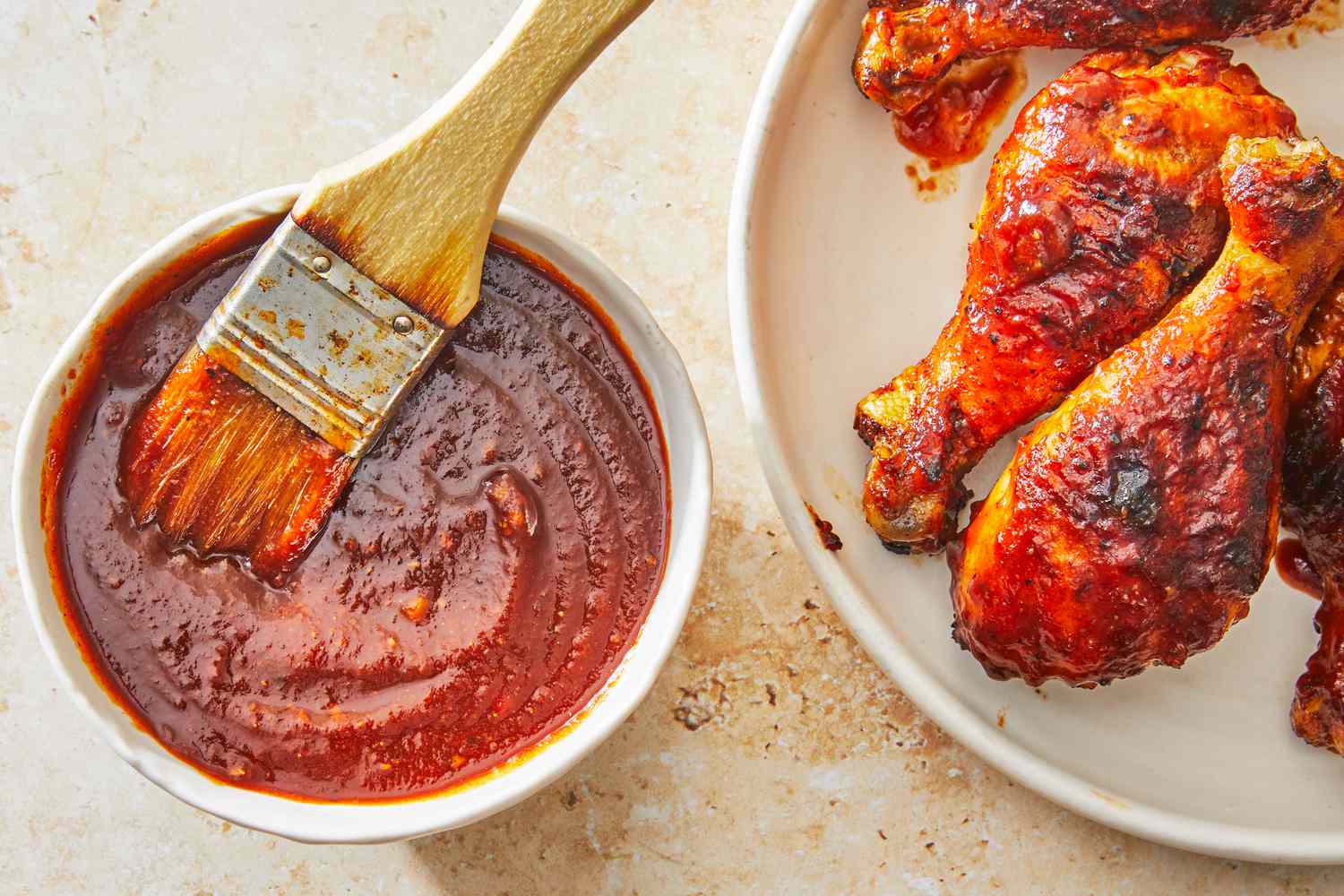
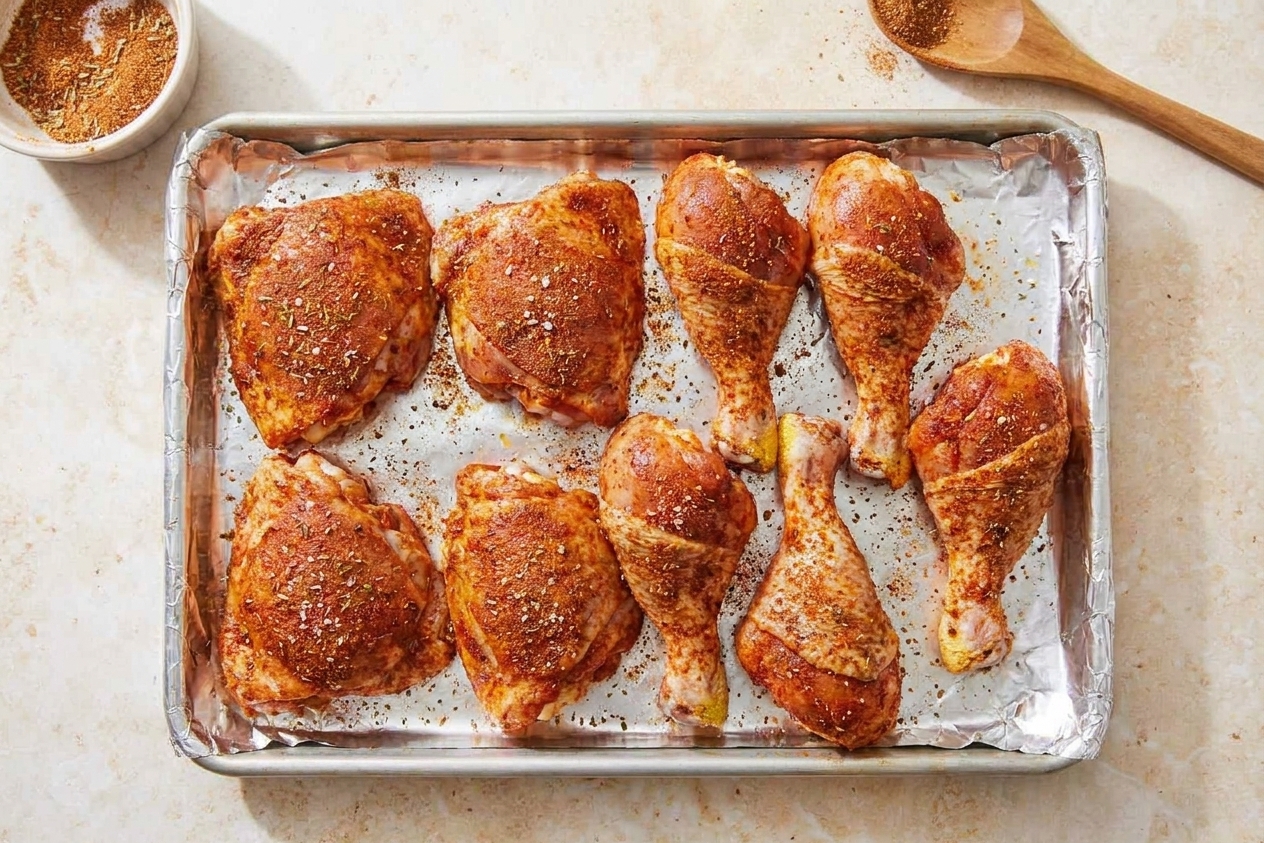
Measured ingredients for homemade barbecue sauce and raw chicken arranged on a clean kitchen counter with warm lighting

Why It Works

  • Juicy chicken first, sticky glaze second: cooking most of the way before saucing keeps the sugar from burning and the meat from drying out.
  • A fast homemade BBQ sauce: tangy, slightly smoky, and balanced. It is built from pantry staples and tastes way more intentional than it has any right to.
  • Crisp edges without deep frying: a hot finish (broiler or grill) tightens the skin and caramelizes the glaze.
  • Works with your life: oven method for weeknights, grill method for weekends, and leftovers that reheat like champs.

Pairs Well With

Storage Tips

Refrigerate: Cool chicken completely, then store in an airtight container for up to 4 days. Keep extra sauce separate if you have it.

Freeze: Freeze cooled chicken (preferably off the bone for easier future meals) in a freezer-safe bag or container for up to 3 months. Thaw overnight in the fridge.

Reheat without drying out:

  • Oven: Put chicken in a baking dish, add a splash of water or chicken broth, cover with foil, and warm at 325°F until hot (about 15 to 25 minutes). Uncover for the last few minutes and brush with a little sauce.
  • Air fryer: Great for crisping. Reheat at 350°F for 6 to 10 minutes, brushing with sauce at the end.
  • Microwave: Works in a pinch. Cover and heat in short bursts, then add fresh sauce to wake it back up.
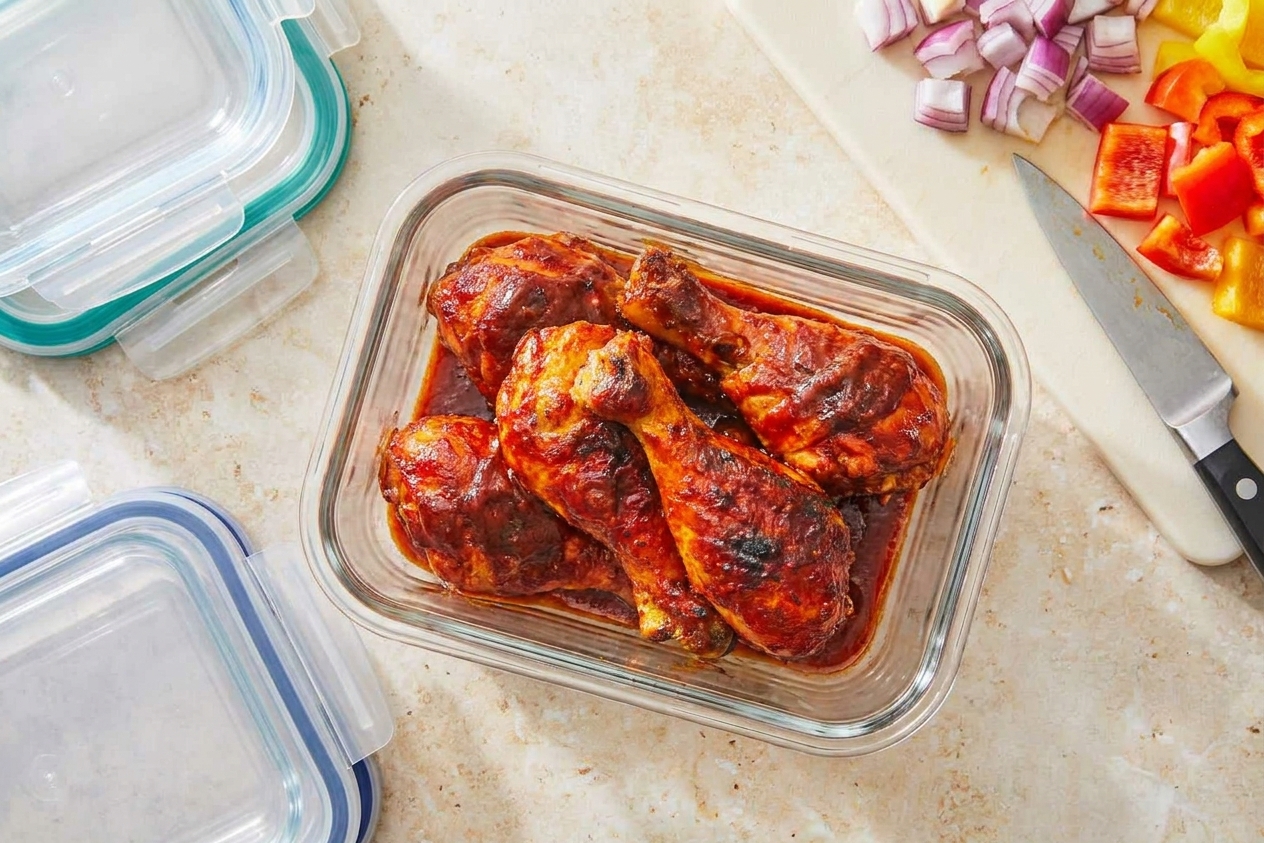
Leftover barbecue chicken pieces stored in a clear airtight container on a kitchen counter, ready for meal prep

Common Questions

Can I use chicken breasts?

Yes, but they are less forgiving. Use boneless skinless breasts and bake at 400°F until they reach 160°F, then rest 5 minutes so carryover heat brings them to a safe 165°F final temperature. Brush with sauce and broil 1 to 2 minutes to set the glaze.

Why do you add BBQ sauce at the end?

Most BBQ sauce has sugar. Sugar plus long cook times equals burnt, bitter glaze. Cooking the chicken first, then glazing near the end gives you sticky shine, not scorched sadness.

What internal temperature should barbecue chicken be?

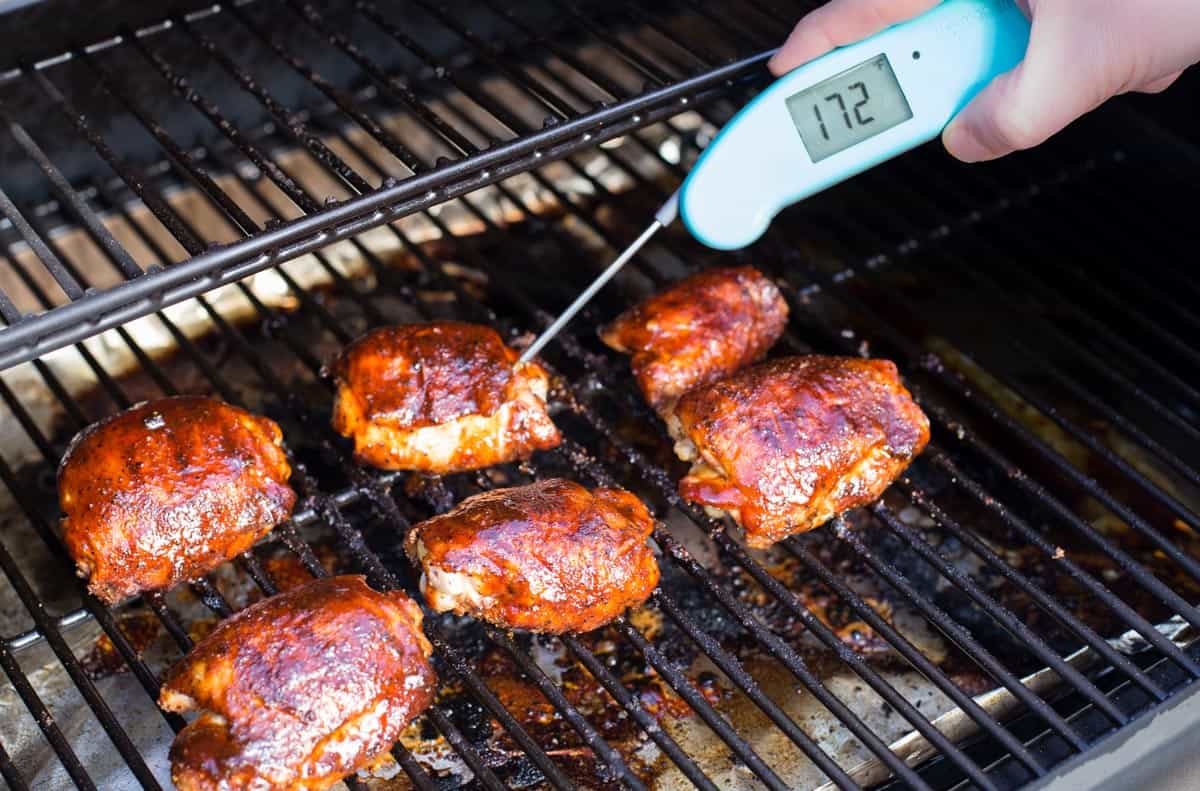
165°F in the thickest part, avoiding bone. Dark meat (thighs, drumsticks) is even better around 175°F to 185°F for that pull-apart texture.

How do I keep the sauce from sliding off?

Pat the chicken dry, season it well, and let the skin render. Then brush on thin layers of sauce and let each layer set under high heat (broiler or grill). Thick sauce all at once tends to drip.

Will the skin stay crisp after saucing?

Sauce softens skin. That is just physics doing its thing. If you want crisp edges, use the rack, keep the glaze in thin layers, and finish with a short broil or a quick pass over high grill heat.

Can I make it less sweet?

Absolutely. Reduce the brown sugar to 1 tablespoon and add 1 to 2 extra teaspoons apple cider vinegar or a squeeze of lemon at the end of the sauce.

Is this spicy?

Not unless you want it to be. Add cayenne, hot sauce, or chipotle powder to taste.

Any allergy notes?

Worcestershire sauce often contains anchovy (fish). If that is an issue, use an anchovy-free Worcestershire, or swap in 1 tablespoon soy sauce plus an extra teaspoon of vinegar.

I used to sauce barbecue chicken like I was painting a fence: early, often, and with absolutely no regard for consequences. The consequence, for the record, is burnt sugar on your pan and chicken that tastes like a bad idea.

Once I started treating BBQ sauce like a finishing move instead of a marinade, everything clicked. Cook the chicken until it is actually juicy, then glaze it when the heat is high and the timing is short. It is calmer. It is stickier. It is the kind of dinner that makes the kitchen smell like you knew what you were doing the whole time.