Mom's Best Recipes
Recipe

Sweet Potato Biscuits

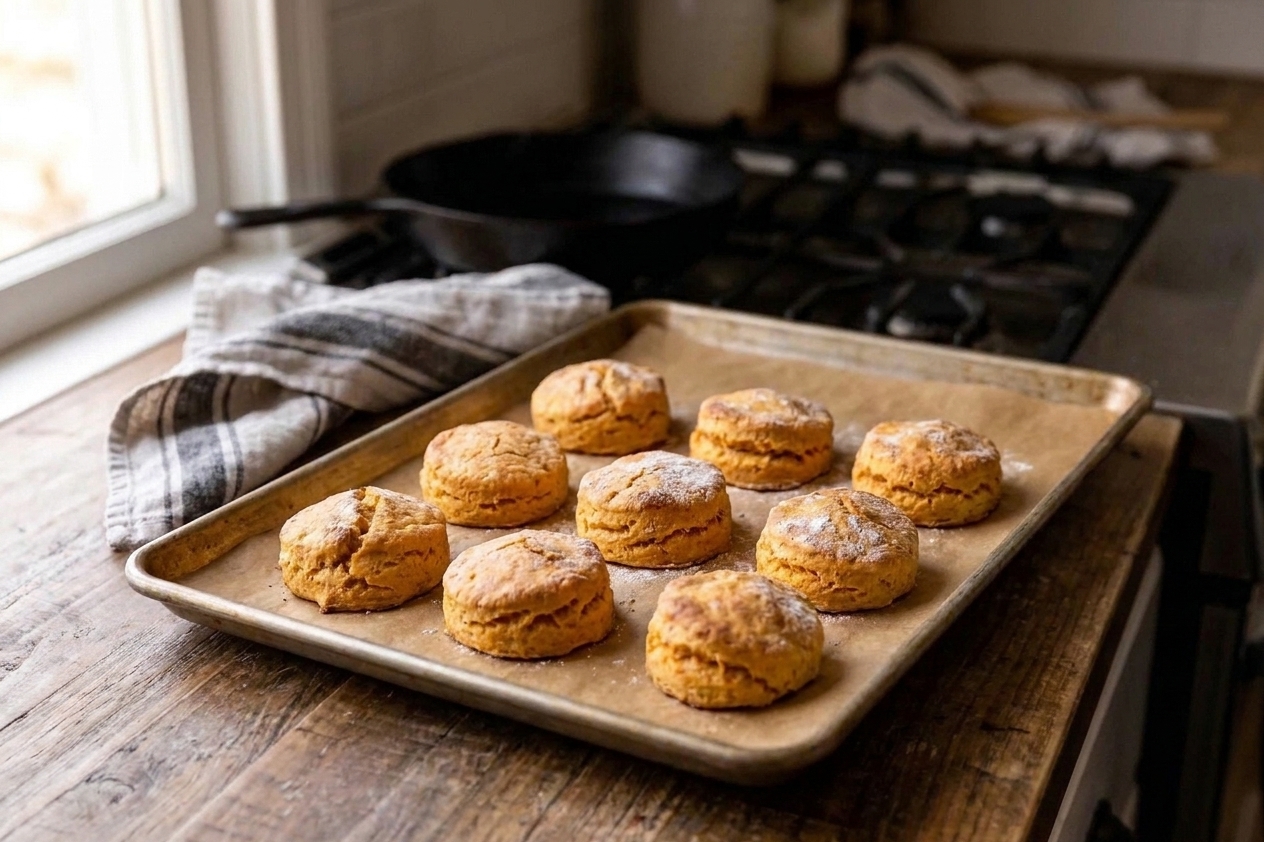
Flaky, tall biscuits made with mashed sweet potato and simple moisture tweaks so they rise instead of spreading.

Author By Pip
4.7
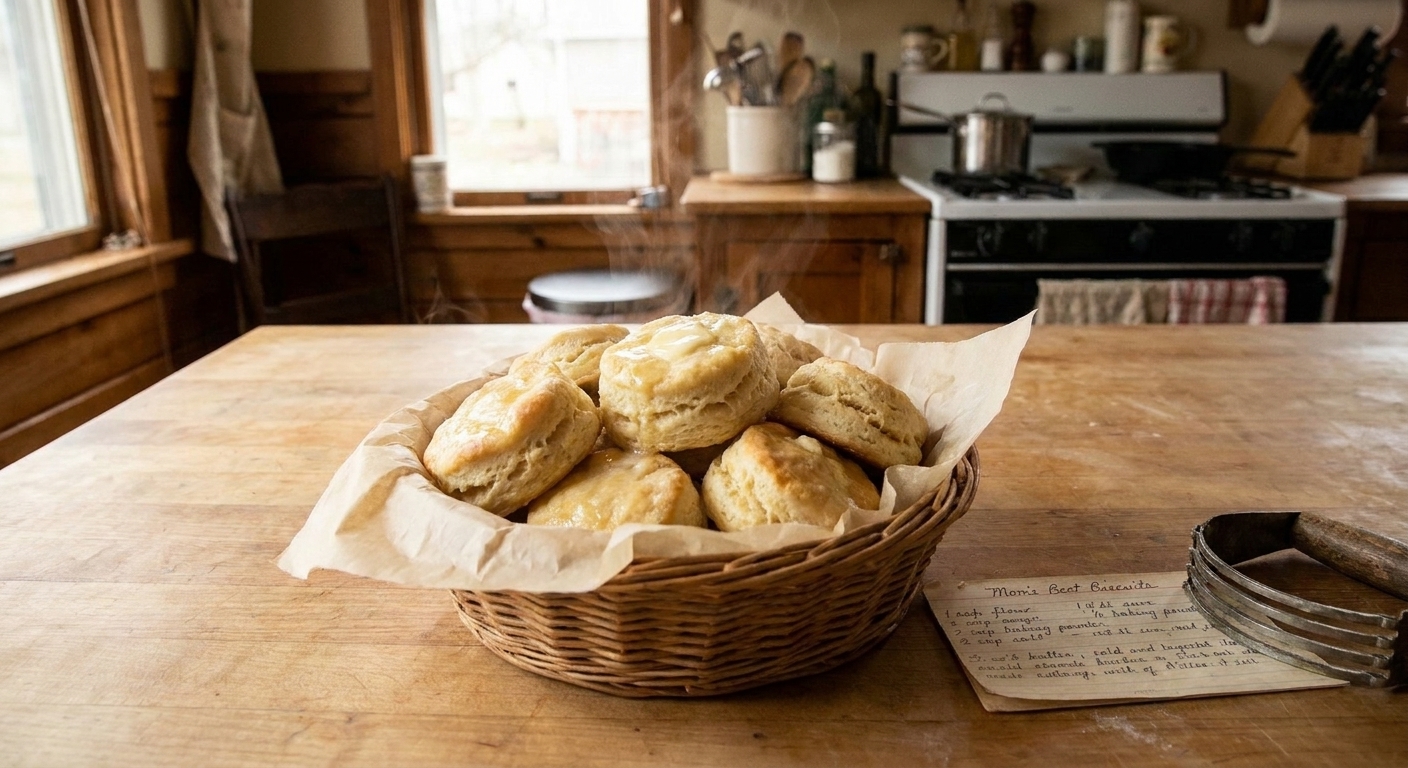
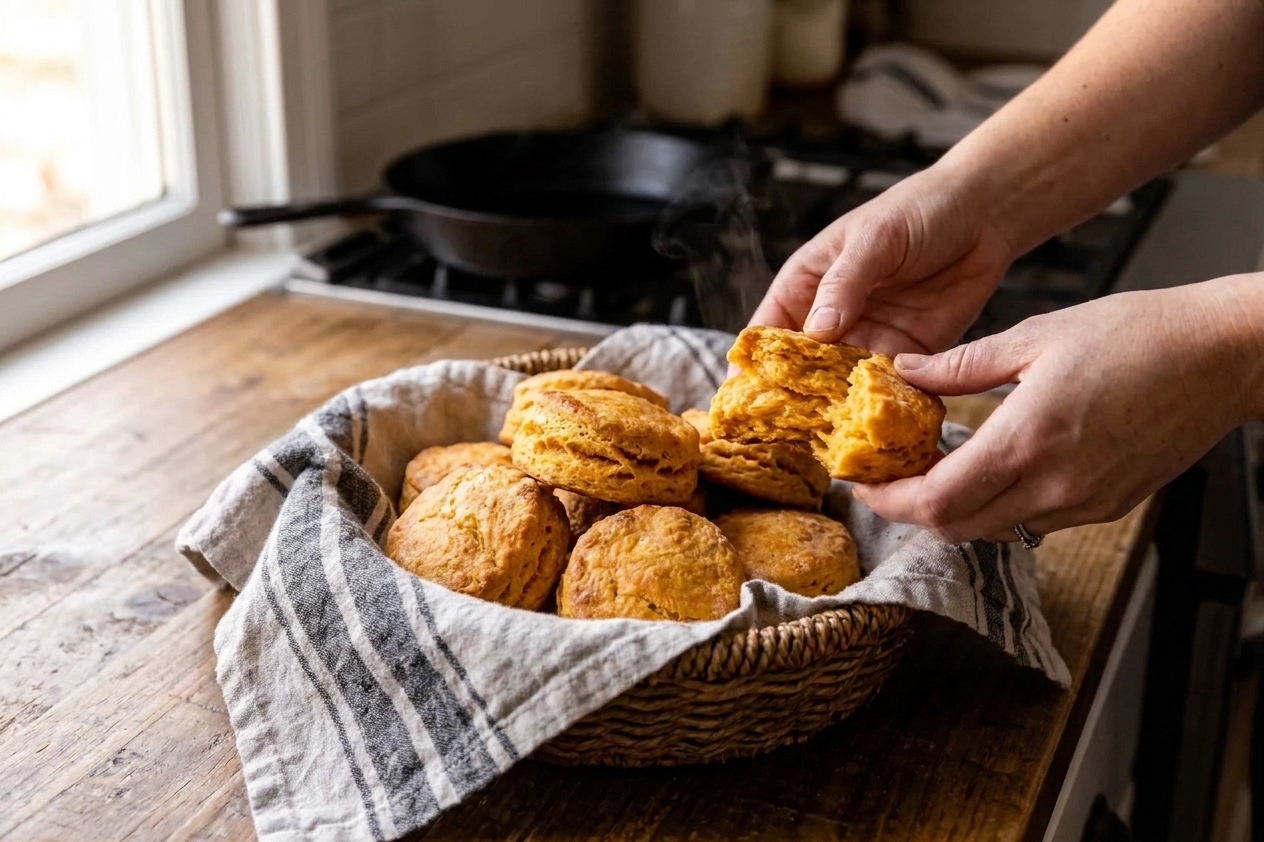
A basket lined with a cozy kitchen towel holding golden sweet potato biscuits, split open to show flaky layers, on a wooden table in warm morning light

Small paws, big appetite, and a soft spot for comfort food.

Sweet potato biscuits are what happen when a classic, flaky biscuit meets a spoonful of cozy. They bake up tender and lightly sweet, with a beautiful warm color and just enough richness to beg for butter, honey, or a swipe of jam.

The only tricky bit is that sweet potato mash can be wildly different from one kitchen to the next. Sometimes it is dry and fluffy, sometimes it is soft and watery. That moisture decides whether your biscuits rise proud and tall or slump and spread like they got sleepy on the baking sheet. So I am going to show you exactly how to adjust the dough as you go, keep the butter the right temperature, and fold just enough to build layers without turning your biscuits tough.

Why It Works

  • Flaky layers with a tall rise: Cold butter plus a short, structured fold creates lift without overworking the dough.
  • Moisture-balanced dough: You will adjust the buttermilk (or flour) based on how wet or dry your sweet potato mash is, so biscuits bake up fluffy instead of spreading.
  • Reliable doneness cues: You will know exactly what to look for so the centers bake through, not gummy.
  • Breakfast-friendly make-ahead: Freeze unbaked biscuits and bake straight from the freezer on busy mornings.

Pairs Well With

Storage Tips

How to Store Sweet Potato Biscuits

Room temperature

Cool completely, then store in an airtight container for up to 2 days. If your kitchen is humid, tuck in a paper towel to absorb extra moisture.

Refrigerator

Refrigerate in an airtight container for up to 5 days. Rewarm to bring back the tenderness.

Freezer (baked biscuits)

Freeze baked, cooled biscuits in a freezer bag for up to 2 months. Reheat from frozen at 325°F until warmed through, about 10 to 15 minutes.

Make-ahead freezer tip (best for breakfast)

Freeze the cut, unbaked biscuits on a parchment-lined sheet until solid, then transfer to a freezer bag. Bake from frozen at 425°F, adding 3 to 6 minutes to the bake time. This is the easiest way to get fresh biscuits on a weekday morning with minimal kitchen chaos.

Common Questions

Common Questions

Why did my sweet potato biscuits spread instead of rising?

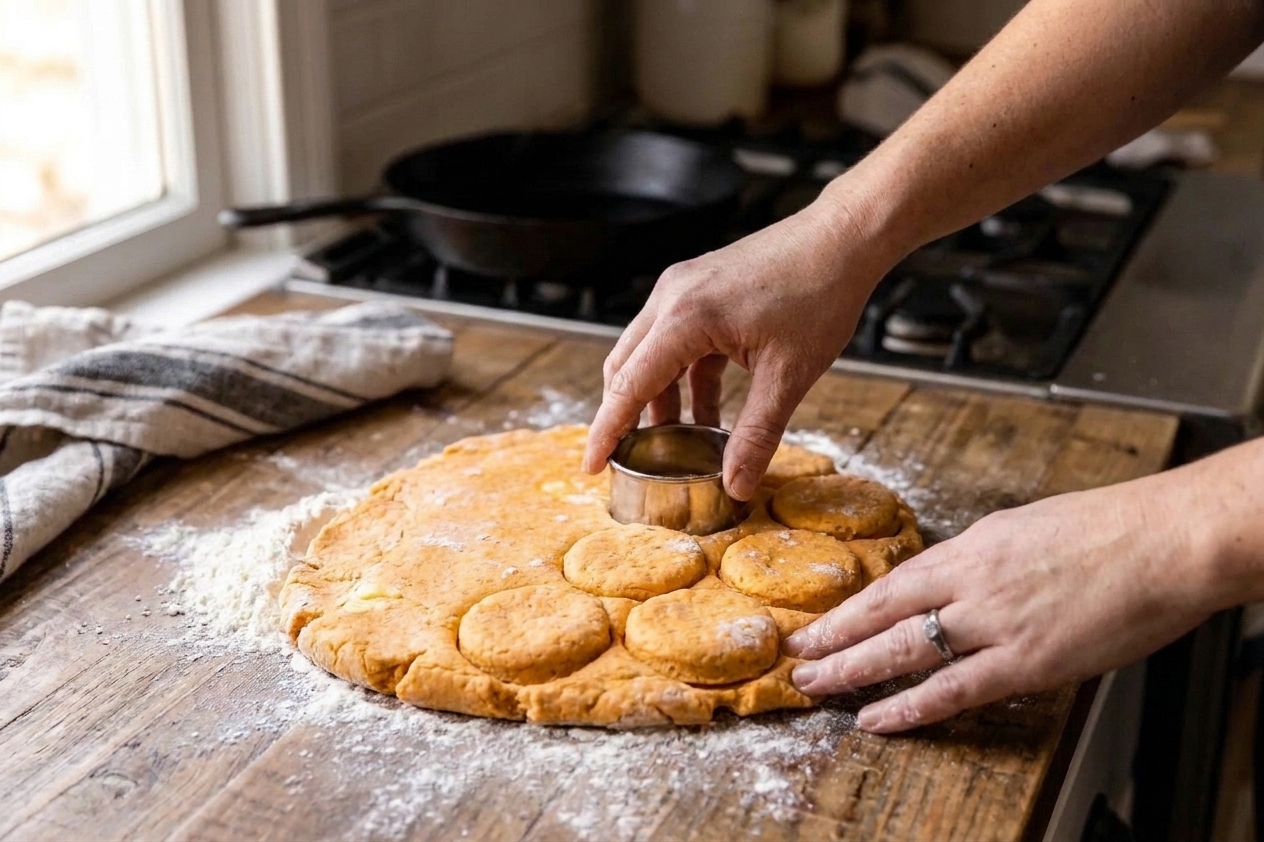
The usual culprits are too-wet mash, warm butter, or dough that was pressed too thin. Sweet potato mash varies a lot. If your mash is soft and glossy or leaves moisture on the plate, reduce the buttermilk by a few tablespoons at first, and only add more if the dough looks dry and crumbly. Also keep the butter cold and chill the cut biscuits for 10 minutes before baking if your kitchen is warm.

How dry should the sweet potato mash be?

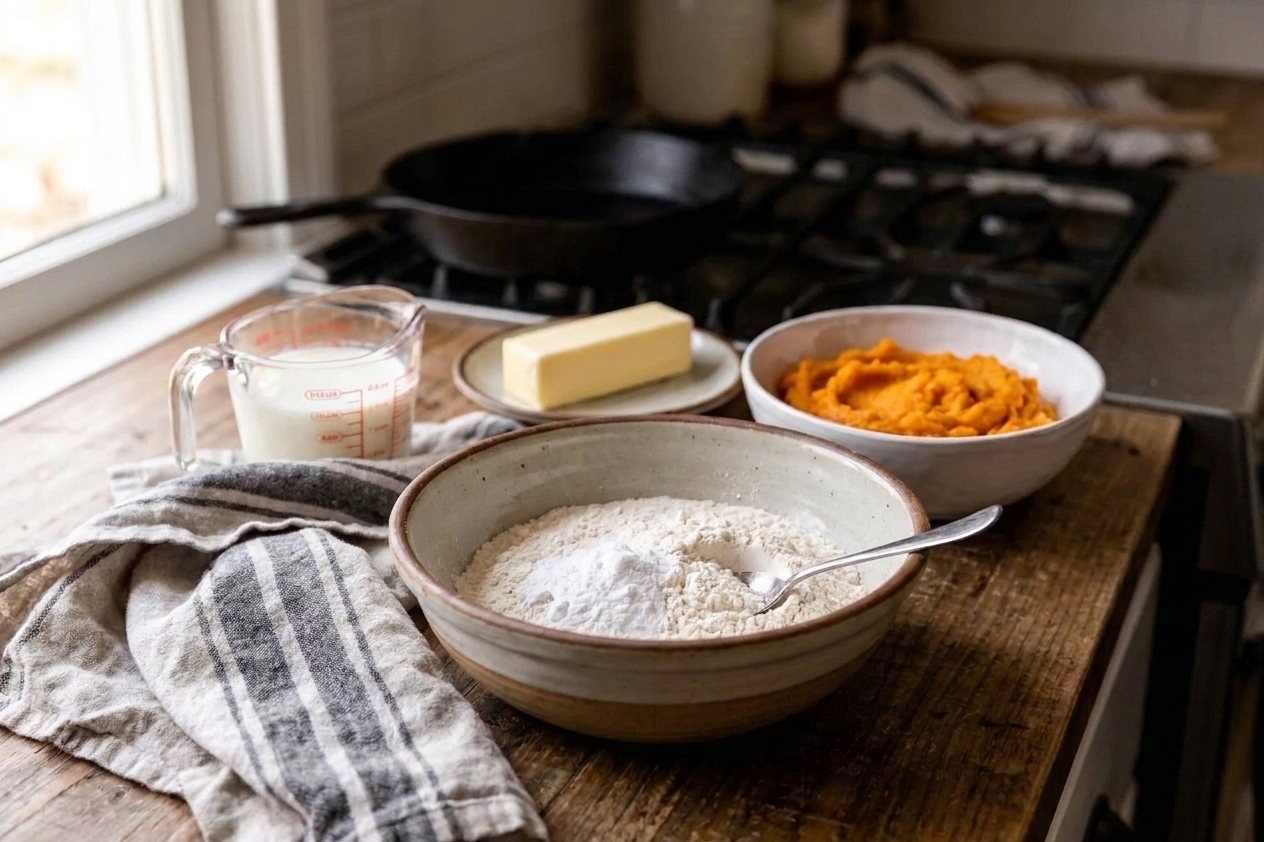
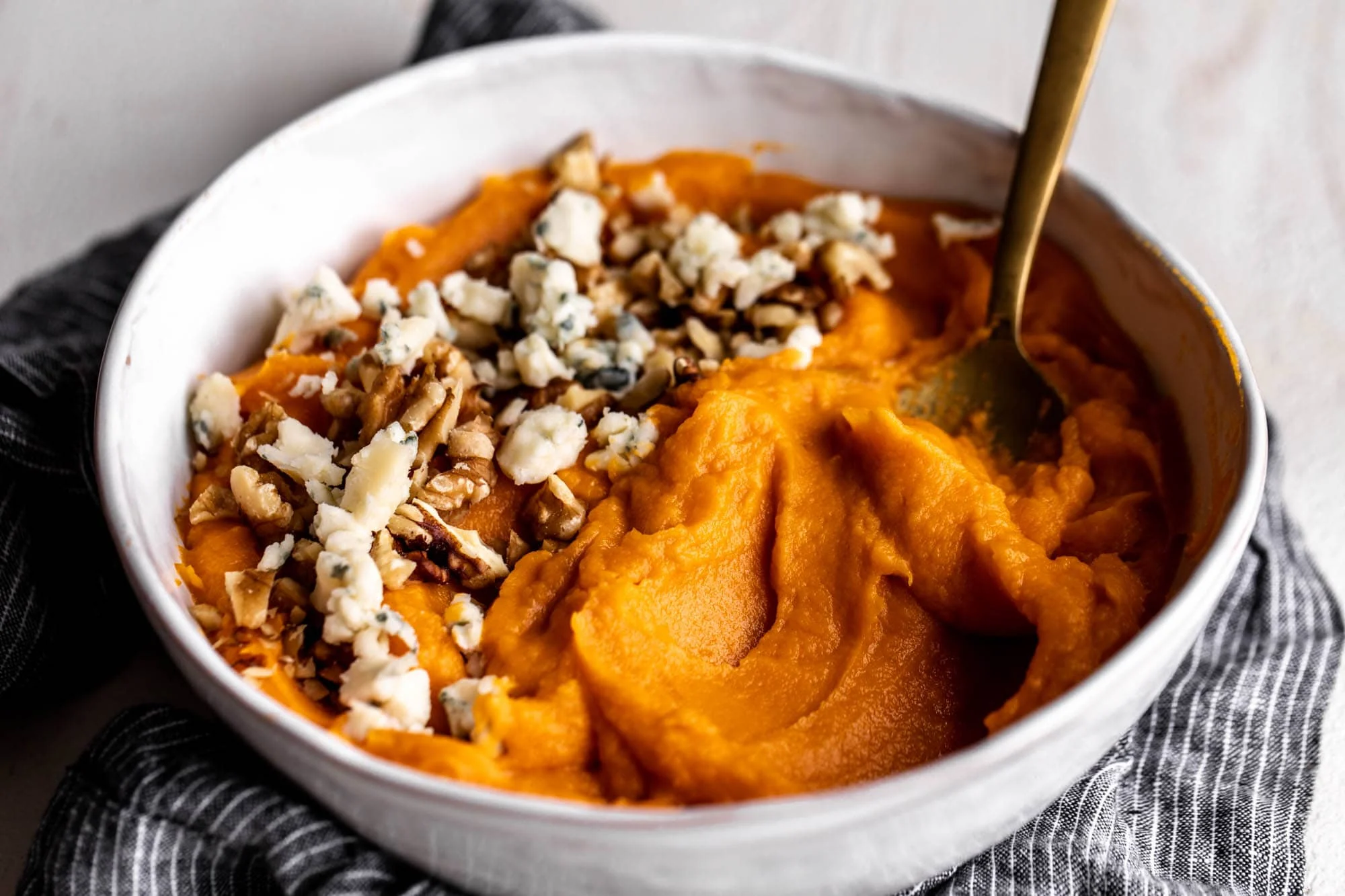
Ideal mash is thick and scoopable, like a firm mashed potato. If it looks watery, spread it on a plate uncovered and let steam off for 10 minutes, or gently warm it in a skillet over low heat, stirring often, to evaporate extra moisture. Let it cool before mixing into the dough.

Should I use baked sweet potato or canned sweet potato?

Baked sweet potato is easiest to control because you can choose a drier scoop from the center. Canned sweet potato can work, but it is often wetter. If using canned, blot with paper towels and expect to use less buttermilk.

What butter temperature is best for flaky biscuits?

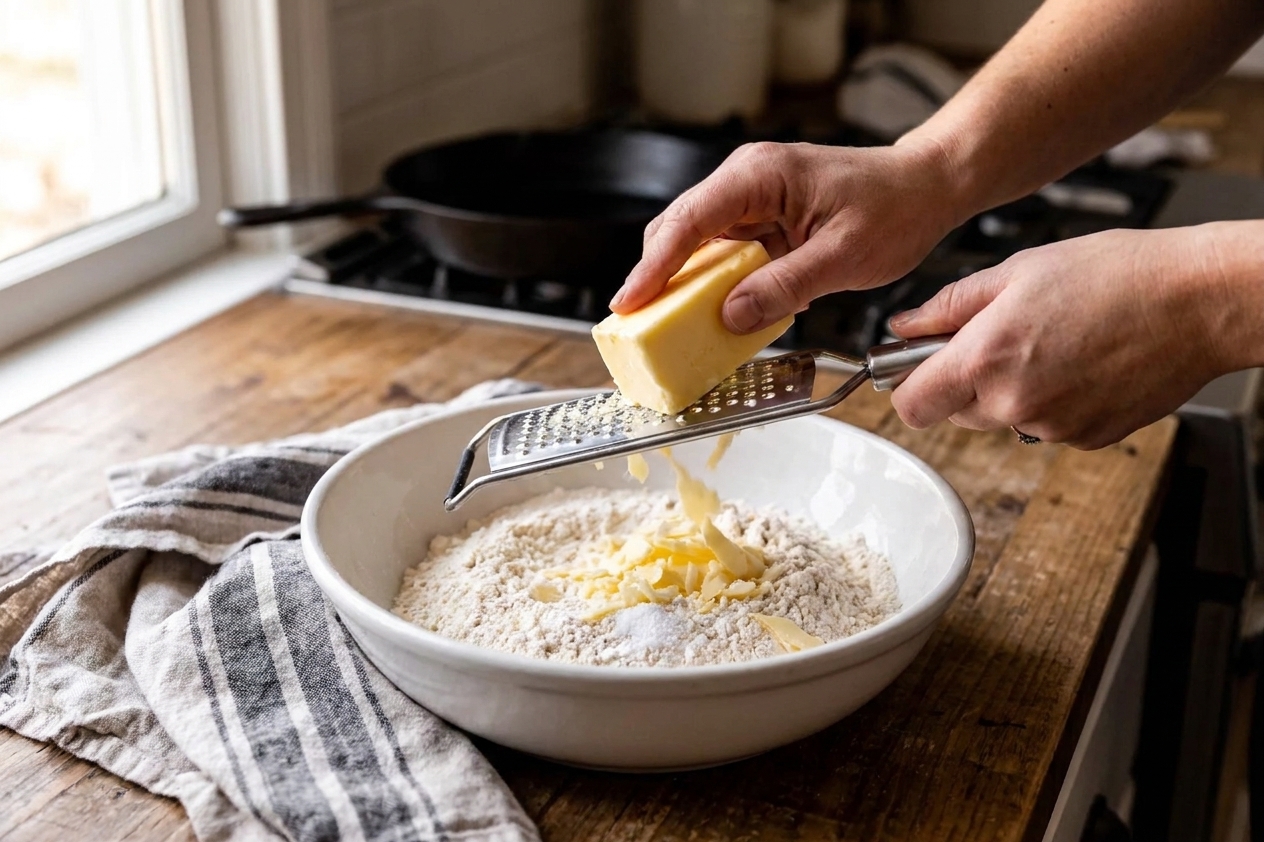
Butter should be cold and firm, straight from the refrigerator. If it bends instead of snapping when you press it, it is already warming up. Cold butter pieces melt in the oven and create steam pockets that become layers.

How many times should I fold biscuit dough?

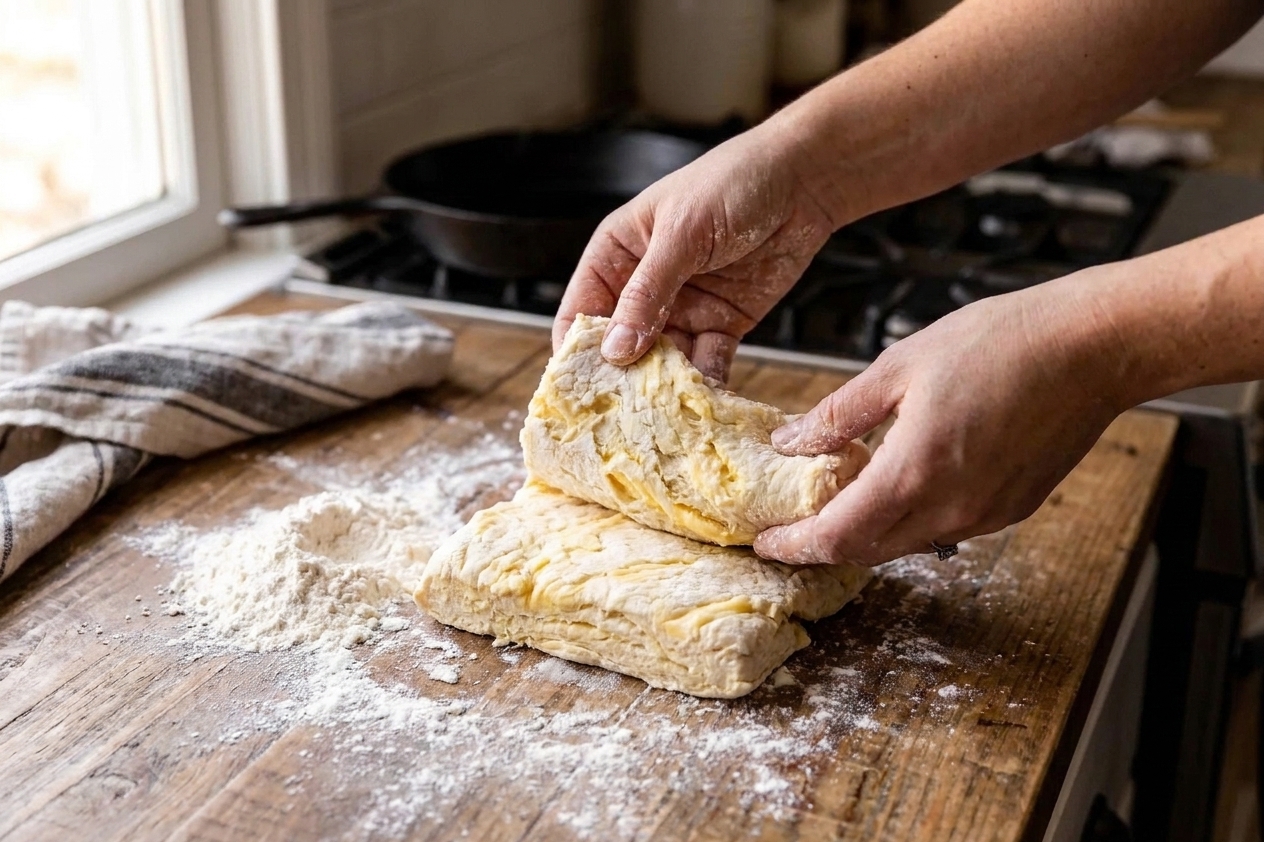
For tender, flaky layers, fold the dough 4 times (a simple letter fold). Fewer folds can be a bit crumblier. Too many folds can make biscuits tighter and less tender.

How do I tell sweet potato biscuits are baked through?

Look for tall biscuits with golden tops and set sides. The bottoms should be deep golden, not pale. If you split one, the center should look steamy and bread-like, not wet or gummy. If you use a thermometer, aim for about 200°F to 205°F in the center as an optional cue, since exact doneness can vary by oven and biscuit size.

Can I make the dough ahead and bake later?

Yes. The best make-ahead method is to cut the biscuits and refrigerate (covered) for up to 24 hours, or freeze unbaked biscuits for longer storage. Chilling keeps the butter cold and the dough easy to handle, and it often helps biscuits bake taller.

What can I use if I do not have buttermilk?

You can make a quick substitute by mixing 3/4 cup milk with 2 1/4 teaspoons lemon juice or vinegar. Let it stand 5 minutes, then use it cold. The texture will be slightly different than true buttermilk, but the biscuits will still bake up tender.
My favorite part of biscuit making is the moment the dough goes from shaggy and unsure to something you can fold into neat little layers. Sweet potato biscuits feel extra cozy, like the biscuit is already wearing a sweater. Also, I will admit this: I like to cut one open the minute it is safe, just to watch the steam escape and check the color inside. Pure kitchen mischief, very on brand for a hedgehog host.