Mom's Best Recipes
Recipe

Easy Tepache

A bright, lightly fermented pineapple drink with warm spice and gentle fizz, made with everyday ingredients and zero fancy gear.

Author By Matt Campbell
4.8
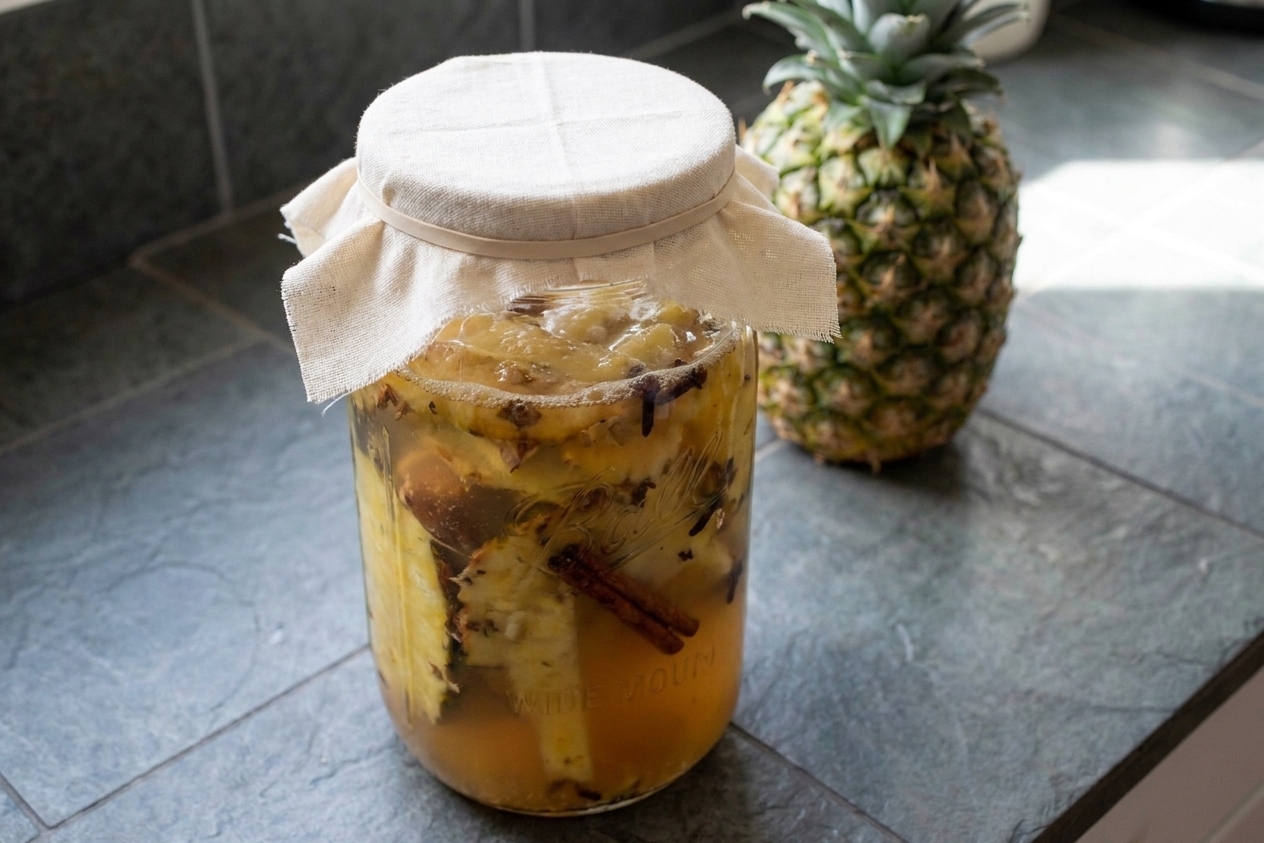
A large glass jar of tepache on a kitchen counter with pineapple peels floating on top and a small bowl of piloncillo nearby, warm natural light

Tepache is one of my favorite kitchen magic tricks because it feels like you are getting away with something. You take a pineapple, save the peels, add unrefined sugar, and a little spice, then a couple days later you have this tangy, lightly fizzy drink that tastes like pineapple cider’s chill cousin.

It is not fussy. It is not precious. It is the kind of ferment that forgives you if your cinnamon stick is missing or your kitchen runs a little warm. The main rules are simple: use clean tools, keep it covered, and taste as you go. If it smells pleasantly fruity and a little yeasty, you are in business.

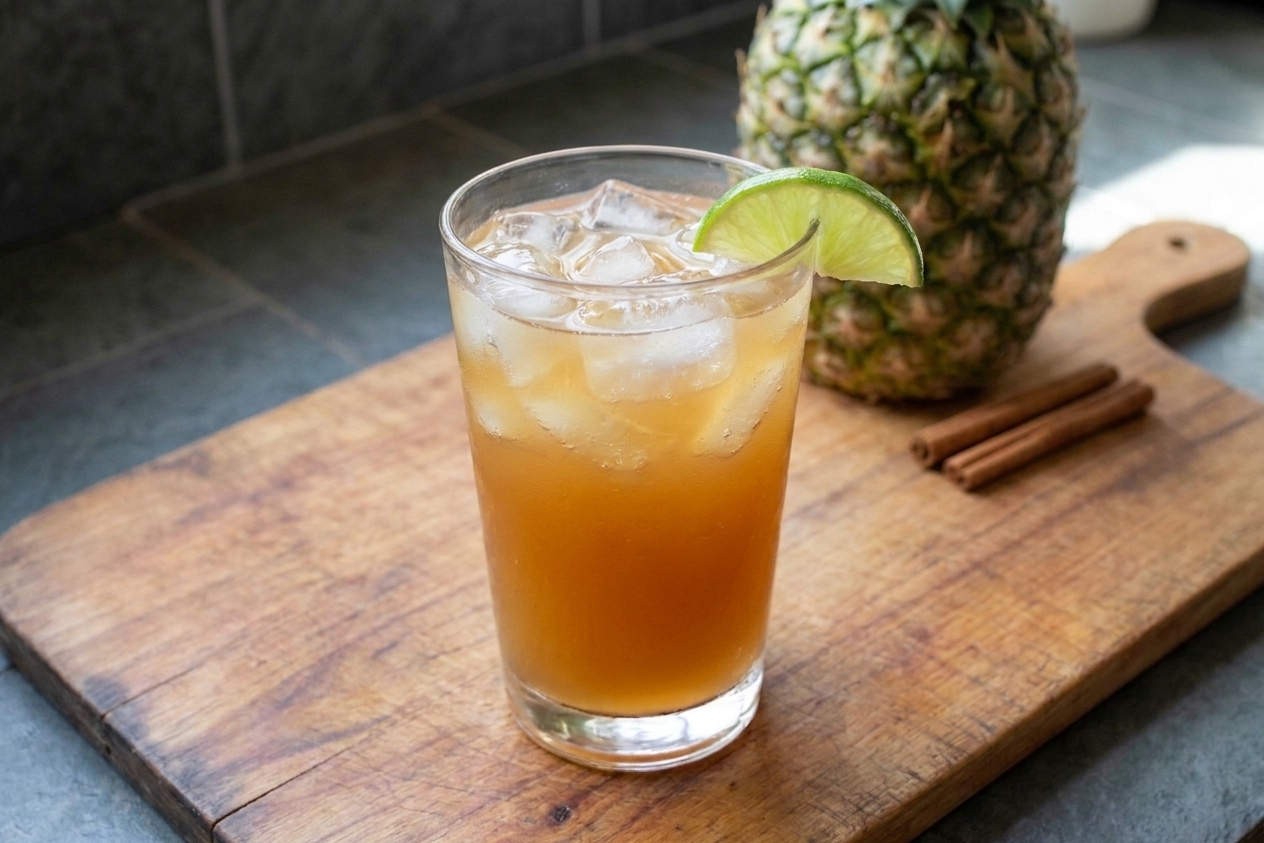
This version stays family friendly and generally low alcohol because we keep the ferment short, then refrigerate. Still, fermentation is fermentation, so if you need it truly alcohol free, this is not the drink to bet your day on. For everyone else, drink it straight over ice, top it with sparkling water for extra bubbles, or use it as a seriously good mixer.
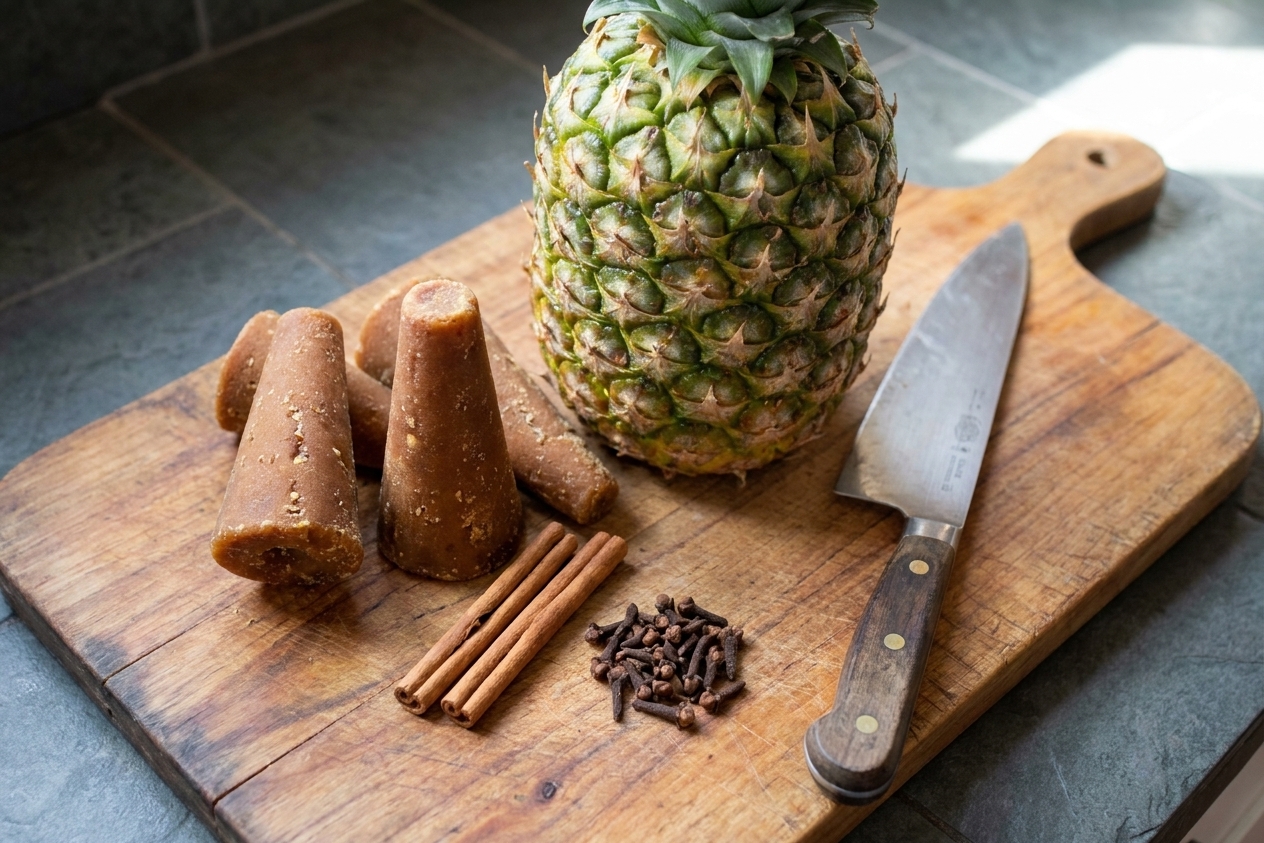
Whole pineapple, piloncillo cones, cinnamon sticks, cloves, and a knife arranged on a wooden cutting board on a bright kitchen counter

Why It Works

Why it works

  • Pineapple peels do the heavy lifting. The natural wild microbes on the skin (yeast and bacteria) help kickstart fermentation without needing a starter.
  • Piloncillo brings depth. Its caramel notes make the drink taste rounder and more grown up than plain white sugar.
  • Short ferment, clean flavor. At 48 to 72 hours you get tang and gentle fizz without the sharp, vinegary edge that happens when it goes too long.
  • Taste-first timing. Your kitchen temperature matters more than the clock, so we use your nose and a quick sip as the real timer.

Food safety notes

  • Keep it clean. Use a very clean jar, spoon, and strainer.
  • Keep solids mostly submerged. Stir daily and push peels down to reduce mold risk.
  • Know when to quit. Thin white film can be normal. Fuzzy mold or rotten smells mean toss it.
  • Watch temperature. Ideal is about 70 to 78°F. Cooler kitchens may take longer. Hotter kitchens can speed things up and turn it sour faster.

Pairs Well With

Storage Tips

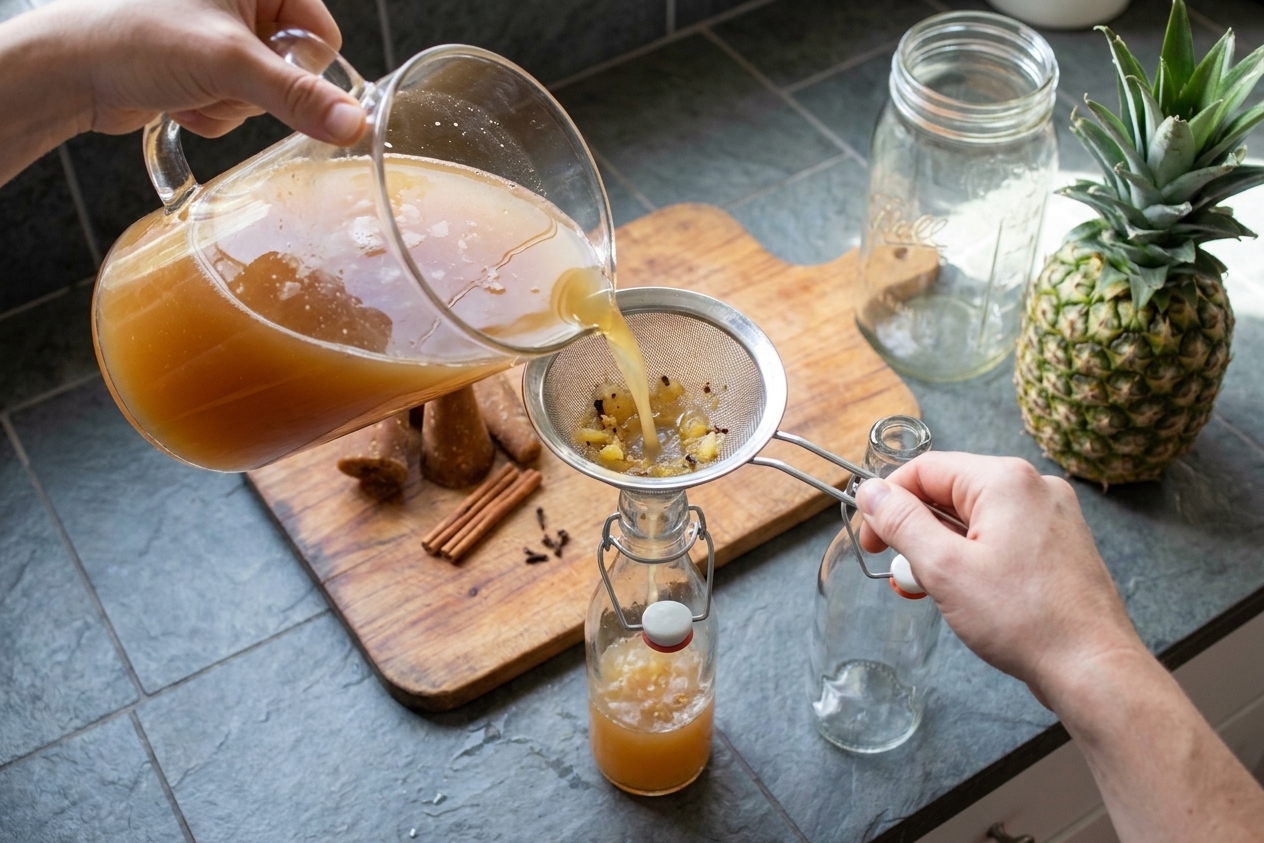
Refrigerate: Strain the tepache into clean bottles or jars, cover, and refrigerate for up to 5 days. The flavor gets a little more tart over time.

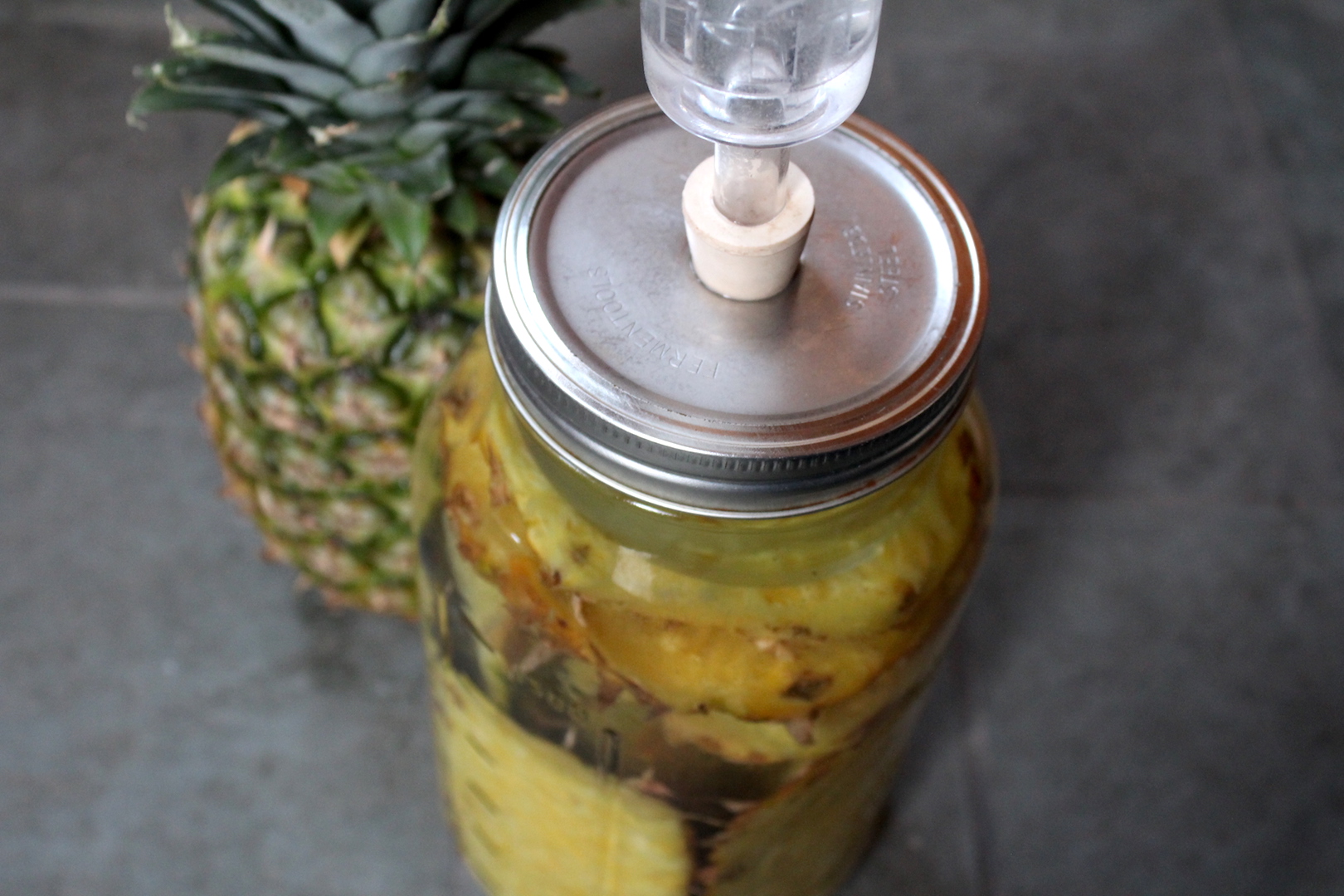
Keep the fizz under control: Tepache can continue to build carbonation in the fridge. If you bottle it tightly, use flip-top bottles rated for carbonation and burp them once a day by briefly opening to release pressure. If a bottle feels rock hard or you hear aggressive fizzing, open it over the sink, pointed away from your face. When in doubt, store it with a looser lid or use a jar that can vent.

Freeze: Pour into ice cube trays and freeze. Tepache cubes are great in sparkling water, iced tea, or blended drinks. Use within 2 months for best flavor.

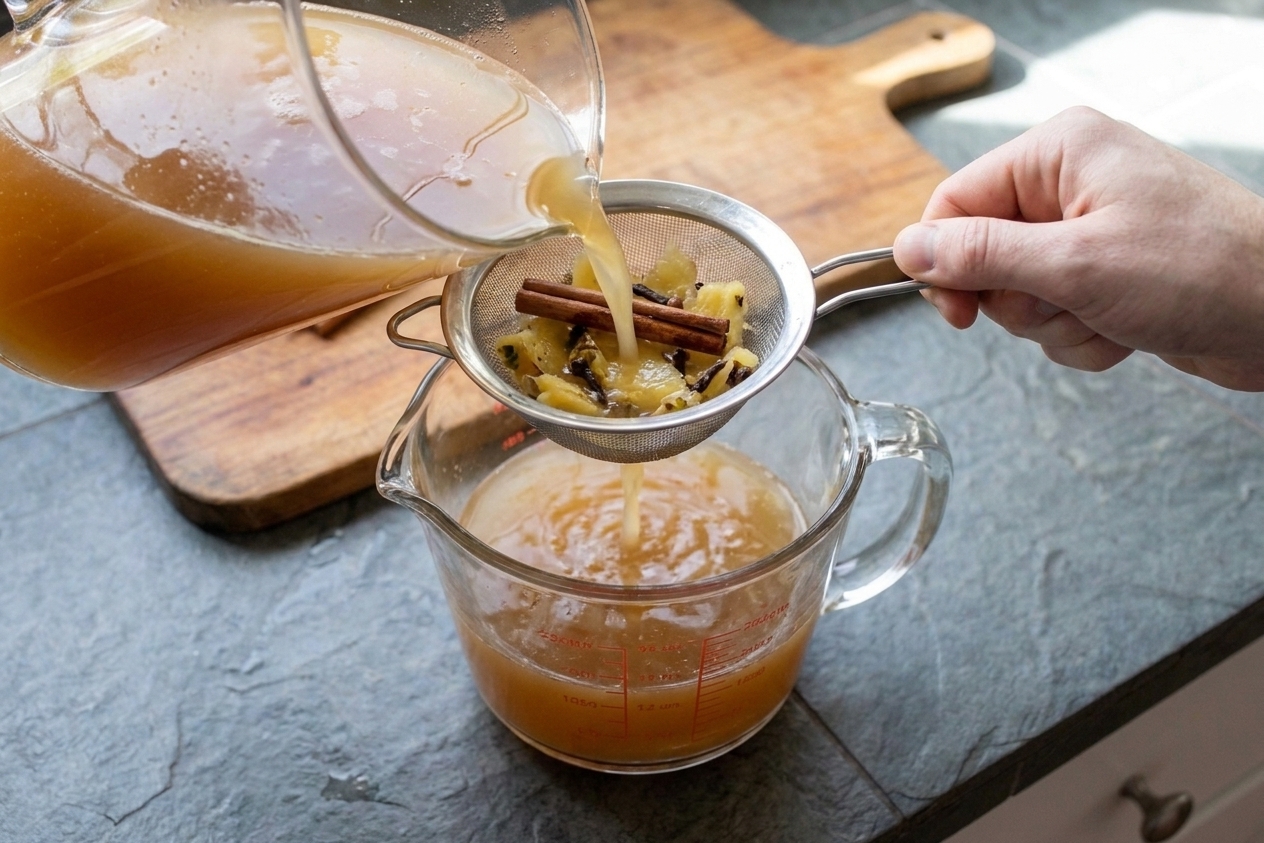
Freshly strained tepache being poured through a fine mesh strainer into glass bottles on a kitchen counter

Common Questions

Common questions

Does tepache have alcohol?

It can, even with a short ferment. Most quick, fridge-stopped batches are low alcohol, but it is not guaranteed non-alcoholic. Depending on sugar, temperature, and time, it can land anywhere from roughly kombucha-like to around 0.5 to 3%+ ABV. If you want to keep it as low as possible, ferment briefly, keep it cooler, and refrigerate as soon as it tastes pleasantly tangy.

How do I know when tepache is ready?

Look for a few signs: small bubbles, a lightly foamy surface, and a smell that is fruity and a little yeasty. Taste it. It should be sweet-tart with a gentle bite. If it tastes flat-sweet, give it more time. If it is sharply sour or smells like vinegar, it went too far.

Is the white film on top normal?

Often, yes. A thin white film can be harmless yeast. Fuzzy mold in green, black, or pink is not. If you see fuzz or smell anything rotten, toss it and start over.

Can I use brown sugar instead of piloncillo?

Absolutely. Use packed brown sugar 1:1 by weight if you can. By volume, start with 3/4 cup packed brown sugar and adjust to taste.

Do I have to use the pineapple peel?

The peel helps fermentation and brings that big pineapple aroma. If you only have pineapple chunks, you can still do it, but it may ferment slower and taste a little less aromatic. Best options: add a few strips of fresh ginger peel (if you have it), or stir in a few tablespoons of active tepache from a previous batch as a starter. Or do nothing and just give it another day.

Can I make it less sweet?

Yes, but go slowly. Sugar is food for fermentation. Start with the recipe amount, then next batch reduce slightly. You can also dilute finished tepache with cold water or sparkling water when serving.

The first time I made tepache, it was purely because I hated throwing away a mountain of pineapple peel. Two days later, I was standing in my kitchen taking little quality control sips straight from the jar like I invented fermentation. Now it is my go-to when I want something fun in the fridge that is not soda, not juice, and not a whole project. Also, it gives big cool host energy for basically no effort, which is my favorite kind of cooking.