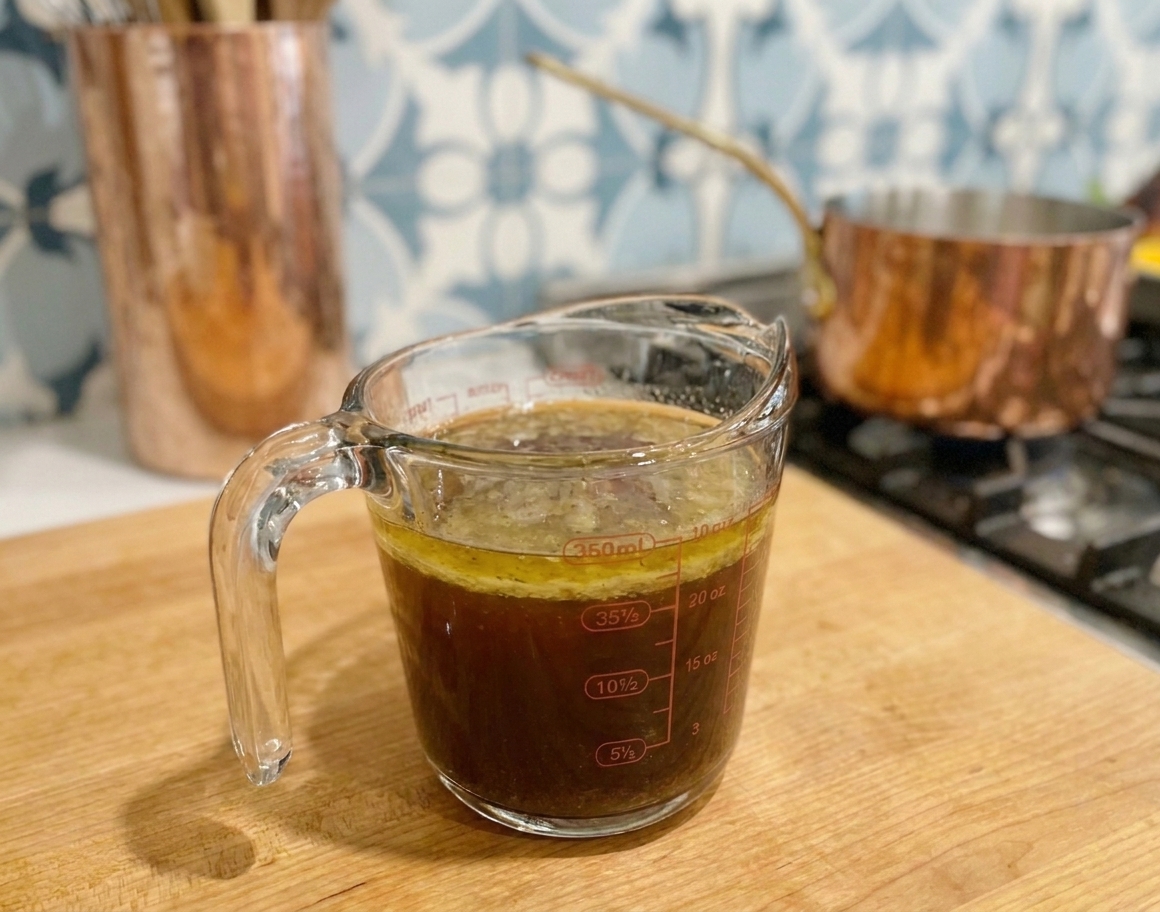
How do I separate the fat from the drippings?
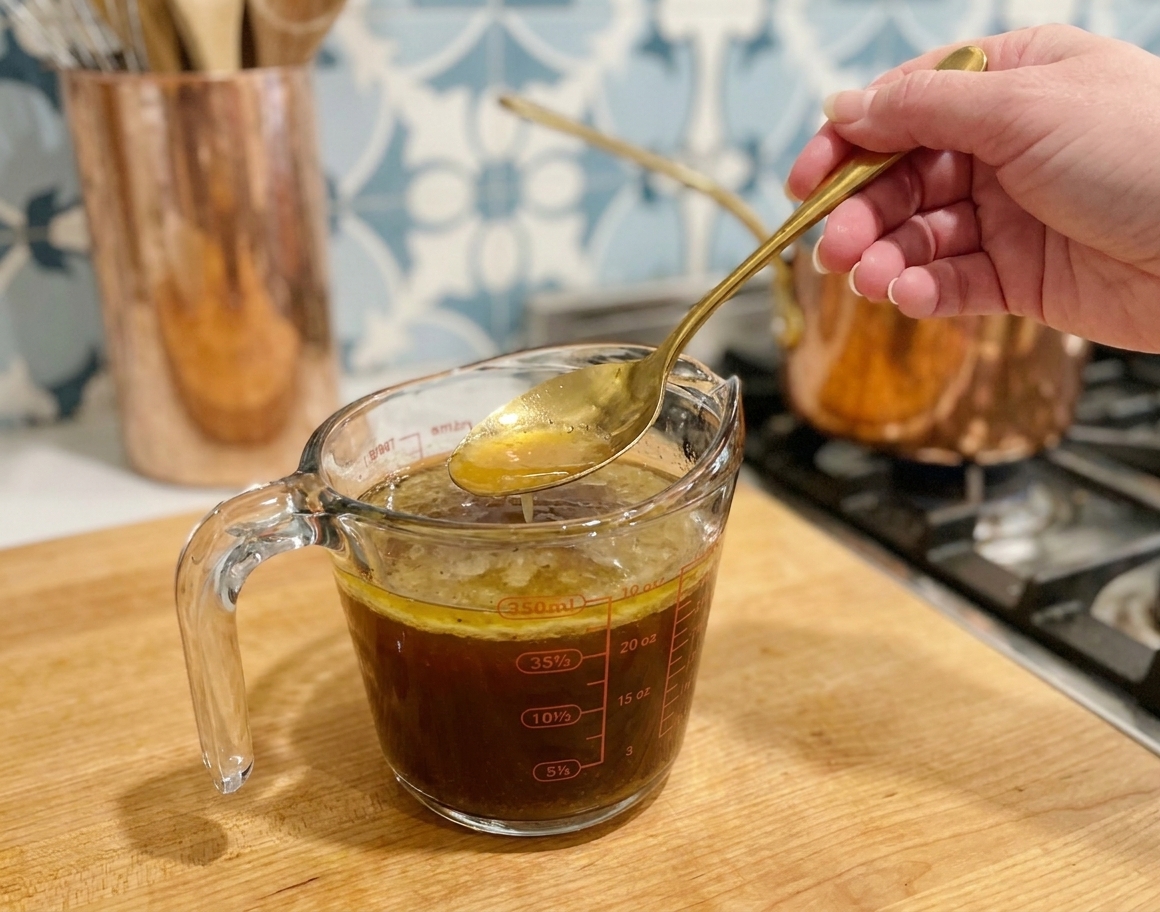
Pour drippings into a measuring cup and let them sit for 5 to 10 minutes. The fat rises. Spoon it off, or pour from the bottom, leaving the fat behind. A fat separator makes this even easier, but a cup and spoon works fine.
What if I do not have enough drippings?
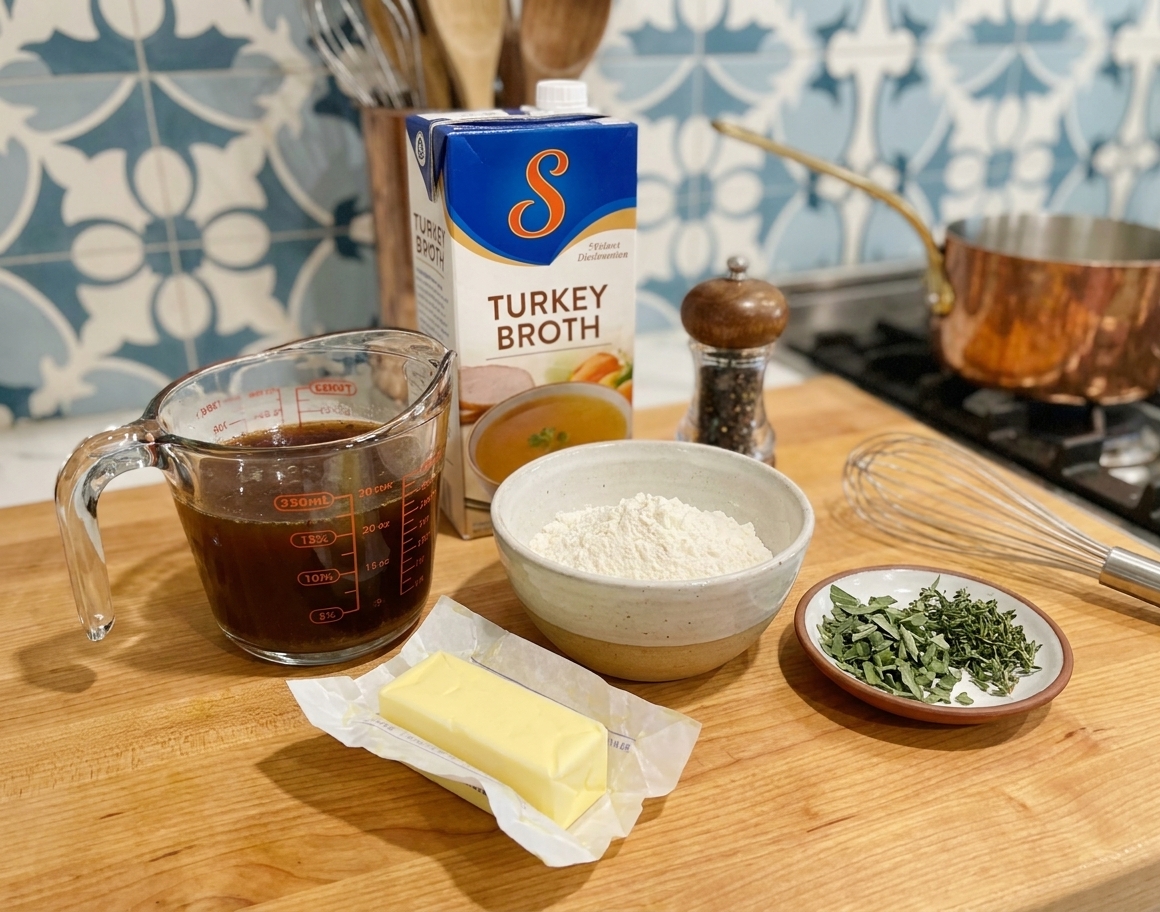
No problem. Use whatever drippings you have for flavor, then make up the rest with turkey or chicken broth. This recipe is designed for that.
What if my drippings are mostly fat?
That happens. Measure out the 6 tablespoons of fat you need for the roux, then treat the rest as optional. Use more broth for the liquid and add only a little of the remaining drippings at a time, tasting as you go.
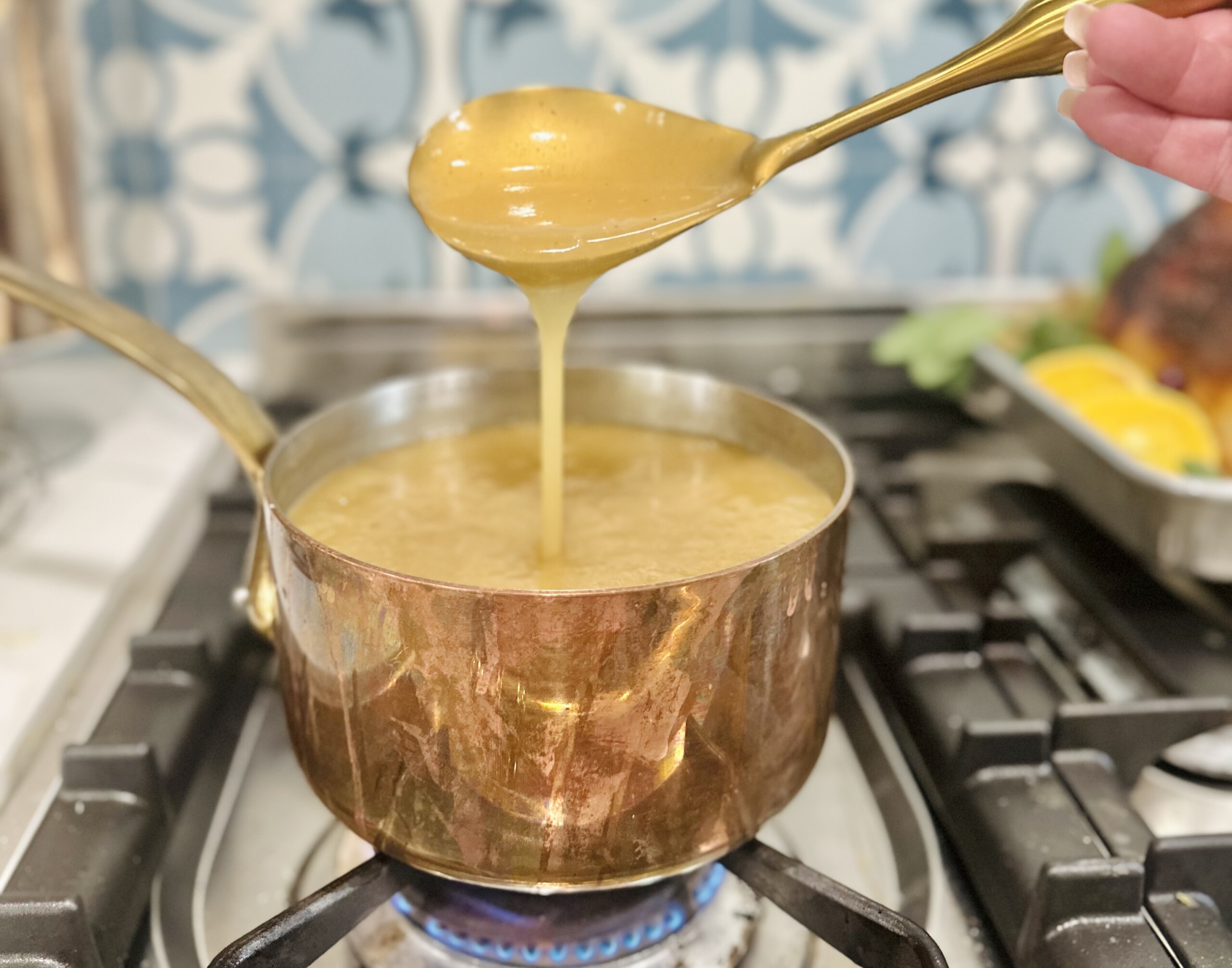
How do I fix lumpy gravy?
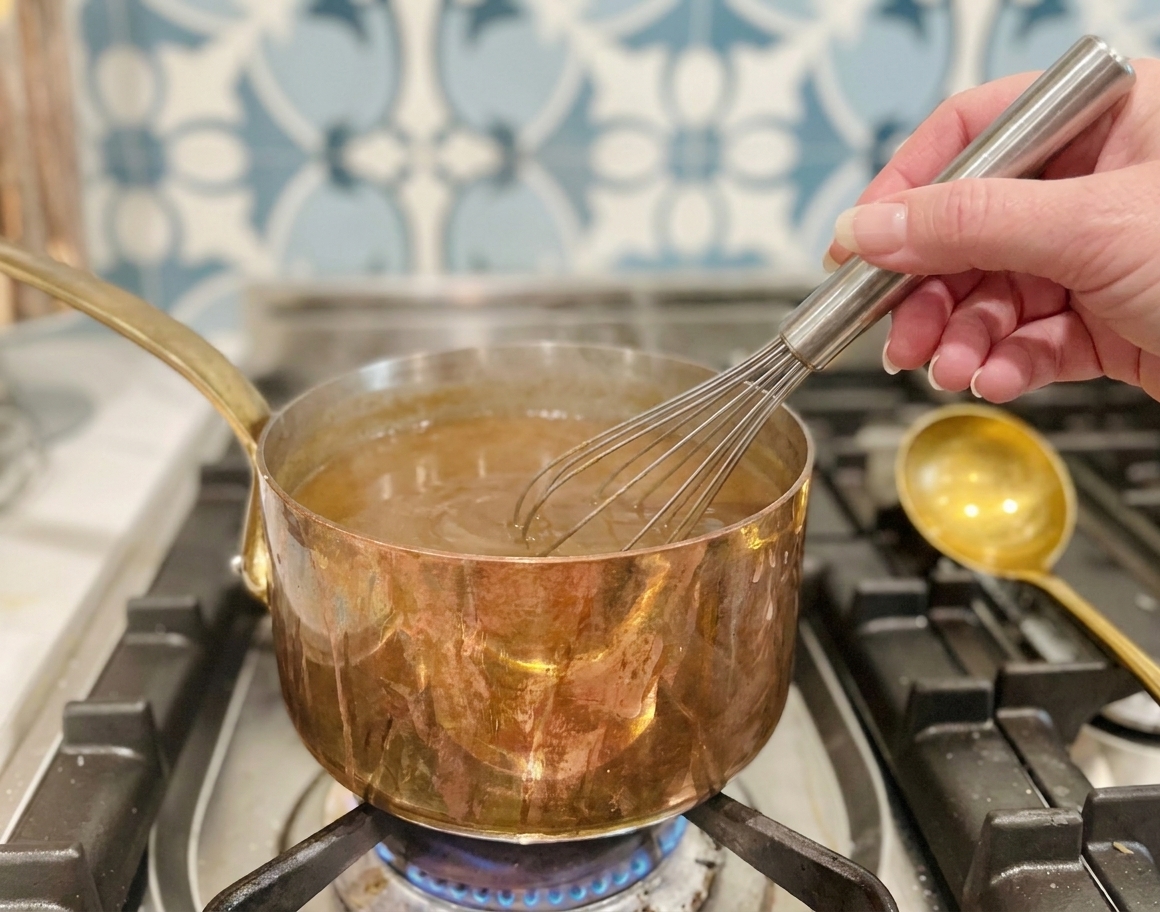
First, whisk like you are trying to win a prize. If lumps are stubborn, strain through a fine mesh sieve. You can also hit it with an immersion blender for 10 to 15 seconds.
My gravy is too salty. Can I save it?
Yes. Add unsalted broth or water a little at a time to dilute. If you have time, whisk in a small amount of unsalted roux (equal parts butter and flour cooked together) to bring body back after diluting.
Can I make gravy ahead?
You can make it 1 to 2 days ahead using broth plus a little butter for the roux, then enrich with drippings on Thanksgiving. Reheat, taste, and adjust. It will still taste like you just made it.
Can I make this gluten-free?
Yes. Swap the flour for a 1:1 gluten-free all-purpose blend. Another option is a cornstarch slurry, but that gives a slightly different, more glossy texture. If you want the slurry method, whisk 1 tablespoon cornstarch with 1 tablespoon cold water and add gradually to simmering drippings plus broth until thick.