Mom's Best Recipes
Recipe

Victoria Sponge Cake

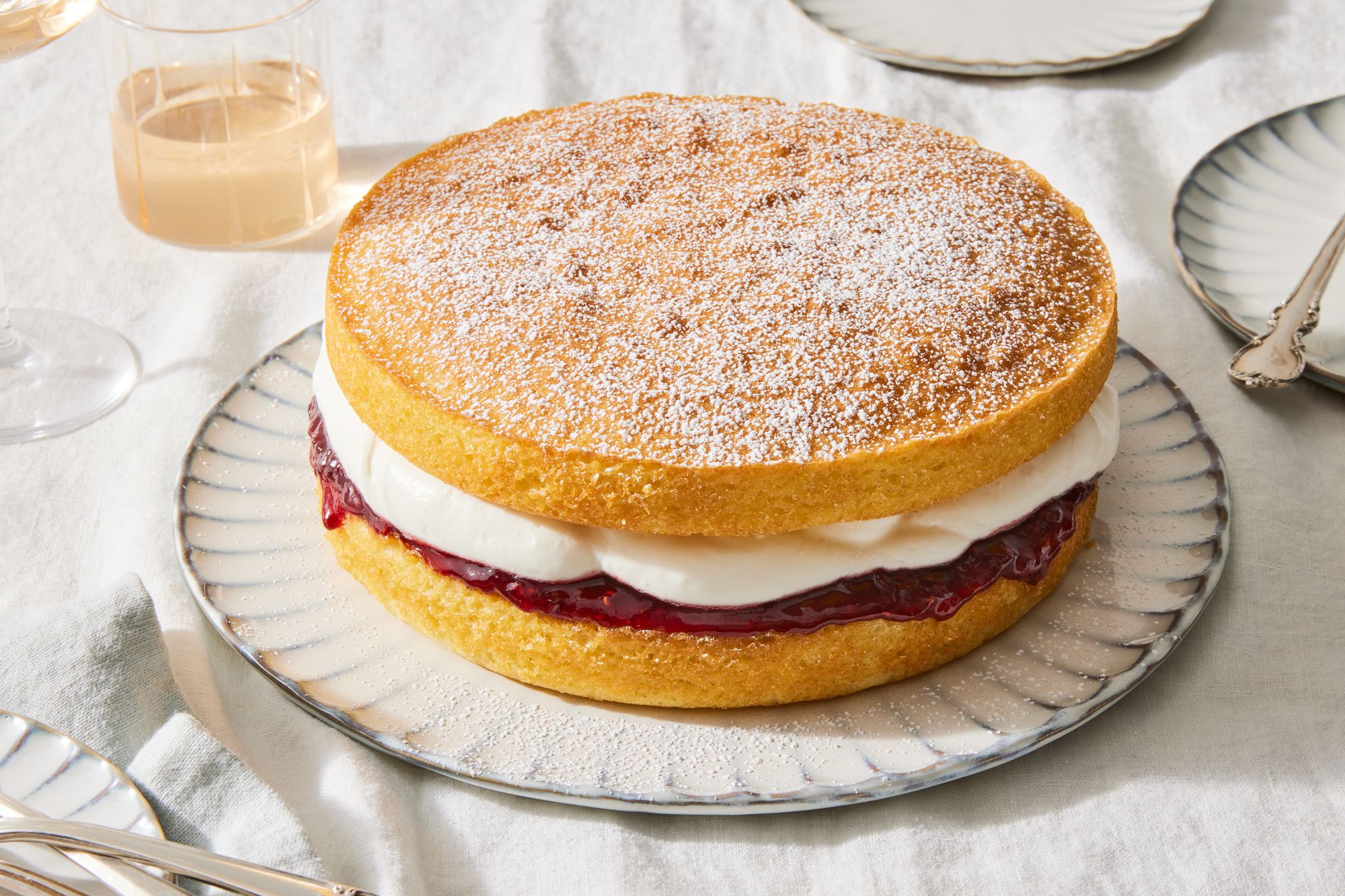
Two tender vanilla sponge layers filled with jam and cream, finished with a snowfall of powdered sugar.

Author By Matt Campbell
4.8
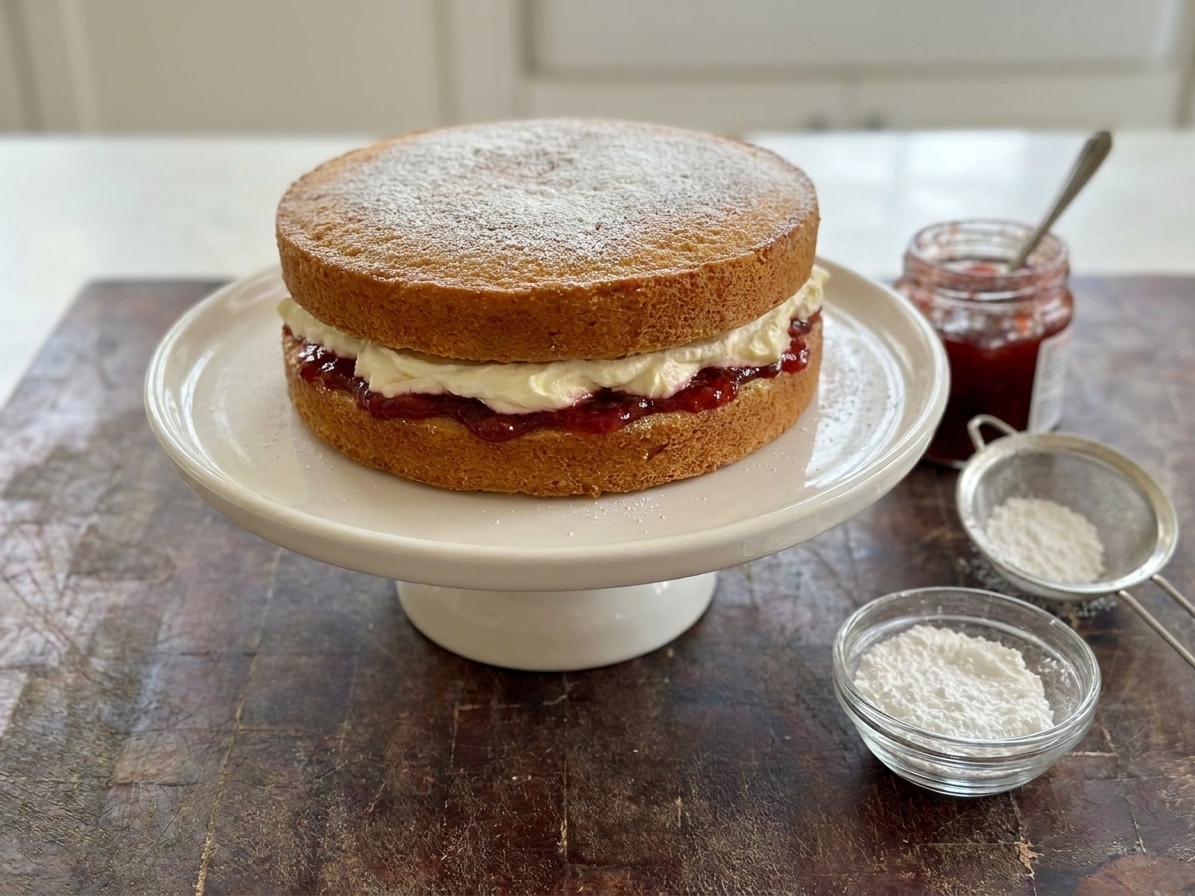
A classic Victoria sponge cake on a simple cake stand, filled with strawberry jam and whipped cream, dusted with powdered sugar on a bright kitchen counter

If you have ever wanted a cake that feels a little fancy but still lives firmly in the land of butter, sugar, and good vibes, this is it. Victoria sponge cake is the original low-drama celebration dessert: two fluffy vanilla layers, jam that peeks out like a wink, and cream that makes every bite feel like a soft landing.

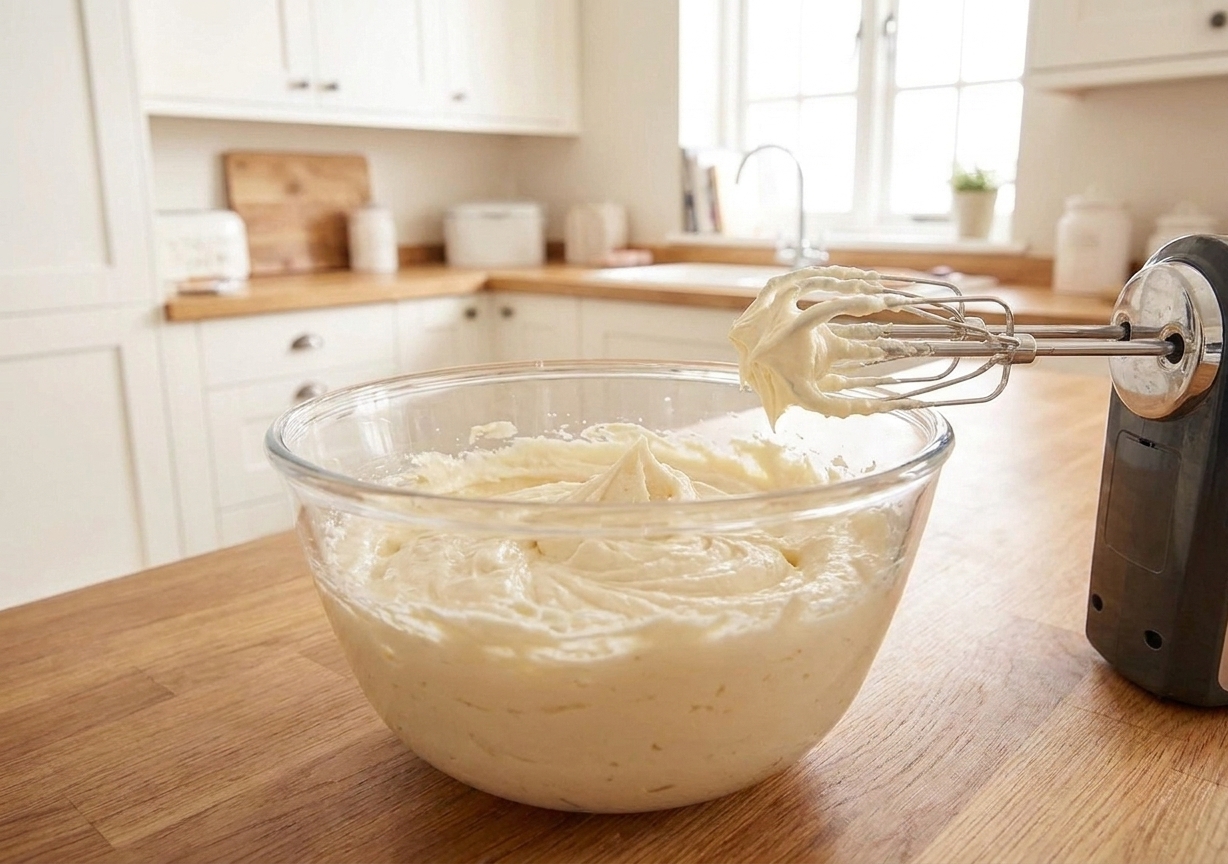
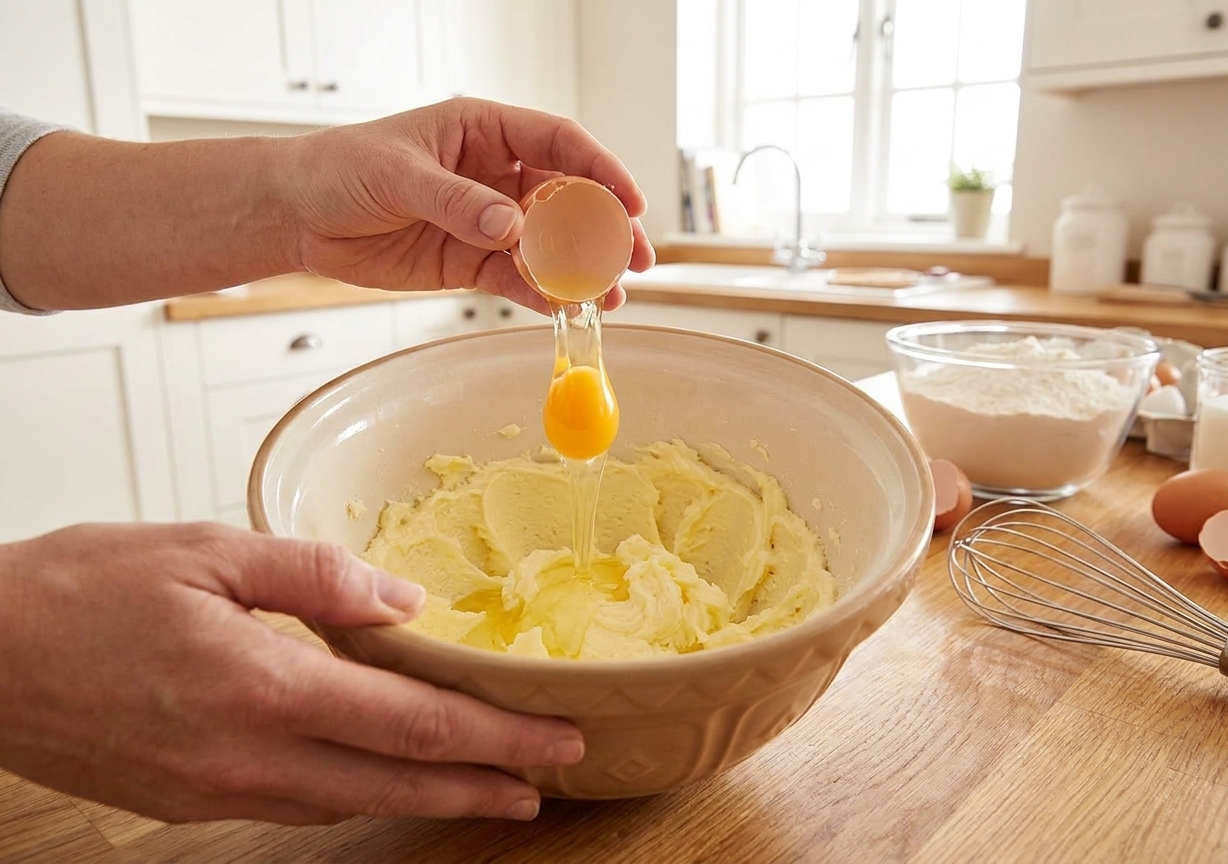
I keep this version intentionally approachable. No obscure ingredients. No weird techniques. Just a few small moves that make a big difference, like using room temp butter, giving the butter and sugar enough time to get properly fluffy, and not overmixing once the flour shows up. (If you like to be extra precise, 4 large eggs usually weigh about 200 g without shells, which helps if your “large” eggs run a little small.) You will end up with a cake that is light, tender, and pleasantly buttery, with crisp edges and that classic powdered sugar finish.
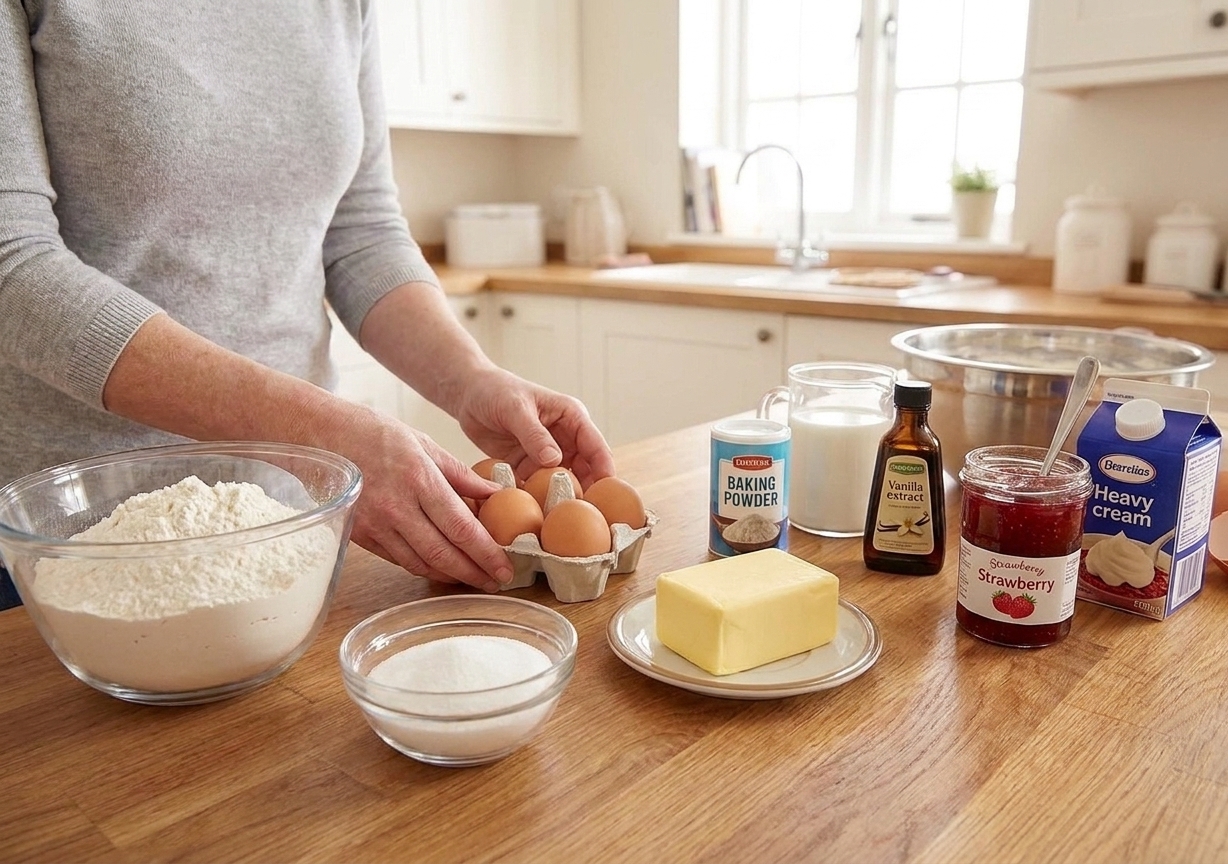
Butter, sugar, eggs, flour, baking powder, milk, vanilla, strawberry jam, and heavy cream arranged on a tidy kitchen counter with warm natural light

Why It Works

  • Fluffy, even layers: Creaming the butter and sugar well builds air into the batter so the sponge rises without feeling heavy.
  • Tender crumb, not tough: You mix just until the flour disappears, which keeps the cake soft instead of bready.
  • Classic flavor balance: Sweet vanilla sponge, bright jam, and lightly sweetened whipped cream.
  • Make-ahead friendly: Bake the layers earlier, then assemble right before serving so the sponge stays light and the cream stays dreamy.

Pairs Well With

Storage Tips

Best day-of: Victoria sponge is at its peak the day you assemble it, when the sponge is fluffy and the cream is fresh.

  • Refrigerate: Store leftover cake in an airtight container in the fridge for up to 2 days. Keep it chilled, especially in warm weather, since it contains cream. Texture will firm up as it sits.
  • Do not leave out: For food safety, do not leave slices at room temperature for more than about 2 hours (less if your kitchen is hot).
  • Serve: Let slices sit at room temp for 15 to 20 minutes to take the chill off and soften the texture.
  • Freeze (layers only): Wrap completely cooled, unfrosted cake layers tightly in plastic wrap, then foil. Freeze up to 2 months. Thaw wrapped at room temp, then fill with fresh jam and cream.

Note: I do not recommend freezing the fully assembled cake. Whipped cream gets weird when thawed, and this cake deserves better.

Common Questions

Why is it called Victoria sponge?

It is commonly linked to Queen Victoria and the tradition of serving sponge cake with tea. The modern classic version is two sponge layers sandwiched with jam and cream, finished with powdered sugar.

Do I use buttercream or whipped cream?

You will see jam-only, buttercream, or whipped cream depending on the baker, the region, and the occasion. Buttercream is sturdier for warm rooms and transport. This recipe uses whipped cream because it tastes light, classic, and not overly sweet.

What jam is best?

Strawberry or raspberry are the usual picks. Strawberry feels classic and cozy. Raspberry gives a slightly sharper, brighter bite. Use a jam you actually like on toast.

My sponge domed in the middle. What happened?

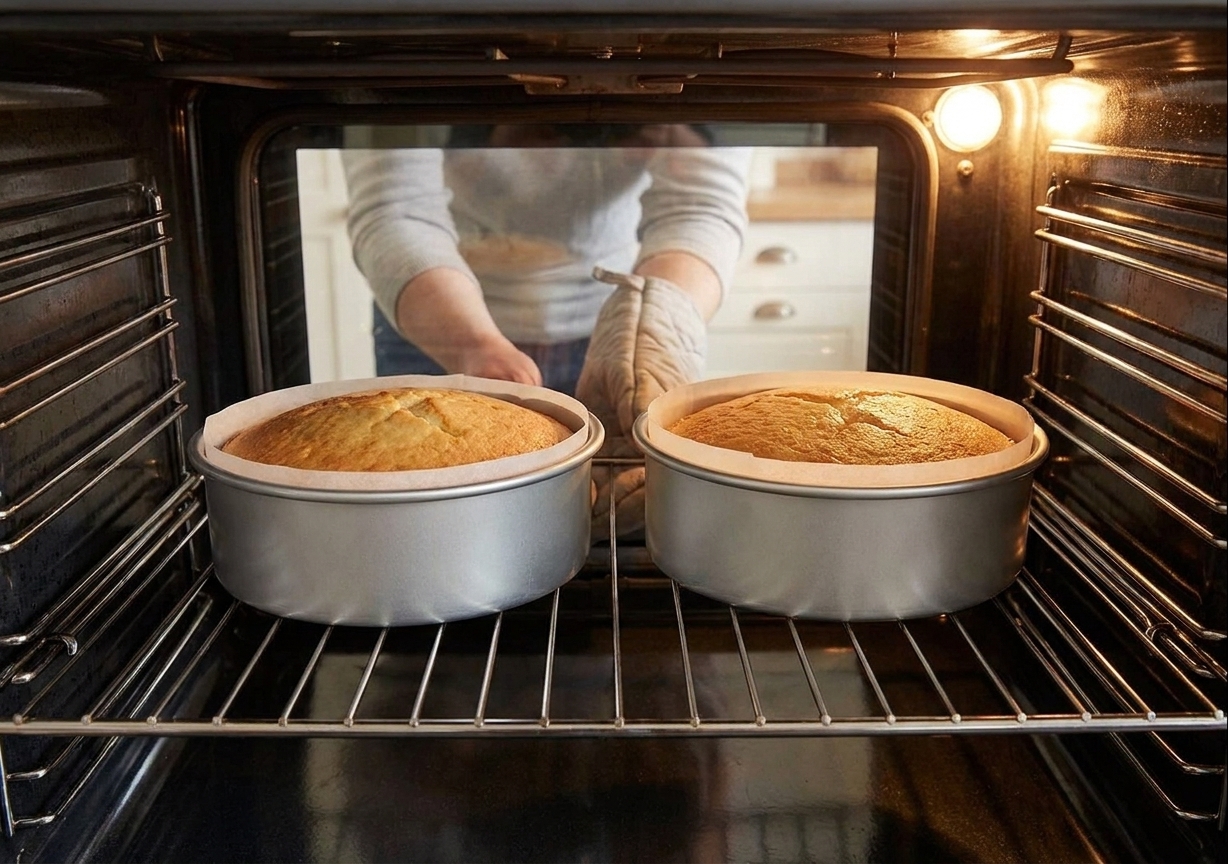
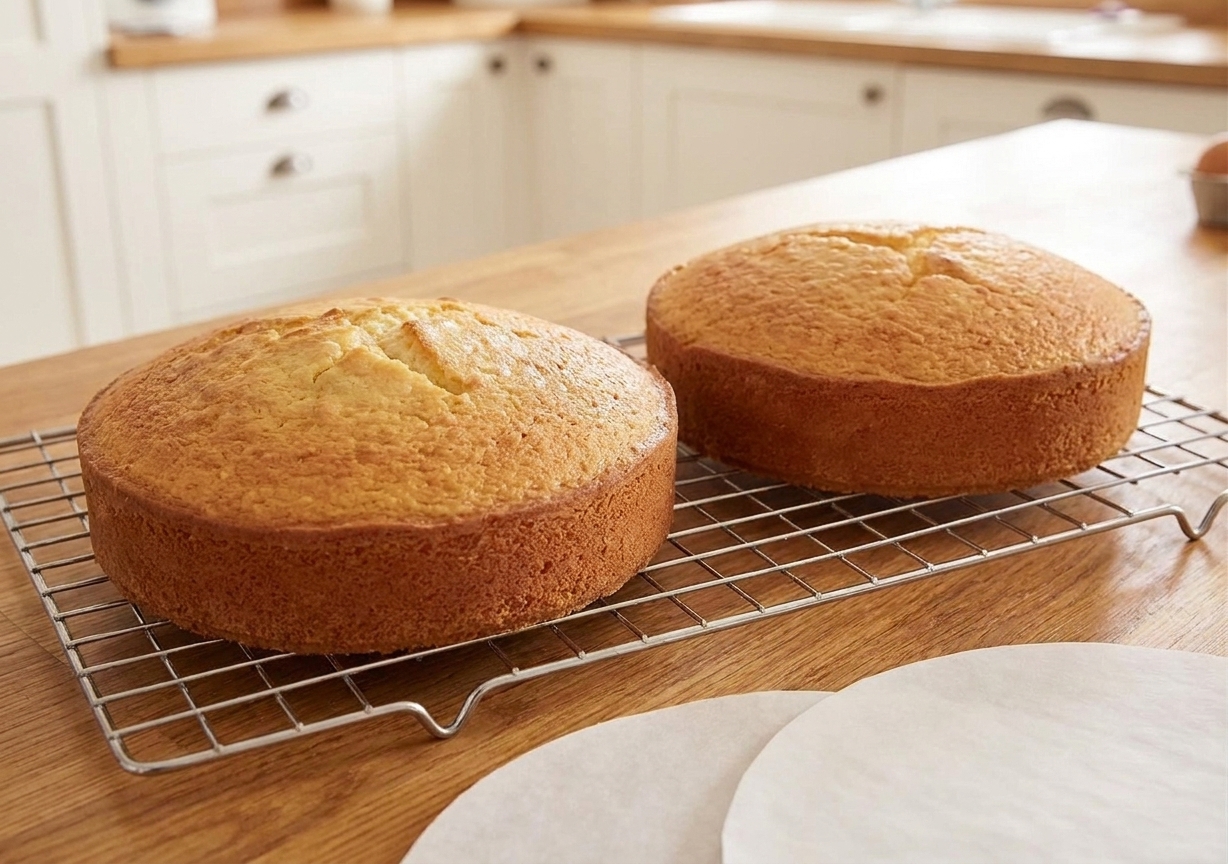
Your oven may be a little hot, or the pans were placed too high. Next time, bake on the middle rack and consider lowering the temp by 10 to 15 degrees F. You can also gently level the cake with a serrated knife once cooled.

Can I make this in one pan and slice it?

Yes. Use one deeper pan, ideally an 8-inch that is at least 3 inches deep (or a 9-inch if that is what you have) and extend bake time. Cool completely, then slice into two layers. Two pans are easier and bake more evenly, but one pan works if that is what you have.

What is the biggest mistake to avoid?

Overmixing after adding flour. That is the fast track to a tight, chewy sponge. Mix just until you do not see dry flour streaks.

How do I know the cakes are done?

Look for golden tops that spring back lightly when pressed and a toothpick that comes out clean. If you like numbers, an instant-read thermometer in the center should read about 200 to 205°F.

I love a dessert that looks like it belongs at a tea table but still feels like something you can pull off on a random Sunday. Victoria sponge is that cake for me. It is simple enough that you can make it without turning your kitchen into a flour crime scene, but it still gives you the little thrill of slicing in and seeing that jam-and-cream stripe. Also, powdered sugar on top is basically the dessert version of saying, “I have my life together,” even if you absolutely do not.