Mom's Best Recipes
Recipe

Watermelon Rind Pickles

Crunchy, sweet-tangy pickles with warm spices and a bright vinegar snap, made from the part of the watermelon you usually toss.

Author By Matt Campbell
4.8
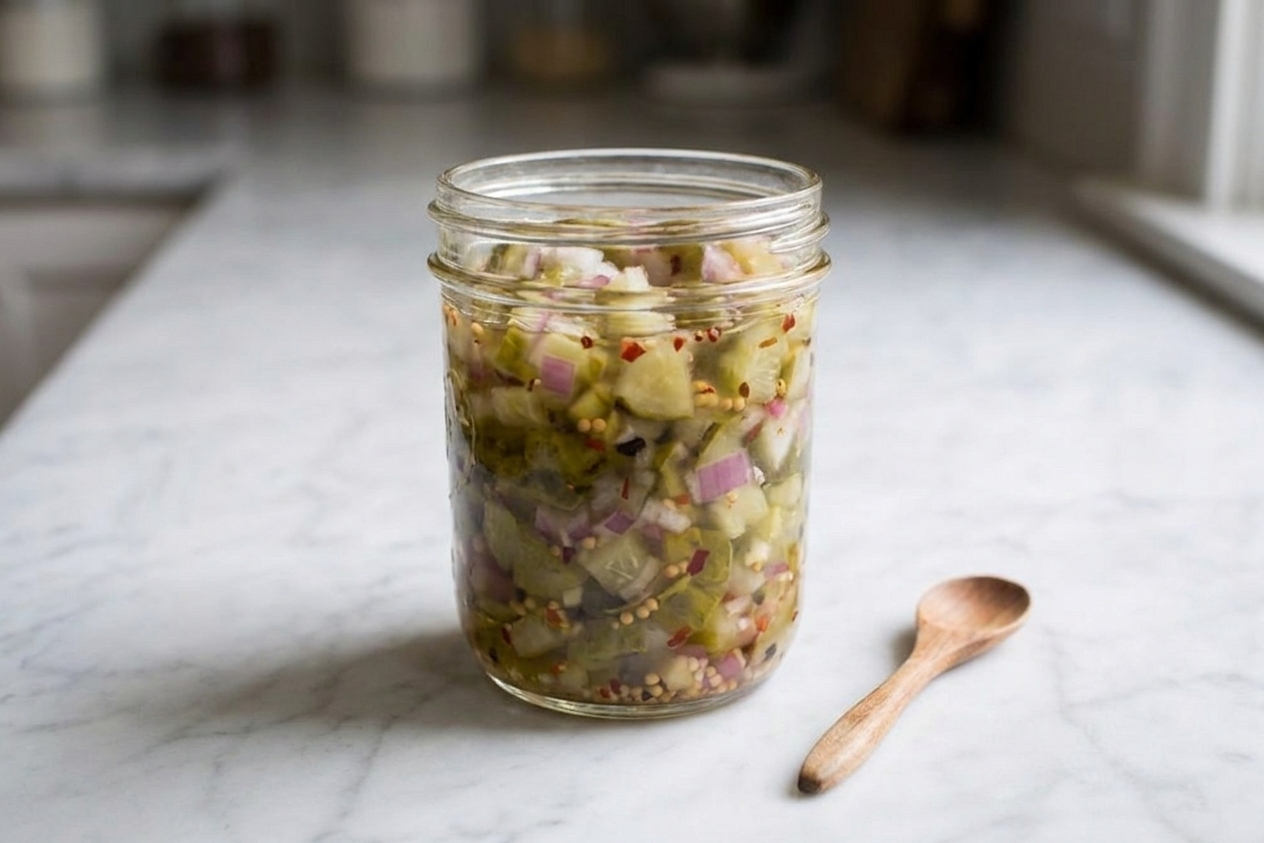
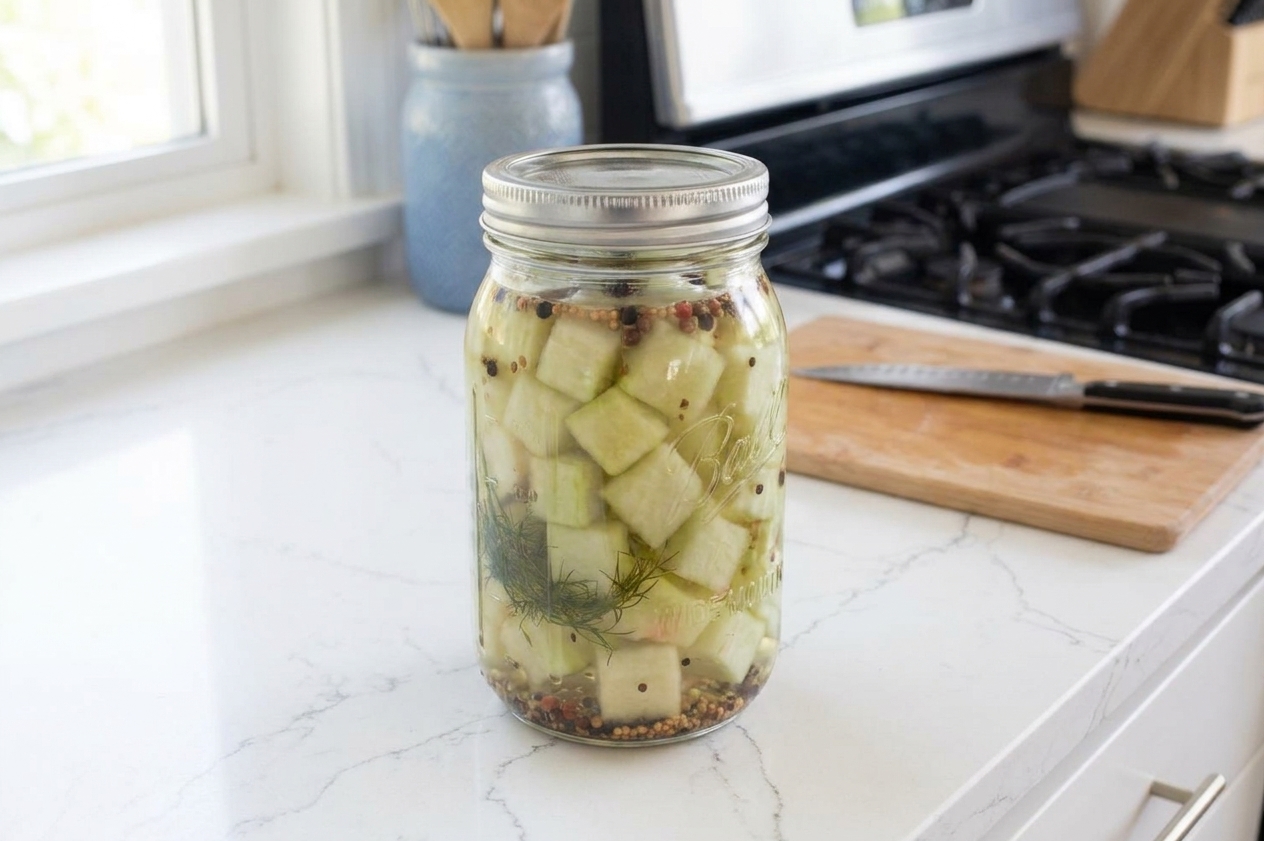
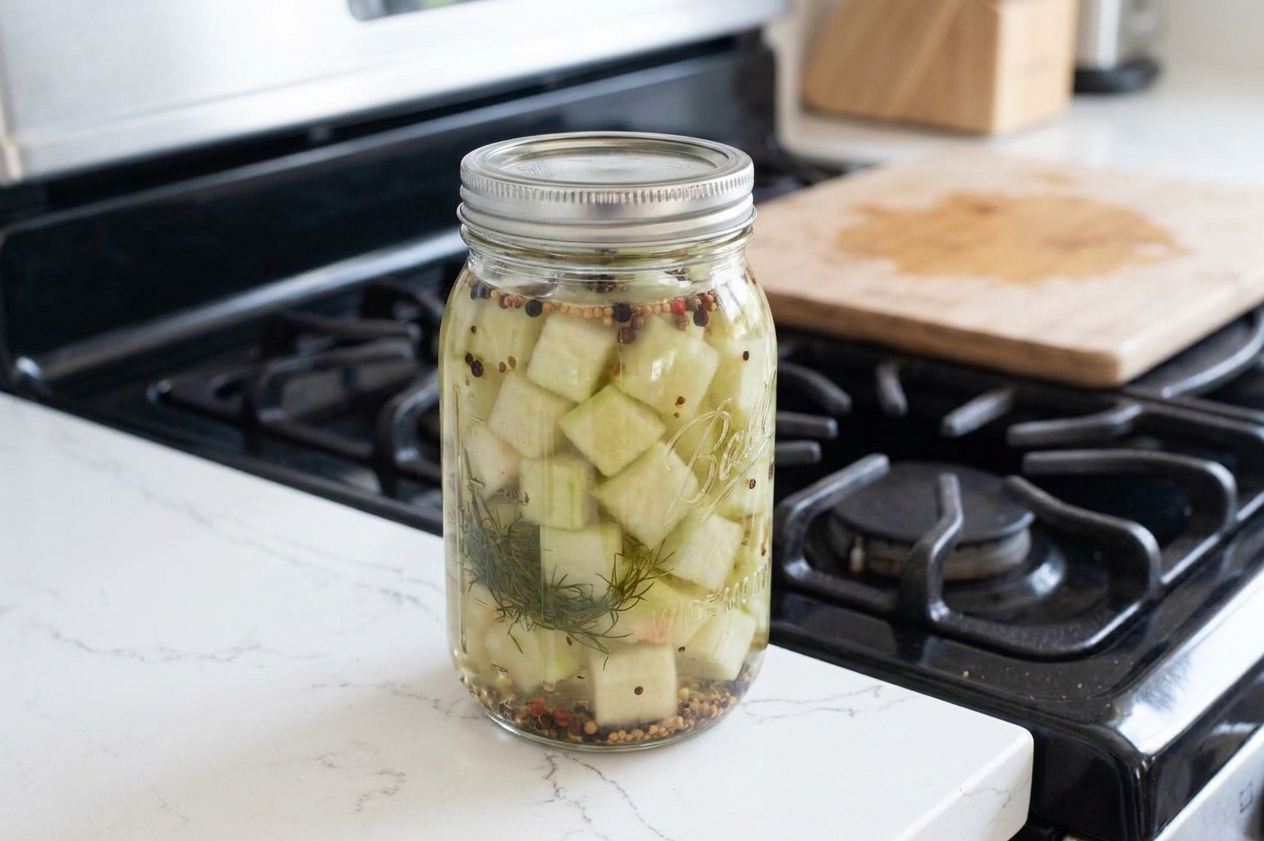
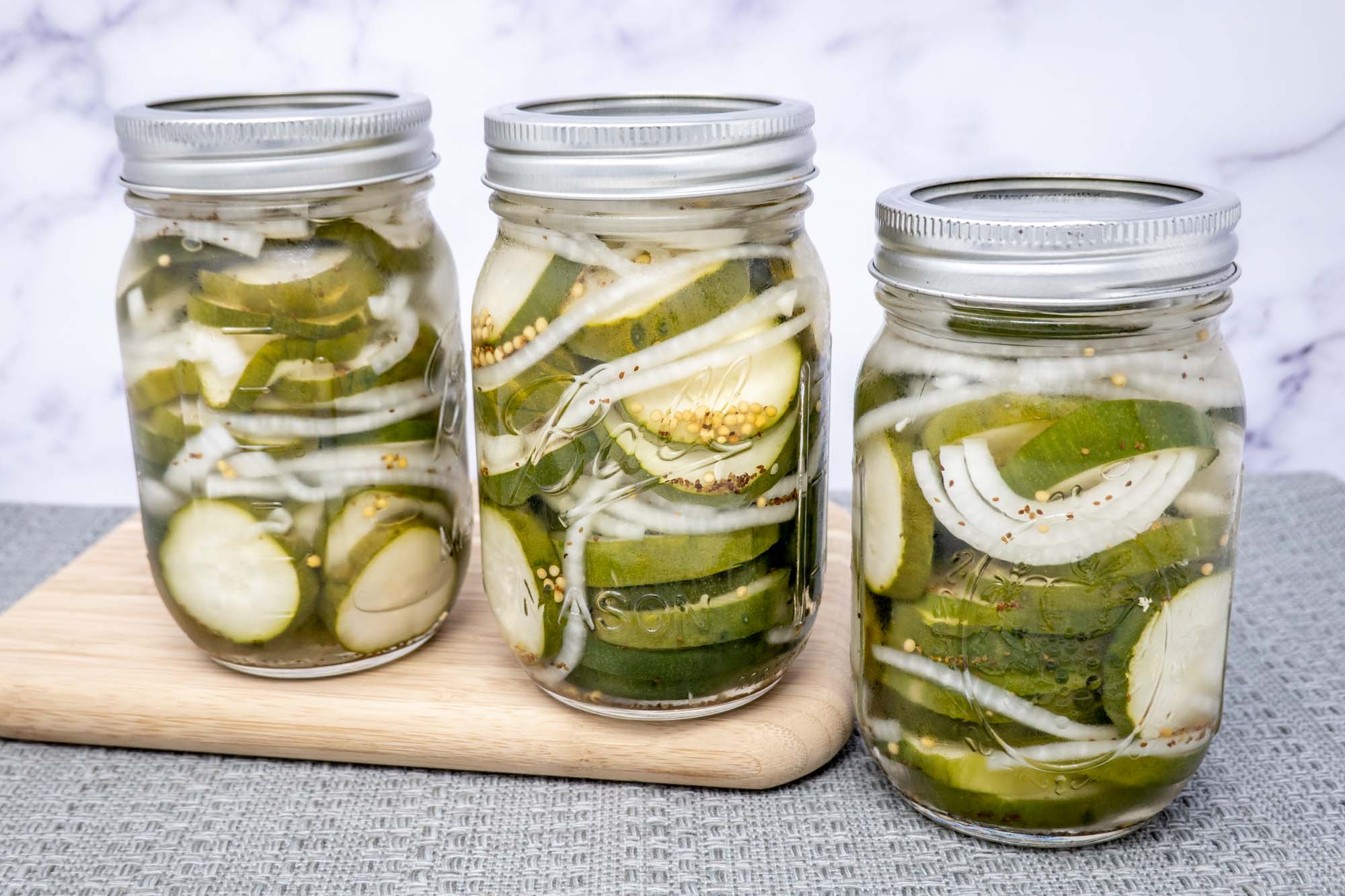
A glass jar filled with pale green watermelon rind pickles in clear spiced brine on a kitchen counter

Watermelon rind is the ultimate kitchen plot twist. You buy a watermelon for the juicy red part, and the green-and-white rind feels like unavoidable waste. But with a little trimming and a quick, spiced brine, that rind turns into crisp, snacky pickles that taste like summer learned some manners.

These are not fussy, canning-only, weekend-project pickles. This is a friendly stovetop method you can stash in the fridge. You get tang, a little sweetness, warm spice, and that addictive crunch that makes you "accidentally" eat three more pieces while putting the jar away.

Quick expectation check: This is a sweet-spiced pickle, not a dill pickle. If you love bread-and-butter vibes, you are in the right place.
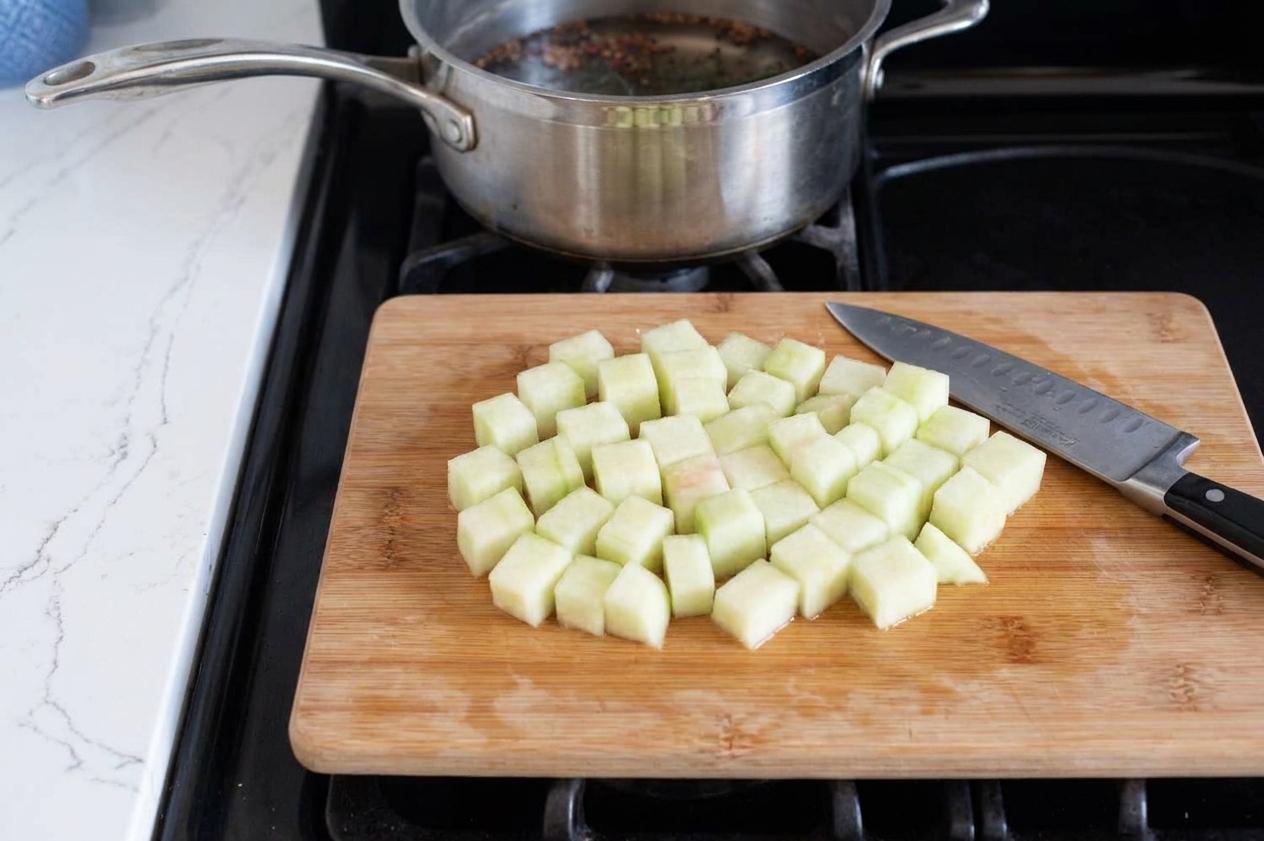
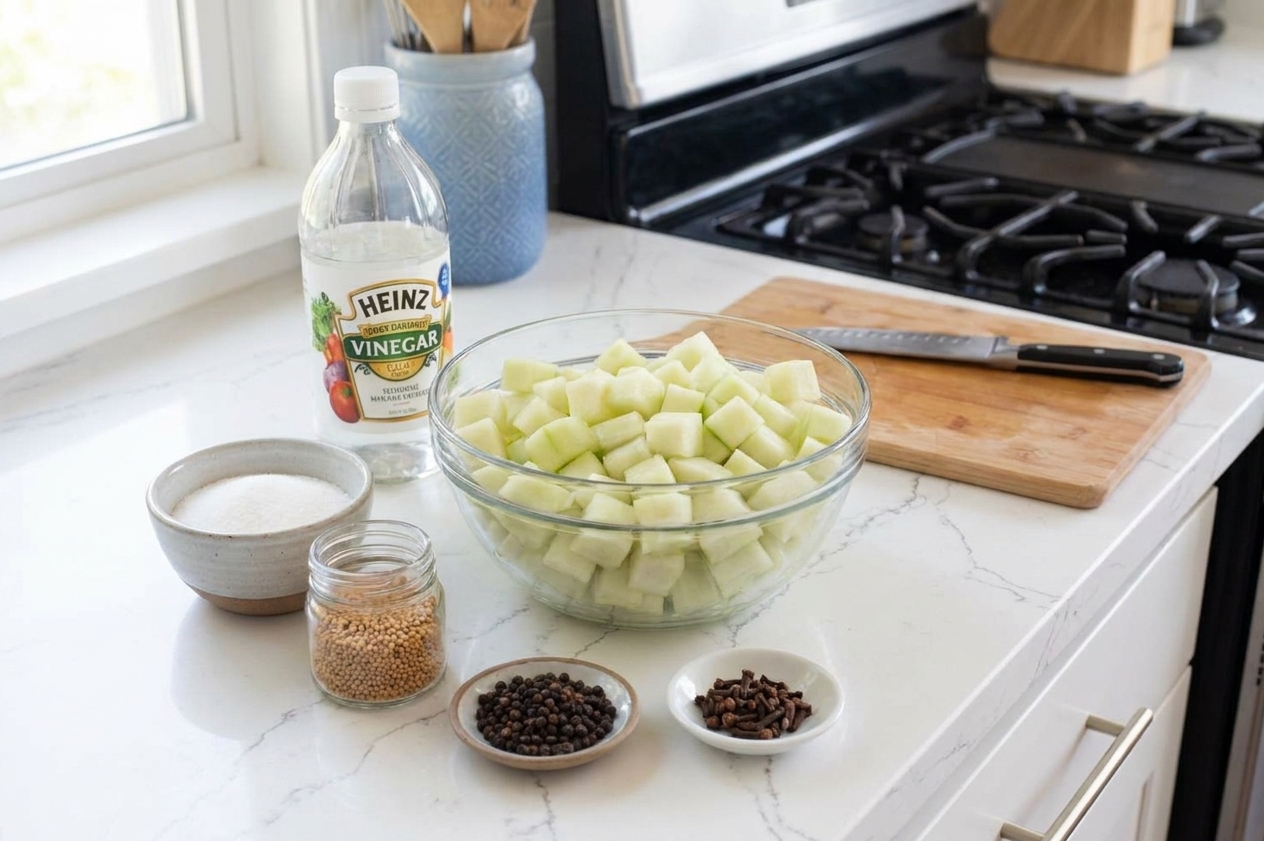
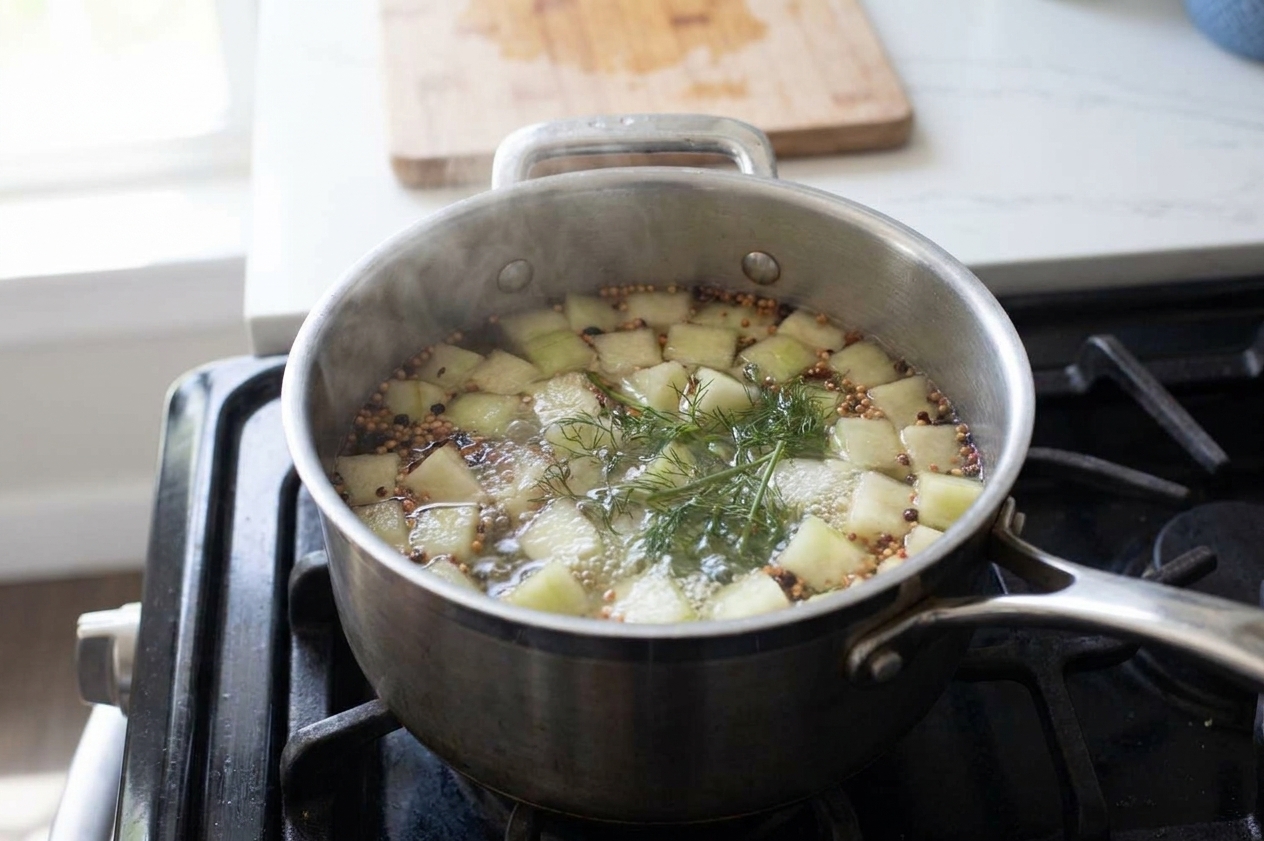
Trimmed watermelon rind cut into small cubes on a cutting board

Why It Works

  • Big crunch: a quick simmer tenderizes just enough while keeping the rind snappy.
  • Balanced brine: vinegar for tang, sugar for shine, salt to make everything pop.
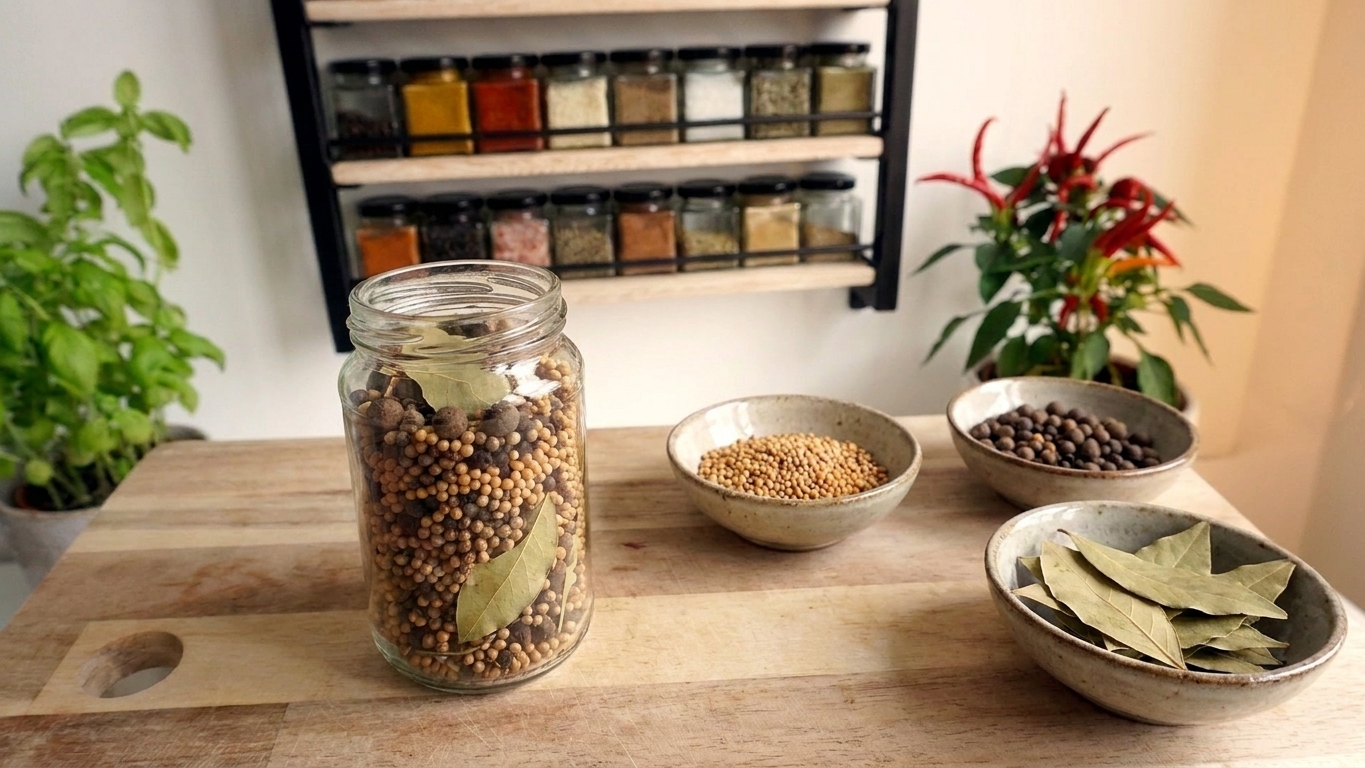
  • Cozy spice: mustard seed, peppercorns, and a little clove give classic deli-pickle vibes without overpowering.
  • Low drama: no special equipment or water-bath canning required, just a clean jar and a fridge.

Pairs Well With

Storage Tips

Refrigerator: Store pickles fully submerged in brine in a tightly sealed jar for up to 3 weeks. This is a guideline, not a countdown timer. It depends on a cold fridge and clean handling.

Keep them crisp: Always use a clean fork. Do not introduce crumbs or fingers, even if you promise you just washed your hands.

When to toss: If you see mold, smell anything funky, or notice unusual fizzing, do not eat them.

Not freezer-friendly: Freezing makes the rind soft and a little sad. These are a fridge pickle situation.

Common Questions

Do I have to remove all the green skin?

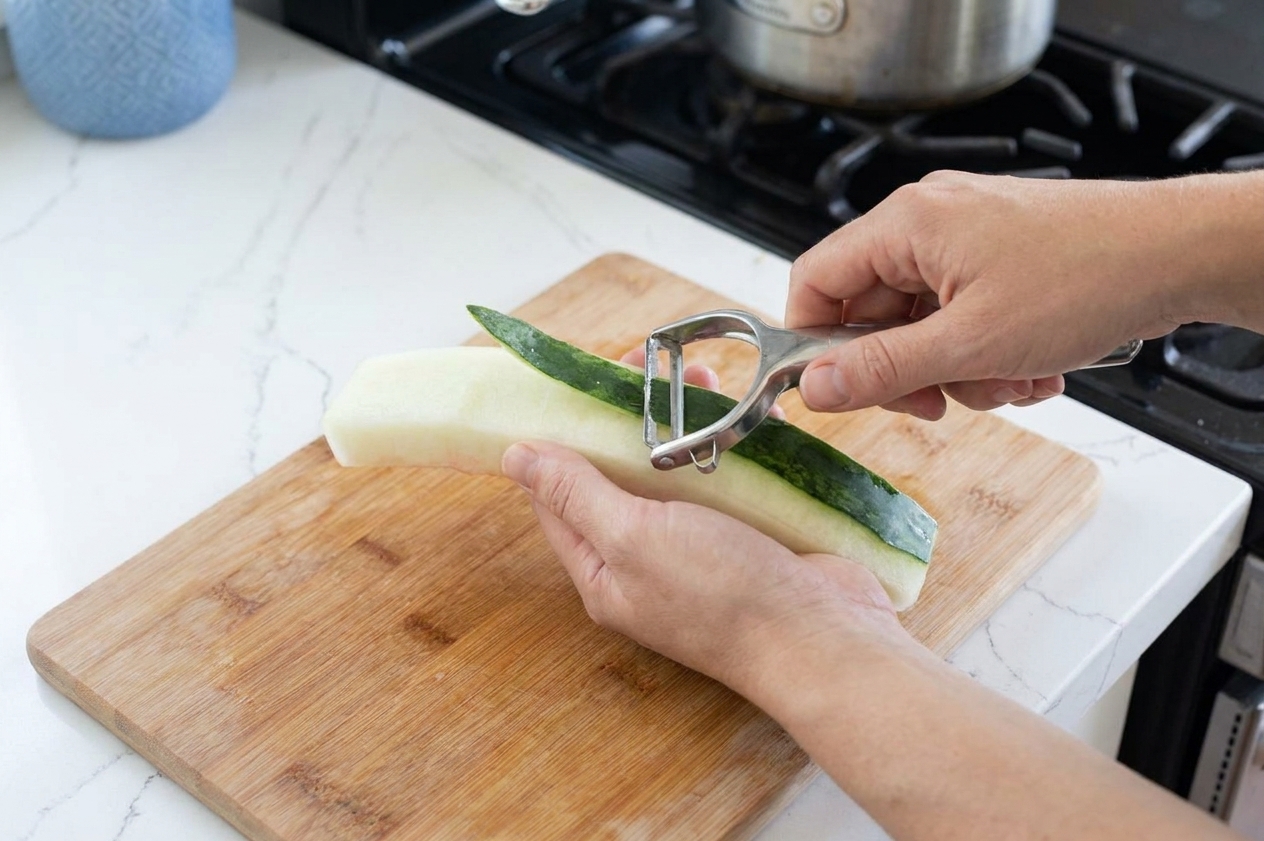
Yes. Peel off the dark green outer layer. You want the firm white and light green part. That is the sweet spot for texture.

Can I use the red watermelon flesh too?

For this recipe, skip it. Red flesh breaks down fast and can make the brine cloudy. If a little pink clings to the rind, that is fine. Just trim most of it away.

Why soak the rind in salt water first?

The short salt soak seasons the rind and can help improve the texture. Results vary a bit depending on the watermelon, but it is a simple step that stacks the odds in your favor.

How long until they taste good?

They are tasty after cooling, but they are best after 24 hours in the fridge. Day 2 is the real glow-up.

Can I make these shelf-stable?

This version is written for refrigerator storage. Shelf-stable canning needs tested ratios, processing times, and jar handling. If you want that, use a trusted, canning-specific recipe designed for water-bath processing.

How do I know if they went bad?

Use common sense. If you see mold, notice an off smell, or the jar is fizzy or bubbling in a suspicious way, toss them. When in doubt, do not power through.

What do I eat watermelon rind pickles with?

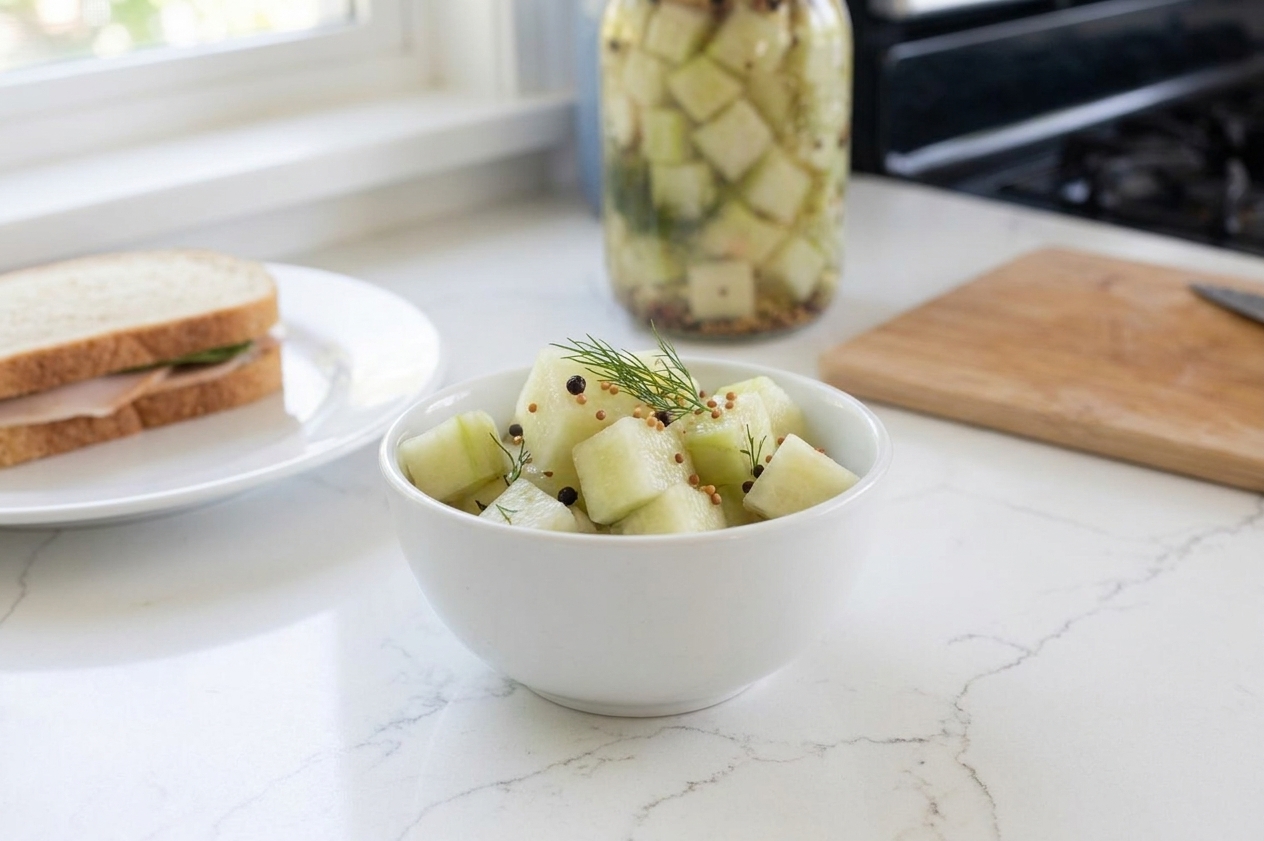
  • Burgers, hot dogs, pulled pork sandwiches
  • Chopped into tuna salad or chicken salad
  • With sharp cheddar and crackers
  • On a Southern-style plate with beans and cornbread

Are these like dill pickles?

Not really. These are a sweet-spiced pickle with tang, more in the bread-and-butter family than the garlicky dill universe.

The first time I made watermelon rind pickles, it was purely out of stubbornness. I looked at a mountain of rind and thought, there is no way this is all trash. A little peeling, a little simmering, and suddenly I had this jar of crunchy, sweet-tangy bites that made my fridge feel like a real deli case. Now it is my favorite "I swear I am being responsible" recipe that also happens to taste like I am getting away with something.