Mom's Best Recipes
Recipe

Yaki Udon

Chewy stir-fried udon noodles with crisp veggies and a glossy savory-sweet sauce that tastes like your favorite noodle shop.

Author By Matt Campbell
4.8
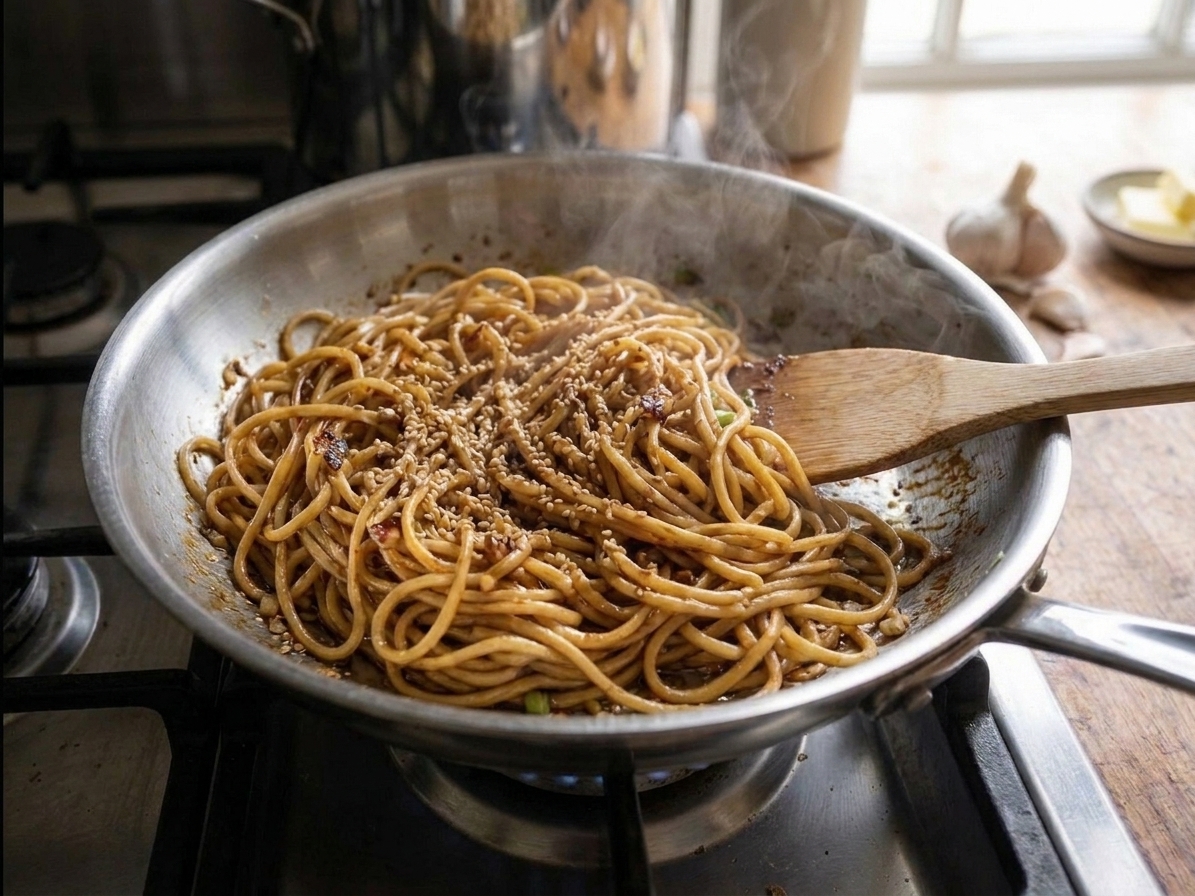
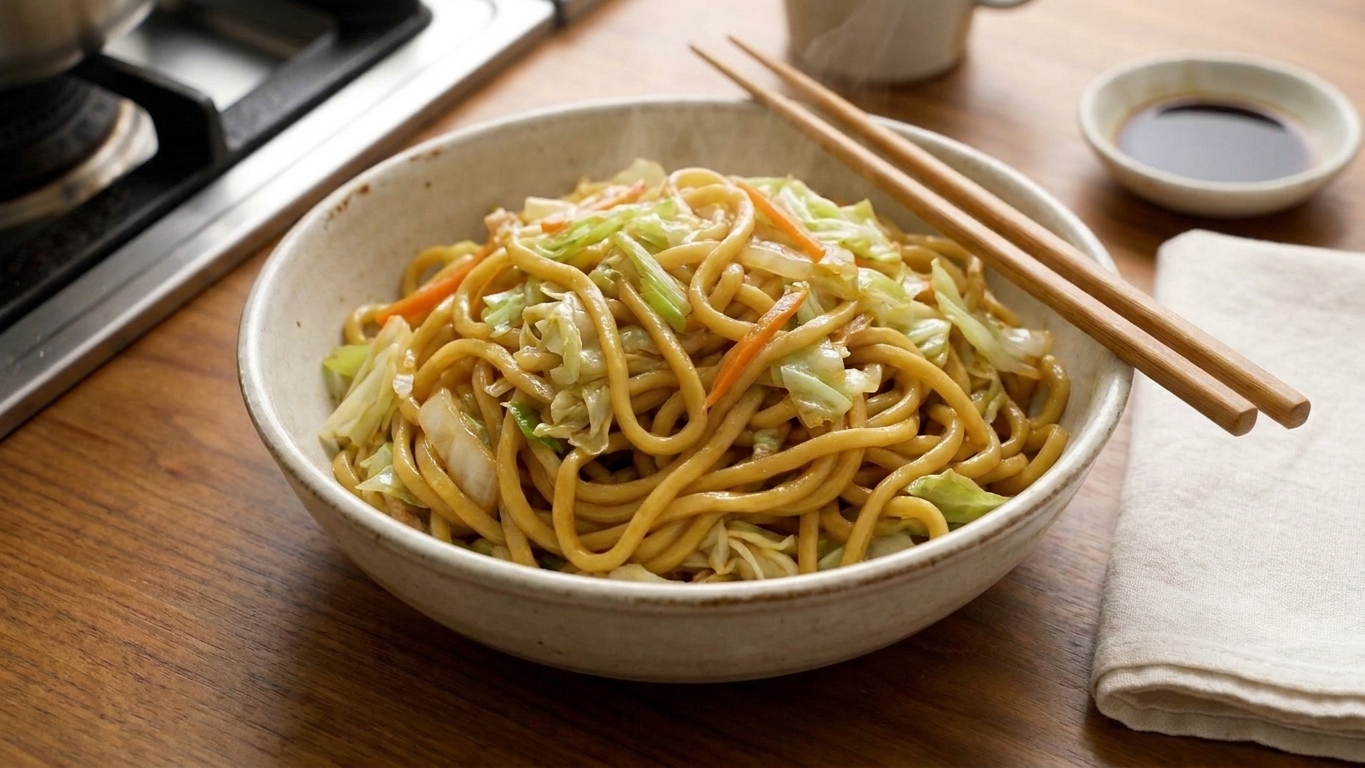
A steaming skillet of yaki udon with glossy thick noodles, sliced cabbage, carrots, and mushrooms, finished with scallions in a bright home kitchen, real food photography

Yaki udon is my kind of weeknight chaos: one hot pan, big chewy noodles, and a sauce that hits salty, sweet, and a little roasty all at once. It is the meal you make when you want takeout vibes but also want to be in sweatpants and in control of the crunchy veggie situation.

Here’s the whole trick: treat udon like you would a good sear, meaning hot pan, fast toss, minimal liquid. We par-cook the noodles just enough to loosen them, toss them with a touch of oil so they do not glue themselves together, then stir-fry in the right order so everything stays crisp and bouncy.

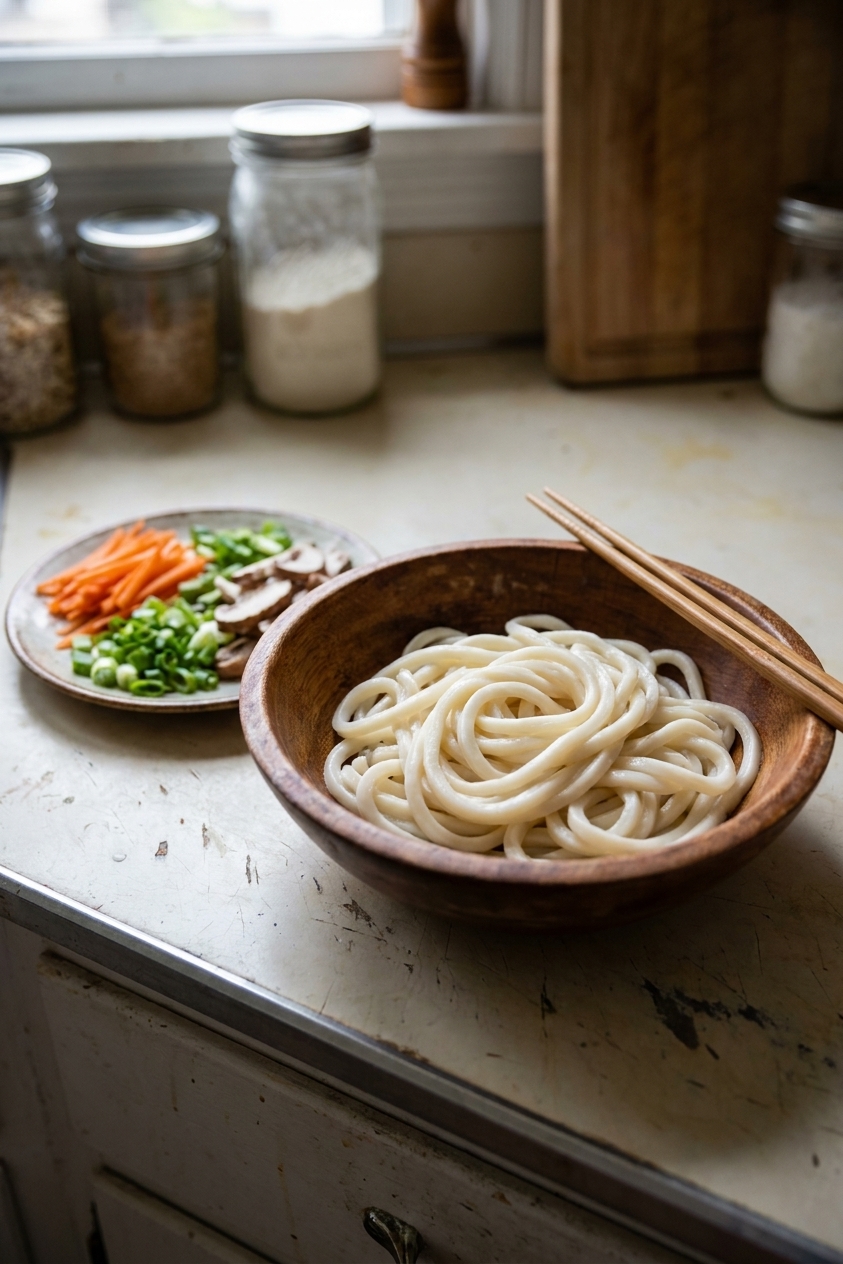
Fresh udon noodles coiled in a wooden bowl on a kitchen countertop next to sliced vegetables, real food photography

Why It Works

  • Bouncy, not mushy noodles: quick loosening, quick drain, quick oil toss, then high-heat stir-fry.
  • Balanced sauce: soy sauce, mirin, and a touch of sugar for that classic savory-sweet gloss.
  • Flexible protein: chicken, pork, shrimp, or tofu all work with the same method.
  • Crisp vegetables: we cook in stages so cabbage stays snappy and mushrooms get a little browning.

Pairs Well With

Storage Tips

Fridge: Store yaki udon in an airtight container for up to 3 days. The noodles will soak up sauce as they sit, which is not a tragedy, just a vibe shift.

Reheat (best): Toss in a skillet over medium-high heat with a splash of water (1 to 2 tablespoons) to loosen the sauce, then stir-fry until hot and glossy again.

Microwave (still fine): Add a teaspoon of water, cover loosely, and heat in 30-second bursts, stirring each time.

Freezer: I do not love freezing this. Udon can turn a little spongey and the veggies lose their snap.

Common Questions

Is yaki udon the same as yakisoba?

Not quite. Both are typically wheat noodles, but they are built different. Yakisoba uses thinner, springy Chinese-style wheat noodles (often steamed and lightly alkaline), while yaki udon uses thick Japanese wheat udon, so you get that chewy, cozy bite that feels more substantial.

What udon should I buy?

Frozen udon is my favorite for texture. Shelf-stable vacuum-packed udon works great too. If you use dried udon, cook it fully and rinse briefly to remove excess starch, then drain well.

How do I keep the noodles from getting mushy?

Three rules: do not over-boil, drain well, and stir-fry fast over high heat. Also, do not dump noodles into a pan full of watery vegetables. Cook veggies first, then add noodles and sauce. If your pan is crowded, cook in batches so everything stays hot and glossy instead of turning into a steamy pile.

Can I make it vegetarian?

Yes. Use tofu or extra mushrooms and swap the sauce add-ins as needed. If you finish with bonito flakes, skip them for vegetarian. Add a little extra umami with a small spoonful of miso stirred into the sauce.

What can I use instead of mirin?

Best swap: sake (or dry sherry) plus a pinch of sugar. Use 2 tablespoons sake plus 1 to 2 teaspoons sugar in place of 2 tablespoons mirin. Mirin-style seasoning also works if you have it. If you are in a true pantry situation, you can do rice vinegar plus a pinch of sugar for a sweet-tang approximation (start with 1 tablespoon rice vinegar and 1 teaspoon sugar), but it is not a true mirin stand-in.


I started making yaki udon when I wanted something that felt like takeout, but without the delivery wait and the inevitable “why is every vegetable steamed into sadness” moment. The first time I nailed it, it was purely because I got impatient and cooked everything in stages. Protein out, veggies in, noodles last, sauce right at the end. Accidentally perfect. Now it is one of those meals I make when I need dinner to feel like a win, even if the kitchen looks like a small tornado rolled through.