Do I need to truss the chicken?
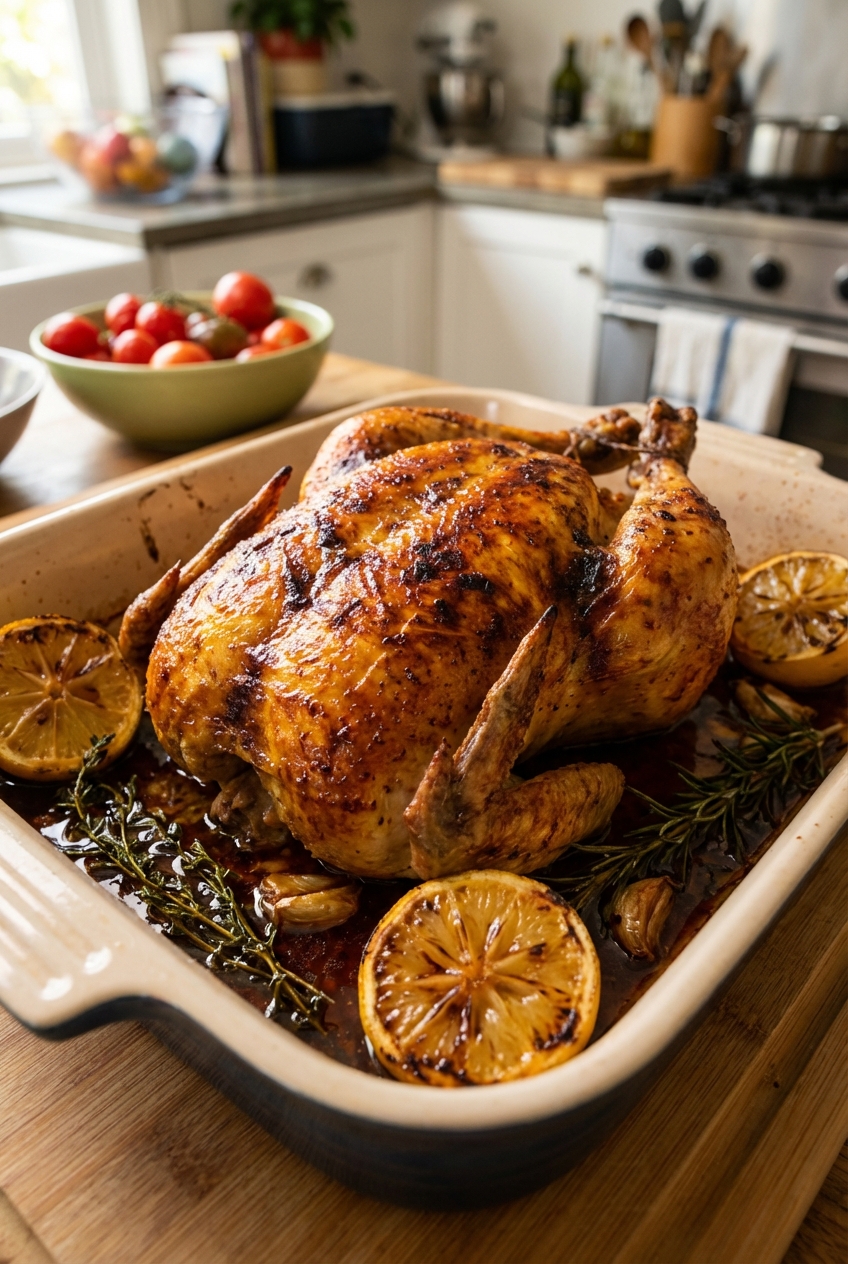
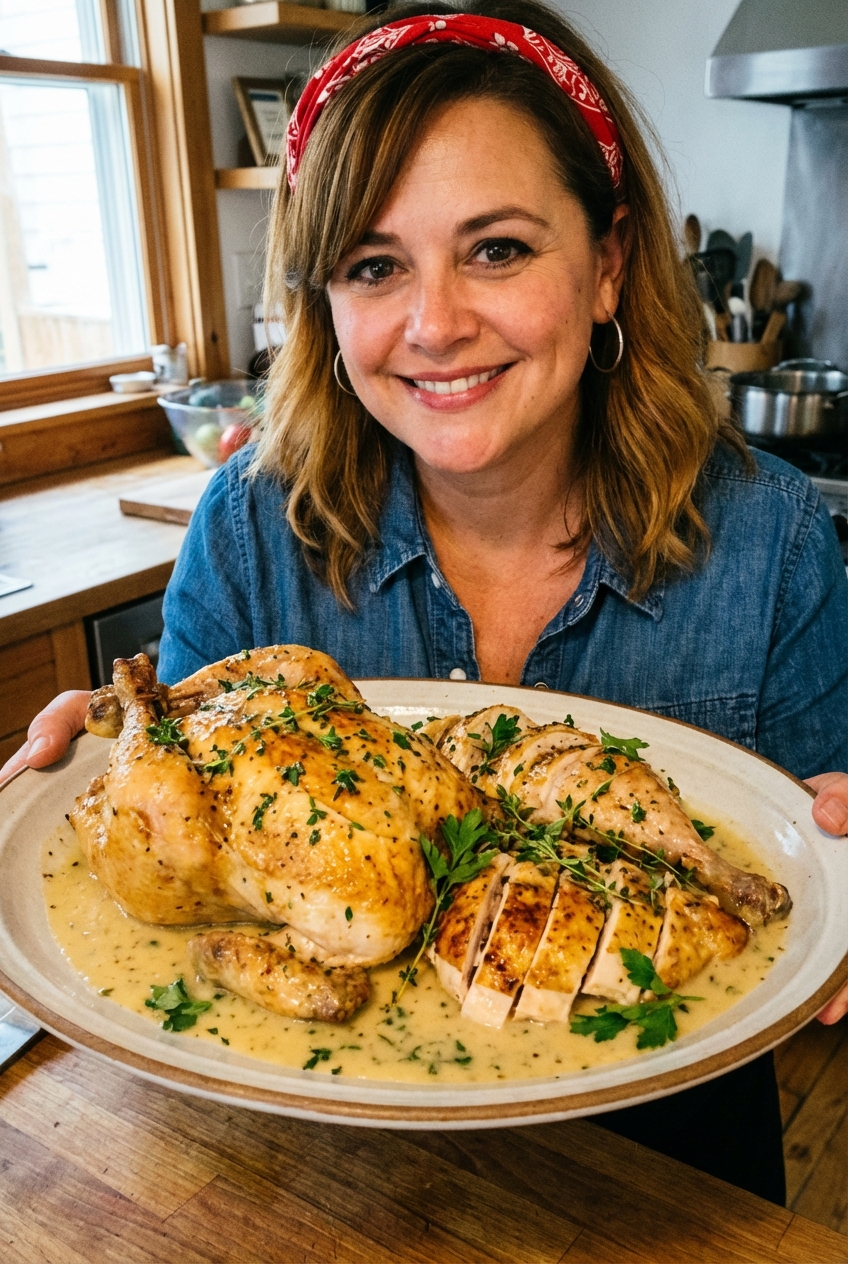
No, but it helps. Trussing (tying the legs together) makes the bird cook a bit more evenly and look extra put together. If you do not have twine, just tuck the wing tips under the body and roast as is.
What internal temperature should I aim for?
USDA guidance is 165°F in the thickest part (and avoid touching bone with the thermometer). For super juicy results, many cooks pull the chicken when the thickest part of the breast hits 155°F to 160°F and the thighs are 170°F to 175°F, then rely on carryover heat during a full rest to finish the job. If you are unsure, take it to 165°F.
Why dry brine instead of a wet brine?
Dry brining (salt plus time) seasons the meat deeply and dries the skin so it roasts up crisp. Wet brines can add moisture, but they often fight against crispy skin.
My pan drippings look dark. Is that bad?
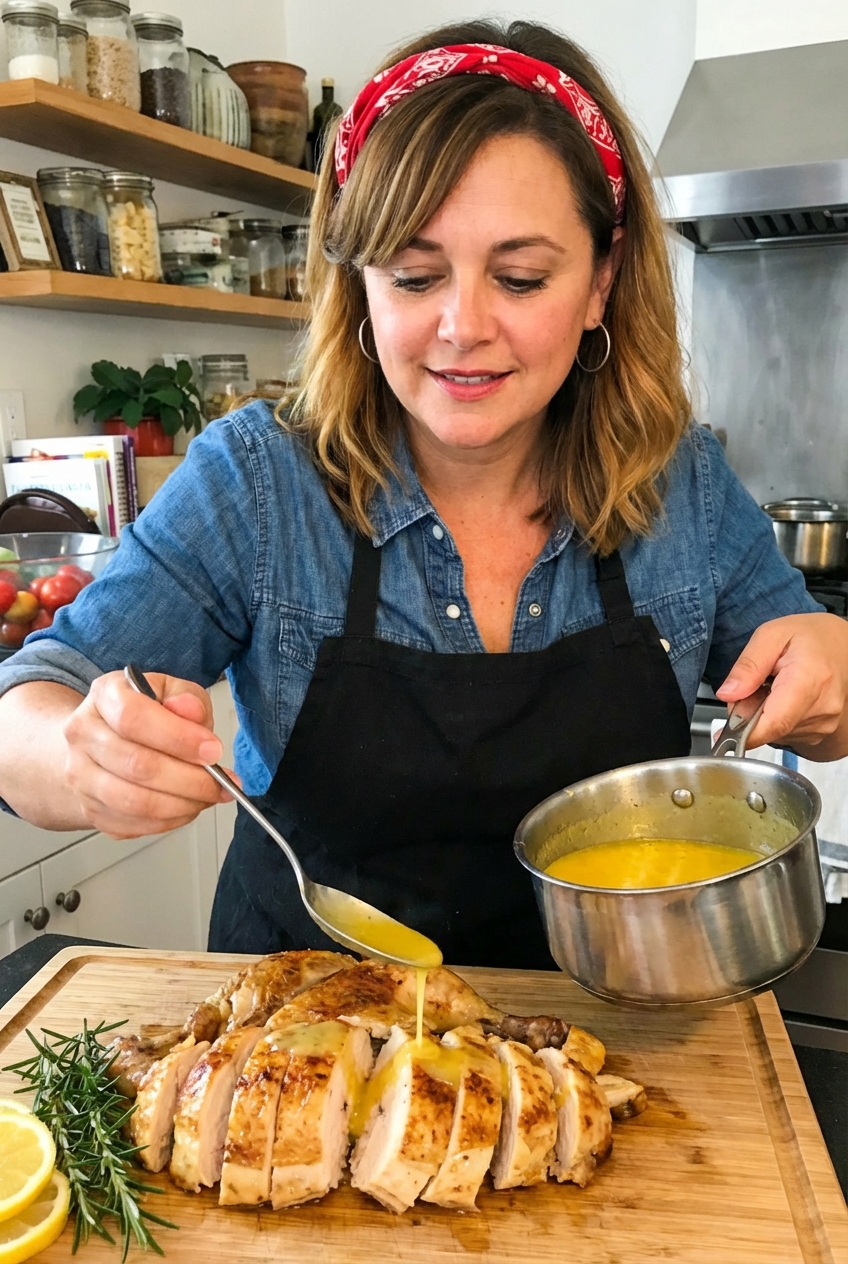
Not necessarily. Deep brown is flavor. If it smells burnt, spoon off excess fat, add broth, and scrape gently. If it is truly burnt, skip the pan sauce and make a quick lemon Dijon butter sauce in a small saucepan instead.
Can I add vegetables to the pan?
Yes. Carrots, onion, and potatoes are great. Just know they can block airflow under the chicken, so use a rack if you have one, or spread vegetables around the edges and keep the chicken slightly elevated on a bed of onion slices.
My sauce is too strong or too thin. Help?
You should end up with about 1/2 to 3/4 cup sauce. If it tastes intense, whisk in an extra splash of broth. If it is too thin, simmer it for another minute or two before adding the butter. If it gets too thick, loosen with broth or lemon juice.