Common Questions
What is the difference between applesauce and apple butter?
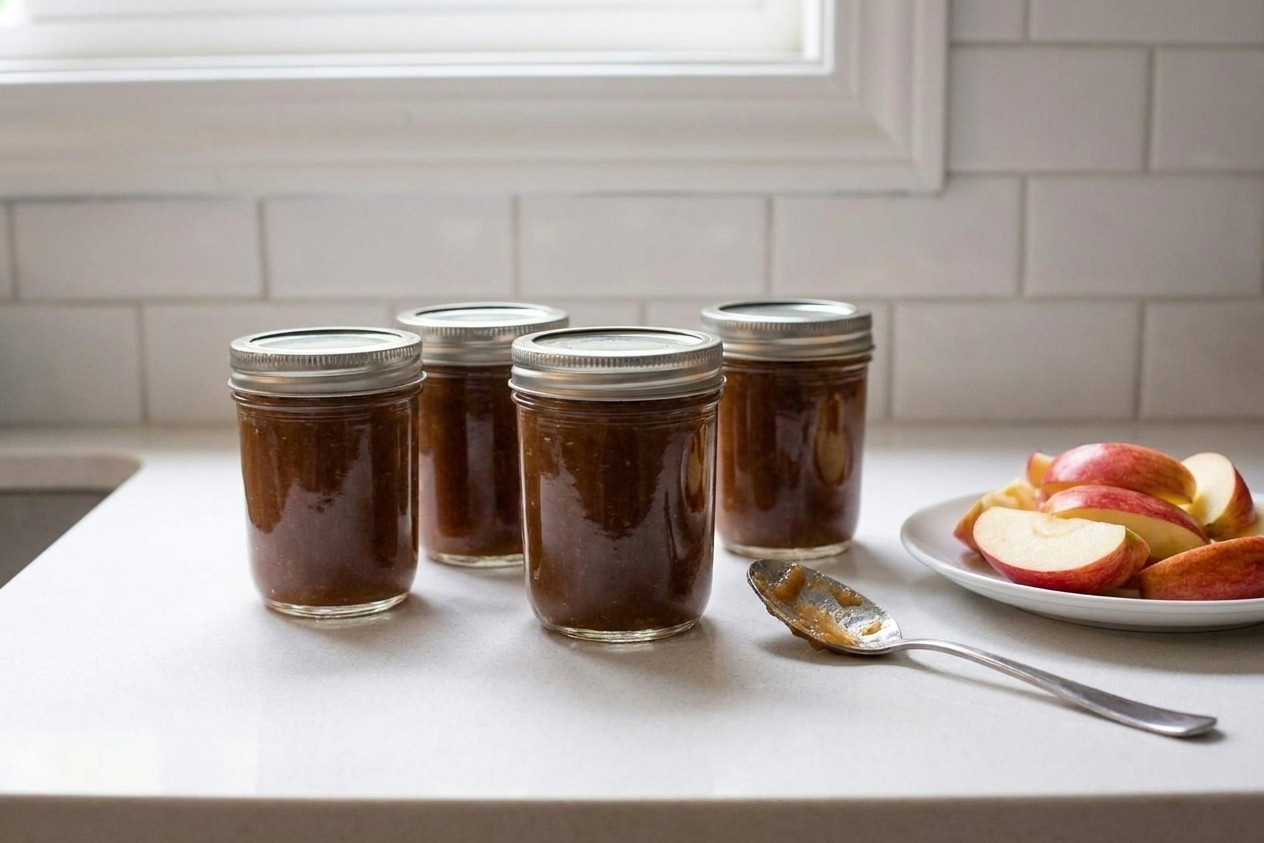
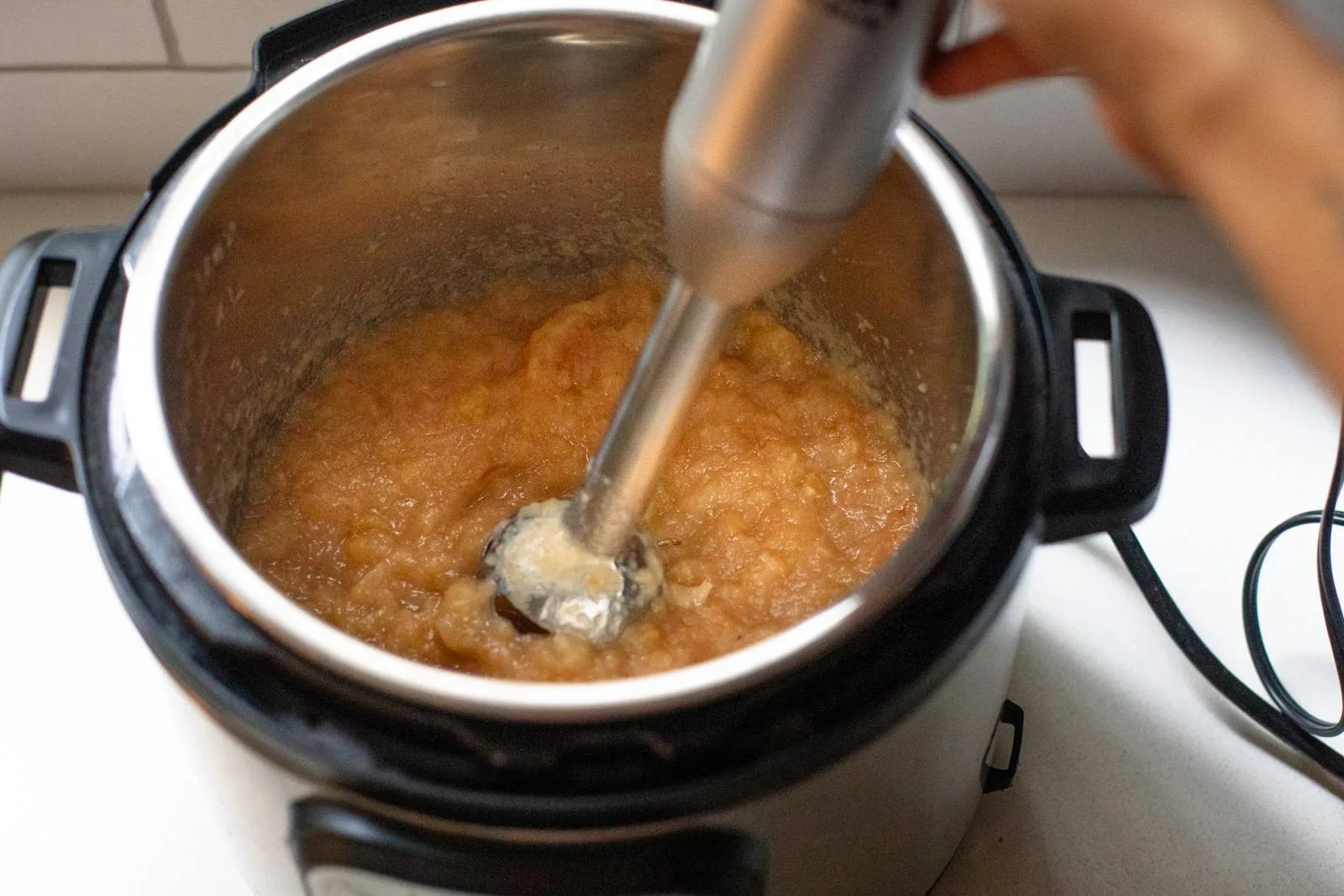
Applesauce is cooked apples that are pureed and kept fairly loose. Apple butter is cooked much longer until it becomes thick, darker in color, and concentrated in flavor. Think spread versus spoon.
Do I have to add lemon juice?
It depends on the tested recipe you are following. Apples are naturally high-acid, and many tested apple butter recipes are safe for water bath canning without added lemon juice. Some recipes include bottled lemon juice for brighter flavor and better color, plus consistency from batch to batch. In this recipe, the lemon juice is there for flavor and to keep the taste lively, not as the only safety step.
Best practice: For maximum canning confidence, follow a tested recipe exactly from a source such as the USDA Complete Guide to Home Canning, the National Center for Home Food Preservation (NCHFP), or Ball.
What apples work best?
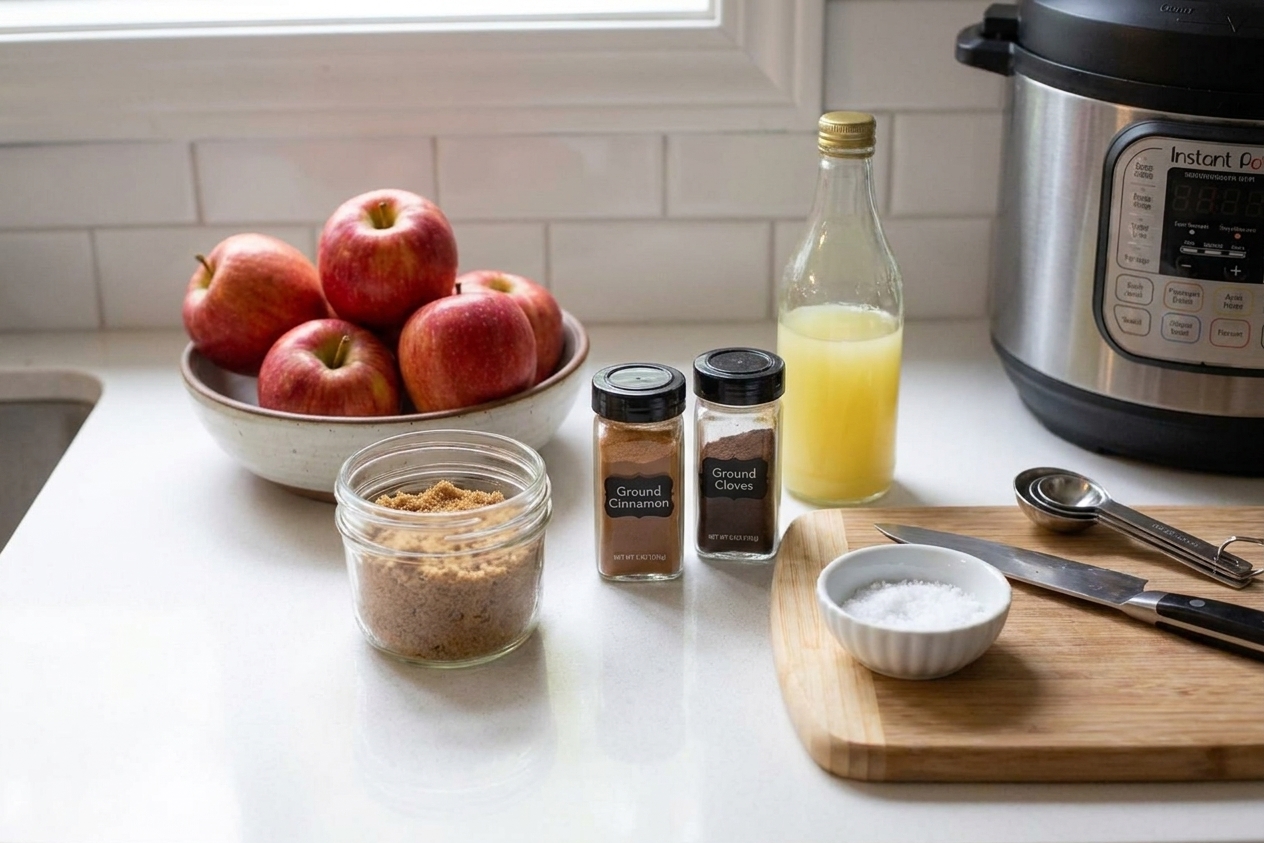
Use a mix if you can. A sweet apple plus a tart apple makes the flavor pop. Great options include Fuji, Gala, Honeycrisp, Golden Delicious, Jonagold, and Granny Smith.
How do I know when apple butter is thick enough to can?
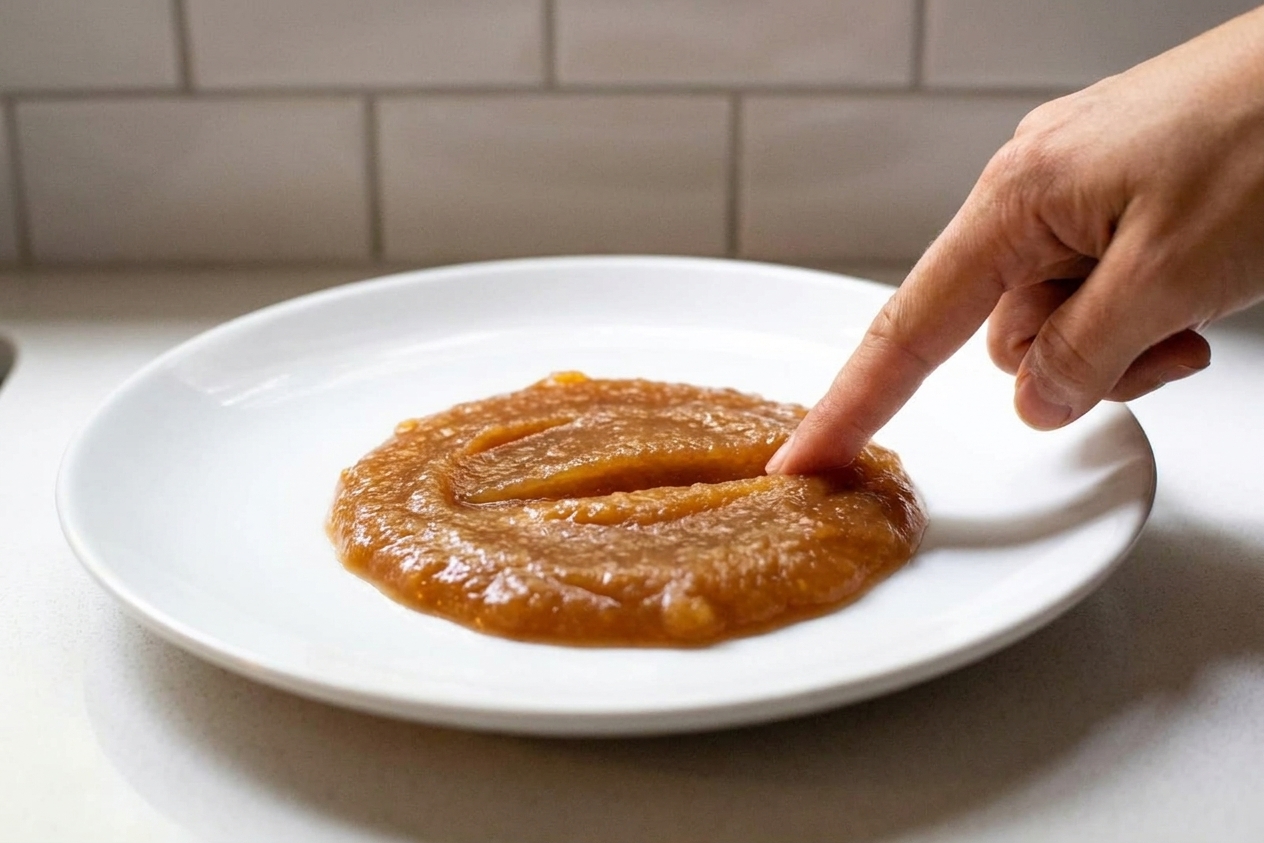
Two easy cues: (1) Spoon test: when you lift a spoon, it should mound and fall in slow, thick sheets. (2) Plate test: put a small spoonful on a cold plate. If liquid does not weep around the edges after a minute and it holds a clean line when you swipe a finger through it, you are in the apple butter zone.
My apple butter is runny. Can I fix it?
Yep. Pour it back into the pot and simmer uncovered, stirring often, until it passes the plate test. Apple butter thickens as water evaporates, not from added starch. Skip thickeners because they can change heat penetration and make canning outcomes less predictable.
Can I reduce the sugar?
You can reduce it a bit for taste, but do not treat sugar as the safety lever here. The key is following a tested canning process (jar size, headspace, and correct processing time for your altitude). Less sugar can mean a looser body and slightly shorter best-quality shelf life.
Can I add vanilla or other flavors?
Small dry spice tweaks are generally fine. For anything beyond that, stick close to the tested recipe you are using. If you add vanilla, keep it to a small amount (like 1 teaspoon) and stir it in at the end for flavor. Avoid adding extra liquid or large amounts of sweeteners that can change thickness and heat flow in the jar.
Can I use pint jars?
Only if the tested recipe you are following explicitly allows pints for apple butter and gives the processing time for that jar size. If you are unsure, stick with half-pints for the most straightforward, widely supported option.
Is processing time the same at high altitude?
No. Processing time increases as altitude goes up. Use the altitude adjustment table for boiling-water canning from the same trusted source as your processing time (for this recipe, see the NCHFP boiling-water canner altitude adjustments table linked in the instructions).