Mom's Best Recipes
Recipe

Classic Apple Tarte Tatin

A French upside-down apple tart with deep caramel, tender fruit, and a shatter-crisp puff pastry top that becomes the buttery base after the flip.

Author By Matt Campbell
4.8
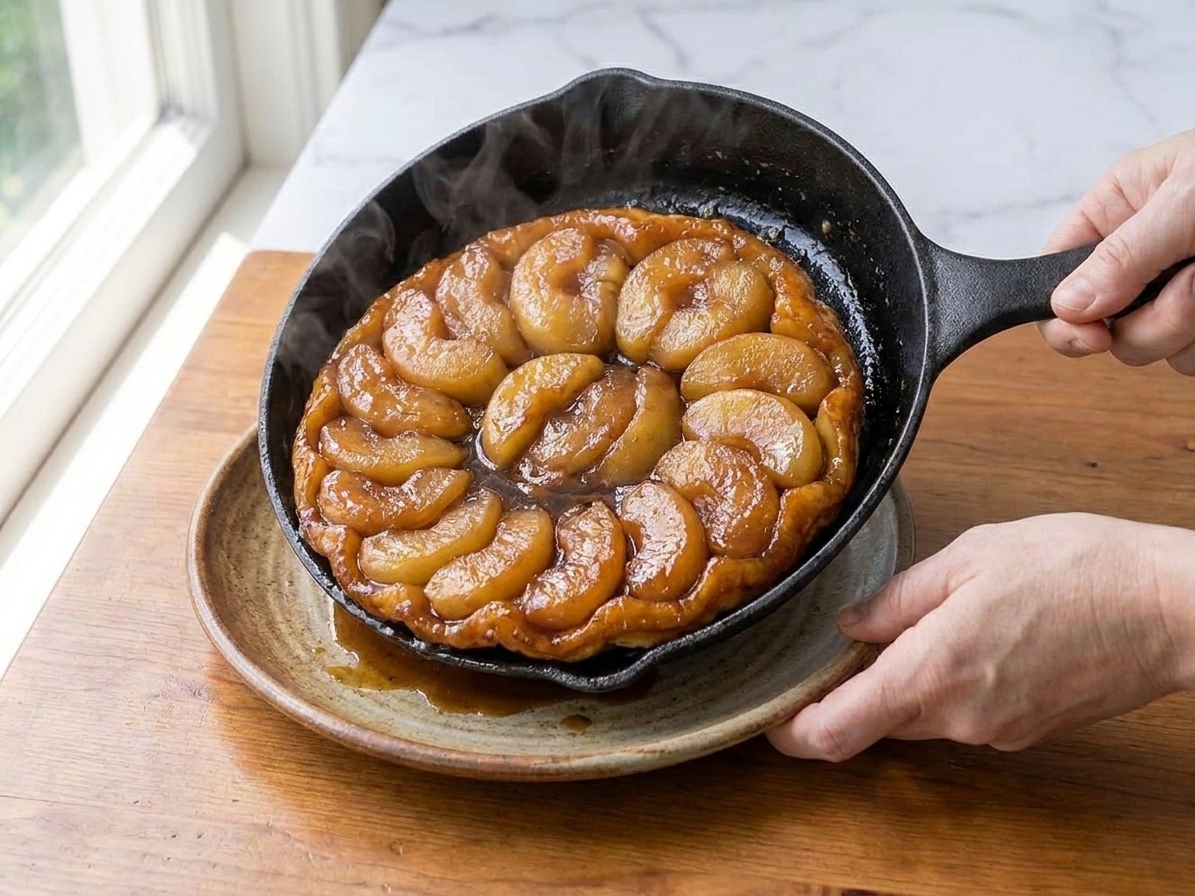
A glossy apple tarte Tatin flipped onto a rustic ceramic plate, deeply caramelized apples arranged in a tight spiral with a burnished, sticky sheen, on a warm wood table with soft window light

Tarte Tatin is the dessert equivalent of a cozy sweater that also happens to be a little bit of a show-off. It is an upside-down apple tart where the apples get cooked in butter and sugar until they turn into deep amber caramel, then you cap it with pastry, bake, and do the dramatic flip at the end. (It bakes on top, then becomes the base after you flip. Magic.)

Here is the good news: you do not need fancy pastry skills. Store-bought puff pastry makes this feel like a weeknight miracle, and the skillet does most of the work. Your job is basically to keep an eye on the caramel and not panic. Even if the apples shift a little during the flip, it still tastes like buttery, caramelized perfection. And that is the whole point.
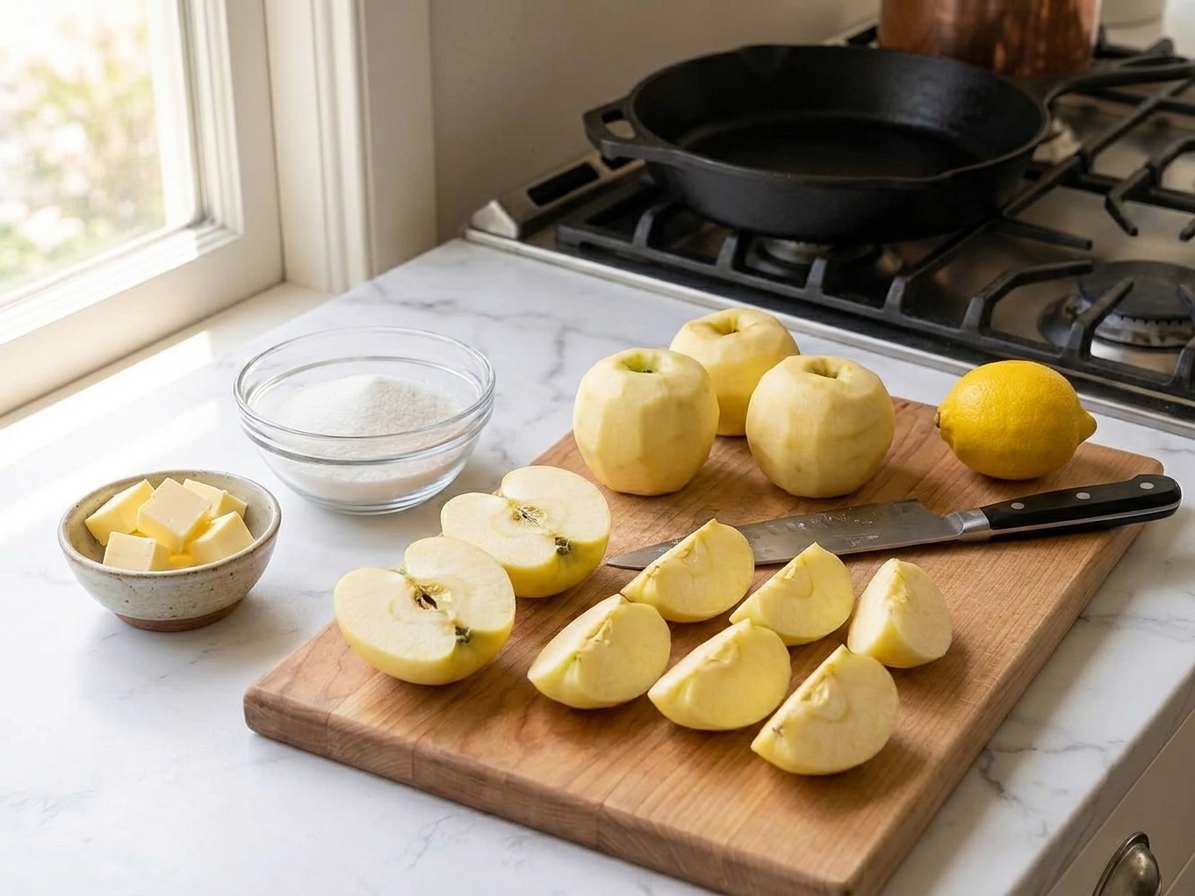
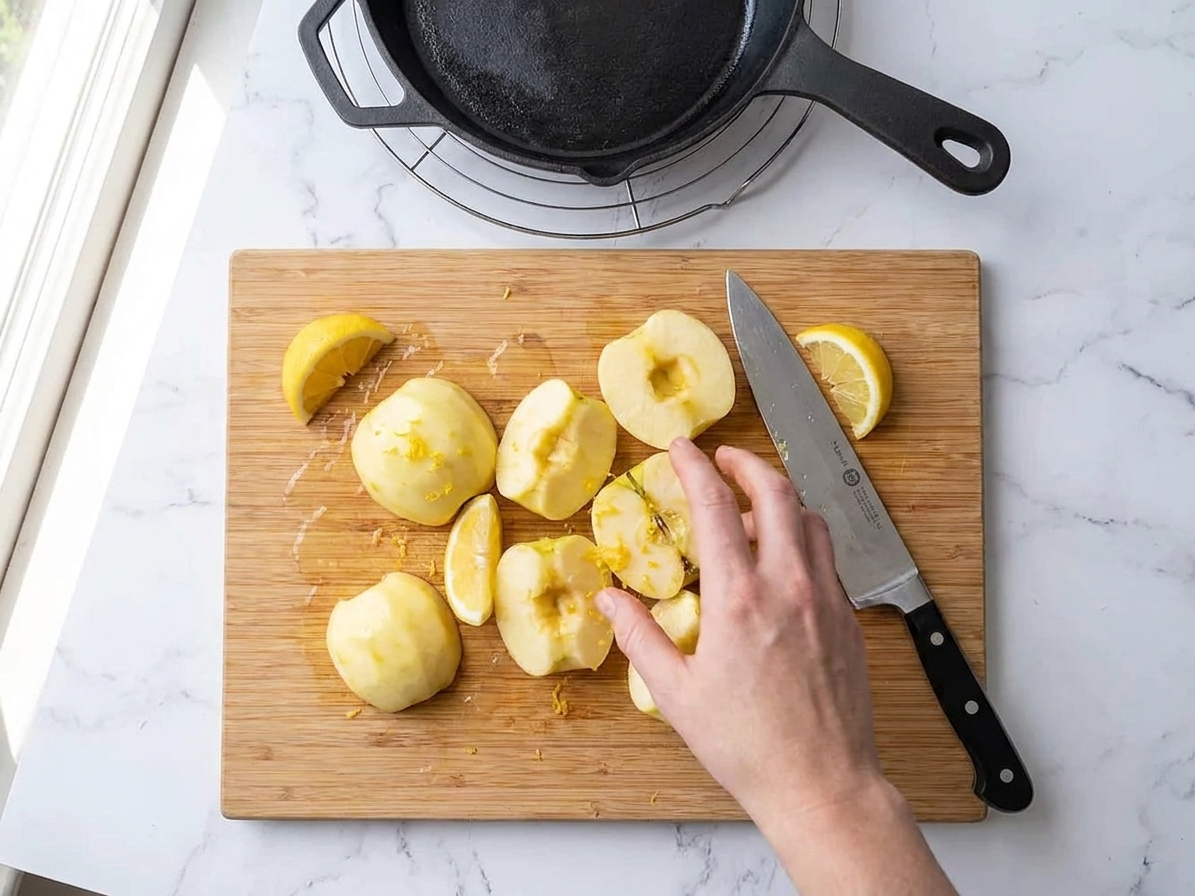
A kitchen counter with peeled apples, a bowl of sugar, a small bowl of butter cubes, and a lemon, set up for making tarte Tatin in warm natural light

Why It Works

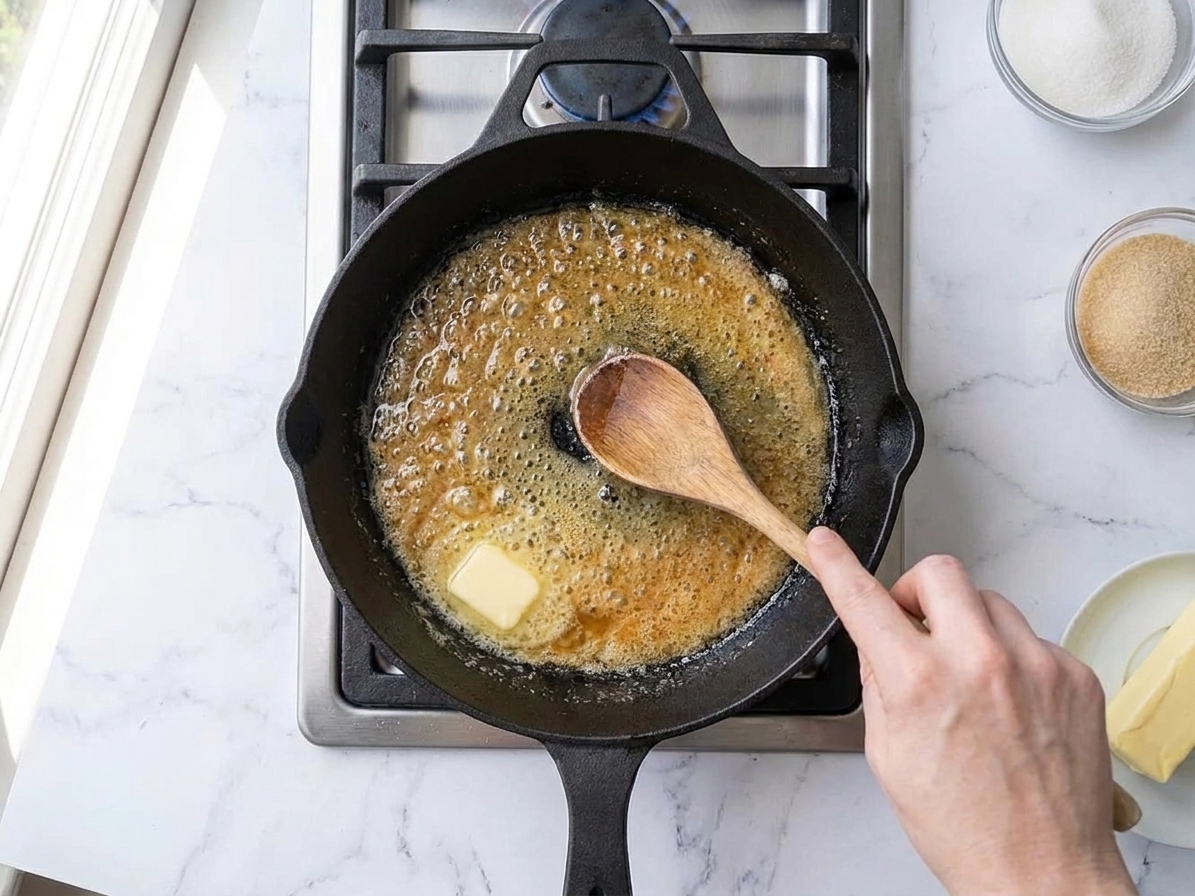
  • Caramel with confidence: You build the caramel right in the skillet, then finish it in the oven so it turns deep and glossy without constant stirring.
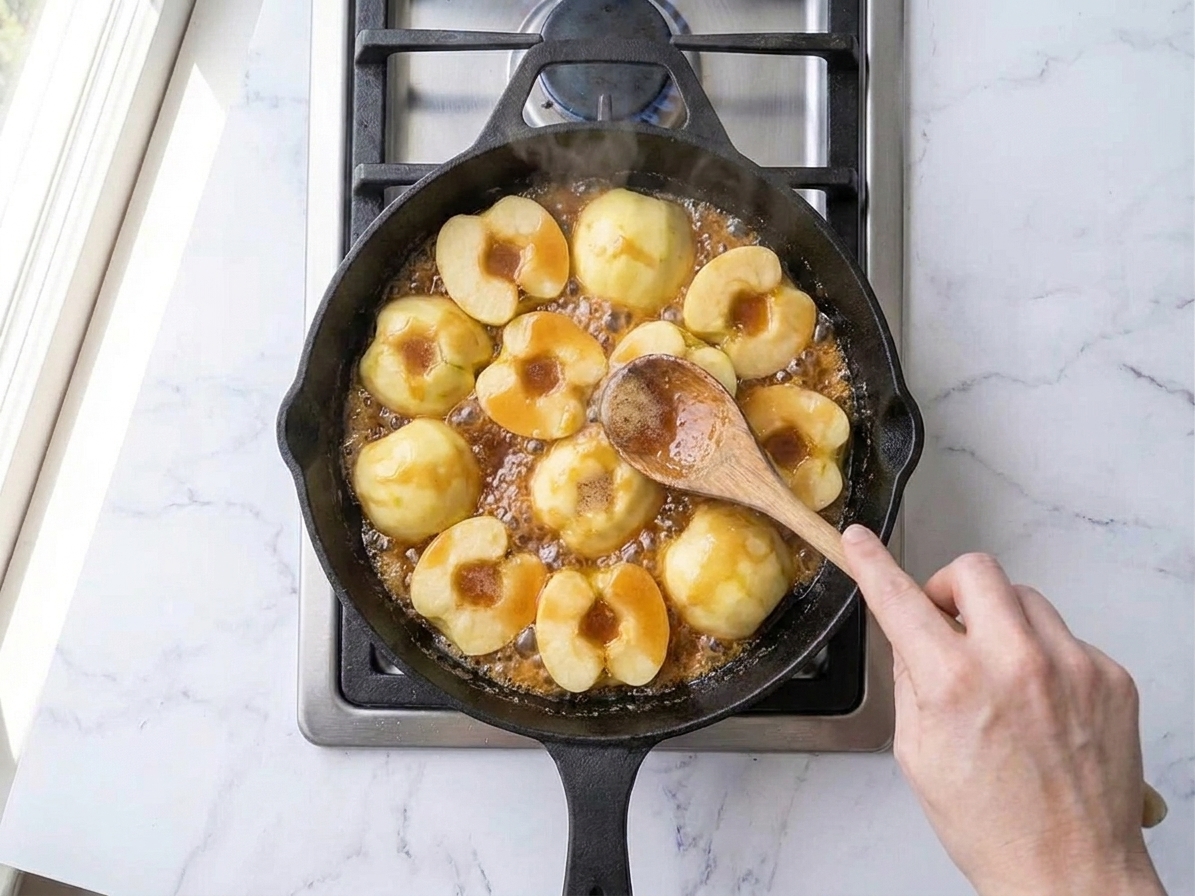
  • Apples that stay tender, not mushy: Halved apples pack tightly and hold their shape while they baste in butter and sugar.
  • Crisp, flaky top: Puff pastry bakes up golden and shatter-crisp, then becomes the base after the flip.
  • Low-drama presentation: A short rest before unmolding helps the caramel release cleanly, so you get that classic shiny apple top.

Pairs Well With

Storage Tips

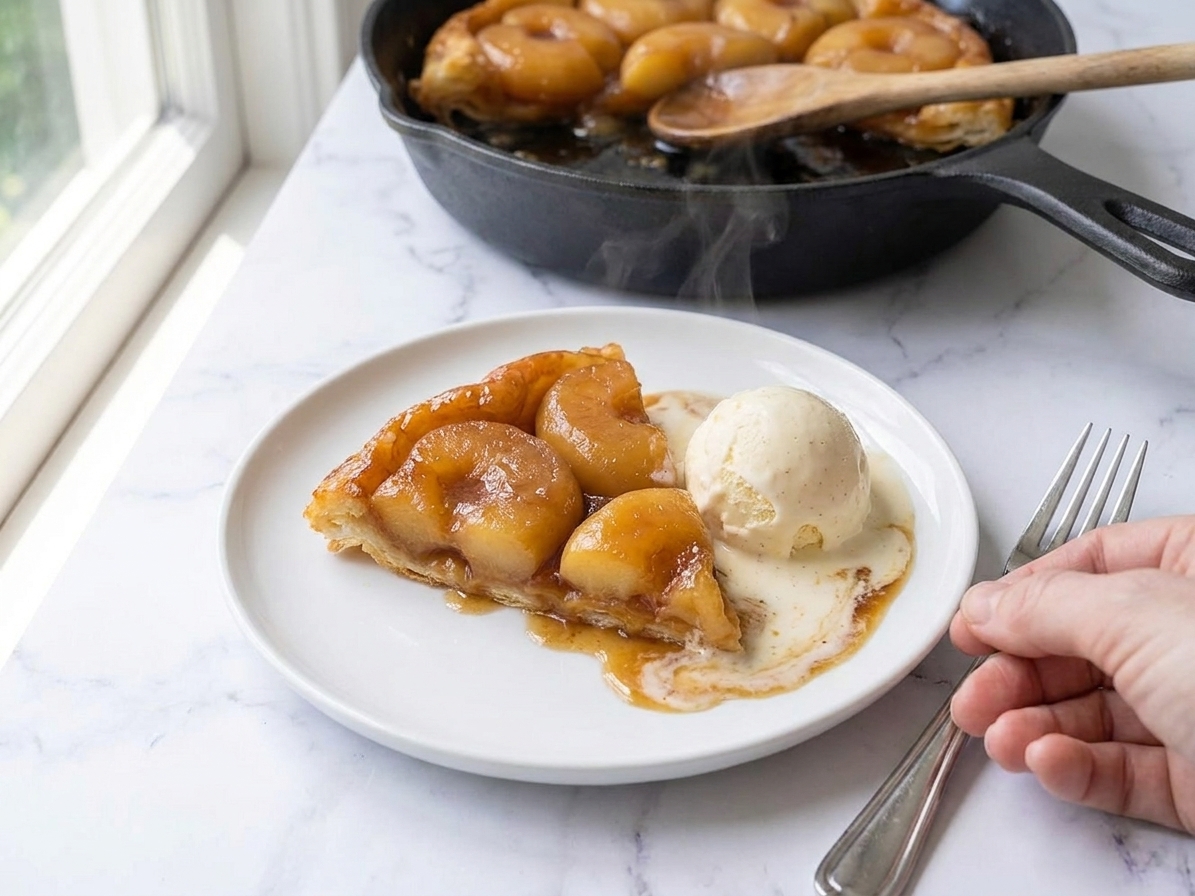
Best day to eat it: Tarte Tatin is peak the day it is made, when the pastry is still crisp and the caramel is glossy.

Fridge: Store leftovers covered in the refrigerator for up to 3 days. The pastry will soften, but it will still taste amazing.

Reheat (recommended): Warm slices on a sheet pan in a 325°F oven for 8 to 12 minutes. This helps re-crisp the pastry and loosens the caramel.

Microwave (in a pinch): 15 to 25 seconds per slice, but expect softer pastry.

Freezing: Not my favorite. The apples weep and the pastry loses its magic. If you must, freeze slices tightly wrapped up to 1 month and reheat from thawed in the oven.

Common Questions

What kind of apples are best for tarte Tatin?

Go for apples that hold their shape: Granny Smith for tang and structure, Honeycrisp for a sweeter balance, or Pink Lady for a nice middle ground. I like using half Granny Smith and half Honeycrisp for that sweet-tart sweet spot.

Do I have to make it in a cast iron skillet?

No, but you do need an oven-safe skillet (10-inch is ideal). Cast iron holds heat well and helps the caramel behave. Heavy-bottomed stainless can work too, just keep a close eye because it can heat quickly and caramel can darken fast.

How do I know when the caramel is the right color?

You want deep amber, like dark honey. Too pale and it tastes like sweet butter. Too dark and it can tip bitter. If you are unsure, pull it just slightly lighter than you think, because it will continue to darken in the oven.

Why did my tarte Tatin stick?

Usually one of three things: the caramel got too dark (it burns, hardens, and sticks), you waited too long to flip (it sets up like glue), or the pan had hot spots that overcooked part of the caramel. Next time, flip after a 10 to 15 minute rest, and run a thin knife around the edge before unmolding.

Can I make tarte Tatin ahead?

Yes. Make it earlier the same day, keep it at room temp for a few hours, then warm it in a 300°F oven for 10 minutes before serving. If you refrigerate it, reheat in the oven so the caramel loosens.

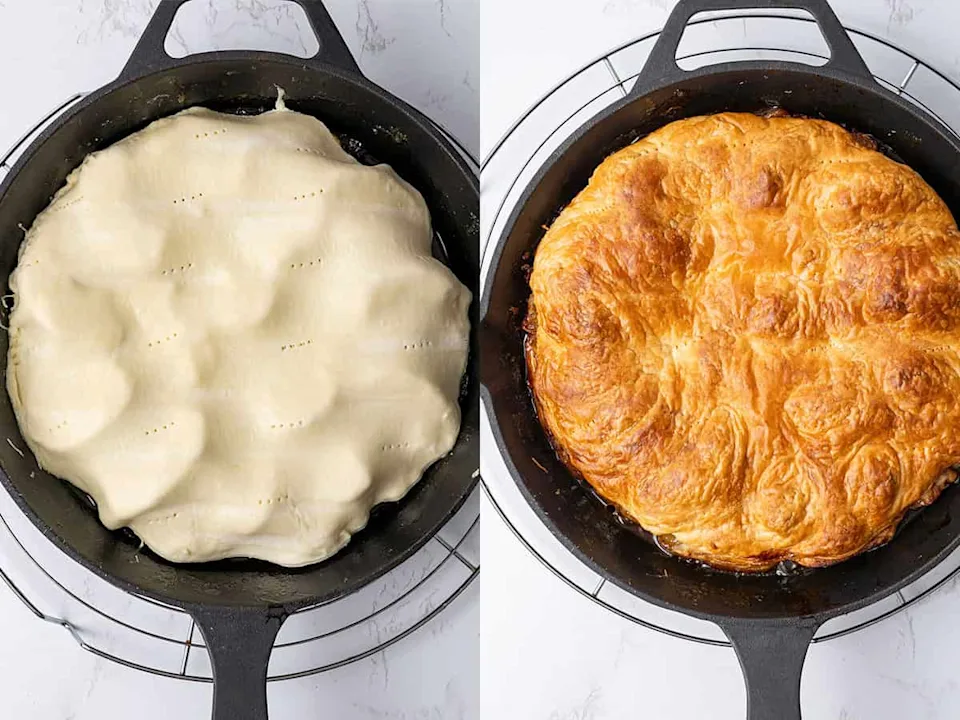
A round of puff pastry being laid over caramelized apples in a cast iron skillet, with the edges being tucked down around the fruit

The first time I made tarte Tatin, I treated the flip like a carnival trick. Confident. Loud. Slightly reckless. The apples slid, the caramel tried to stage a jailbreak, and I still ate it standing at the counter thinking, yep, this is the one. Now it is my favorite “I want something impressive but I also want to keep it fun” dessert. The secret is accepting that tarte Tatin is allowed to be a little chaotic. That is part of its charm.