What kind of beer is best for carbonnade?
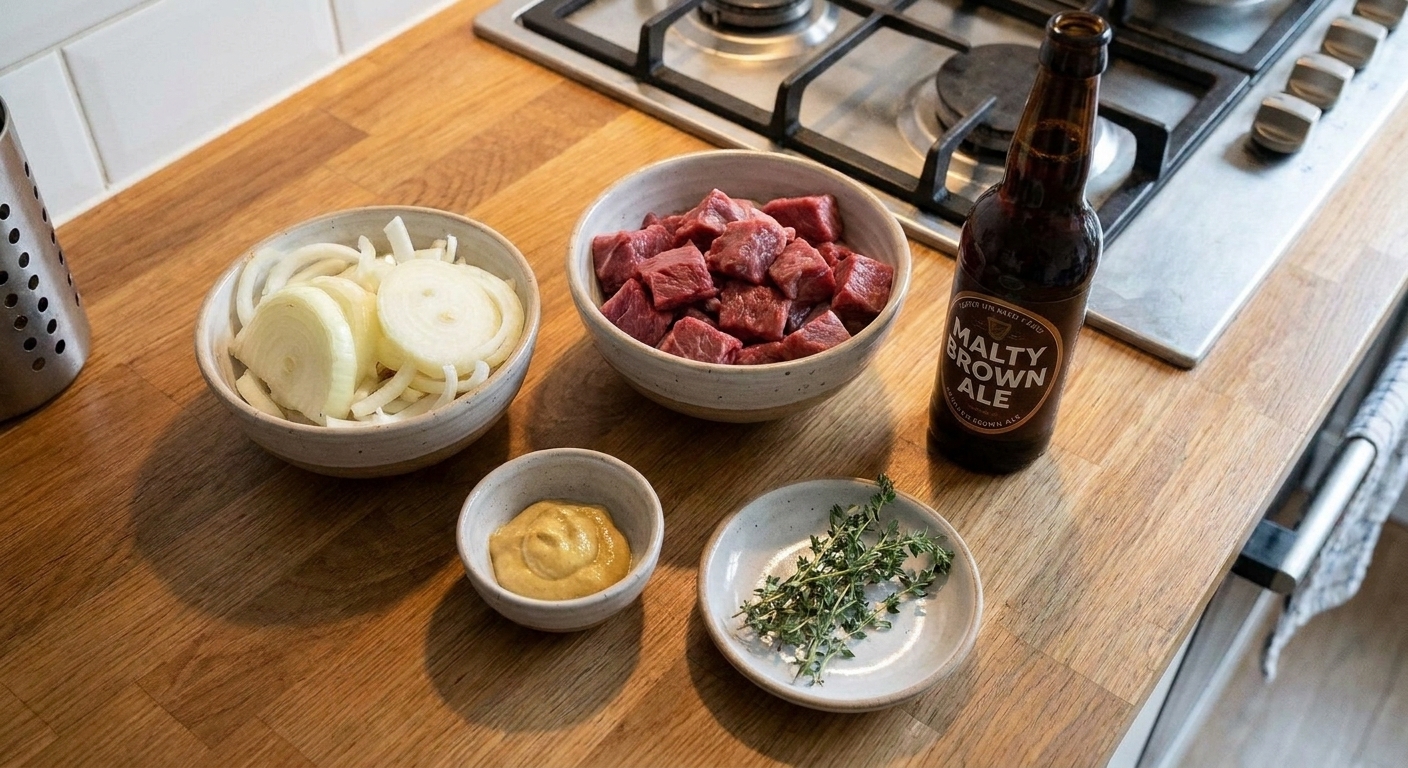
Choose a malty, low-hop beer so the stew stays rounded and not bitter. Great choices are Belgian dubbel, a Belgian brown ale, or an amber ale. Avoid very hoppy IPAs because bitterness can concentrate as the stew simmers.
How dark should I brown the meat?
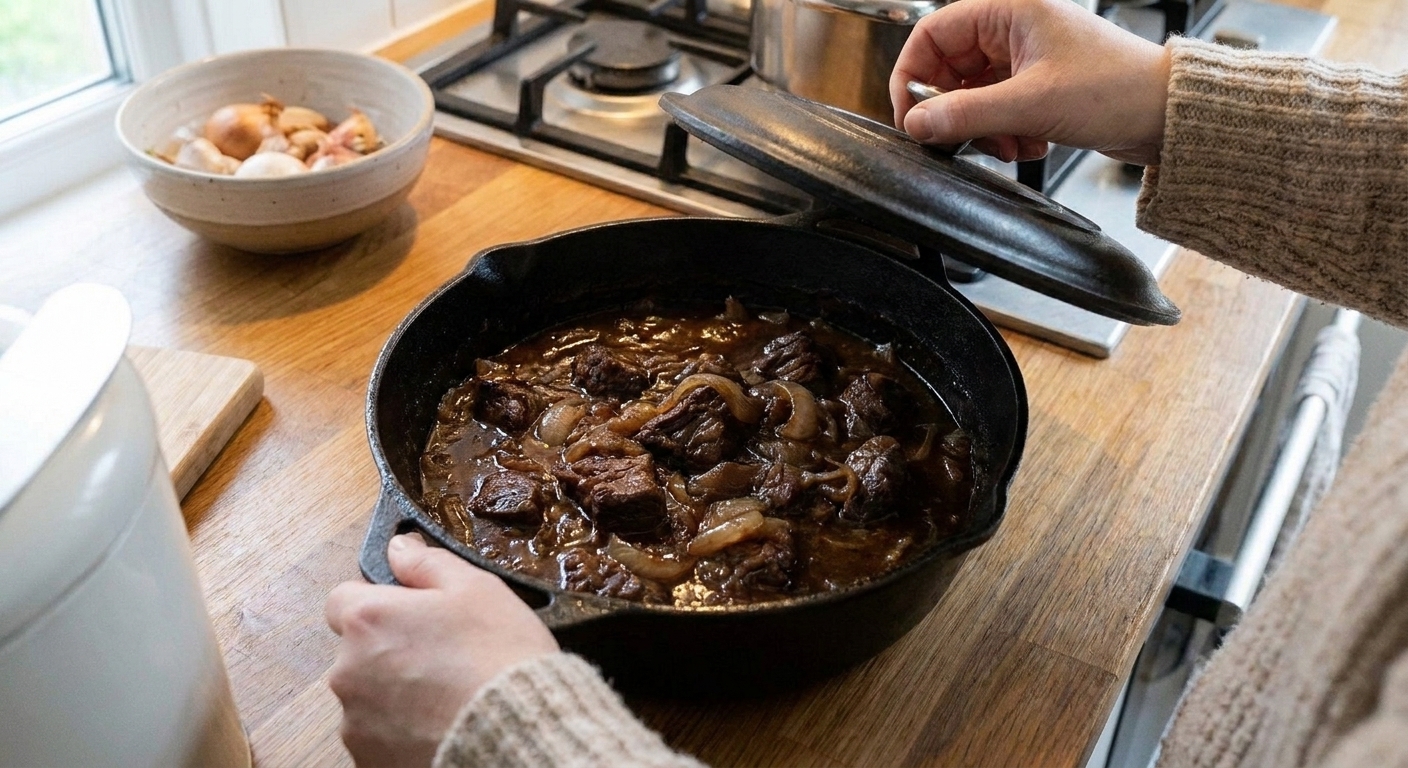
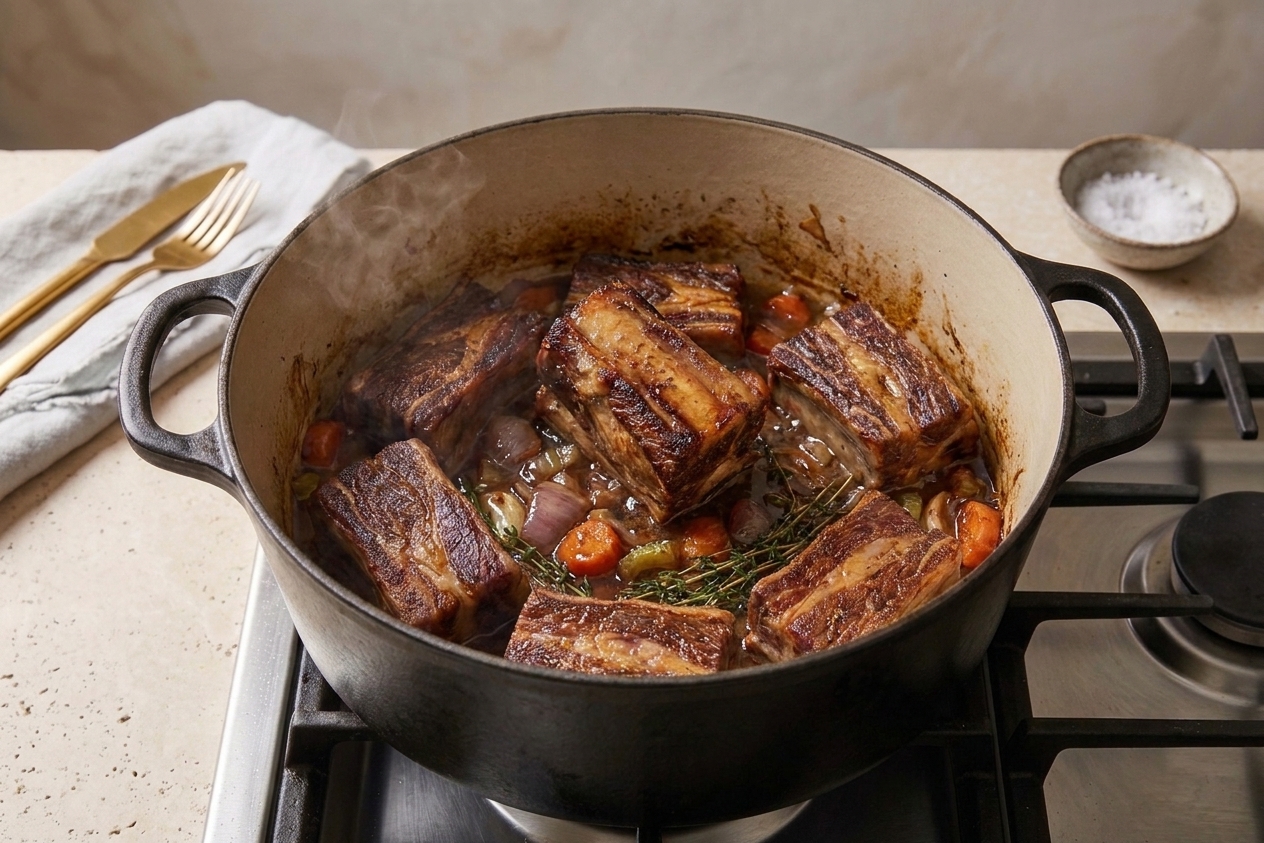
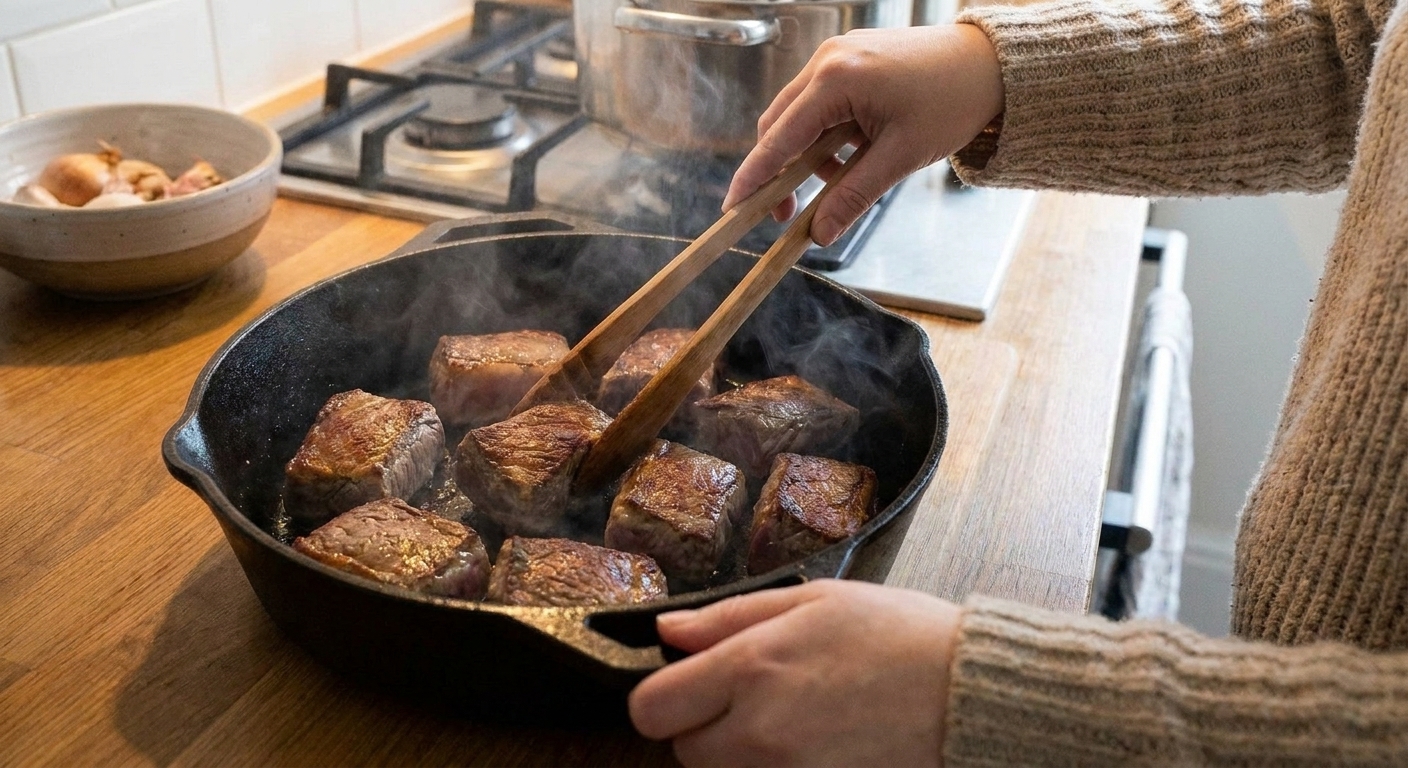
Aim for dark golden brown with a real crust, but not black. If the browned bits on the pot bottom start to look scorched (very dark, almost charred), lower the heat and add a splash of beer or broth to loosen them right away.
Do I have to use gingerbread?
No. Traditional versions often use Belgian gingerbread for a gentle spiced sweetness, but plain hearty bread works beautifully too. If your family prefers less sweetness, use plain bread and skip the brown sugar.
Why add bread with mustard on top?
It is an easy thickener that also adds flavor. The bread dissolves into the sauce as it simmers, and the mustard gives the gravy a subtle tang that keeps it from tasting flat.
Should I serve carbonnade with noodles or potatoes?
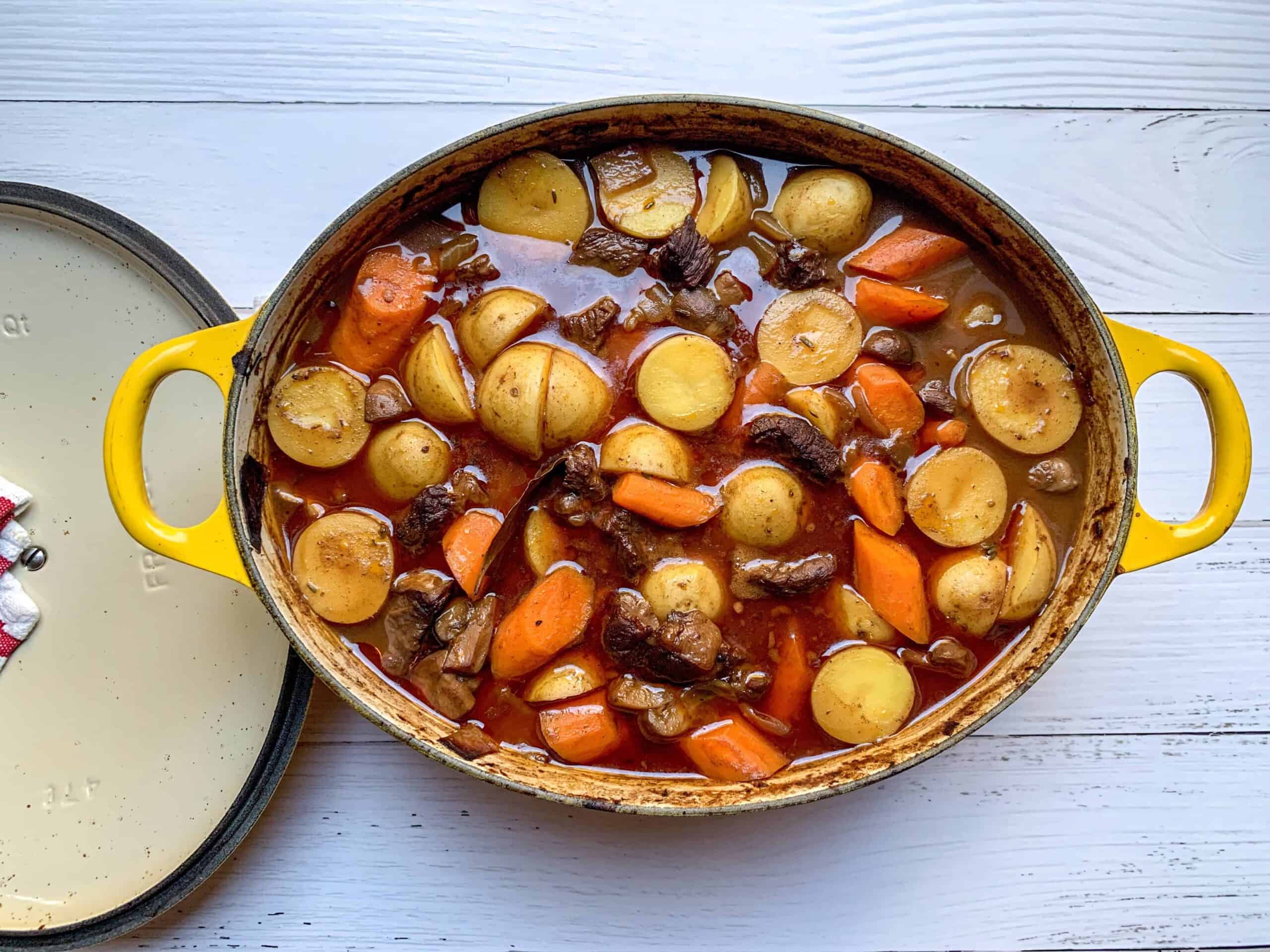
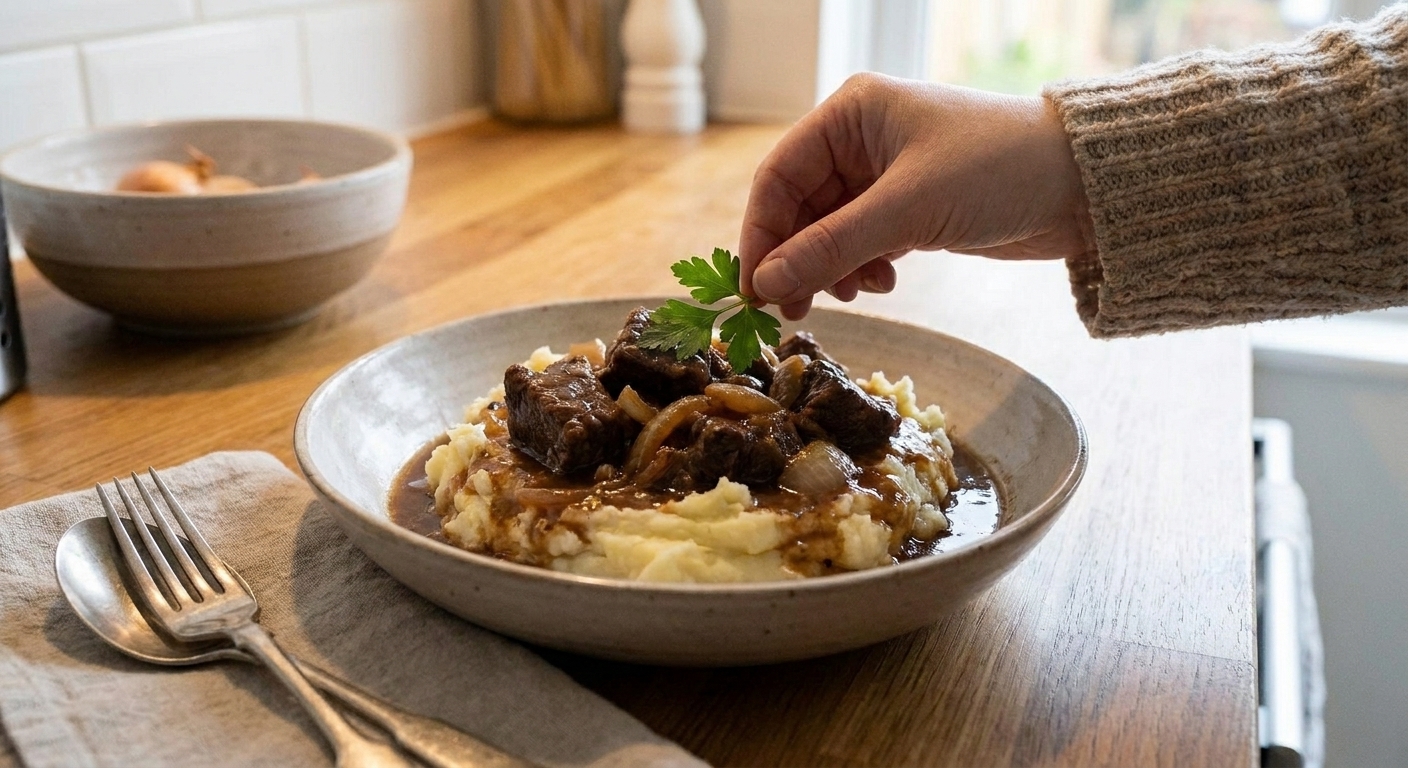
Both are great. Potatoes (mashed, boiled, or roasted) are the most classic match for soaking up gravy. Buttered egg noodles are a cozy, kid-friendly option. If you want a Belgian touch, serve with fries if that is your style.
Can I make it in the oven instead of the stovetop?
Yes. After you bring everything to a gentle simmer, cover and bake at 325°F for about 2 to 2 1/2 hours, or until the beef is fork-tender. Stir once or twice.
What if the liquid reduces too much?
Carbonnade should simmer gently, not boil hard. If the pot looks dry at any point, add a splash of beer or beef broth and keep going. You want the beef mostly covered and the onions nice and saucy.
How do I know I have a gentle simmer?
Look for a few lazy bubbles breaking the surface now and then. If it is rapidly bubbling, turn the heat down so the meat stays tender.