Mom's Best Recipes
Recipe

Oven Pot Roast

A classic Dutch oven pot roast with carrots, potatoes, and a rich, savory gravy. Low effort, big comfort, and seriously tender beef.

Author By Matt Campbell
4.8
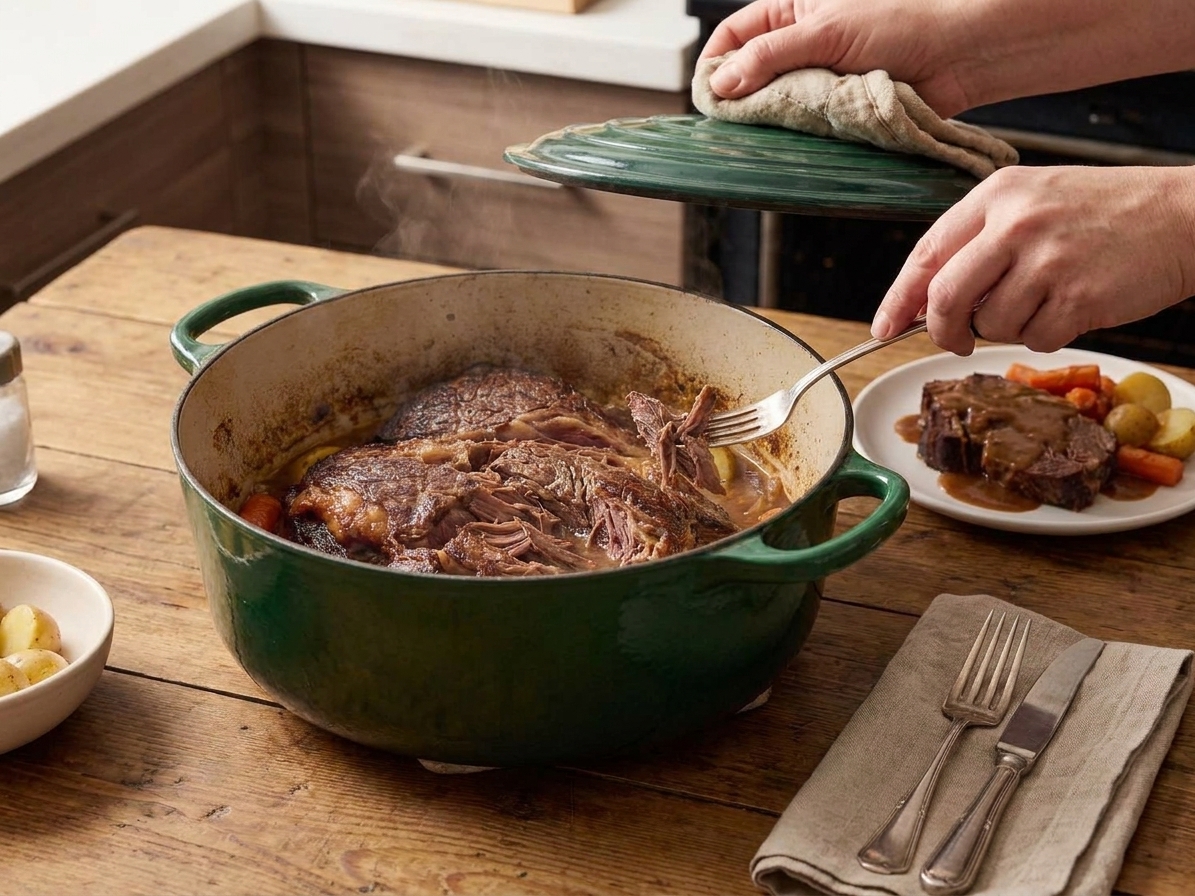
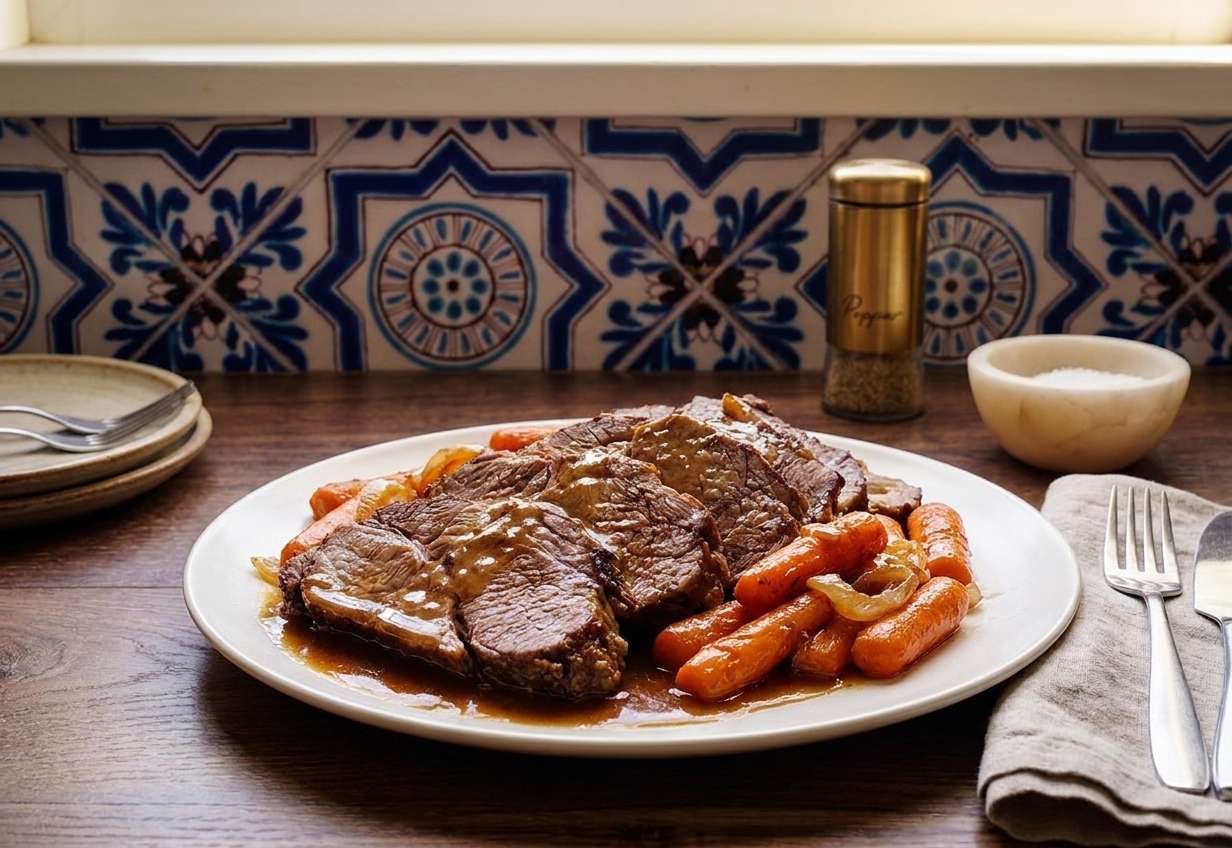
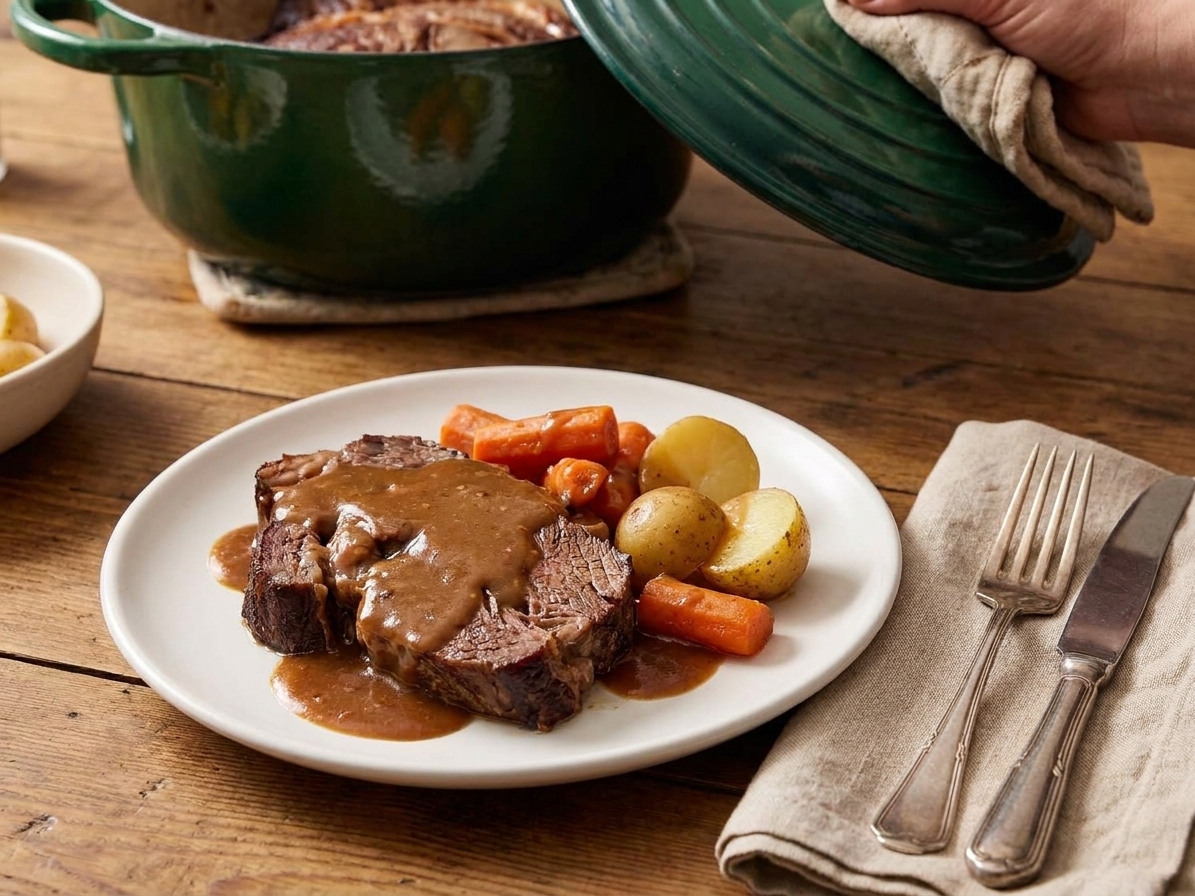
A Dutch oven filled with fork-tender pot roast, carrots, and baby potatoes in a glossy brown gravy on a rustic kitchen table

Pot roast is one of those meals that makes the whole house smell like you have your life together, even if the kitchen looks like a tiny tornado hit it. My version is simple: we sear the beef hard for flavor, build a quick braising liquid that tastes like it simmered all day (because it basically does), then let the oven quietly handle the rest.

You get tender, pull-apart beef, vegetables that taste like they belong in the pot, and a gravy that is rich without being fussy. If you can brown meat and remember to put a lid on a pot, you have got this.

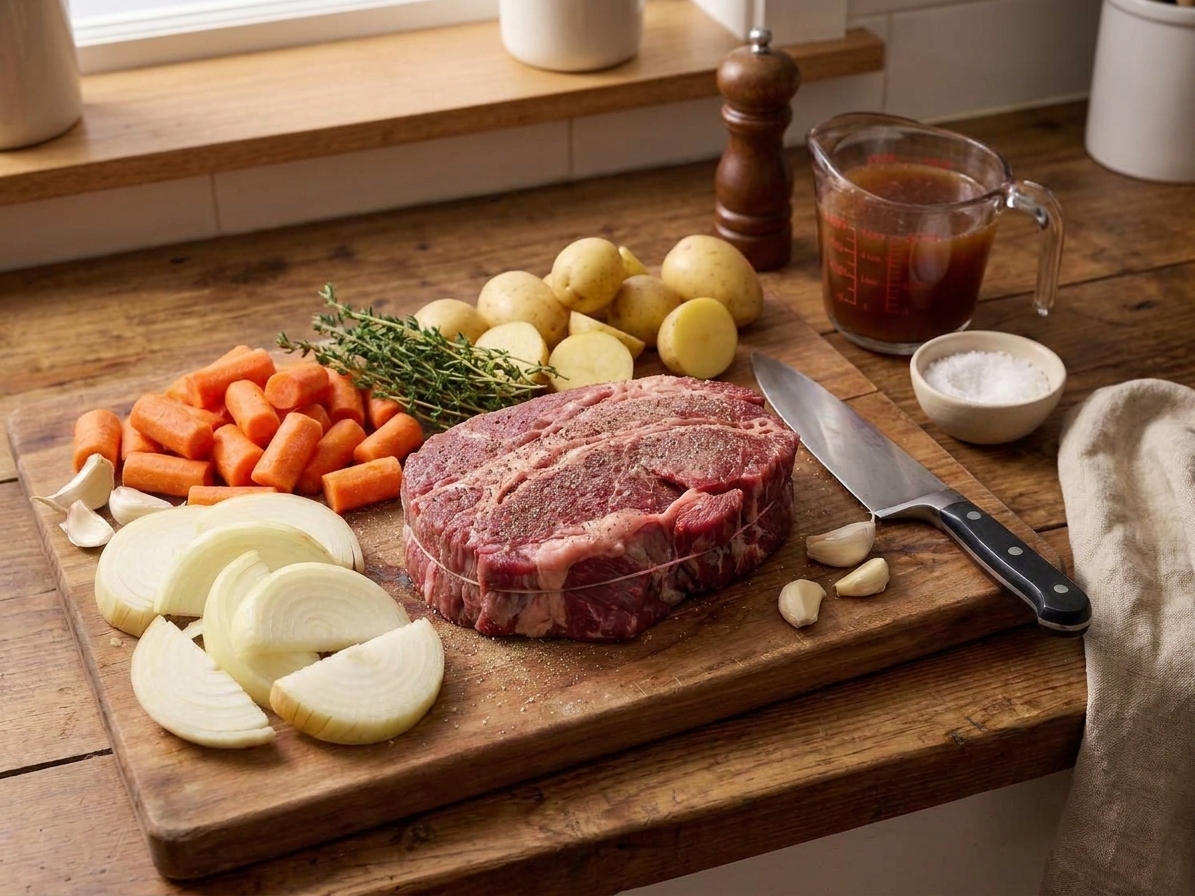
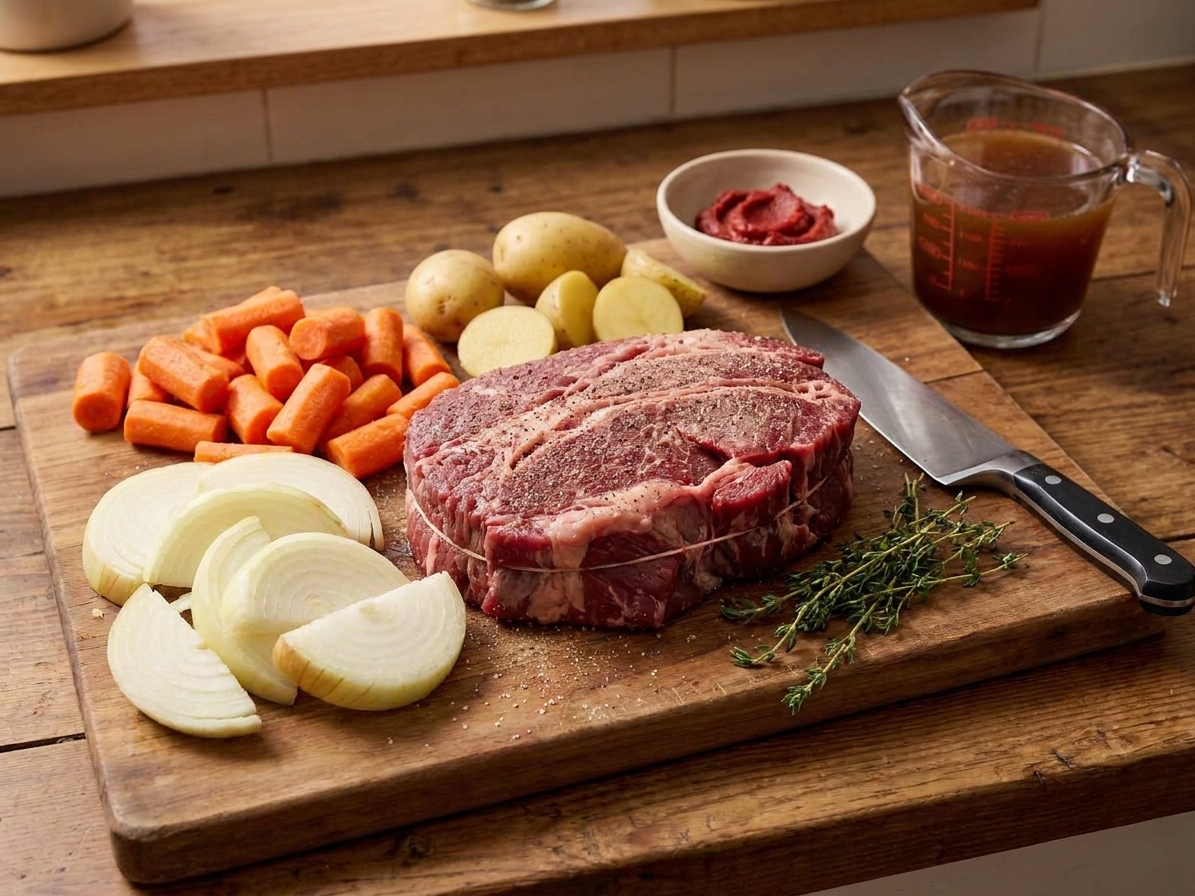
Raw ingredients for pot roast including a chuck roast, carrots, yellow onion, garlic, baby potatoes, fresh thyme, and beef broth arranged on a kitchen counter

Why It Works

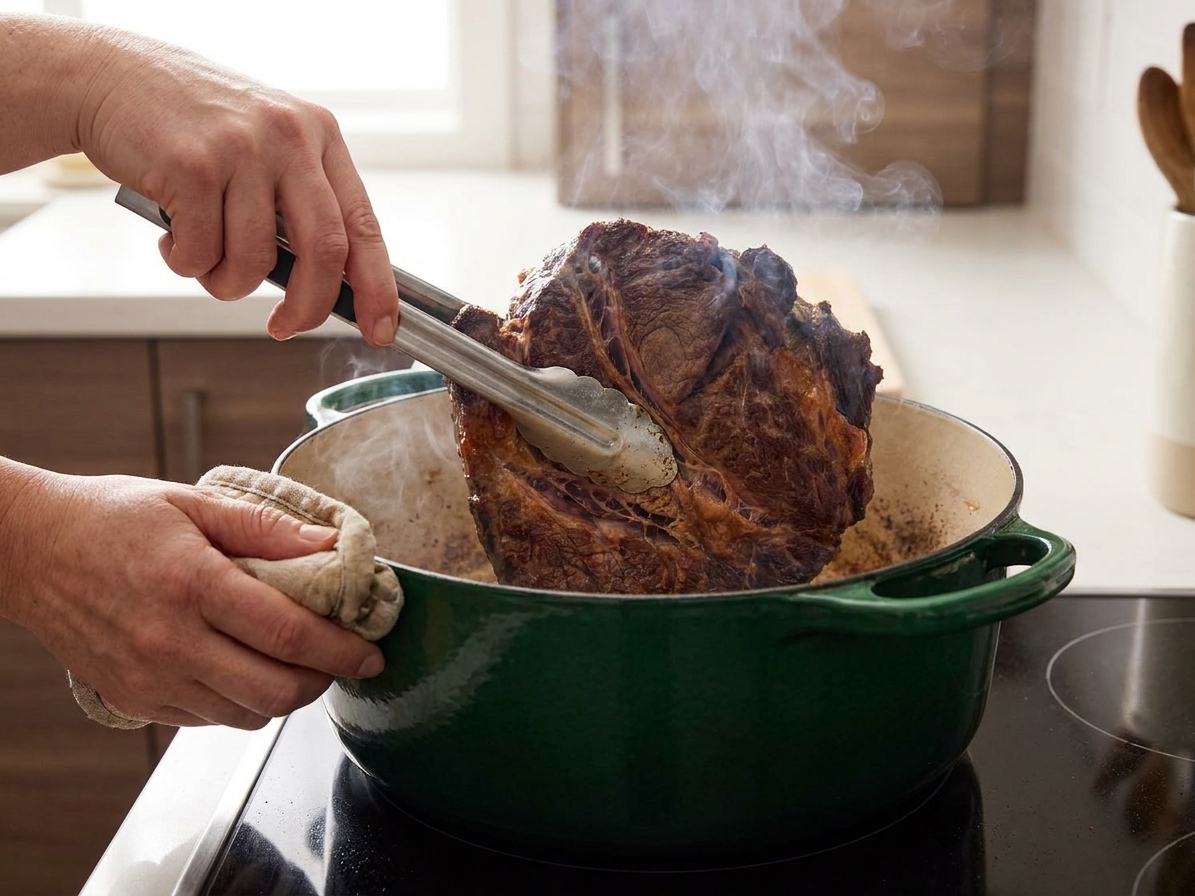
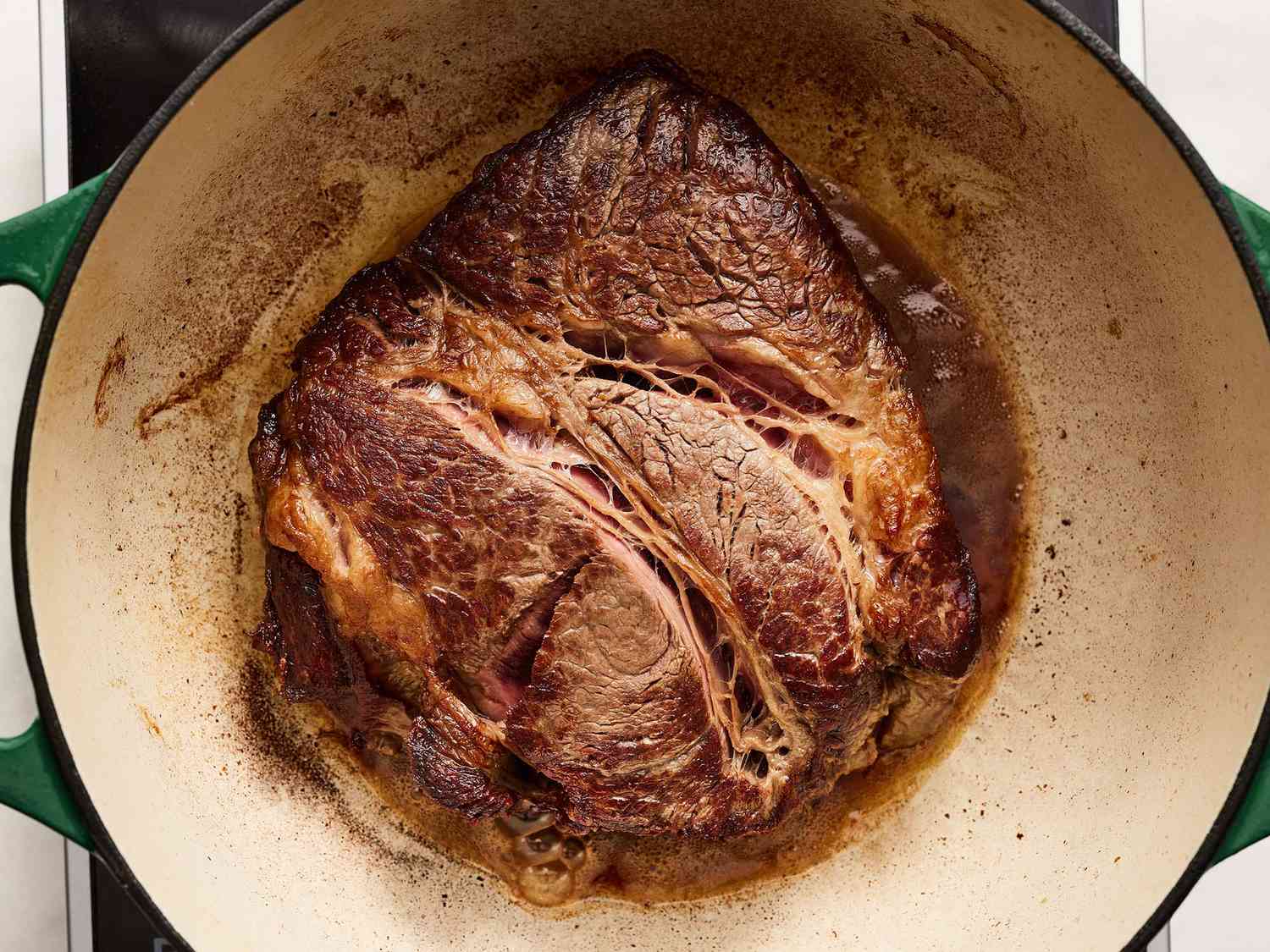
  • The sear builds the whole foundation. Browning the chuck roast creates deep flavor that makes the gravy taste rich and savory.
  • Low-and-slow oven braise means tenderness you can count on. Collagen melts, the meat relaxes, and slicing becomes optional.
  • Vegetables cook in the good stuff. Potatoes and carrots soak up the braise so they taste beefy and seasoned, not just boiled.
  • Gravy is built right in. A little flour and tomato paste plus the braising liquid equals glossy, spoon-coating gravy without extra pans.

Pairs Well With

Storage Tips

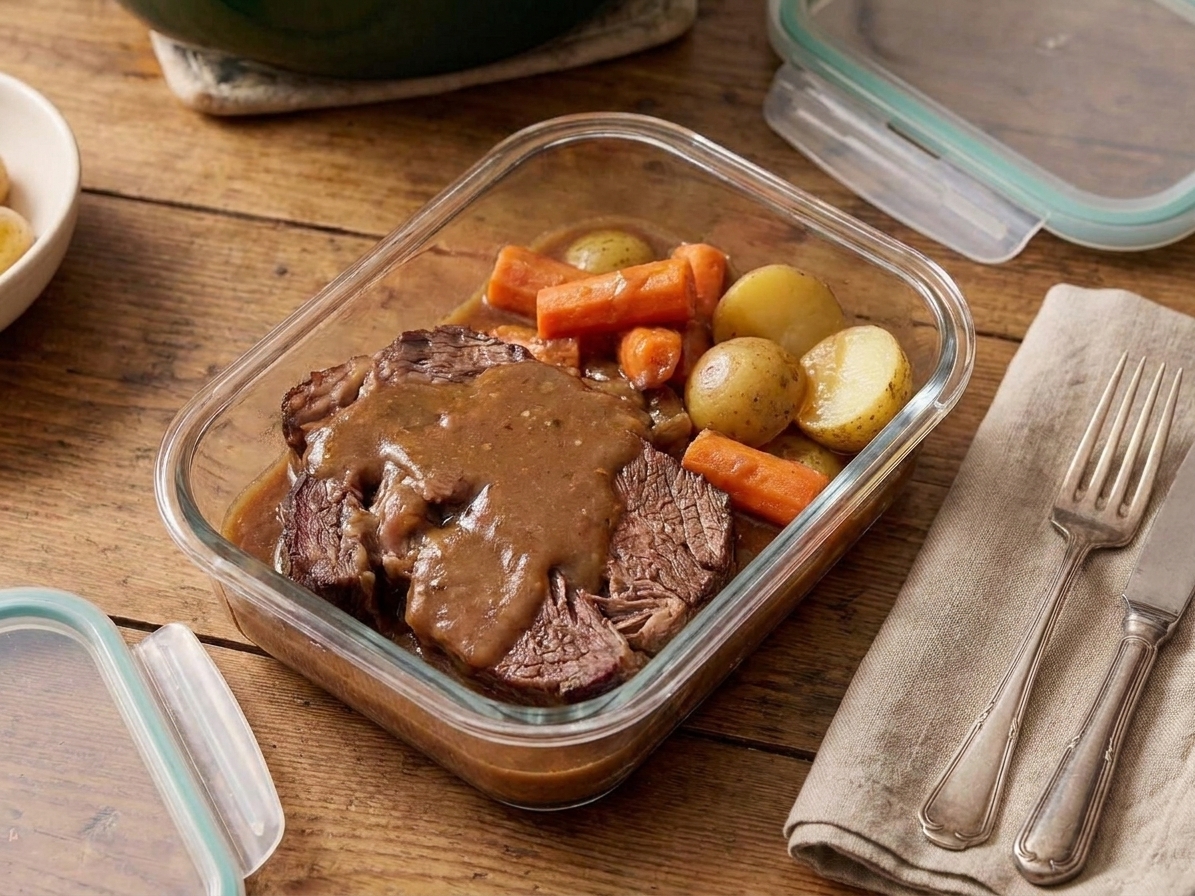
Refrigerate: Store beef, veggies, and gravy together in an airtight container for up to 4 days. The flavor gets better overnight.

Freeze: Freeze in a freezer-safe container for up to 3 months. For best texture, freeze the beef with gravy. Potatoes can get a little grainy after thawing, but they are still totally usable.

Reheat: Warm gently on the stove over medium-low with a splash of broth or water, or microwave in short bursts, stirring the gravy so it heats evenly.

Leftover moves: Shred the beef into toasted rolls with horseradish mayo, pile it over buttered egg noodles, or turn it into a quick shepherd’s-pie-ish bake with mashed potatoes on top.

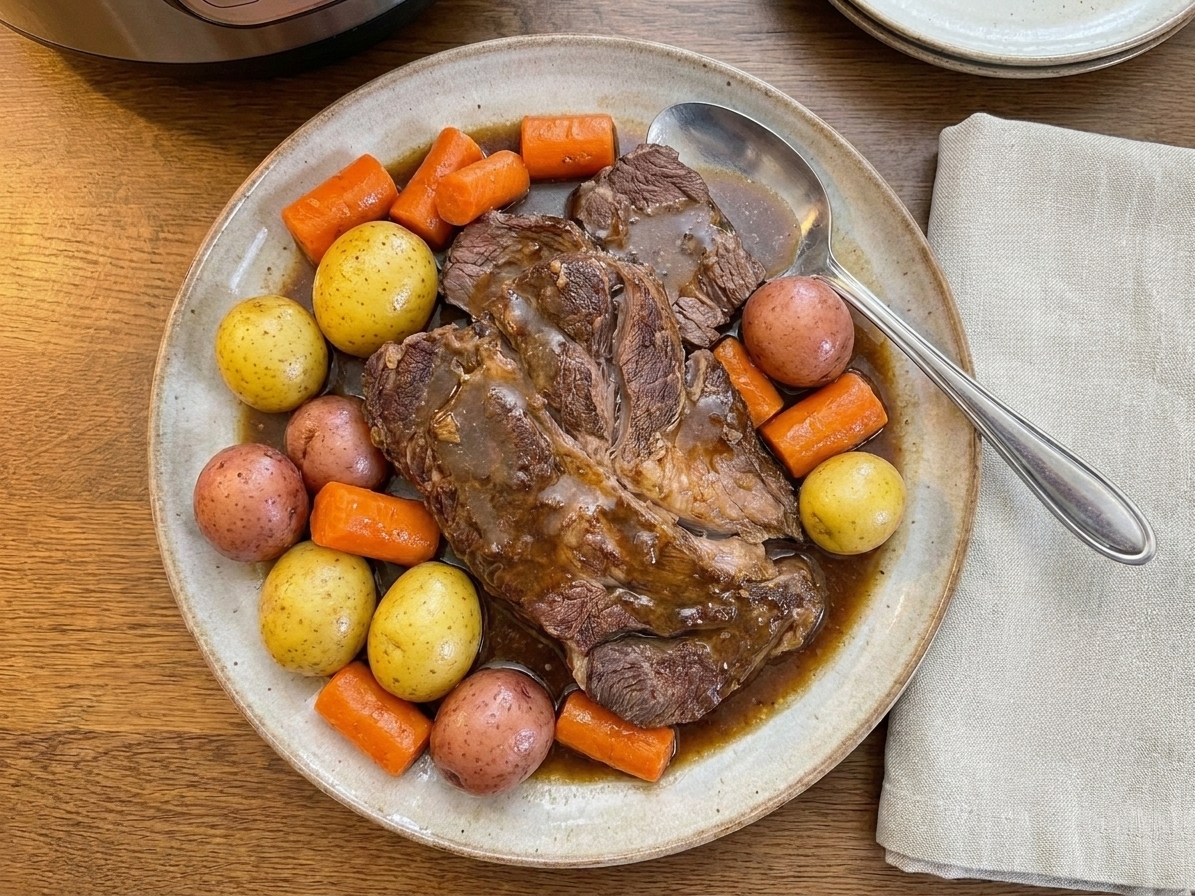
A glass meal prep container filled with sliced pot roast, carrots, potatoes, and gravy on a kitchen counter

Common Questions

What cut of beef is best for pot roast in the oven?

Chuck roast is the classic for a reason: it has enough fat and connective tissue to become tender and juicy after a long braise. Bottom round can work, but it is leaner and less forgiving.

What oven temperature is best for pot roast?

I like 300°F for the most consistent tenderness. You can go to 325°F to shave a bit of time, but 300°F gives you that dreamy, fall-apart texture with less risk of drying out.

How long does pot roast take in the oven?

Plan on 3 to 3 1/2 hours for a 3 to 4 pound chuck roast at 300°F, plus about 45 to 60 minutes more after adding potatoes and carrots, depending on size. Roasts vary, so start checking around the 3-hour mark and let tenderness be the judge.

How do I know when pot roast is done?

Forget slicing tests. You want the meat to be fork-tender, meaning a fork twists easily and the roast wants to shred. Temperature-wise, it is often in the 195°F to 205°F range when it is truly tender, but treat that as a guideline. The feel matters most.

Why is my pot roast tough?

Tough usually means it needs more time. Chuck gets tender when collagen breaks down, and that takes a while. Put it back in the oven, keep it covered, and check every 20 to 30 minutes.

Can I cook pot roast without a Dutch oven?

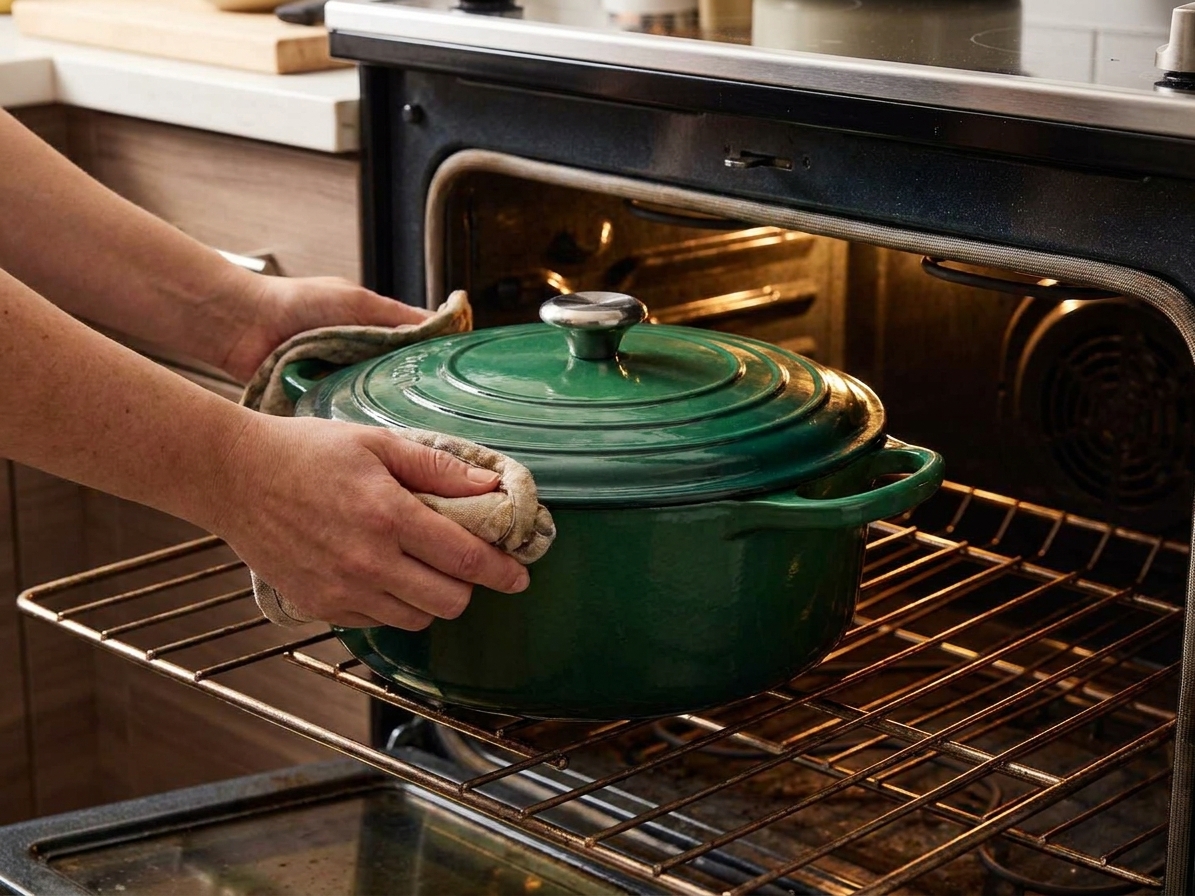
Yes. Use a deep roasting pan and cover tightly with foil, or use an oven-safe pot with a snug lid. The key is keeping moisture in so the braise does its job.
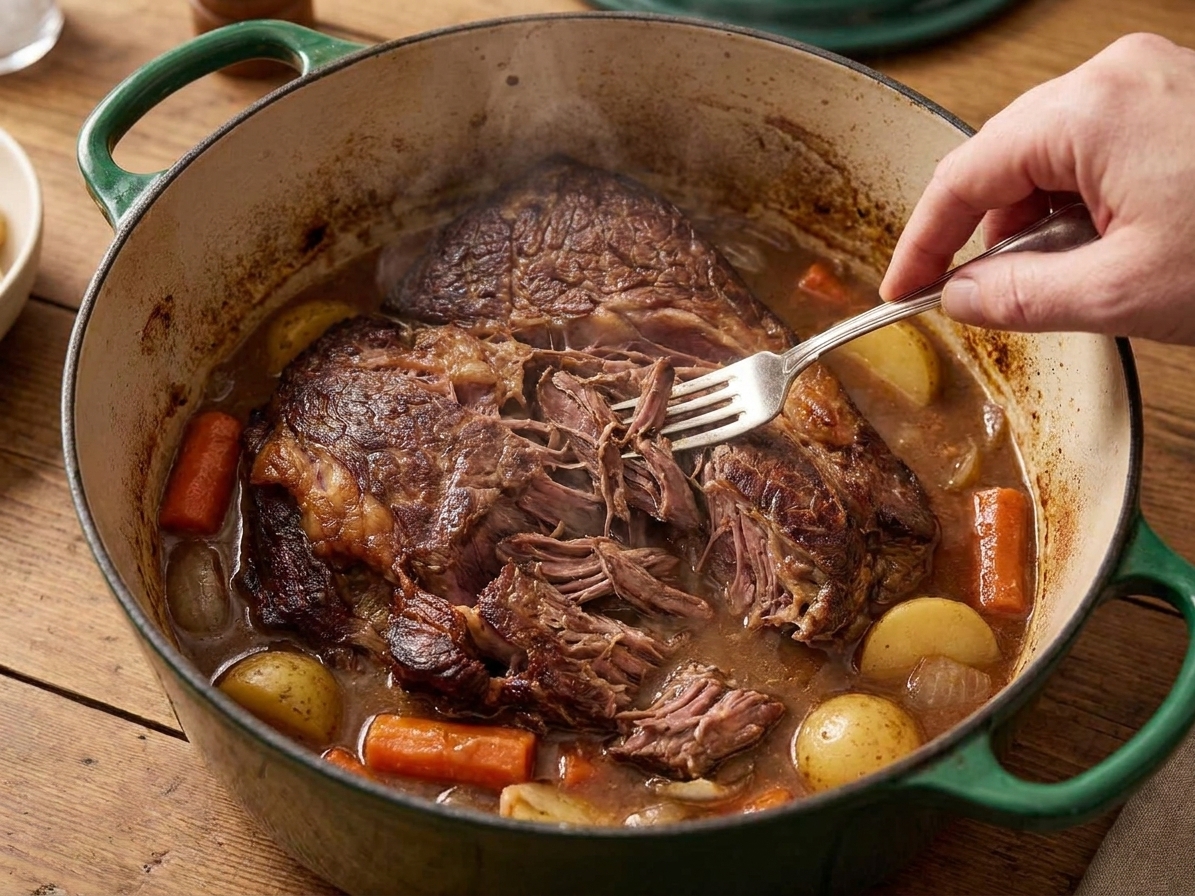

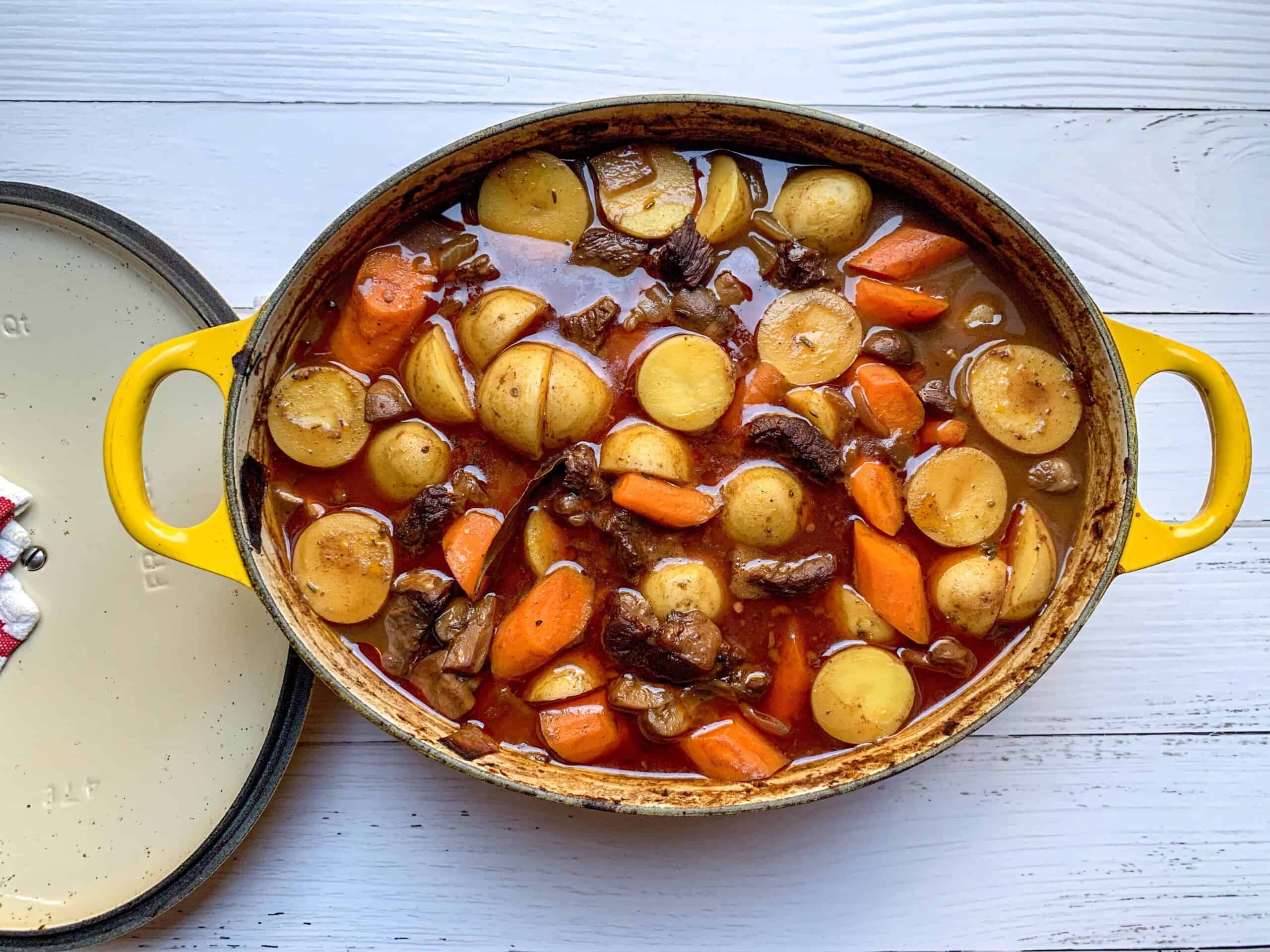
A fork pulling apart a tender pot roast in a Dutch oven with gravy and vegetables

When I first started chasing real kitchen skills instead of just collecting recipes, pot roast was one of the big confidence builders. It is humble, but it teaches you everything: sear equals flavor, time equals tenderness, and those browned bits on the bottom of the pot are not a mess, they are a gift. Now it is my go-to when I want dinner to feel like a warm blanket and I also want tomorrow’s lunch to be handled.

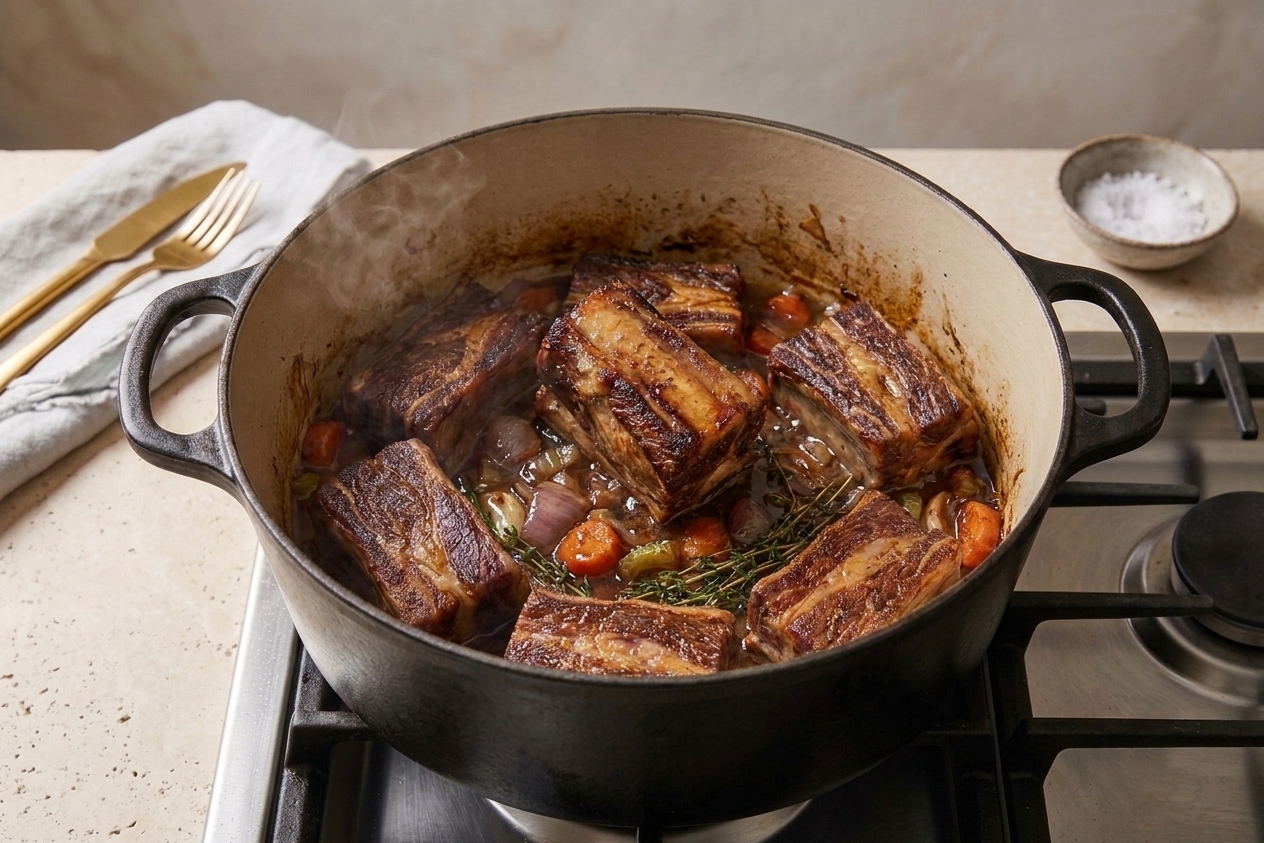
A home cook’s hands using tongs to sear a chuck roast in a Dutch oven on a stovetop