Mom's Best Recipes
Recipe

Benihana Fried Rice

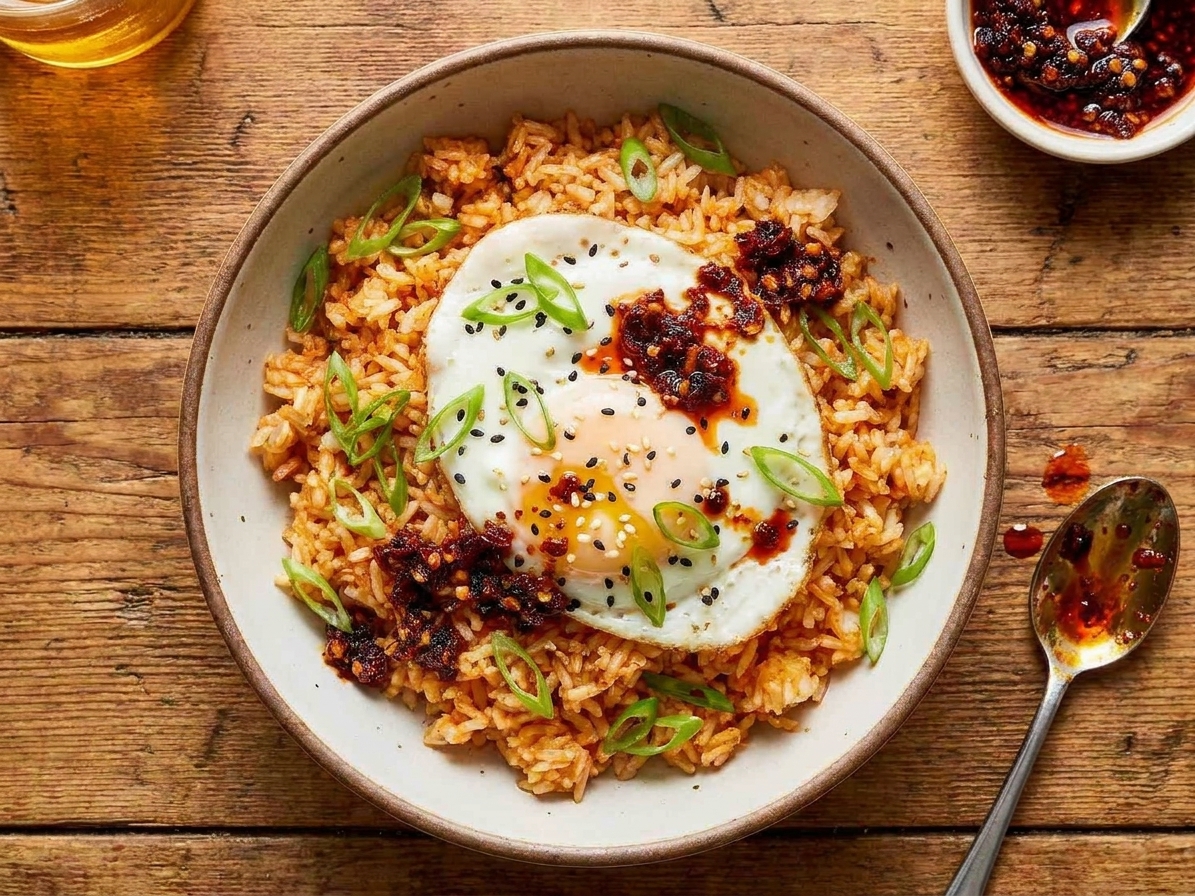
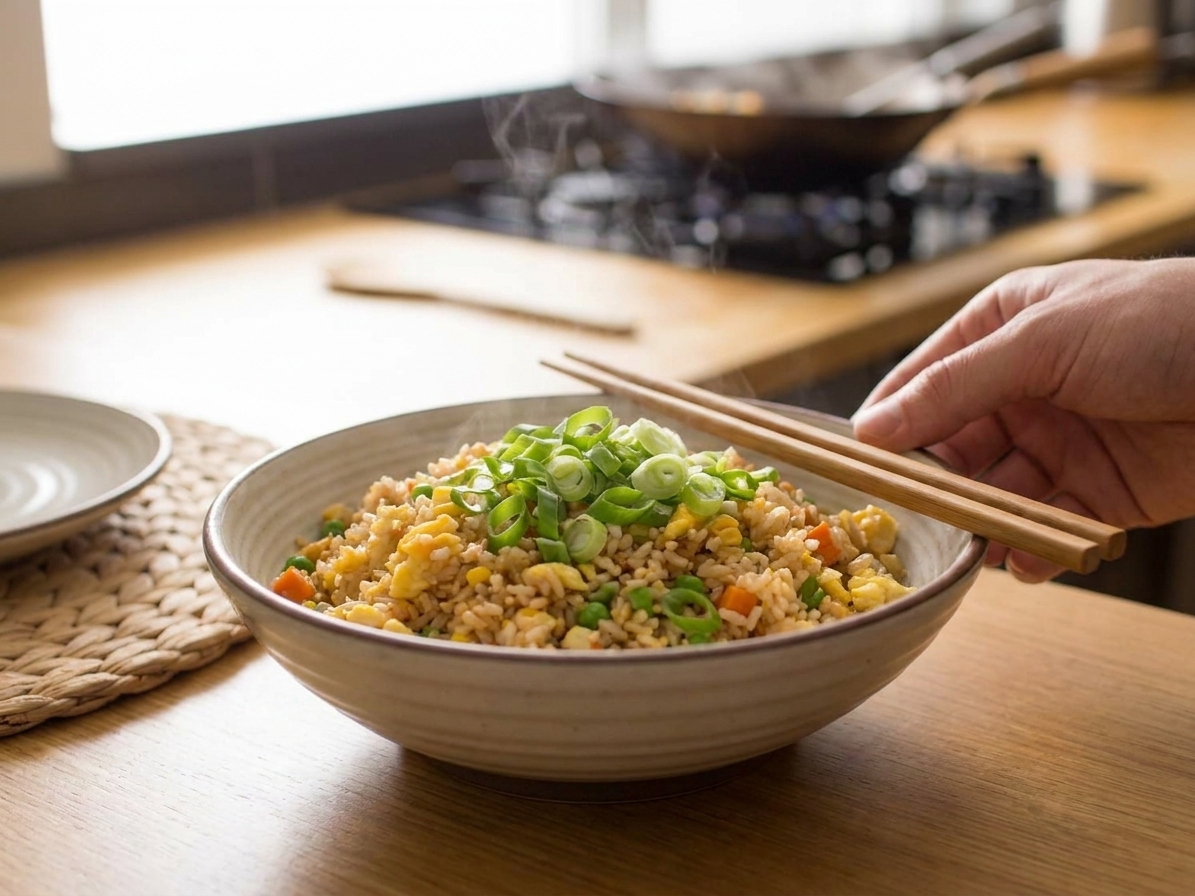
Buttery, garlicky hibachi-style fried rice with fluffy grains, scrambled egg ribbons, and crisp vegetables, inspired by your favorite steakhouse grill.

Author By Matt Campbell
4.8
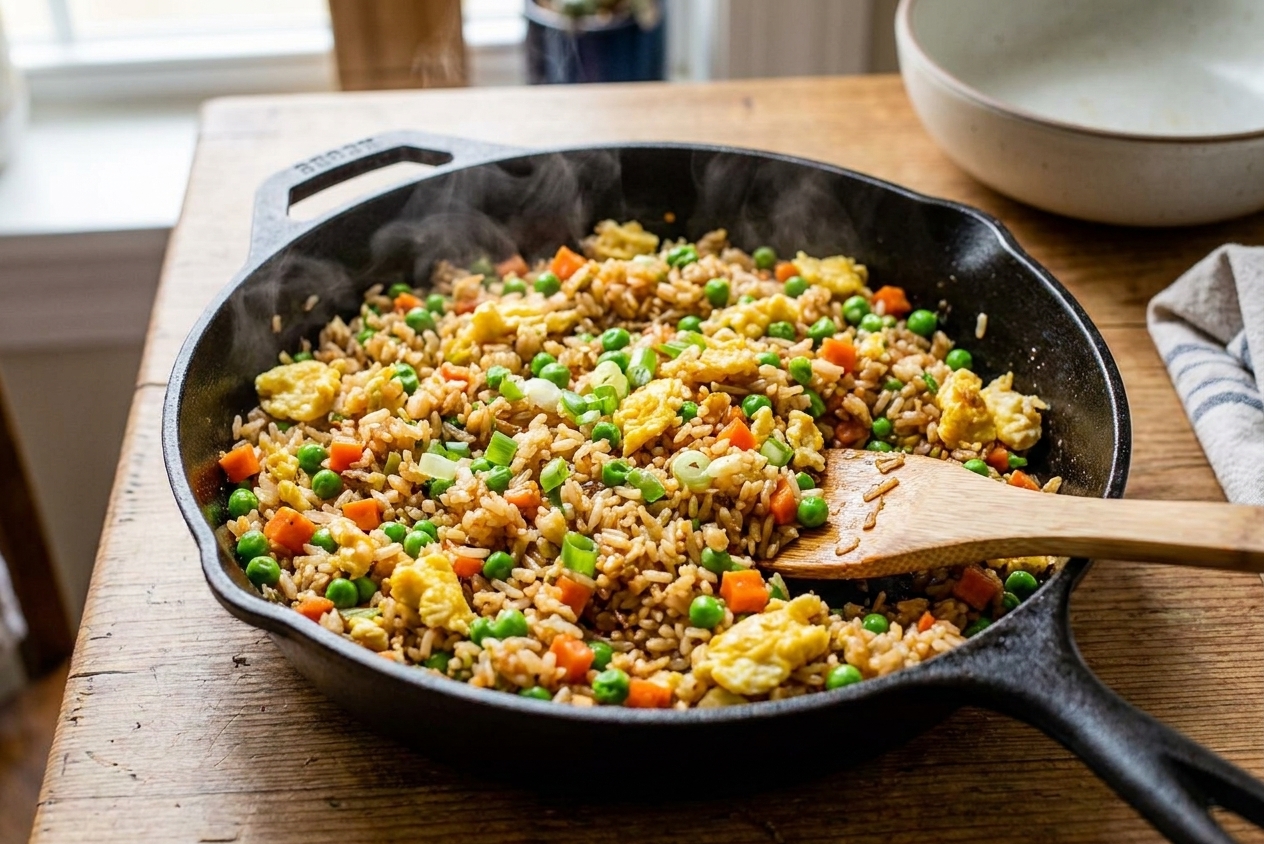
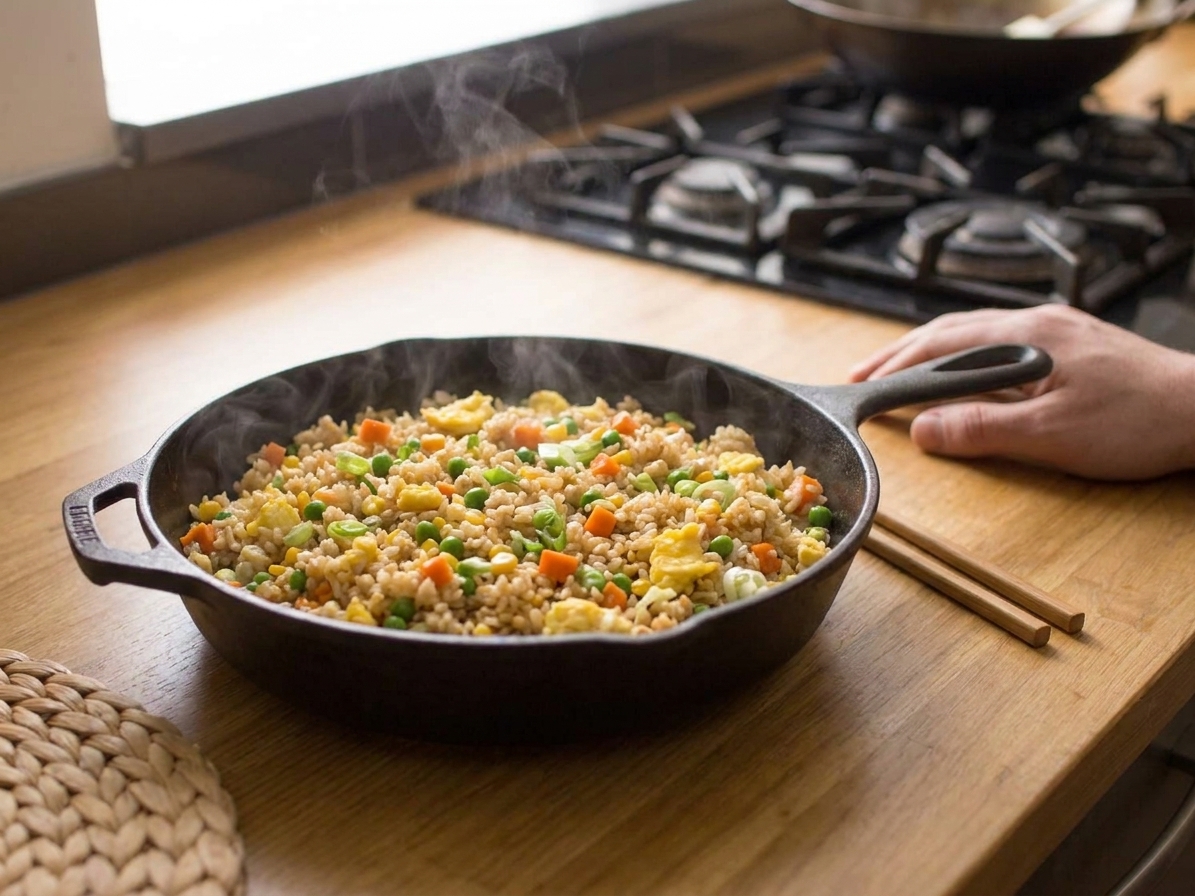
A cast iron skillet filled with Benihana-style fried rice with scrambled egg, diced carrots, peas, and green onion, photographed on a warm kitchen counter with chopsticks nearby

Benihana-style fried rice is one of those dishes that feels like dinner and a show. You get the buttery garlic aroma, the soy sauce sizzle, the little bits of egg tucked into fluffy rice, and the crisp-tender veggies that make you keep going back with “just one more bite” energy.

This version is built for real life home kitchens. No flat-top required. Just a big skillet or wok, cold cooked rice, and a couple of simple restaurant tricks that make it taste like you watched someone flip a spatula with unnecessary confidence.

My biggest promise: you will not end up with soy sauce mush. We are going for distinct grains, crisp edges, and that butter-forward hibachi finish.

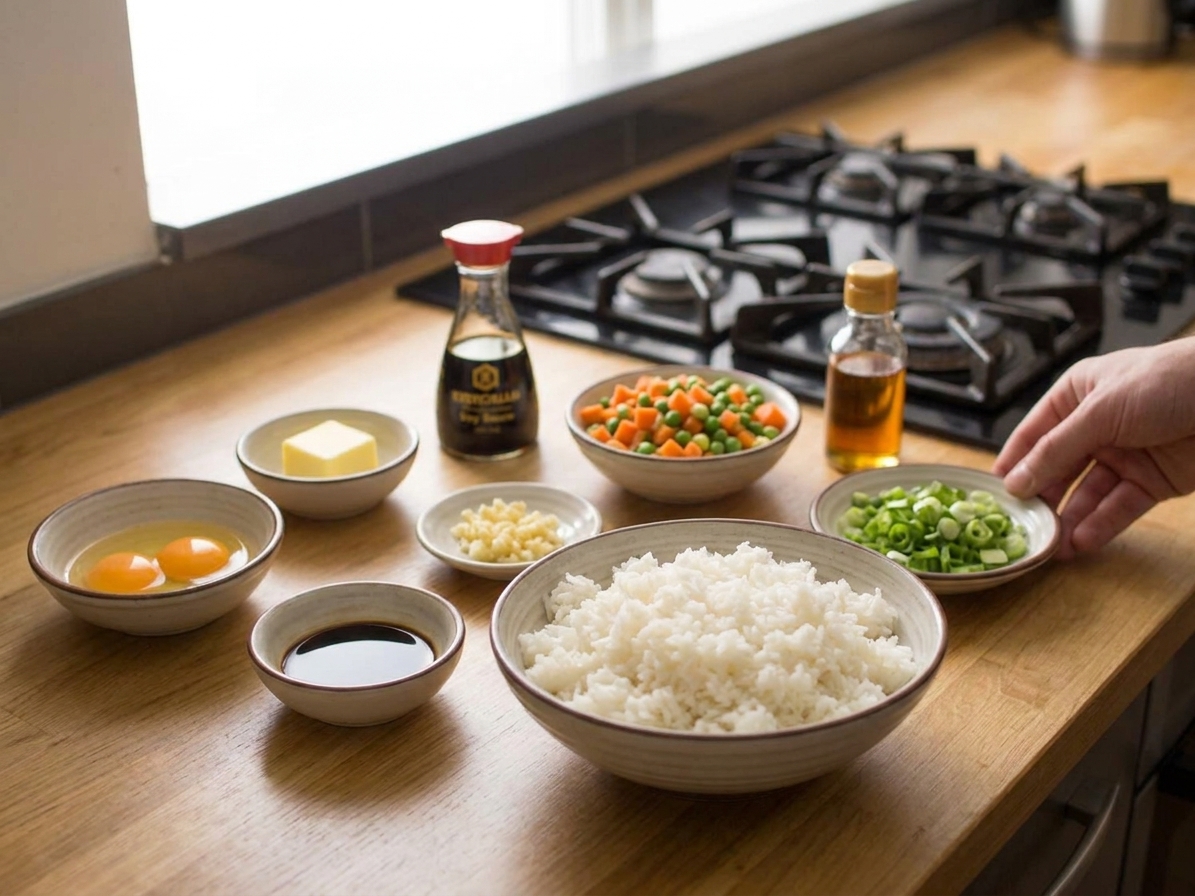
A neat lineup of ingredients for hibachi fried rice on a kitchen counter including cooked rice, eggs, butter, soy sauce, garlic, carrots, peas, sesame oil, and green onions

Why It Works

  • Cold rice method: Using chilled, day-old rice keeps the grains separate and lets you get those lightly crisp edges instead of steaming everything into a clump.
  • Oil plus butter: Hibachi-style fried rice is often butter-forward. We use oil for heat tolerance, then finish with butter for that rich, savory steakhouse taste.
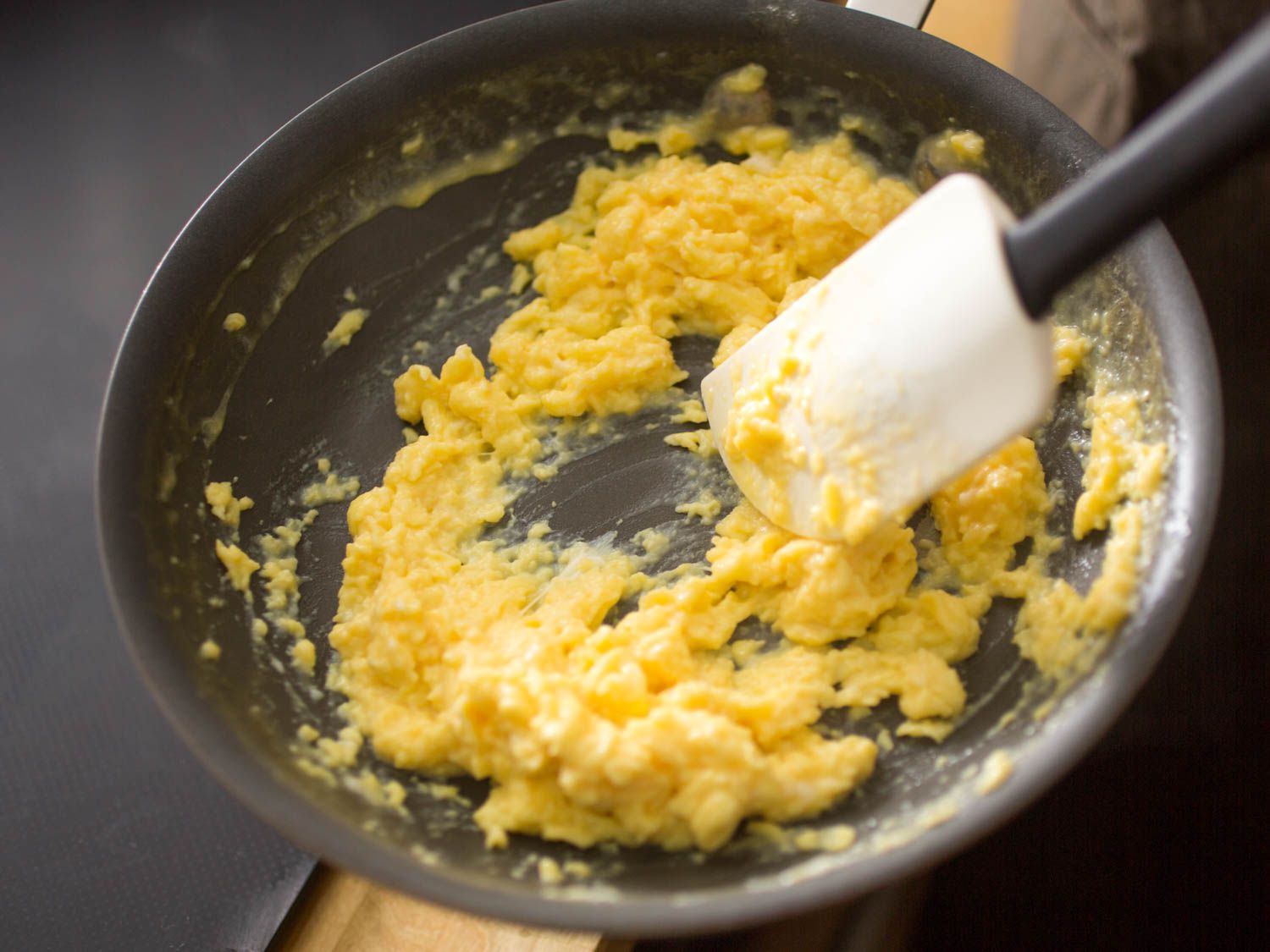
  • Egg cooked separately: Scrambling the eggs first keeps them tender and distinct so you get real bites of egg throughout.
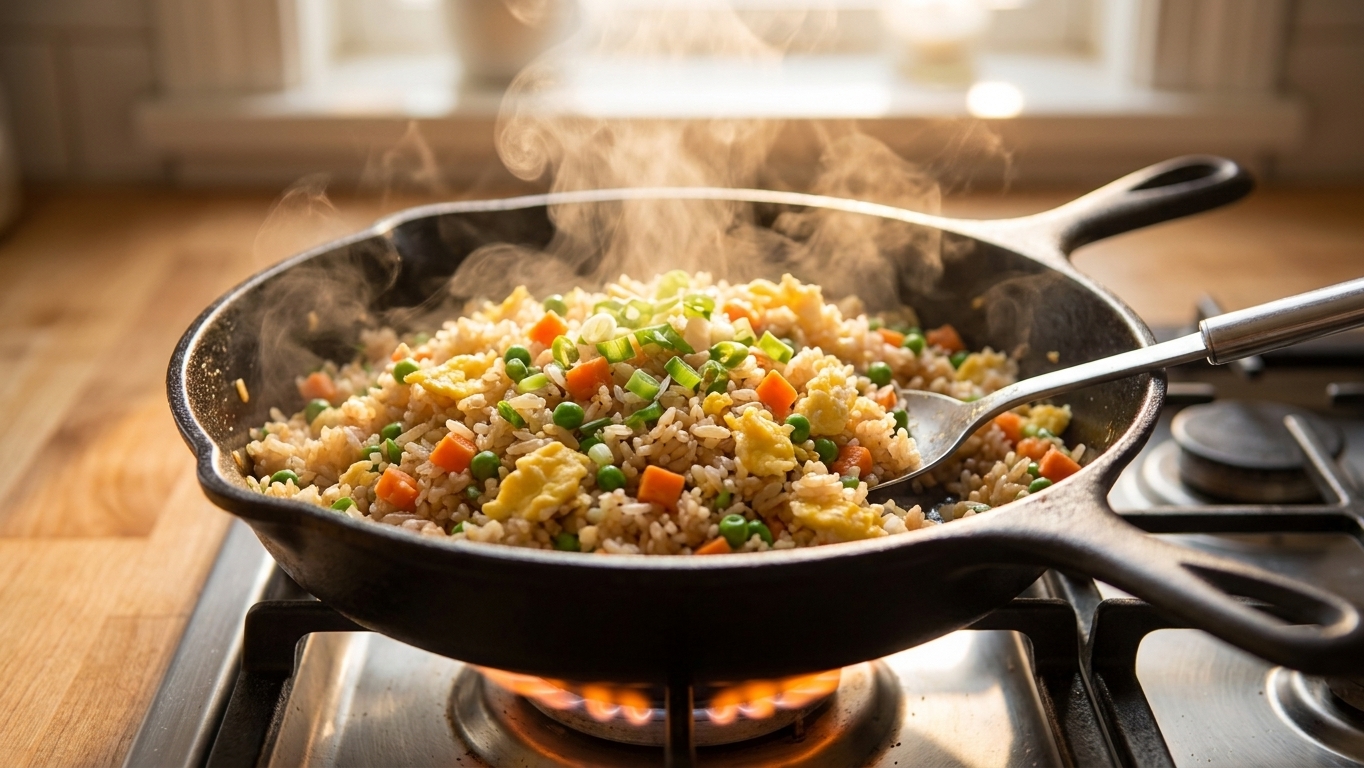
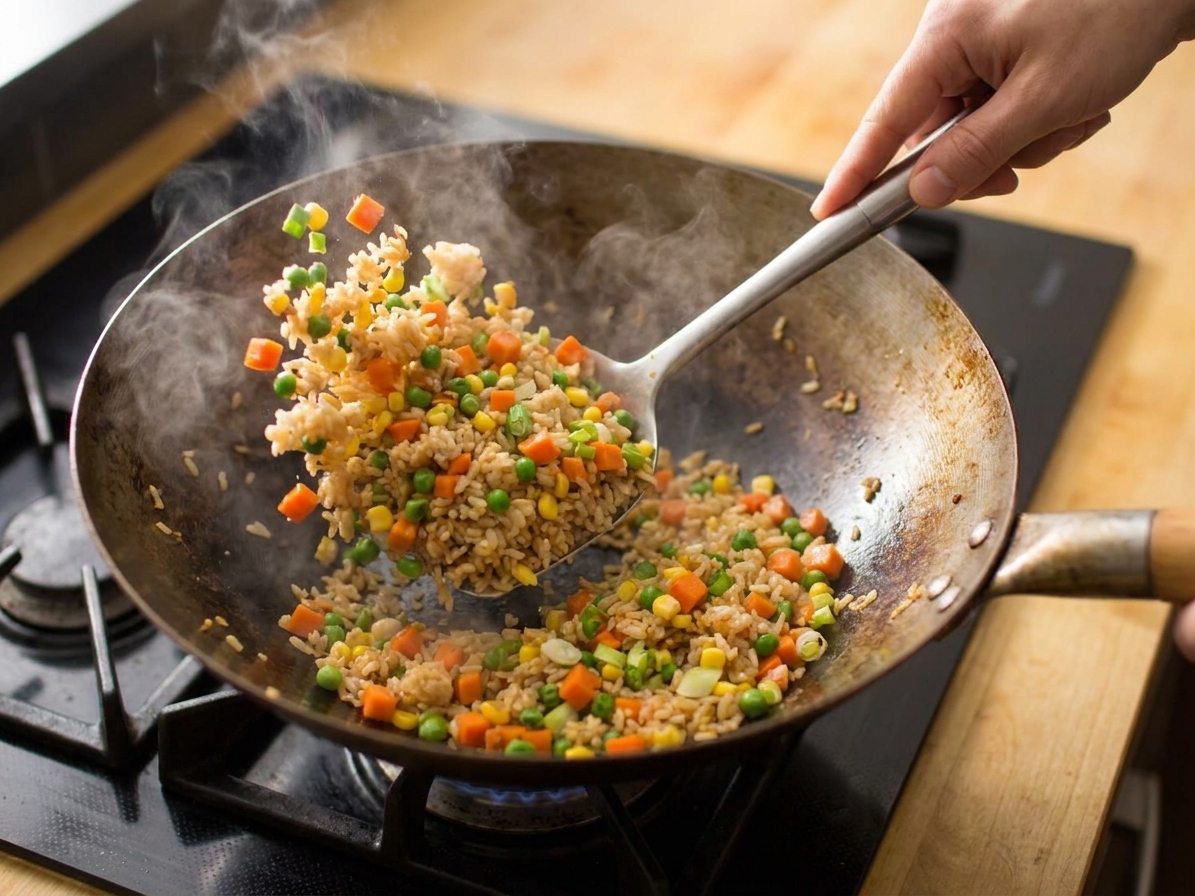
  • High heat, don’t crowd: Overcrowding cools the pan and turns frying into steaming. A wide skillet and a little patience equals restaurant texture.

Pairs Well With

Storage Tips

Refrigerator: Cool fried rice quickly, then store in an airtight container for up to 4 days. For best food safety, get it into the fridge within 2 hours (or within 1 hour if it is above 90°F/32°C in your kitchen or outdoors).

Freezer: Freeze in flat portions (a zip-top bag pressed thin works great) for up to 2 months. Thaw overnight in the fridge for best texture.

Reheating: For the best “fresh off the grill” vibe, reheat in a hot skillet with a small pat of butter or a teaspoon of oil, tossing until piping hot. Microwave works too. Add a splash of water and cover loosely so it warms through without drying out.

Food safety note: Reheat leftovers until steaming hot throughout, ideally 165°F (74°C).

Common Questions

What kind of rice is closest to Benihana-style fried rice?

White rice is the move, and the biggest thing is texture, not a single “perfect” grain. Some hibachi-style restaurants use a slightly stickier short- to medium-grain white rice, but long-grain (or jasmine) works great at home too. Whatever you choose, cook it, cool it, then use it cold.

Can I use freshly cooked rice?

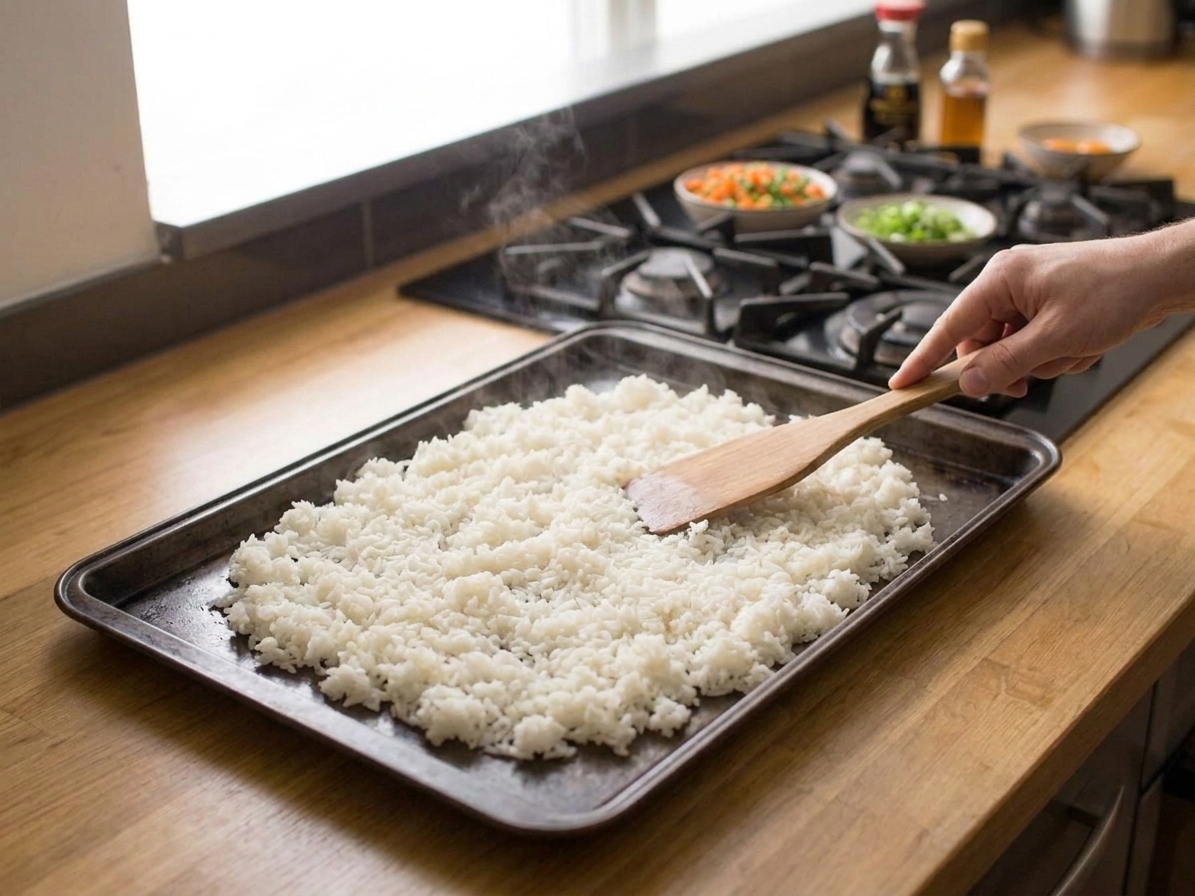
You can, but you have to dry it out first. Spread hot rice on a sheet pan, fluff it, and chill it uncovered for 30 to 60 minutes. Day-old rice is still the easiest win.

Do I need sesame oil?

It is optional, but a small drizzle at the end adds that toasty steakhouse aroma. Use toasted sesame oil and treat it like perfume, not cooking oil.

Should I add sesame seeds or lemon juice?

Some copycat versions add sesame seeds and a tiny squeeze of lemon for that steakhouse touch. Benihana-style fried rice varies by location and by cook, so consider these optional finishing moves if you want the extra “hibachi” vibe.

What soy sauce should I use?

Regular soy sauce is classic. If you are sensitive to salt, use low-sodium and add more to taste at the end. The flavor should be present, not salty.

How do I make it gluten-free?

Swap the soy sauce for tamari (gluten-free) or coconut aminos. Taste and adjust since coconut aminos can be sweeter.

Why is my fried rice soggy?

Usually one of these: the rice is warm, the pan is not hot enough, or the skillet is crowded. Cold rice, high heat, and cooking in batches fixes it fast.

Can I add chicken, shrimp, or steak?

Absolutely. Cook the protein first, remove it, then proceed with the recipe and toss the cooked protein back in at the end to warm through.

Any time I go to a hibachi spot, I tell myself I am there for the steak or the shrimp. Then the fried rice shows up and suddenly I am negotiating bites like it is a group project. At home, this is my weeknight version of that same feeling. It is fast, it is a little loud in the pan, and it makes the kitchen smell like you know what you are doing, even if you are cooking in sweatpants and using a cereal bowl to beat the eggs.