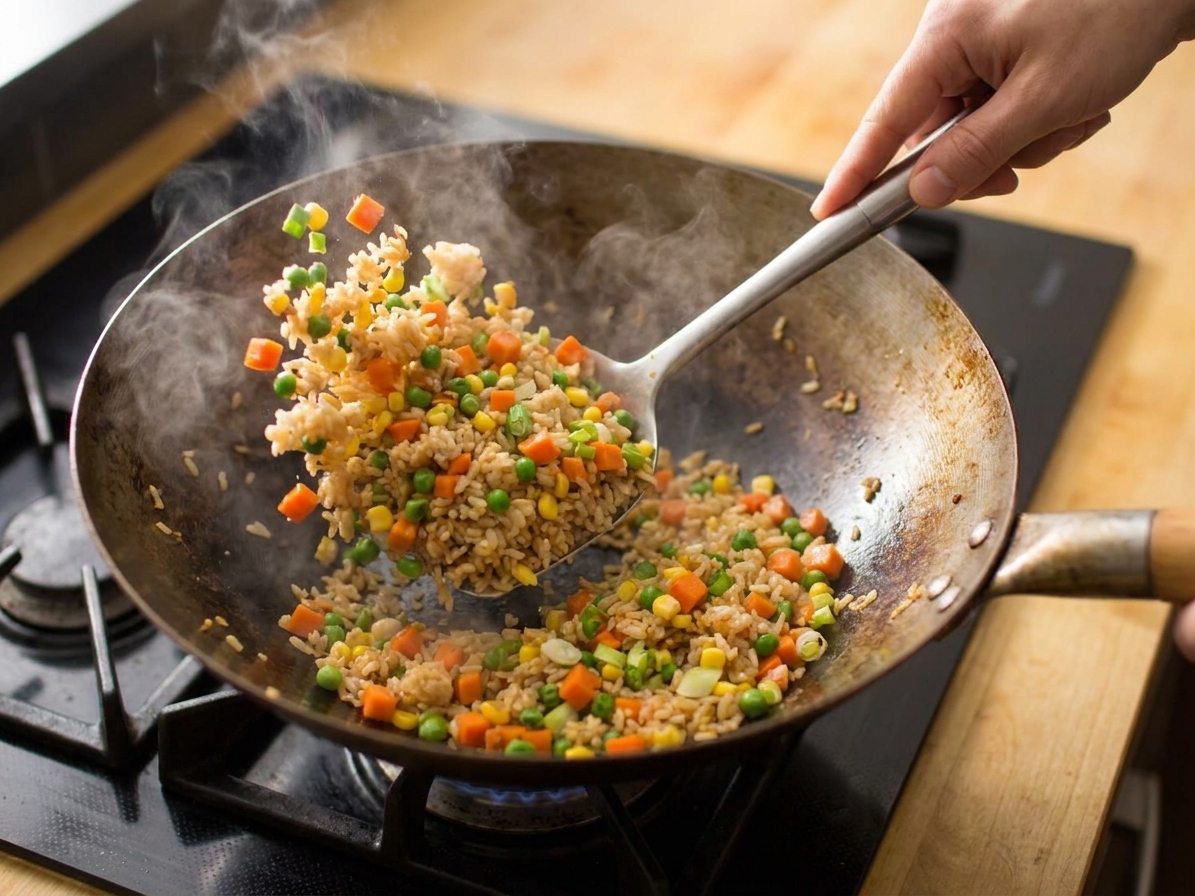
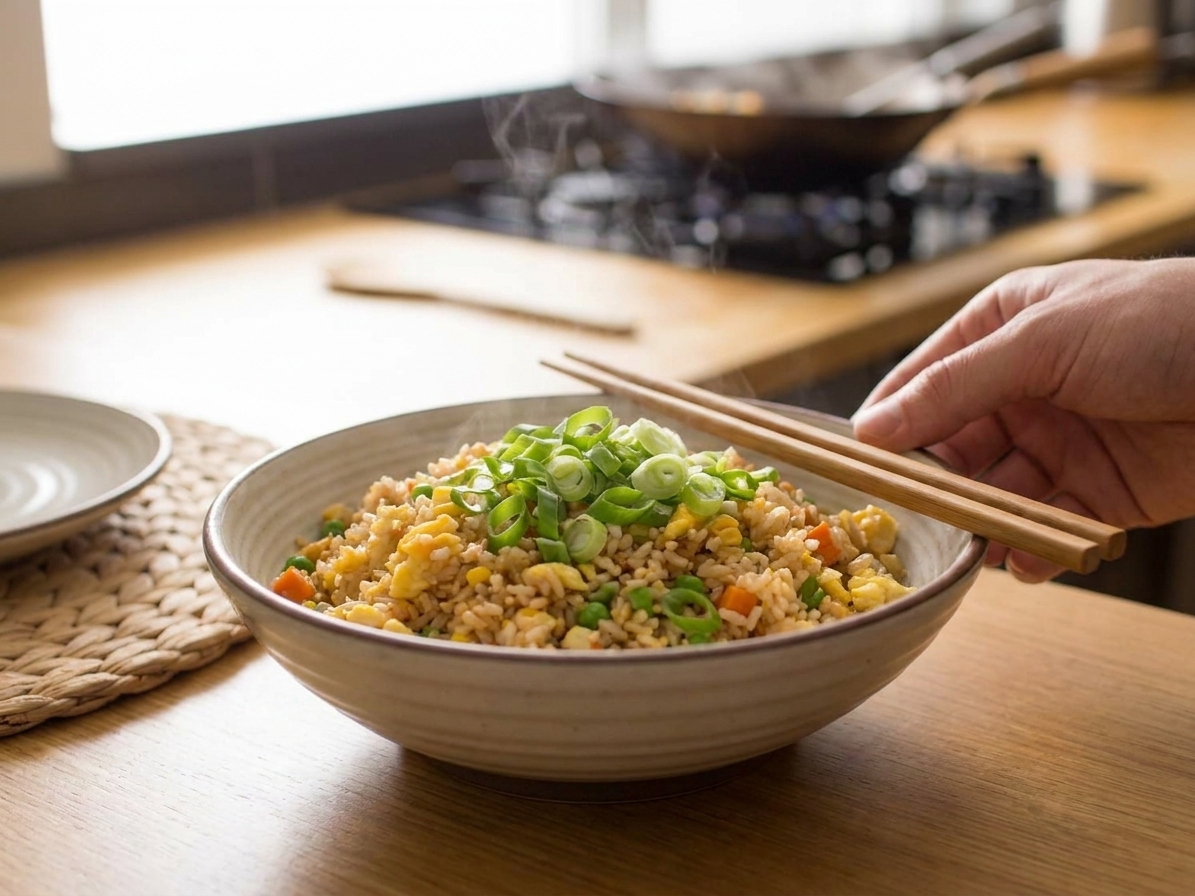
What kind of rice is closest to Benihana-style fried rice?
White rice is the move, and the biggest thing is texture, not a single “perfect” grain. Some hibachi-style restaurants use a slightly stickier short- to medium-grain white rice, but long-grain (or jasmine) works great at home too. Whatever you choose, cook it, cool it, then use it cold.
Can I use freshly cooked rice?
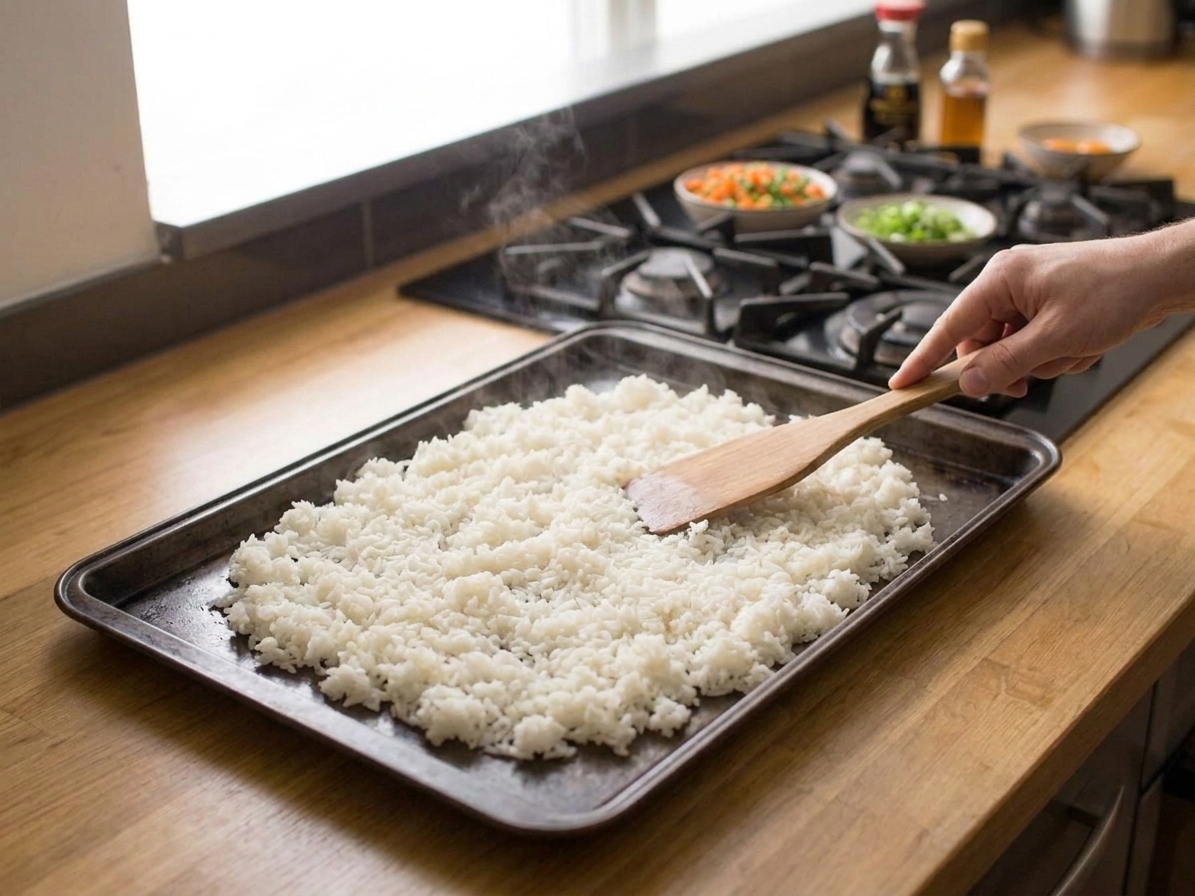
You can, but you have to dry it out first. Spread hot rice on a sheet pan, fluff it, and chill it uncovered for 30 to 60 minutes. Day-old rice is still the easiest win.
Do I need sesame oil?
It is optional, but a small drizzle at the end adds that toasty steakhouse aroma. Use toasted sesame oil and treat it like perfume, not cooking oil.
Should I add sesame seeds or lemon juice?
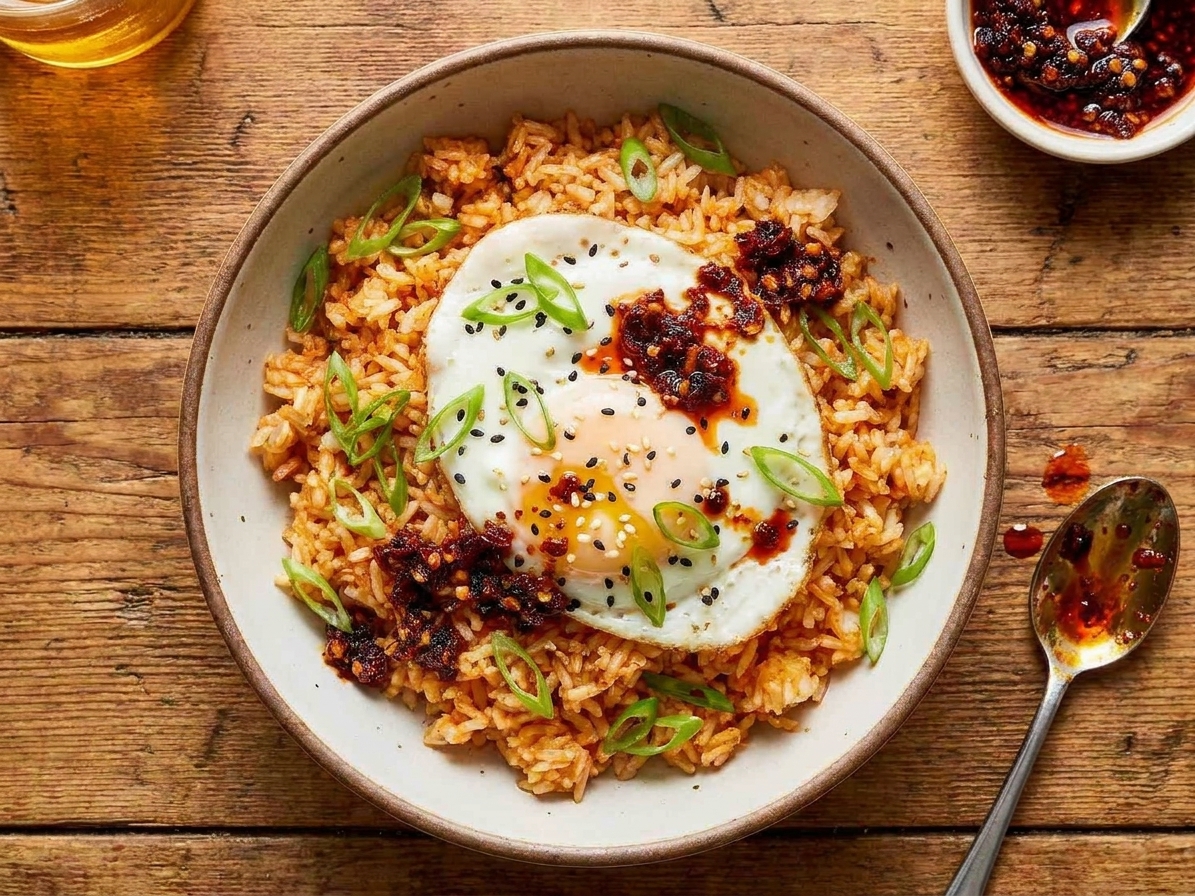
Some copycat versions add sesame seeds and a tiny squeeze of lemon for that steakhouse touch. Benihana-style fried rice varies by location and by cook, so consider these optional finishing moves if you want the extra “hibachi” vibe.
What soy sauce should I use?
Regular soy sauce is classic. If you are sensitive to salt, use low-sodium and add more to taste at the end. The flavor should be present, not salty.
How do I make it gluten-free?
Swap the soy sauce for tamari (gluten-free) or coconut aminos. Taste and adjust since coconut aminos can be sweeter.
Why is my fried rice soggy?
Usually one of these: the rice is warm, the pan is not hot enough, or the skillet is crowded. Cold rice, high heat, and cooking in batches fixes it fast.
Can I add chicken, shrimp, or steak?
Absolutely. Cook the protein first, remove it, then proceed with the recipe and toss the cooked protein back in at the end to warm through.