Can I use almond flour or coconut flour instead of a gluten free flour blend?
Not here. Almond flour and coconut flour behave totally differently and need a different formula. This recipe is built for a 1:1 gluten free all-purpose flour blend.
What gluten free flour blend works best?
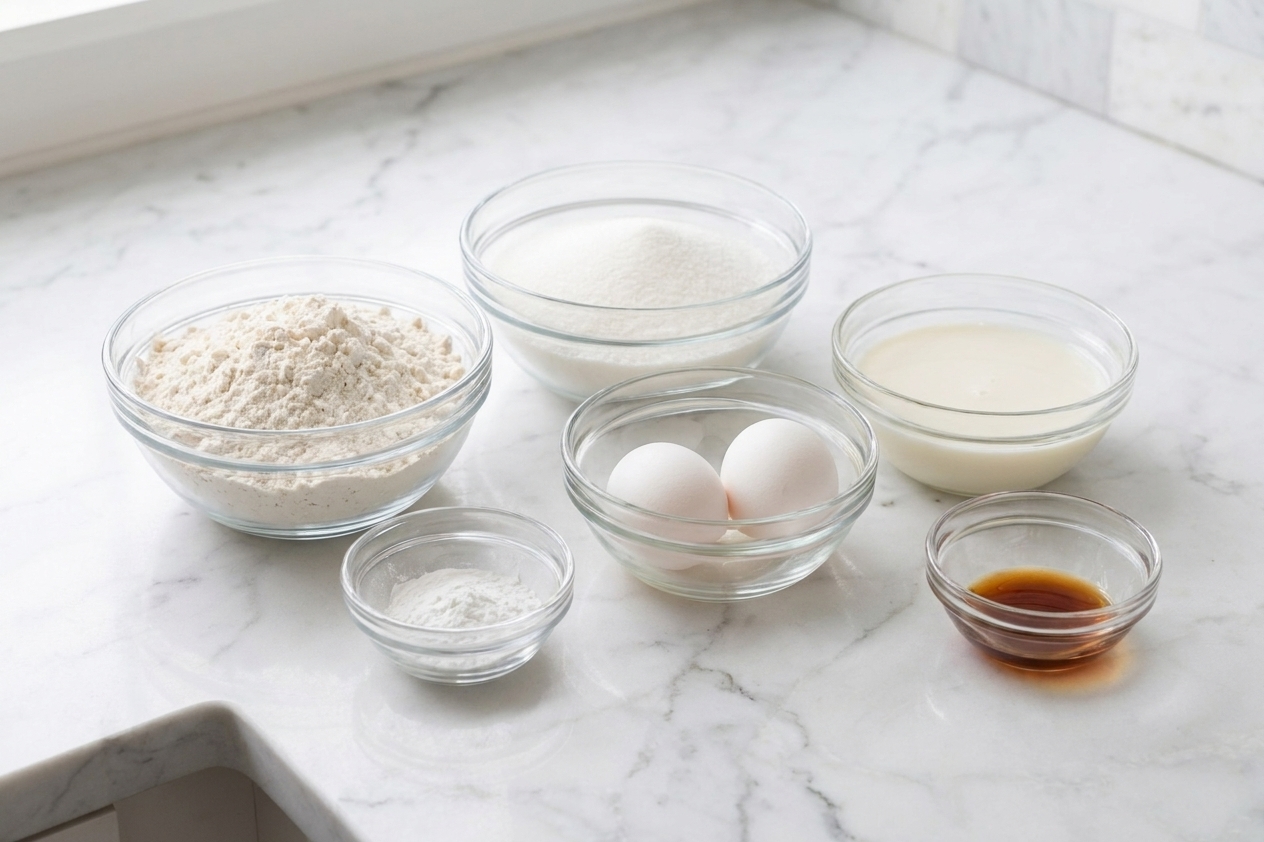
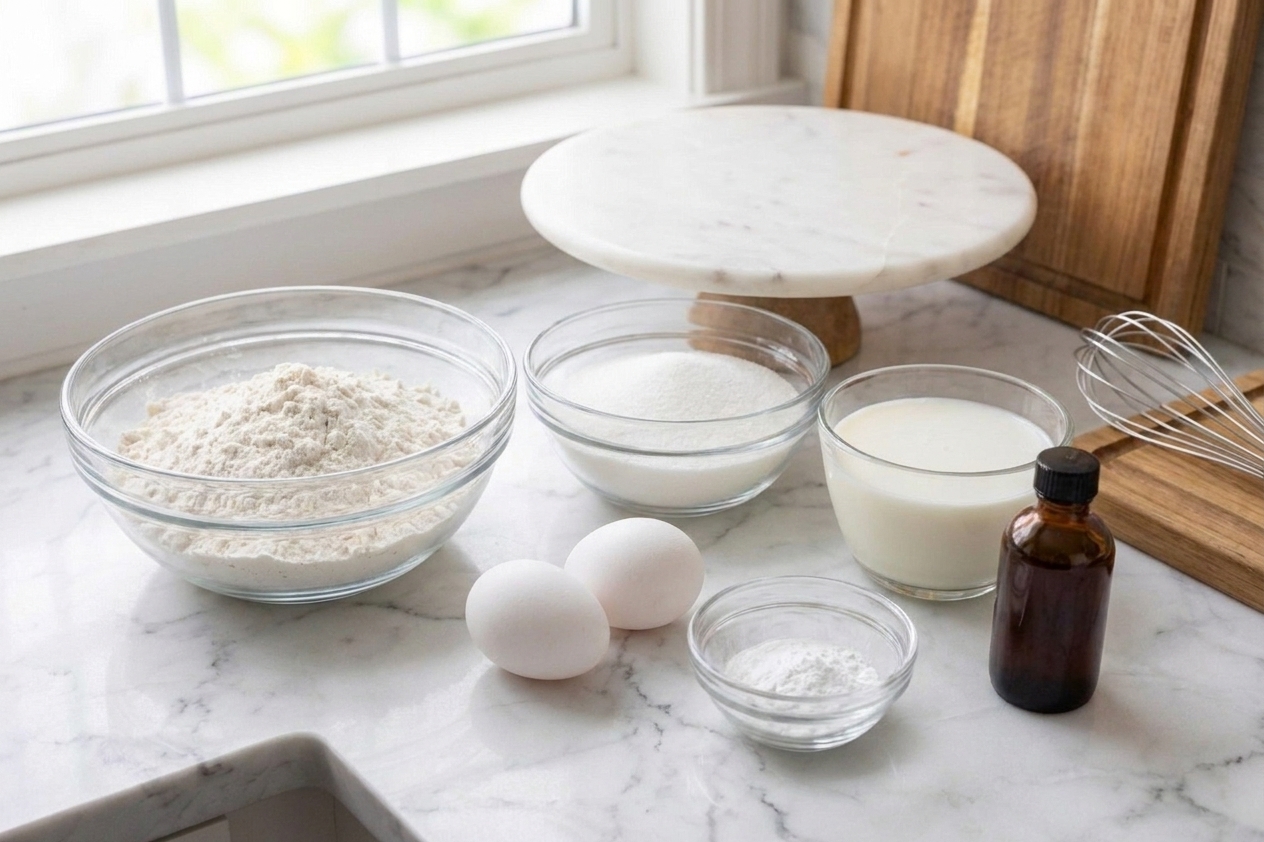
Use a blend labeled 1:1 or measure-for-measure that contains rice flour and starches. Blends vary, some absorb more liquid or bake up softer than others, so small texture differences are normal. For the most consistent results, weigh your flour if you can.
If your blend does not include xanthan gum (or guar gum), add it as listed. If it already includes it, skip the extra.
Why rest the batter?
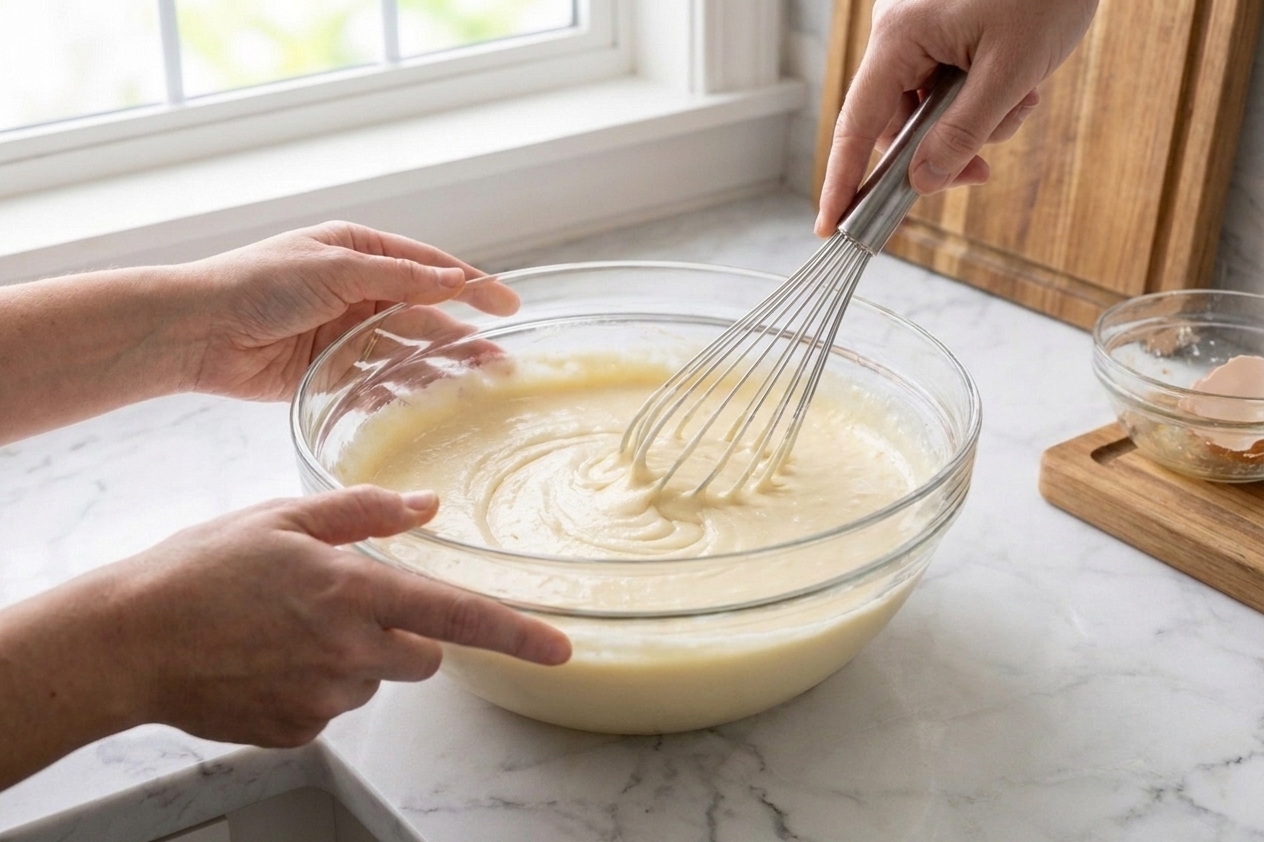
Gluten free flours need a minute to absorb liquid. Resting for 10 minutes reduces grittiness and helps the cake bake up with a smoother, more “normal cake” crumb. This can vary a bit by blend, but it is rarely a bad idea.
My cake sank in the middle. What happened?
- Oven temperature off, or the door opened early.
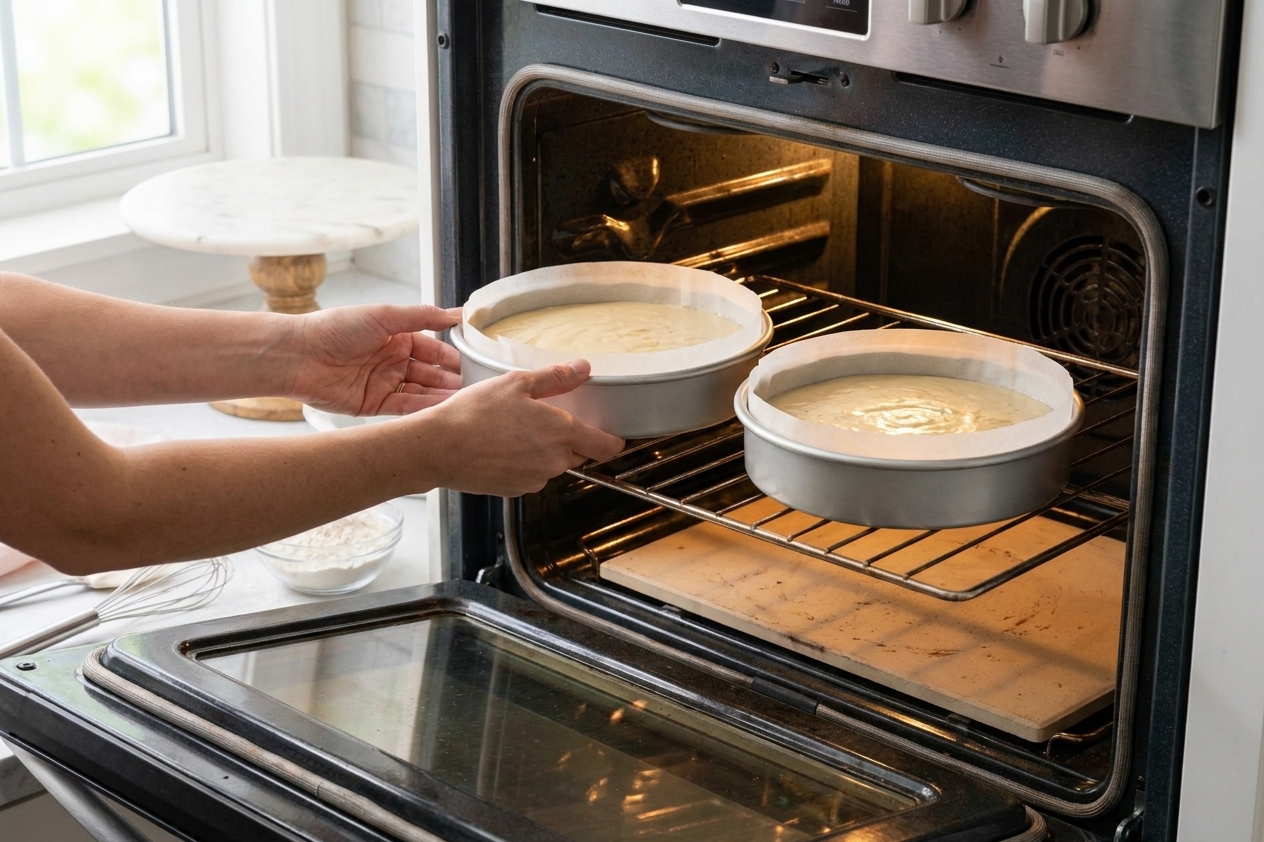
- Underbaked center. Check with a toothpick, look for a gentle spring-back, or use an internal temperature check (see below).
- Expired baking powder.
- Too much liquid from a milk swap. Some dairy-free milks are thinner, which can change structure.
Can I make it dairy free?
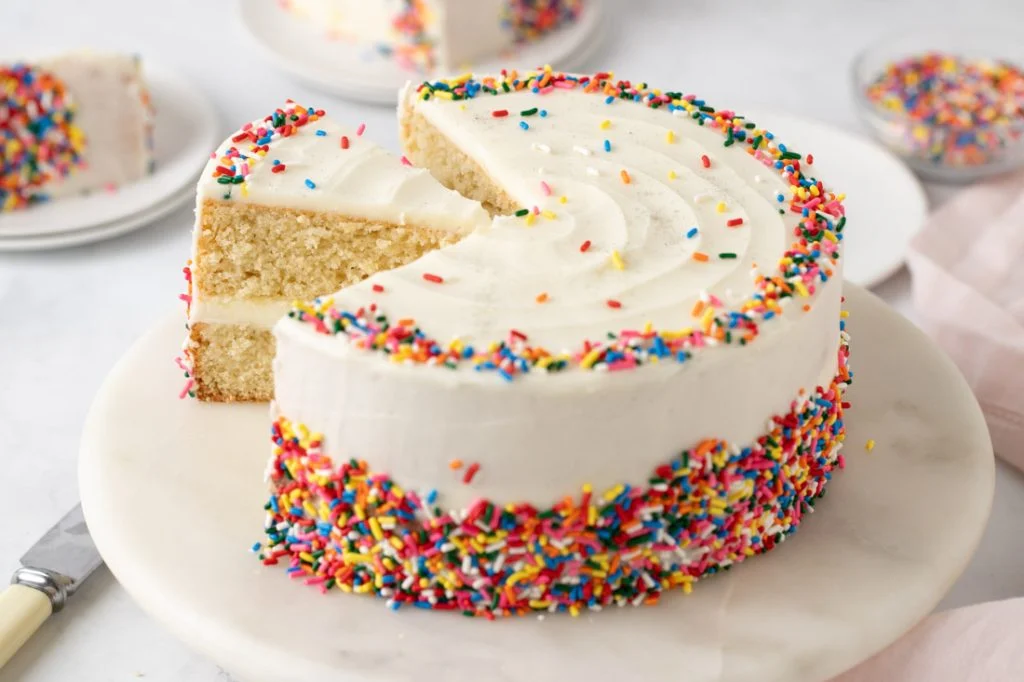
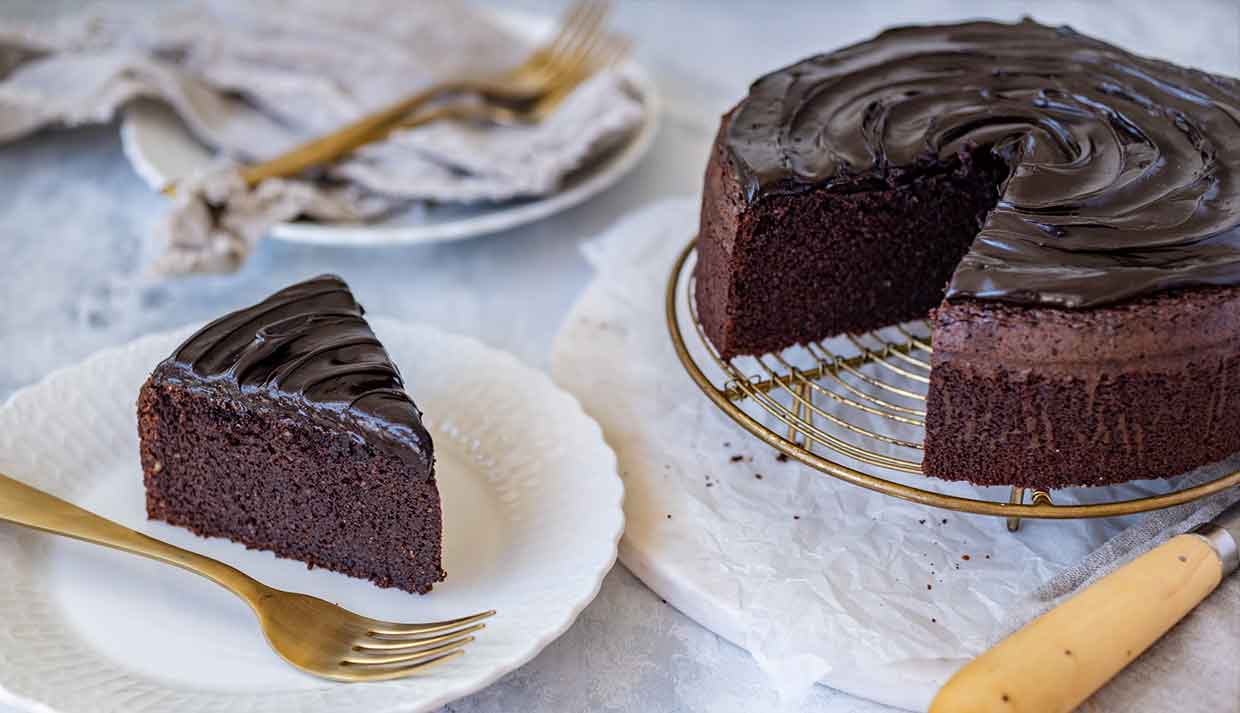
Yes. Use neutral oil (already dairy free), swap milk for unsweetened almond or oat milk, and use a dairy-free butter for the frosting. The cake stays tender.
Can I make it egg free?
Egg-free gluten free cakes can be tricky. If you want to try, use a commercial egg replacer designed for baking. The crumb will be a bit more delicate and the rise slightly smaller.