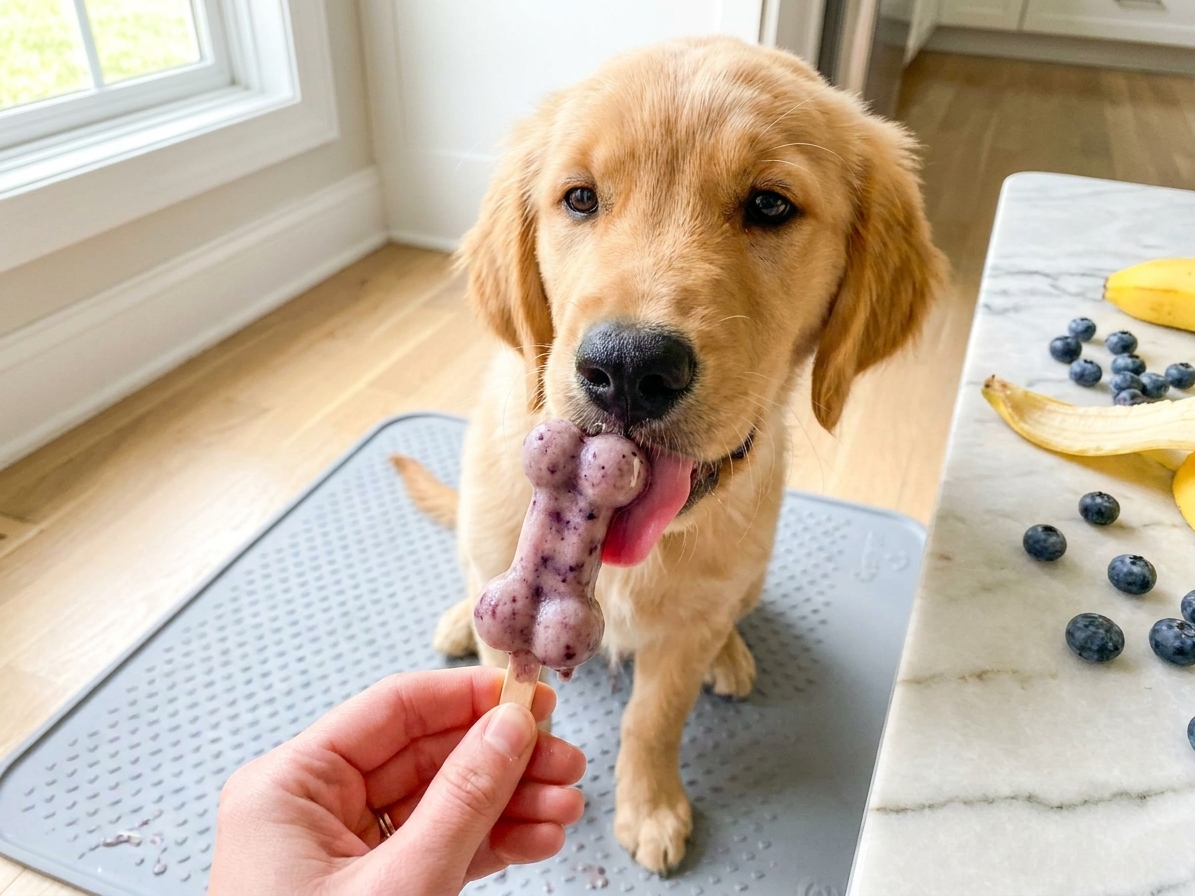
Are pupsicles safe for dogs?
Most pupsicles are safe when they are made with dog-safe ingredients and served in sensible portions. Avoid xylitol (sometimes in peanut butter), chocolate, grapes or raisins, macadamia nuts, and anything heavily sweetened or seasoned.
Can dogs have yogurt?
Many dogs can handle plain, unsweetened yogurt in small amounts, but some dogs are lactose sensitive. If yogurt tends to upset your dog’s stomach, use a lactose-free plain yogurt or swap in a dog-safe alternative recommended by your vet.
Can I use peanut butter?
Yes, as long as it is xylitol-free. If possible, choose peanut butter that is unsalted and no-sugar-added. Stir 1 to 2 tablespoons into the blend for a nuttier pupsicle. Check the label carefully because xylitol is extremely dangerous for dogs.
What can I use if I do not have popsicle molds?
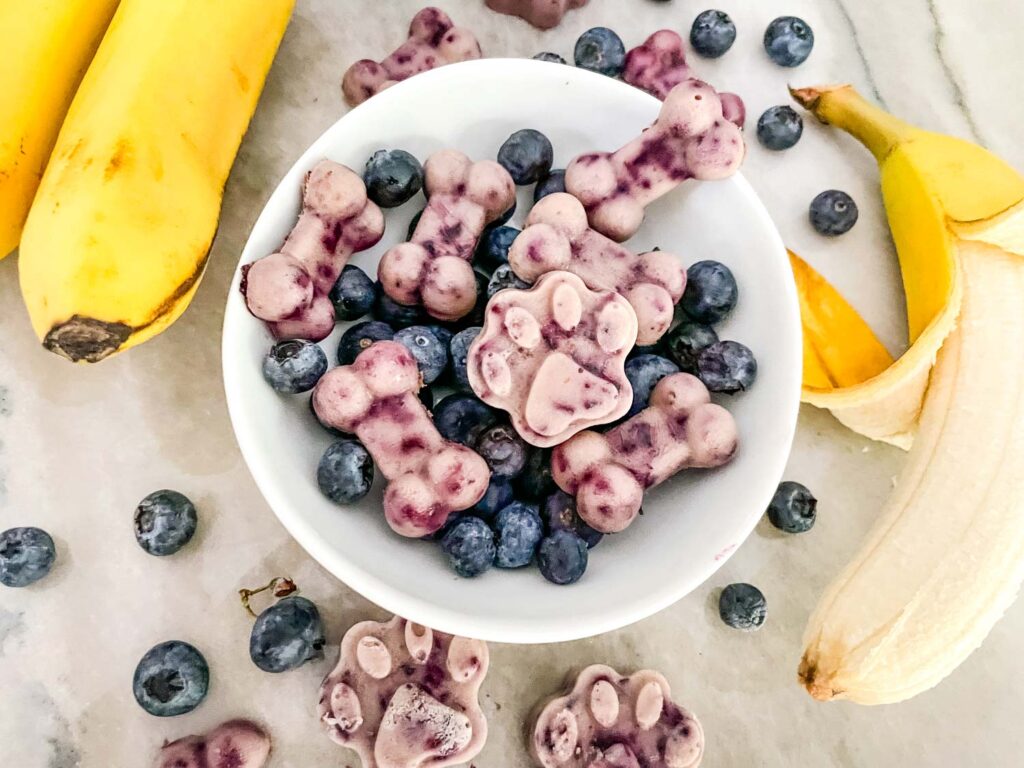
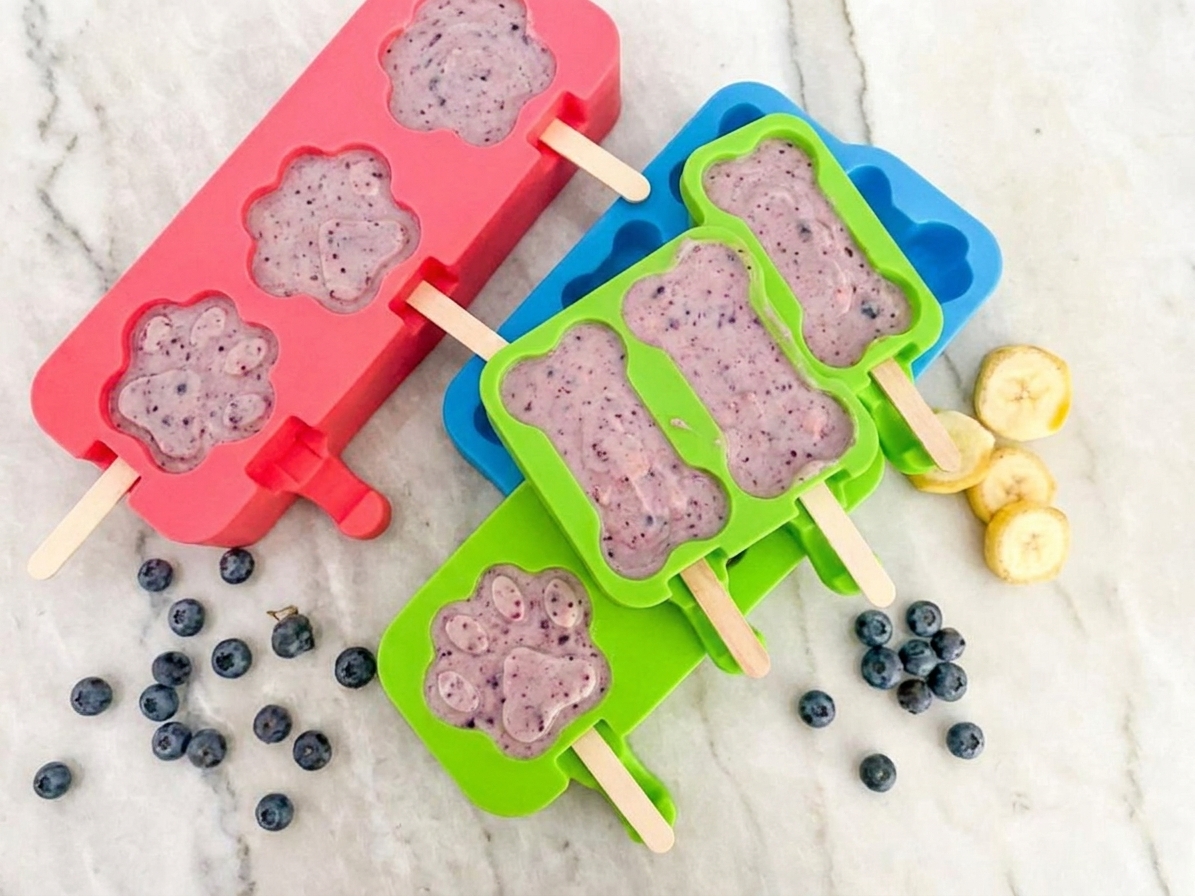
An ice cube tray works perfectly. You can also use silicone mini muffin cups. Smaller shapes are great for small dogs and portion control.
How many pupsicles can my dog have?
Think of these as treats, not meals. A good starting point is 1 small pupsicle for small dogs and 1 to 2 small pupsicles for medium to large dogs, then adjust based on your dog’s size and how their stomach handles it. If your dog is on a weight-loss plan or has diabetes, treat portions matter even more, so keep servings extra small and check with your vet.
Are pupsicles on sticks ok?
Some dogs do fine, but sticks can be a chewing or choking hazard for enthusiastic gulpers. When in doubt, go stick-free (ice cube tray or mini muffin cups) and supervise while they enjoy it.
Why did my pupsicles freeze rock hard?
More water and less fat means a harder freeze. For a softer, creamier treat that becomes more lickable as it starts to thaw, use a little more yogurt or add a spoonful of pumpkin puree. Smaller molds soften faster once served.