Common Questions
How much boneless rib roast per person?
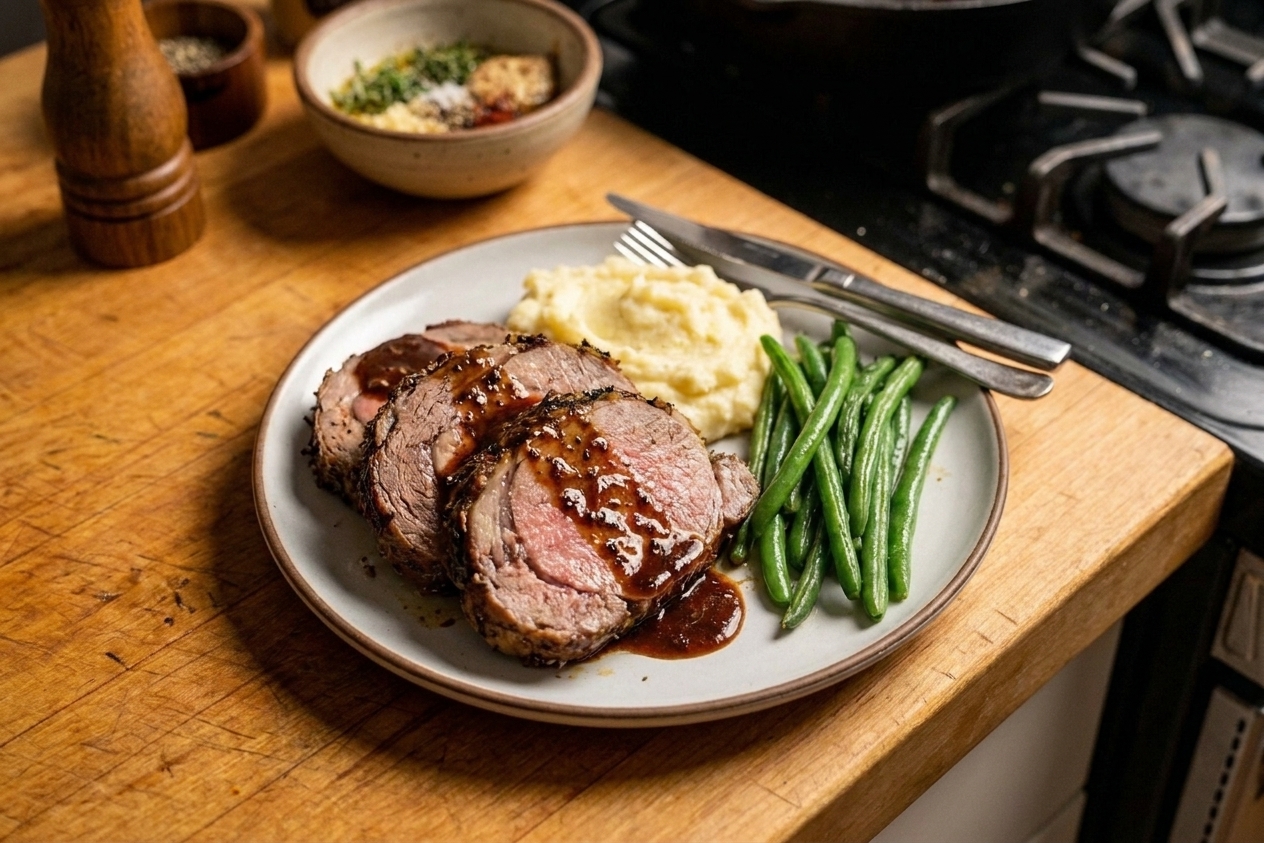
A good rule is 1/2 pound per person for a boneless roast if you have plenty of sides. For big appetites, fewer sides, or guaranteed leftovers, plan 3/4 pound per person (many butchers use this as the baseline for boneless). Appetites vary, so if you are on the fence, round up.
Do I need to tie a boneless rib roast?
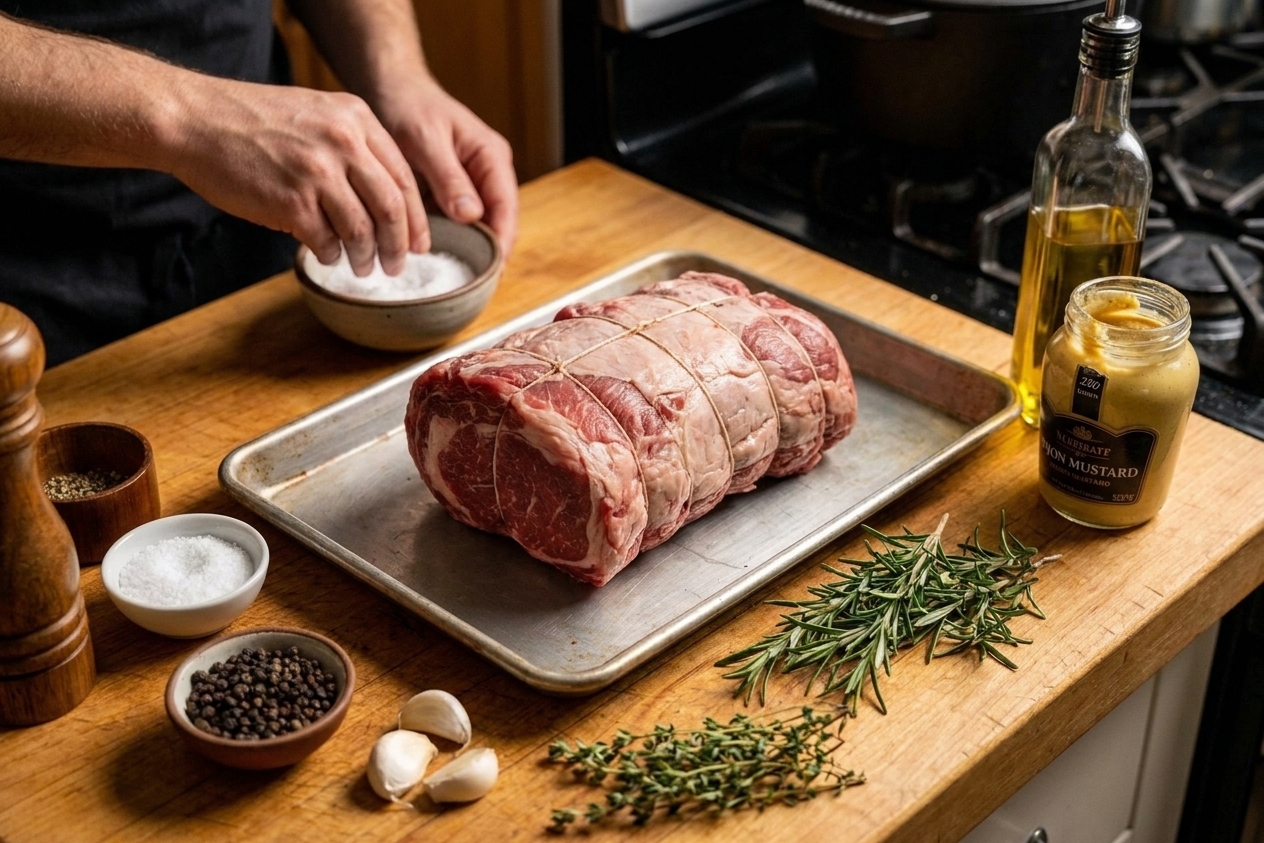
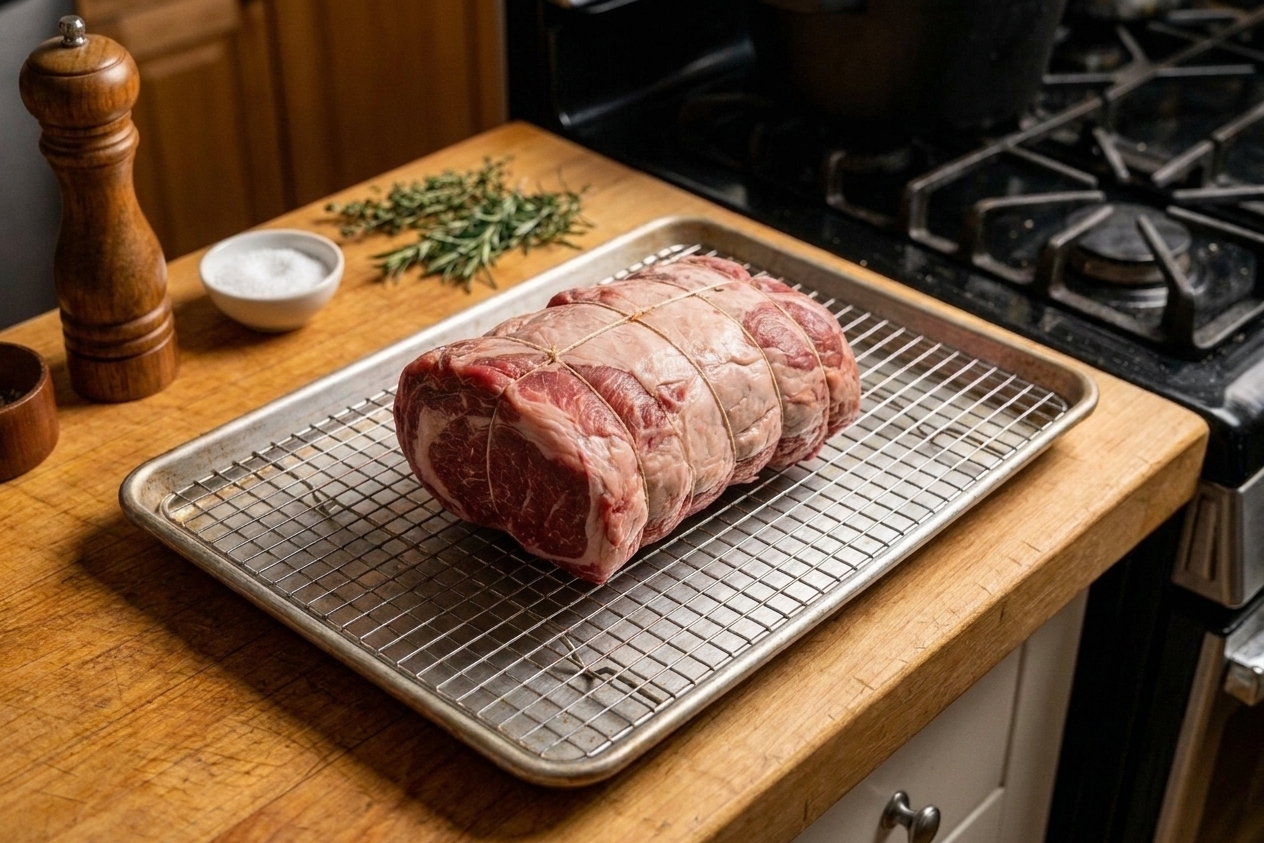
It helps. Boneless roasts are sometimes a little floppy since the bones are gone. If yours is not already tied, loop butcher’s twine around it every 1 1/2 to 2 inches. More even shape equals more even cooking.
What internal temperature should I aim for?
- Rare: pull at 120°F to 125°F, rest to 125°F to 130°F
- Medium-rare: pull at 125°F to 130°F, rest to 130°F to 135°F
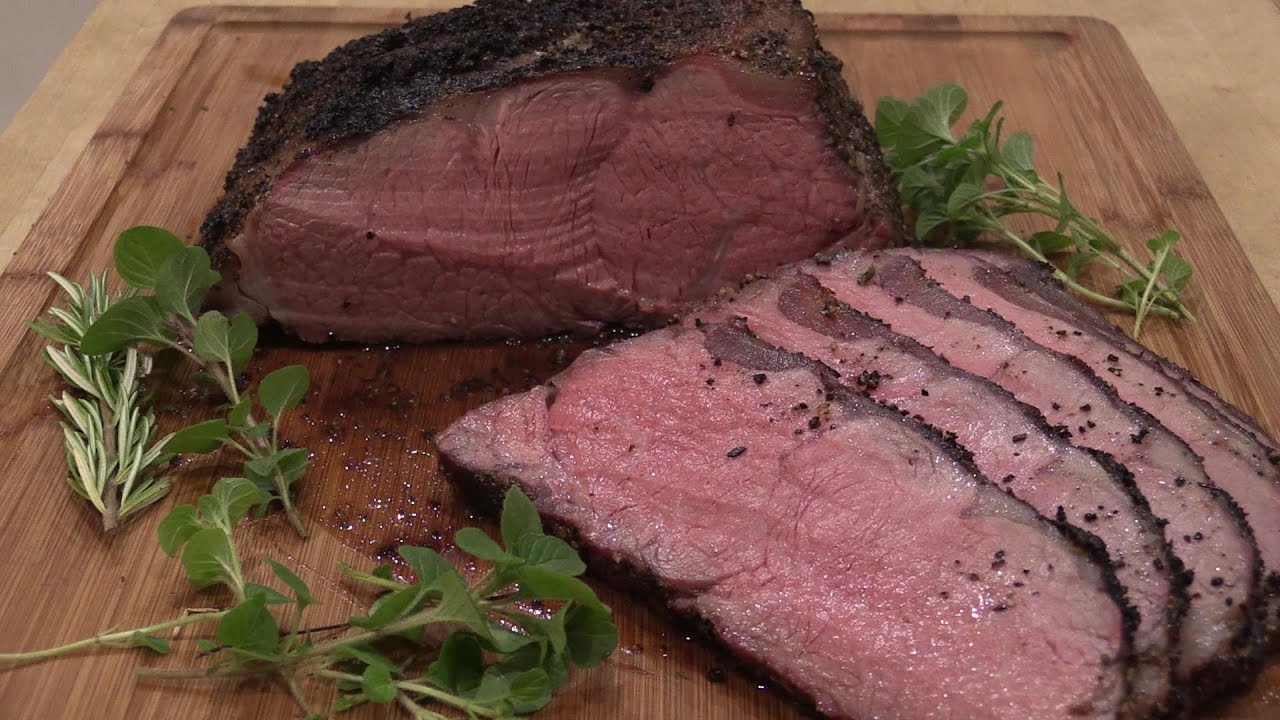
- Medium: pull at 135°F to 140°F, rest to 140°F to 145°F
Carryover cooking: expect roughly 5 to 10°F of rise while resting, and bigger roasts tend to climb more.
USDA guidance: USDA’s recommended endpoint for roasts/steaks is 145°F with a 3-minute rest. Many people cook intact whole-muscle beef (not tenderized or ground) to lower temps for a rosy center, especially when handled and stored properly. When in doubt, follow the higher endpoint.
Why rest the roast so long?
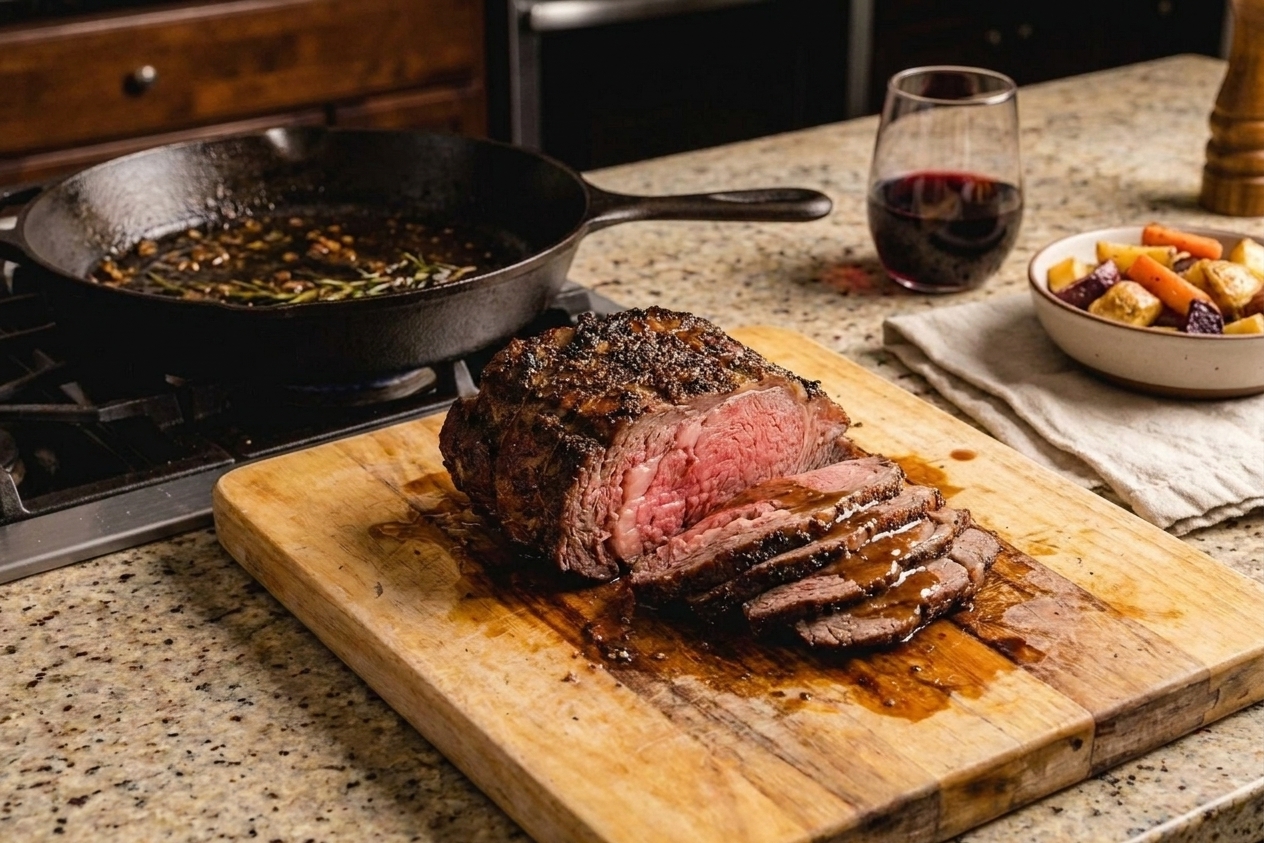
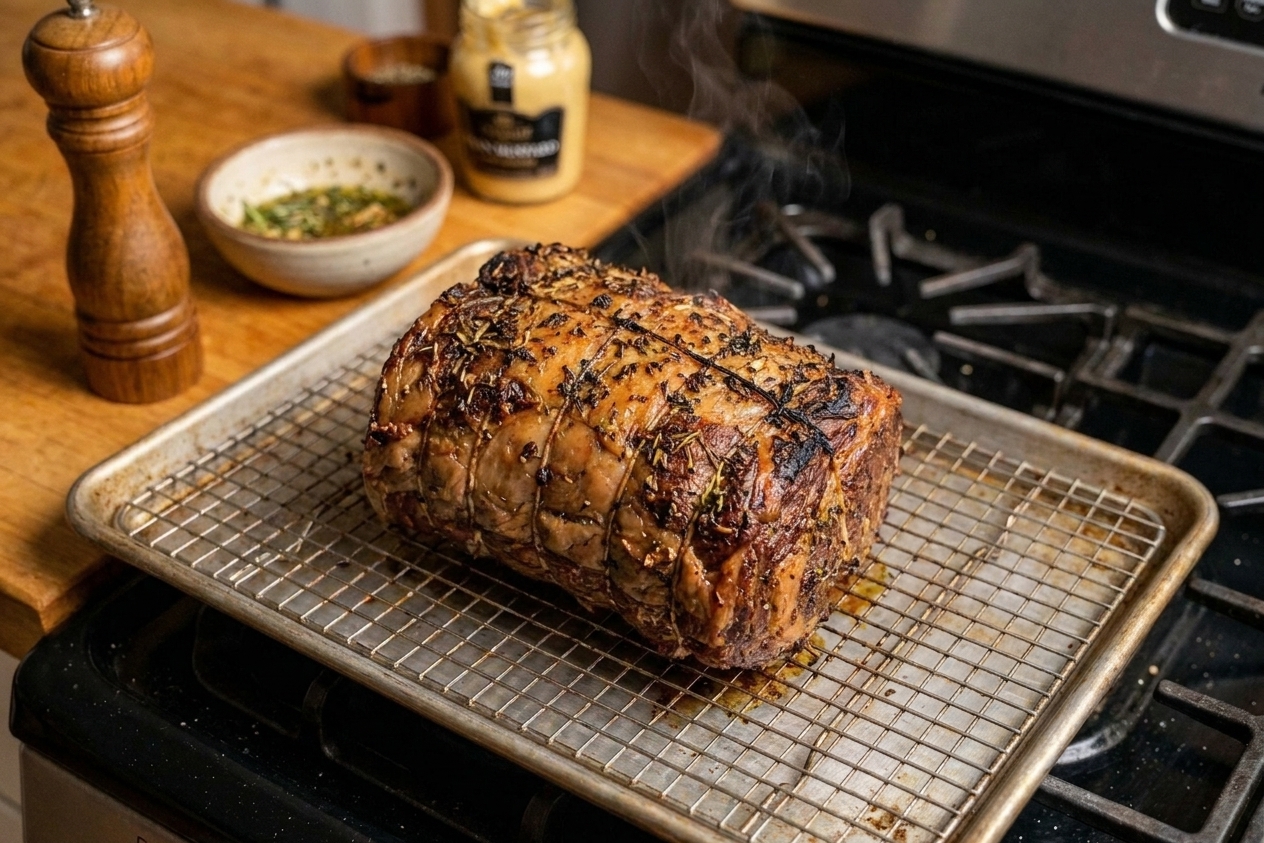
Resting lets the juices redistribute and the exterior finish cooking gently. If you slice too early, those juices end up on the cutting board instead of in your roast. For a rib roast, 25 to 40 minutes total resting time is perfect.
Can I cook it without a rack?
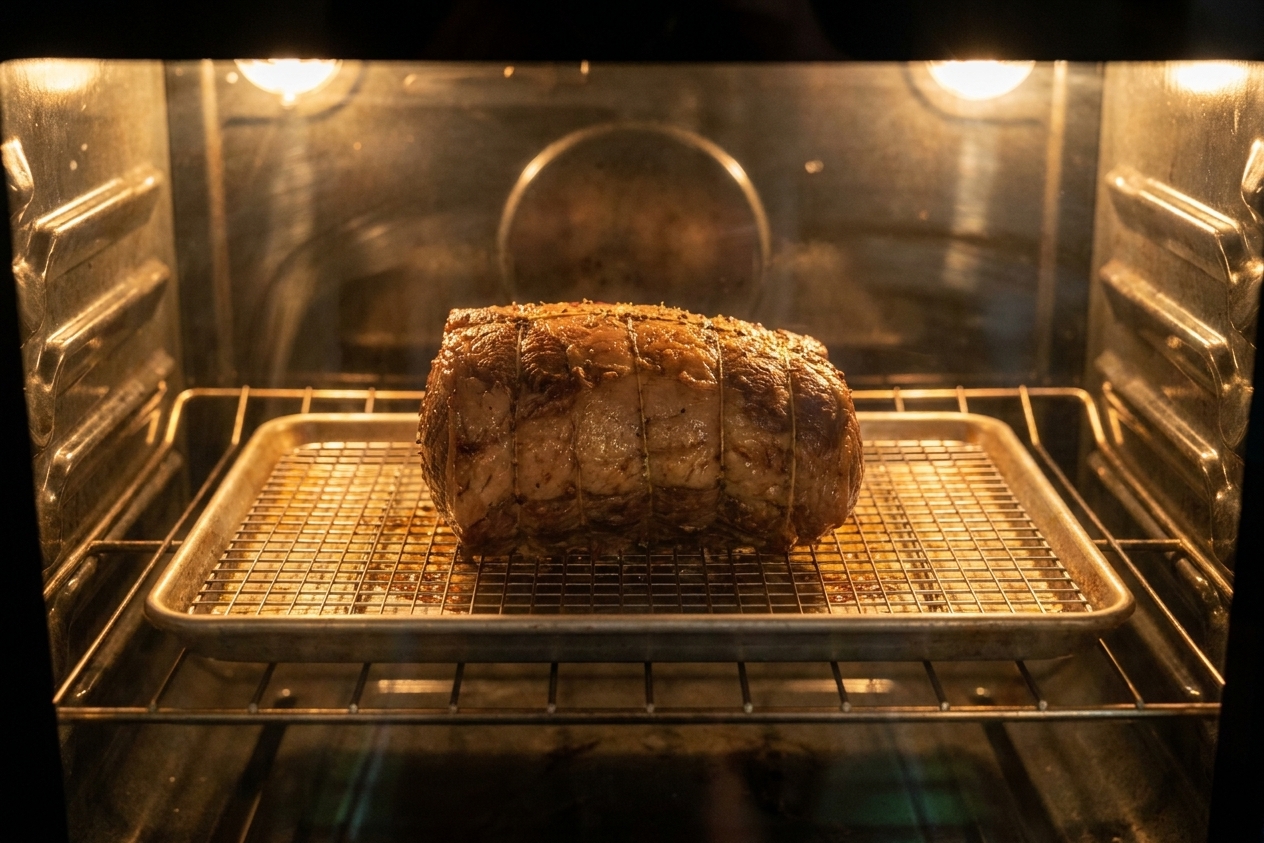
Yes. Use a bed of thick-sliced onions or halved carrots as a “vegetable rack.” It lifts the roast, adds flavor to drippings, and keeps the bottom from steaming.
My roast is cooking too fast. What do I do?
Check that your oven temp is accurate, then tent loosely with foil and reduce the oven by 25°F. Also make sure your thermometer is in the center of the thickest part and not touching fat pockets.