Common Questions
Do I have to use red wine?
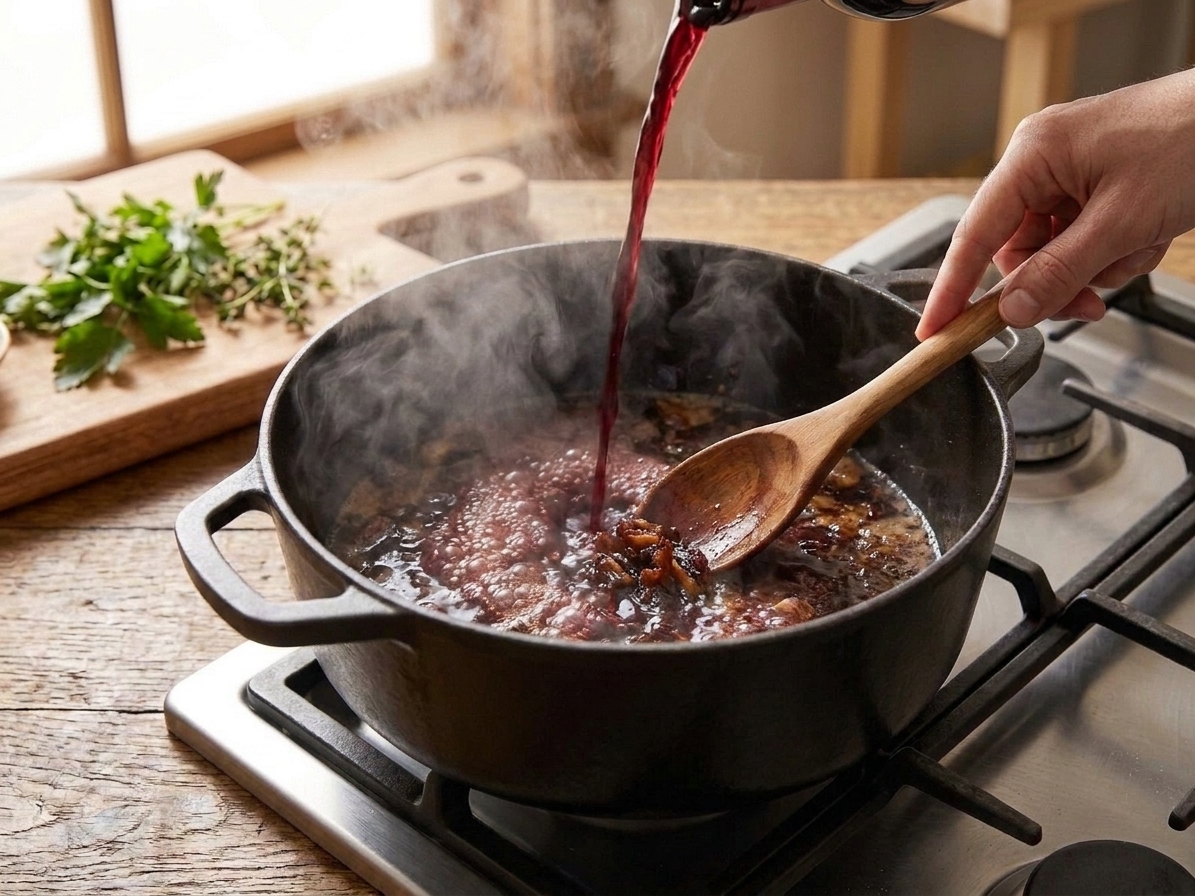
No. Wine gives depth and a subtle acidity that keeps the sauce from tasting flat, but you can swap it.
Best no-wine swap: use an extra 1 1/2 cups beef stock plus 2 tablespoons red wine vinegar added with the stock.
If using balsamic: it is a little sweeter and darker. Start with 1 tablespoon, taste near the end, and add more only if you want that extra pop.
Bone-in or boneless short ribs?
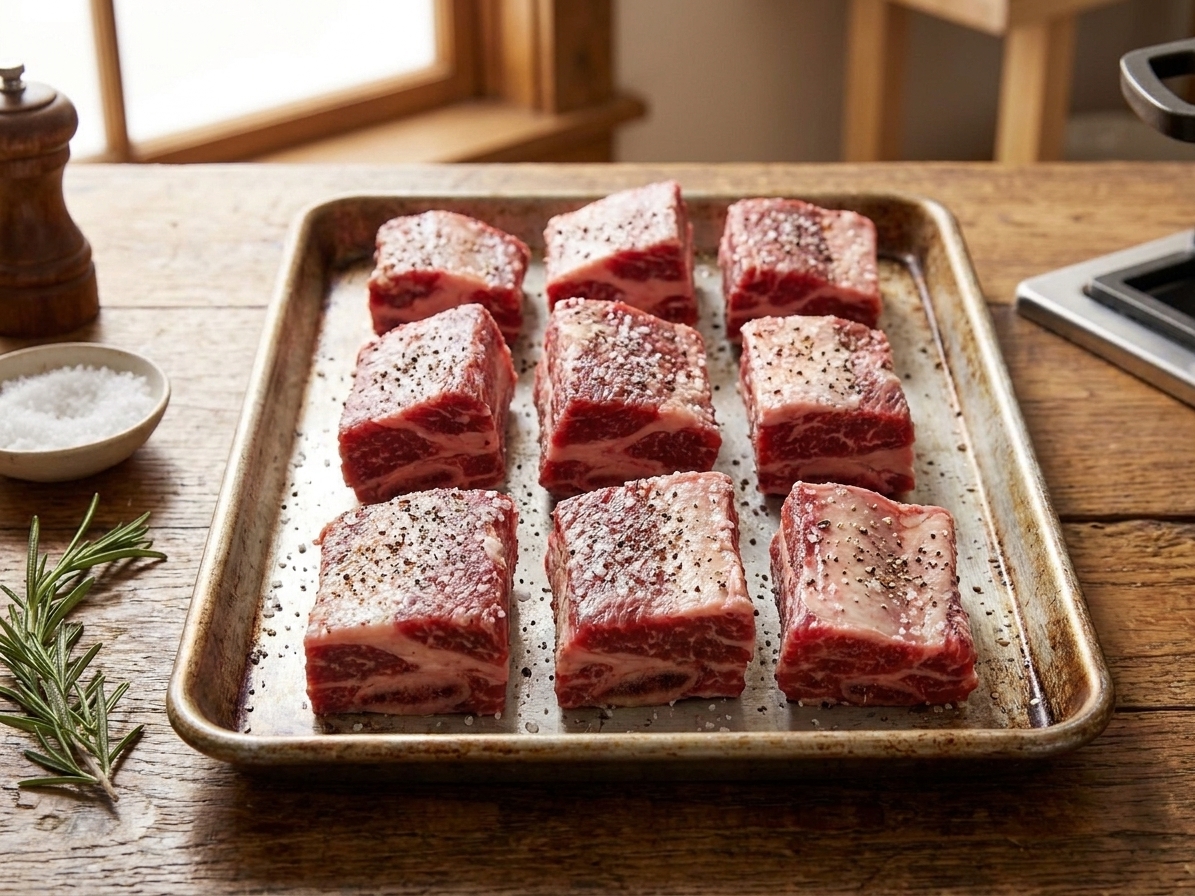
Either works. Bone-in, English-cut short ribs are the classic choice for braising and tend to stay especially juicy. Boneless can cook a little faster, so start checking tenderness around the 2 hour mark. Flanken-cut short ribs are sliced across the bone and cook differently, so they are not ideal for this long braise.
How do I know they are done?
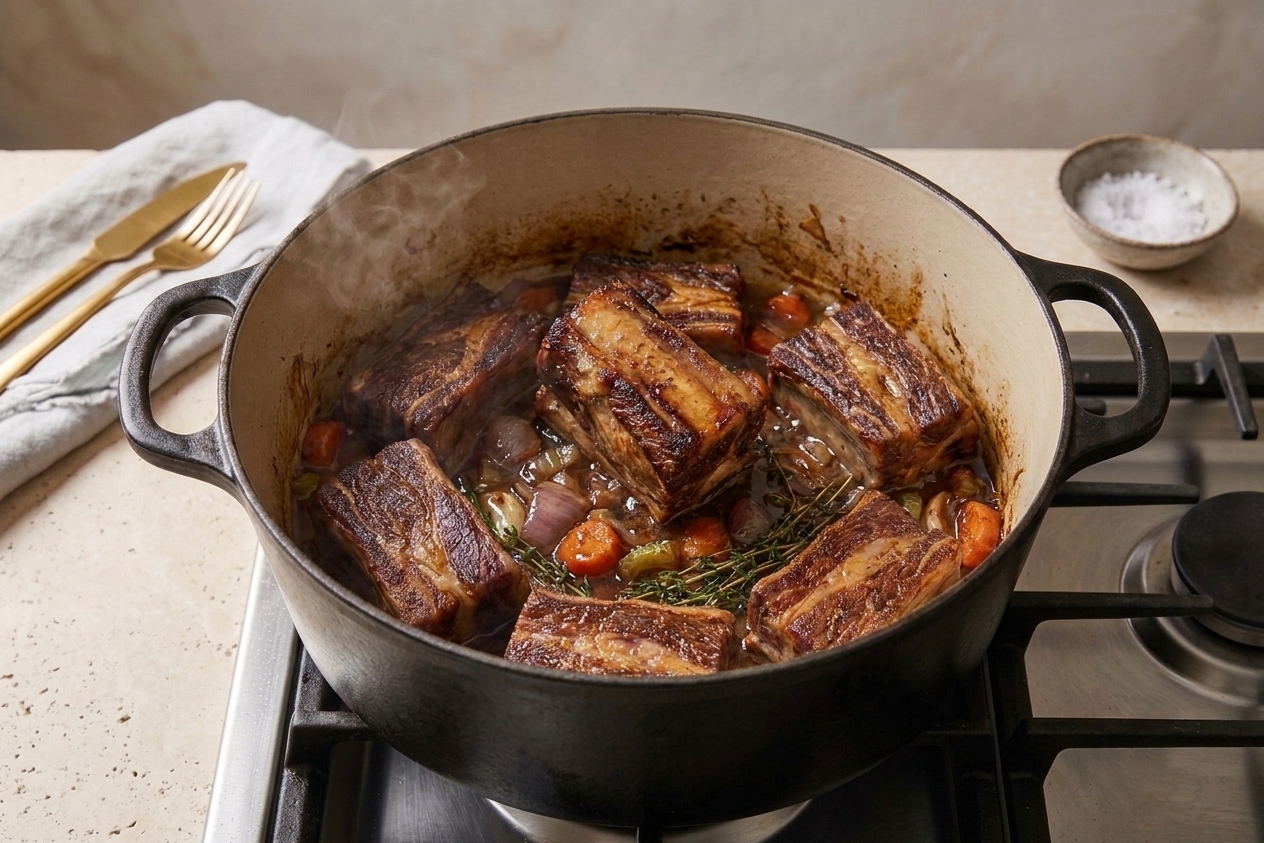
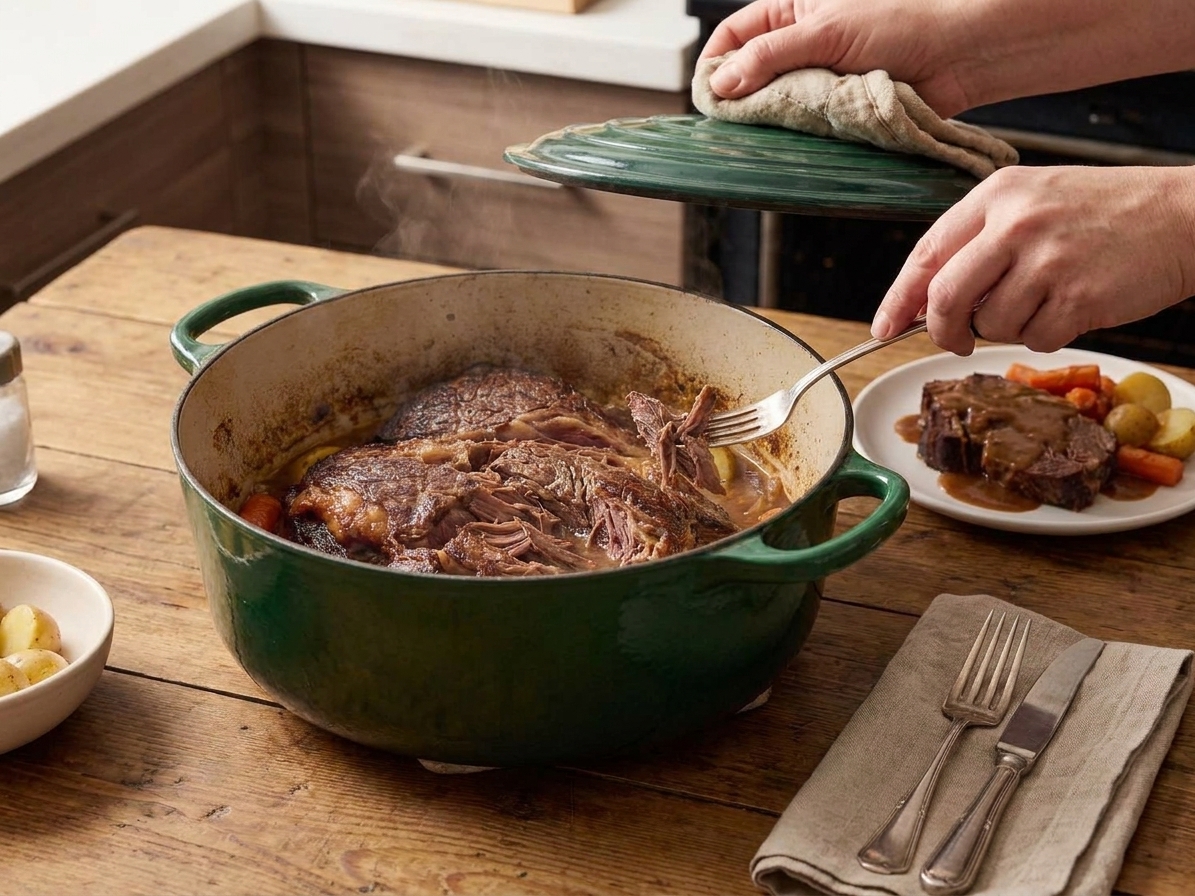
They are done when a fork slides in with almost no resistance and the meat wants to separate along its seams. If they are still tight or chewy, they just need more time. If you like a number, many ribs get that fall-apart tenderness around 195 to 205°F, but the fork test matters more than the thermometer.
My sauce tastes good but looks greasy. Help.
Skim the surface with a spoon, or chill the pot and remove the hardened fat the next day. If you want to fix it right now, blot the surface with a folded paper towel dragged lightly across the top.
Can I make these in a slow cooker?
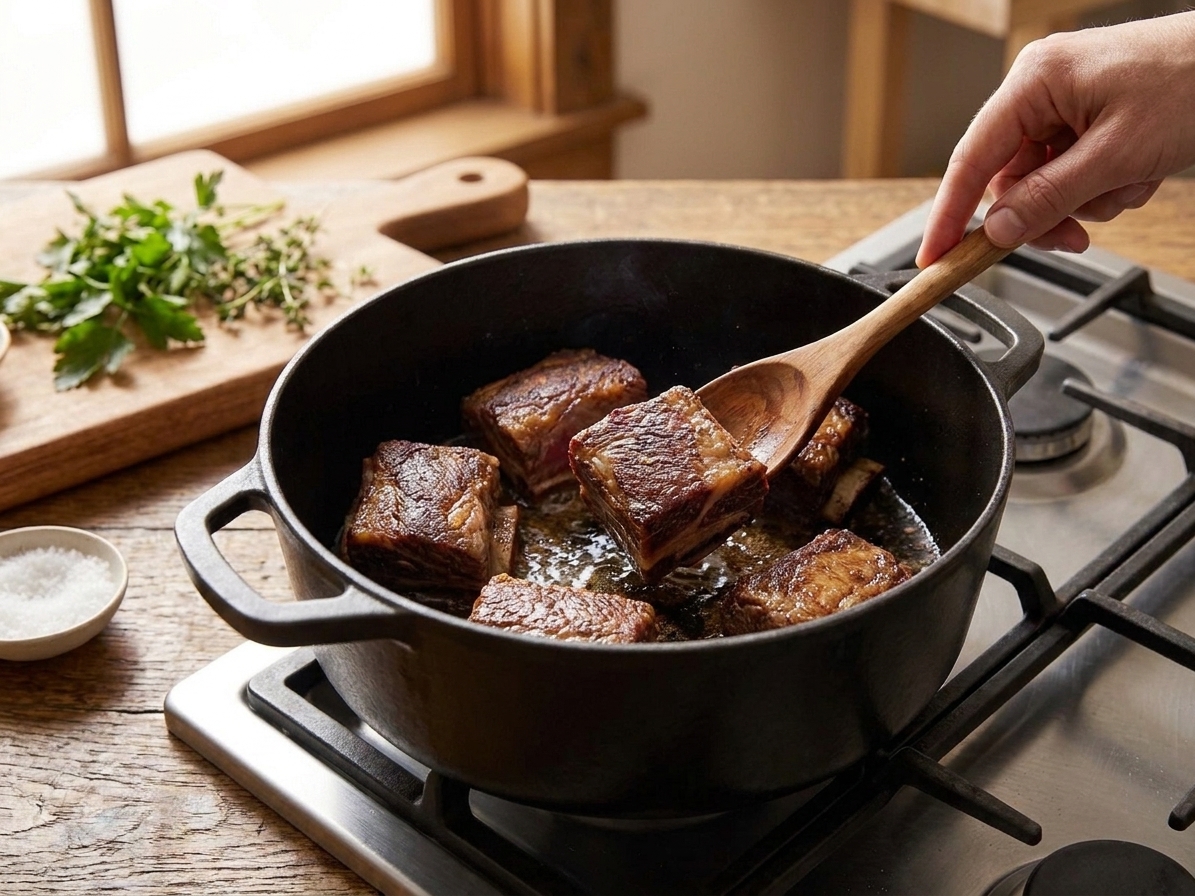
Yes, with one important rule: still sear the ribs and saute the aromatics first. Then transfer everything to the slow cooker and cook on Low for 7 to 8 hours (or High for 4 to 5) until fork-tender. Rib size and cut matter, so use the time as a guide, not a promise. Reduce the sauce on the stove at the end if you want it thicker.
Can I make these in an Instant Pot?
Yes. Brown the ribs using Saute, build the braise, then pressure cook on High for 45 minutes with a 15 minute natural release. They are ready when they are fork-tender. If they are not quite there (thicker ribs can be stubborn), pressure cook for 5 to 10 minutes more. Reduce the sauce on Saute afterward.