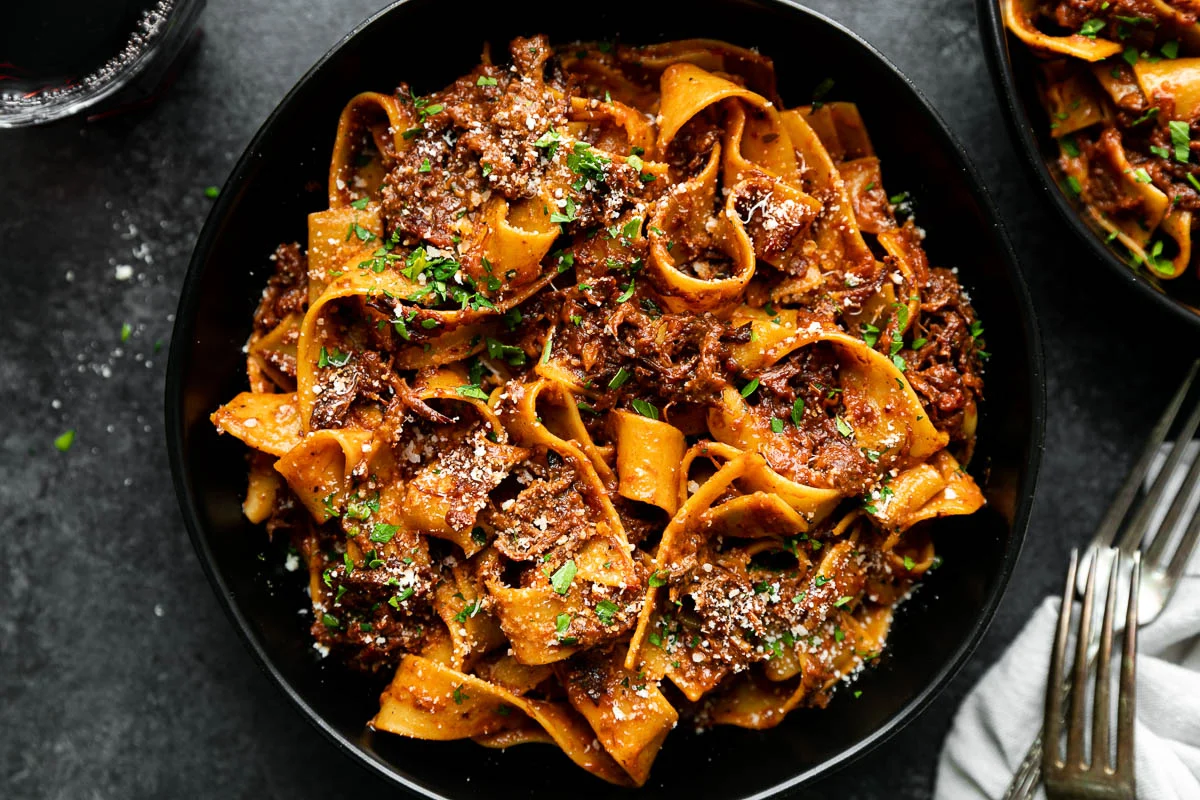
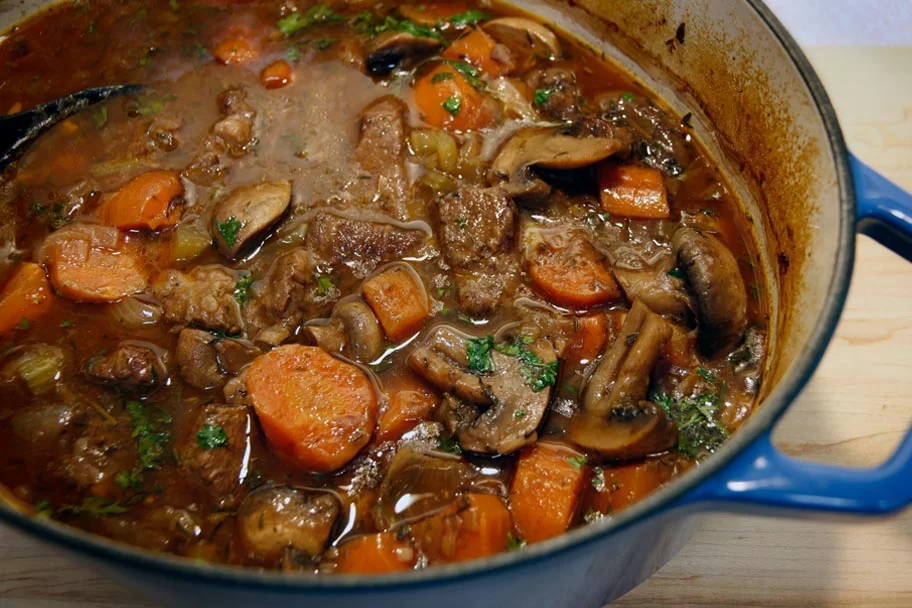
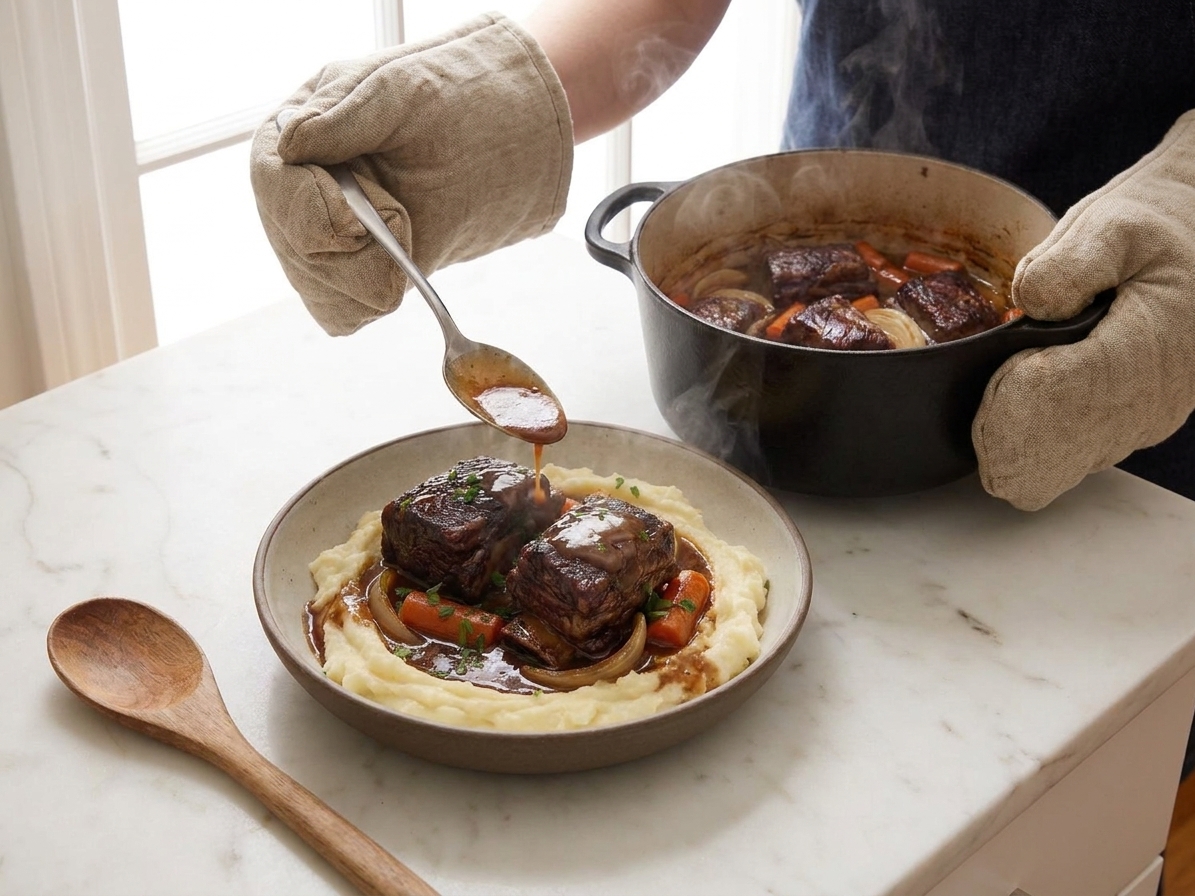
What are boneless short ribs, exactly?
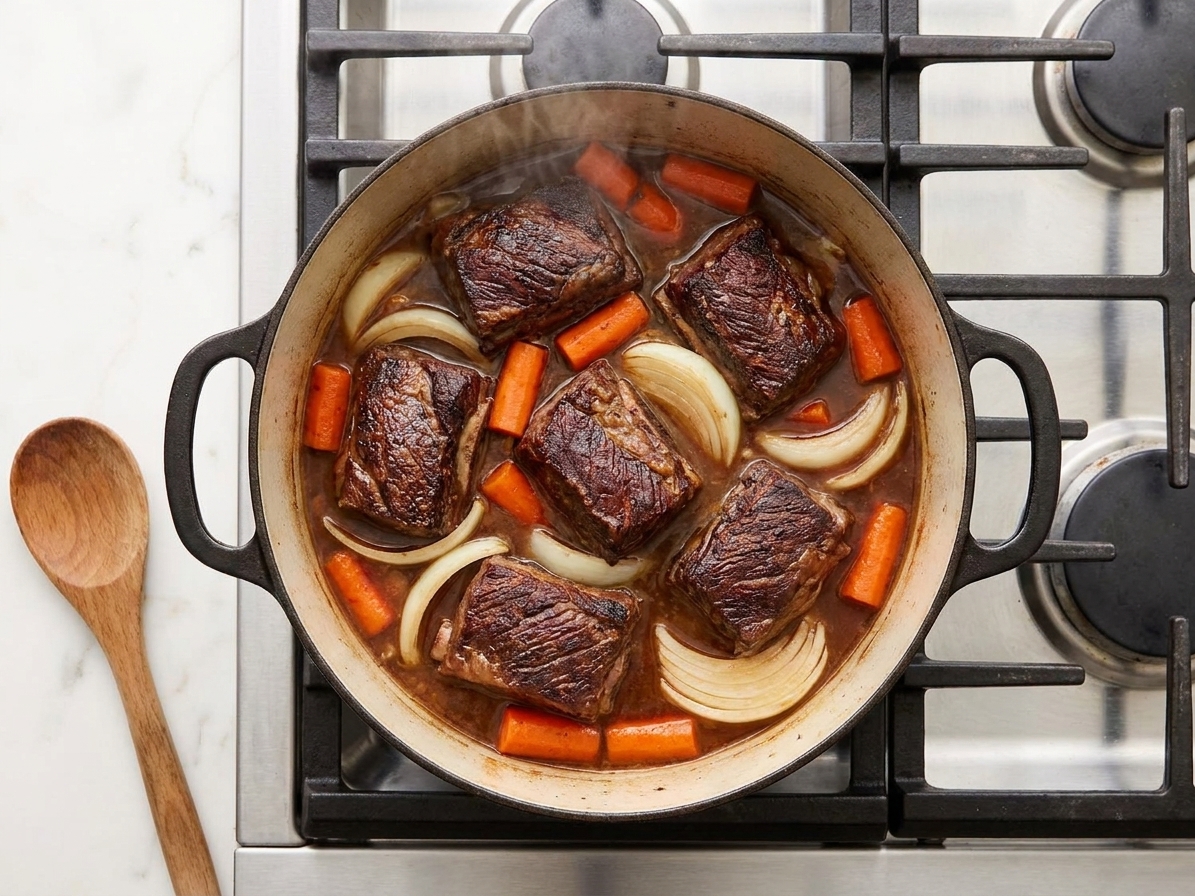
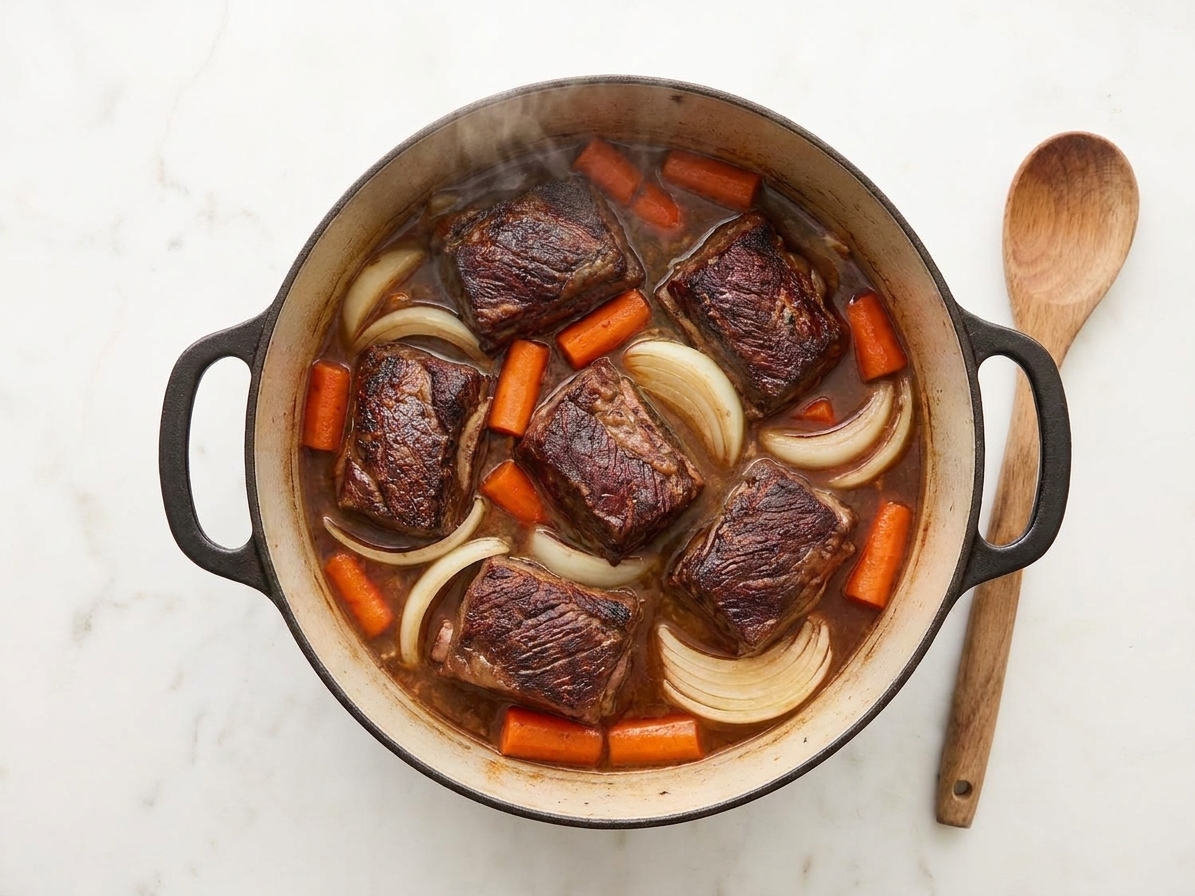
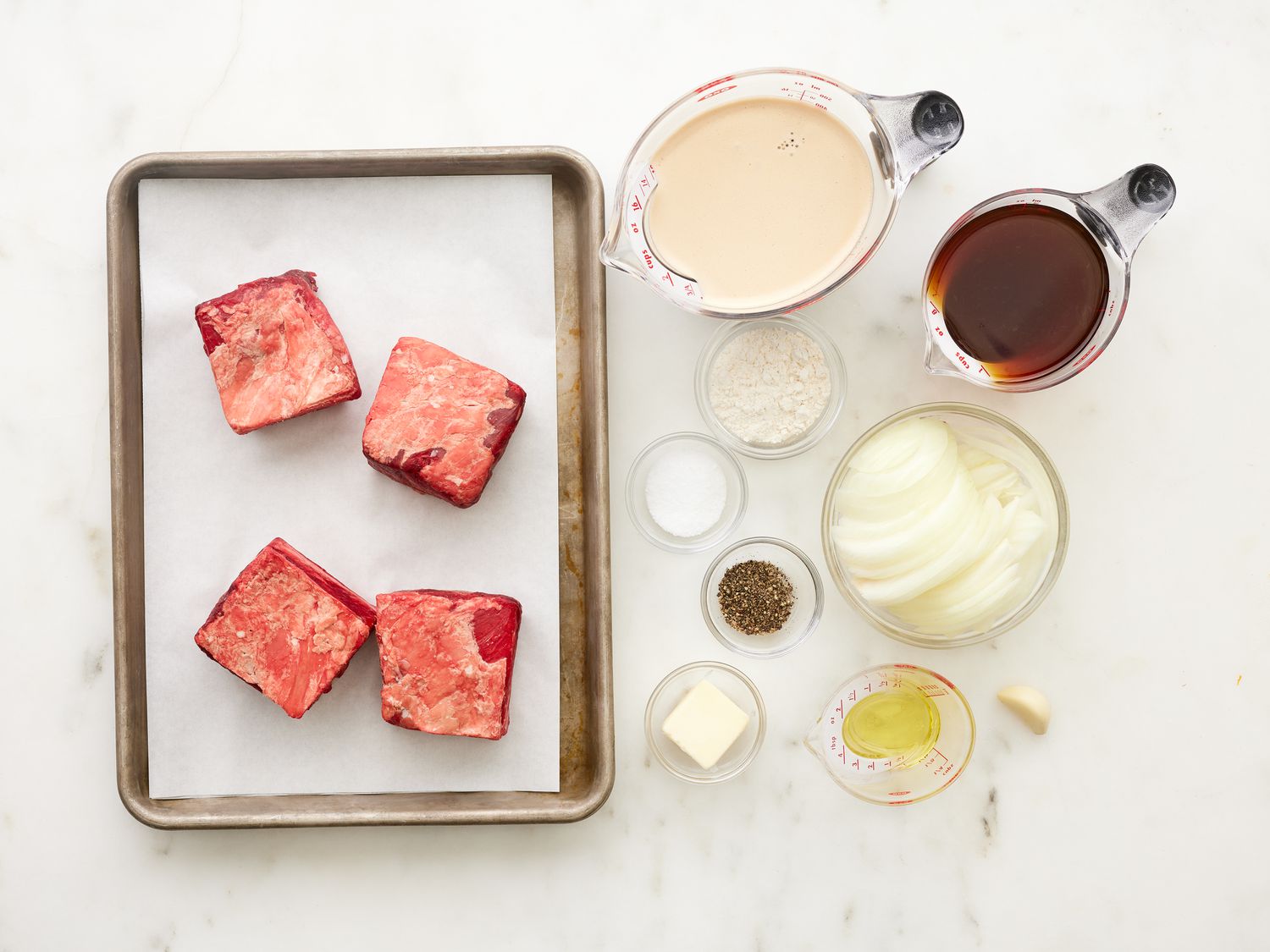
Boneless short ribs are short rib-style beef with the bone removed, but here is the helpful truth: labeling varies. Some packages are true short rib meat from the plate/rib area, and some are chuck cuts (like chuck flap or “Denver” style) marketed as boneless short ribs. Either way, you are looking for well-marbled, collagen-rich beef that loves low-and-slow braising.
Do I have to use red wine?
No. The wine adds depth and a little brightness, but you can swap it with more beef broth plus 1 to 2 tablespoons balsamic vinegar (added toward the end) or 1 tablespoon Worcestershire for that savory edge.
Why did my short ribs turn tough?
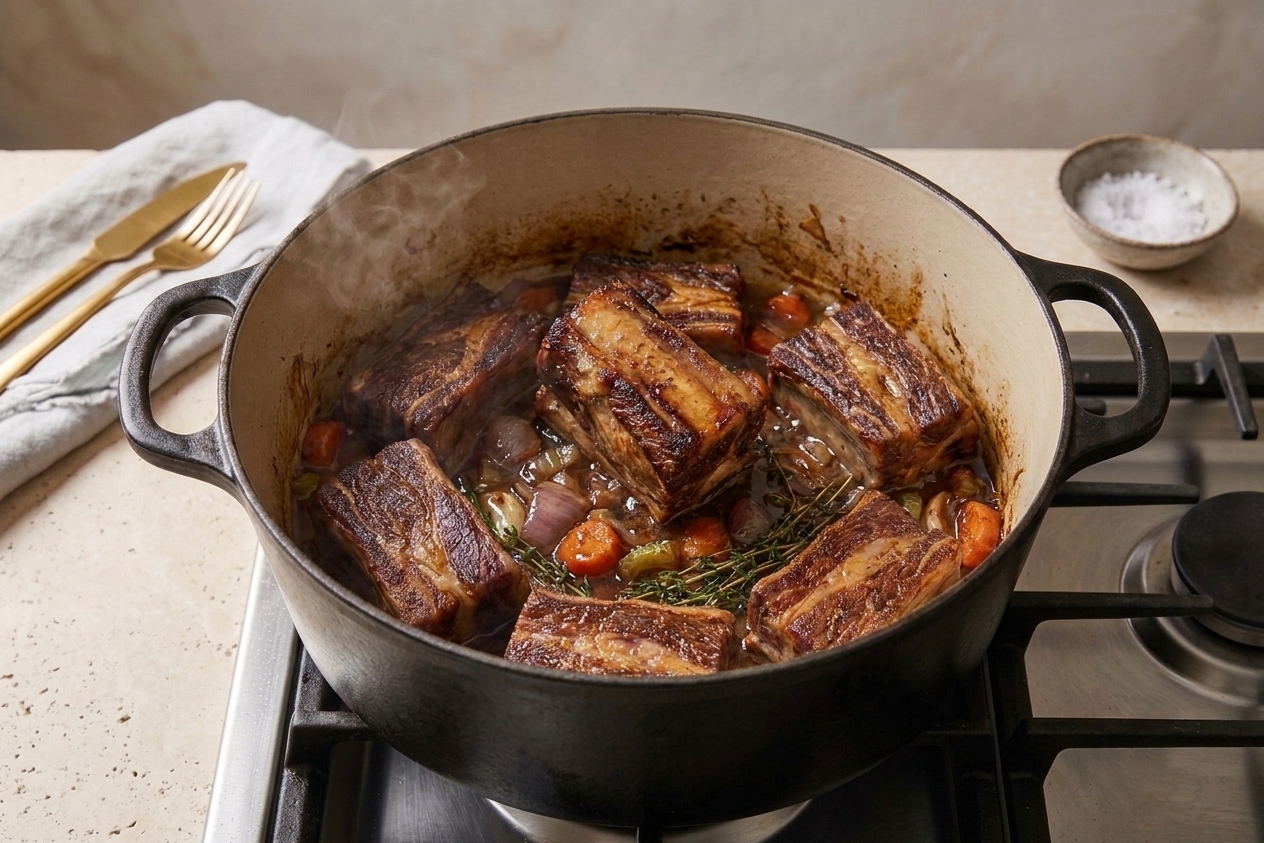
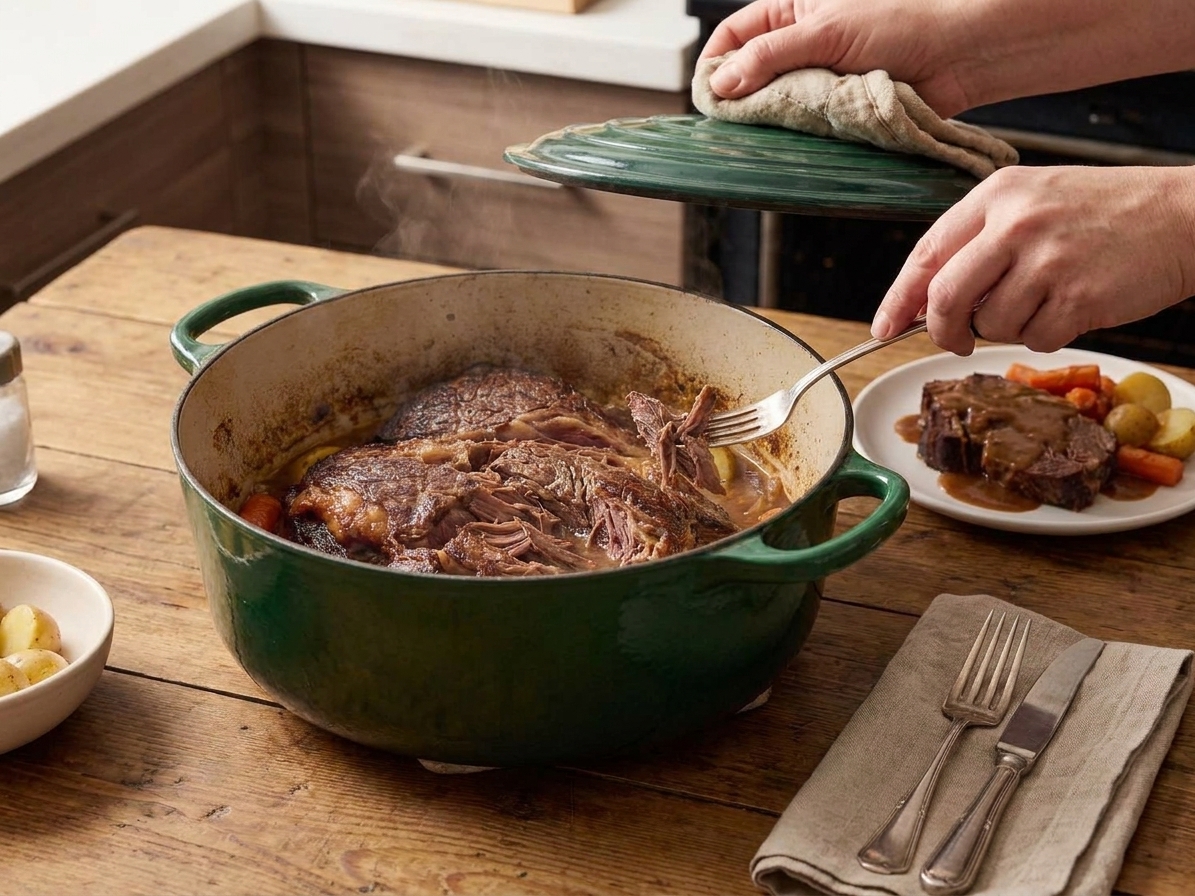
They usually need more time, not less. Short ribs get tender when collagen fully breaks down. Keep braising until a fork slides in easily and twists with almost no resistance. Also make sure the pot is covered tightly so the braise stays moist.
Should the ribs be fully submerged?
Not fully. Aim for the liquid to come about halfway to two-thirds up the sides of the meat. If your pieces are very thick or stacked, rearrange them so they sit in a snug, even layer, and add a splash more broth if needed for even cooking.
How do I thicken the sauce?
You have two easy options. Pick one. For a naturally glossy sauce, reduce it uncovered on the stove. For a faster, thicker gravy, use a slurry: mix 1 tablespoon cornstarch with 1 tablespoon cold water, then whisk into simmering sauce and cook 1 to 2 minutes.
How do I skim the fat?
The quick way is to spoon it off the surface once the sauce settles. The even easier way is to chill the pot or sauce (30 minutes, or overnight), then lift off the solidified fat.