Mom's Best Recipes
Recipe

Braised Chicken Feet

Crispy-skin first, then a slow, glossy braise with black bean, ginger, and soy until the feet are tender and sticky.

Author By Matt Campbell
4.8
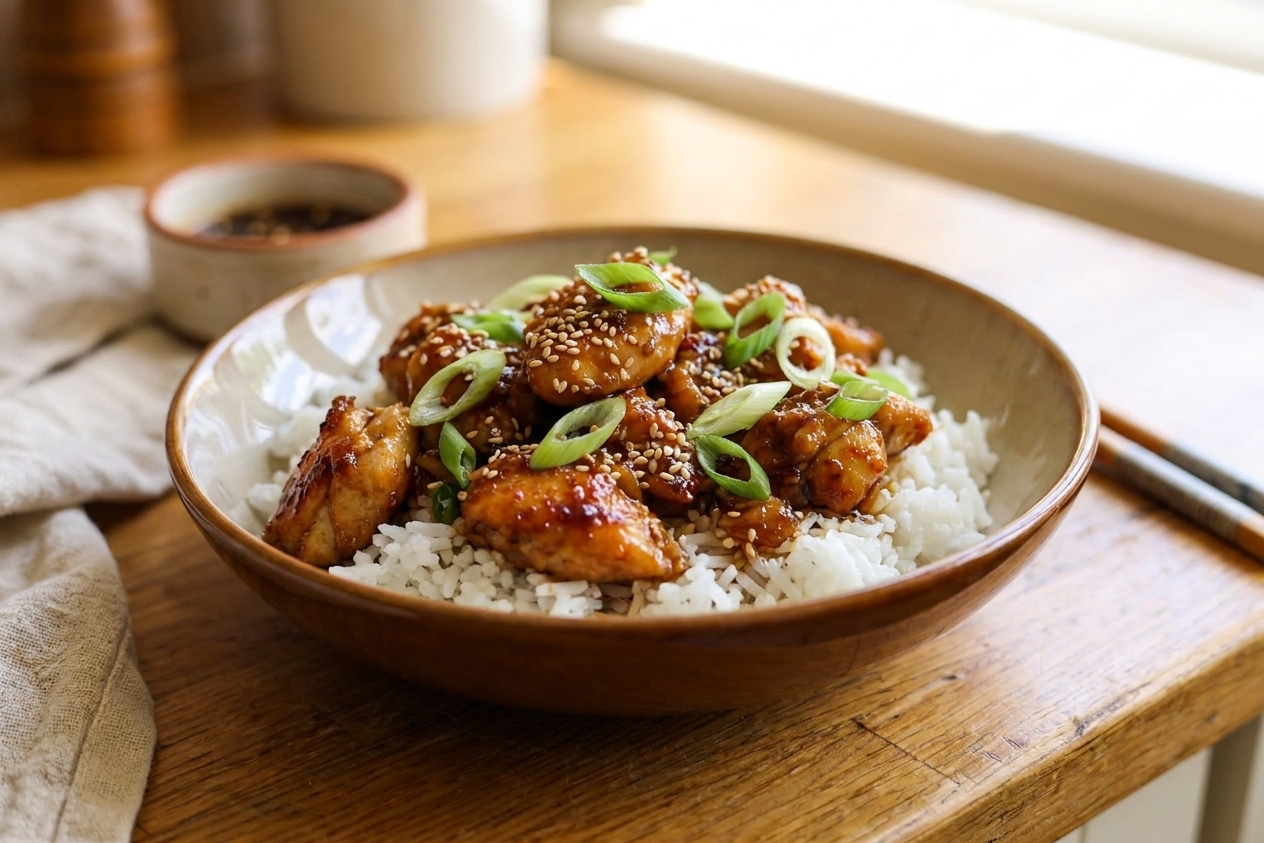
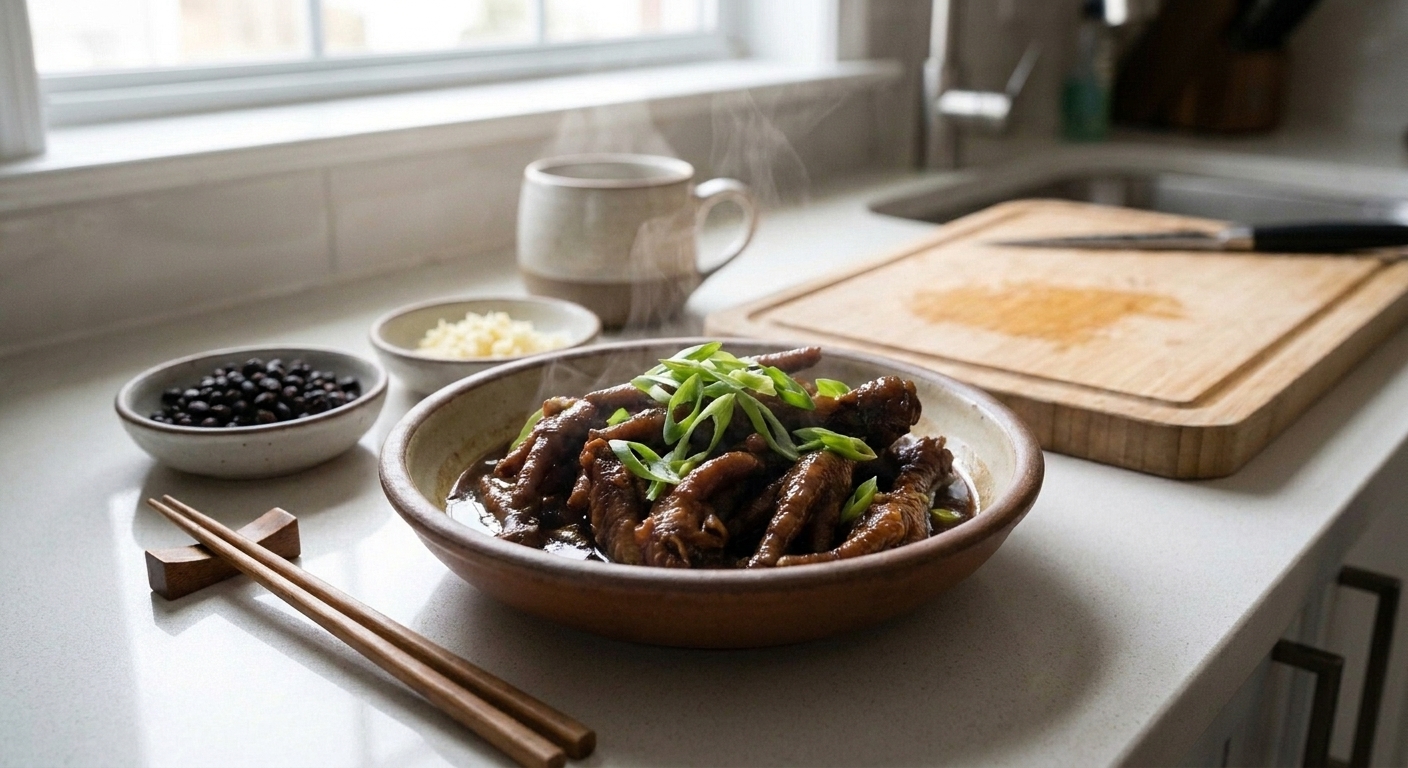
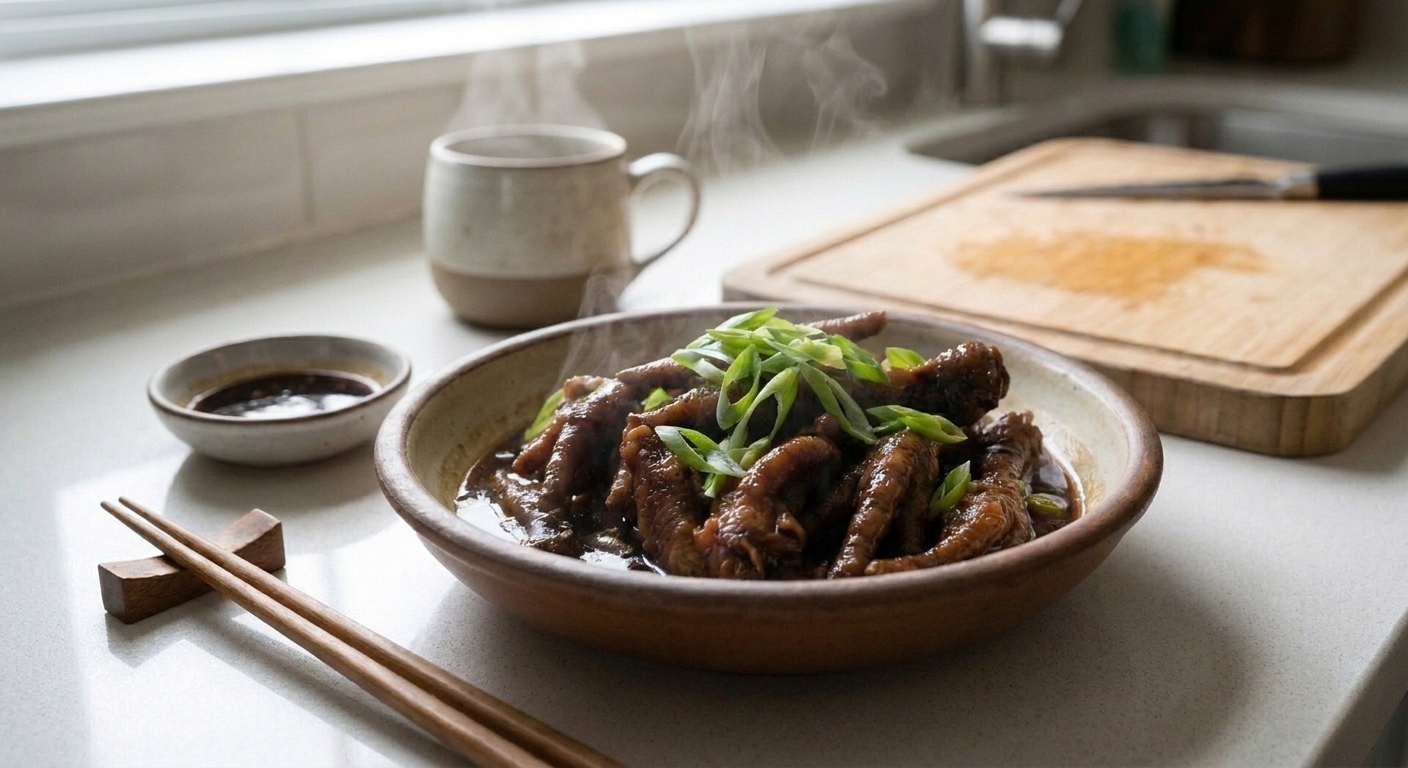
A shallow bowl of glossy braised chicken feet in a dark soy-based sauce with sliced scallions on top, set on a warm kitchen table with chopsticks and a small dipping dish

Chicken feet have a reputation, but once you cook them right, they make perfect sense. They are all about texture: tender skin, a little chew, and that rich, silky collagen that turns the sauce into something you want to mop up with rice or buns.

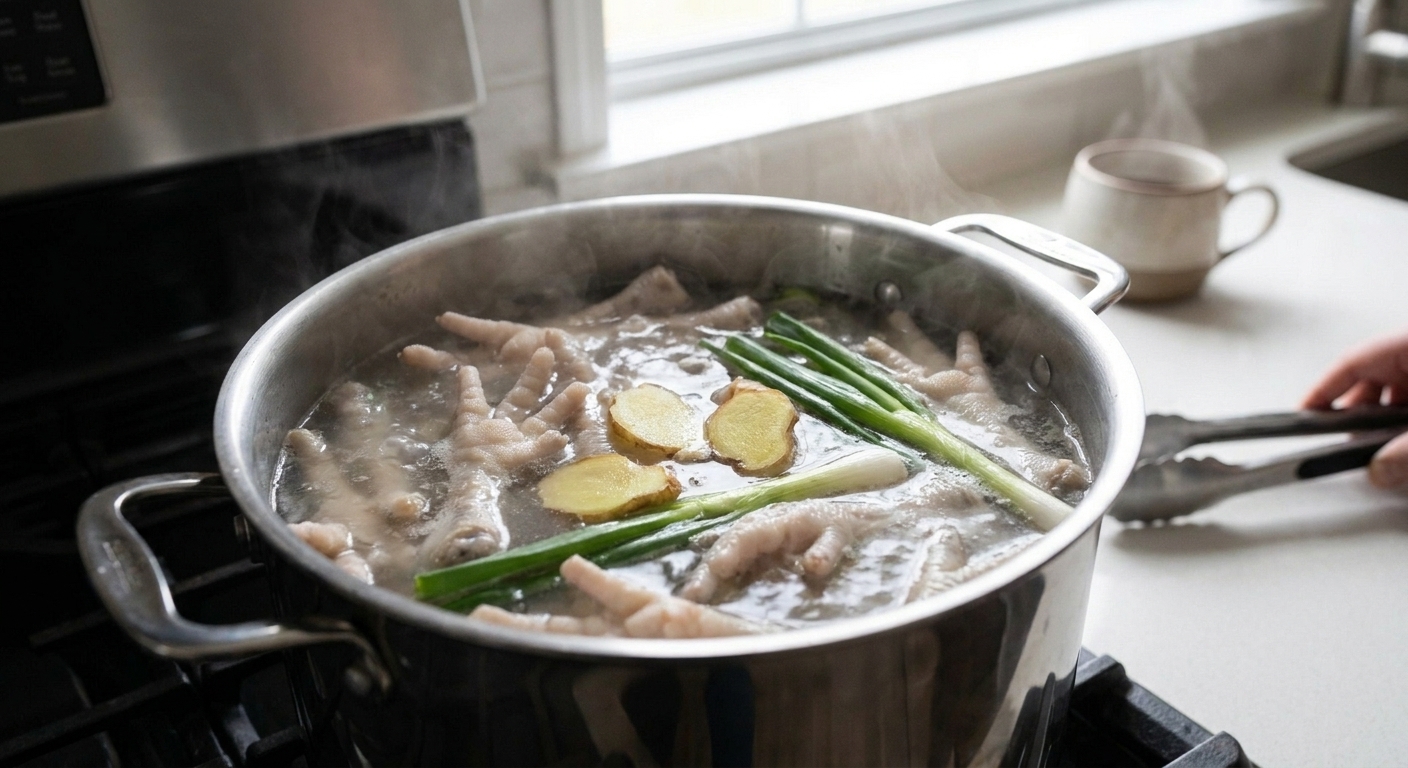
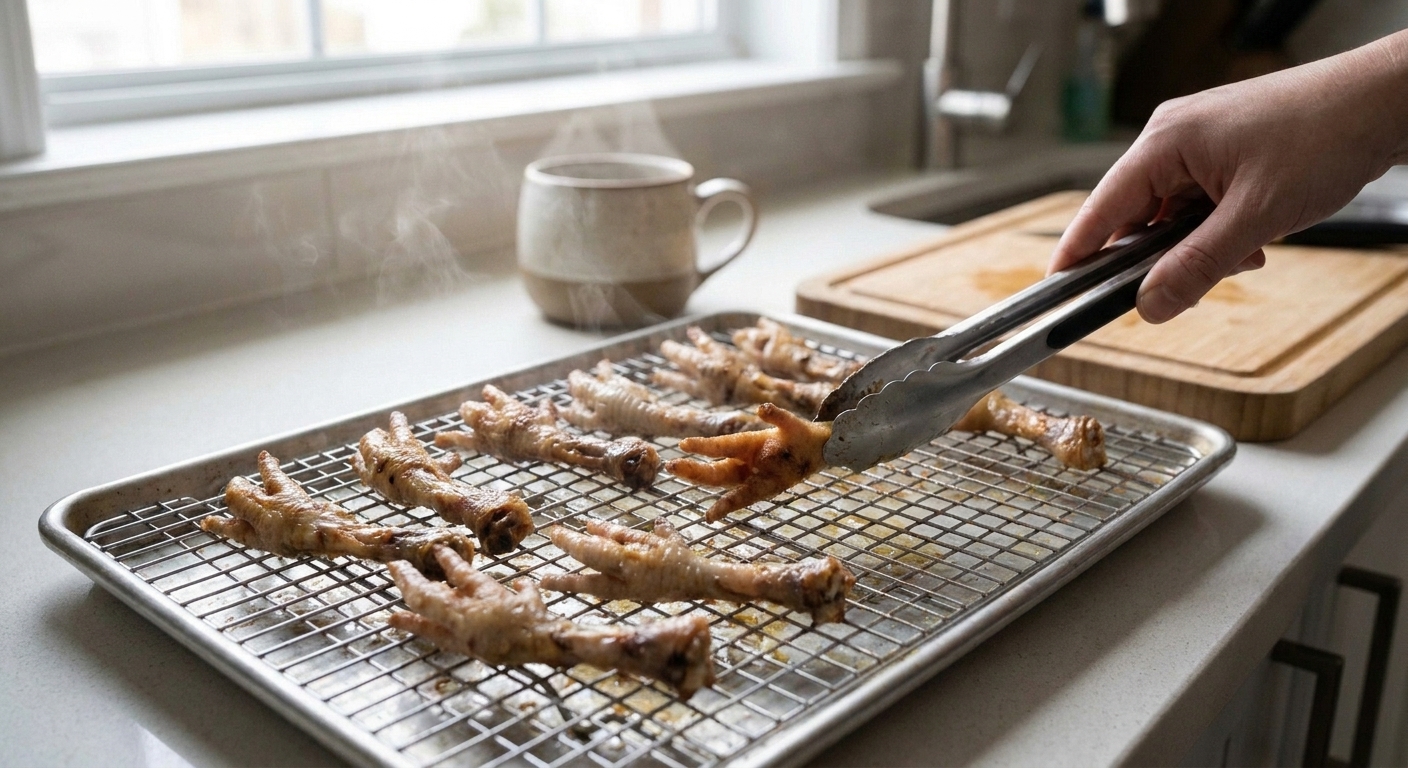
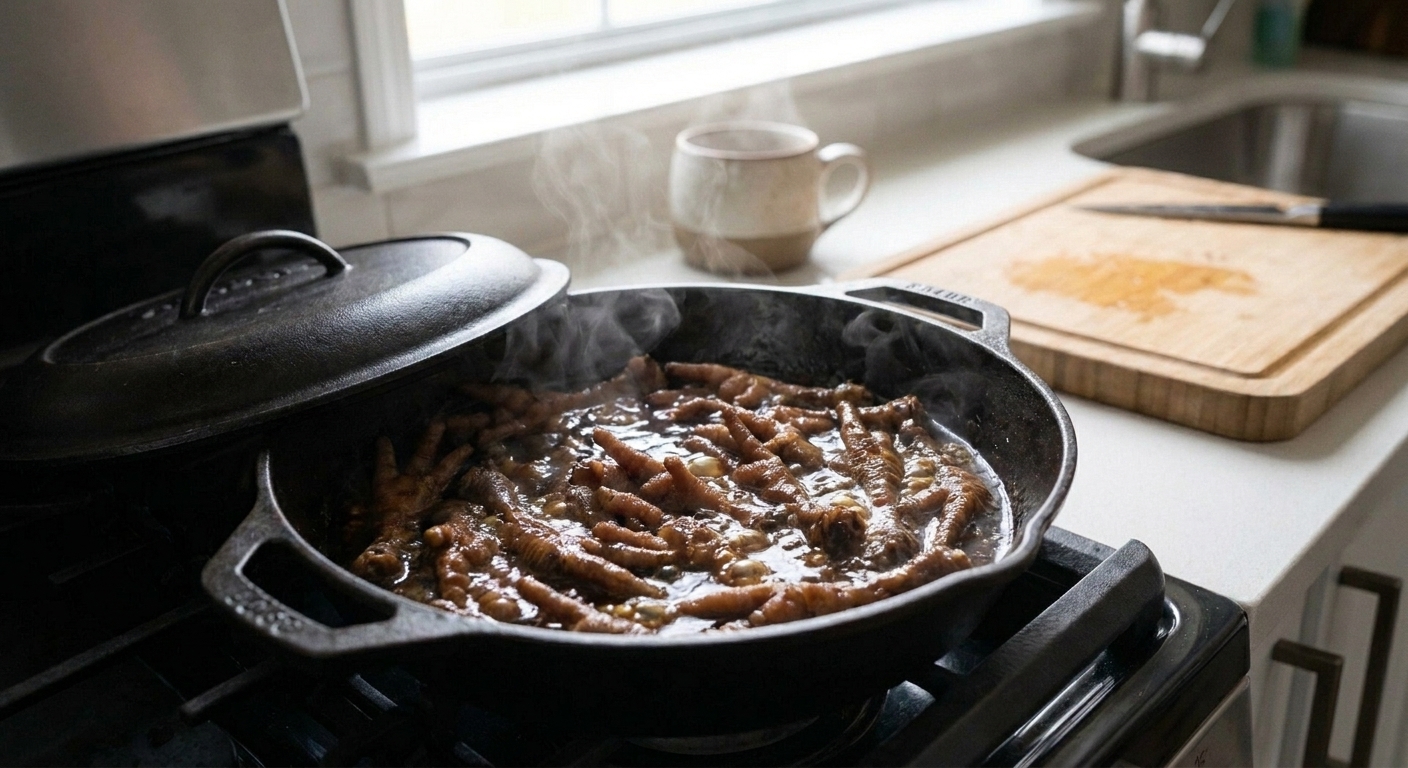
This is my home-kitchen take on the dim sum classic. We do a quick blanch to clean things up, a fast fry or oven crisp to tighten the skin, then a long, low braise that turns everything glossy and spoonable. No mystery. Just patient heat and big flavor.

If you want to go full traditional, there is also an optional ice water soak after frying that helps create that puffed “tiger skin” look. Not required, but it is a fun little restaurant trick to know.

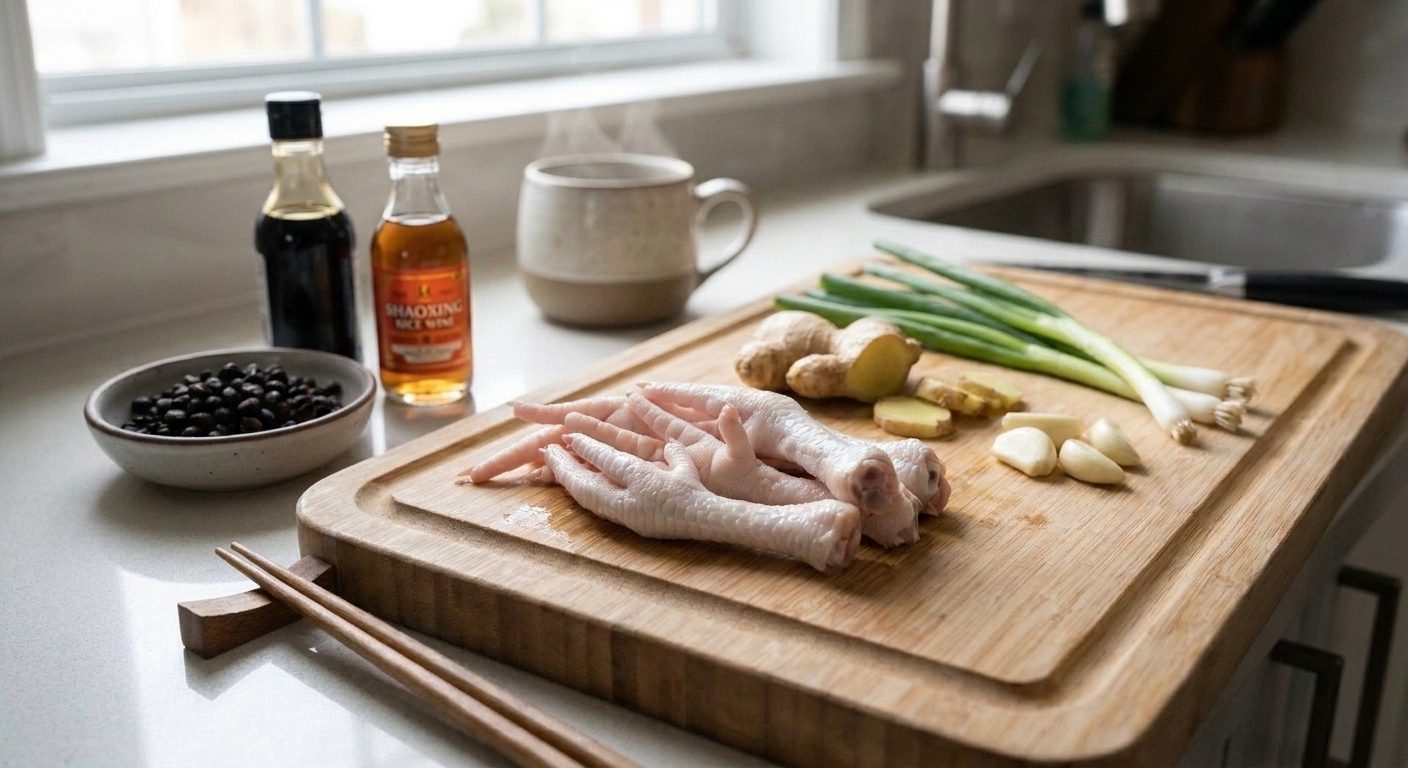
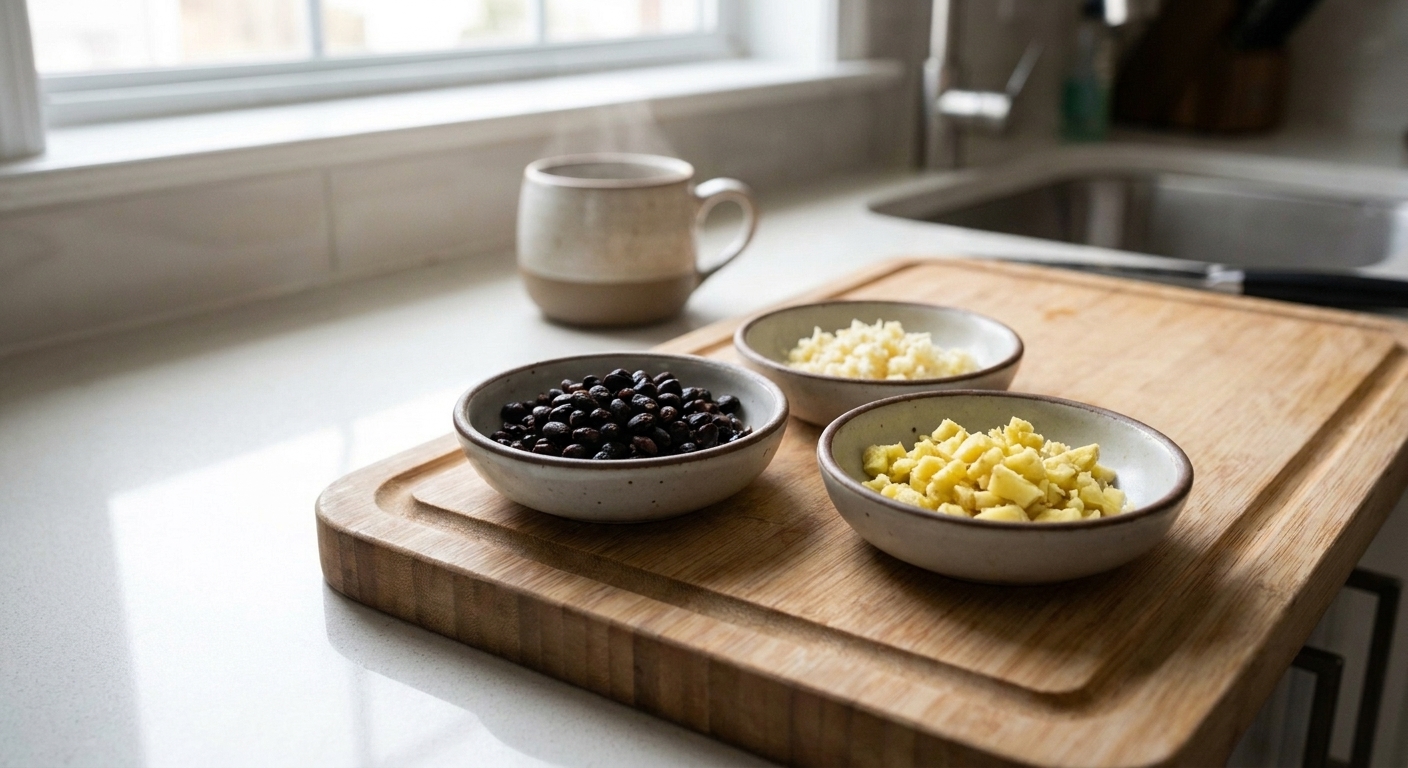
Cleaned raw chicken feet on a cutting board beside ginger, garlic, scallions, soy sauce, Shaoxing wine, and a small bowl of fermented black beans on a kitchen counter

Why It Works

  • Tender, not rubbery: A steady braise gives you that dim sum texture without turning the sauce watery.
  • Glossy, clingy sauce: Collagen plus a little sugar and soy equals the kind of shine that makes you pause mid-bite.
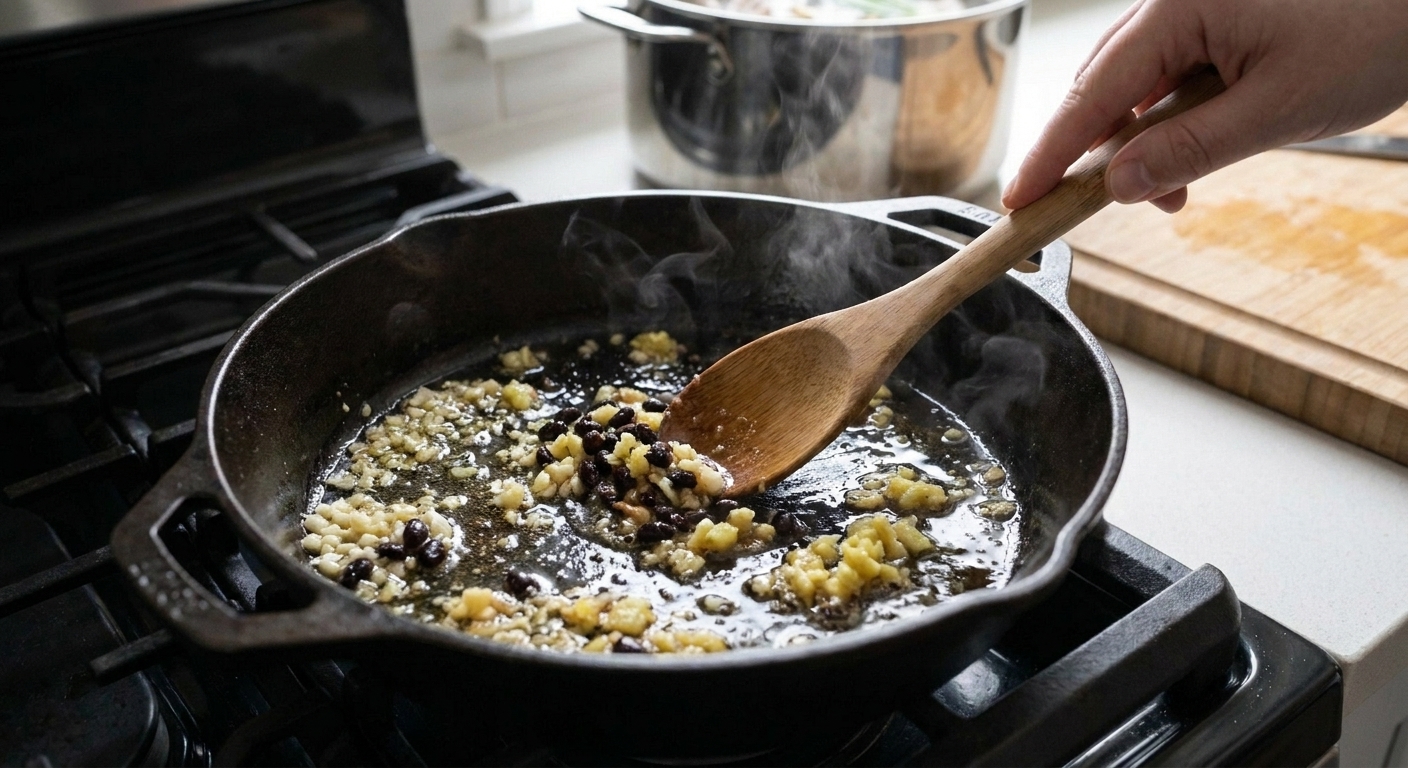
  • Cleaner flavor: A quick blanch clears out any off notes so the aromatics and black bean come through.
  • Flexible heat: Fry for the most classic result, use the ice bath for tiger skin if you want to go traditional, or use the oven if you want less splatter and less drama.

Pairs Well With

Storage Tips

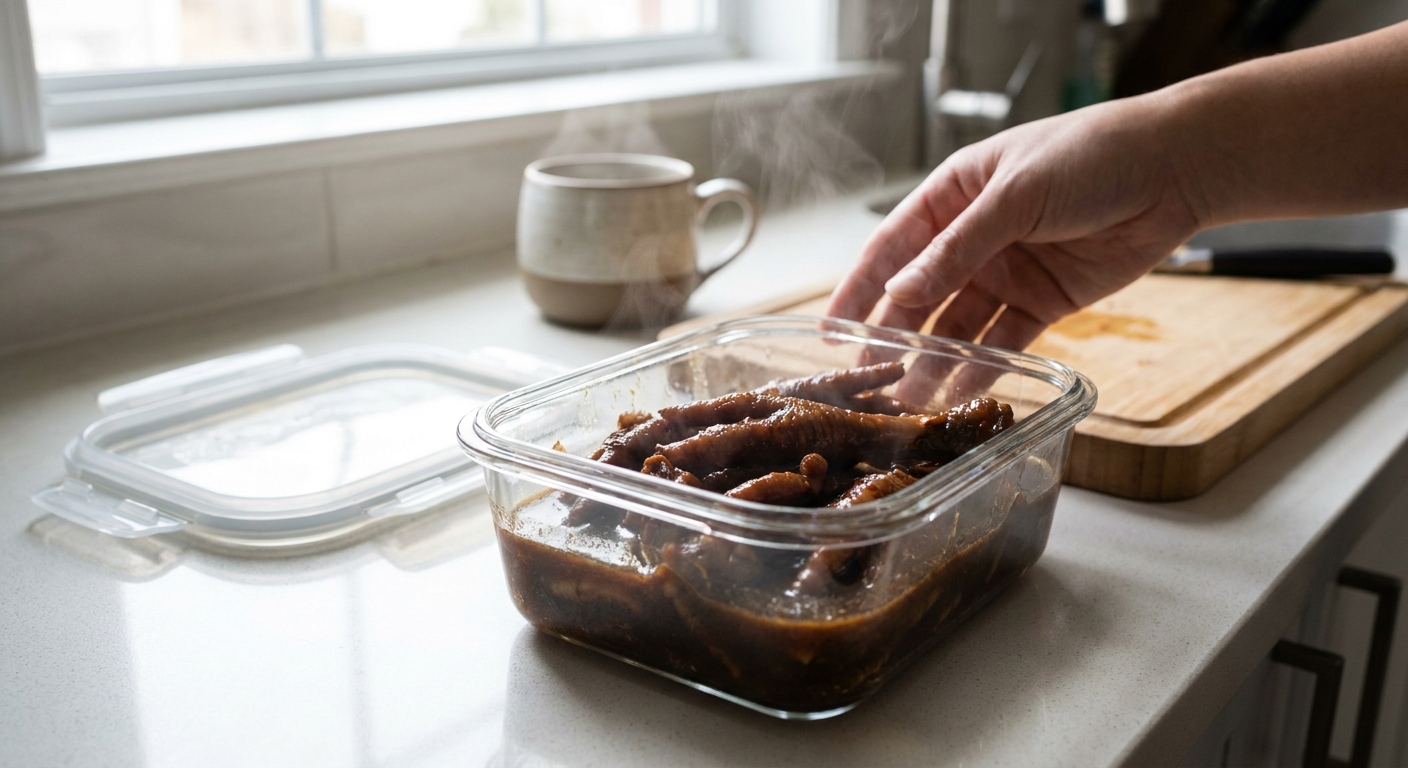
Refrigerate: Cool chicken feet in the sauce, then store in an airtight container for up to 4 days. The sauce will thicken a lot when cold. That is a good sign.

Freeze: Freeze in a freezer-safe container for up to 2 months. Thaw overnight in the fridge.

Reheat: Warm gently in a covered saucepan over low heat with a splash of water, 8 to 12 minutes, stirring carefully. You can also microwave in short bursts, covered, so they heat evenly without drying out.

A glass meal prep container filled with braised chicken feet and thick sauce cooling on a kitchen counter with a lid nearby

Common Questions

Are chicken feet safe to eat?

Yes, as long as you buy them from a reputable source, handle them like any raw chicken (clean hands, clean board), and cook them thoroughly. They are mostly skin, tendon, and cartilage, so they need time to get tender. Also, discard the blanching water. That is the point of blanching.

Do you eat the bones?

No. You nibble and suck the skin and soft bits off, then discard the small bones. Think of them like the most hands-on chicken wing you have ever met.

Do I have to fry them first?

Frying gives the most classic dim sum texture and helps the sauce cling. If you do not want to deep fry, the oven option still works. You just may lose a little of that signature blistered look.

What is the ice water bath step I keep hearing about?

That is the traditional secret for the puffed, wrinkly “tiger skin” texture. After frying, you soak the hot feet in cold or ice water for about 45 to 60 minutes, then drain well before braising. It is optional in this home version, but if you want the most authentic dim sum texture, do it.

What do fermented black beans do?

They add deep, savory funk and a little bitterness that balances the sweetness in the braise. Rinse them quickly so they do not overpower the pot.

Where do I buy fermented black beans, and is there a substitute?

Look for douchi at Chinese markets or online. If you cannot find them, you can use 1 to 2 tablespoons black bean garlic sauce instead. Reduce the soy sauce a touch and taste as you go, since those sauces can be salty.

Can I make these in a pressure cooker?

Yes. Pressure cook on high for 20 to 30 minutes, then simmer uncovered to reduce the sauce until glossy. Texture can be slightly softer than the dim sum version, but still delicious. If they are not tender enough after releasing pressure, simmer or pressure cook a few minutes more.

How do I know they are done?

The skin should look wrinkled and feel tender when you pinch with tongs, and the gelatinous parts should pull away easily when you bite. They will not “fall off the bone” like meat, but they should not feel tight and rubbery. If they still feel bouncy, keep braising and check every 15 to 20 minutes.

The first time I made chicken feet at home, I treated them like a dare. Then the sauce reduced, the kitchen smelled like ginger and soy, and suddenly it was not a dare anymore. It was comfort food with a little edge. The best part is how forgiving they are once you accept the one truth: you cannot rush tenderness. Give them time, taste the sauce, adjust as you go, and you end up with a pot of glossy, cozy chaos that feels way more impressive than it actually is.