Common Questions
Do I put the yeast in first or last?
In many bread machines, liquids go in first, then dry ingredients, and yeast goes last in a little well on top of the flour so it does not touch the liquid until the cycle starts. That said, some machines are the opposite, so follow your manual if it gives a different order.
Do I need to proof active dry yeast first?
Usually, no. For most bread machines, you can add active dry yeast or instant yeast right into the pan as written. The machine handles the warm-up and mixing. If your manual specifically tells you to dissolve yeast first, go with that.
Why did my loaf sink in the middle?
The usual culprits are too much liquid, too much yeast, or an over-proof during a warm day. Next time, hold back 1 to 2 tablespoons of milk and add only if the dough looks dry during the first mix. Also measure flour by spooning into the measuring cup and leveling, or weigh it if you can.
Why is my bread dense?
Dense loaves usually come from old yeast, too much flour, or cold ingredients. Use fresh yeast, measure carefully, and use milk that is warm (not hot), about 100 to 110°F, so the yeast can get moving. If you are using instant yeast, slightly cooler milk is fine too.
Can I use all-purpose flour instead of bread flour?
Yes. Bread flour gives you a slightly higher rise and chewier structure, but all-purpose works. If using all-purpose, you may need a splash less liquid. Use the dough check in the first knead to dial it in.
Can I make it dairy-free?
You can swap the milk for unsweetened oat or soy milk and use vegan butter. The loaf will be a touch less rich, but it still bakes up soft.
What size loaf is this?
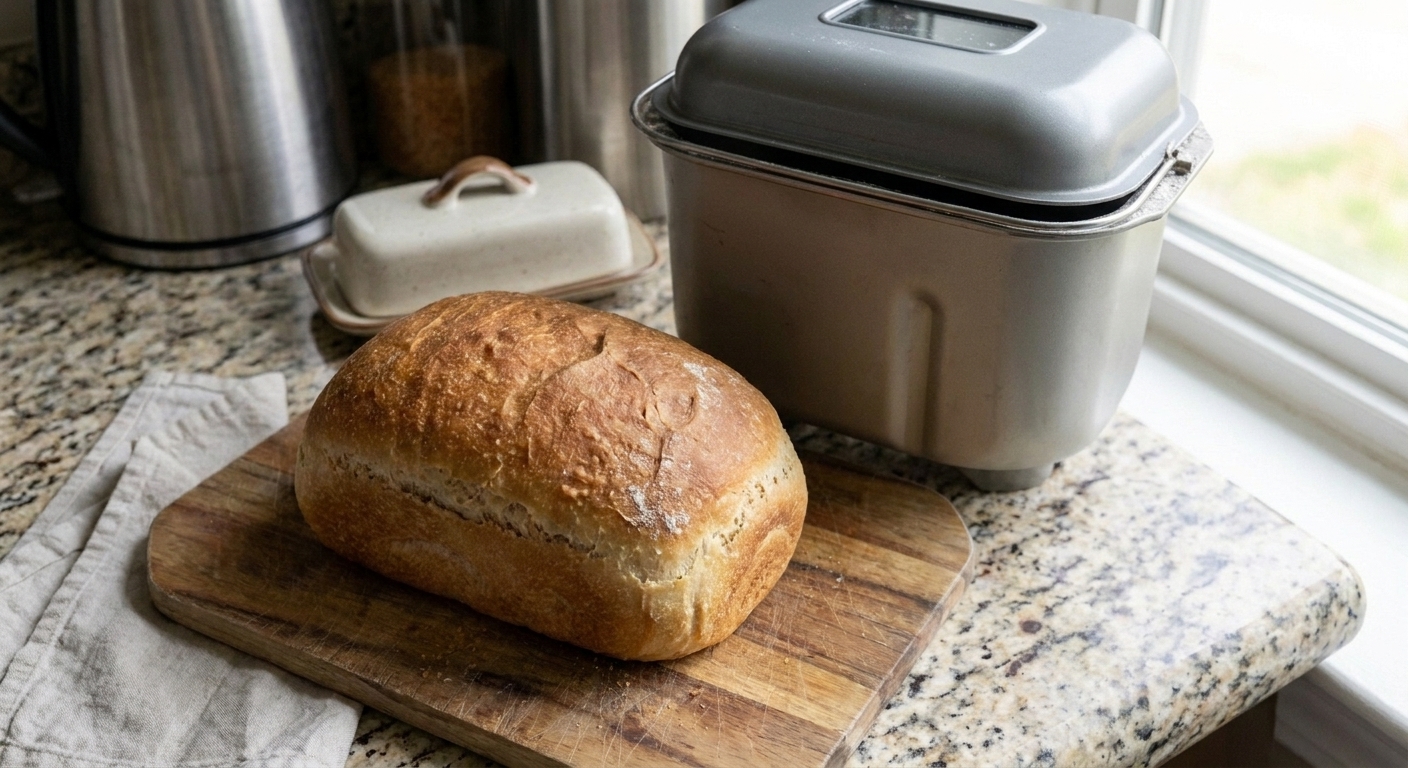
This recipe is designed for the 1.5-pound setting in most standard machines, but loaf settings vary by brand. If your machine is 2-pound only, you can usually still run it as a 1.5-pound loaf. The bread will just be a bit shorter.
How do I avoid the big paddle hole?
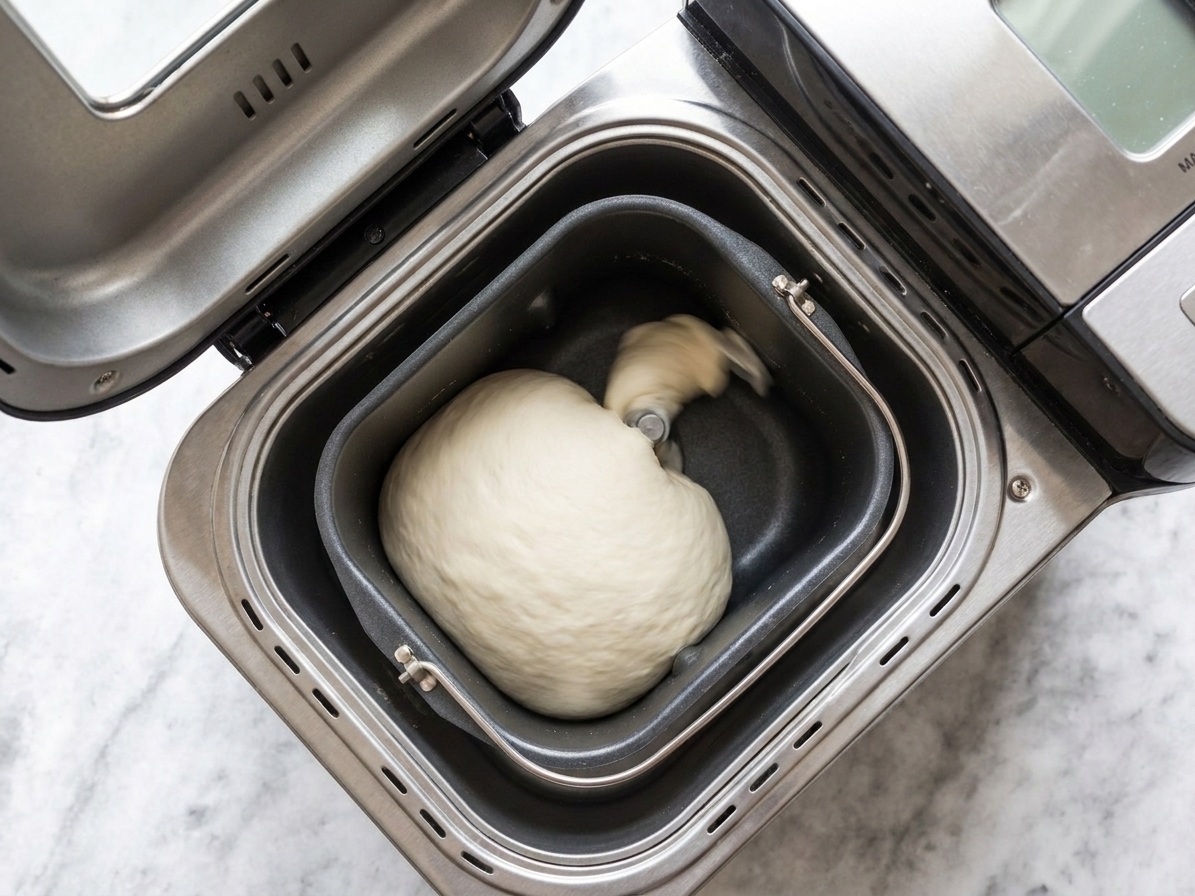
If your machine allows it, you can remove the kneading paddle after the final knead (before the last rise). It is optional, but it helps reduce the crater at the bottom. Use a lightly oiled hand, and be careful not to deflate the dough too much.