-
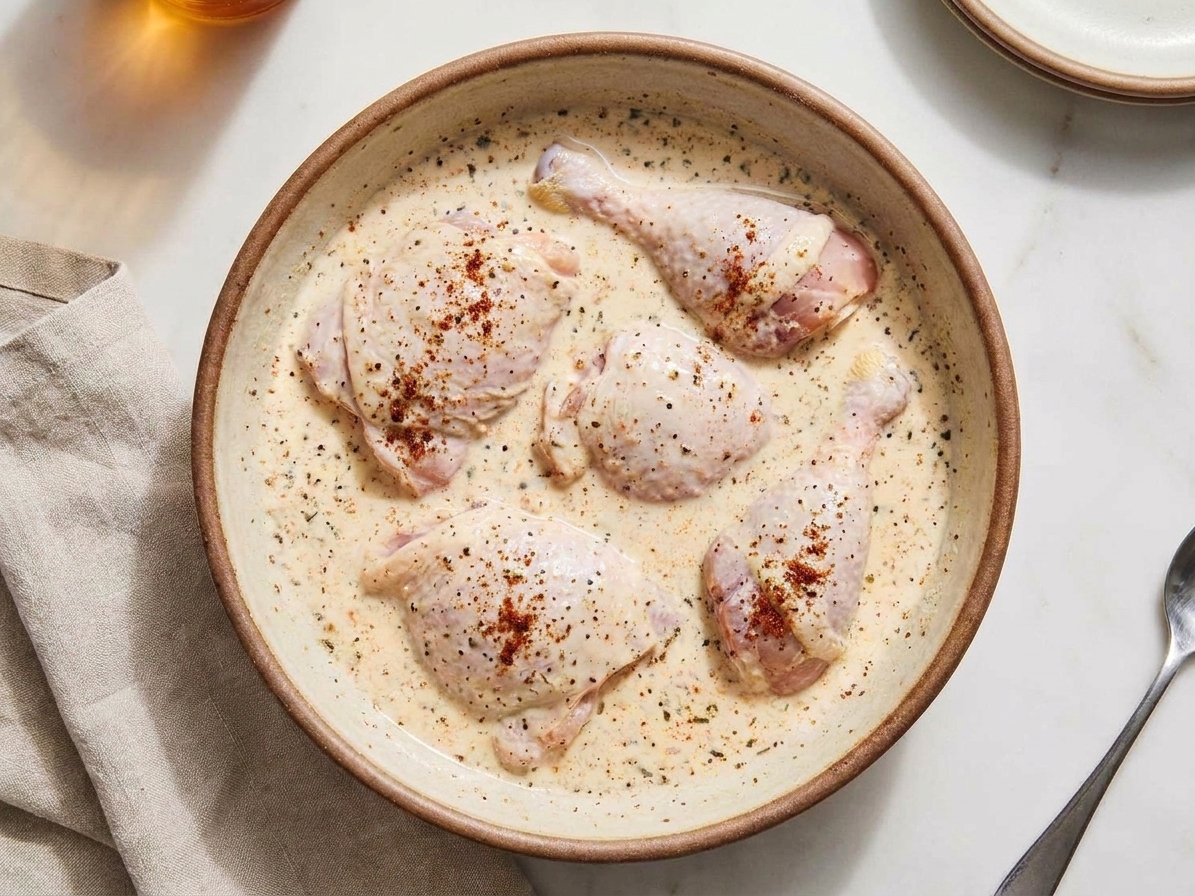
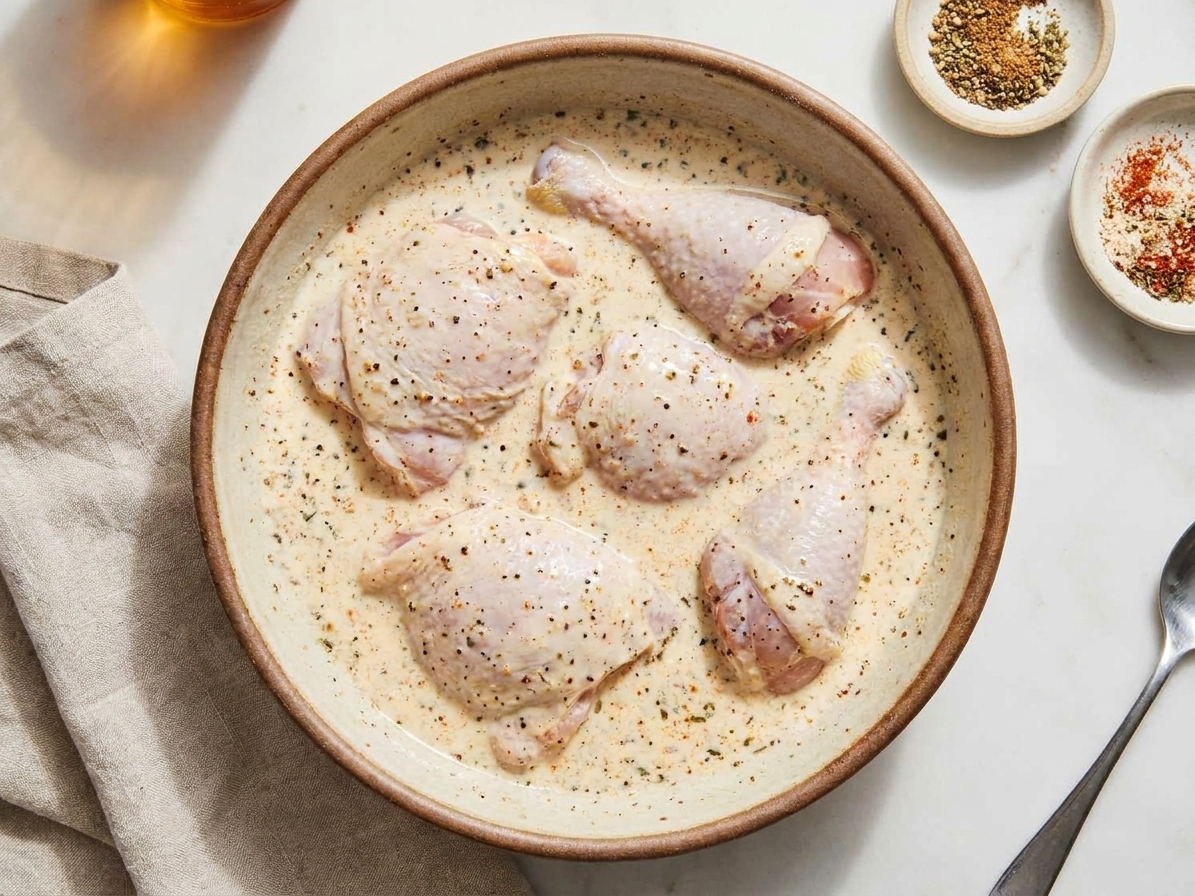
Marinate the chicken. In a large bowl or zip-top bag, whisk together buttermilk, salt, pepper, garlic powder, paprika, and cayenne if using. Add the chicken and turn to coat. Cover and refrigerate for at least 2 hours, ideally 8 to 12 hours.
-
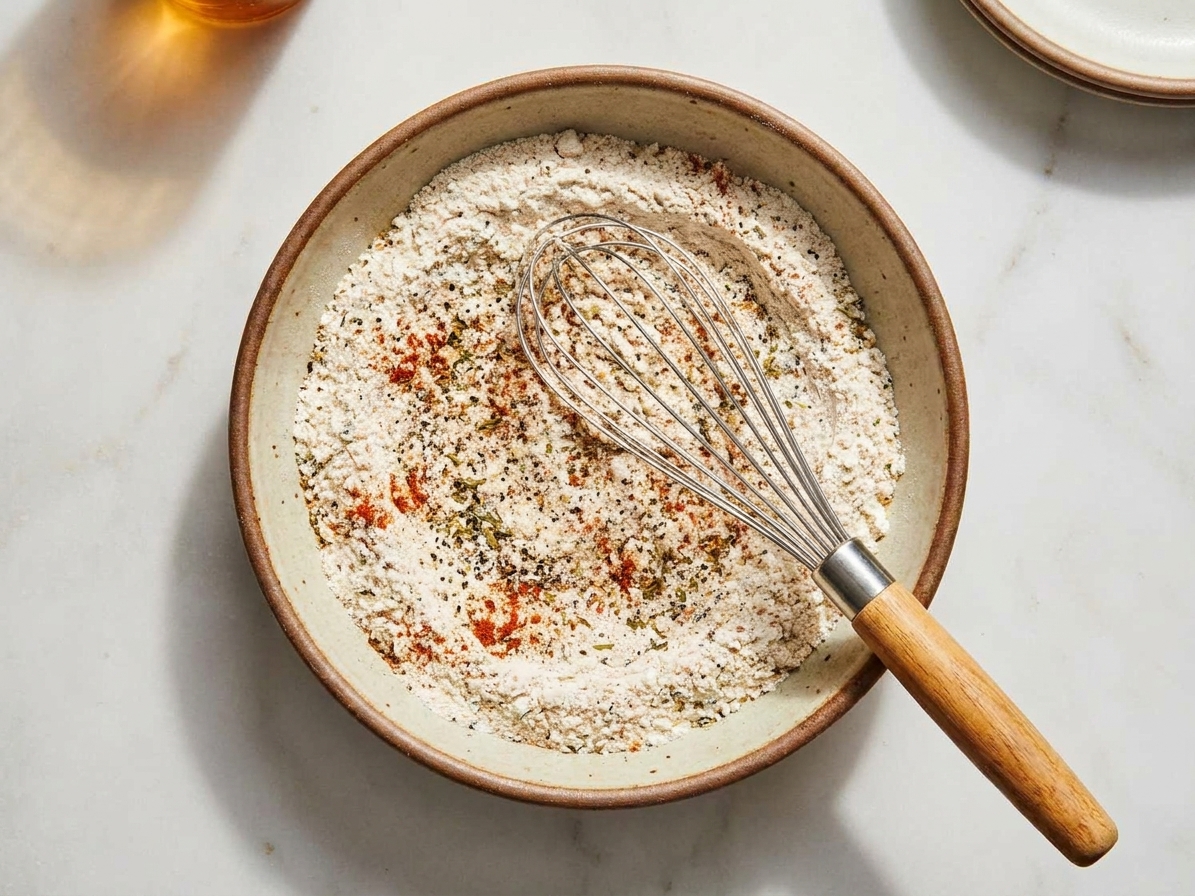
Set up your dredging station. In a wide shallow bowl, whisk flour, cornstarch, baking powder, salt, pepper, garlic powder, onion powder, paprika, and cayenne. Set a wire rack over a sheet pan nearby.
-
Dredge like you mean it. Pull chicken from the marinade, letting excess drip off for a few seconds. Press each piece into the flour mixture, flipping and pressing again until heavily coated.
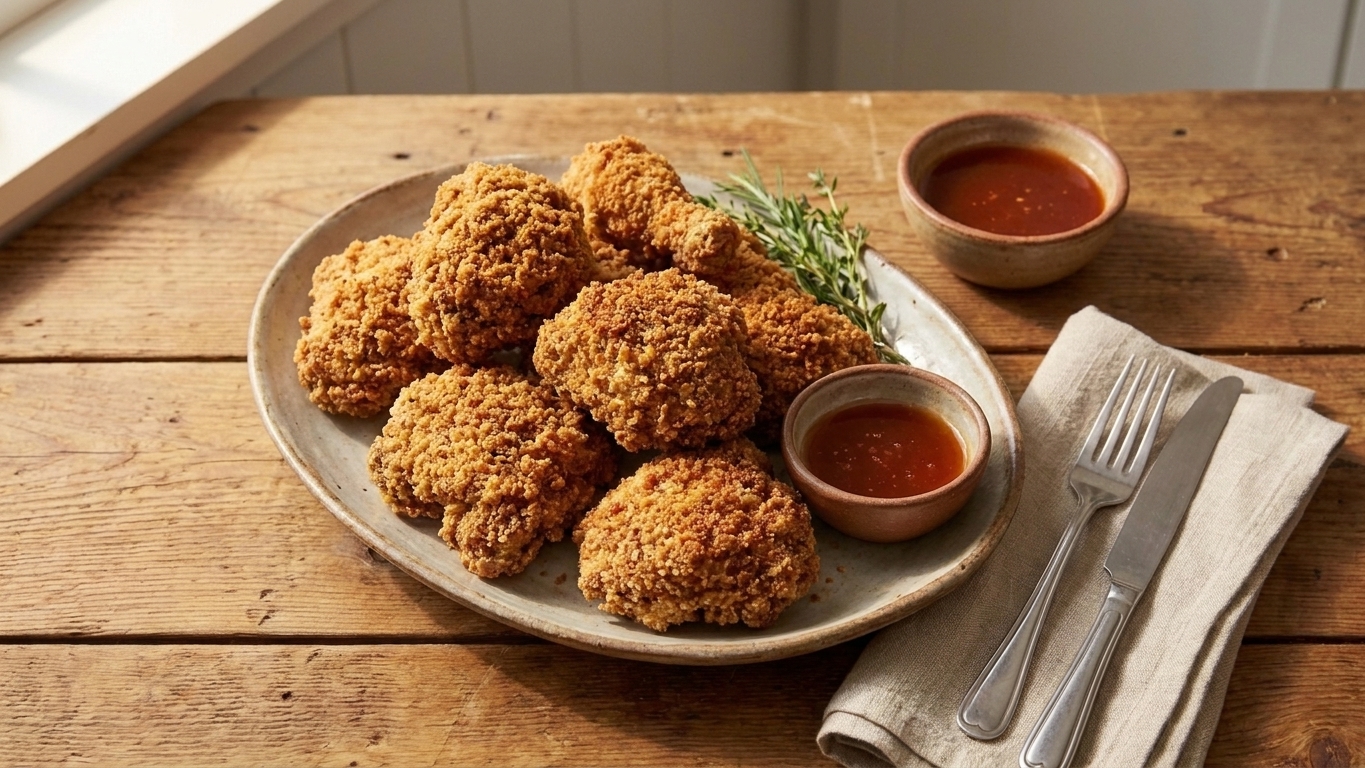
For extra cragginess, drizzle 2 to 3 tablespoons of the buttermilk marinade into the flour and toss with your fingers to make little clumps, then dredge the chicken through those clumps. Food safety note: this is totally fine because it gets fried, but discard any remaining marinade afterward and wash hands and tools like you are being graded.
-
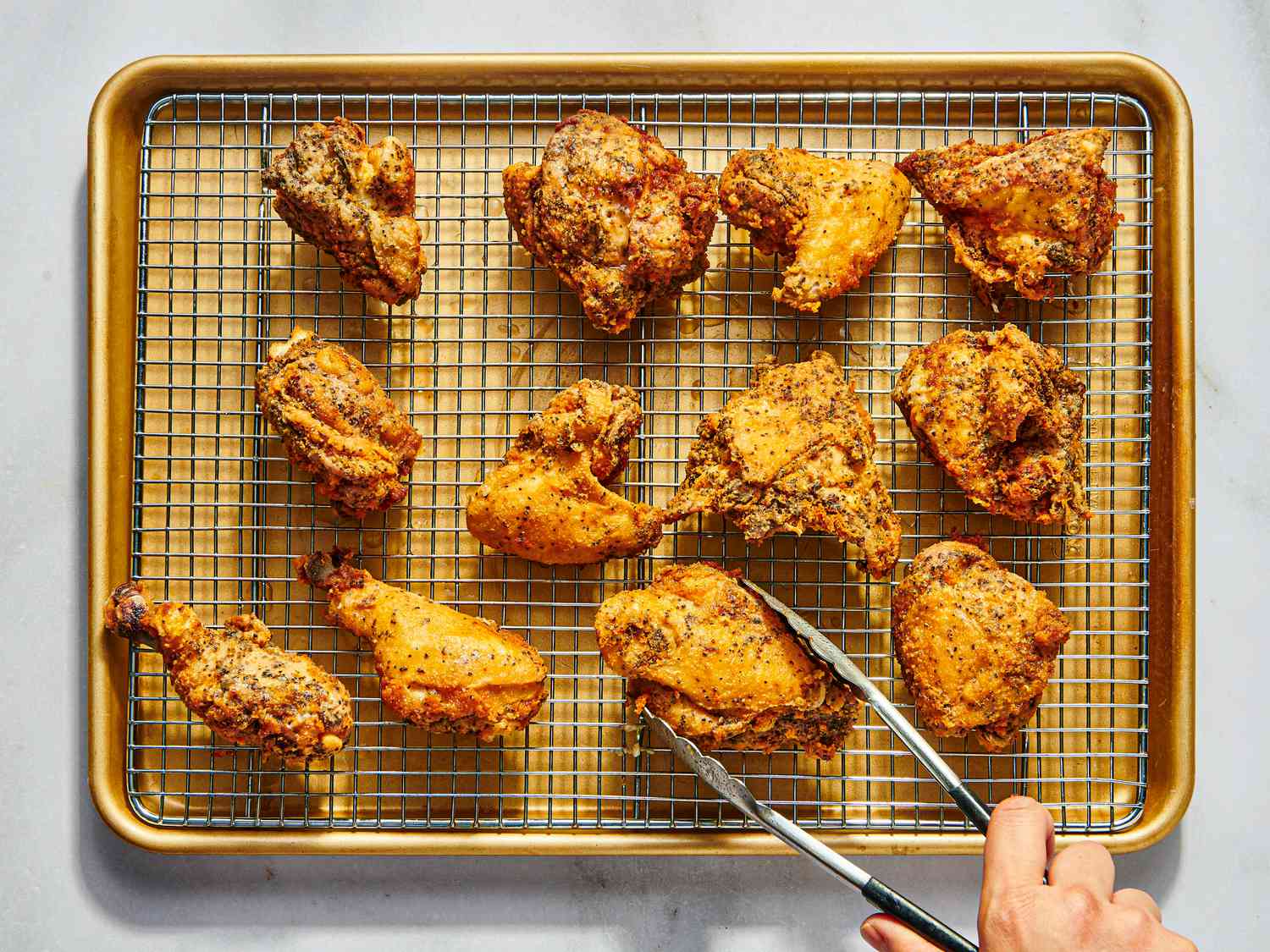
Rest the coating. Place dredged chicken on the rack and let sit 10 to 15 minutes. This helps the coating hydrate and cling, which means less heartbreak in the pan.
-
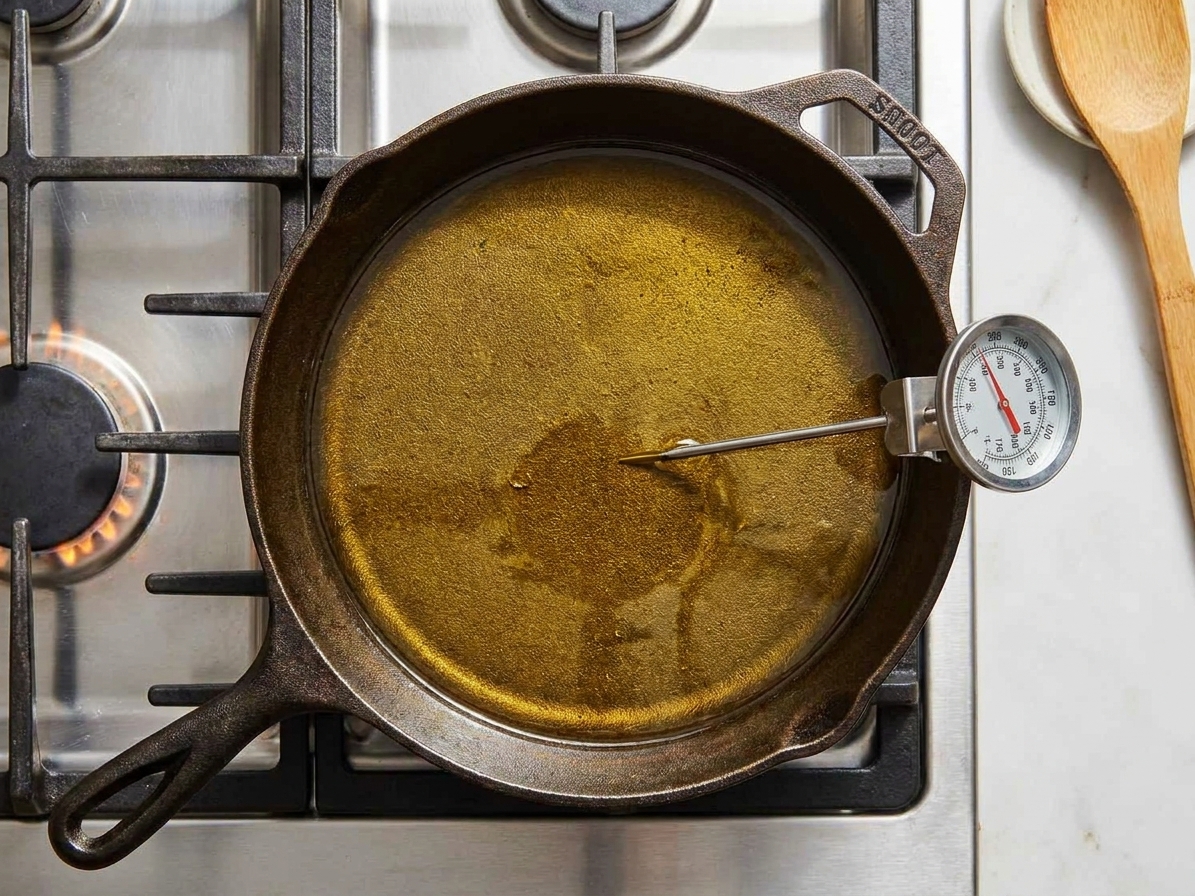
Heat the oil to 325°F. Add oil to a heavy skillet or Dutch oven (about 3/4-inch deep). Heat over medium to medium-high until it reaches 325°F. Adjust heat as needed to stay in the 300°F to 340°F range.
-
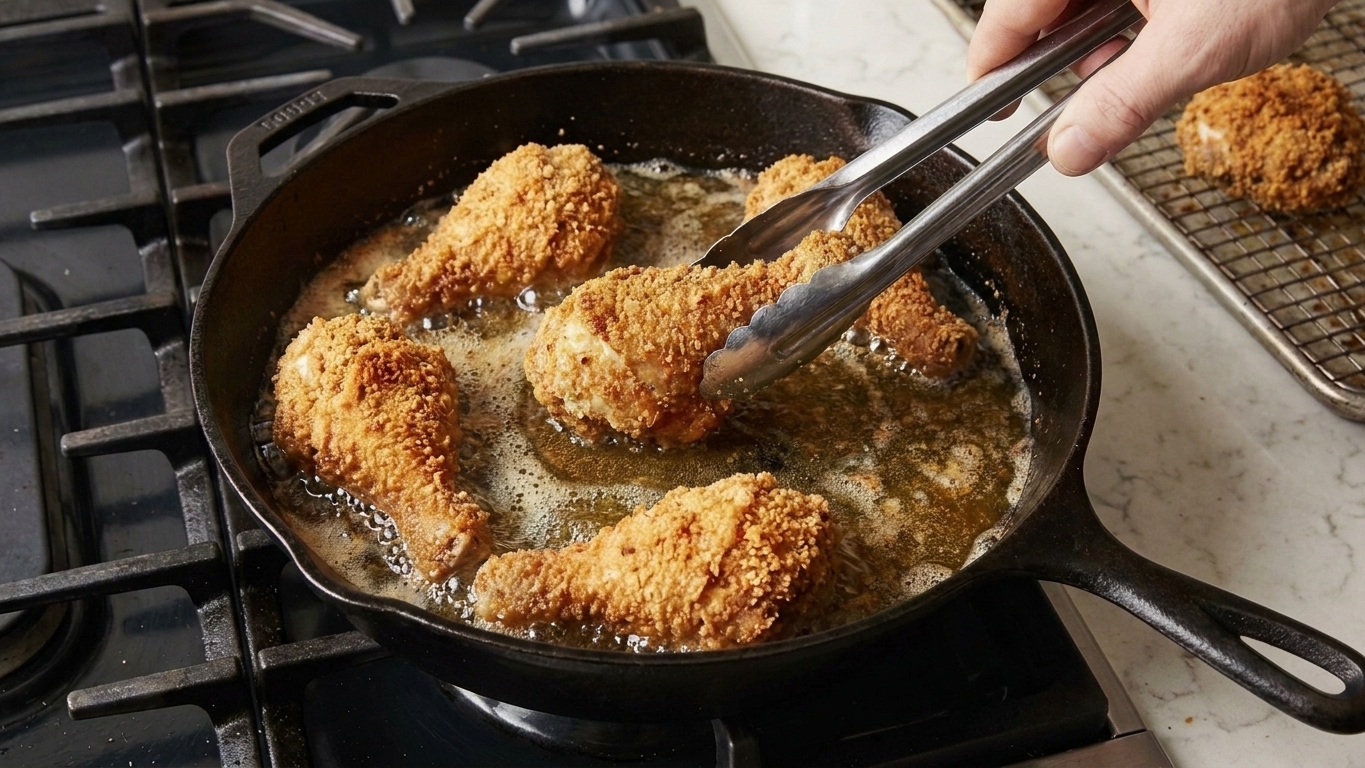
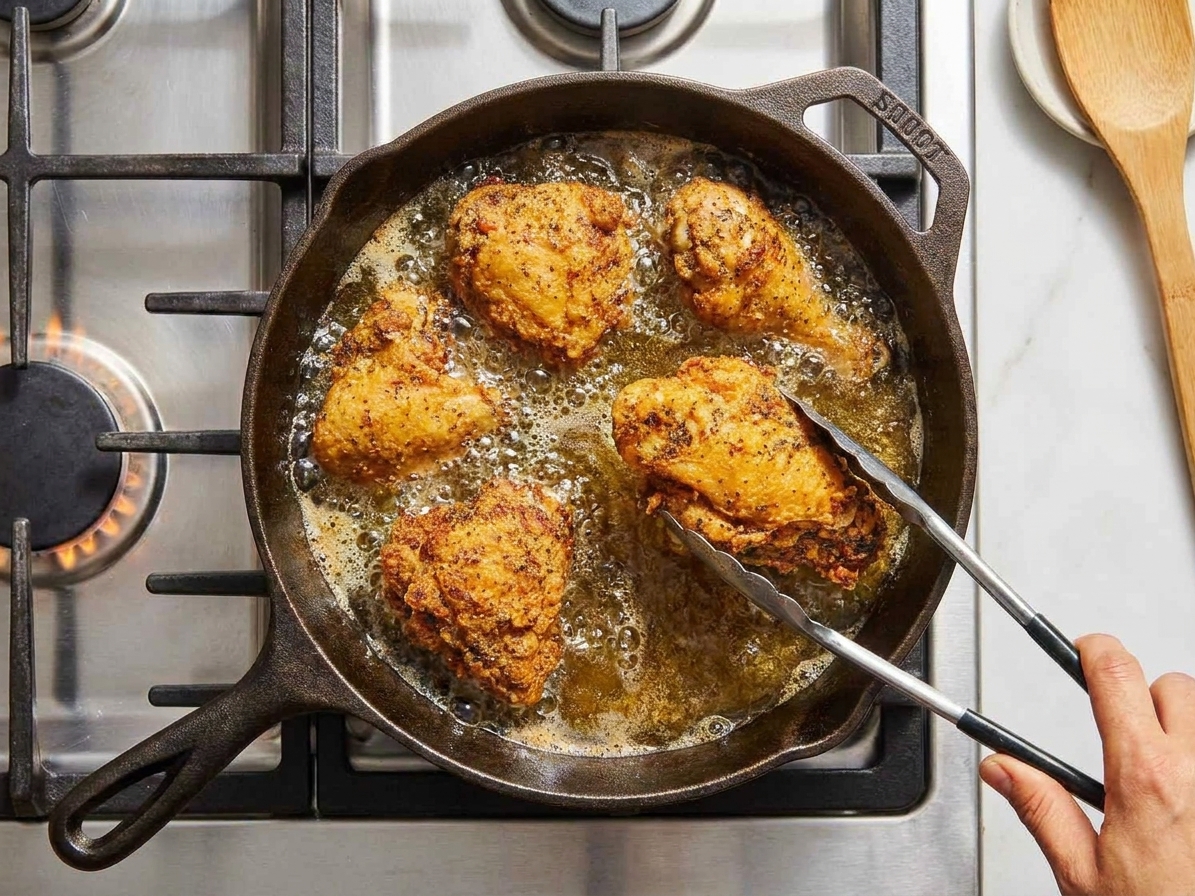
Fry in batches. Carefully add chicken pieces skin side down, leaving space between them. In a 12-inch skillet, that usually means 3 to 4 pieces at a time depending on size. Crowding drops the oil temperature fast and makes the crust sad.
Fry until deep golden and the internal temperature hits 165°F, turning as needed. As a rough guide, plan on 12 to 16 minutes for smaller pieces, but bigger bone-in breasts often take longer. Minutes are a hint. The thermometer is the answer.
Flip the first time when the underside is deep golden and releases easily, usually about 4 to 6 minutes. Then continue turning every few minutes so it browns evenly.
-
Let the oil recover and keep it clean. Between batches, let the oil climb back toward 325°F. If you see a lot of dark flour bits floating, skim them out with a spider strainer so they do not burn and stick to the next batch.
-
Drain on a rack, not paper towels. Move finished chicken to a clean wire rack over a sheet pan. Sprinkle with a tiny pinch of flaky salt while it is hot if you want that restaurant vibe.
-
Keep warm if needed. If you are cooking multiple batches, hold fried chicken in a 200°F oven on a rack while you finish.
If a thick piece is perfectly golden but not quite at temp, slide it onto that rack and let it finish in a 350°F oven until it hits 165°F. This is how you dodge the burnt crust, undercooked center combo.
-
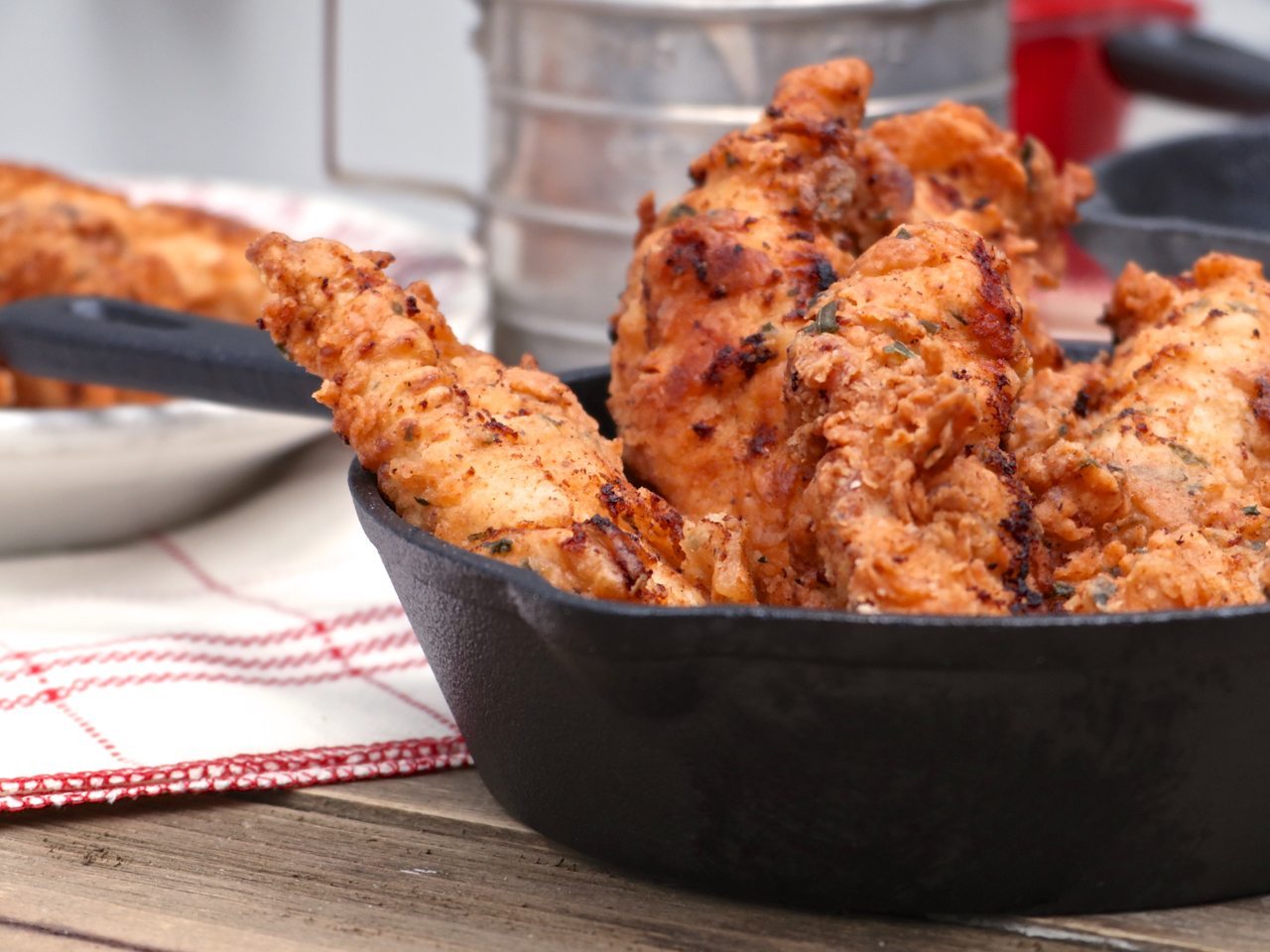
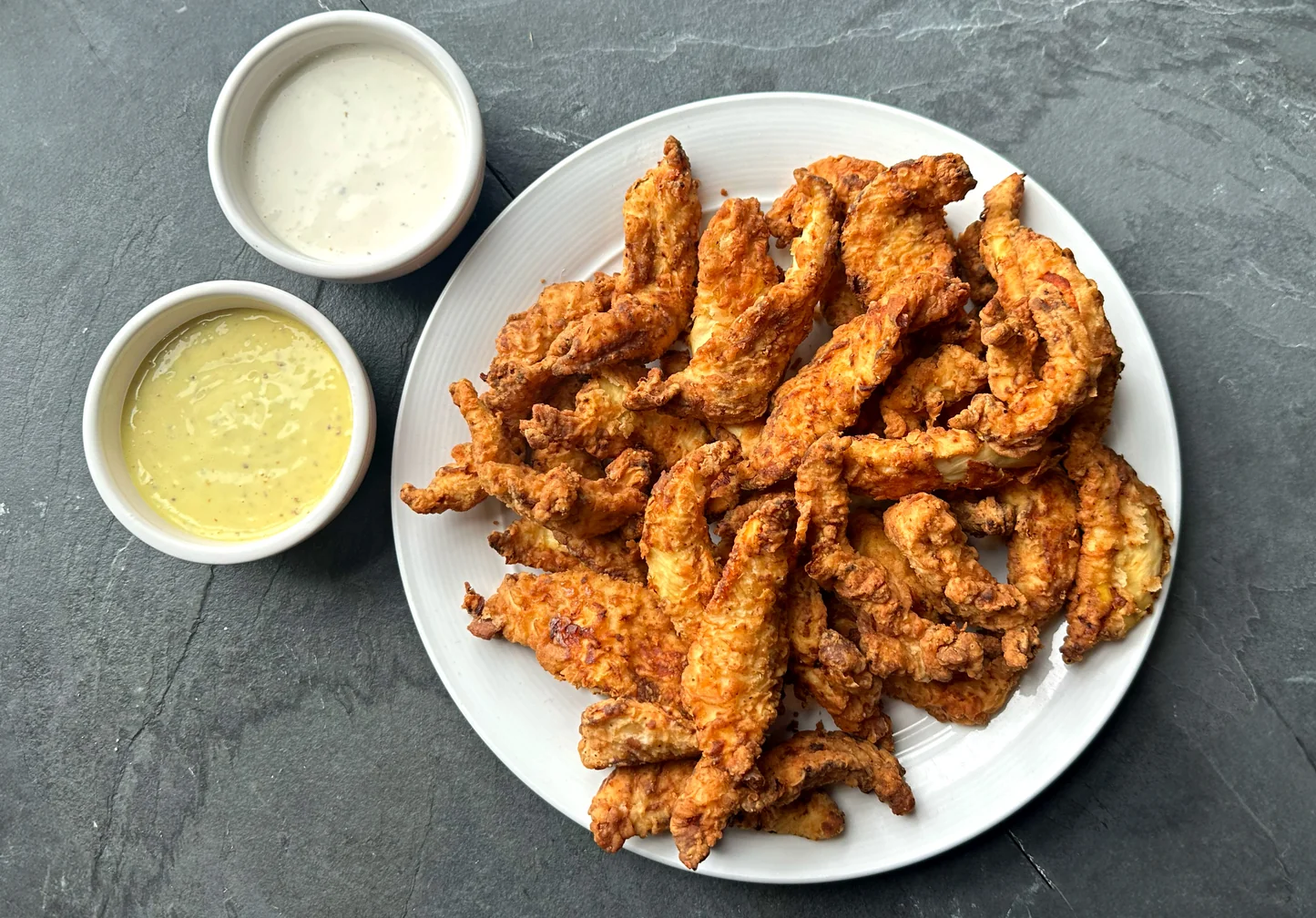
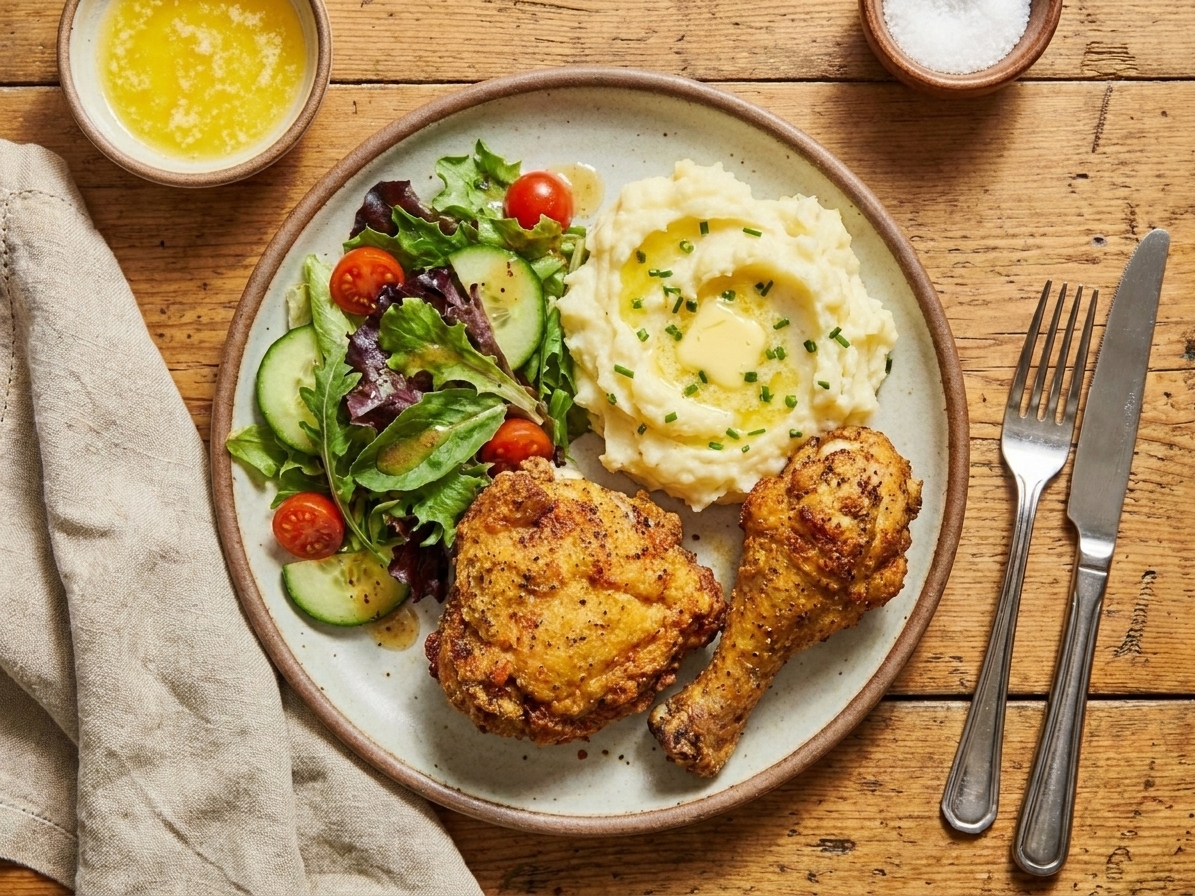
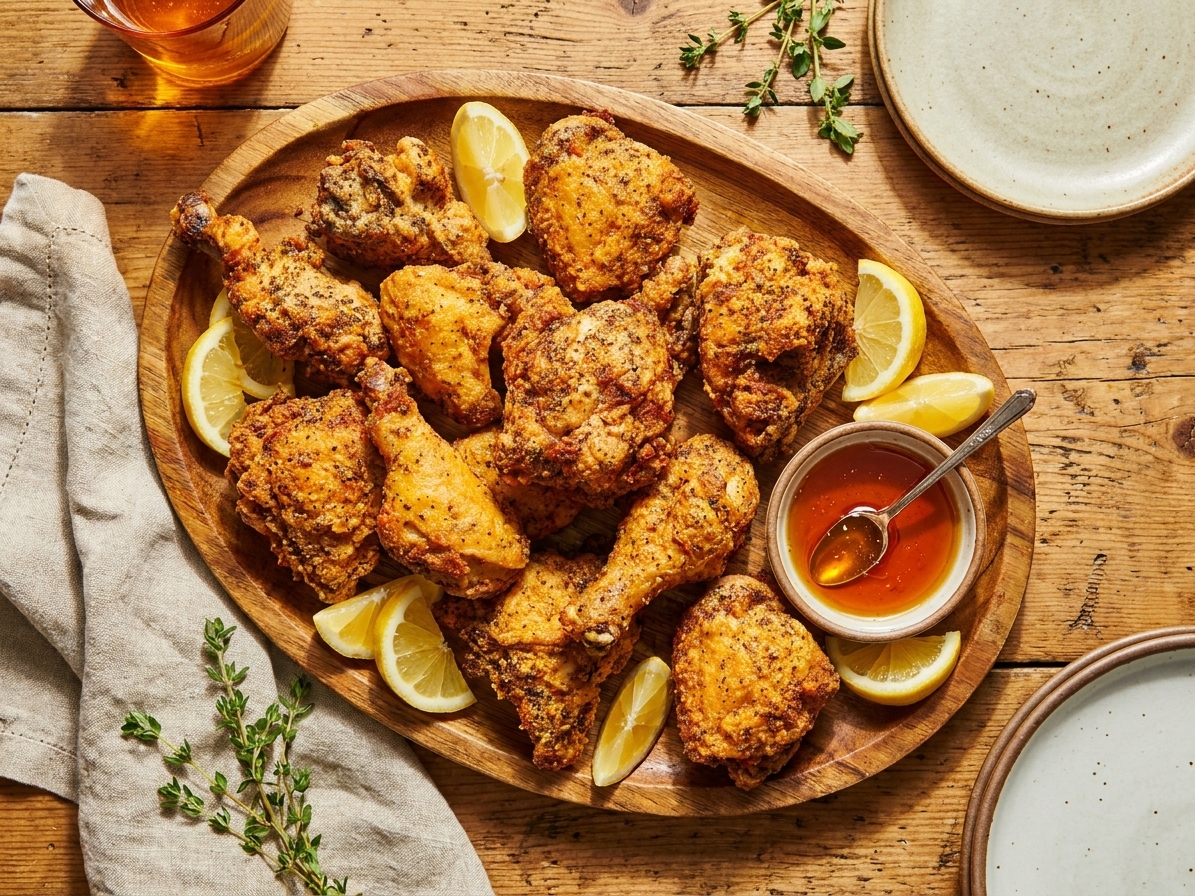
Serve. Hit it with lemon, drizzle with hot honey, or do the classic picnic plate with whatever cozy sides you love. Just promise me you will take one bite standing at the counter. That is the chef tax.