Mom's Best Recipes
Recipe

Cast Iron Skillet Chicken Thighs

Crispy-skinned chicken thighs seared in cast iron with a fast lemon-garlic pan sauce.

Author By Matt Campbell
4.8
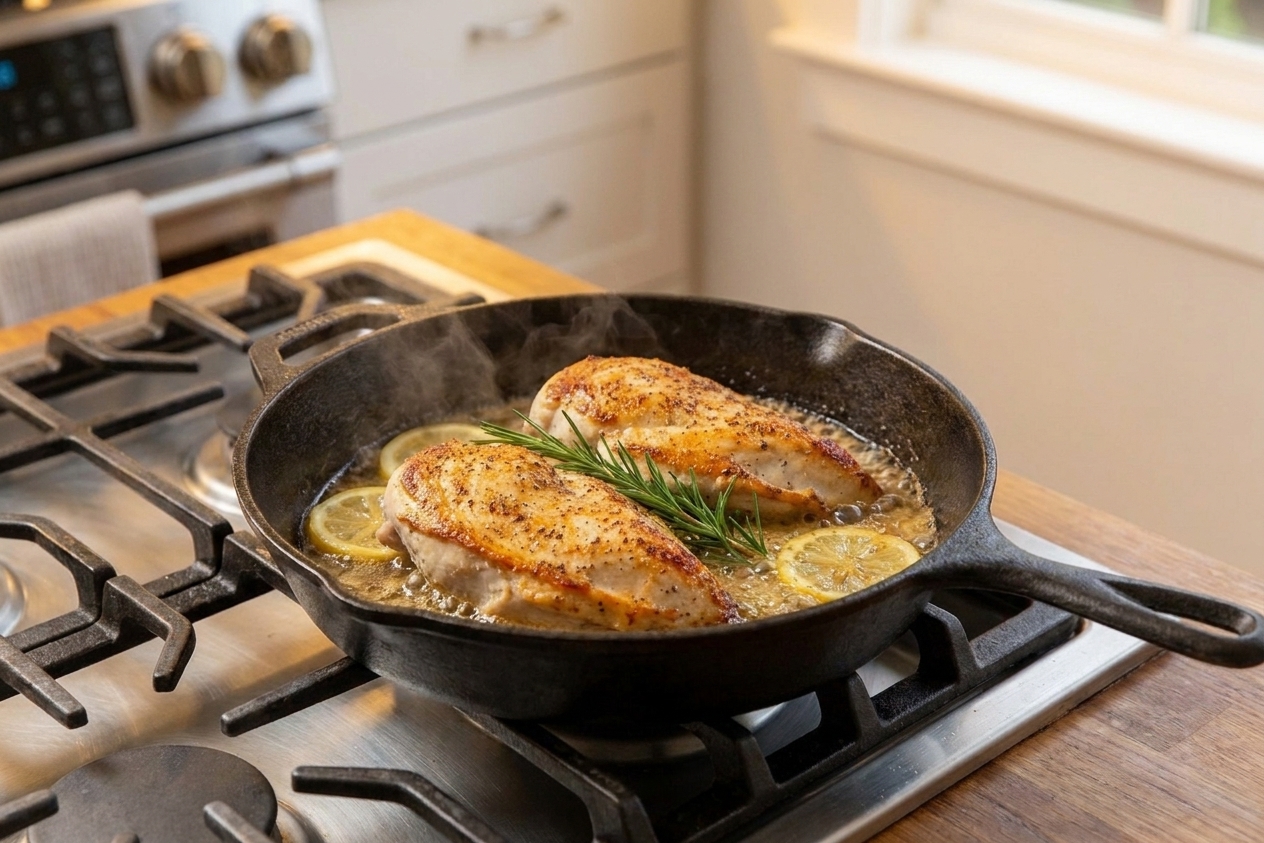
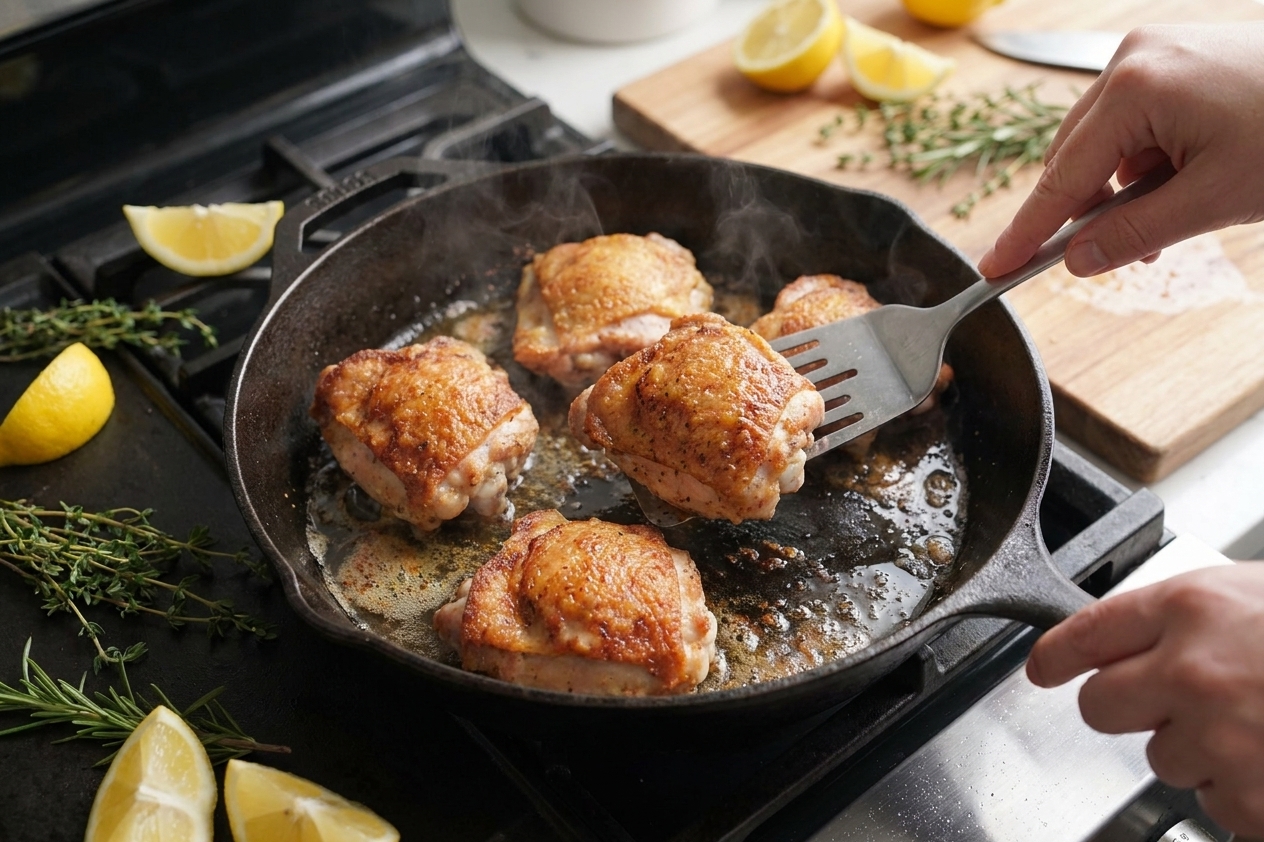
Crispy chicken thighs sizzling in a well-seasoned cast iron skillet on a stovetop with lemon wedges and herbs nearby

If you own a cast iron pan, you basically own a crispy-edge machine. And when you pair that pan with chicken thighs, you get the kind of dinner that feels like you tried harder than you did. We are talking crackly skin, juicy meat, and a little lemon-garlic pan sauce that tastes like it has a backstory.

This recipe is also secretly a cast iron confidence booster. You will practice the two things that make cast iron magic: letting the pan get properly hot, and letting the chicken release when it is ready. No panic-flipping, no prying, no drama. Just sizzle, patience, and a very good meal.

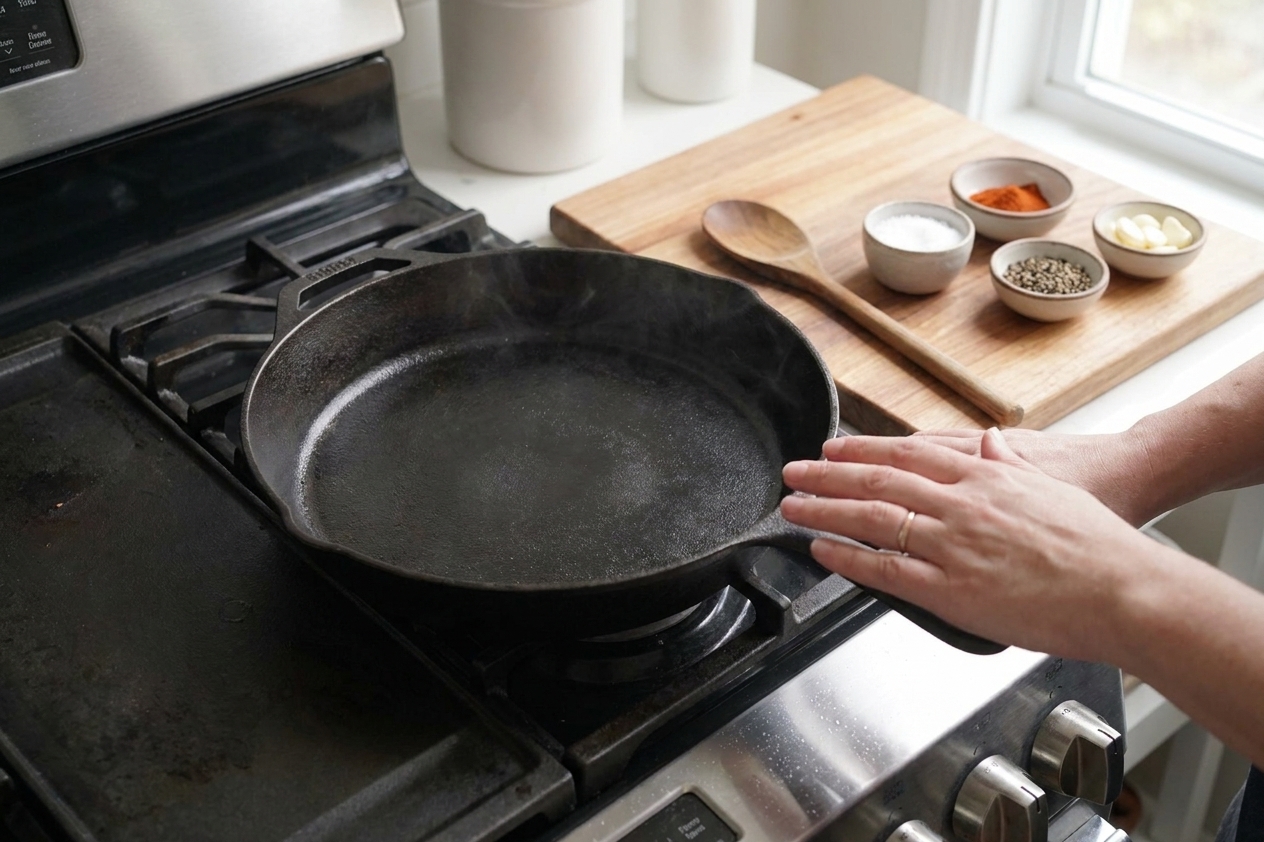
A clean, black cast iron skillet preheating on a home stove with a wooden spoon and small bowls of seasoning on the counter

Why It Works

  • Cast iron gives you the best sear. Its heat retention means the skin browns fast and stays crisp instead of steaming.
  • Skin-side down first, no moving. The chicken naturally releases once the fat renders and the crust forms.
  • One-pan sauce with real flavor. Garlic, lemon, and a splash of broth pull up the browned bits and turn them into a glossy, bright pan sauce.
  • Oven finish = juicy center. After the sear, the skillet goes in the oven so the thighs cook evenly without burning the skin.

Pairs Well With

Storage Tips

Refrigerate: Cool leftovers, then store chicken and sauce in an airtight container for up to 4 days.

Reheat (best for crispy skin): Warm a dry cast iron skillet over medium-low. Add chicken skin-side up, cover loosely, and heat 6 to 10 minutes until warmed through. Then uncover and turn heat to medium for 1 to 2 minutes to re-crisp the skin.

Reheat (quick option): Microwave in short bursts with a spoonful of sauce. The chicken stays juicy, but the skin will soften.

Freeze: Freeze chicken and sauce for up to 2 months. Thaw overnight in the fridge before reheating.

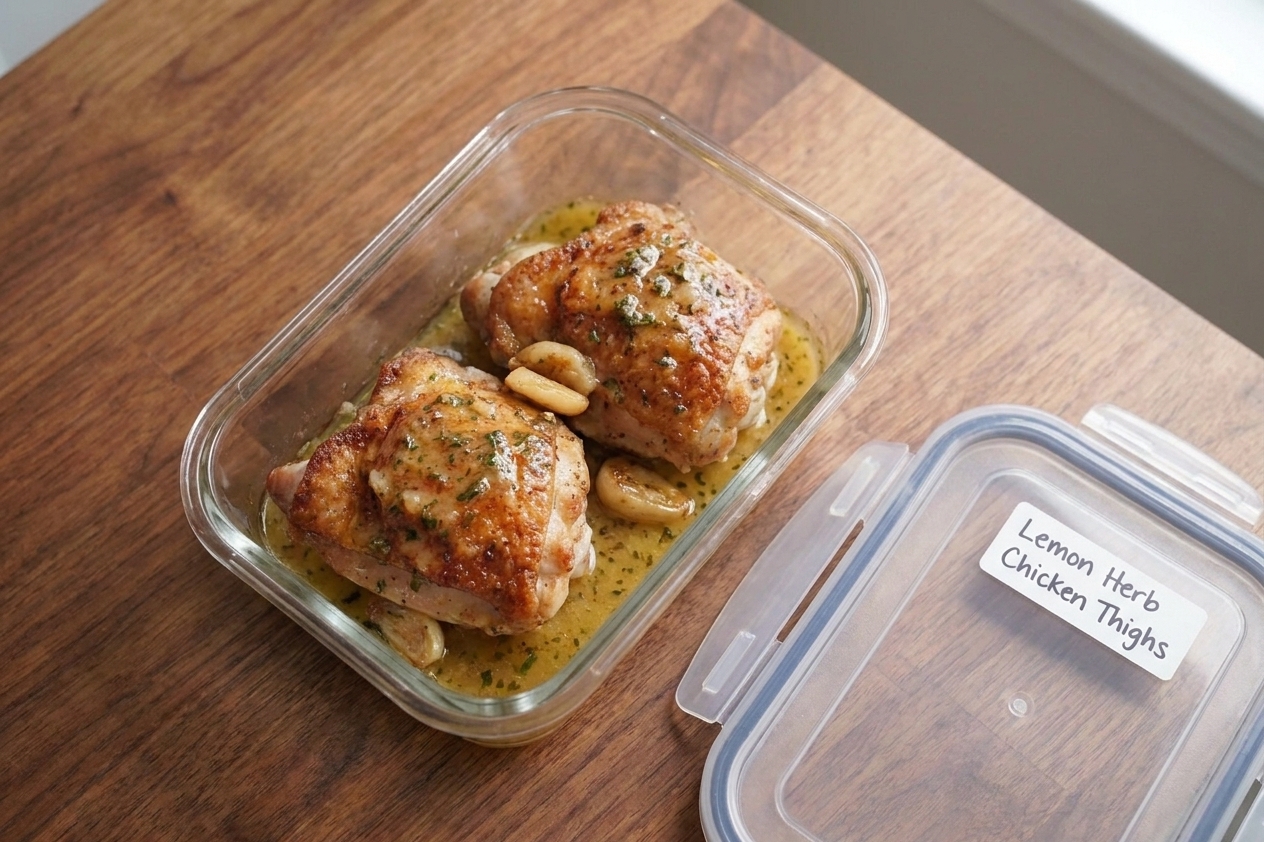
Cooked chicken thighs and pan sauce stored in a glass meal prep container on a kitchen counter next to a labeled lid

Common Questions

Do I need to season my cast iron before making this?

If your skillet is already relatively nonstick and has a dark, semi-gloss finish, you are good. If food tends to stick or the pan looks dry and patchy, cook this with a little extra oil and plan to do a quick post-dinner maintenance seasoning: wash, dry, rub with a thin film of oil, and heat until just smoking.

Why is my chicken sticking to the pan?

Two main reasons: the pan was not hot enough, or you tried to move the chicken too early. Preheat until the oil shimmers, then place thighs skin-side down and do not touch them for about 8 to 12 minutes. When the skin is properly browned, it releases.

My skin is getting too dark. What should I do?

Turn the heat down a notch and keep going. You are looking for deep golden brown with rendered fat, not blackened. Burner strength varies a lot, and cast iron holds heat like a champ.

Can I use boneless, skinless thighs?

You can, but you lose the crispy-skin payoff and the rendered fat that helps the sauce. If using boneless, skinless thighs, sear 3 to 4 minutes per side and reduce oven time to 6 to 10 minutes, depending on thickness.

What internal temp should chicken thighs be?

Food-safe is 165°F. Thighs are often best around 175°F to 185°F because the connective tissue softens and the meat turns extra tender. You can push closer to 190°F for very tender thighs, but smaller thighs can dry out if you go too far. Use a thermometer in the thickest part without touching bone.

Is it okay to cook acidic sauces in cast iron?

Yes, with a reasonably seasoned pan. Keep acidic simmering short, like this sauce. If your skillet is brand new or the seasoning is fragile, keep the lemon time brief and do not store leftovers in the pan.

Can I make this on an electric or induction stove?

Absolutely. Preheat a little longer and use medium to medium-high, not full blast. Cast iron holds heat, so once it is hot, it stays hot.

My cast iron pan has been with me through every phase of home cooking confidence. The early days were loud. Too much heat, too little patience, and one unfortunate egg that basically became part of the pan’s personality.

Chicken thighs were the turning point. They are forgiving, they love a hard sear, and they teach you the cast iron lesson that fixes everything: stop messing with it. Let the pan do its job. When I hear that steady sizzle and smell the browned chicken fat doing its thing, I know dinner is going to be good, even if the rest of my kitchen looks like a mild tornado hit it.