Mom's Best Recipes
Recipe

Cheesy Potato Bread Skillet

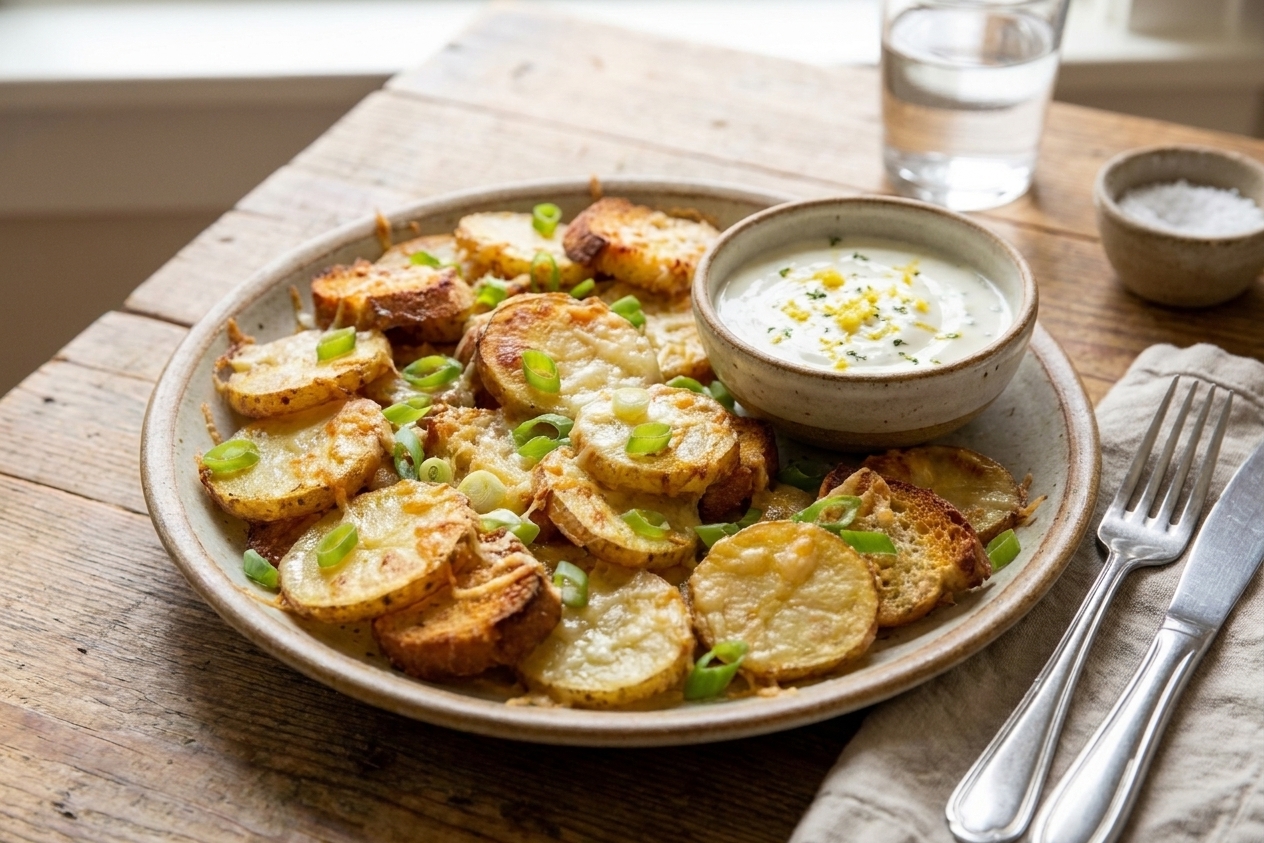
Crispy potatoes, golden bread, and melty cheese in one pan, finished with a lemony garlic yogurt sauce for a bright, cozy bite.

Author By Matt Campbell
4.8
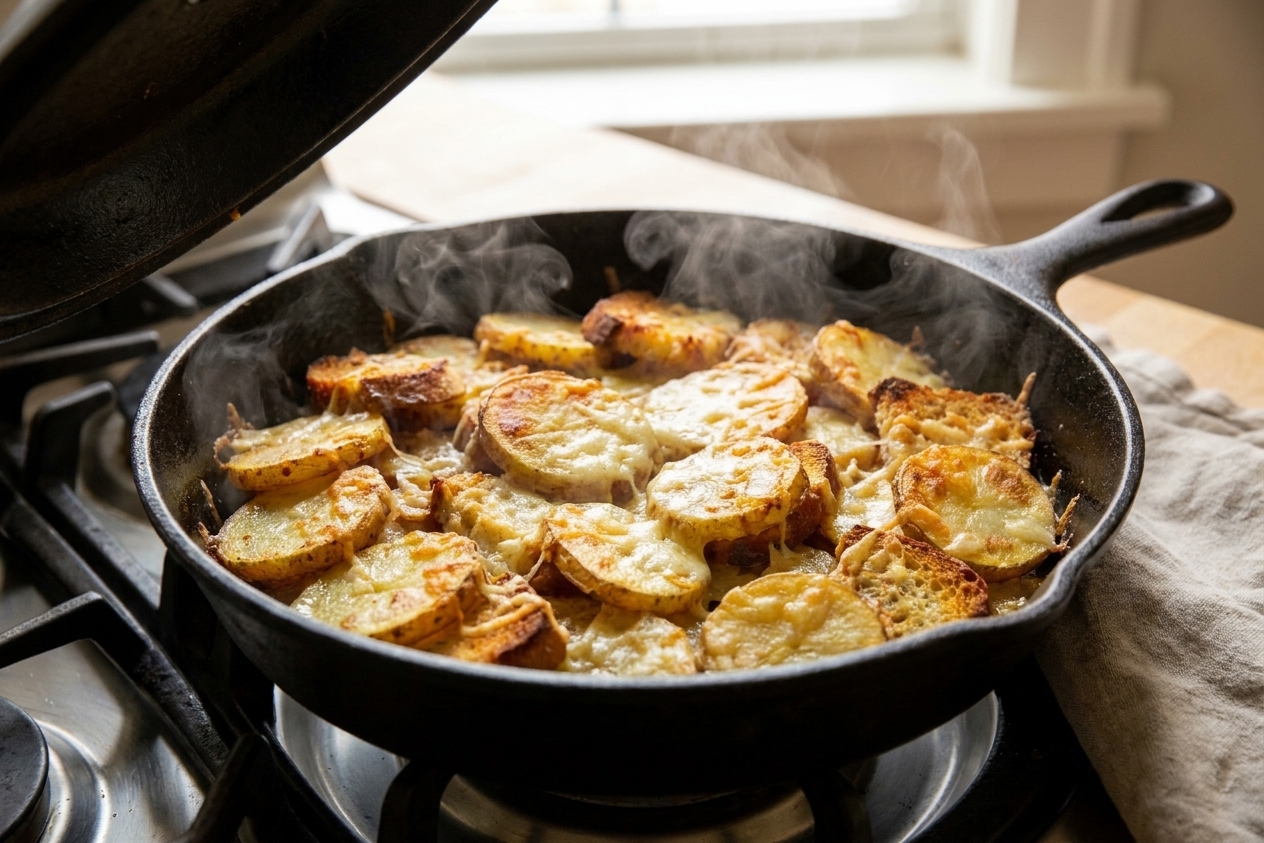
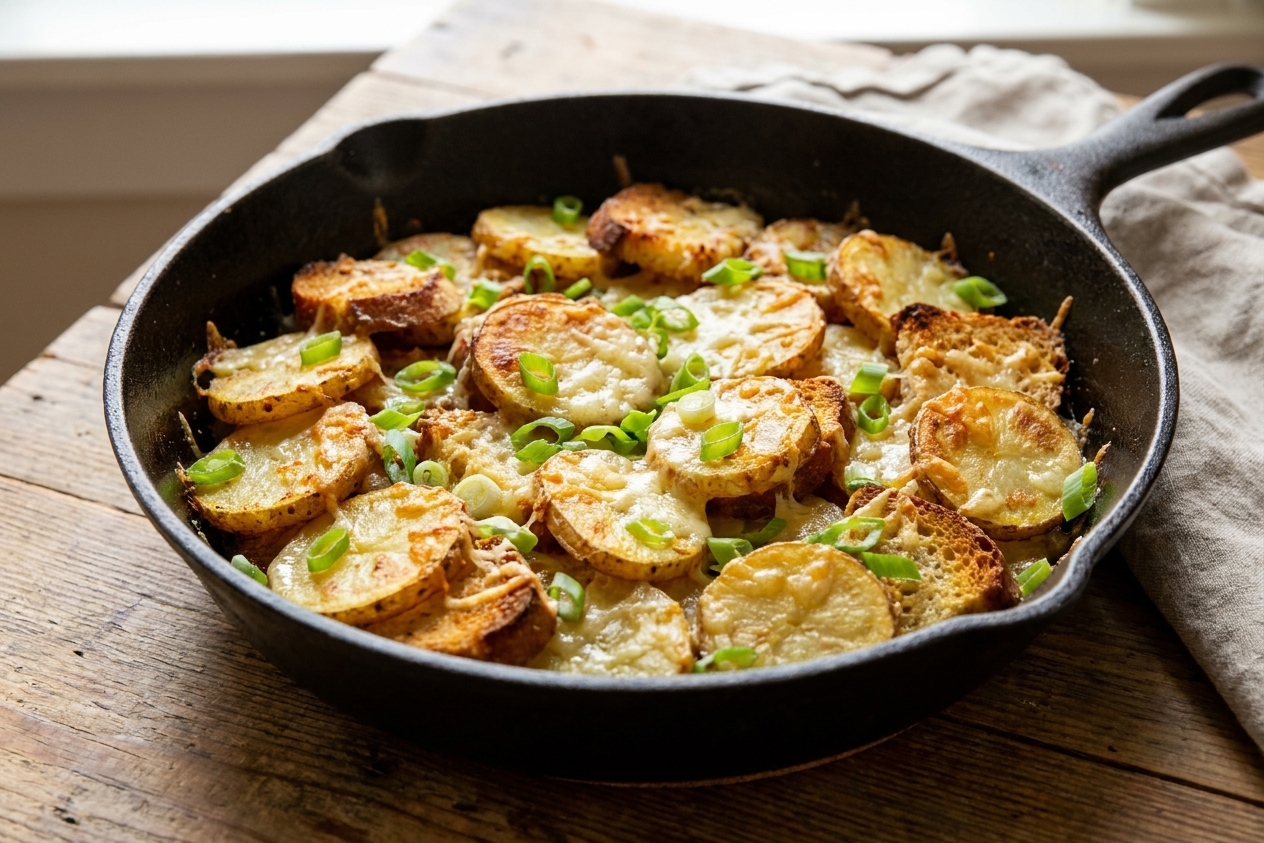
A cast iron skillet filled with crispy golden potato slices, toasted bread pieces, and melted cheese, finished with sliced scallions on a rustic kitchen table

When you want comfort food but you don’t want a sink full of dishes, this is the move. Think of it as a skillet mashup of roasted potatoes, garlic toast energy, and cheese-pull satisfaction, all with crisp edges and soft centers.

The secret weapon is the quick sauce. A little yogurt, lemon, and garlic turns this from heavy to dangerously snackable. You get cozy carbs, bright pop, and a pan you can drag to the table and let everyone “just grab a piece.”
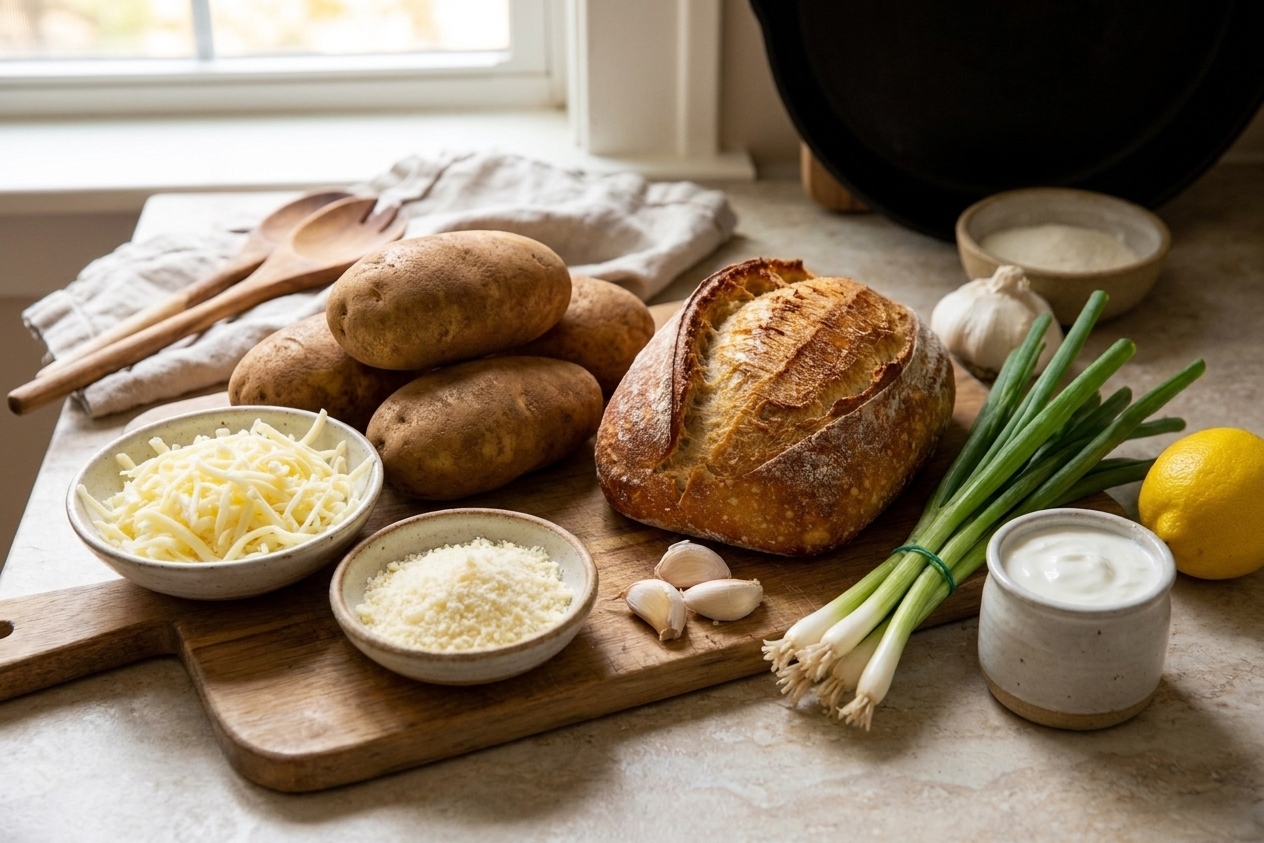
Whole russet potatoes, a small loaf of sourdough, shredded mozzarella, grated Parmesan, scallions, lemon, garlic, and yogurt arranged on a clean kitchen counter

Why It Works

  • Crisp plus creamy texture. Parboiled potatoes fry up faster and get that golden crust without staying raw in the middle.
  • Big flavor from simple stuff. Garlic, fat (olive oil and/or butter), and Parmesan do the heavy lifting, while lemon keeps it lively.
  • Flexible by design. Use whatever bread you have, swap cheeses, add herbs, or toss in leftover cooked bacon or ham.
  • One skillet dinner energy. It’s hearty enough to stand alone, but it also plays nice with salads, eggs, or soup.

Pairs Well With

Storage Tips

Refrigerate: Store leftovers in an airtight container for up to 3 days. Keep sauce separate if you can, so the bread stays less soggy.

Reheat: Best method is a skillet over medium heat with a tiny splash of oil or butter. Cover for 2 to 3 minutes to warm through, then uncover to re-crisp. Oven works too at 400°F for 8 to 12 minutes on a sheet pan.

Freezing: I don’t love freezing this one because the bread goes soft and the potatoes can turn a bit mealy. If you do it anyway, freeze without sauce. For the most even reheat, thaw overnight in the fridge, then bake at 400°F until hot and crisp. If you’re in a hurry, you can bake from frozen, just plan on a longer reheat time and expect a softer center.

Common Questions

Can I use leftover cooked potatoes?

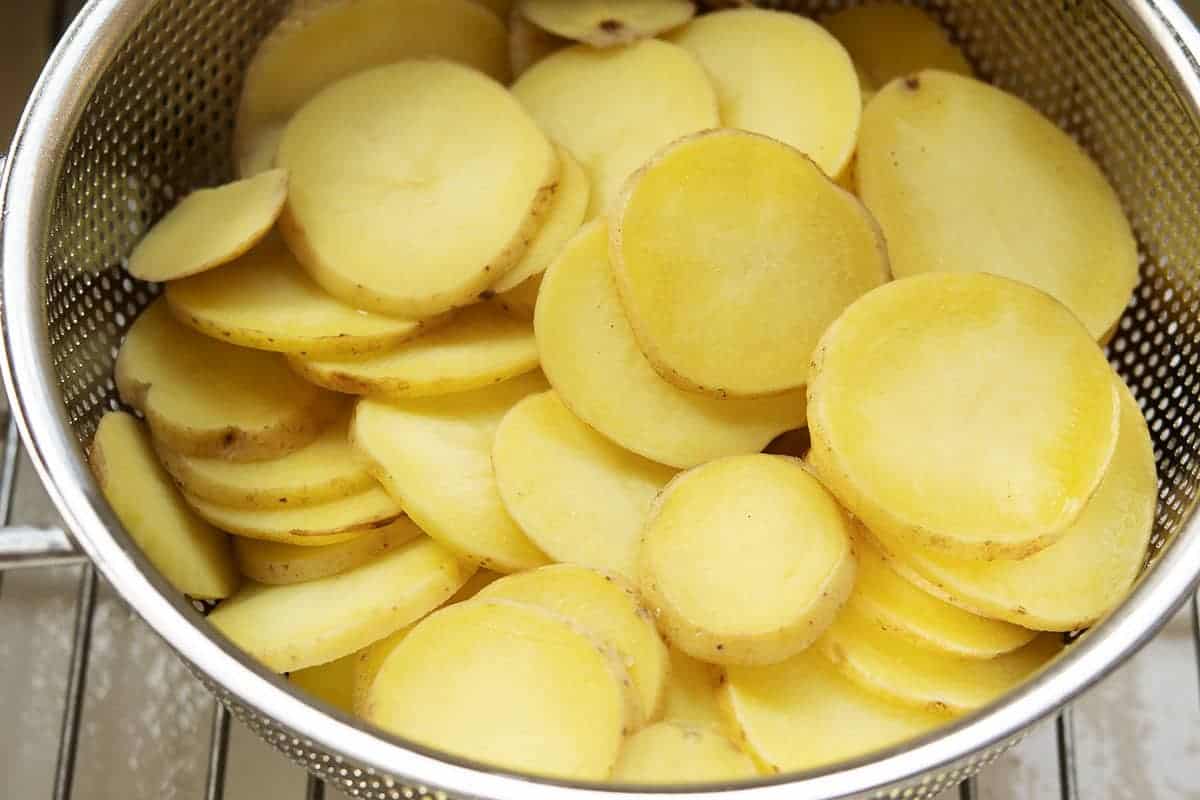
Yes. If you’ve got roasted or boiled potatoes already cooked, skip the parboil step. Slice or chunk them and start at the browning stage. You’ll need less oil and less time.

What kind of bread works best?

Sturdy bread wins. Sourdough, ciabatta, a baguette, or thick sandwich bread all work. Slightly stale bread is perfect. If your bread is super fresh and soft, dry it for 5 to 8 minutes in a 300°F oven, then tear it up and proceed.

How do I keep the potatoes from sticking?

Use a well-heated skillet and don’t rush the turn. Once the potatoes are browned, they release easier. Also, parboiling and drying the potatoes helps a lot.

Can I make it without dairy?

Yes. Use olive oil instead of butter, your favorite dairy-free melting cheese, and swap the yogurt sauce for a quick lemon-tahini sauce or a garlicky vinaigrette.

What else can I add?

Great add-ins: caramelized onions, chopped spinach (wilted at the end), cooked sausage crumbles, paprika, rosemary, or a pinch of chili flakes. This skillet is very “use what you have.”

This is the kind of pan I end up making when I open the fridge and see one lonely potato and half a loaf of bread that’s not quite stale, but it’s headed there. I started doing it as a “clean out the kitchen” move, then realized it tastes like something you’d order at a casual spot and swear has a secret ingredient. It does. It’s the last-minute lemony sauce and the permission to let things get a little extra crispy.