Mom's Best Recipes
Recipe

Chicago Deep-Dish Pizza

Buttery, crisp-edged deep-dish with cheese-first layering and a bold tomato sauce.

Author By Matt Campbell
4.8
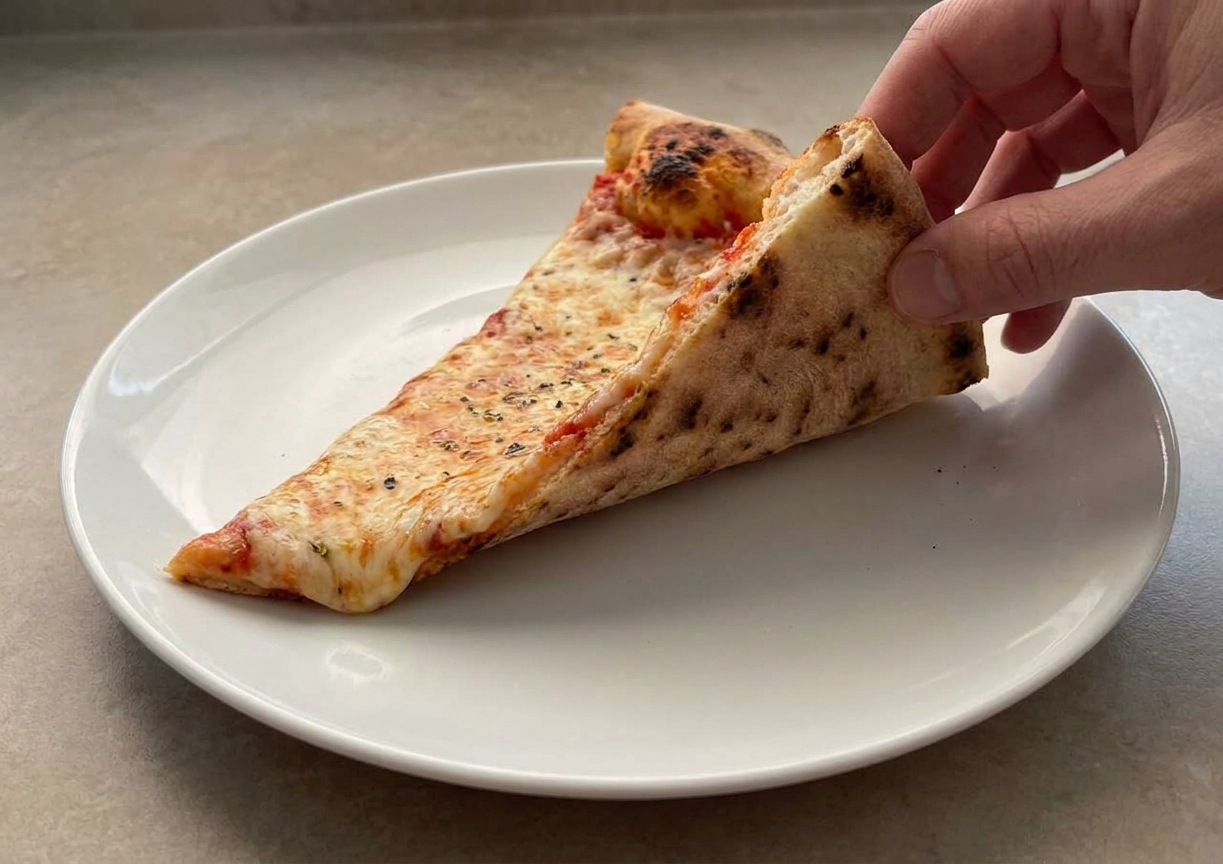
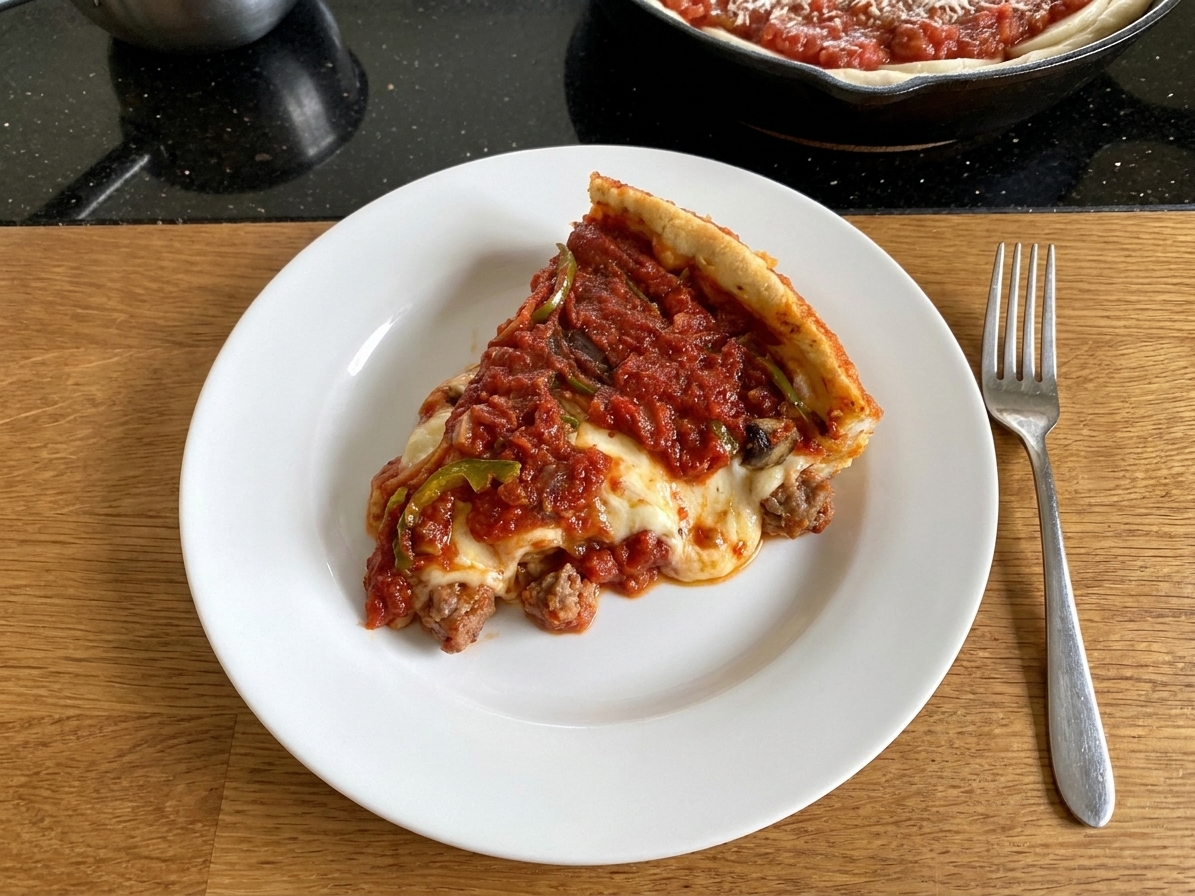
A golden, tall Chicago deep-dish pizza in a black cast iron skillet with a slice lifted to show stretchy mozzarella and chunky tomato sauce

Chicago deep-dish is not trying to be your quick weeknight flat pizza. It is comfort food you plan for. Think buttery crust with crisp edges, a layer of mozzarella that pulls its weight, and a bright, garlicky tomato sauce spooned on top like it belongs there.

This is the version I make when I want maximum comfort with ingredients you can actually find. No specialty flour required. No drama. Just a few smart techniques that help you land on “cozy and impressive” instead of “heavy and questionable.”

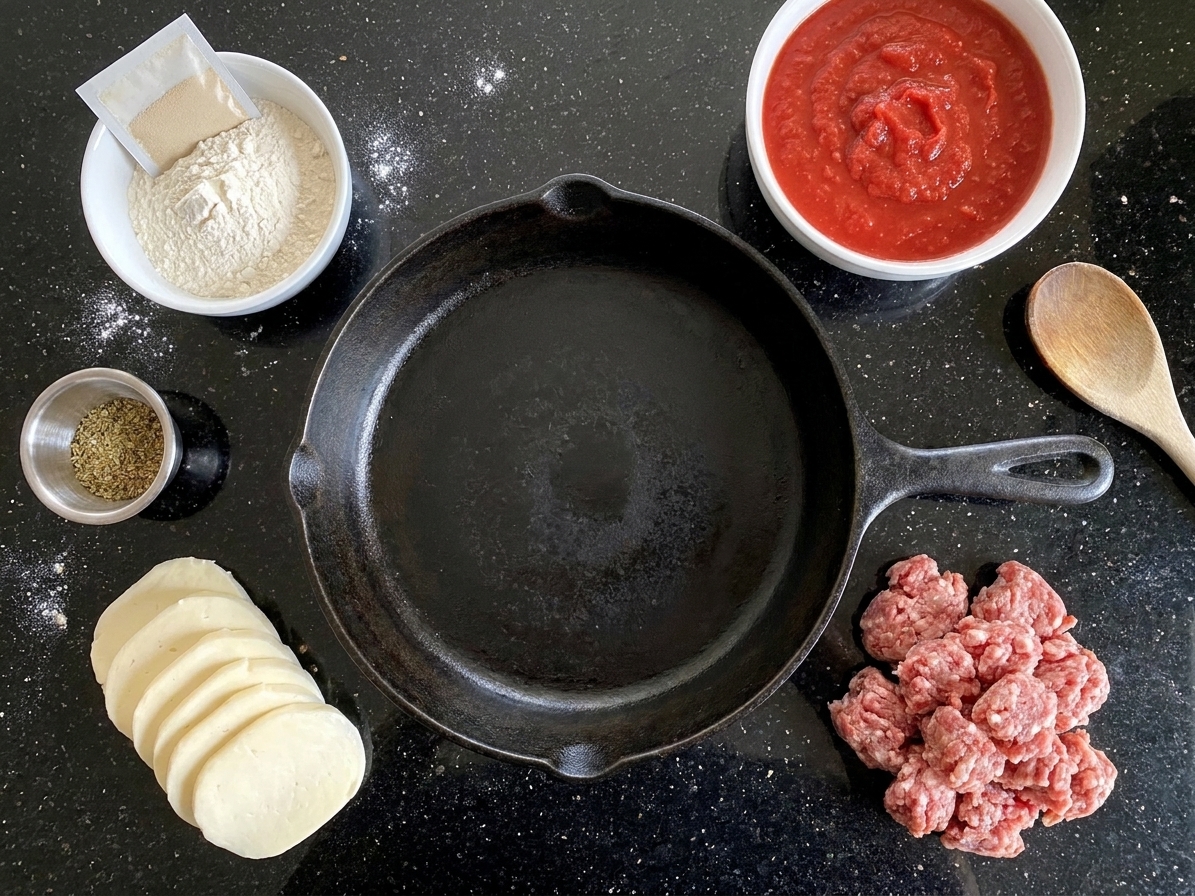
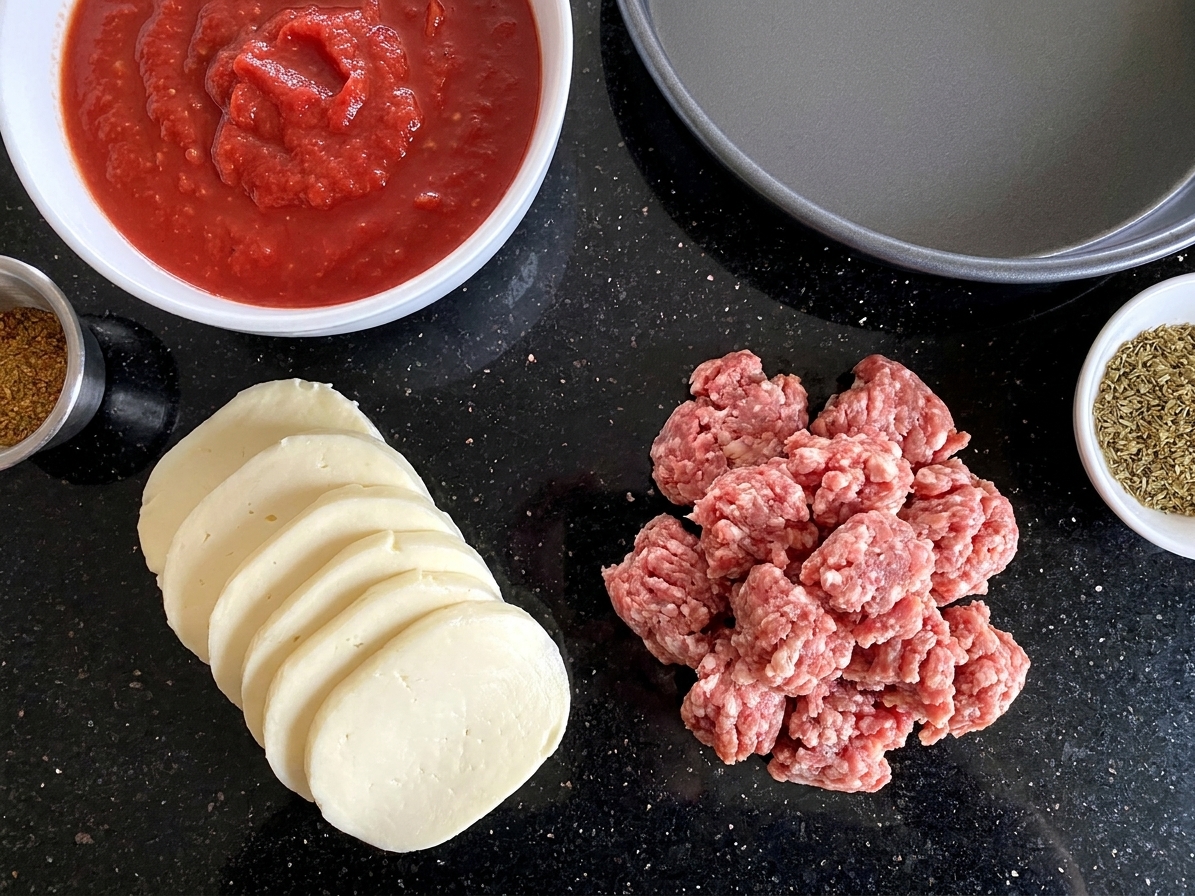
Deep-dish pizza ingredients arranged on a kitchen counter including flour, yeast, mozzarella, canned tomatoes, Italian sausage, and a cast iron skillet

Why It Works

  • That signature structure: a sturdy, buttery crust that stays crisp on the edges and holds the toppings without collapsing.
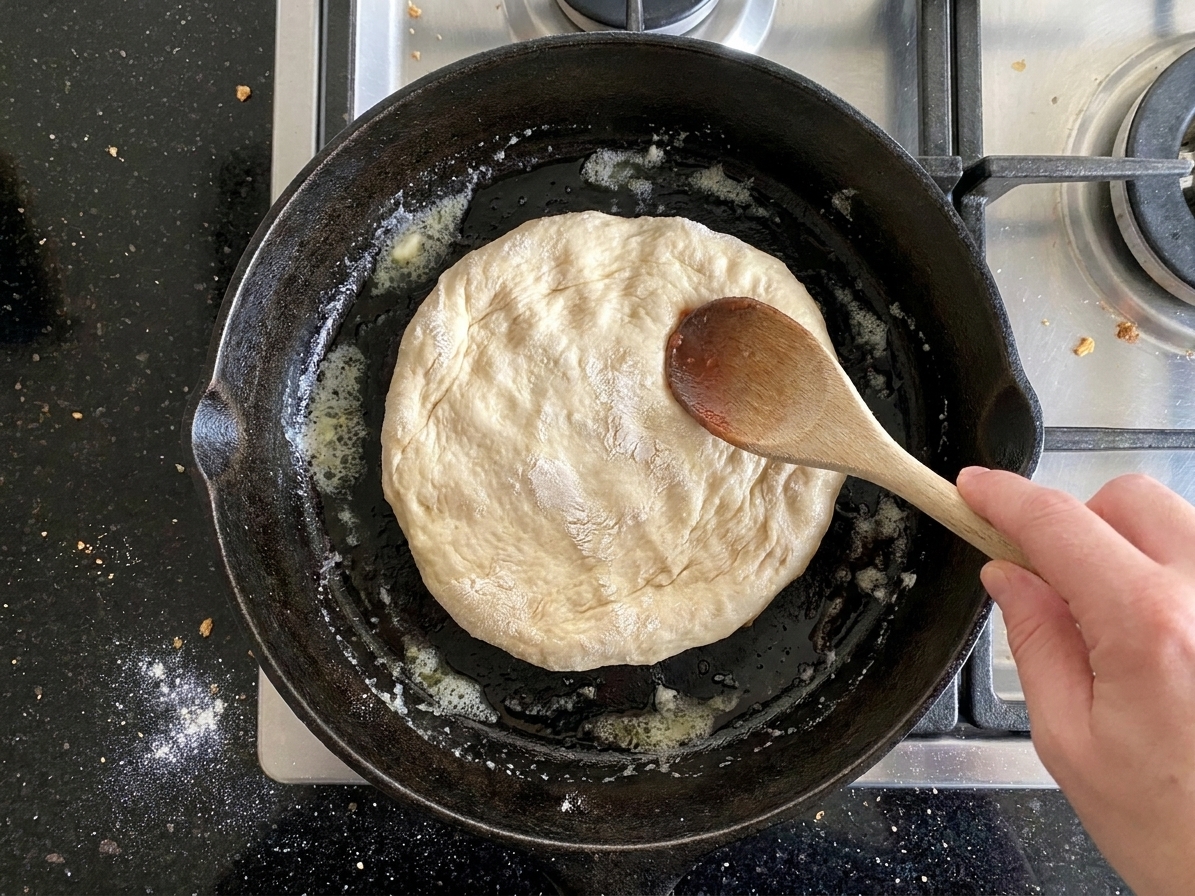
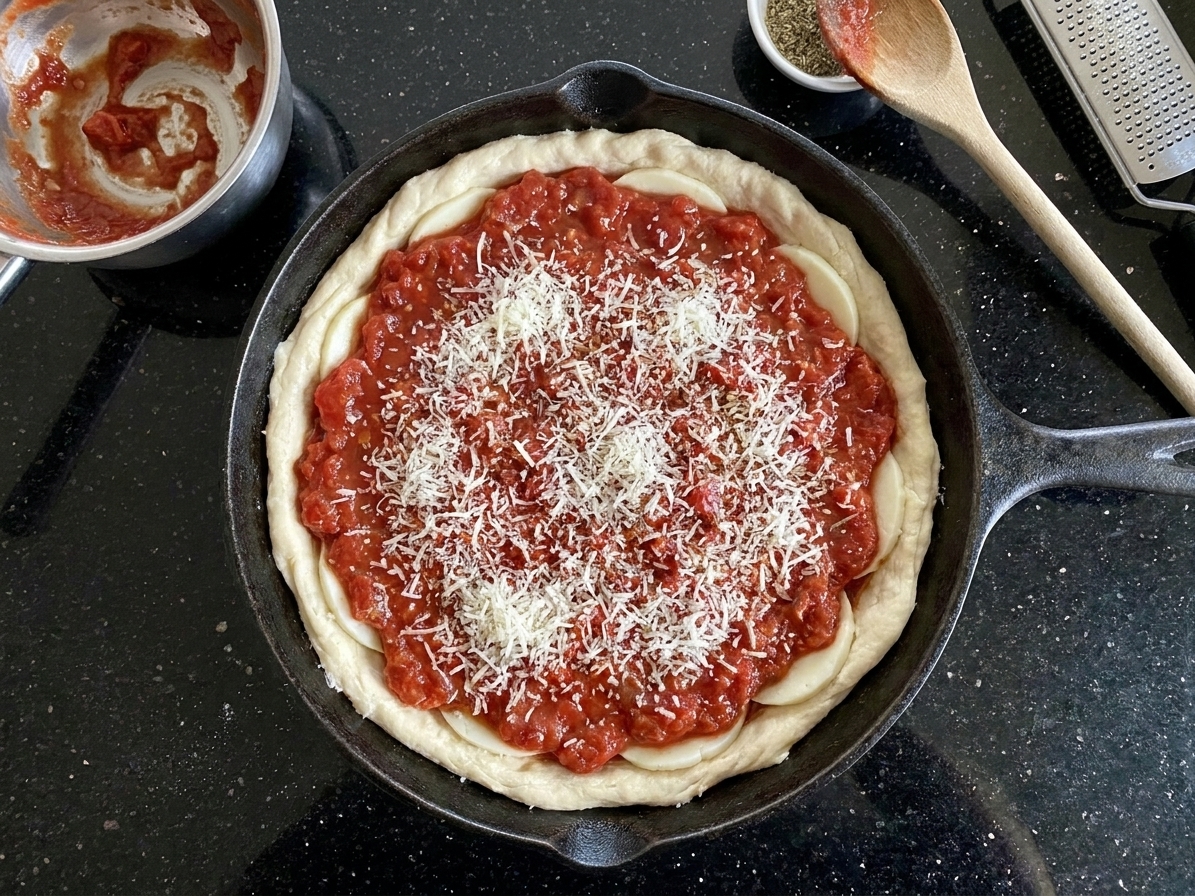
  • Cheese-first layering: mozzarella goes directly on the dough to help prevent sogginess and protect the cheese during the longer bake.
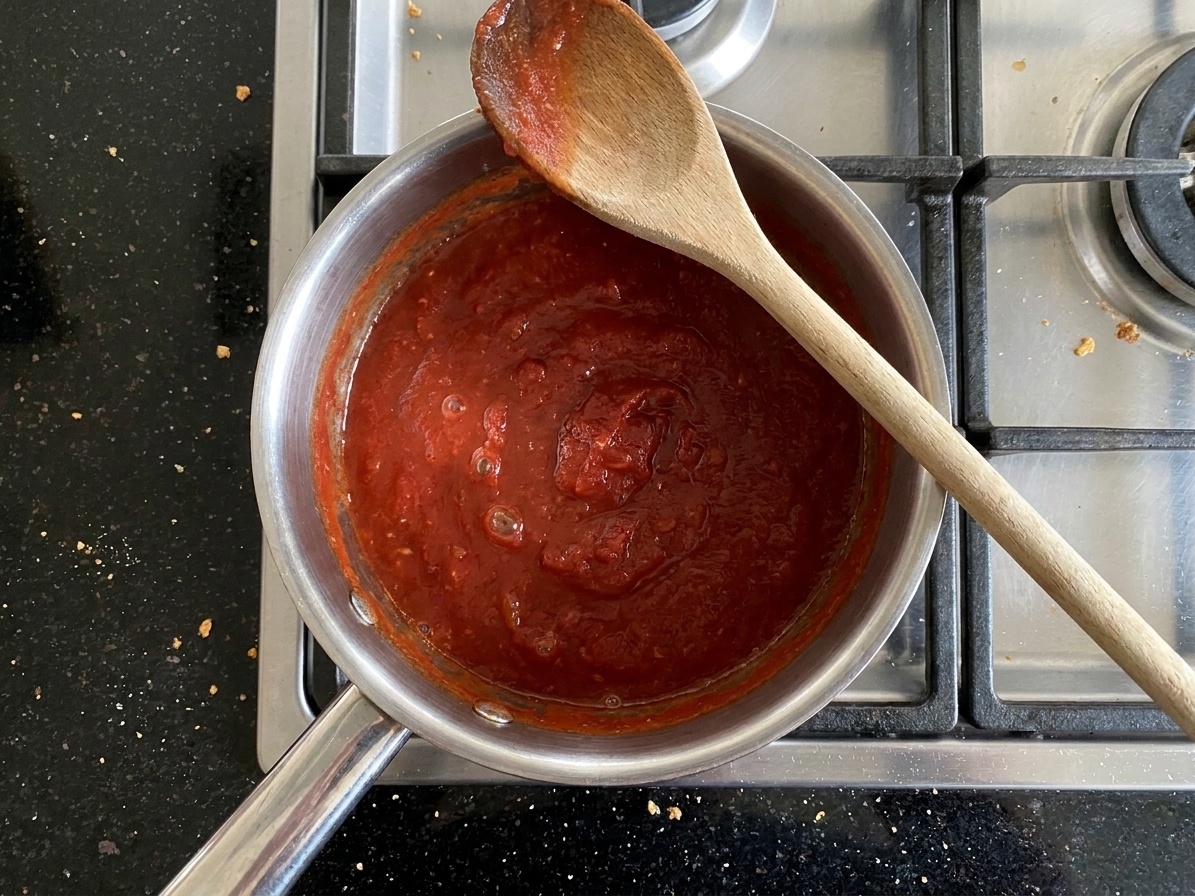
  • Bright sauce on top: a quick, garlicky tomato sauce that tastes lively and cuts through all the richness.
  • Home oven friendly: no pizza stone needed, just a deep skillet or cake pan and a little patience.

Pairs Well With

Storage Tips

Refrigerate: Let slices cool completely, then store in an airtight container for up to 4 days.

Freeze: Wrap individual slices in foil, then slide into a freezer bag. Freeze up to 2 months for best texture.

Reheat (best method): Warm slices on a sheet pan at 375°F for 12 to 18 minutes until the center is hot and the bottom re-crisps. If the top is browning too fast, loosely tent with foil.

Quick reheat: A skillet works great. Medium-low heat, covered, 6 to 10 minutes. You get a crisp bottom and melty top without drying it out.

Common Questions

What makes Chicago deep-dish different?

It is baked in a deep pan with a thicker, buttery crust. The classic layering is cheese first, then meat or veg, then sauce on top. That order helps protect the cheese from over-browning and helps prevent a soggy center.

Do I have to use cornmeal?

Nope. Some deep-dish crusts use cornmeal, some use semolina, and some use neither. This recipe uses a little cornmeal for texture, but you can swap it for more flour (or semolina if you have it).

Why is the sauce on top?

Because deep-dish bakes longer than thin crust. Sauce on top helps shield the cheese from over-browning and keeps the inside from drying out.

Can I use shredded mozzarella instead of sliced?

You can, but sliced low-moisture mozzarella gives you a cleaner melt and a better moisture barrier. If using shredded, buy low-moisture and pat it with paper towels if it feels damp.

How do I keep the crust from getting soggy?

Use low-moisture mozzarella, do cheese first, and do not overload with watery veggies. If you use mushrooms or spinach, sauté and cool them first to drive off moisture.

What pan is best?

A 10-inch cast iron skillet is my favorite for crisp edges. A 9-inch springform or deep cake pan also works great. If your pan is shallower than about 2 inches, go lighter on fillings to avoid overflow.

Can I make it vegetarian?

Absolutely. Skip the sausage and load up on sautéed mushrooms, roasted peppers, onions, or spinach (cooked and cooled first). You can also add a can of drained, rinsed white beans for extra heft.

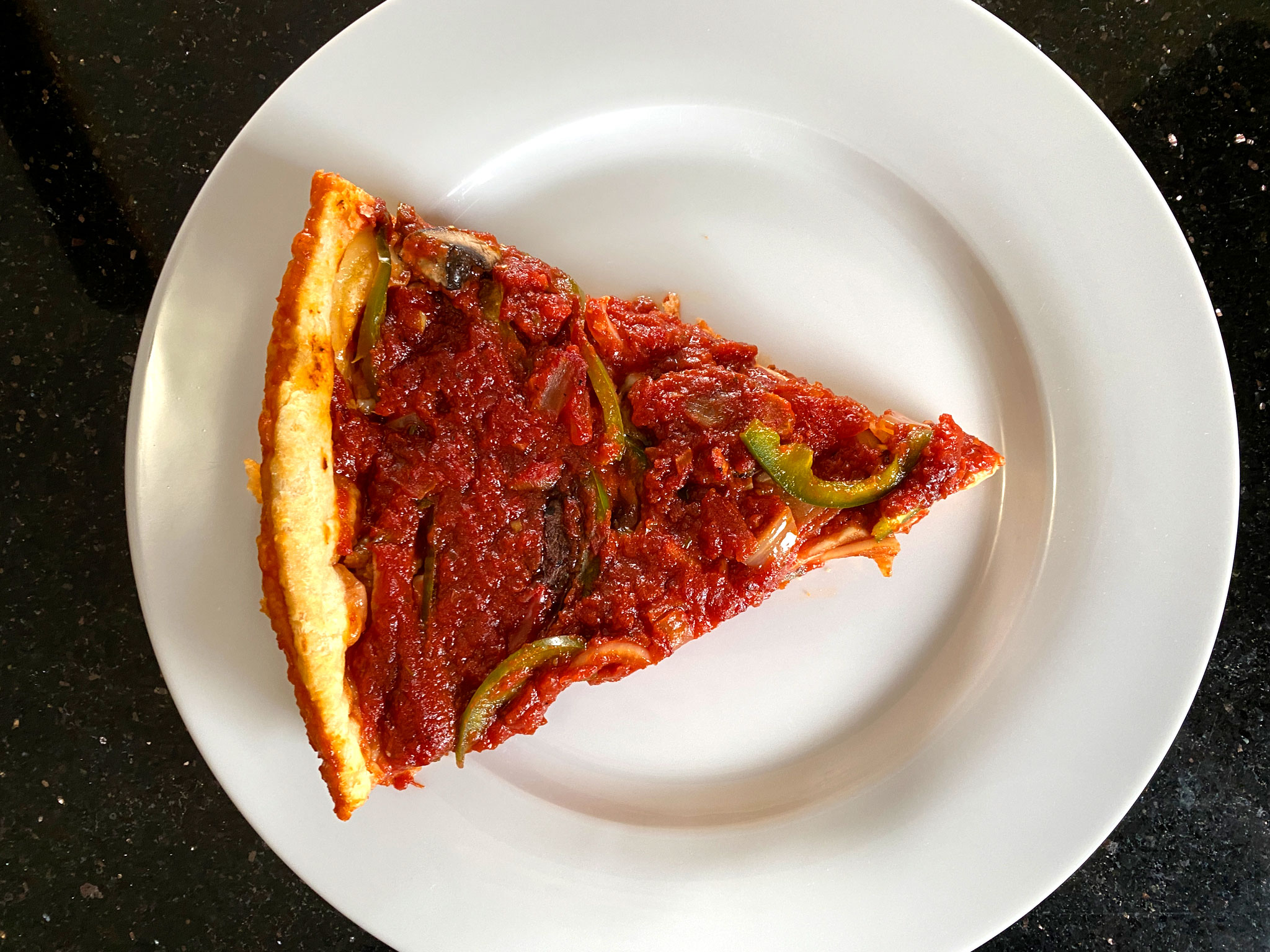
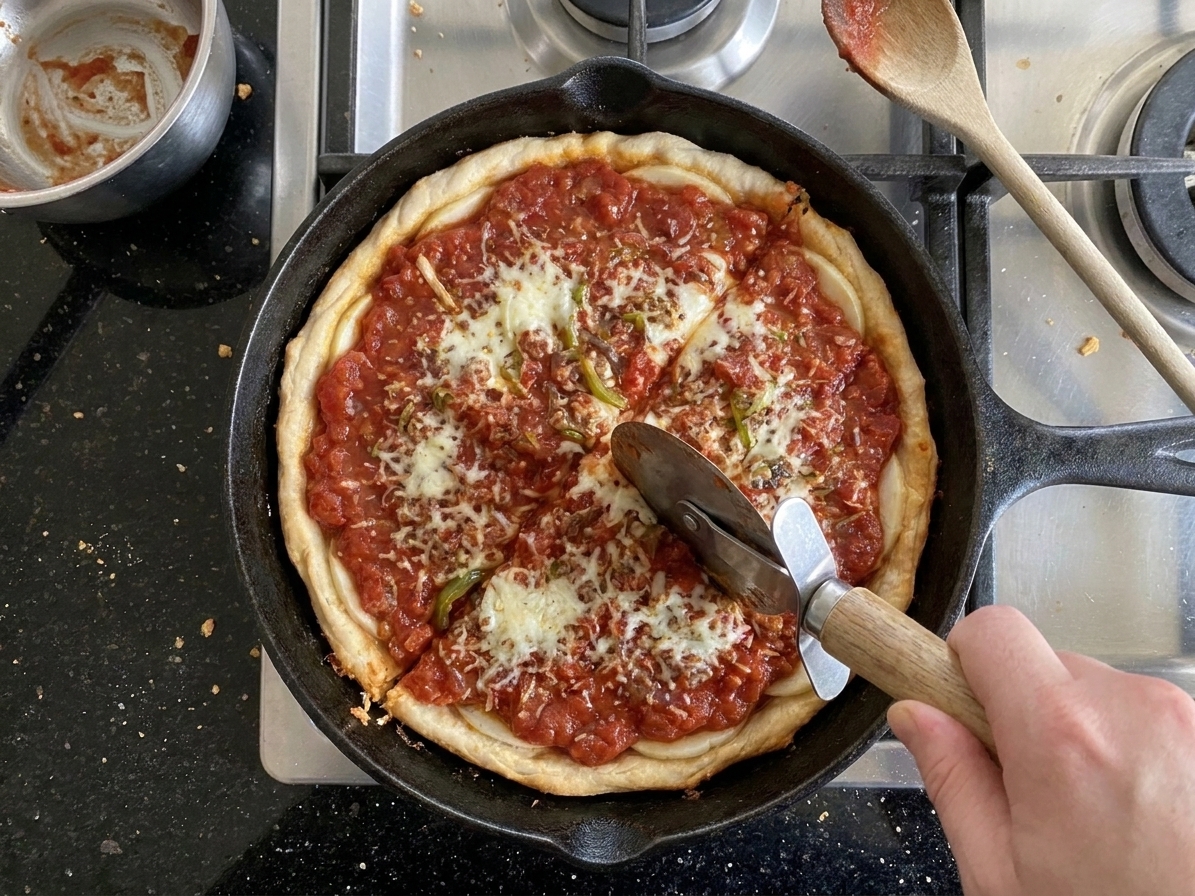
I love cooking food that feels like a project without turning into an all-day saga. Deep-dish is exactly that. The first time I made it, I treated it like regular pizza and wondered why the middle felt a little suspicious. Then I learned the Chicago rules: cheese first, sauce on top, and give it time to set before slicing. Now it is my go-to when I want to feed people and hear that one perfect sentence: “Wait, you made this at home?”