Mom's Best Recipes
Recipe

Chicken Adobo Tagalog

Tangy, garlicky, soy-braised chicken with bay leaves and peppercorns, simmered until glossy and spoonable over rice.

Author By Matt Campbell
4.8
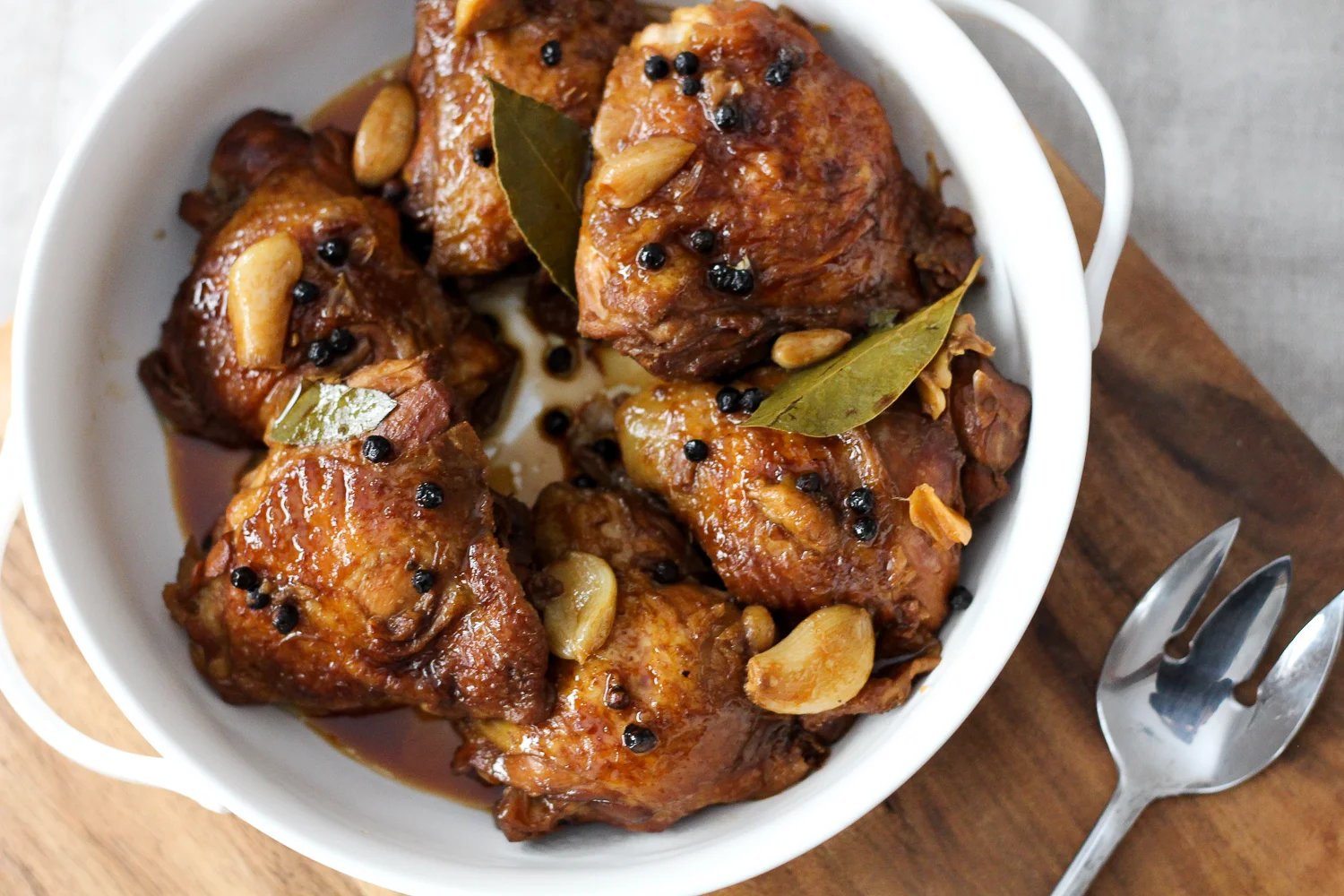
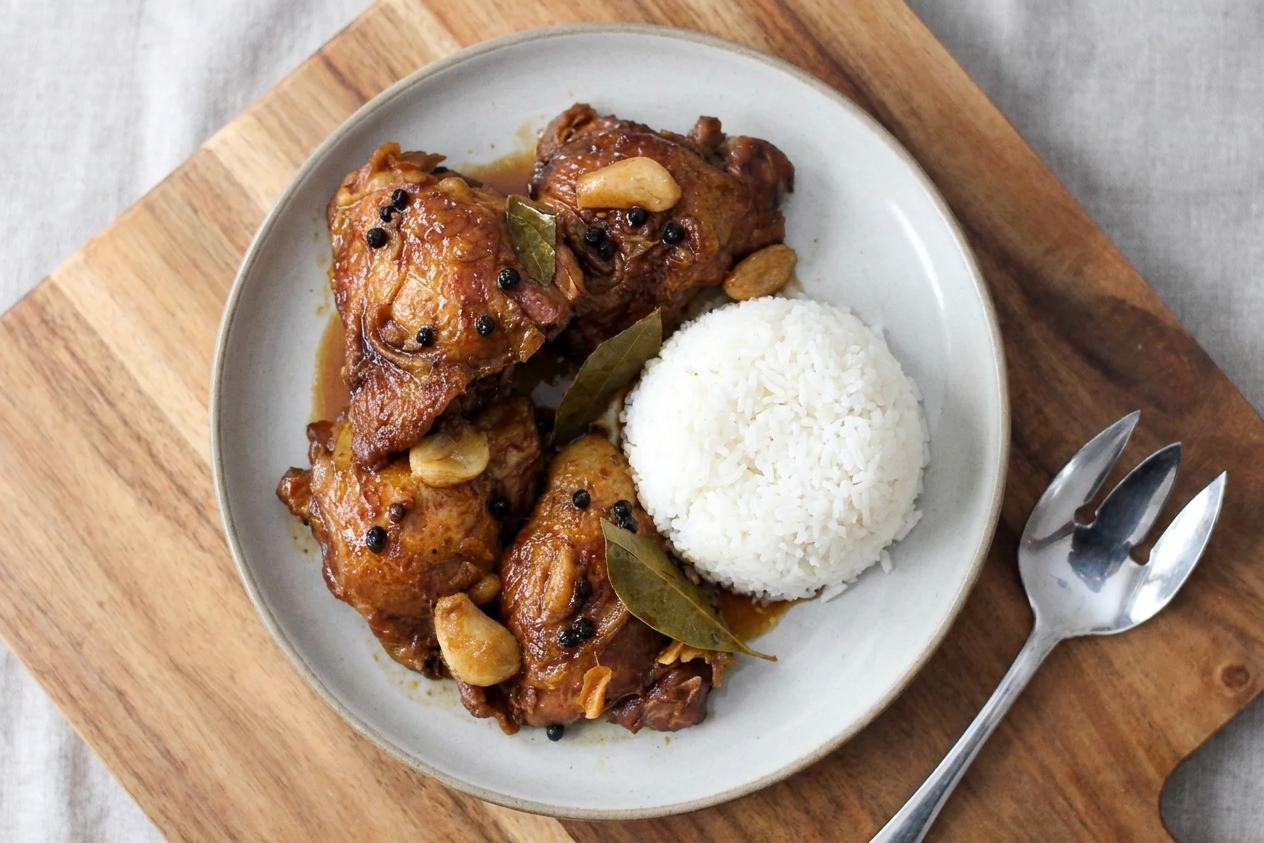
A plated serving of chicken adobo Tagalog with glossy brown sauce, bay leaves, and steamed white rice on a simple ceramic plate at a wooden table

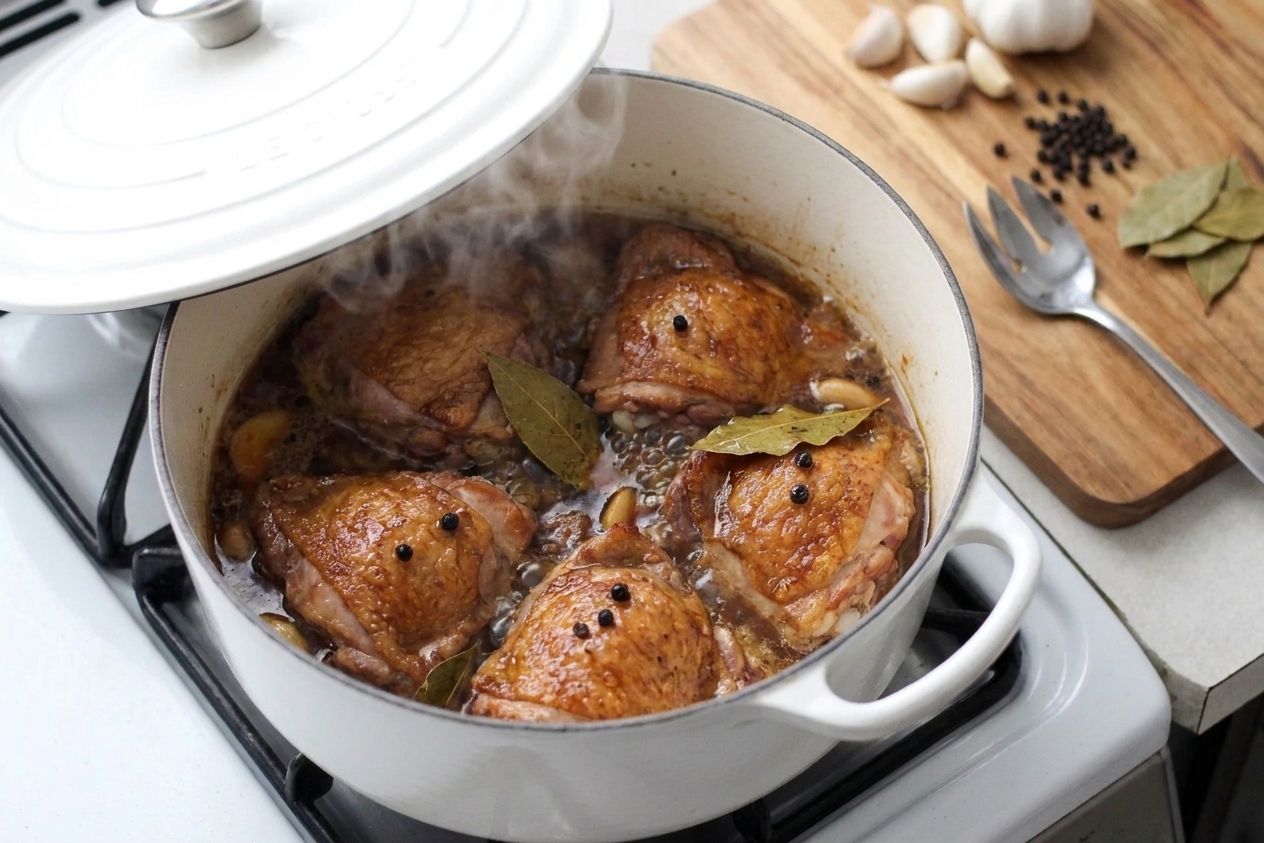
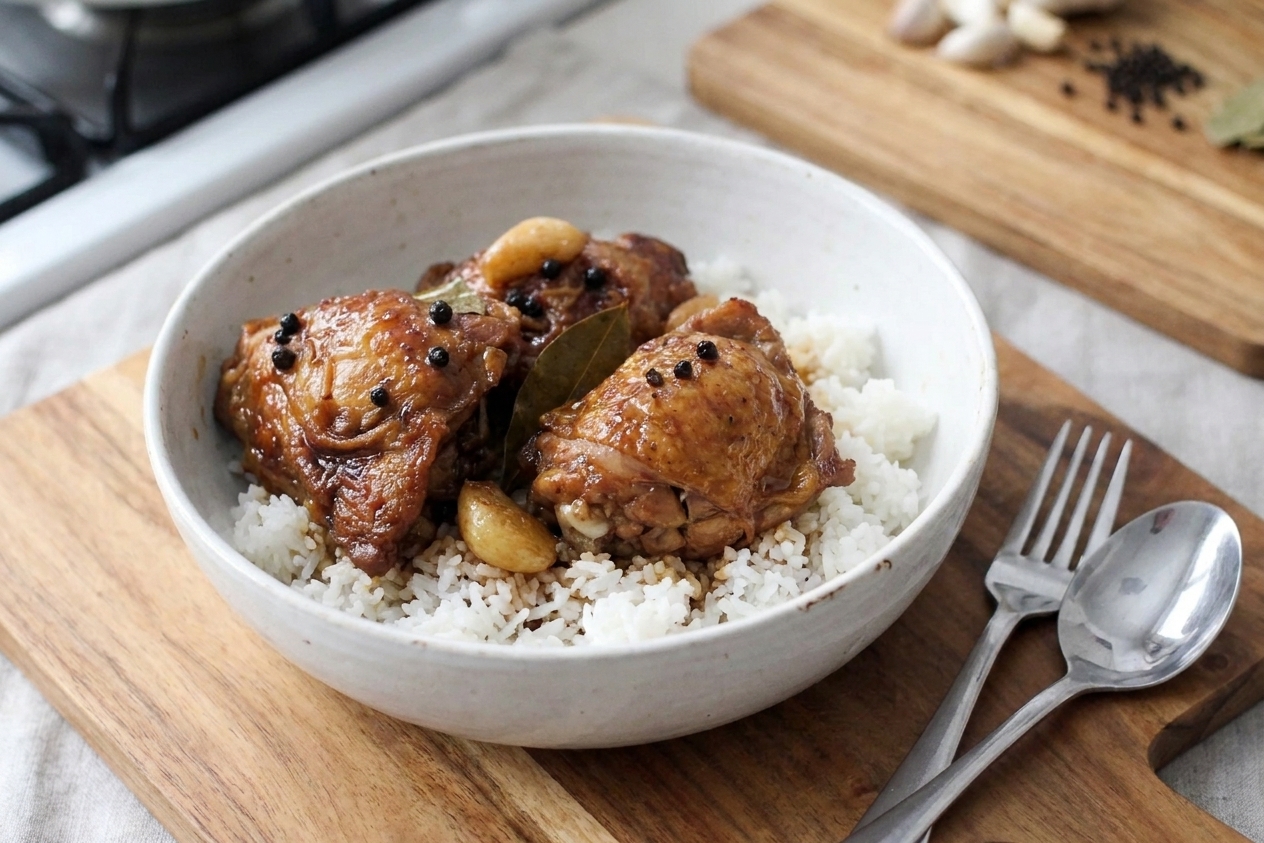
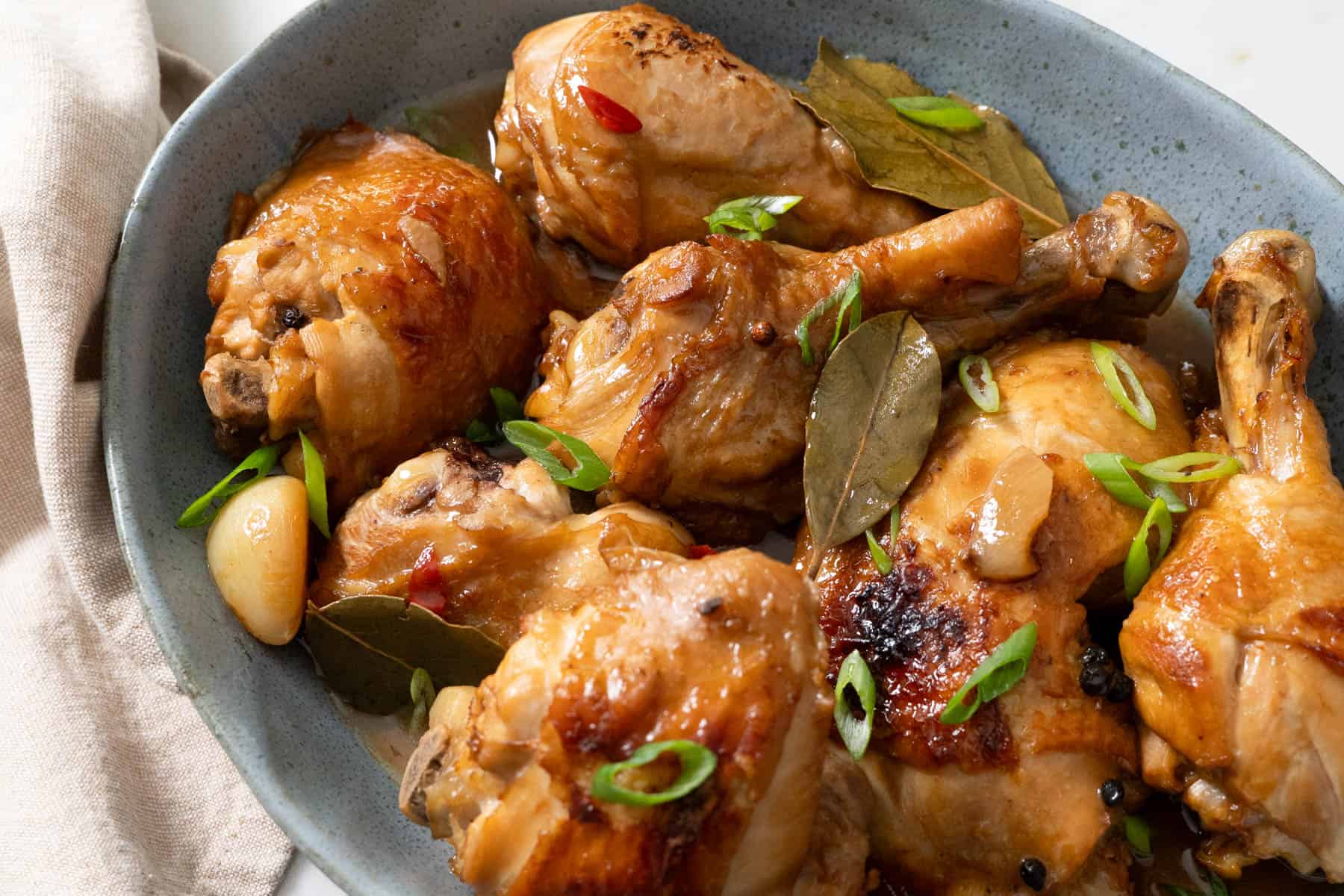
Chicken adobo Tagalog is one of those dishes that makes you feel like you have your life together even if your kitchen looks like a garlic tornado hit it. You get tender chicken, a salty-tangy sauce that begs for rice, and that unmistakable adobo perfume: vinegar, soy sauce, bay leaf, and black peppercorns doing the absolute most with very little effort.

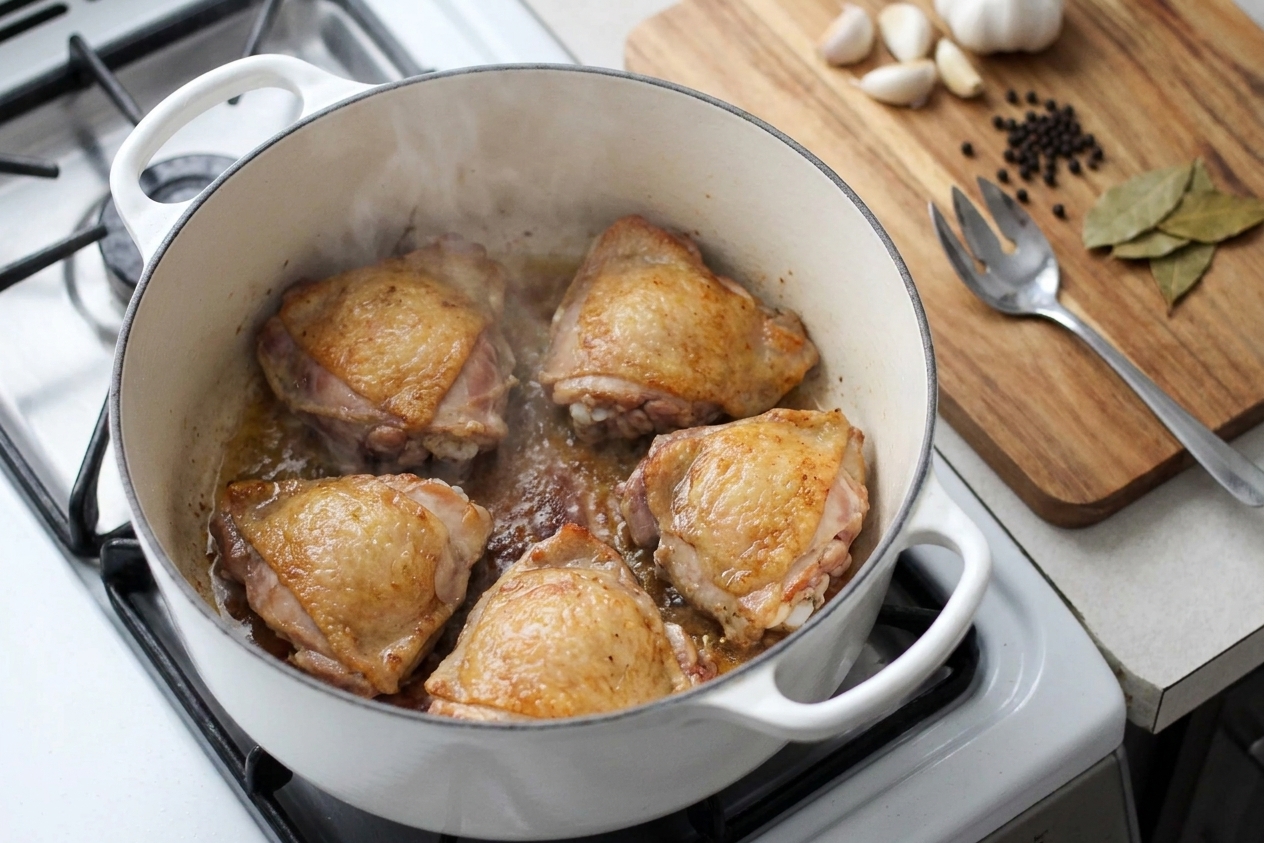
This version sticks to a straightforward Tagalog-style approach that is common in many households: no sugar, no coconut milk, no pineapple, just clean, punchy balance. The move is to let the vinegar do its thing, simmer low and steady, then reduce the sauce until it turns shiny and clingy. If you like crisp edges, we will also give the chicken a quick sear so it tastes braised and roasted at the same time.
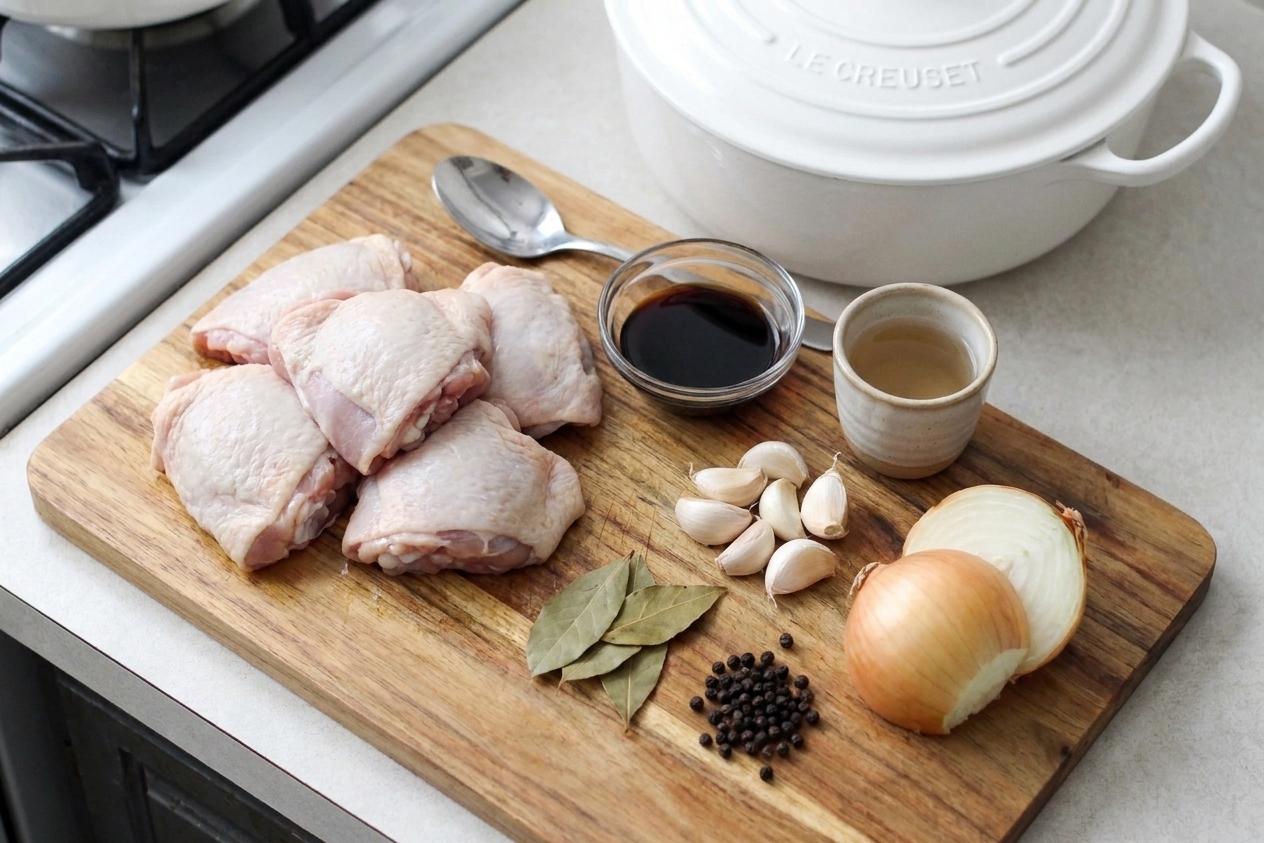
Raw chicken pieces, soy sauce, cane vinegar, garlic cloves, bay leaves, whole black peppercorns, and sliced onion arranged on a bright kitchen counter

Why It Works

  • Bold but balanced: Vinegar brings brightness, soy sauce brings depth, and garlic ties it together so it tastes savory, not harsh.
  • Glossy, spoonable sauce: A gentle simmer extracts flavor, then a short reduction makes the sauce cling to the chicken and rice.
  • Weeknight friendly: Minimal prep, pantry ingredients, and the stove does the heavy lifting.
  • Even better later: Like many braises, adobo gets more cohesive after a night in the fridge.

Pairs Well With

Storage Tips

Refrigerate: Cool adobo to room temp, then store in an airtight container for up to 4 days (or follow your site’s standard food-safety guidance). Keep chicken and sauce together so the meat stays moist.

Freeze: Freeze in a freezer-safe container for up to 3 months for best quality. Thaw overnight in the fridge.

Reheat: Warm gently in a saucepan over medium-low with a splash of water if the sauce has reduced too much. Microwave works too, but stovetop keeps the sauce glossy.

Bonus tip: If the fat rises and solidifies in the fridge, do not panic. Scoop some off if you want it lighter, or stir it back in while reheating for maximum richness.

Common Questions

Do I need to marinate the chicken?

No, it is optional. Adobo builds flavor during the simmer. If you have time, a quick 30-minute marinade helps the garlic and soy sink in a bit more. If you do not, you will still get great results.

Should I add the vinegar later or at the start?

Many Tagalog cooks add it at the start, then avoid stirring for the first few minutes of simmering. It is a traditional habit that helps the vinegar aroma mellow before you start moving things around. After that, stirring is fine.

Can I use chicken breast?

You can, but thighs and drumsticks stay juicier. If you use breast, cut into large pieces and simmer gently until just cooked through, then reduce the sauce separately so you do not overcook the meat.

Why is my adobo too salty?

Most often it is the soy sauce. Use low-sodium soy sauce if your brand runs salty, and add water as needed. You can also balance with a bit more vinegar and a touch more garlic.

Why is my adobo too sour?

Different vinegars hit differently. Add a little water and simmer longer, then finish with a small knob of butter or a drizzle of oil to round the edges. If you like, add 1 teaspoon brown sugar, but that is a personal preference, not required in many Tagalog households.

What vinegar is best for Chicken Adobo Tagalog?

Traditional in many Tagalog households is cane vinegar. White vinegar works in a pinch. Apple cider vinegar is fruitier and softer, which is delicious, just slightly different.

Do I eat the bay leaves and peppercorns?

No. Bay leaves are for aroma, not chewing. Peppercorns are edible but intense. I usually remove the bay leaves before serving and warn everyone about the peppercorns.

The first time I tried to make adobo, I treated it like a regular braise and kept stirring the second the vinegar hit the pot. The smell was loud enough to make me question every life choice I made that day. Then I learned the simple rhythm: let it simmer untouched for a few minutes, relax, and let time do the mellowing. Now it is one of my favorite “feed everyone” dinners because it tastes bold, forgives distractions, and somehow gets even better when you eat it standing at the stove with a spoon and a little too much rice.