Common Questions
What cut of beef is best for rouladen?
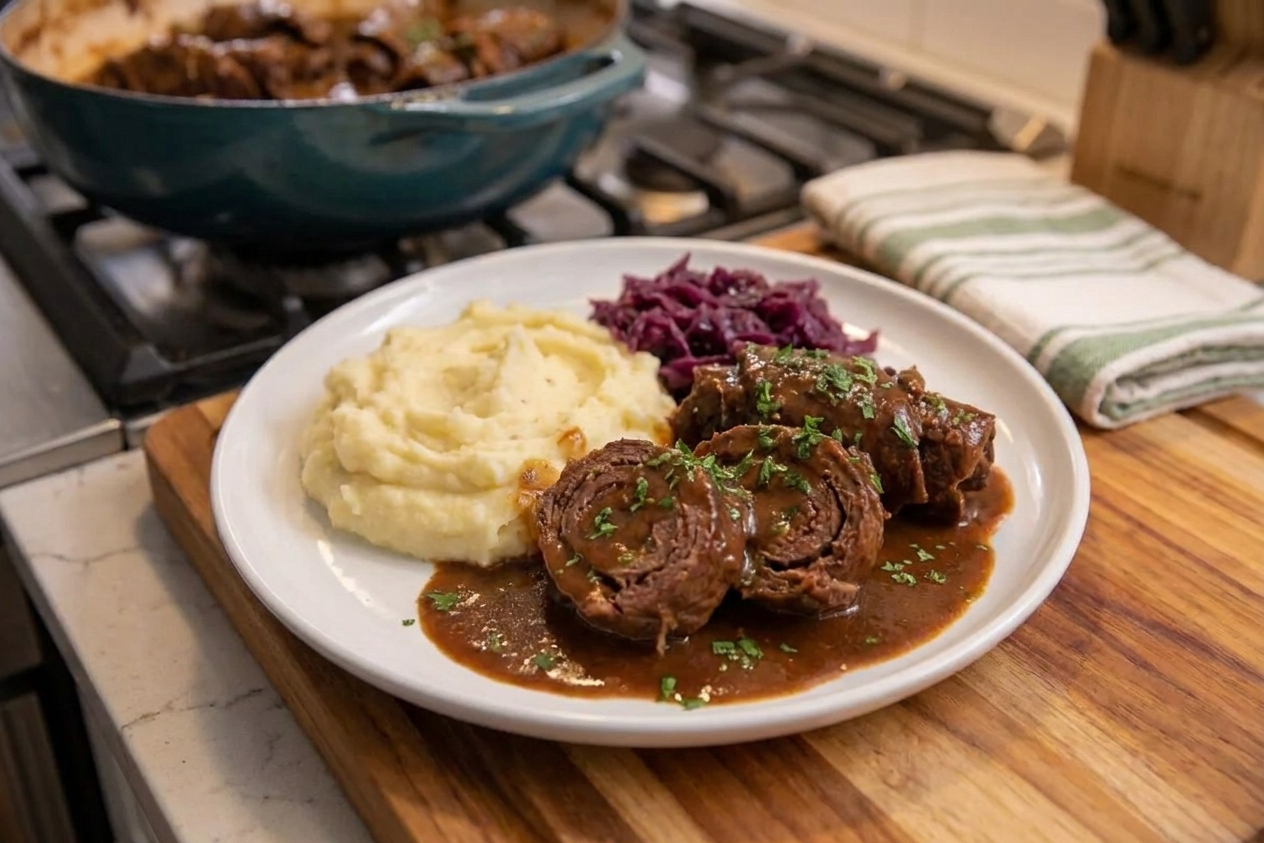
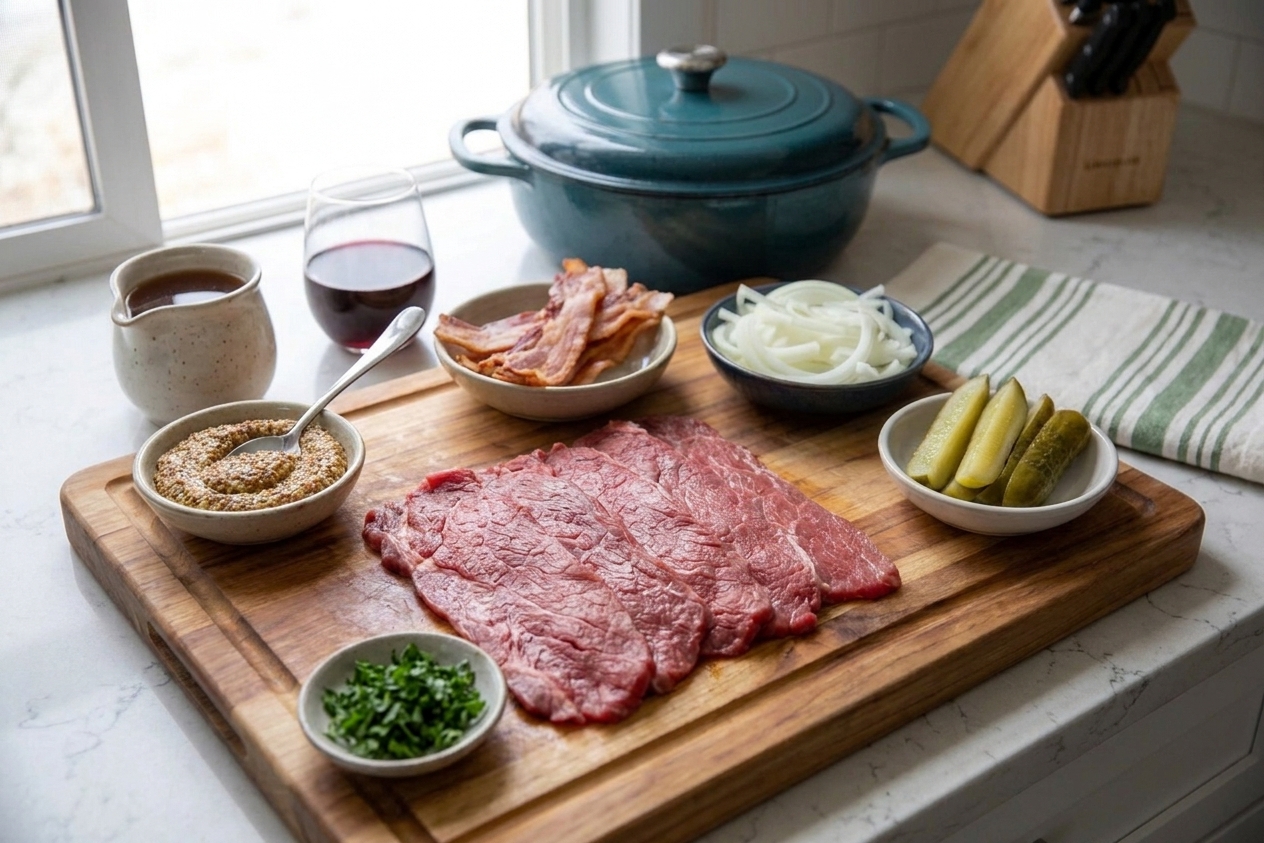
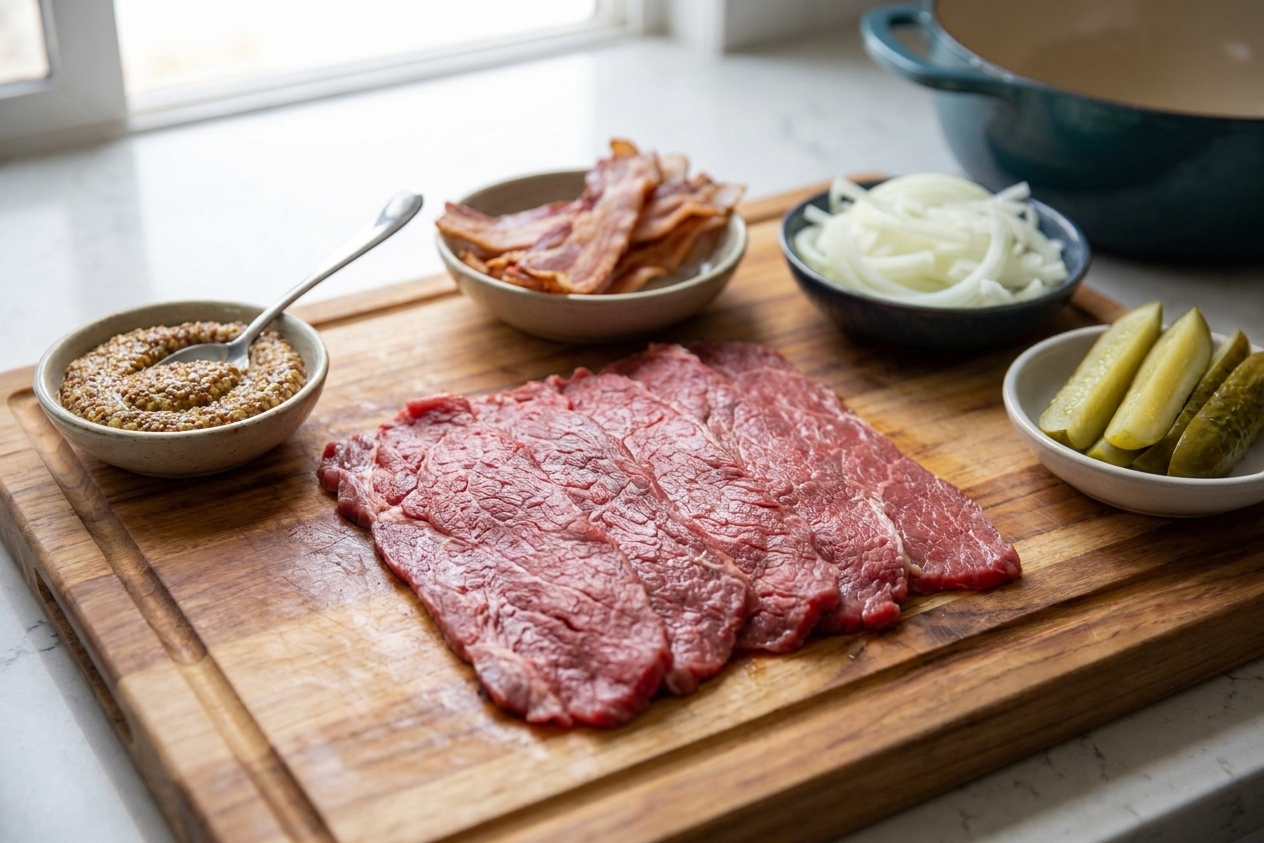
Traditionally you use thin slices cut from top round (often sold as “rouladen beef” or “thin-sliced round”). If you cannot find it, ask the butcher to slice top round about 1/8-inch thick. Aim for slices around 6 x 8 inches so they roll easily without being bulky.
Do I have to use toothpicks or kitchen twine?
No, but you do need something to keep the rolls snug. Toothpicks are fast and easy. Twine feels more secure if you are making a bigger batch. Just remember to remove toothpicks or twine before serving.
What kind of pickles should I use?
Dill pickles are the standard. German-style dill gherkins are great if you can find them. Avoid sweet pickles unless you specifically want that sweet-and-sour vibe.
Can I make rouladen without wine?
Absolutely. Swap the wine for more beef broth. For a little extra depth, add 1 teaspoon Worcestershire or a splash of pickle brine.
Why did my rouladen turn tough?
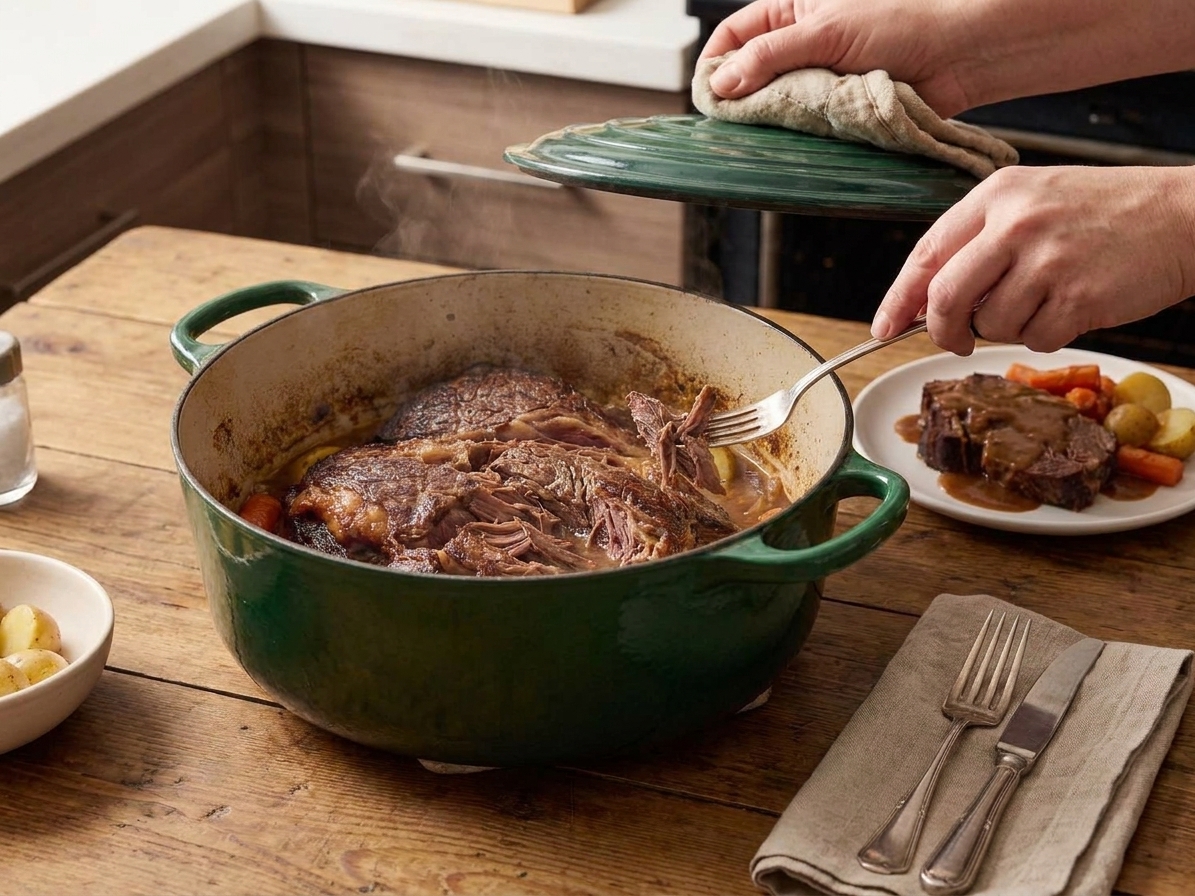
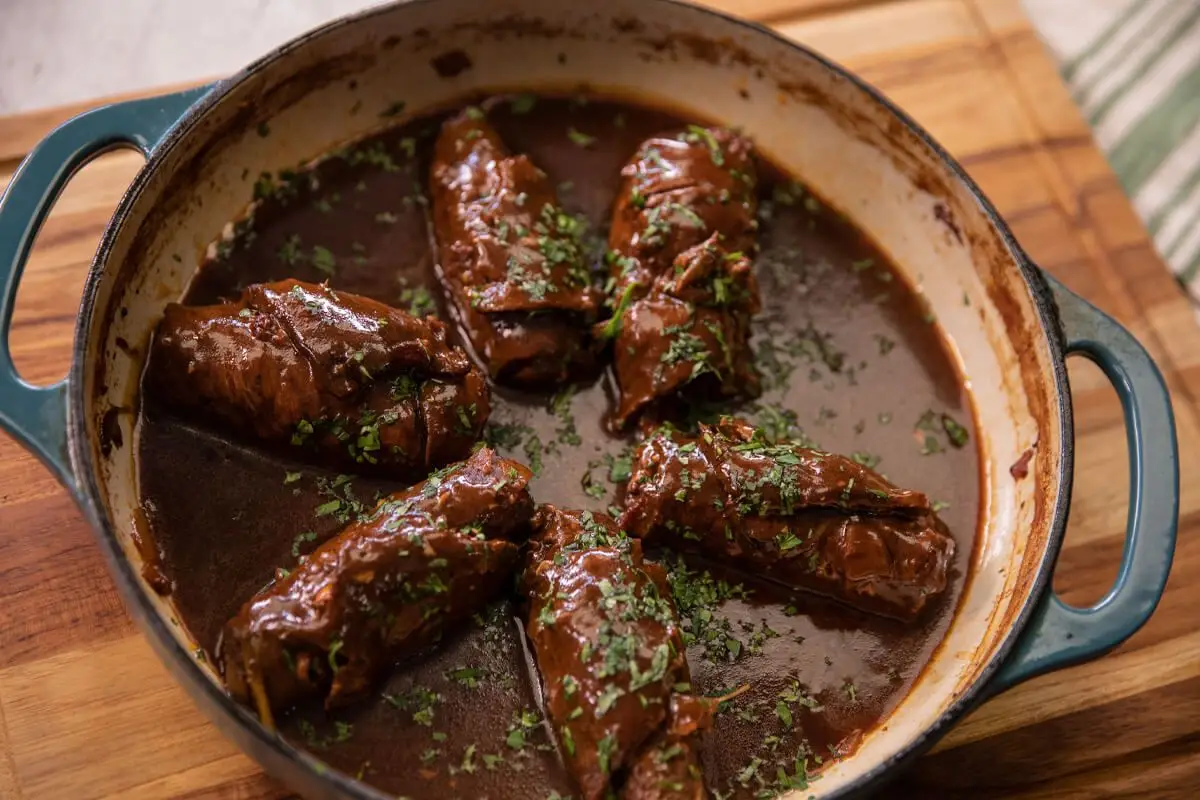
Usually it just needs more time. Keep the braise at a bare simmer and give it another 20 to 40 minutes. Also make sure the beef is sliced thin and rolled so that when you slice the cooked rouladen, you are cutting across the grain. If your slices came pre-cut and you cannot easily see the grain, do not stress. Just slice the finished rolls on a slight angle and keep braising until fork-tender.
How do I thicken the gravy?
The easiest way is a quick slurry: mix 1 tablespoon cornstarch with 1 tablespoon cold water, stir it into simmering gravy, and cook 1 to 2 minutes until glossy and slightly thick. If you prefer a more old-school gravy, you can also whisk in 1 tablespoon flour with the tomato paste for 30 seconds before adding liquid.