Common Questions
Do I really need a water bath?
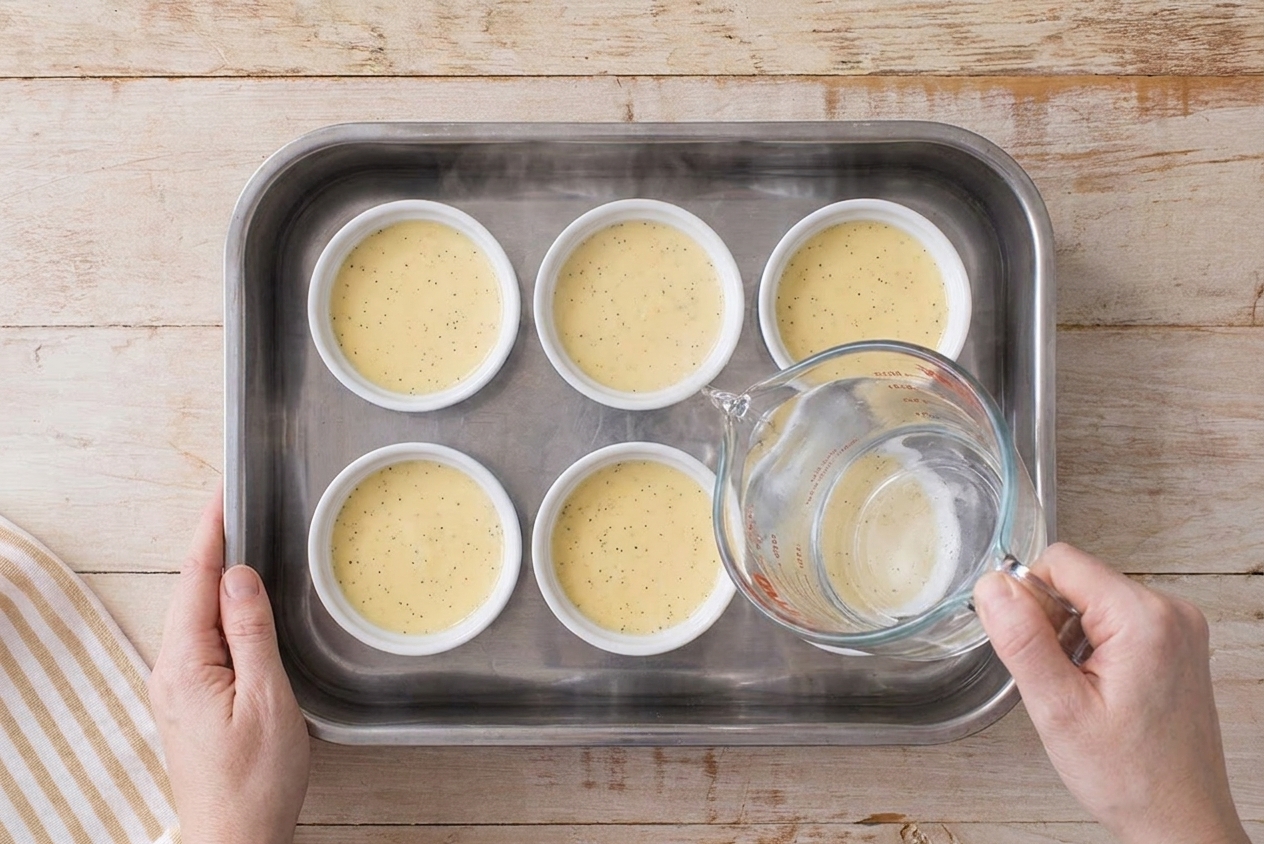
For classic crème brûlée, yes. The water bath (bain-marie) keeps the heat gentle and even, which prevents curdling and gives you that creamy, uniform set.
How do I know it is done baking?
The edges should look set, but the center should still have a small jiggle like Jell-O. If the whole surface ripples like a wave, it needs more time. If it is puffed or cracked, it went a bit too far.
If you like numbers, aim for an internal temp of about 170 to 175°F (77 to 80°C) in the center.
Why is my custard grainy?
Usually the oven ran too hot, the water bath was too shallow, or the custard was baked too long. Also, pour the cream into the yolks slowly (tempering) and strain the mixture before baking.
Can I make crème brûlée without a torch?
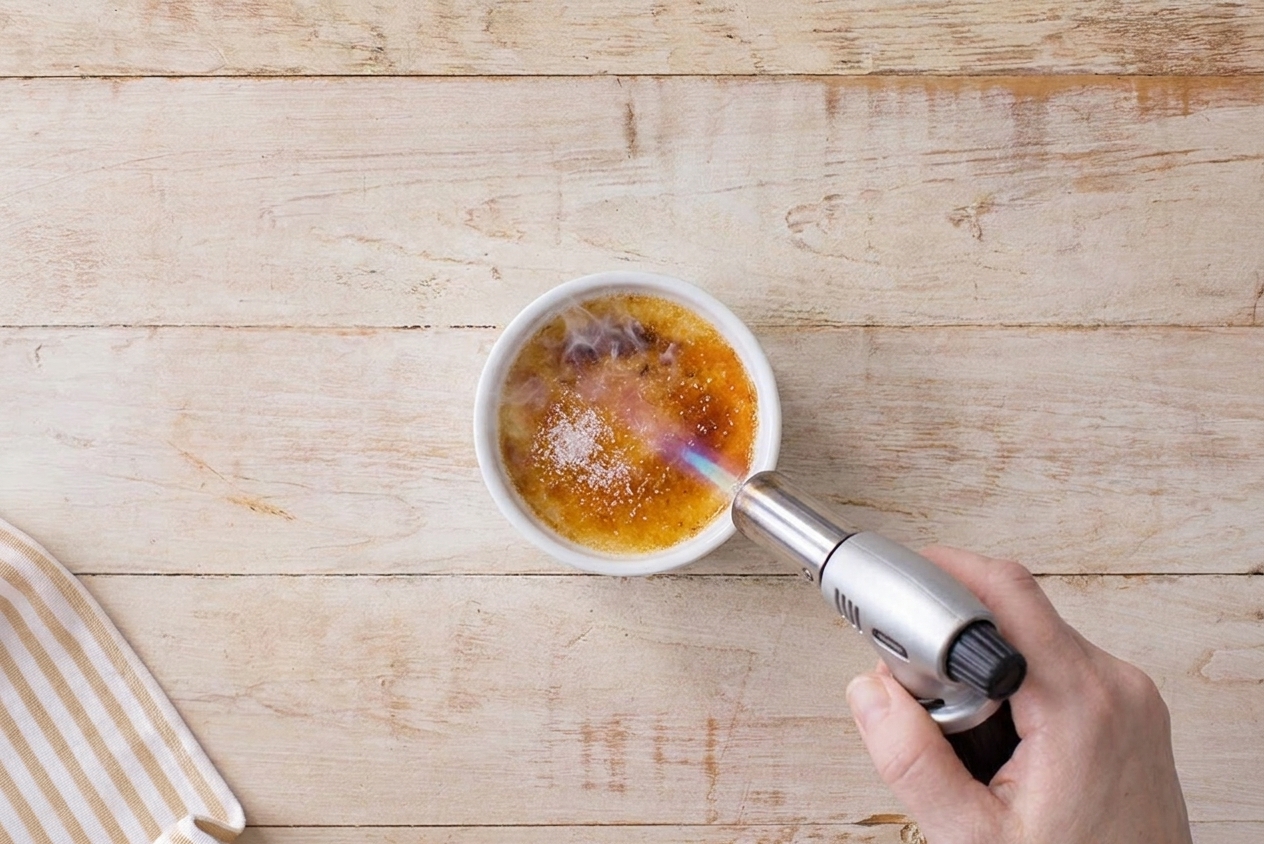
Yes. The broiler method works, but it is a little intense. Make sure the custards are very cold (I like to pop them in the freezer for 10 to 15 minutes right before broiling). Broil on the top rack very briefly, watch continuously, rotate the pan, and pull as soon as the sugar melts and browns. A torch is easier and more precise, but the broiler can absolutely get it done.
What sugar is best for the top?
Regular granulated sugar works perfectly. Superfine sugar melts a little faster. Avoid powdered sugar, it burns too quickly and tastes bitter.
Can I use half-and-half instead of heavy cream?
You can, but it will be less rich and slightly less silky. If you want to lighten it, do a mix like 2 cups heavy cream + 1 cup half-and-half.
How long does crème brûlée keep?
Covered and refrigerated (before brûléeing), it is best within 2 to 3 days. The sooner you torch, the crispier the top.