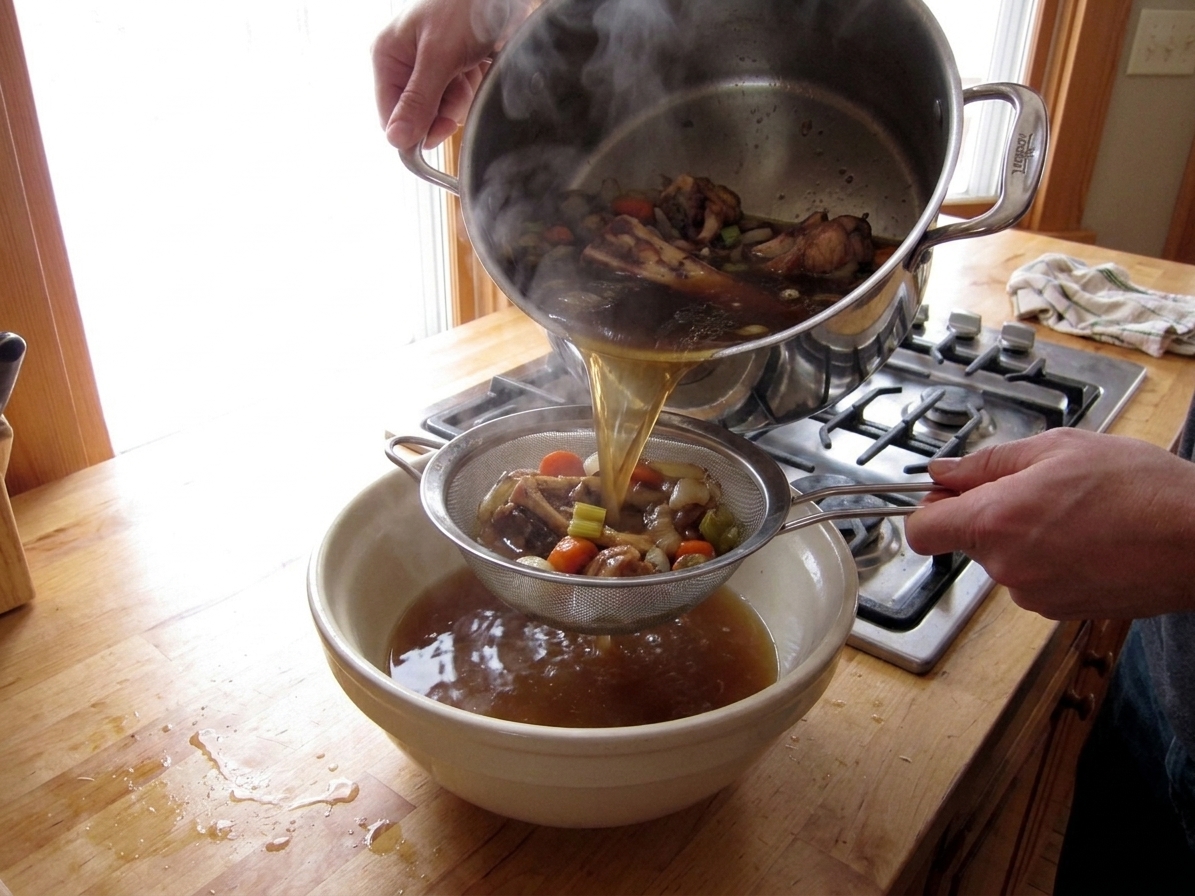
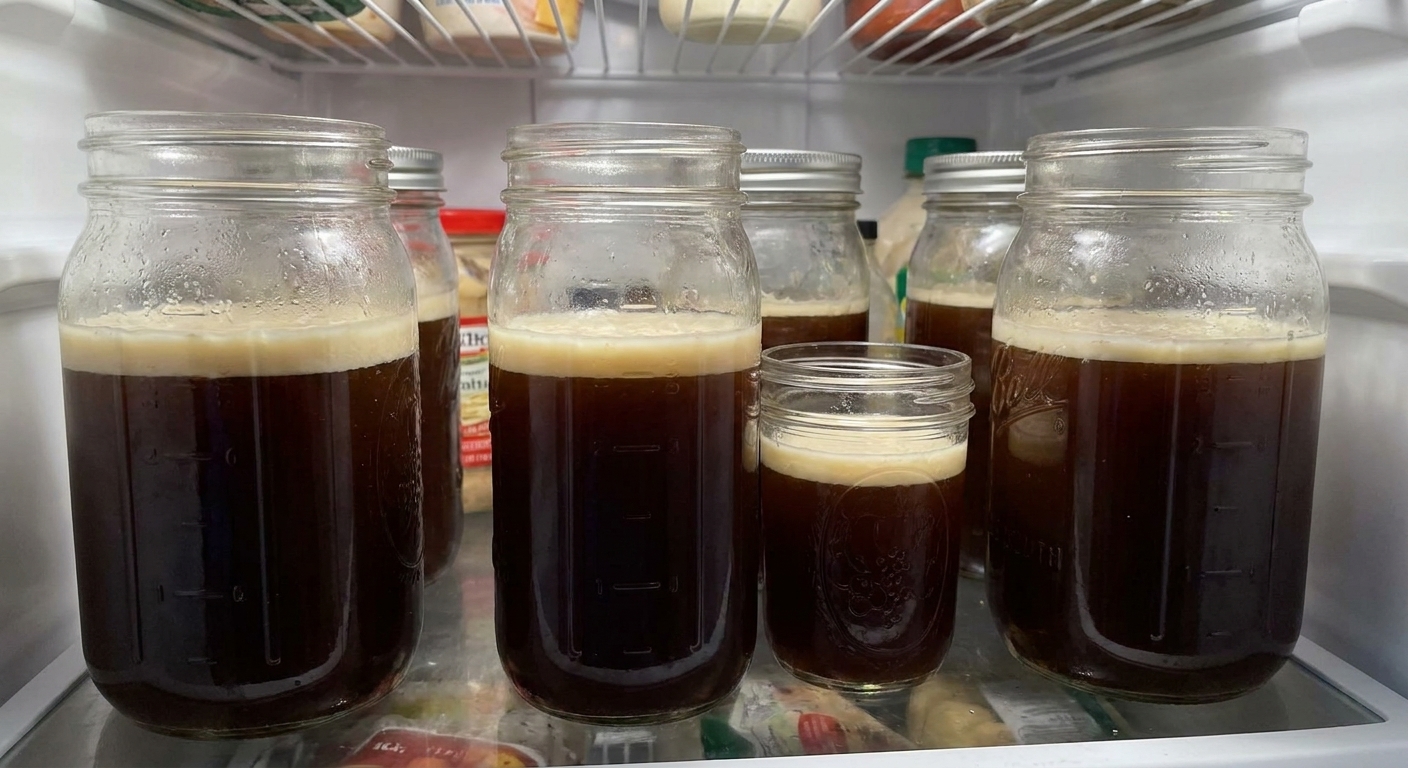
Common Questions
What bones are best for beef stock?
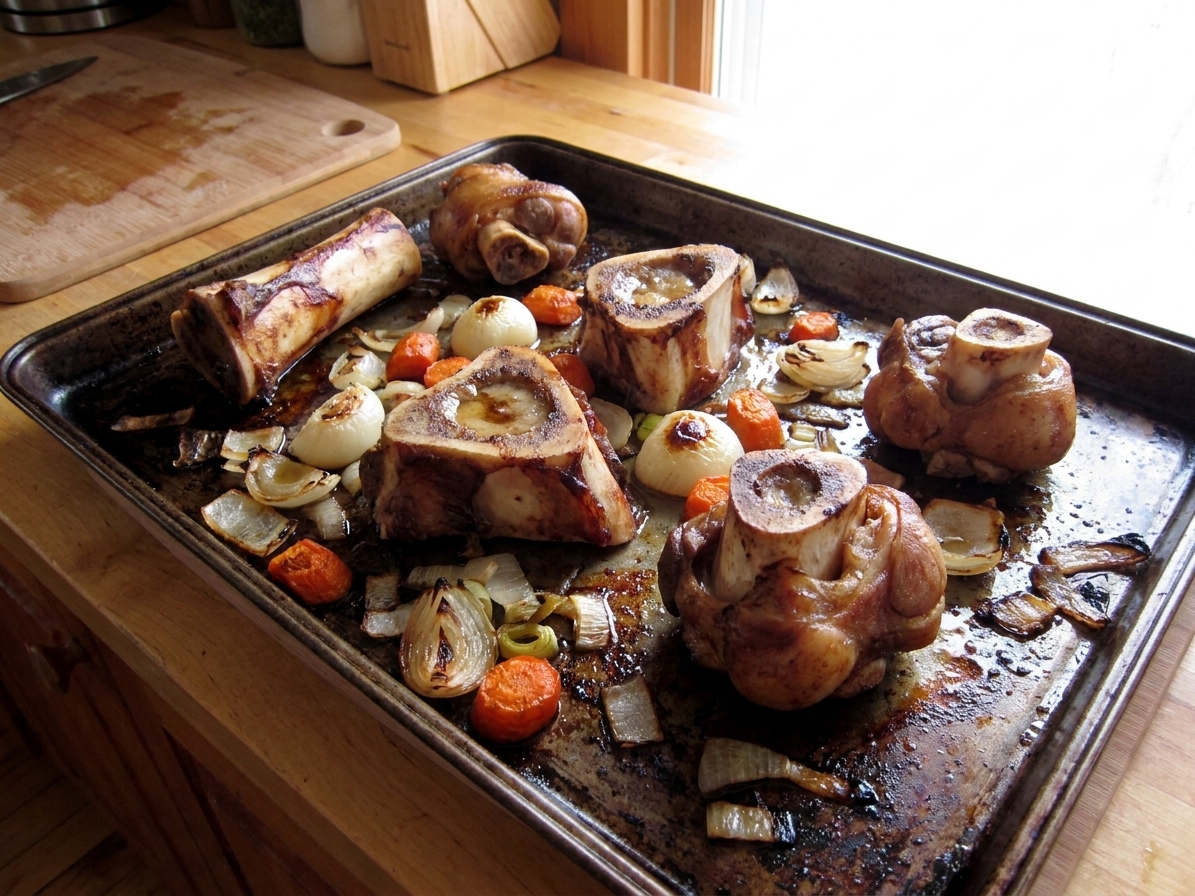
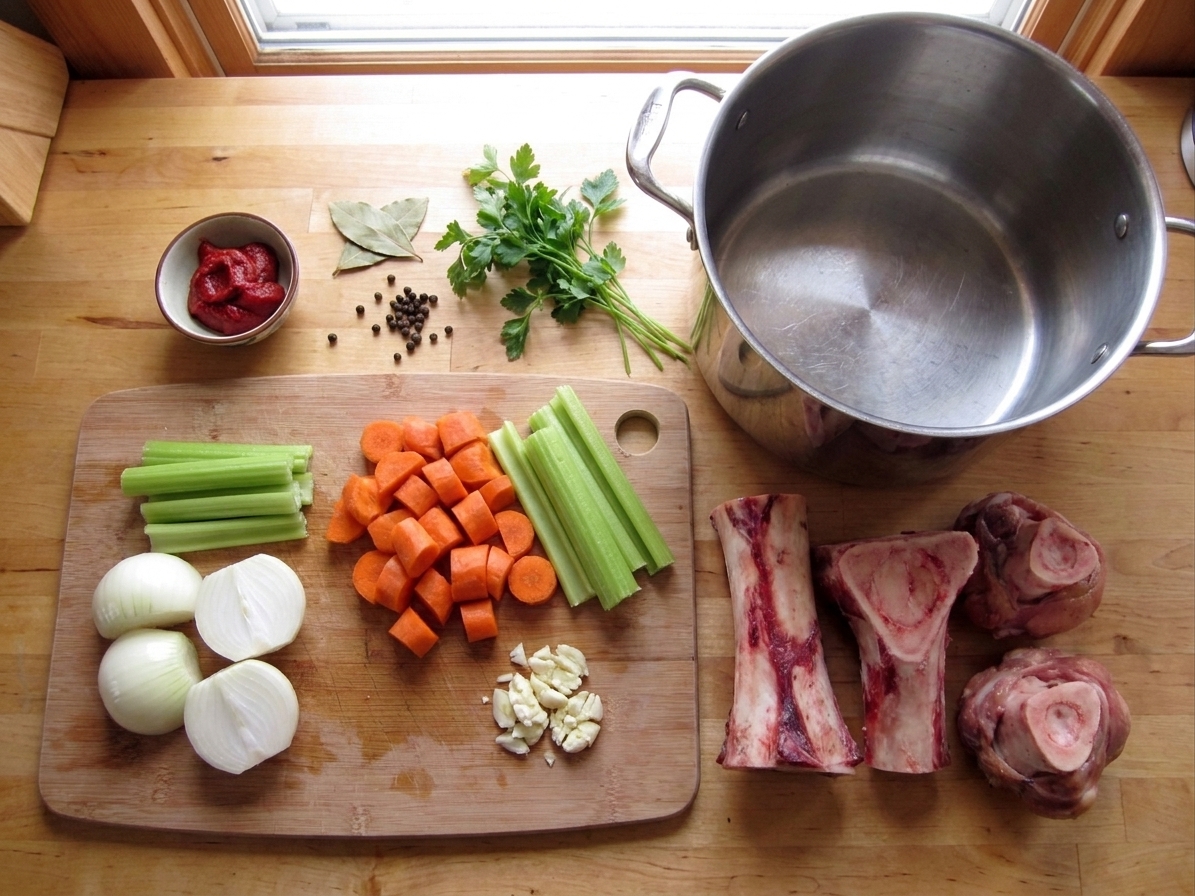
Use a mix. For flavor: roasted marrow bones and shank. For body: knuckle joints and oxtail. If you can only grab one, ask the butcher for knuckle bones or any “soup bones” with connective tissue.
Do I need to add vinegar?
Not required. A small splash, like 1 tablespoon apple cider vinegar, may help nudge a little more mineral extraction, and it does not hurt as long as you keep it modest. Gelatin mostly comes from collagen-rich bones plus time and a gentle simmer, so consider vinegar optional insurance, not magic.
Why is my stock cloudy?
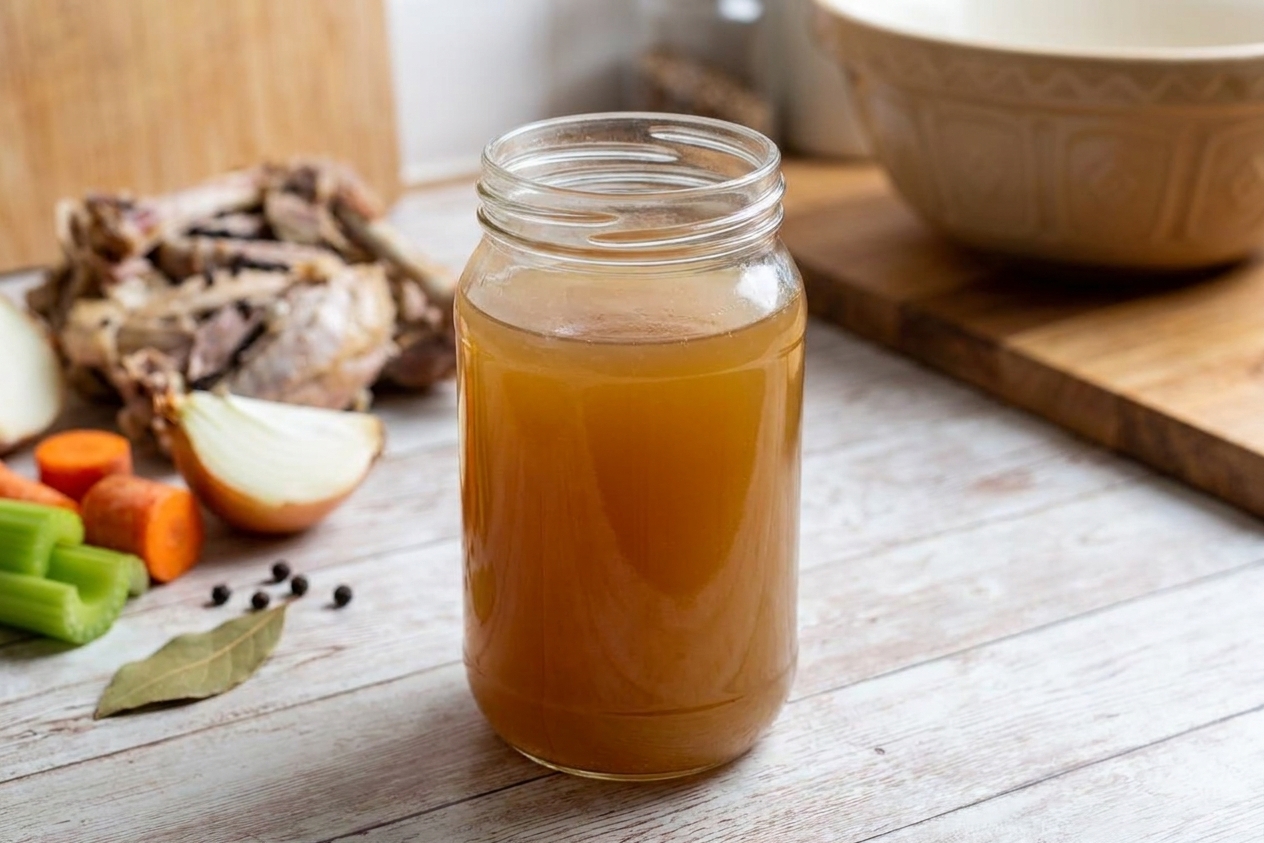
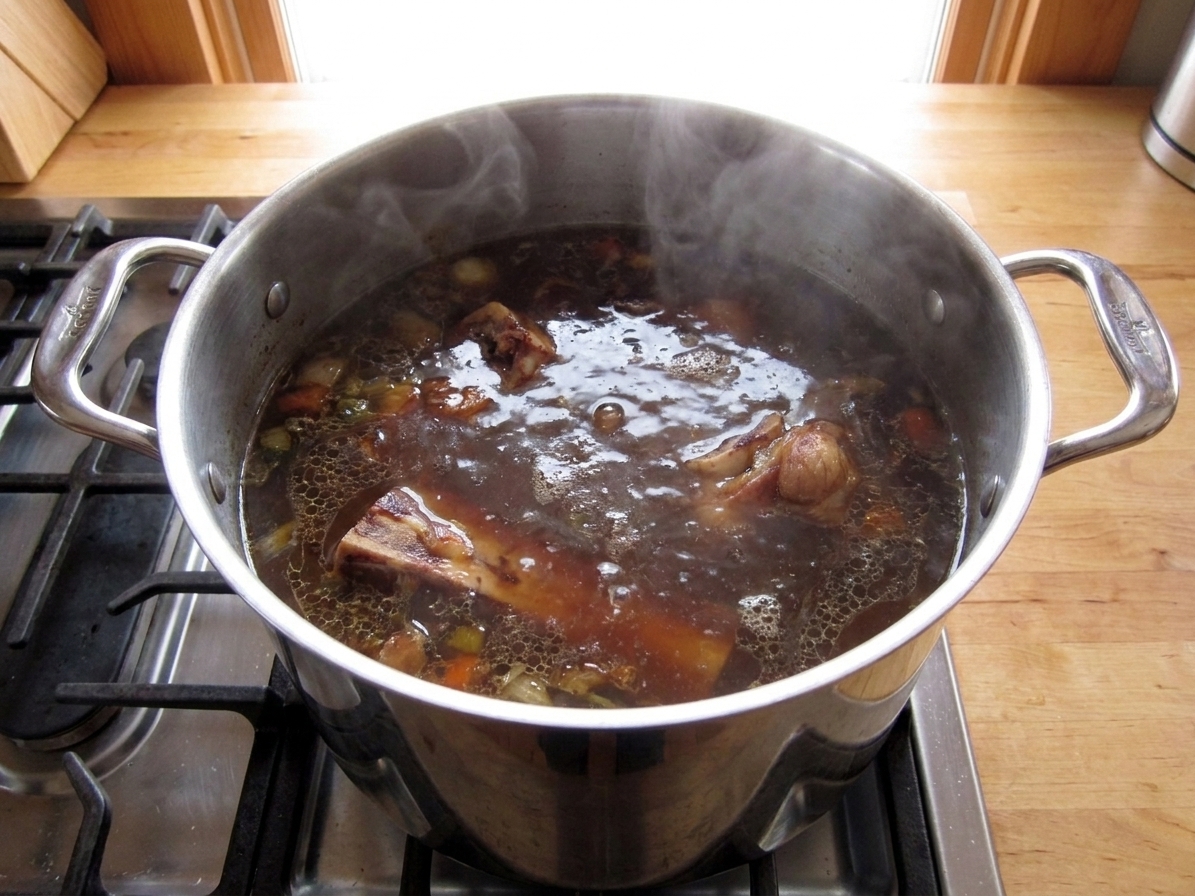
Cloudy usually comes from boiling or stirring too aggressively. It will still taste great. Next time, keep it at the gentlest simmer and skim foam early.
How do I make it darker and richer?
Roast bones until deeply browned, and do not skip the tomato paste. You can also roast the vegetables a bit longer and reduce the strained stock for extra intensity.
Can I make this in a slow cooker or Instant Pot?
Yes. Roast the bones first, then:
Slow cooker: low 10 to 12 hours.
Pressure cooker: 90 to 120 minutes on high pressure with natural release for a classic rich stock. Go up to 150 to 180 minutes if you want it extra intense.
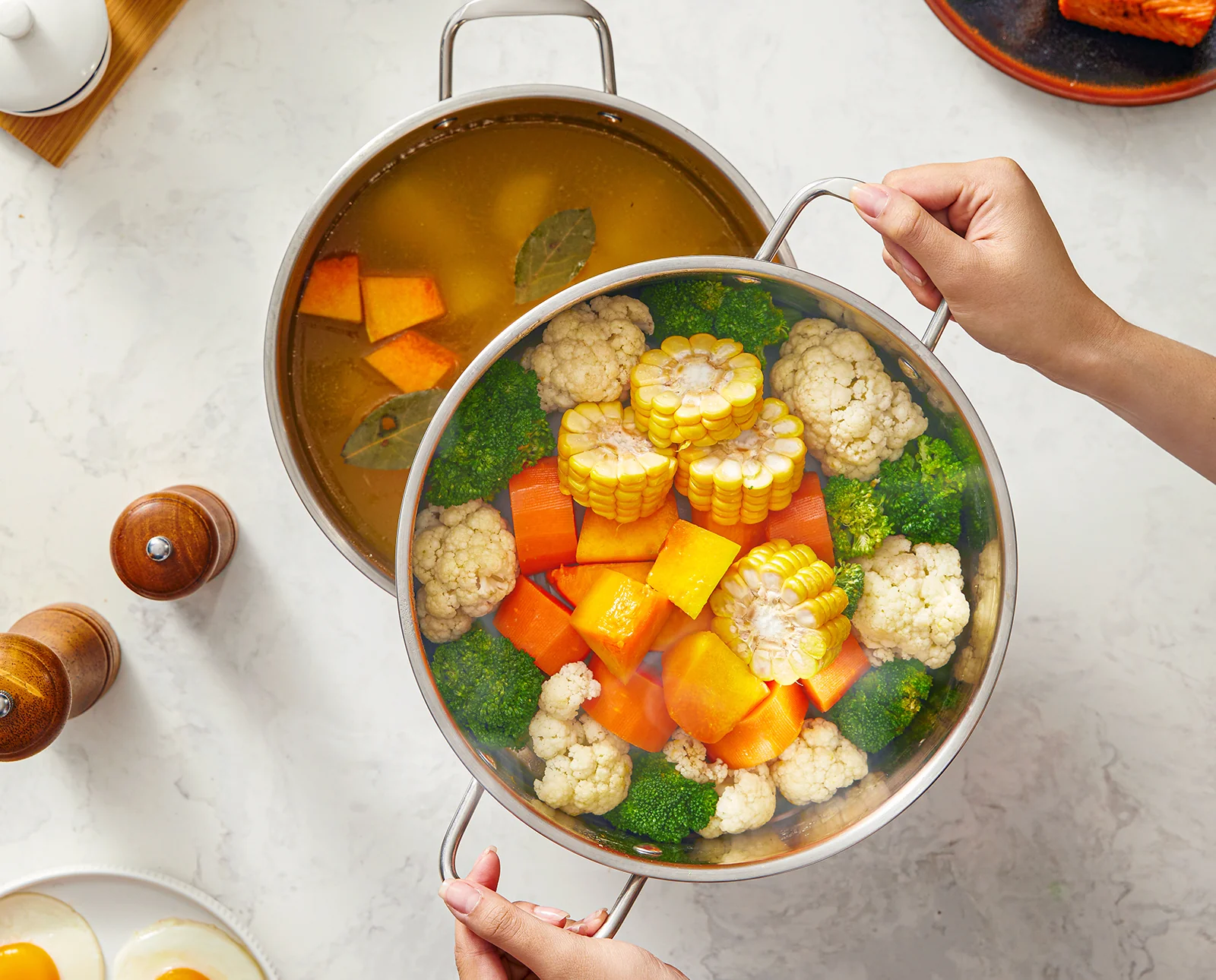
Tip: For the cleanest flavor in a pressure cooker, add the vegetables and herbs only for the last 30 to 45 minutes (or simmer them separately and combine), so they do not turn the stock overly vegetal.
Stock vs broth, what is the difference?
Stock is bone-forward and usually unsalted, built for cooking. Broth is often meat-forward, seasoned, and meant to sip. This recipe is a true stock you can season later.
How much stock will I get?
It depends on your pot, simmer strength, and how wide the surface area is. Expect roughly 10 to 12 cups. If the bones start peeking out while it simmers, add a splash of water to keep them submerged.