
Mom's Best Recipes
Recipe

Cock-a-Leekie Soup

Scottish chicken and leek soup with clear broth, tender shredded chicken, and optional prunes. Includes leek-cleaning, skimming, and prune timing tips.

Author By Pip
4.7
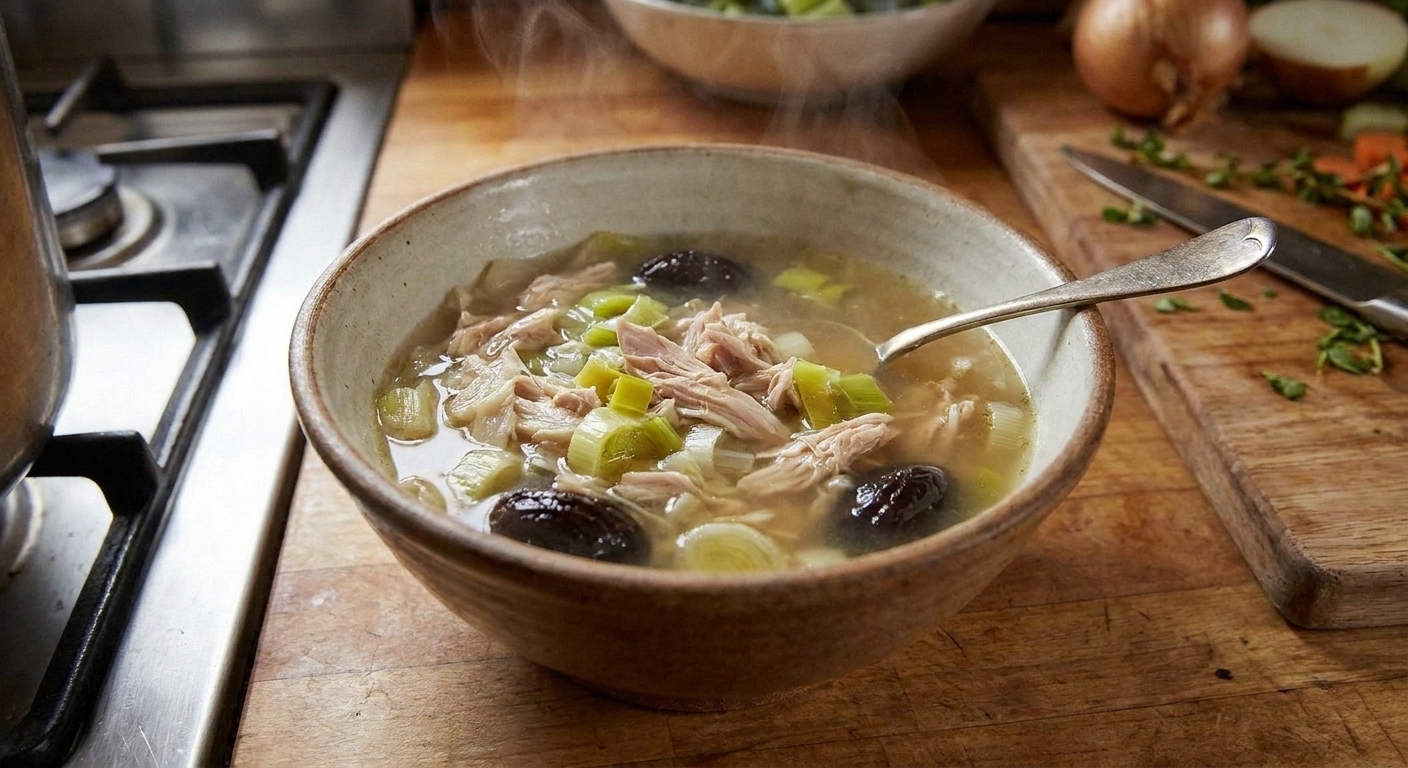
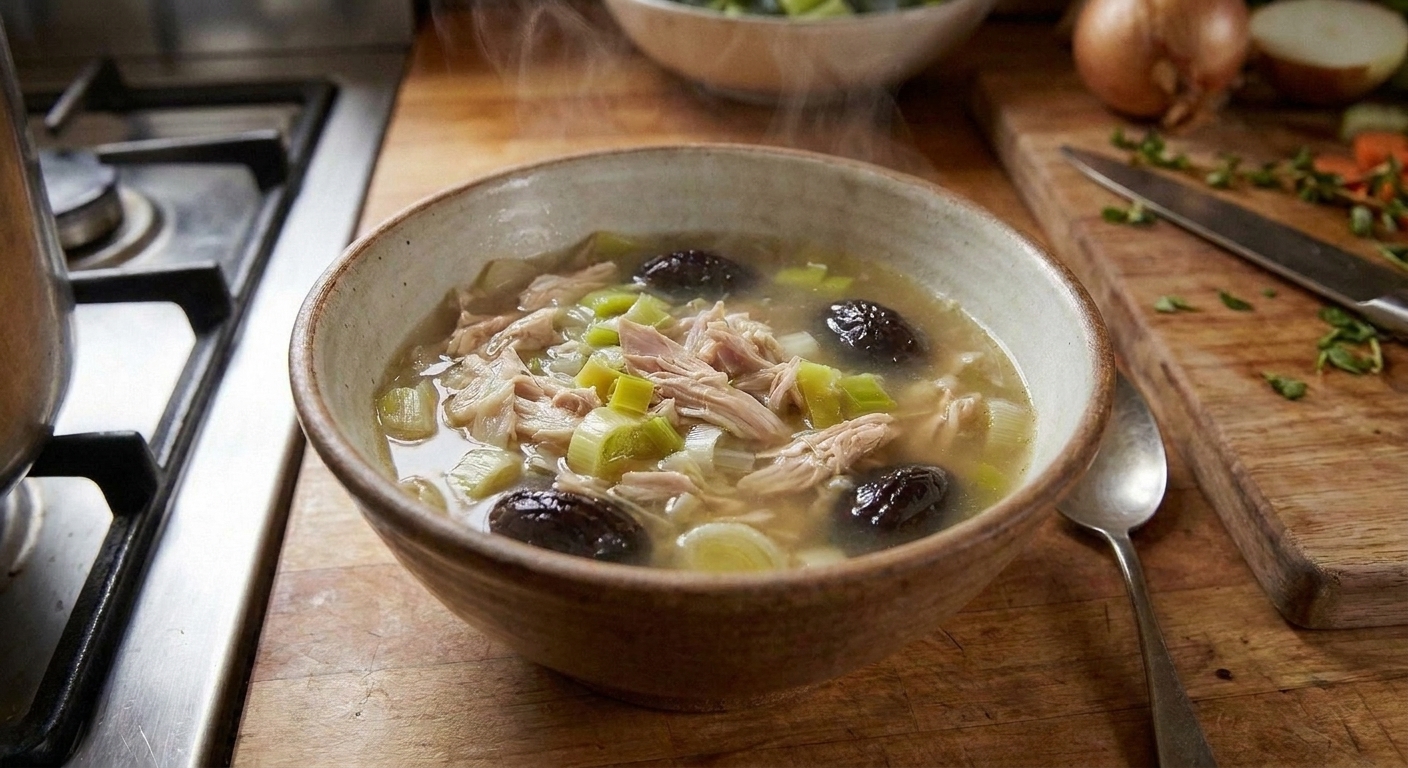
A steaming bowl of cock-a-leekie soup with clear golden broth, sliced leeks, shredded chicken, and a few whole prunes, set on a rustic wooden table with a spoon beside it

Small paws, big appetite, and a soft spot for comfort food.

Cock-a-leekie soup is Scotland’s warm hug in a bowl: chicken, leeks, and a clear, savory broth that tastes like it’s been quietly doing the right thing on the stove all afternoon. Some older and regional versions tuck in a few prunes for a gentle sweetness that sounds mischievous until you try it.

In this recipe, I’ll walk you through the three spots where this soup can get fussy: cleaning leeks (they hide grit like it’s a hobby), skimming (hello, clear broth), and when to add prunes so they stay whole instead of melting into the pot.
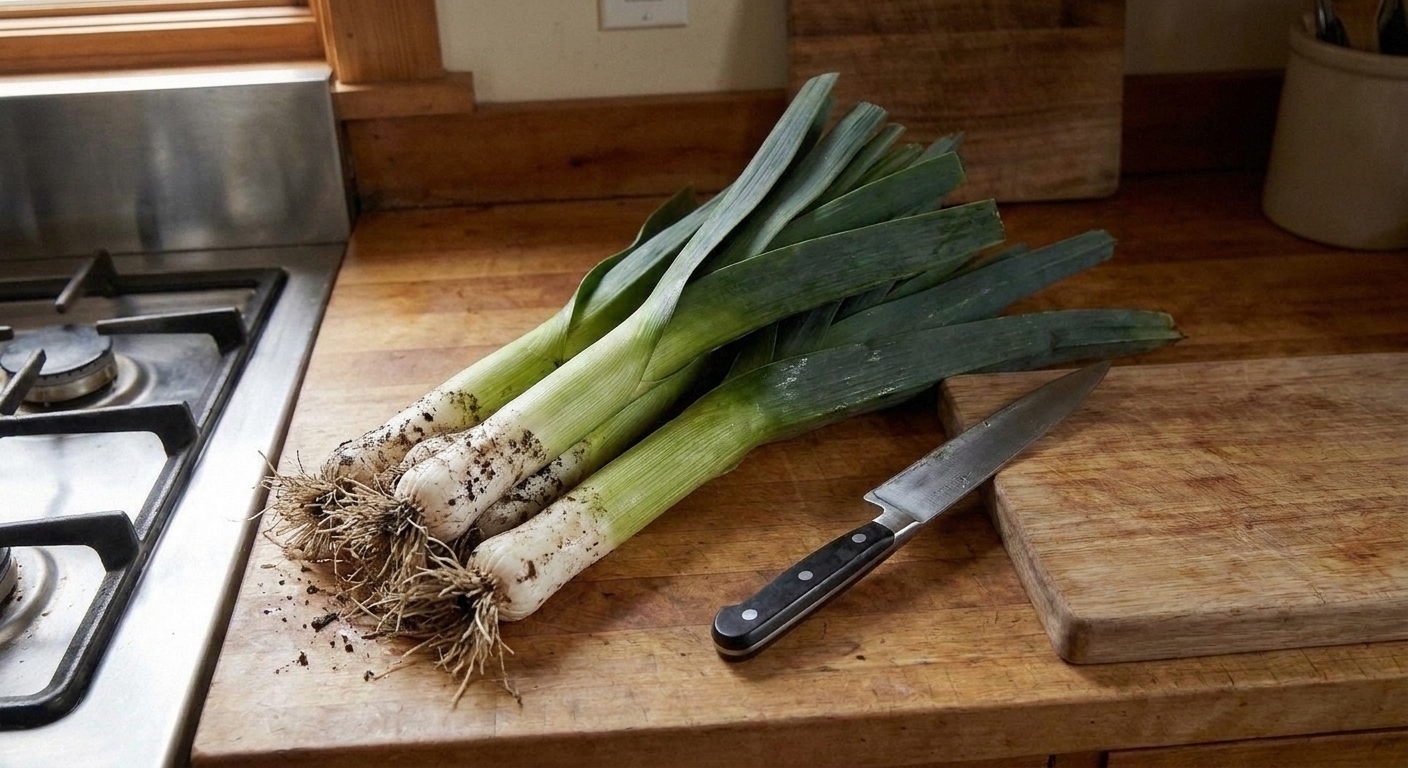
Whole raw leeks with dark green tops on a kitchen counter next to a chef's knife and cutting board, ready to be cleaned

What makes it special

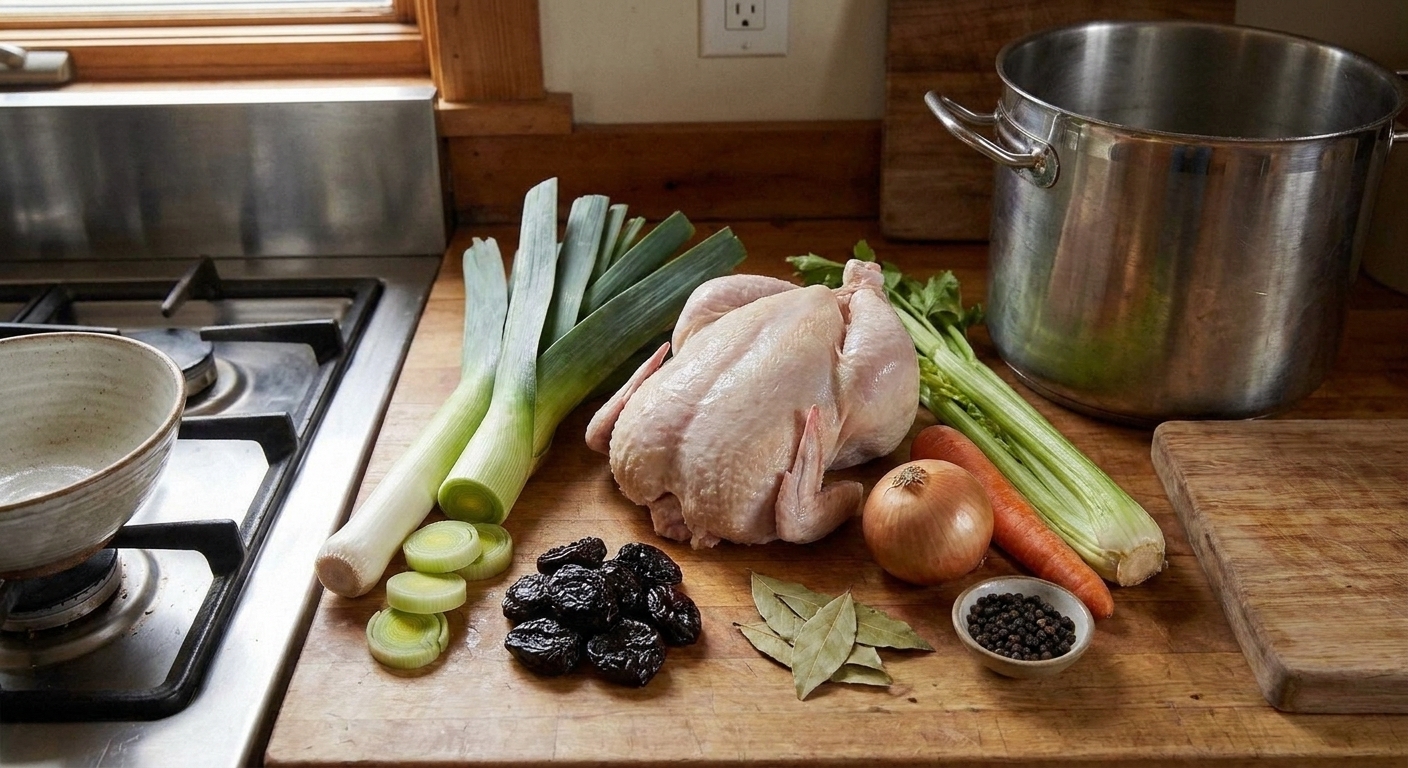
This is a broth-forward soup, not creamy. Many cooks keep it clear and simple, while some versions add a spoonful of rice for body. Here, we are going for the classic clear-broth feel: gently simmered chicken and aromatics, then finishing with tender leeks and shredded chicken. The prunes are optional, but traditional enough in older recipes that it’s worth trying at least once.

If you serve it for a cozy winter supper or as part of a Burns Night spread, it fits right in.

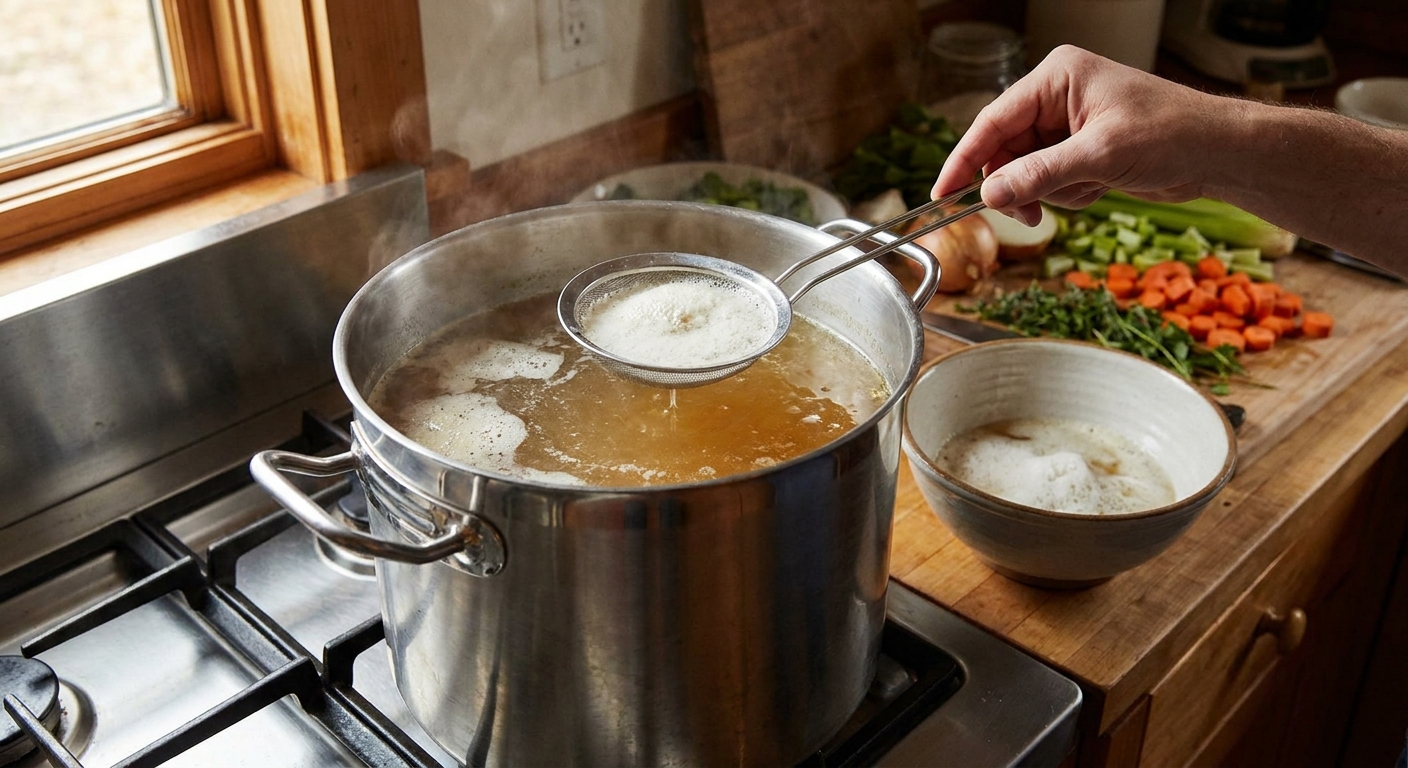
  • Clear broth from steady simmering and skimming
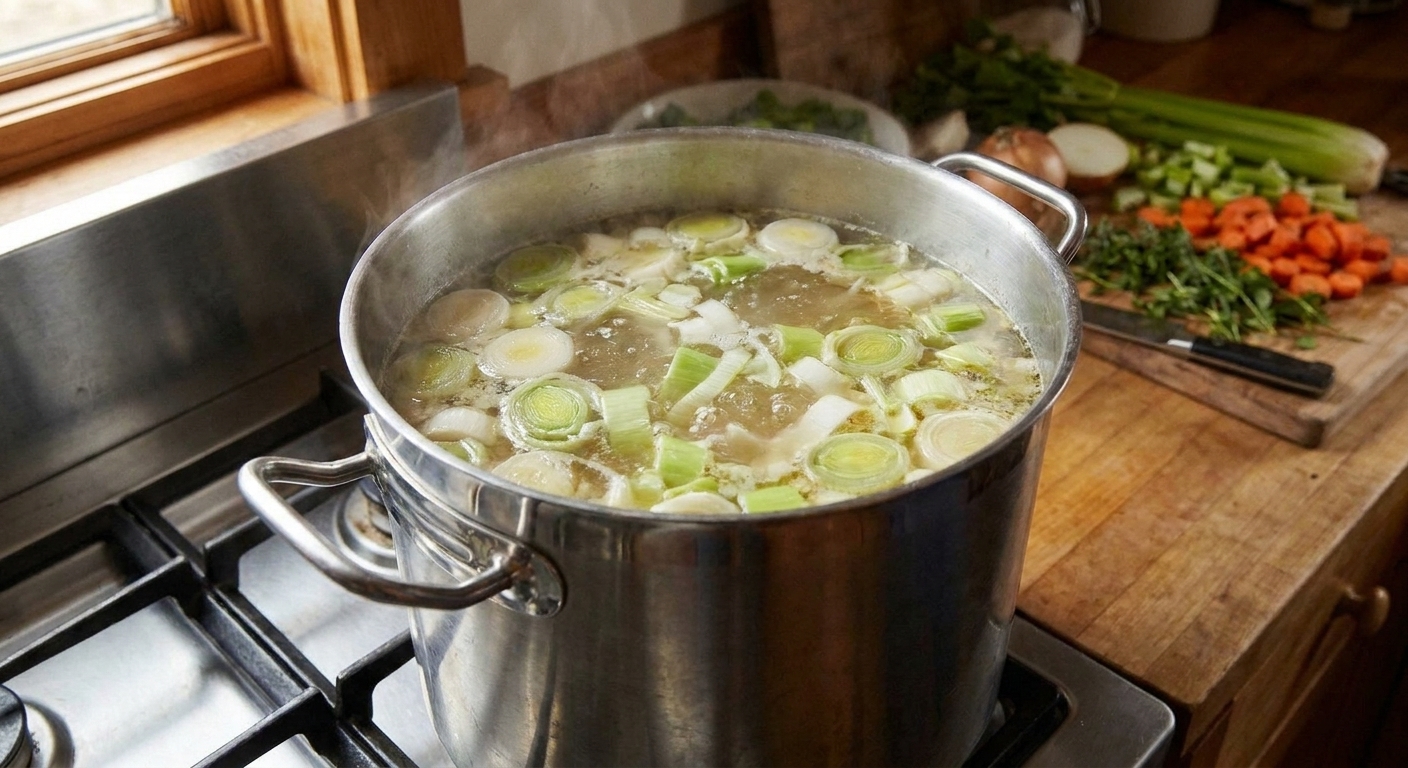
  • Leeks added later so they stay sweet and silky, not gray and overcooked
  • Prunes added near the end so they plump up but keep their shape

Leek cleaning

Leeks grow in sandy soil, and grit likes to camp out between the layers. Cleaning them well is the difference between “cozy soup” and “why is my soup crunchy?”

Best method for soup

  1. Trim off the root end and the dark, tough green tops. (Keep a little pale green, it’s flavorful.) Save the dark greens for stock if you like, or toss them.

  2. Slice the leeks lengthwise, then cut into half-moons.

  3. Soak and swish in a big bowl of cold water. Separate the rings with your fingers and let the grit sink.

  4. Lift the leeks out with your hands or a spider strainer into a colander. Do not dump the bowl, or the grit will pour right back on top.
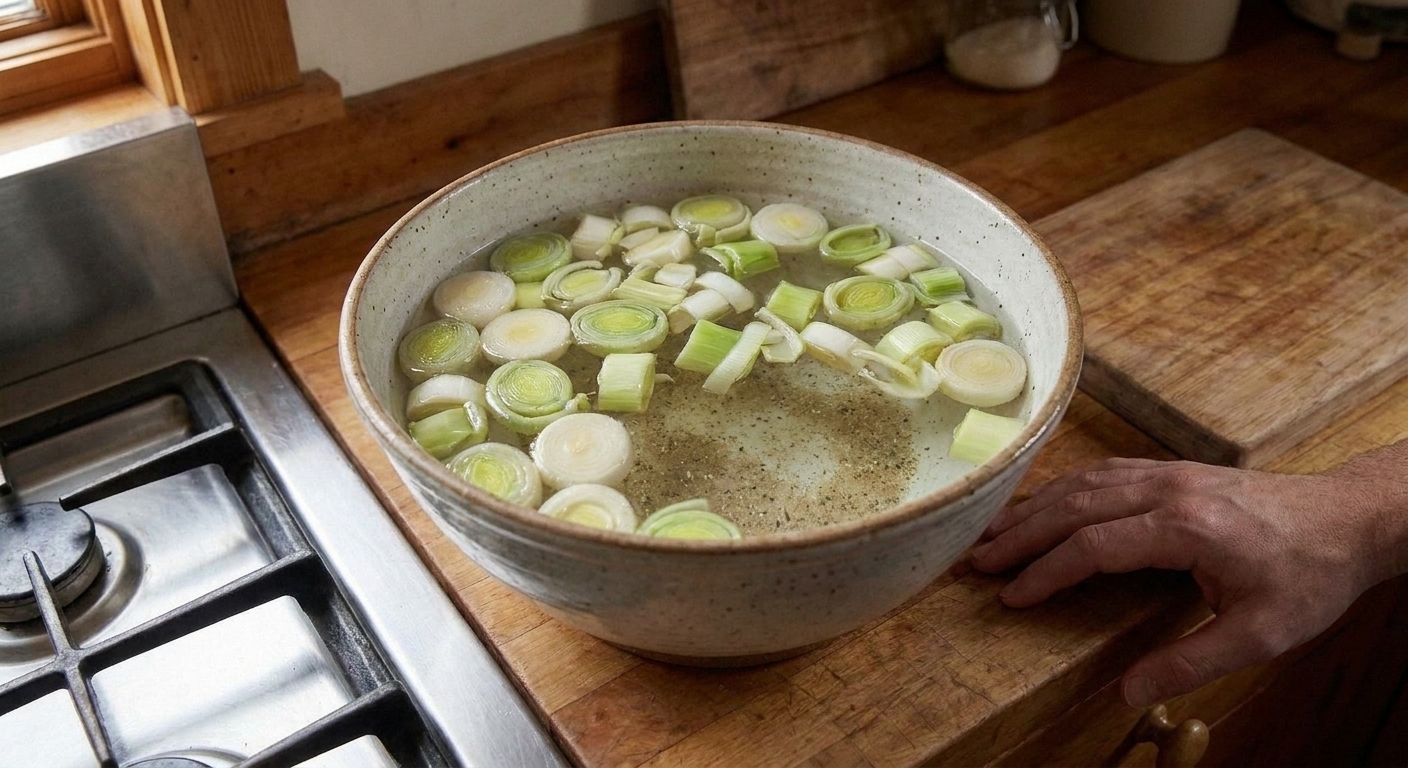
Sliced leek rings soaking in a large bowl of cold water on a kitchen counter, with grit settled at the bottom

Pip tip: If you want extra insurance, do a second rinse in fresh water. Leeks have fooled braver cooks than me.

Why It Works

  • Comforting, clear broth: A gentle simmer plus skimming keeps the soup golden and clean tasting.
  • Sweet, tender leeks: Adding leeks after the chicken is cooked prevents them from turning dull and mushy.
  • Prunes that stay intact: Stir them in near the end so they plump and soften without dissolving.
  • Shredded chicken in every spoonful: Cooking the chicken first, then shredding, keeps it tender and easy to serve.

Pairs Well With

Storage Tips

How to store and reheat

This soup keeps beautifully, and the flavor often gets even cozier overnight.

Refrigerator

  • Cool, then store in an airtight container for up to 4 days.
  • If you used prunes, expect them to soften more as they sit. They will still taste lovely.

Freezer

  • Freeze in freezer-safe containers for up to 3 months.
  • For the clearest broth, thaw overnight in the fridge and reheat gently.

Reheating

  • Warm over medium-low heat until steaming.
  • Avoid a hard boil, which can make chicken stringy and broth cloudy.

Common Questions

Common questions

Do I have to use a whole chicken?

Nope. A whole chicken gives the broth lots of body, but bone-in pieces work well too. Use bone-in thighs and drumsticks for a rich, chickeny broth. Boneless chicken cooks faster but makes a lighter broth.

Why is my broth cloudy?

The usual culprits are a hard boil or stirring the pot a lot while it simmers. Keep it at a gentle bubble and skim foam and surface fat as it appears. If you want it extra clear, strain the broth before adding the leeks and shredded chicken back in.

When should I add the leeks?

Add them after the chicken is cooked and removed, once the broth is strained if you are straining. Leeks only need about 15 to 20 minutes to turn tender and sweet.

When do I add the prunes so they stay whole?

Add whole prunes 10 to 12 minutes before serving. That is enough time for them to plump and soften without falling apart. If you simmer them for a long time, they can break down and darken the broth.

What if I can only find pitted prunes?

Pitted is fine. Just be gentle when stirring, and keep the prune simmer time on the shorter side, closer to 8 to 10 minutes.

Can I make cock-a-leekie without prunes?

Absolutely. The soup is still traditional in spirit and very delicious. If you want a hint of sweetness without prunes, a small carrot added to the simmering broth can help.

Do any versions use rice?

Yes. Some versions add a little rice to thicken the soup. This recipe sticks to a clear-broth style, with leeks and chicken doing the heavy lifting.

Some soups feel like they should be eaten quietly, with a cozy chair nearby and absolutely no sudden loud opinions. Cock-a-leekie is that kind of soup. It looks humble, but the first spoonful is all golden broth and sweet leeks, and then the prunes show up like a tiny plot twist. Optional, yes. Fun, also yes.