Mom's Best Recipes
Recipe

Cream of Asparagus Soup

Silky, bright, and cozy with a lemony finish and just enough cream to feel luxurious. Easy weeknight soup that tastes like you tried harder than you did.

Author By Matt Campbell
4.8
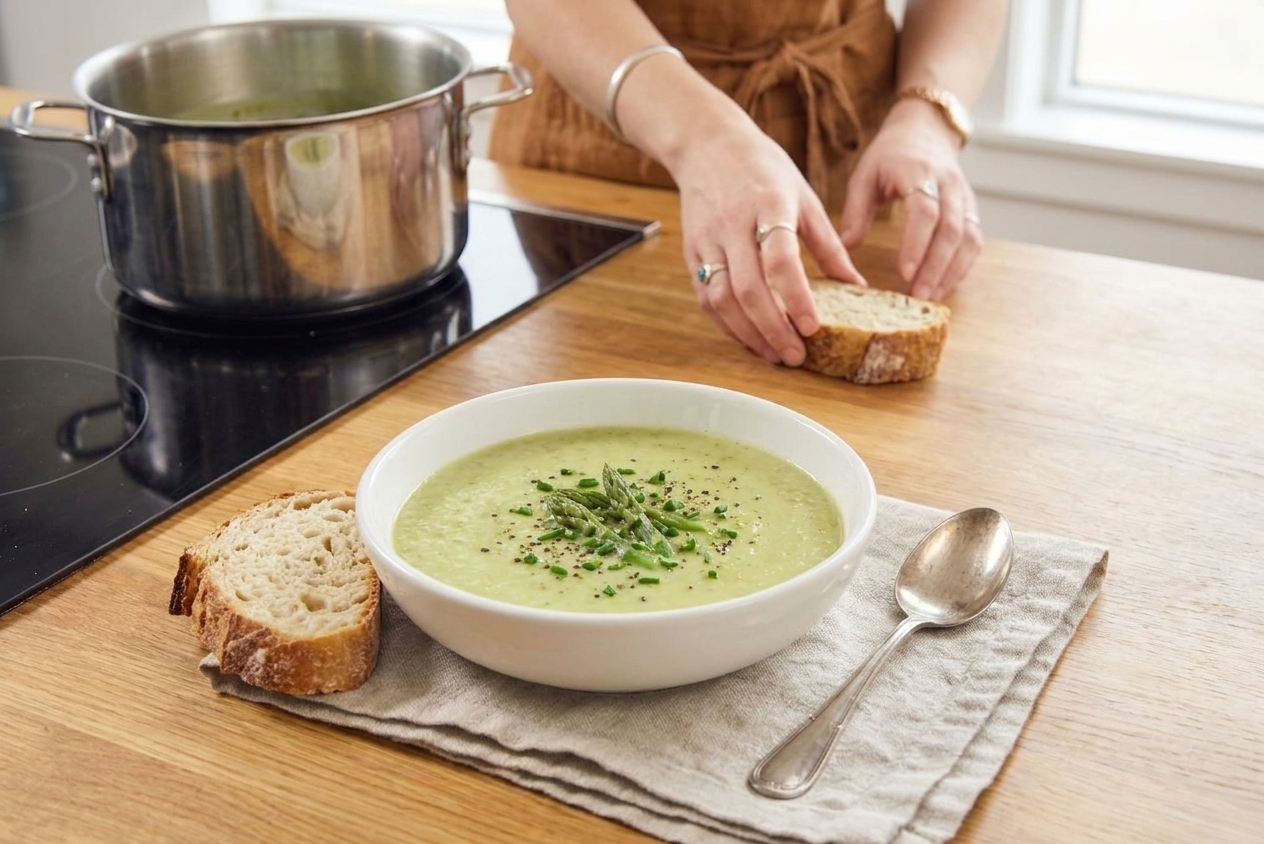
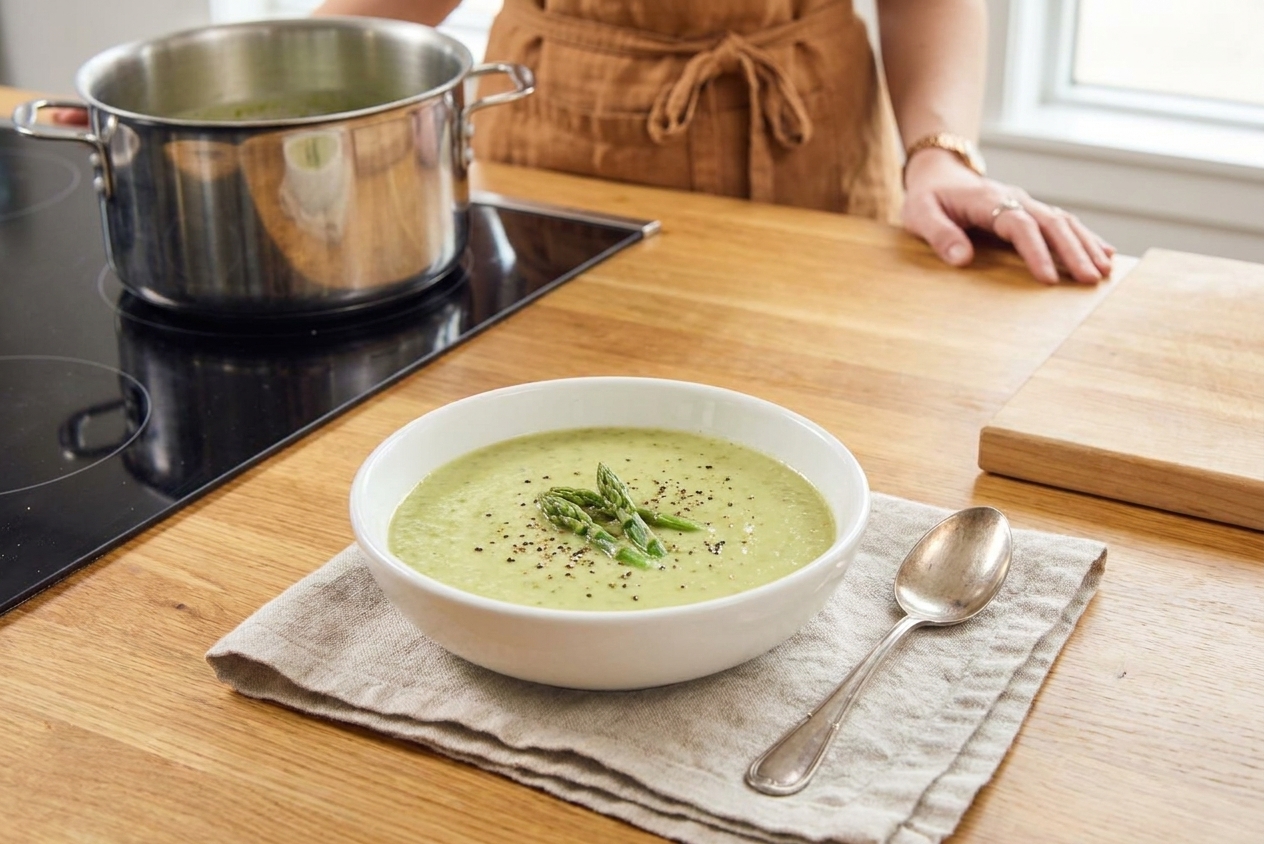
A white ceramic bowl filled with pale green cream of asparagus soup, topped with asparagus tips and cracked black pepper on a linen napkin beside a spoon on a warm kitchen table

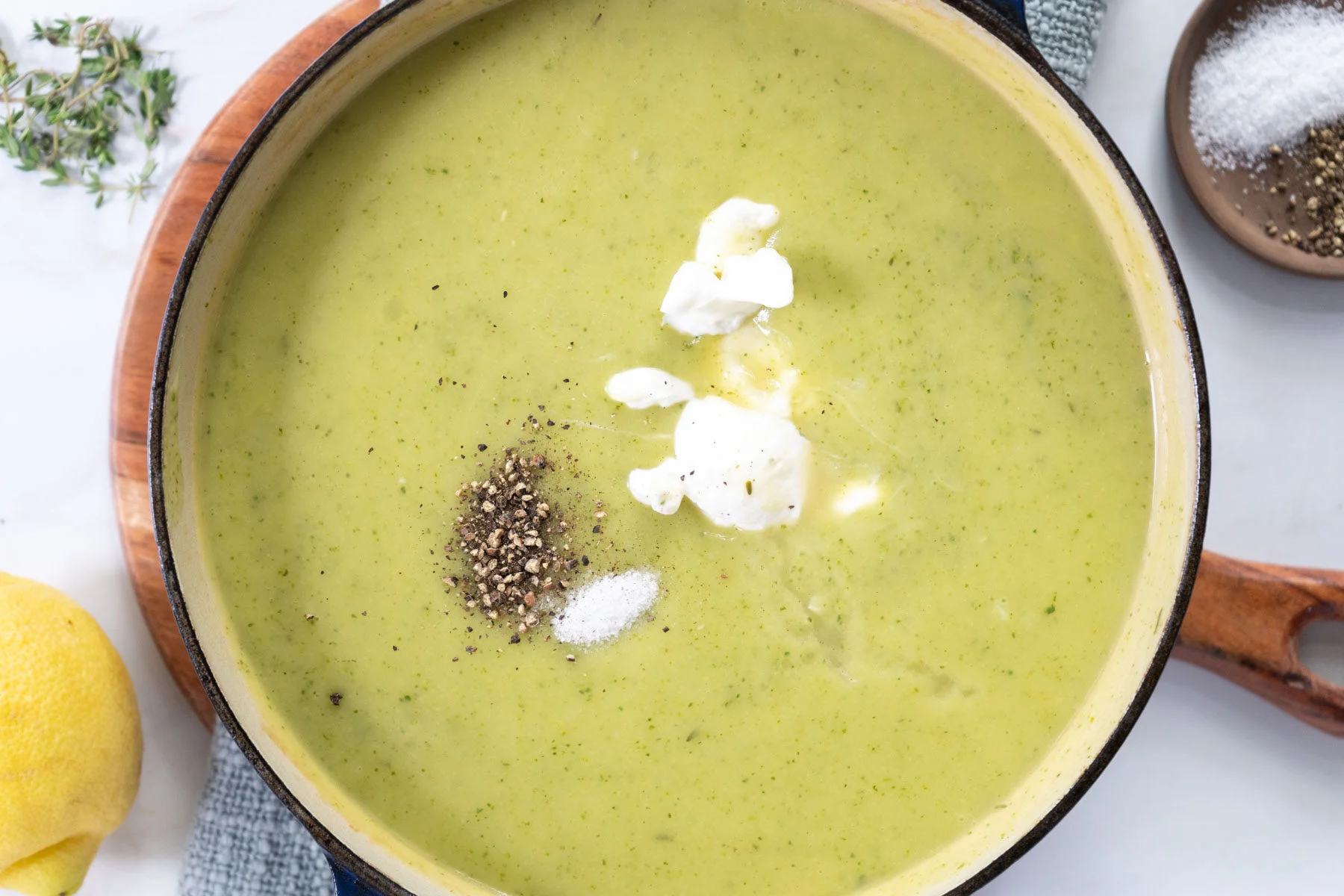
Cream of asparagus soup is one of those recipes that feels fancy, but it’s basically a controlled simmer and a good blitz. The goal is simple: keep the flavor fresh and grassy, keep the texture velvety, and avoid the sad gray-green situation that happens when asparagus gets overcooked and forgotten.

My version leans on leeks + garlic for a soft, sweet base, potato for body (so you don’t need a gallon of cream), and a quick hit of lemon at the end to wake everything up. It’s spring in a bowl, but it also absolutely works on a chilly weeknight when you want dinner to feel like a hug. As a light meal, plan on 4 servings. As a starter, it’ll comfortably stretch to 6.
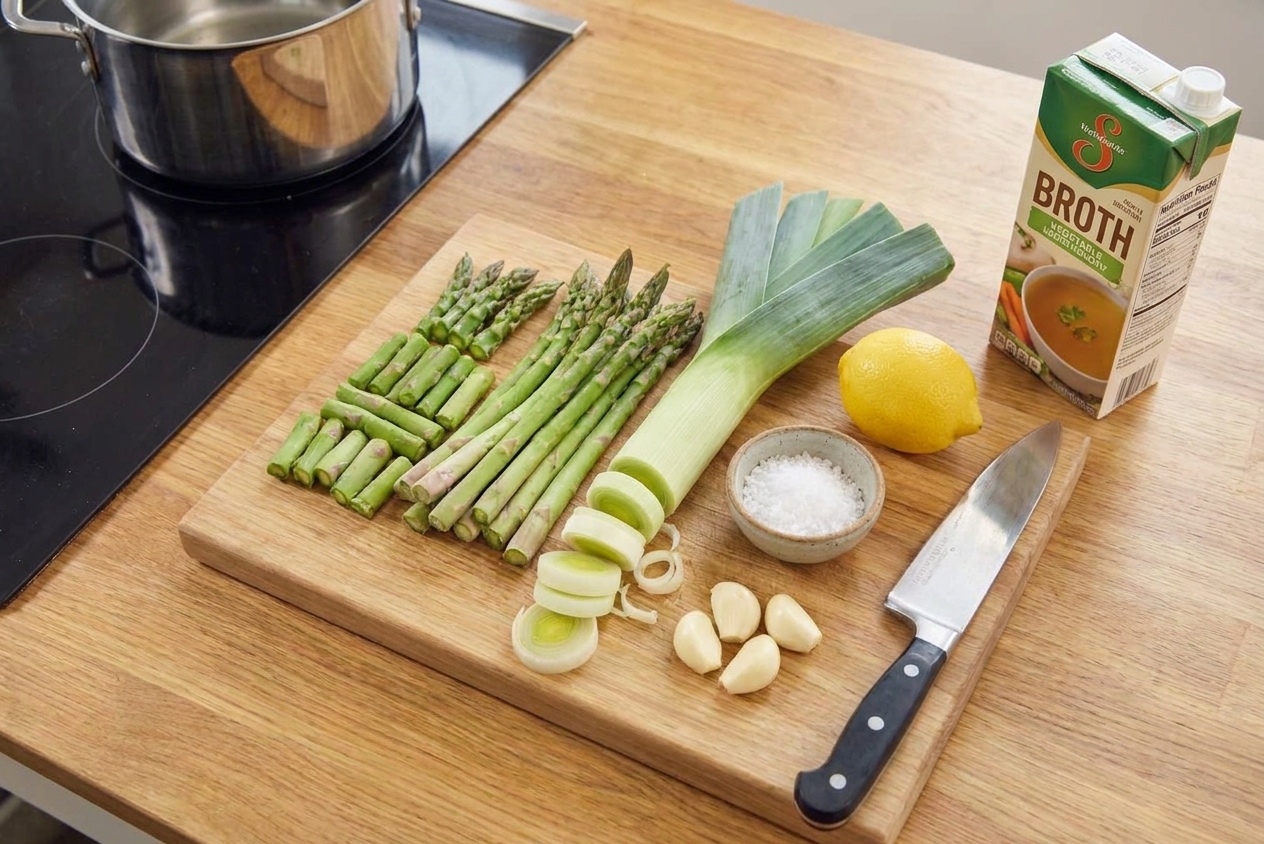

A wooden cutting board on a kitchen counter with fresh asparagus, a leek, garlic cloves, a lemon, a small bowl of salt, and a carton of broth ready for soup prep

Why It Works

  • Bright green flavor, not murky: We simmer just until tender, then blend, so the asparagus stays fresh-tasting.
  • Silky texture without heaviness: Potato gives the soup natural creaminess, and the dairy is optional and adjustable.
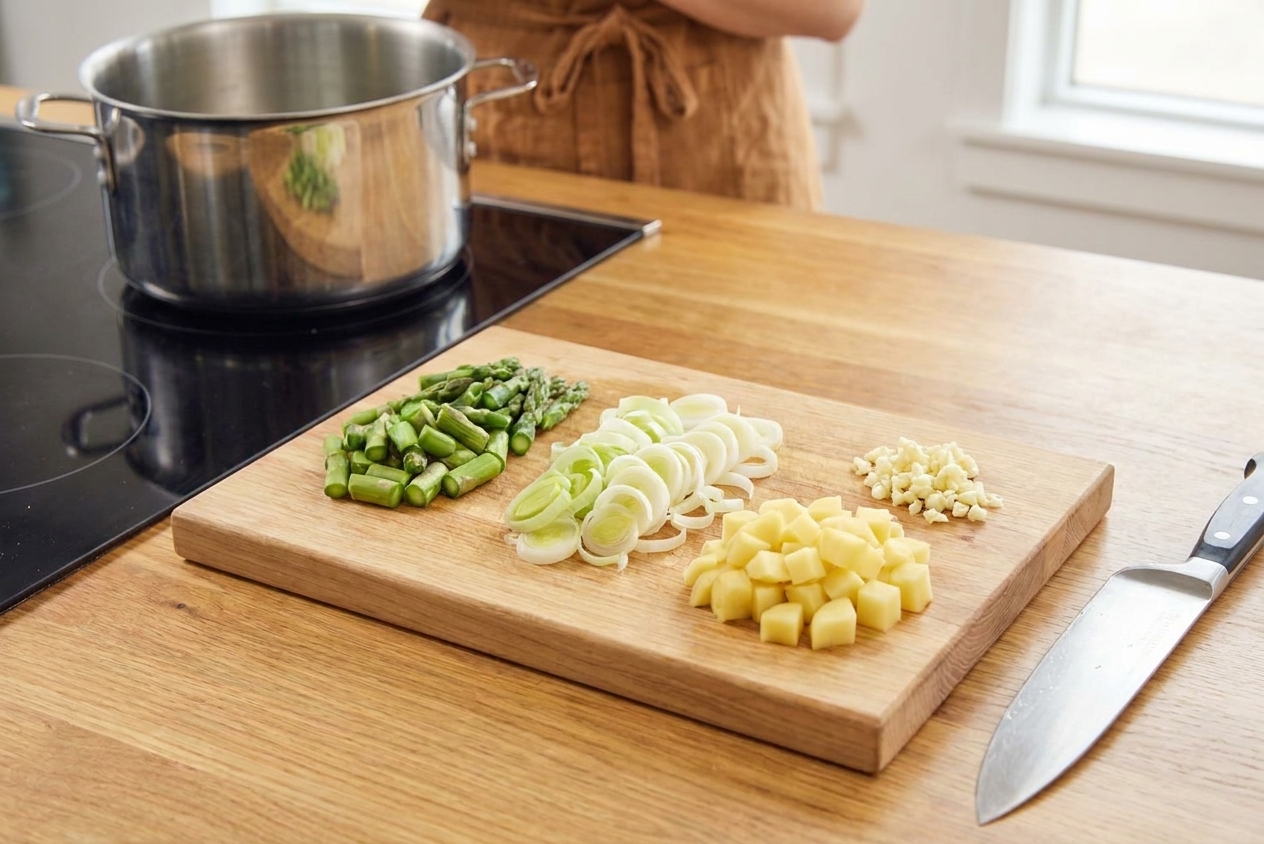
  • Fast flavor build: Leeks, garlic, and a tiny pinch of thyme make the whole pot taste like it has been working all day.
  • Flexible finishes: Keep it classic with cream, go dairy-free with coconut milk or cashew cream, or add parmesan for a savory boost.

Pairs Well With

Storage Tips

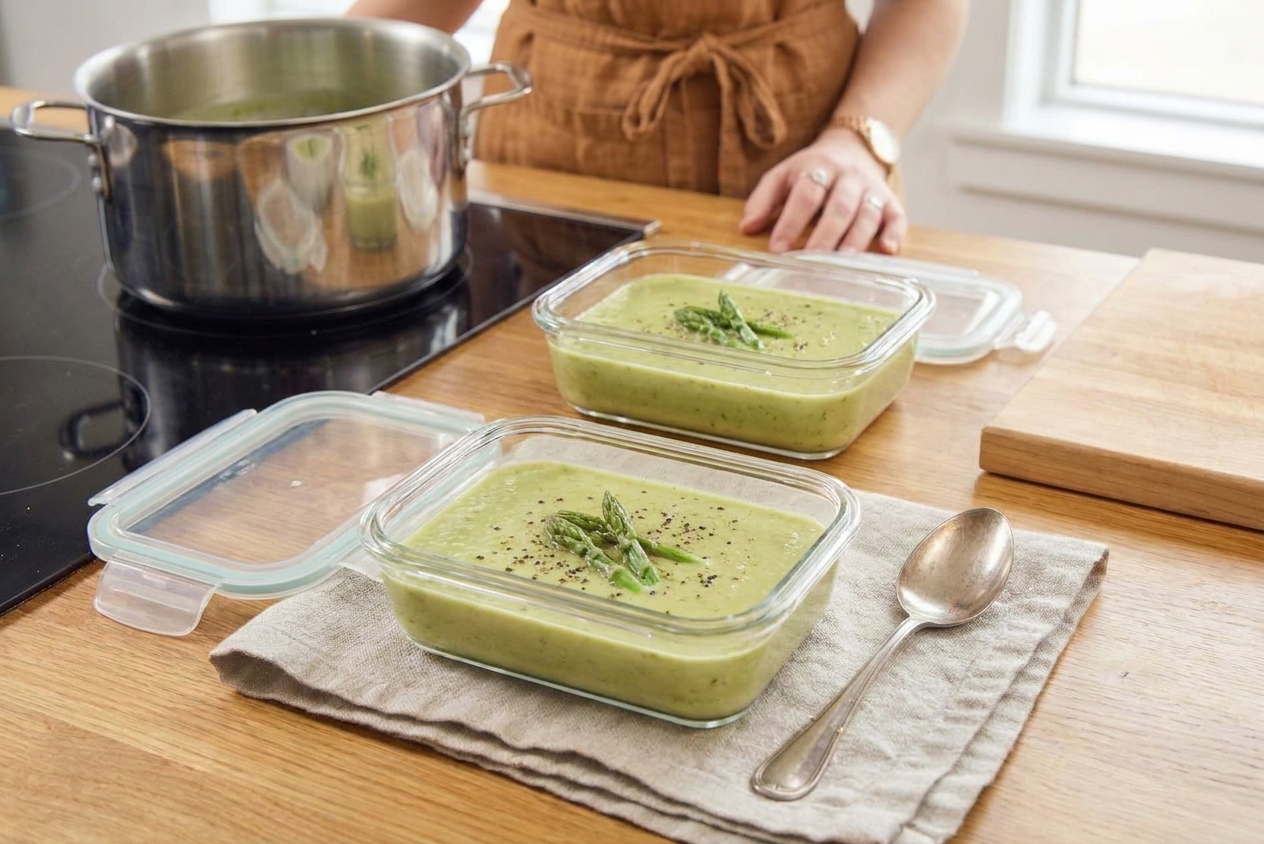
Refrigerator: Cool completely, then store in an airtight container for up to 4 days. The soup thickens as it sits. Add a splash of broth or water when reheating. The color may fade a little over time, but the flavor stays lovely.

Freezer: Freeze up to 3 months in freezer-safe containers, leaving a little headspace. For best texture, freeze the soup before adding heavy cream. Add cream after reheating if you want that richer finish.

Reheating: Warm gently over medium-low, stirring often. Avoid a hard boil if you used dairy so it stays smooth. If it tastes a little sleepy after chilling, a small squeeze of lemon at serving brings it right back to life.

Two glass meal prep containers filled with green asparagus soup cooling on a kitchen counter with lids nearby

Common Questions

How do I keep asparagus soup green?

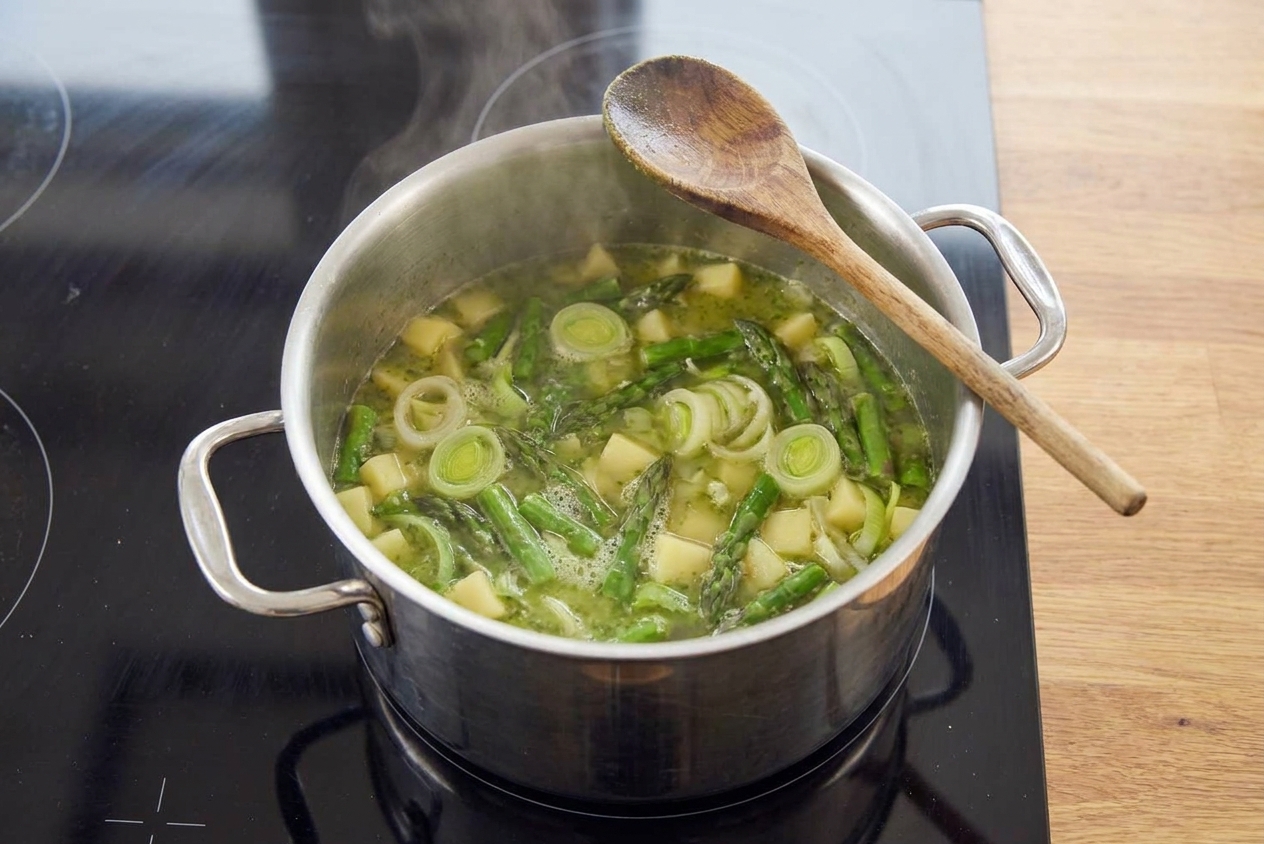
The biggest color-killer is overcooking. Simmer just until the thickest asparagus pieces are tender, then blend right away. Also, add lemon juice at the end, not early. Acid plus long cooking can contribute to dulling, so finishing at the end keeps it brightest.

Can I make it without cream?

Yes. The potato already makes it creamy. For extra richness without dairy, use unsweetened coconut milk (a little goes a long way) or blend in cashew cream. You can also stir in a spoonful of olive oil right before serving for a glossy finish.

Why is my soup stringy?

Asparagus can be fibrous, especially if the stalks are thick or older. Peel the lower third of thick stalks, and blend thoroughly. If needed, push the blended soup through a fine-mesh sieve for a truly silky texture.

What is the best blender option?

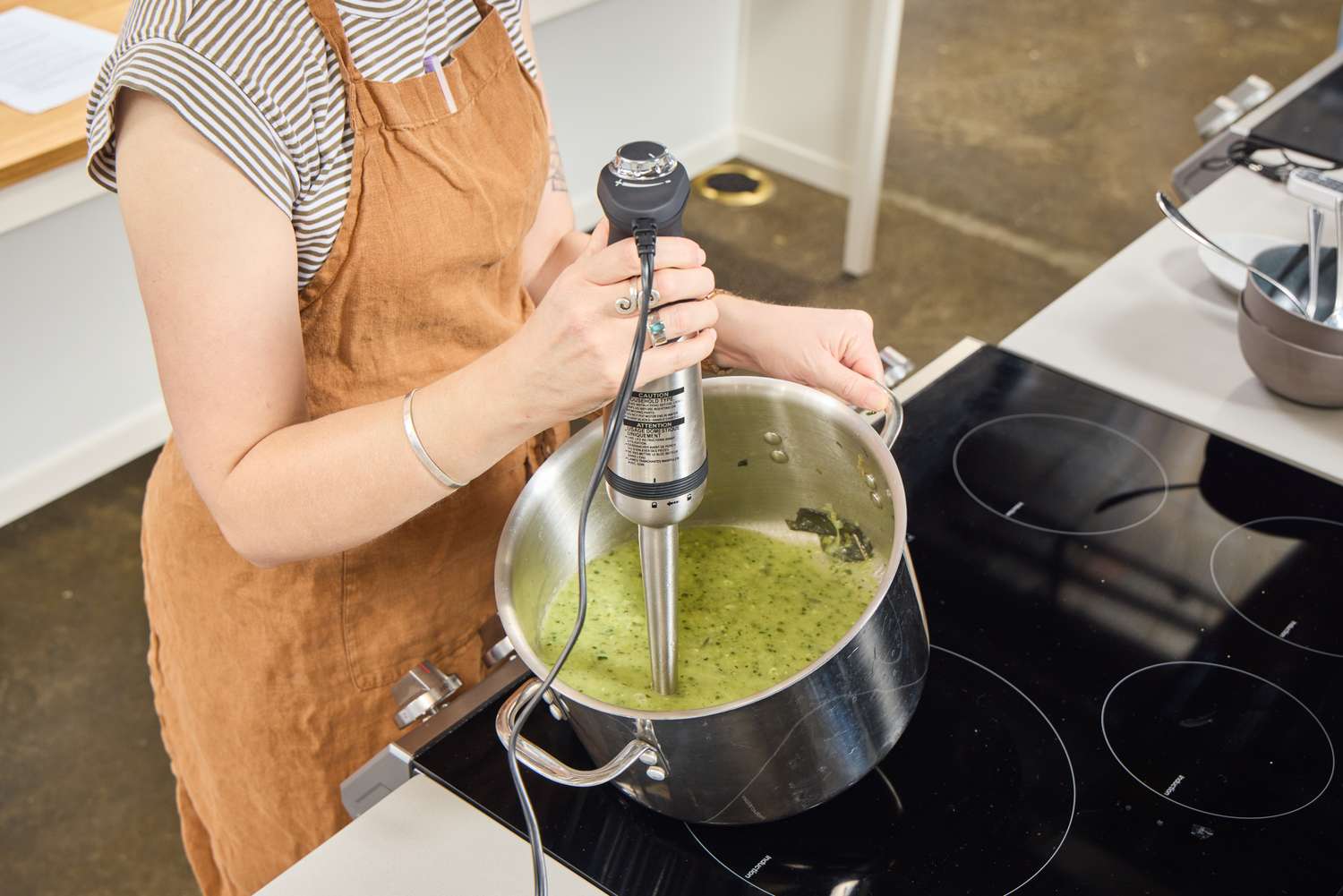
An immersion blender is easiest and safest. If using a countertop blender, blend in batches, fill the pitcher only halfway, start on low, and vent the lid so steam can escape. I like to hold the lid down with a folded kitchen towel, because hot soup plus a sealed blender equals chaos.

Can I use frozen asparagus?

You can. Frozen tends to be softer and slightly less bright, but it still makes a solid soup. Frozen asparagus is typically blanched before freezing, so it often cooks faster. Start checking for tenderness early.

I started making cream of asparagus soup when I realized asparagus has about a five-minute window between “snappy and perfect” and “why does this taste like canned vegetables.” Soup is my favorite save. You get to take a bunch that is just barely past its prime, give it a proper send-off with leeks and garlic, and suddenly it feels like something you’d happily order with a slice of bread on the side.

Also, blending hot soup is a humbling experience. The first time I did it in a sealed blender, I learned a valuable life lesson about steam. Now I’m team immersion blender forever, tasting as I go like the kitchen gremlin I was born to be.

Hands using an immersion blender in a pot of green asparagus soup on a stovetop, steam rising under warm kitchen lighting