What kind of onion works best?
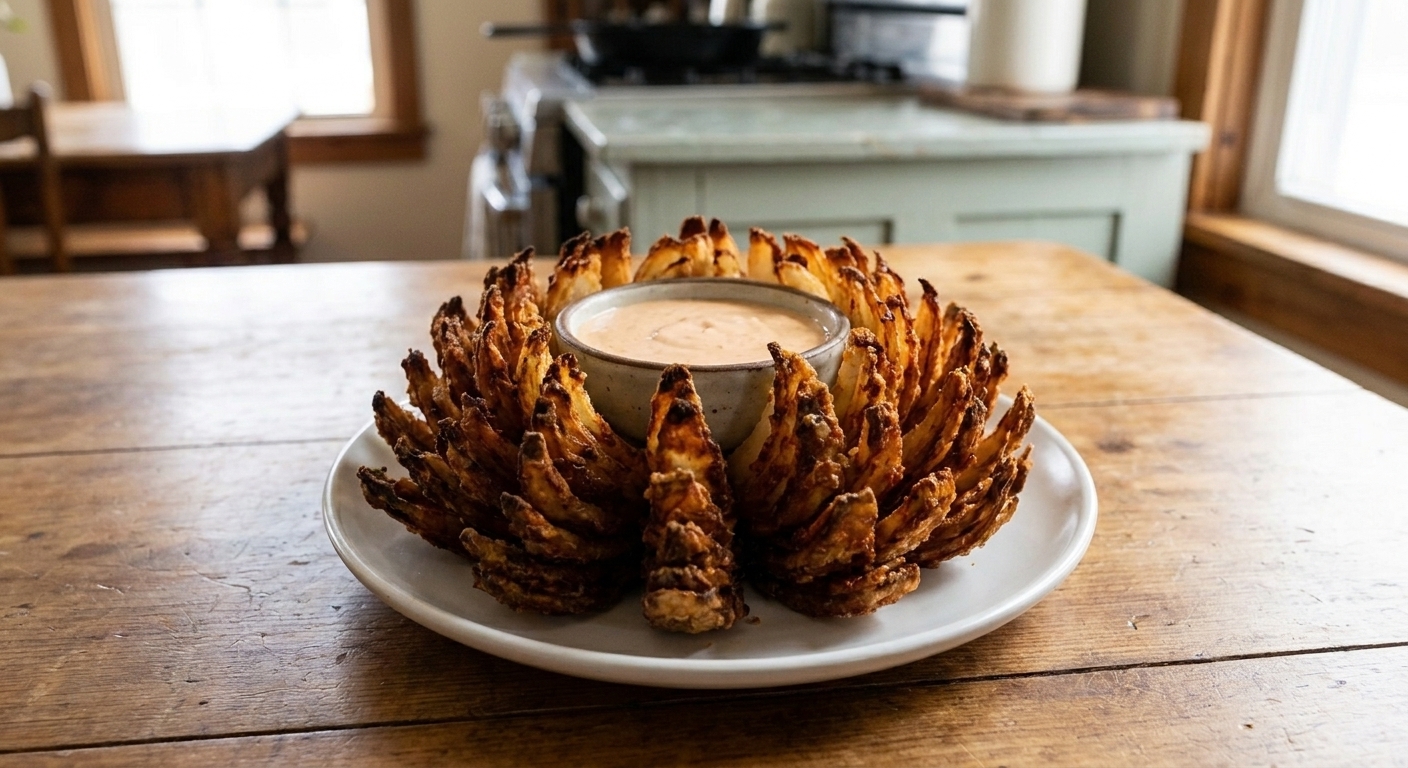
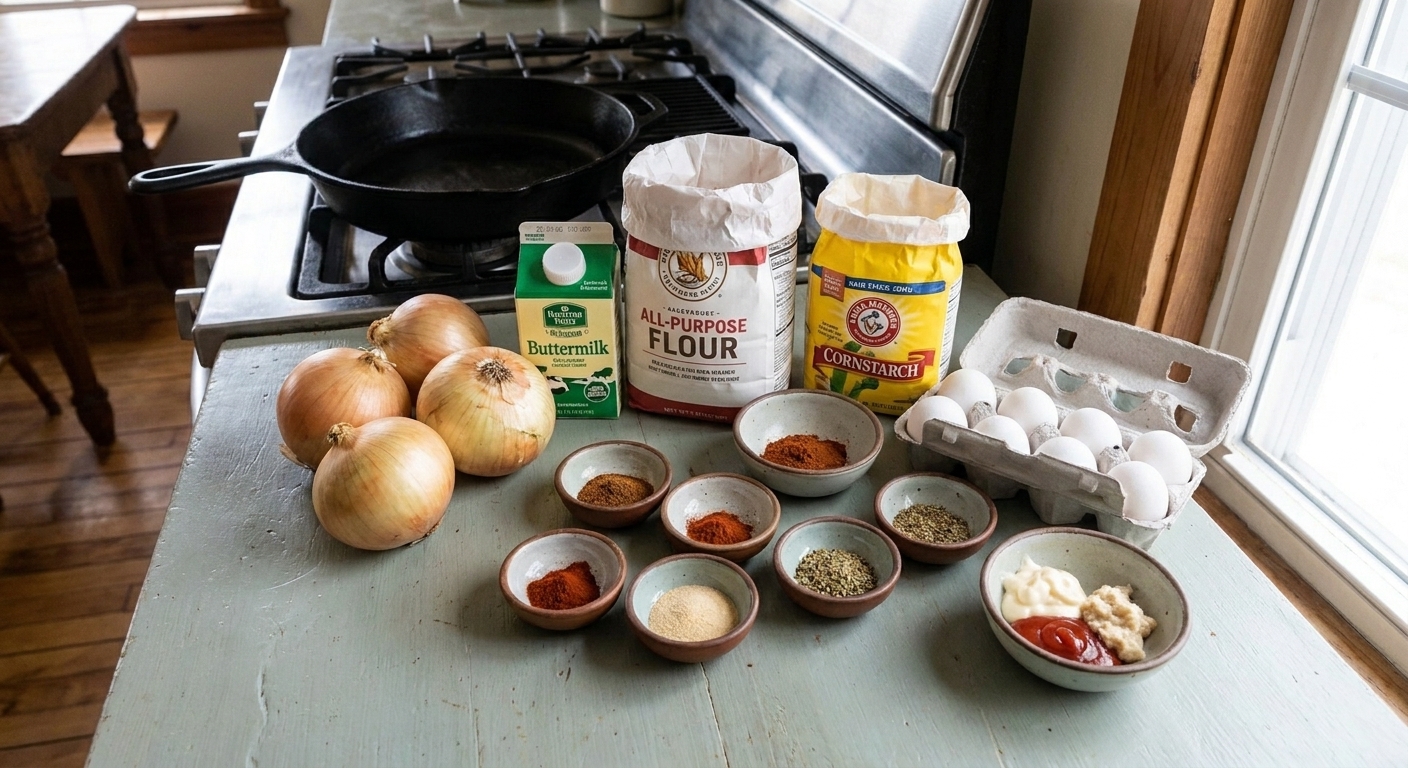
Go with a large sweet onion (Vidalia, Walla Walla) or a big yellow onion. Sweet onions give you that mellow, almost caramel vibe. Yellow onions are a little sharper but still great.
How do I keep the onion from falling apart while cutting?
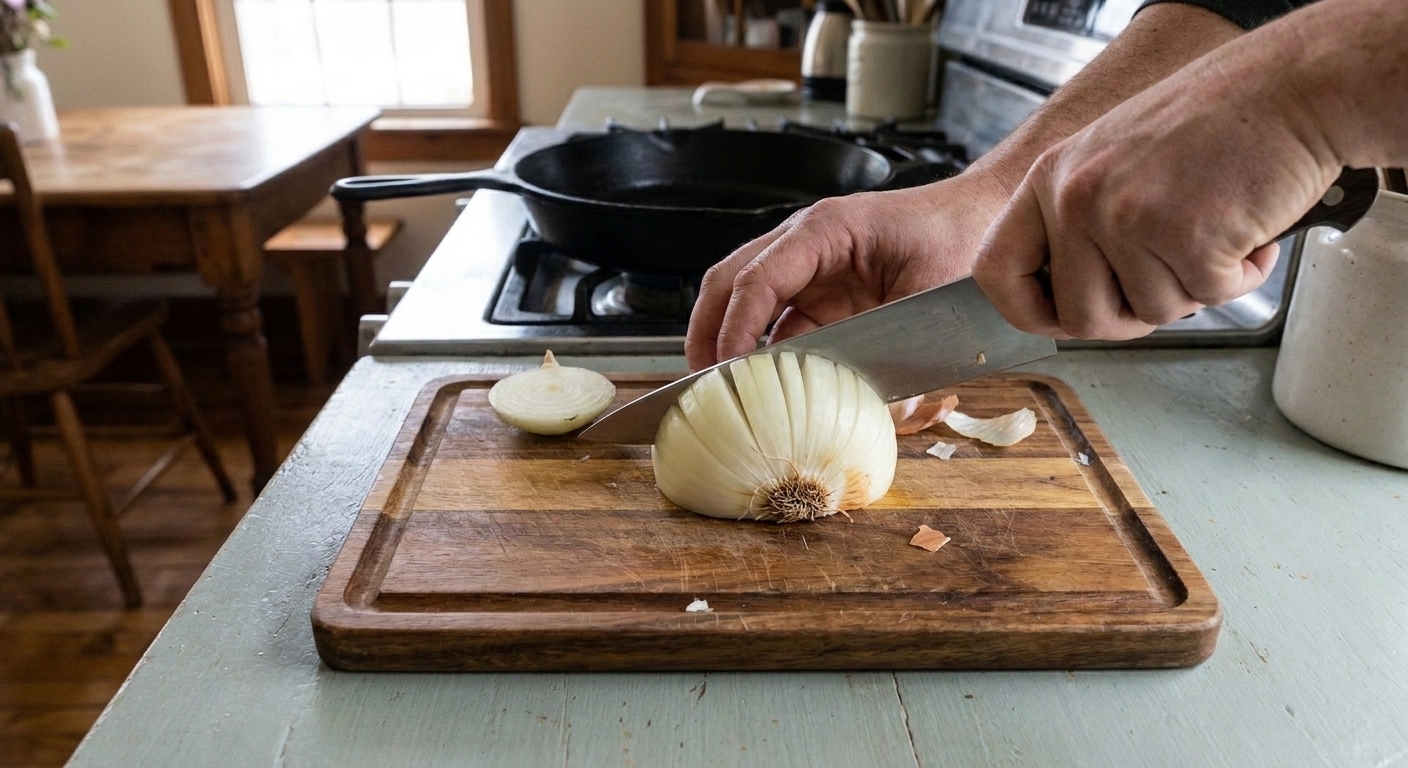
Leave the root end intact and stop your cuts about 1/2 inch from the bottom. The root is your built-in handle and the thing holding the petals together.
Do I need to rinse the onion after cutting?
Optional. A quick rinse can mellow some of the sharp onion bite and wash away tiny fragments, but it also adds moisture, which can make coating stick less. If you rinse, keep it brief and pat very dry, including between the petals.
Can I make it without a deep fryer?
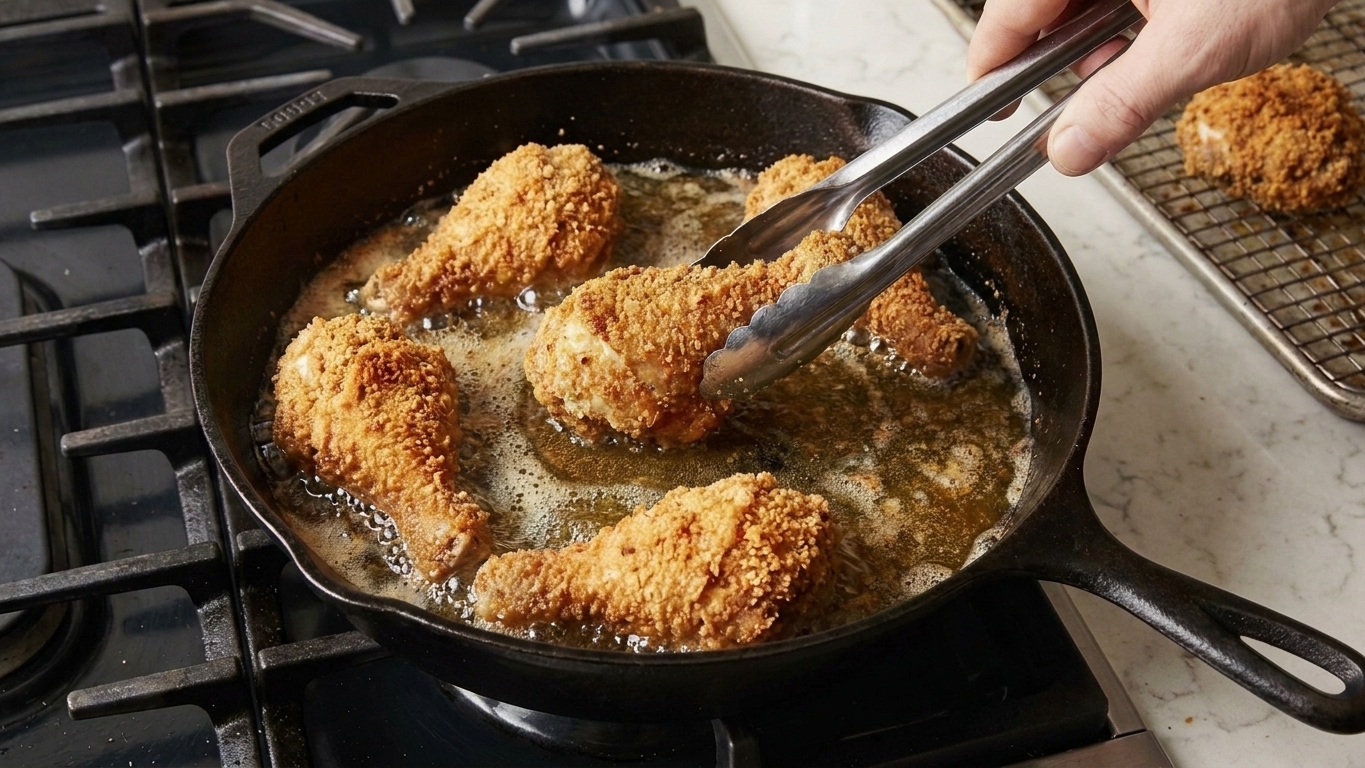
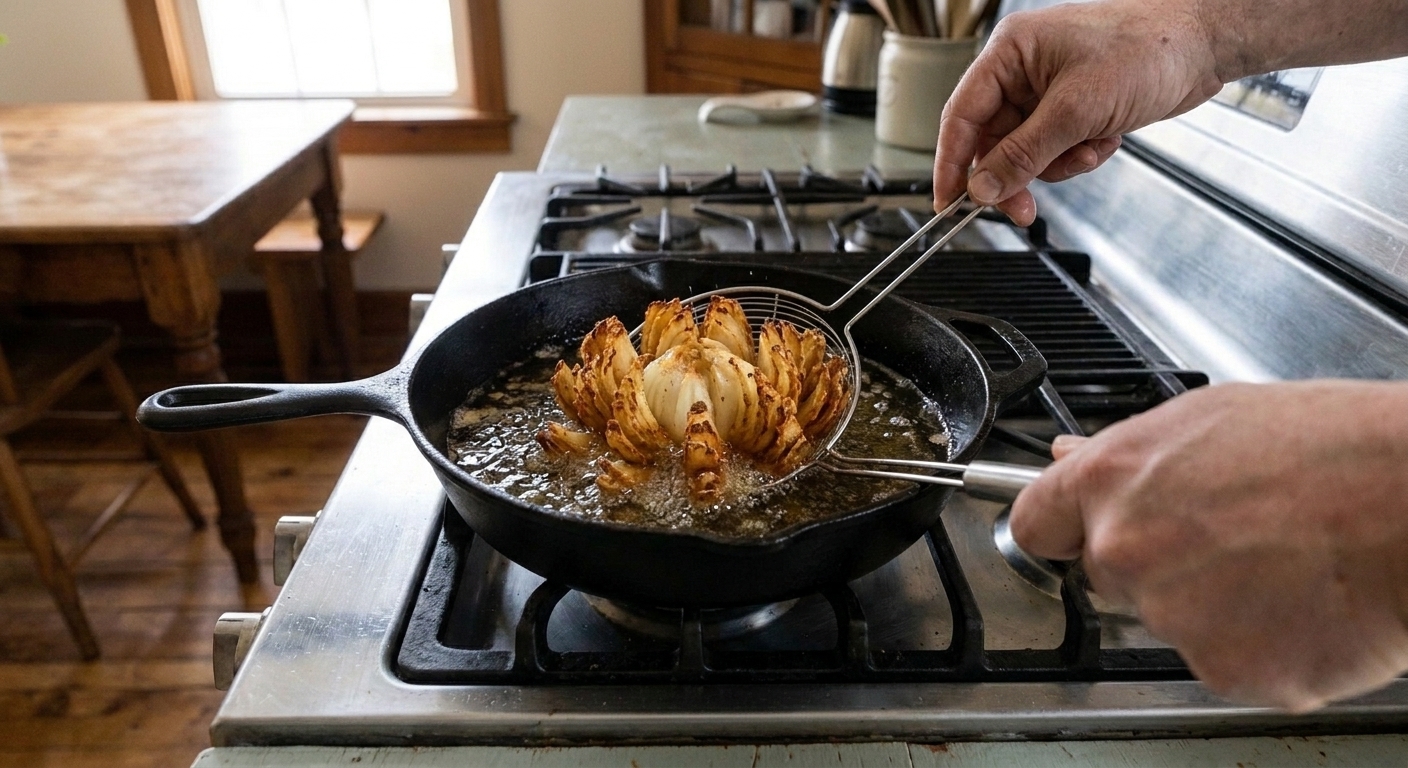
Yes. A heavy-bottomed pot or Dutch oven works perfectly. You just want enough oil depth (about 2 to 3 inches) so the petals fry evenly. A thermometer helps a lot.
Why did my coating fall off?
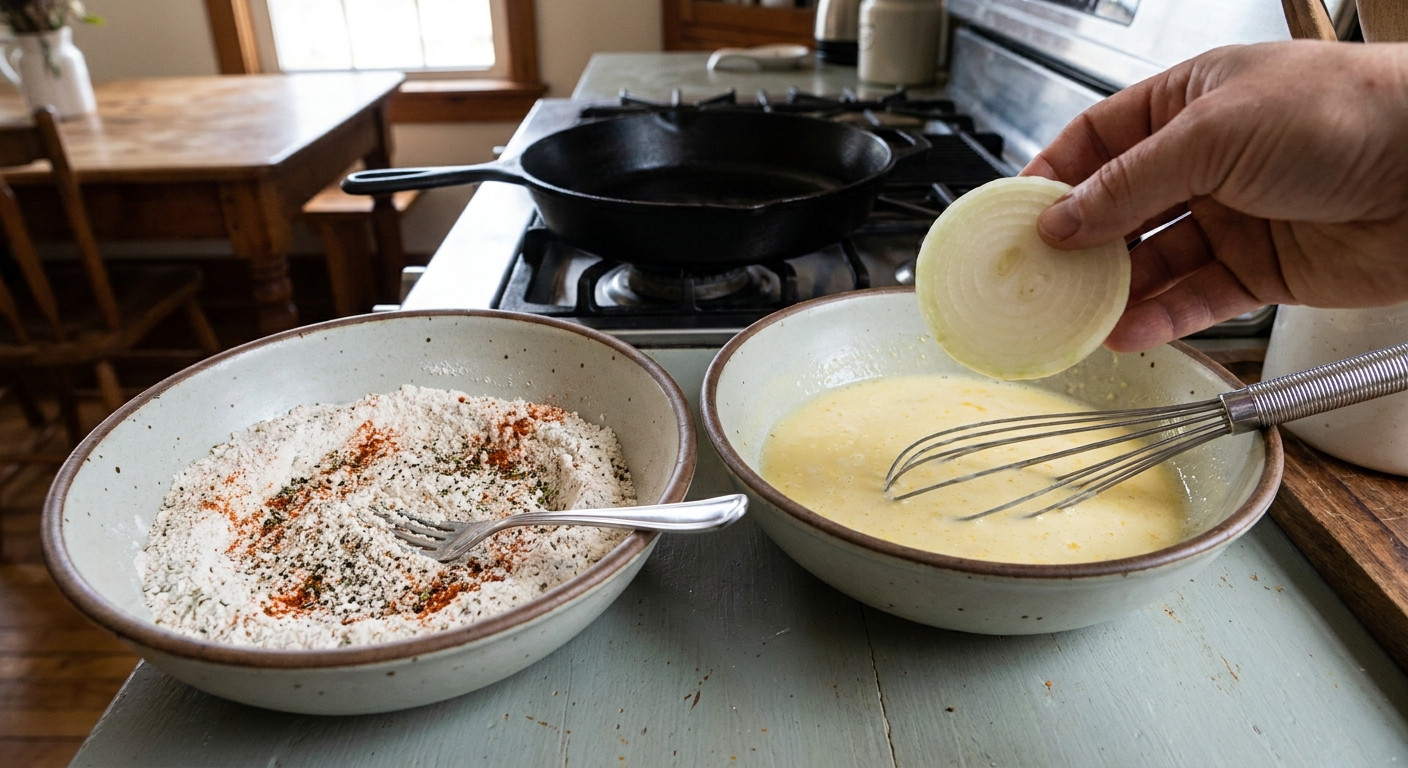
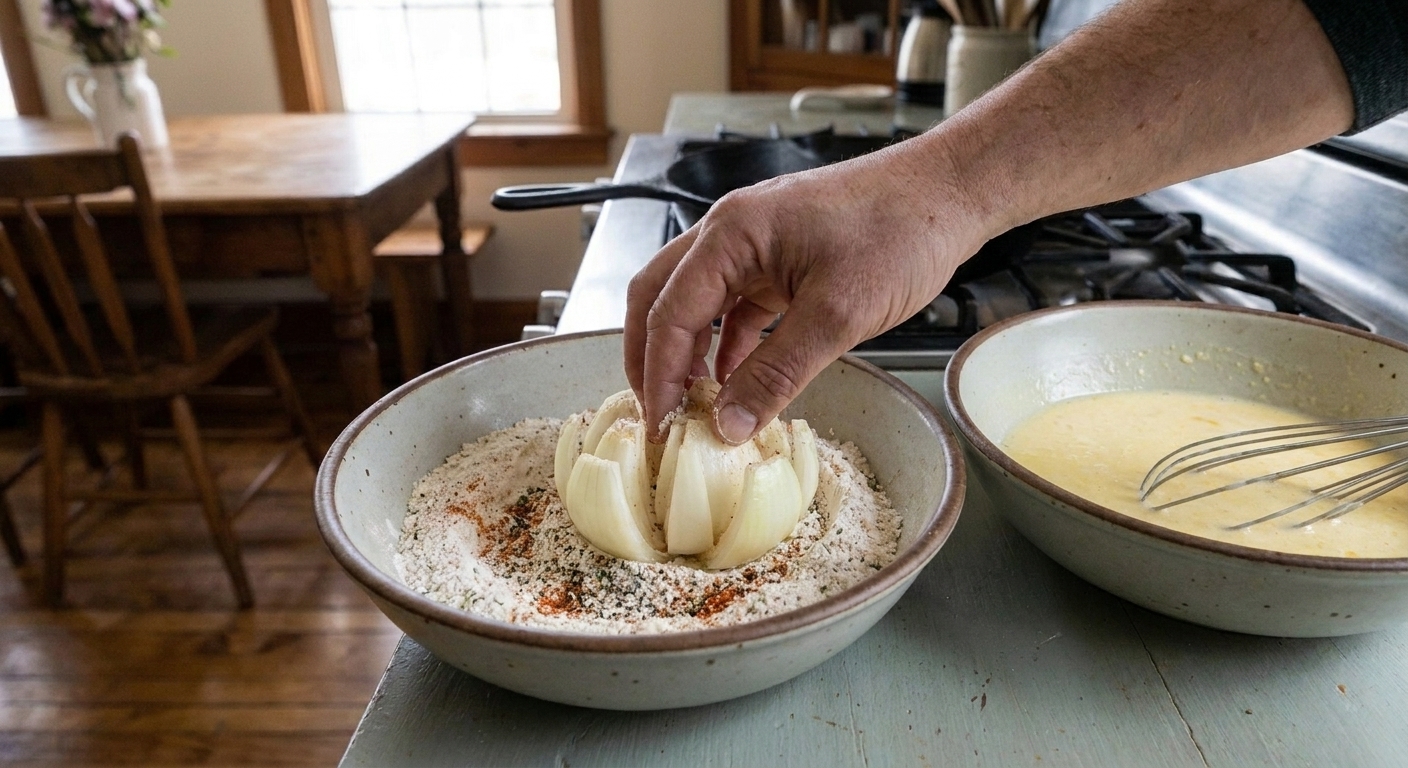
Usually it is one of these: the onion was too wet when you dredged, the flour mix was not pressed into the petals, or the oil was not hot enough. Pat the onion dry, really work the coating into the cuts, let the coated onion rest a few minutes, and keep the oil near 350°F.
How do I know it is done?
Look for deep golden brown petals, bubbling that slows down a bit, and an onion center that feels tender if you gently pierce near the root with a thin knife.
Can I bake it instead of frying?
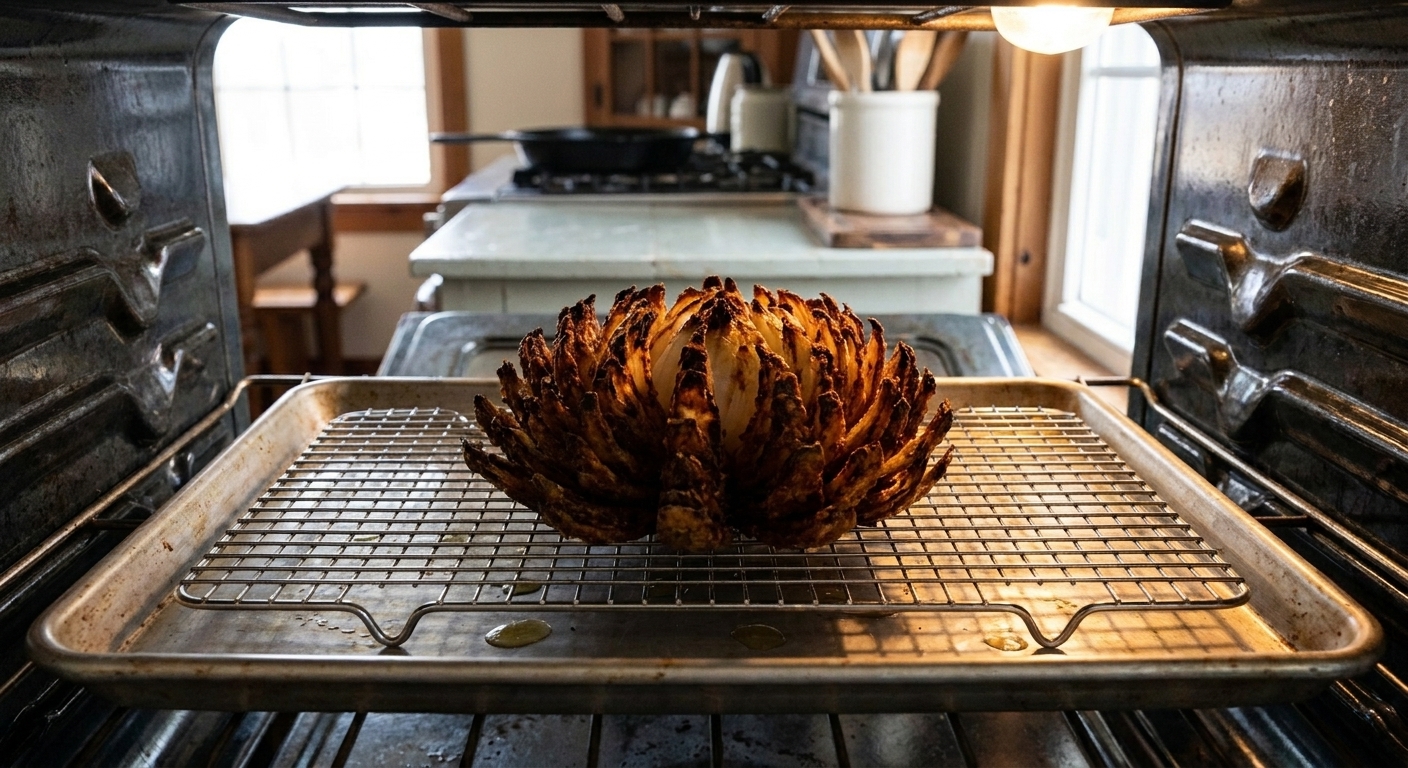
You can, but it will be more “crispy-ish” than truly crunchy. If you want a baked version, spray the coated onion generously with oil and bake at 425°F on a rack. Expect a lighter color and less dramatic crunch.
Is the dipping sauce spicy?
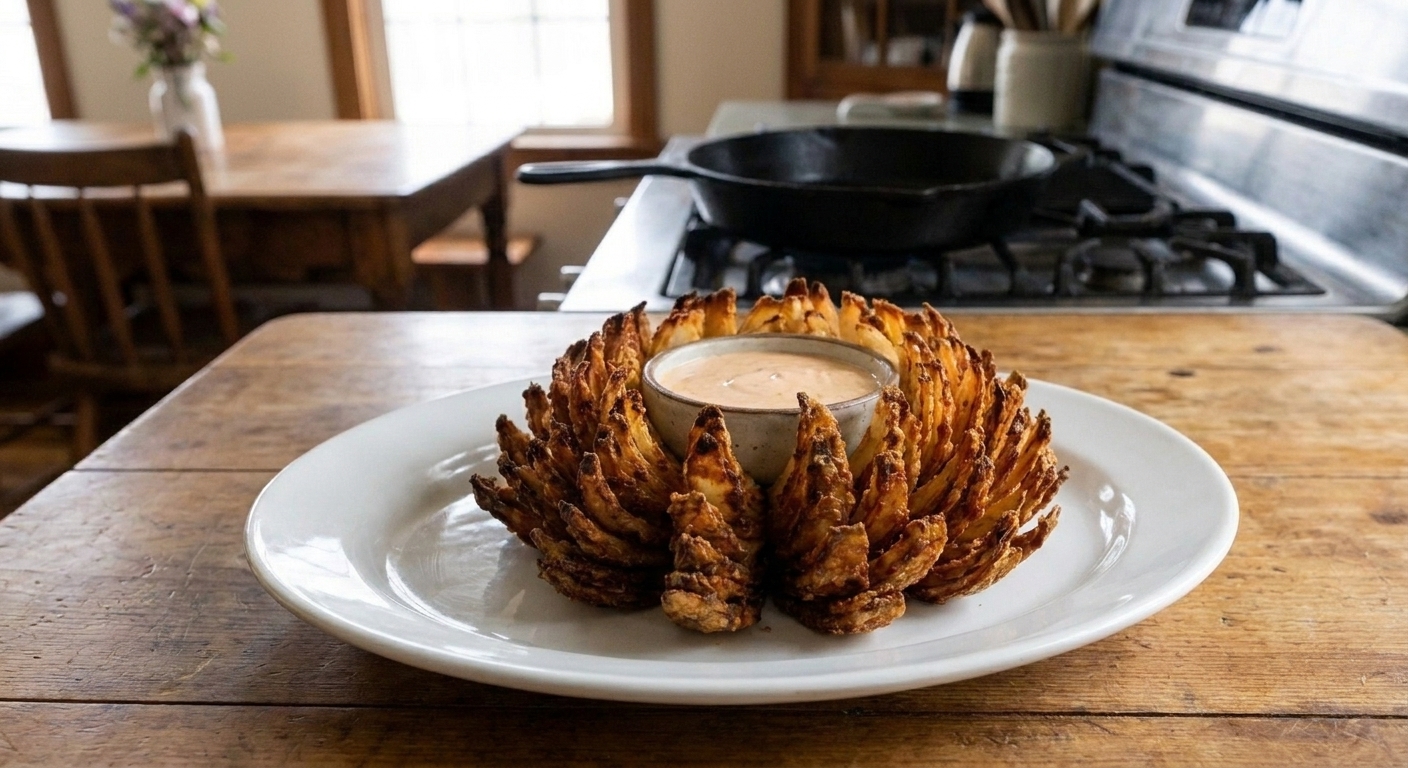
Mild to medium depending on your horseradish and hot sauce. Start small, taste, and build. Tasting as you go is not only allowed, it is encouraged.
Any substitutions for buttermilk?
Yes. Mix 2 cups milk with 2 tbsp lemon juice or white vinegar. Let it sit 5 minutes, then use it like buttermilk.