1) Marinate the chicken
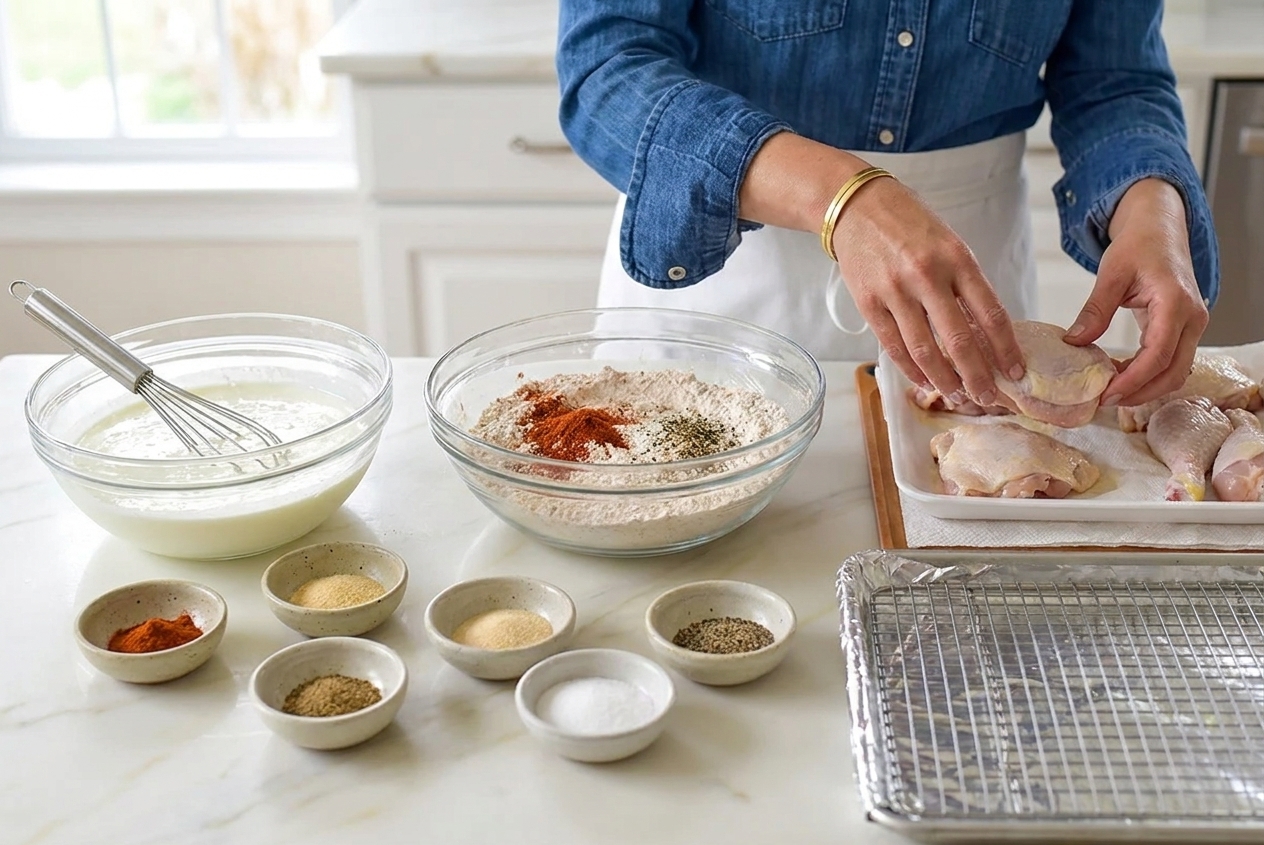
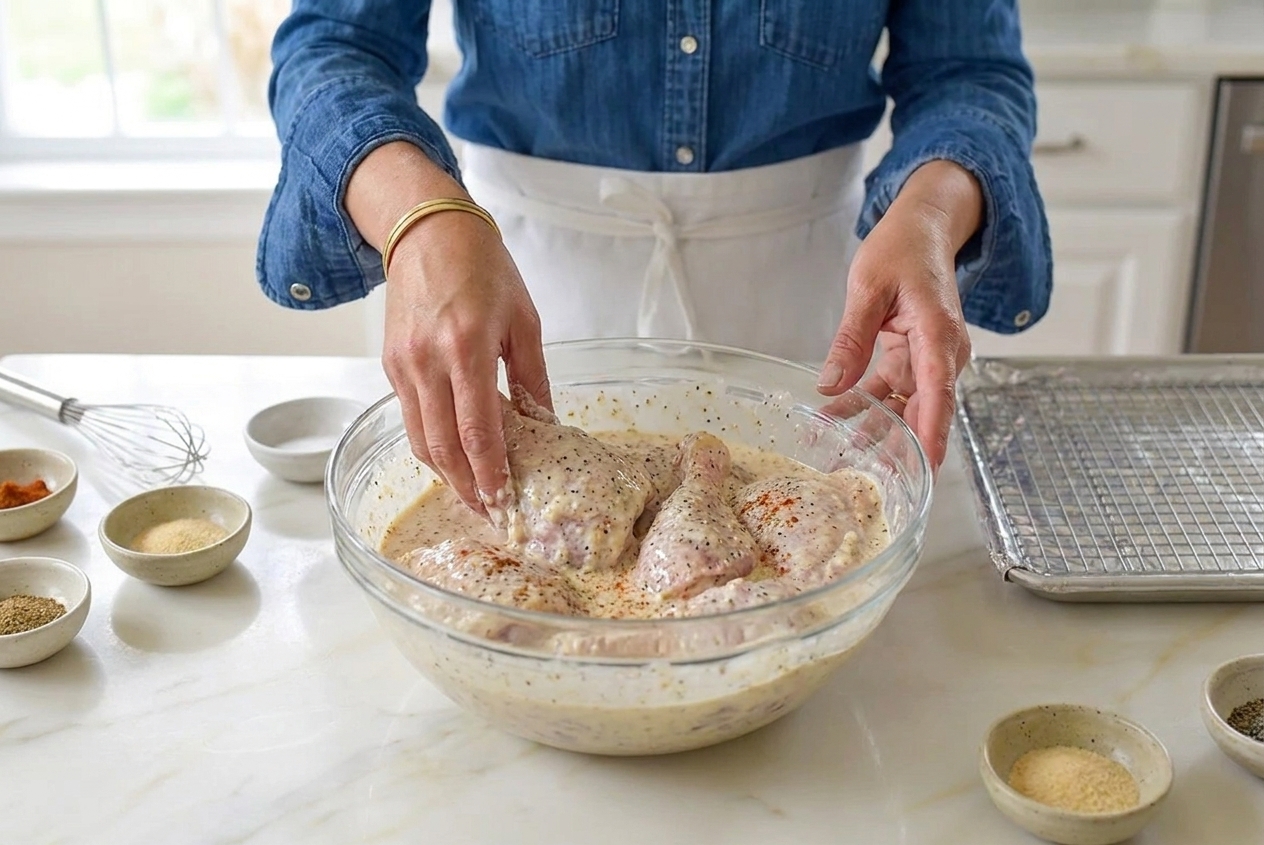
In a large bowl (or zip-top bag), whisk together the buttermilk, salt, pepper, garlic powder, onion powder, paprika, cayenne, and hot sauce. Add the chicken and make sure every piece is coated. Cover and refrigerate for at least 4 hours, ideally 8 to 12 hours.
2) Set up your dredging station
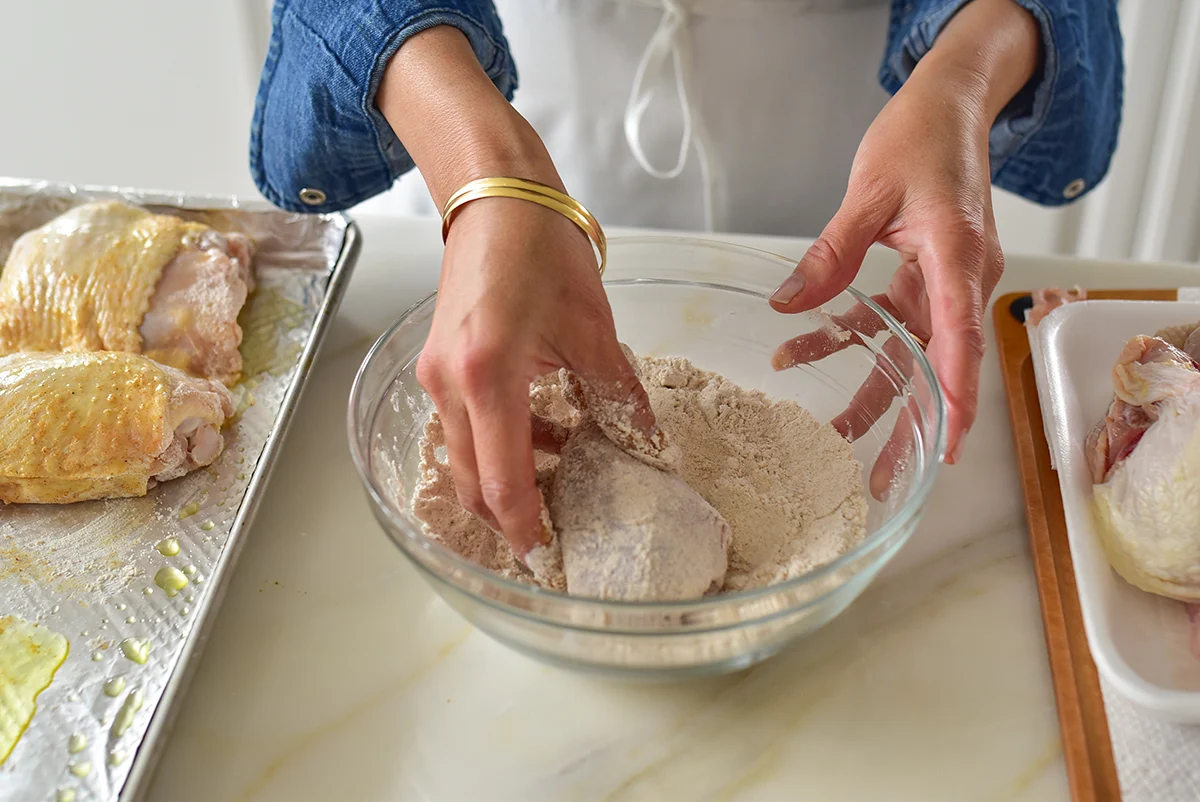
Place a wire rack over a sheet pan. In a shallow dish, mix flour, cornstarch, baking powder, salt, pepper, garlic powder, onion powder, paprika, and cayenne.
Now for the crunch trick: drizzle 2 to 4 tablespoons of the buttermilk marinade into the flour mixture and rub it in with your fingertips until you have little shaggy clumps. Those clumps become the craggy bits.
Food safety note: This is safe because the coating gets fully fried. Discard any leftover marinade and don't use it as a sauce.
3) Dredge and rest
Lift chicken from the marinade, letting excess drip off. Press each piece firmly into the flour mixture, coating all sides. Squeeze gently so the dredge sticks.
Set coated chicken on the wire rack and let it rest for 10 to 15 minutes. This helps the coating hang on and fry up crisp instead of sliding off.
4) Heat the oil
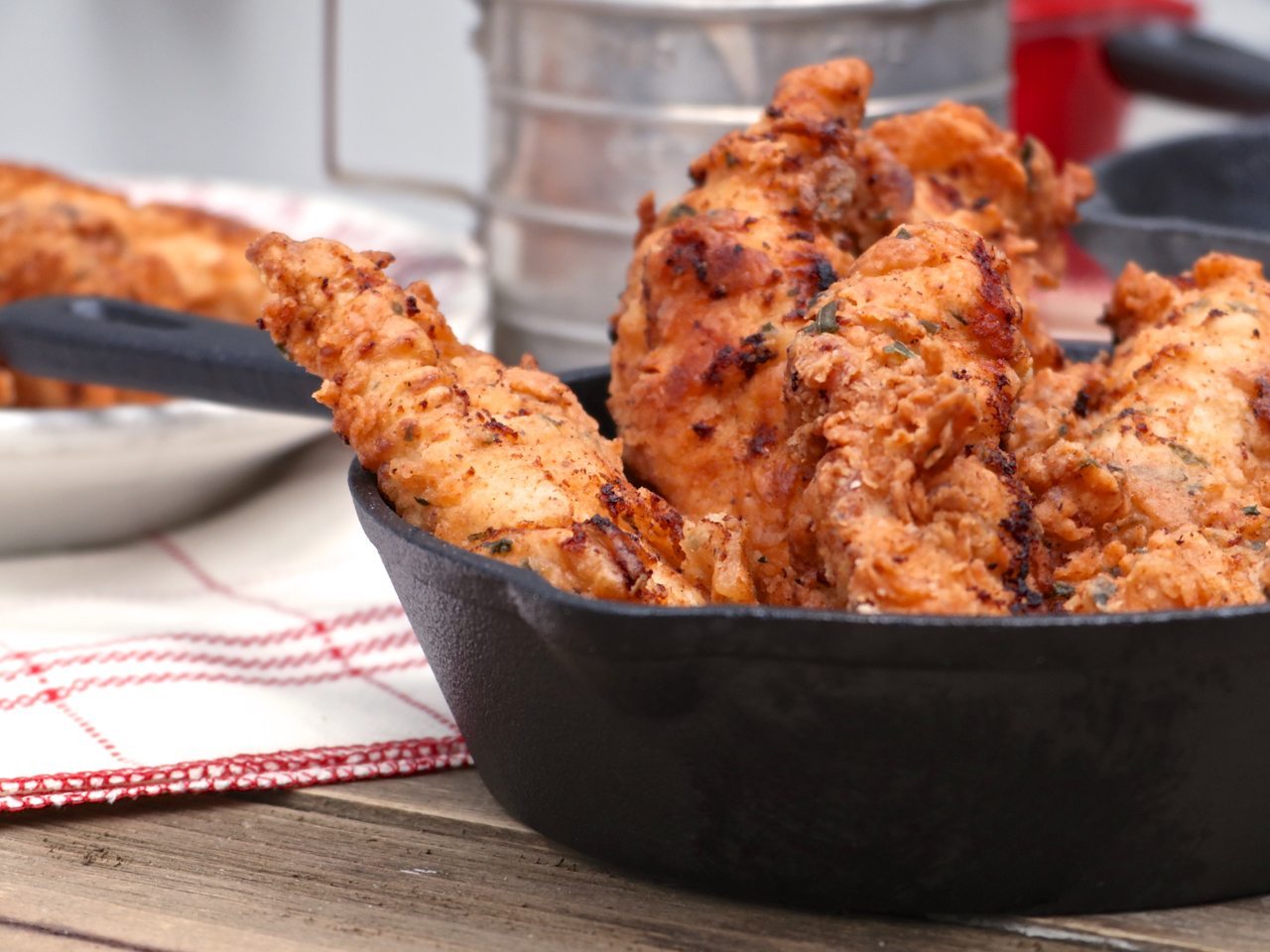
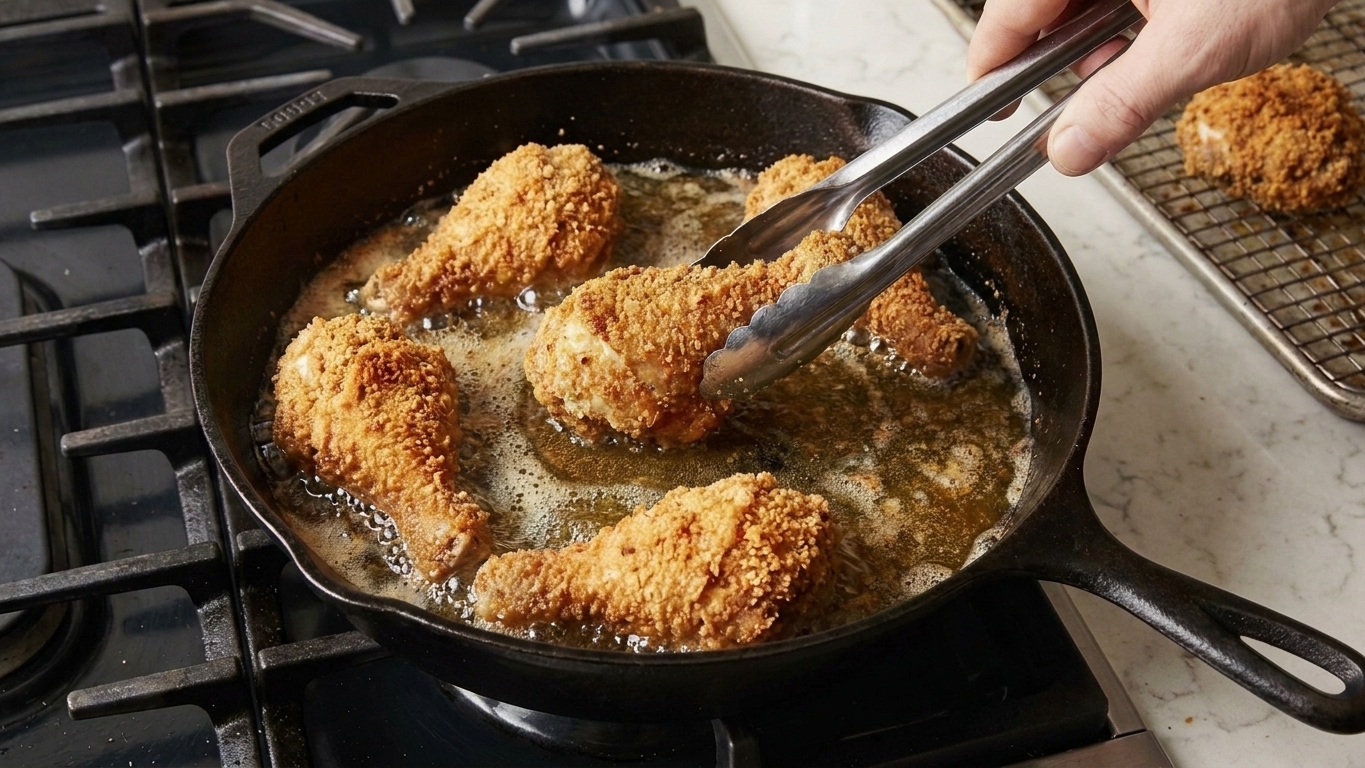
Pour oil into a cast iron skillet or Dutch oven to a depth of about 1 to 1 1/2 inches. Heat to 325 to 350 F.
If you don't have a thermometer, test with a pinch of flour. It should sizzle actively right away. If it browns instantly, it's too hot.
5) Fry in batches
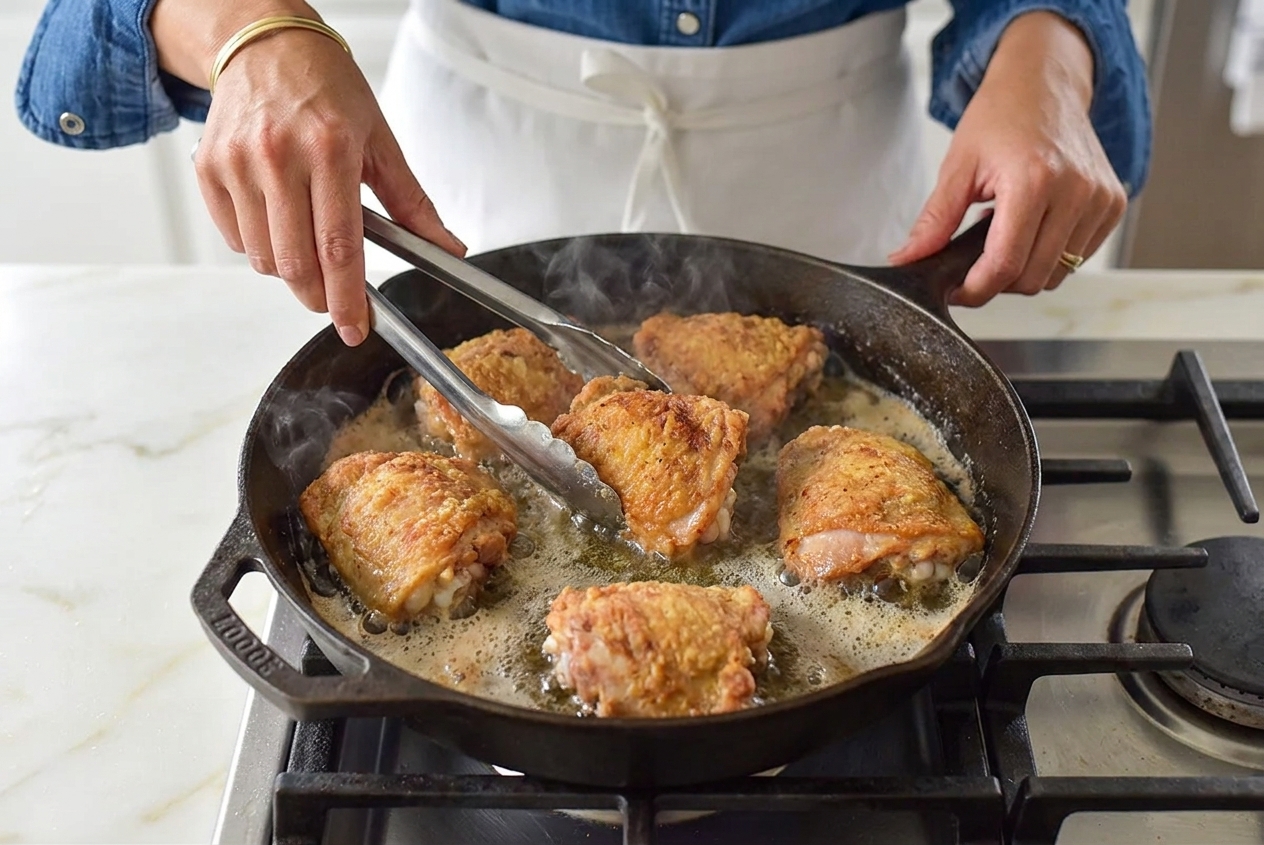
Carefully add chicken skin-side down, without crowding the pan. Fry until deep golden and cooked through, flipping once or twice total as needed for even browning. Don't cover the pan.
- Thighs and drumsticks: about 12 to 16 minutes total
- Breasts (bone-in): about 14 to 18 minutes total
Timing can vary depending on piece size and how quickly your oil temp recovers between batches, so let the thermometer be the boss.
Keep an eye on oil temp and adjust heat as needed. If it climbs too high, the crust browns before the chicken's done. Between batches, let the oil come back to 325 to 350 F before adding more chicken.
Chicken is done at 165 F in the thickest part. Dark meat is even better at 175 to 185 F if you've got the patience.
6) Drain and season
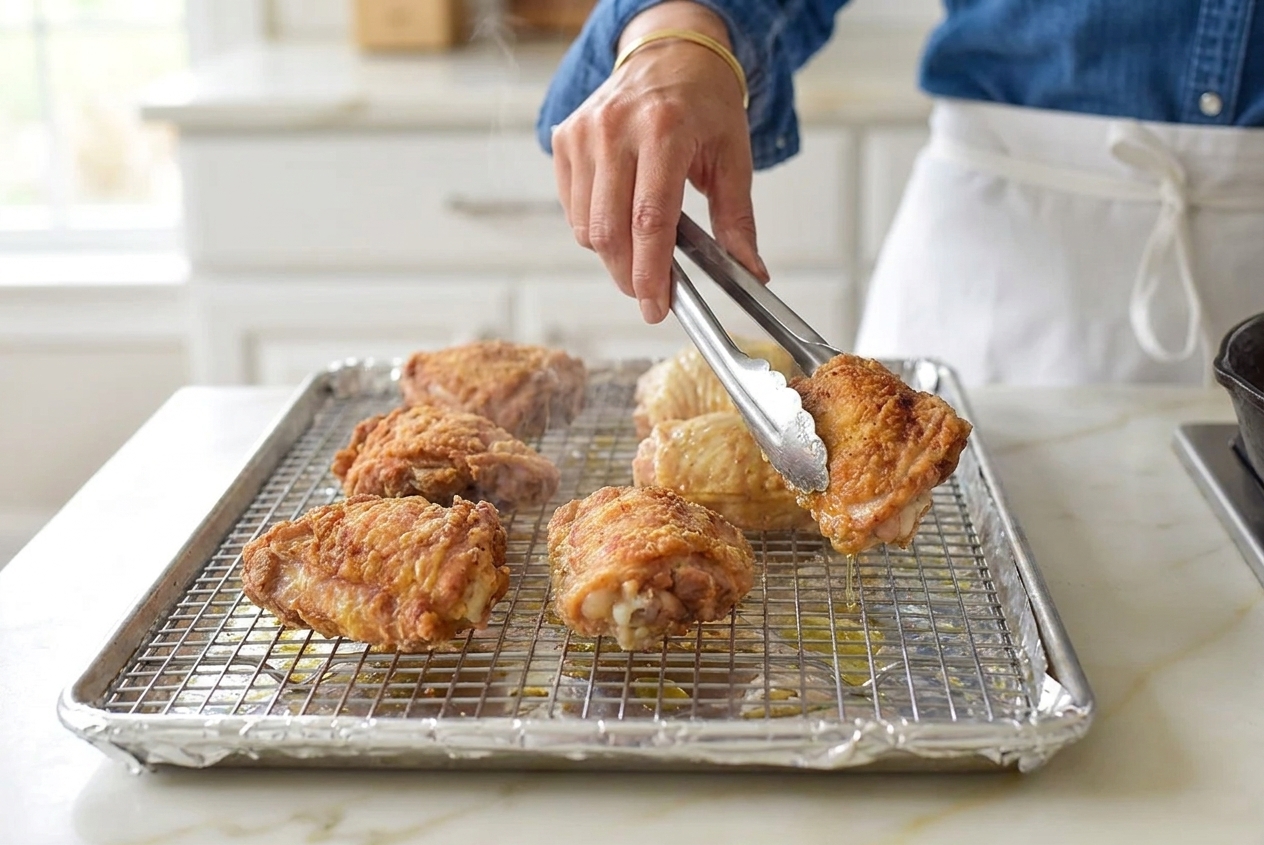
Move cooked chicken to a clean wire rack (not paper towels if you want max crunch). While it's hot, hit it with a tiny pinch of salt. Let it rest 5 minutes before eating so the juices settle and you don't burn your mouth like a hero.
7) Serve
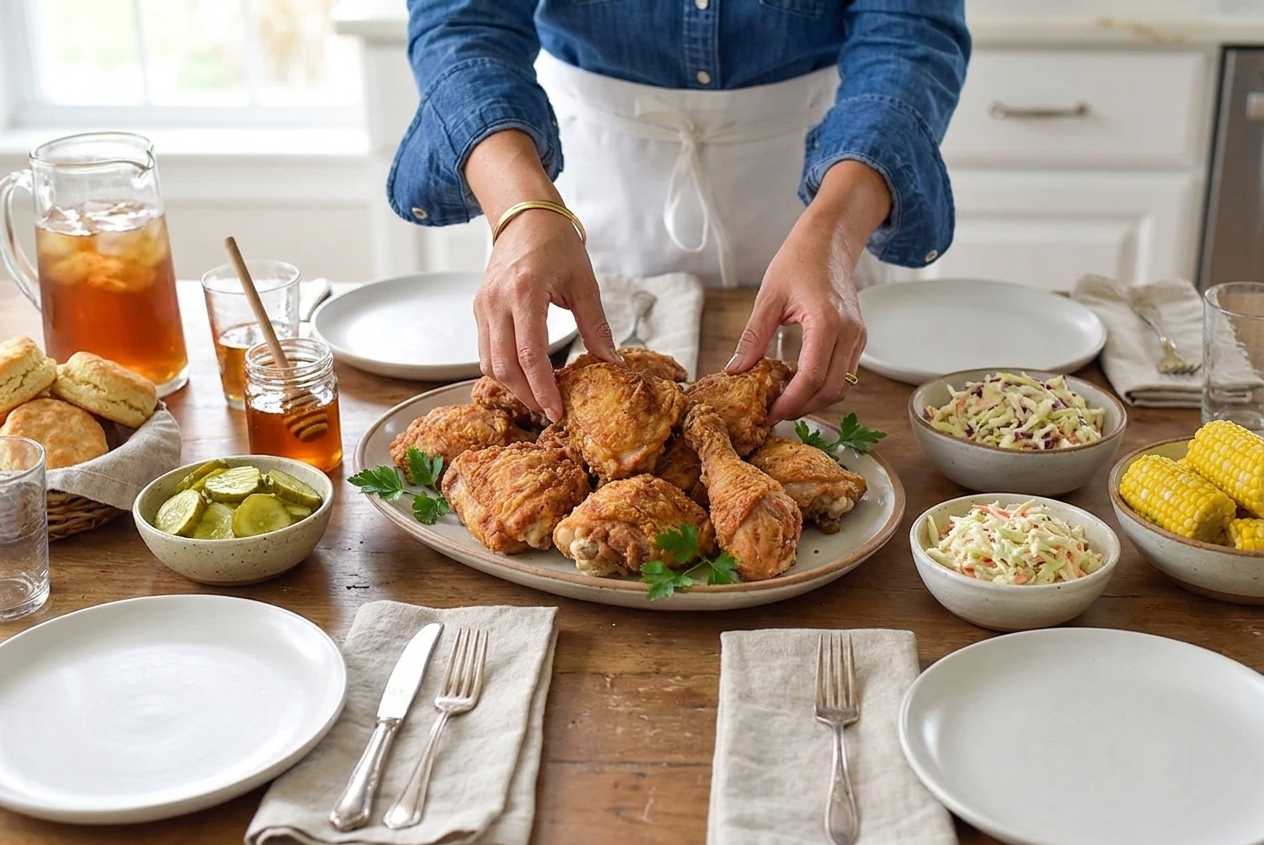
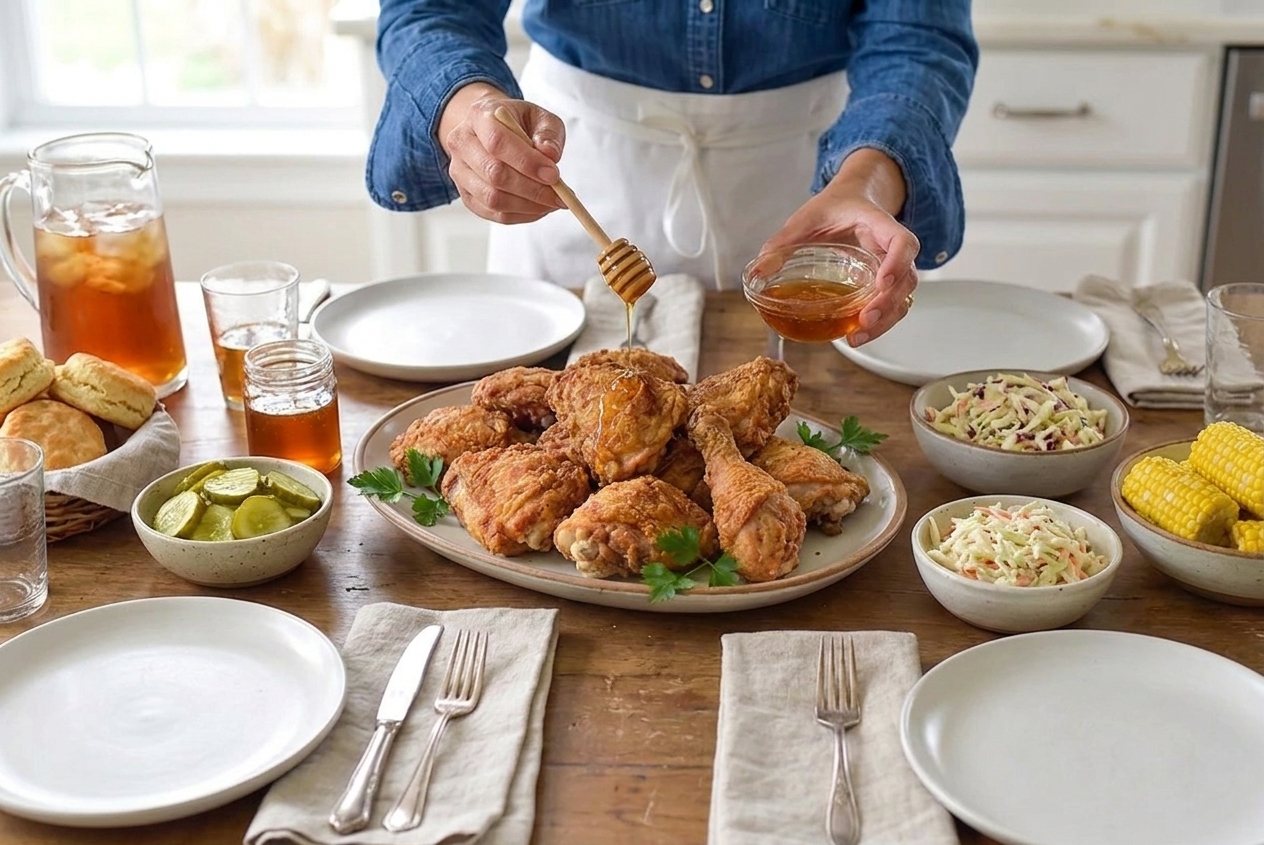
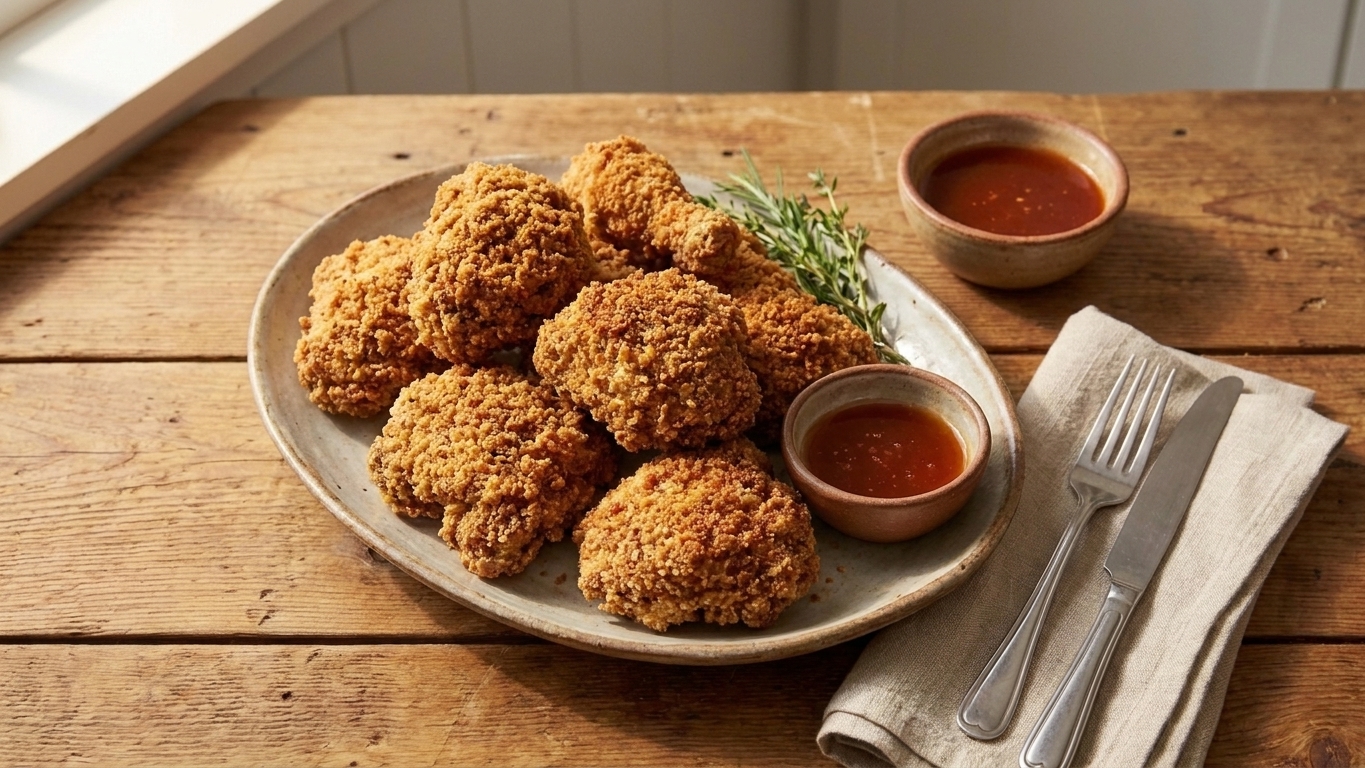
Serve with pickles, hot honey, or a squeeze of lemon. If you want the full cozy-carb experience, put it next to mashed potatoes, biscuits, or mac and cheese and accept the compliments.