Mom's Best Recipes
Recipe

Crispy Fish Fry

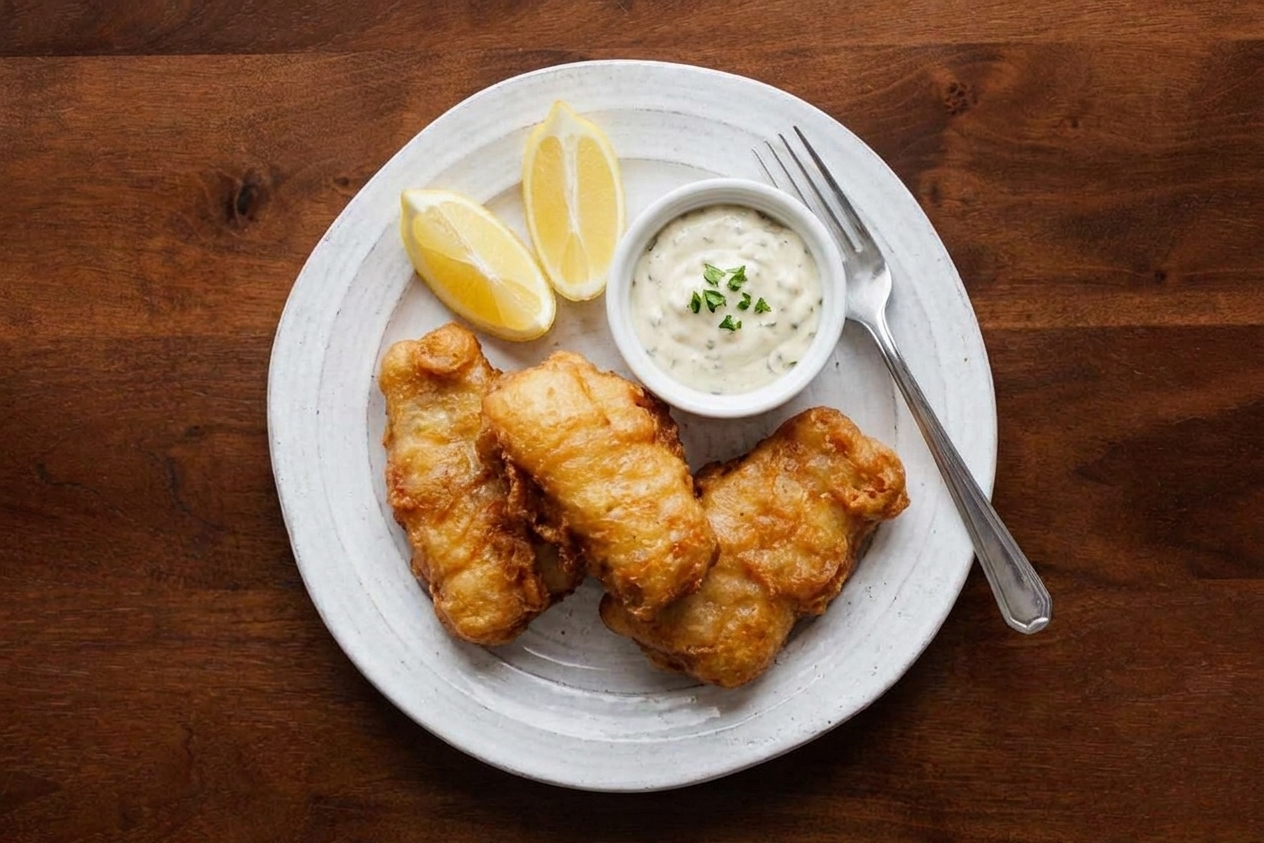
Golden, crunchy fish with a lightly spiced cornmeal crust, made with pantry ingredients and a no-stress frying method.

Author By Matt Campbell
4.8
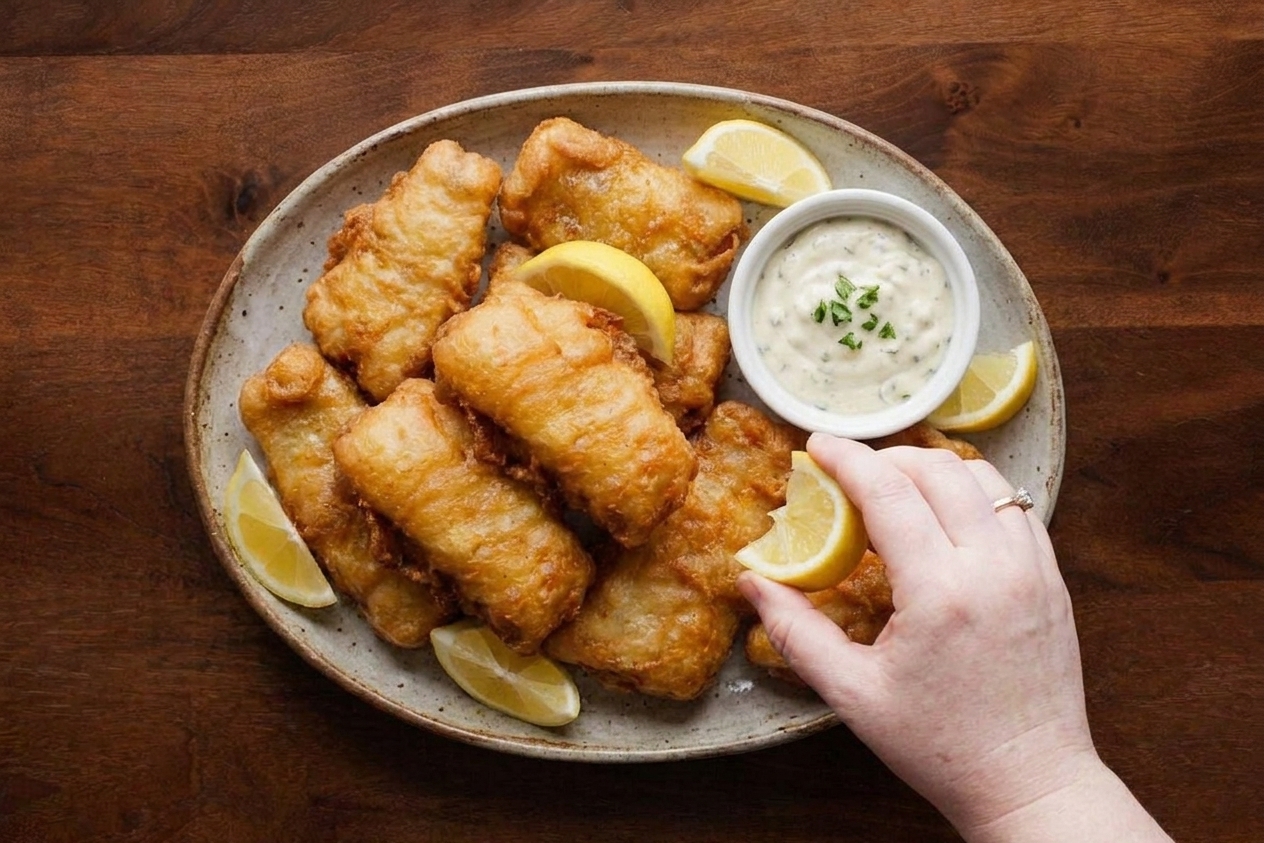
A platter-style serving of golden, crispy fried fish fillets with lemon wedges and a small bowl of tartar sauce on a wooden table

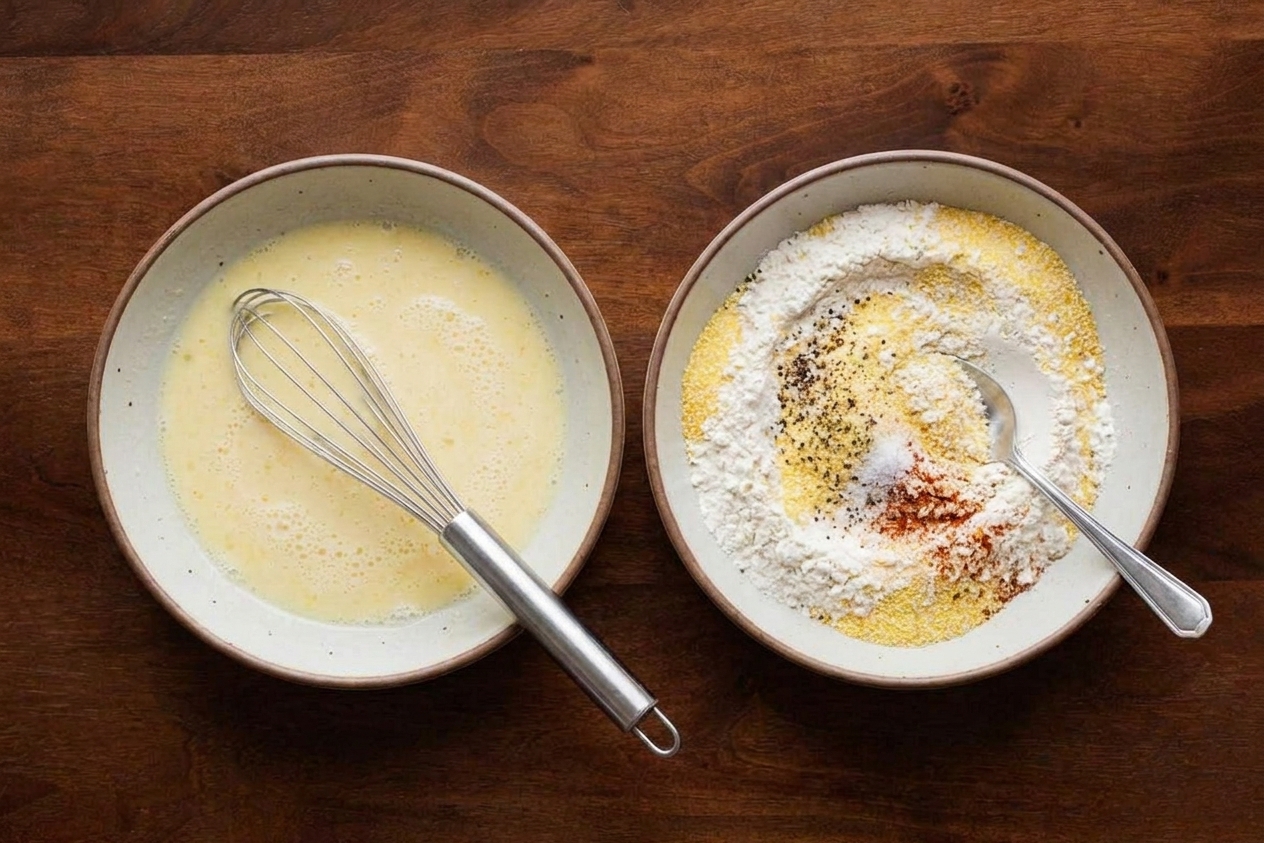
A good fish fry is not complicated. It is hot oil, fish kept chilled until you are ready to dredge, a crust that actually sticks, and seasoning that shows up to do its job. This version is my weeknight-friendly, friend-in-the-kitchen approach: a flour plus cornmeal coating for crisp edges, a little paprika and garlic for real flavor, and a simple dunk in buttermilk (or an easy swap) so you do not end up with sad bald spots where the breading fell off.

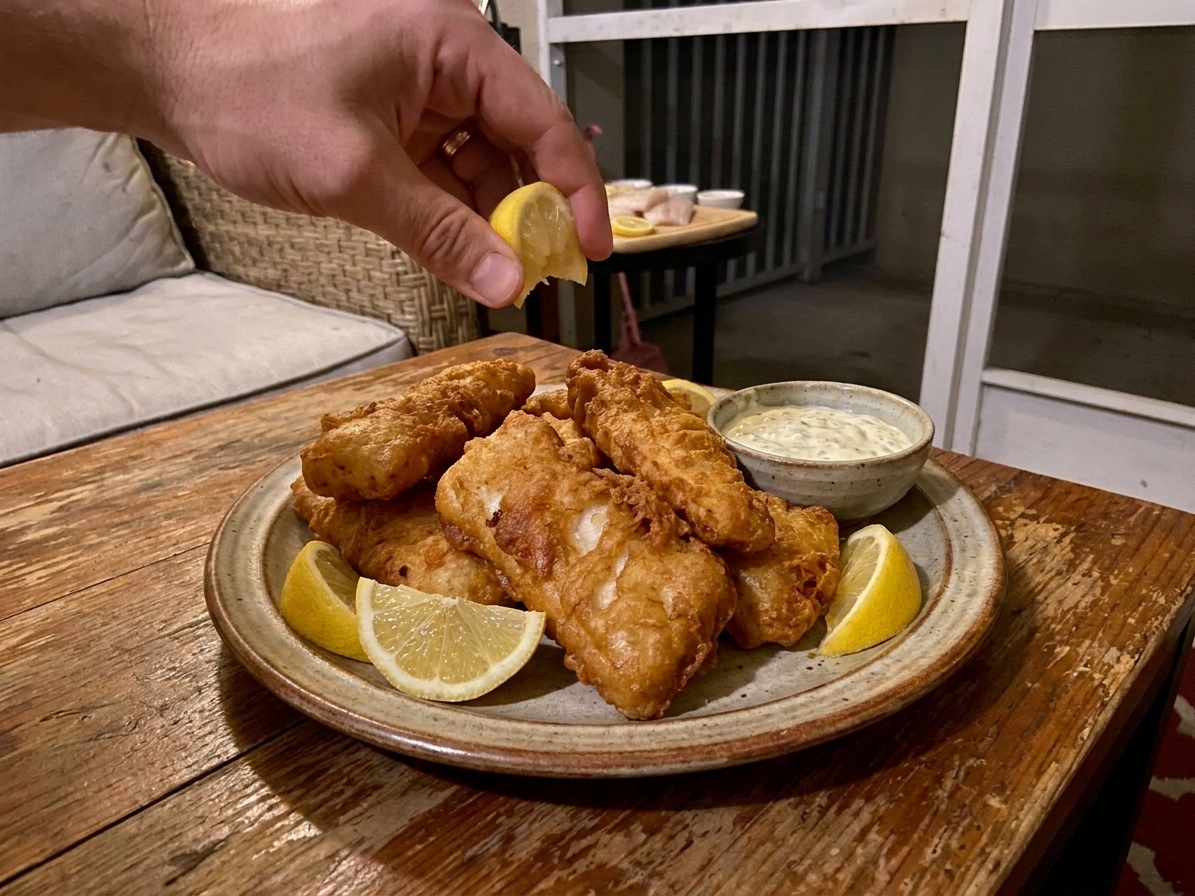
You can deep fry, shallow fry, or do a deeper shallow-fry in a Dutch oven. The goal is the same: golden outside, juicy inside, and that first bite crackle that makes everyone hover near the stove asking, “Is the next batch ready yet?”
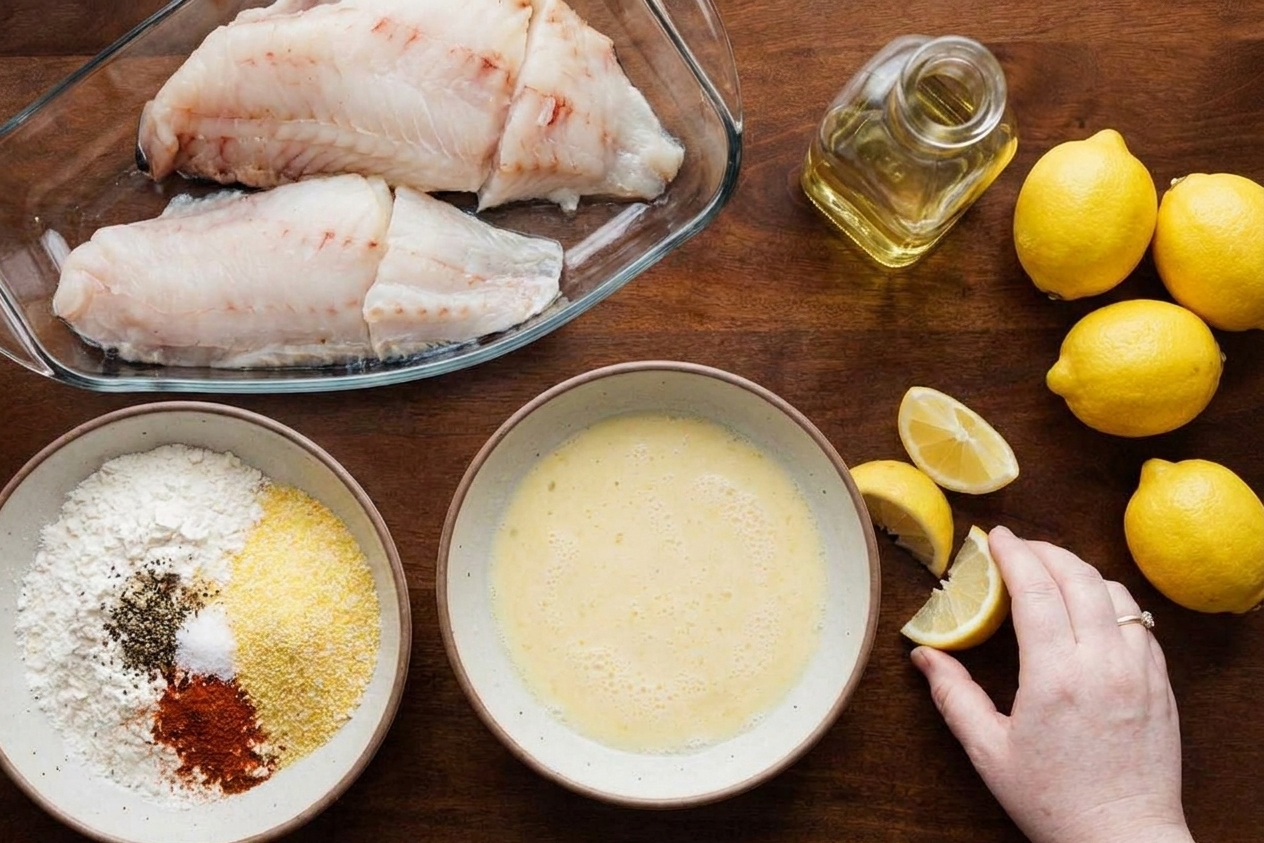
White fish fillets, flour, cornmeal, spices, eggs, buttermilk, lemon, and oil arranged together for a fish fry

Why It Works

  • Crispy crust that stays put: A quick rest after dredging helps the coating bond before it hits the oil.
  • Bright, not greasy: Proper oil temperature means the crust fries fast and does not soak up oil.
  • Flexible fish options: Works with cod, haddock, pollock, catfish, tilapia, or even thick pieces of salmon.
  • Seasoning in layers: Salt and spices go in the dredge and you finish with a light pinch right after frying.

Pairs Well With

Storage Tips

Fried fish is best fresh, but leftovers can still be very good if you treat them right.

Refrigerate

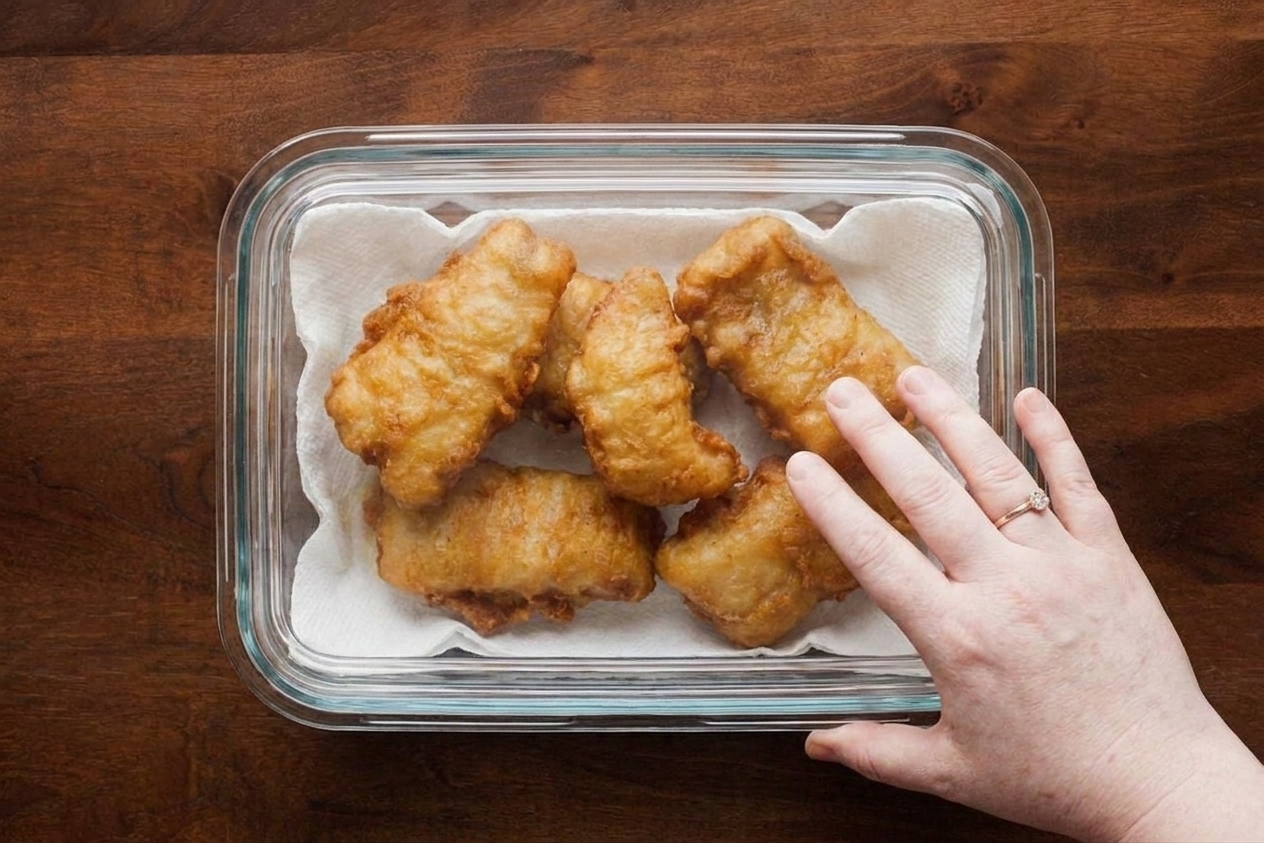
  • Cool completely, then store in an airtight container lined with paper towels.
  • For best quality, eat within 2 days. (Food-safety guidance is often longer, but fried fish is happiest sooner.)

Reheat (to bring back the crunch)

  • Oven: Heat to 425°F. Put fish on a wire rack over a sheet pan and bake 8 to 12 minutes, flipping once.
  • Air fryer: 375°F for 4 to 7 minutes, flipping halfway.
  • Avoid the microwave if you want crisp. It turns the crust soft fast.

Can you freeze it?

  • You can, but the crust will lose some of its magic. Freeze in a single layer, then bag it once solid. Reheat from frozen at 425°F until hot and crisp, about 15 to 18 minutes depending on thickness.
Cooled fried fish stored in an airtight container lined with paper towels for leftovers

Common Questions

What fish is best for a fish fry?

Any firm, mild white fish is perfect. Cod, haddock, pollock, and catfish are classic choices. Tilapia works too, just keep the pieces a little thicker so it stays juicy.

How do I keep fried fish crispy?

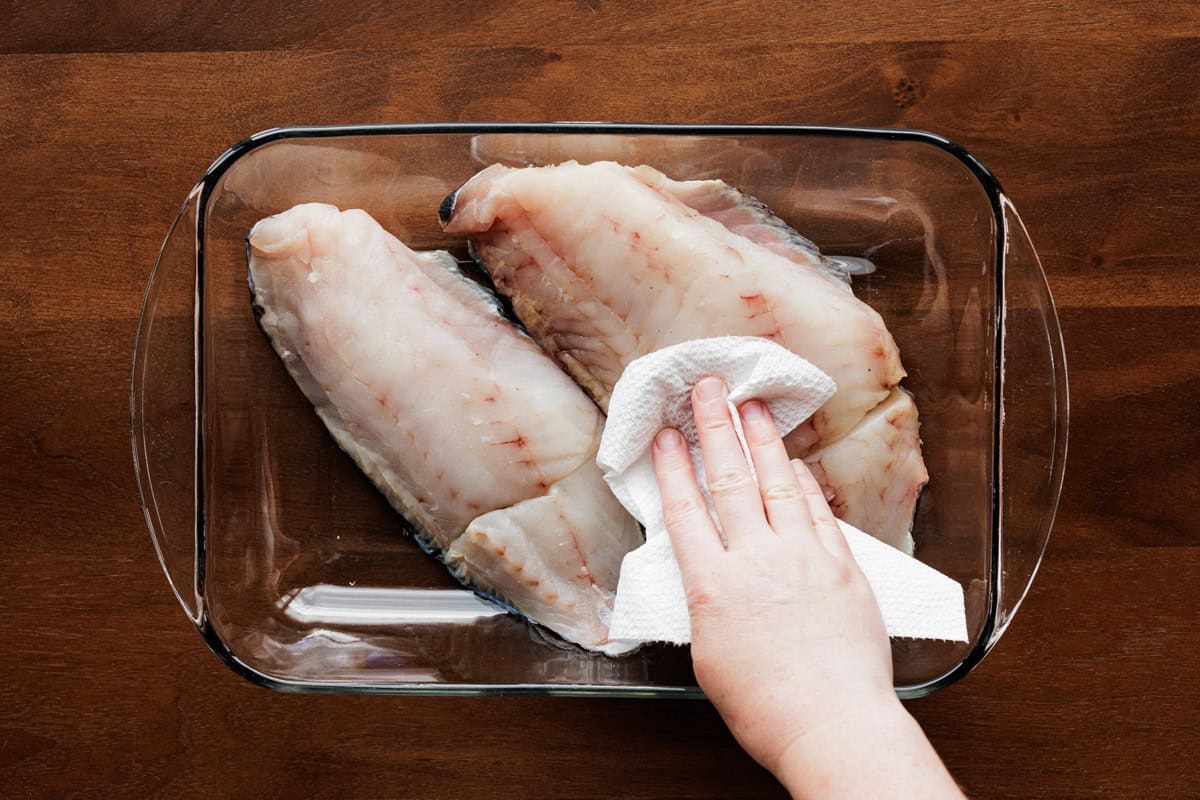
  • Pat the fish dry before dredging.
  • Let the coated fish rest 10 minutes before frying.
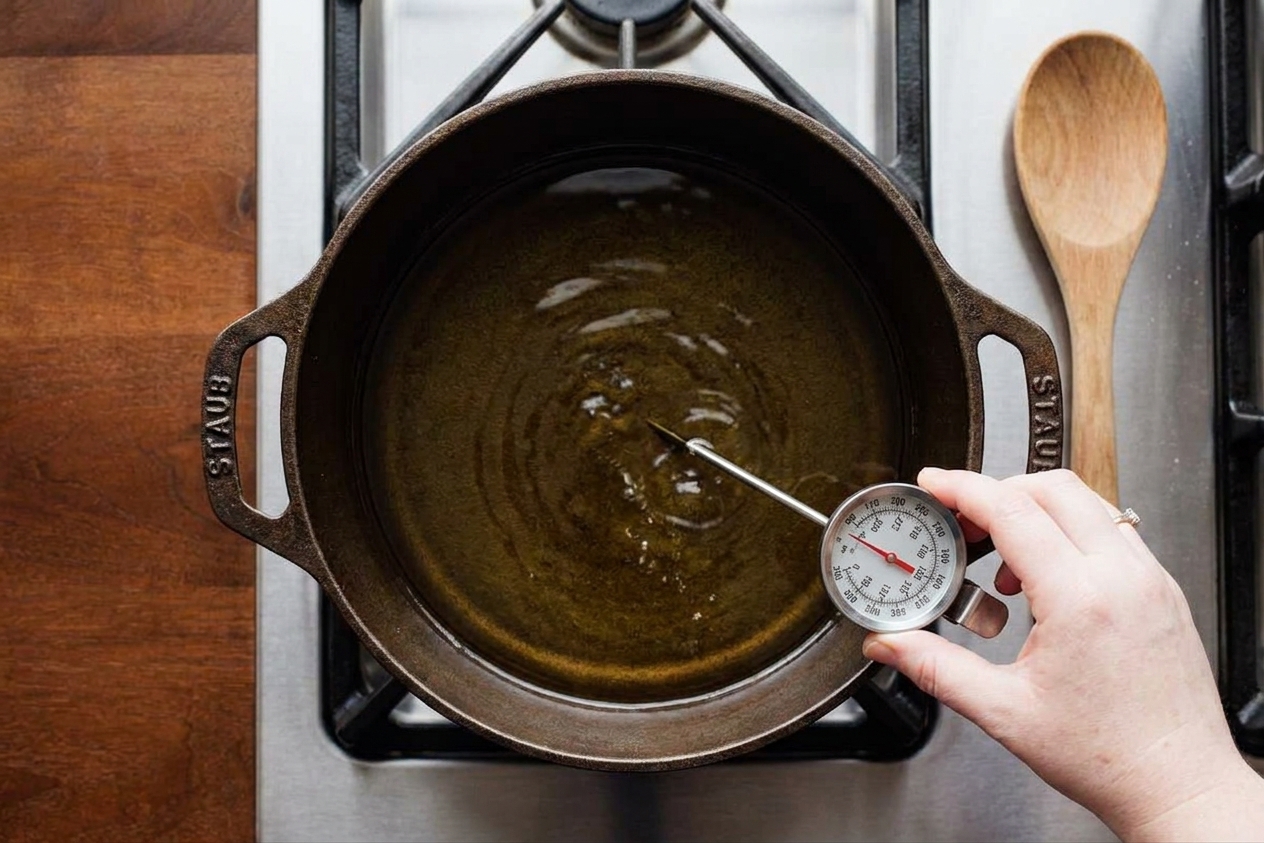
  • Keep oil at 350°F to 365°F.
  • Do not overcrowd the pan.
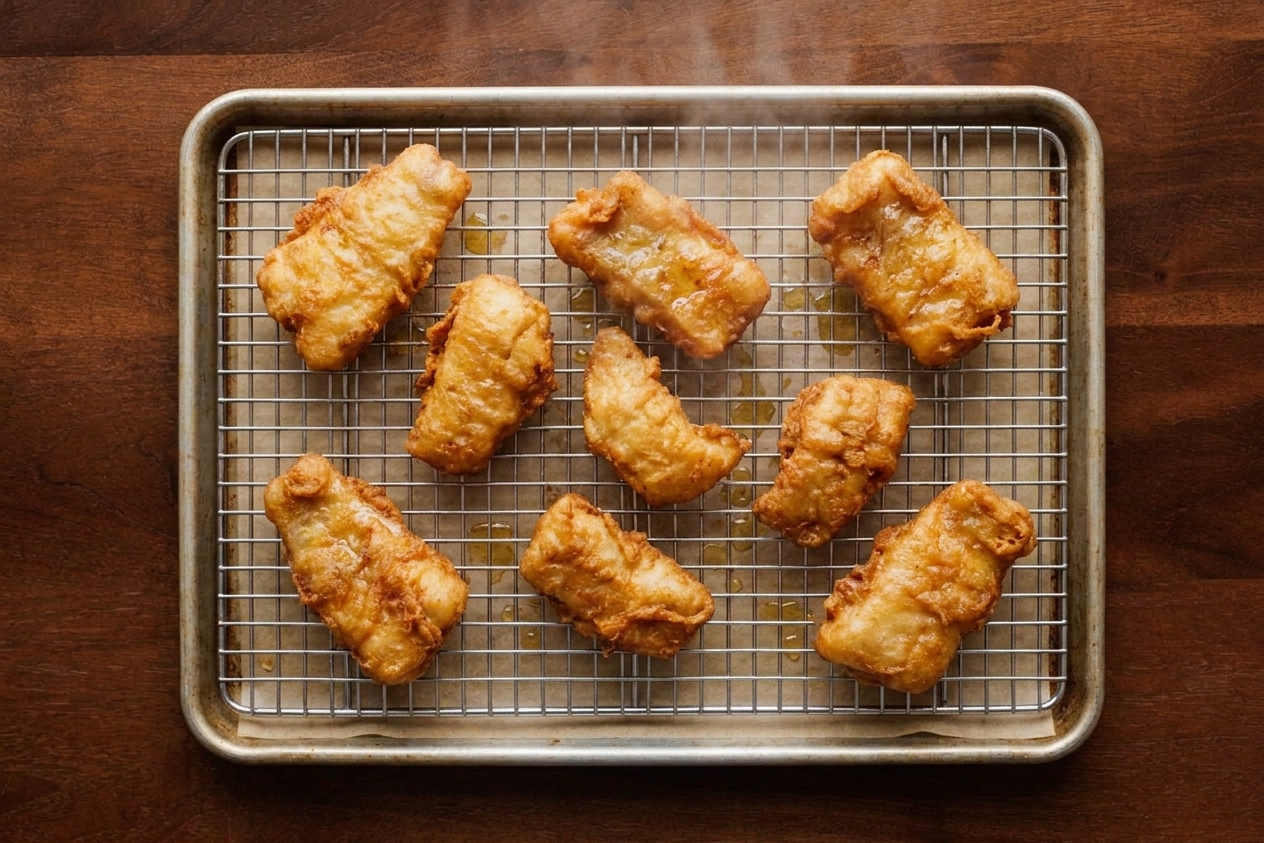
  • Drain on a wire rack, not directly on paper towels.

Do I need beer batter?

Nope. Beer batter is great, but a seasoned dredge is easier and reliably crisp. This flour and cornmeal combo gives you crunch without making the coating heavy.

Can I pan fry instead of deep fry?

Yes. Shallow fry in about 1/2 inch of oil. Turn once the first side is deeply golden and releases easily from the pan.

How do I know when the fish is done?

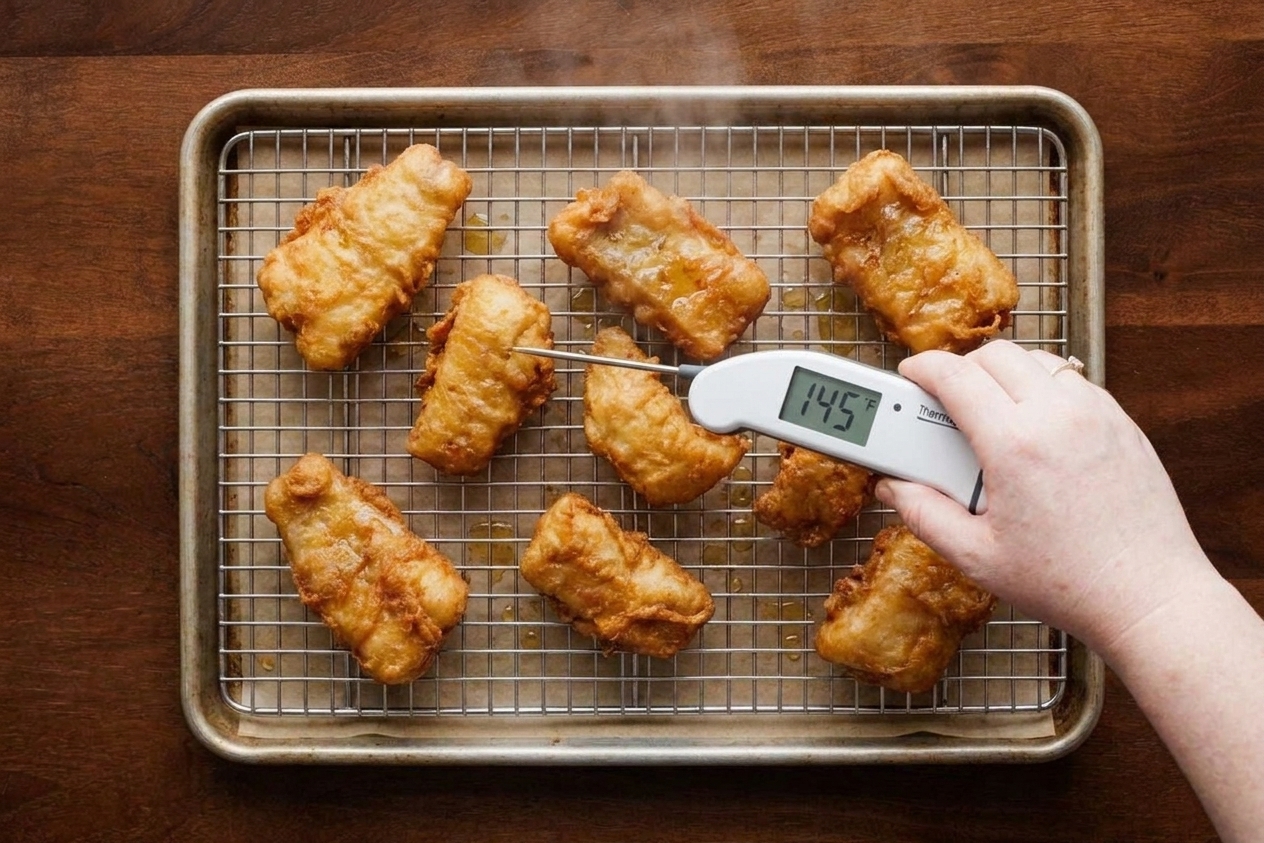
It should flake easily and reach 145°F in the thickest part. If you do not have a thermometer, look for opaque flesh and a steady sizzle that calms down a bit as moisture cooks off.

Why is my breading falling off?

Usually one of these: the fish was wet, the oil was not hot enough, or you skipped the rest after dredging. Also, flip gently with a fish spatula or tongs, not a fork.

An instant read thermometer being inserted into a thick piece of freshly fried fish resting on a wire rack

I love a fish fry because it is one of the quickest ways to turn a regular night into a “grab a plate and hang out in the kitchen” night. The first time I tried making fried fish at home, I did everything wrong. Oil too cool, fish too wet, breading sliding off like it had places to be. Now I keep it simple: dry the fish, season the dredge like I mean it, and give the coating a few minutes to set. Suddenly it is crunchy, golden, and dangerously snackable while you pretend you are “just checking for doneness.”