Mom's Best Recipes
Recipe

Crispy Calamari With Lemon Garlic Aioli

Lightly coated squid rings and tentacles, fried fast for crisp edges and a tender bite, served with a punchy lemon garlic aioli.

Author By Matt Campbell
4.8
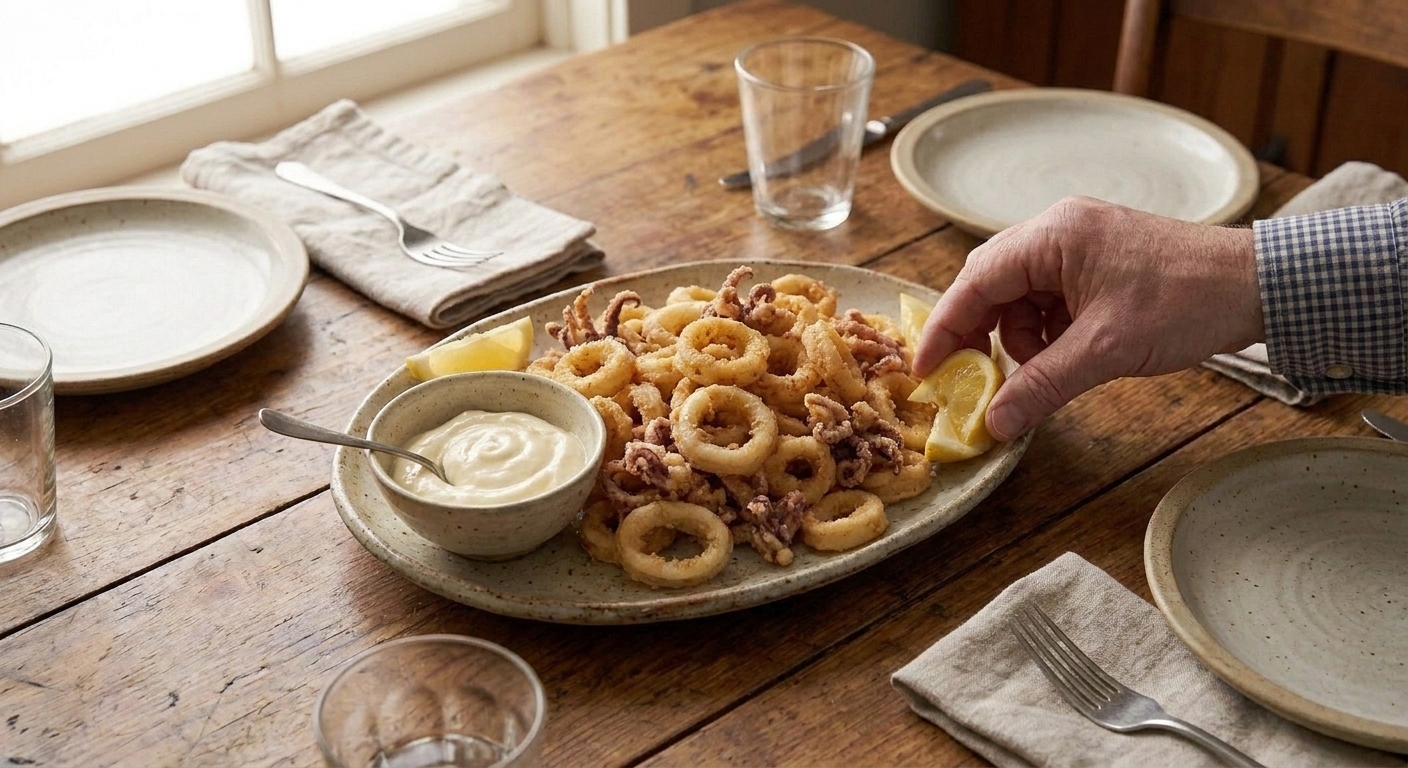
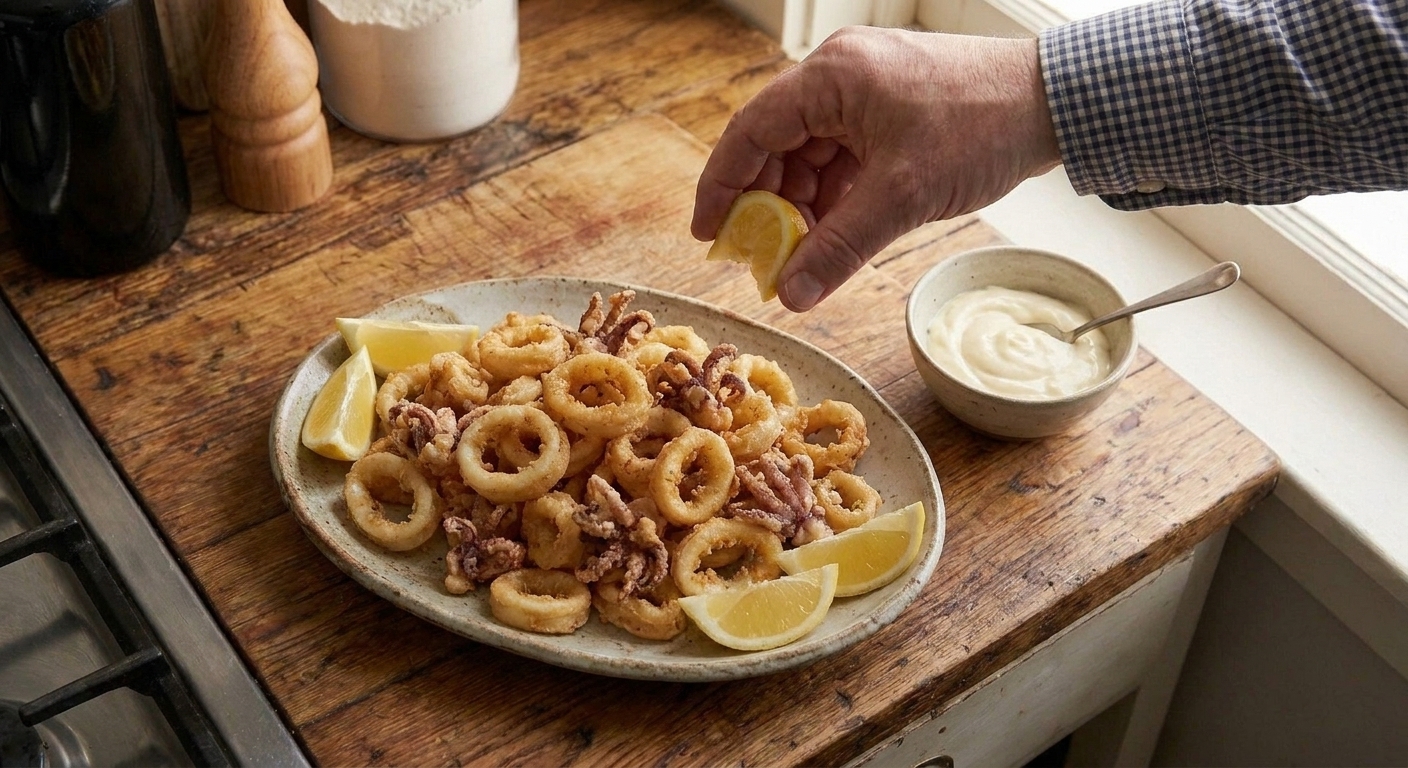
A platter of golden fried calamari rings and tentacles with lemon wedges and a small bowl of aioli on a wooden table

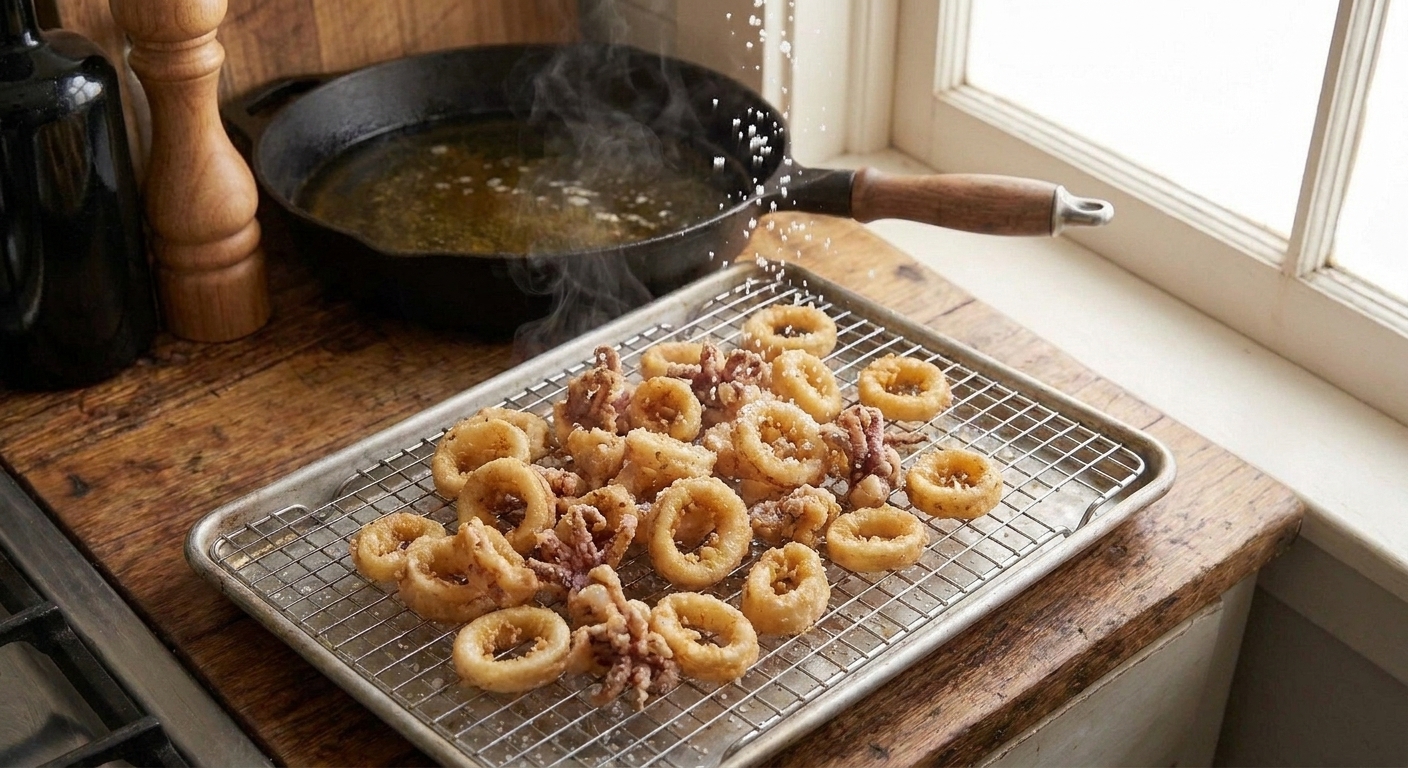
Calamari has a reputation for going from perfect to rubber band in the time it takes to say “Is the oil hot yet?” So here is my low-drama version: a quick soak that helps keep squid tender, a light cornstarch-forward coating for that shattery crunch, and a fast fry so nothing has time to toughen up.

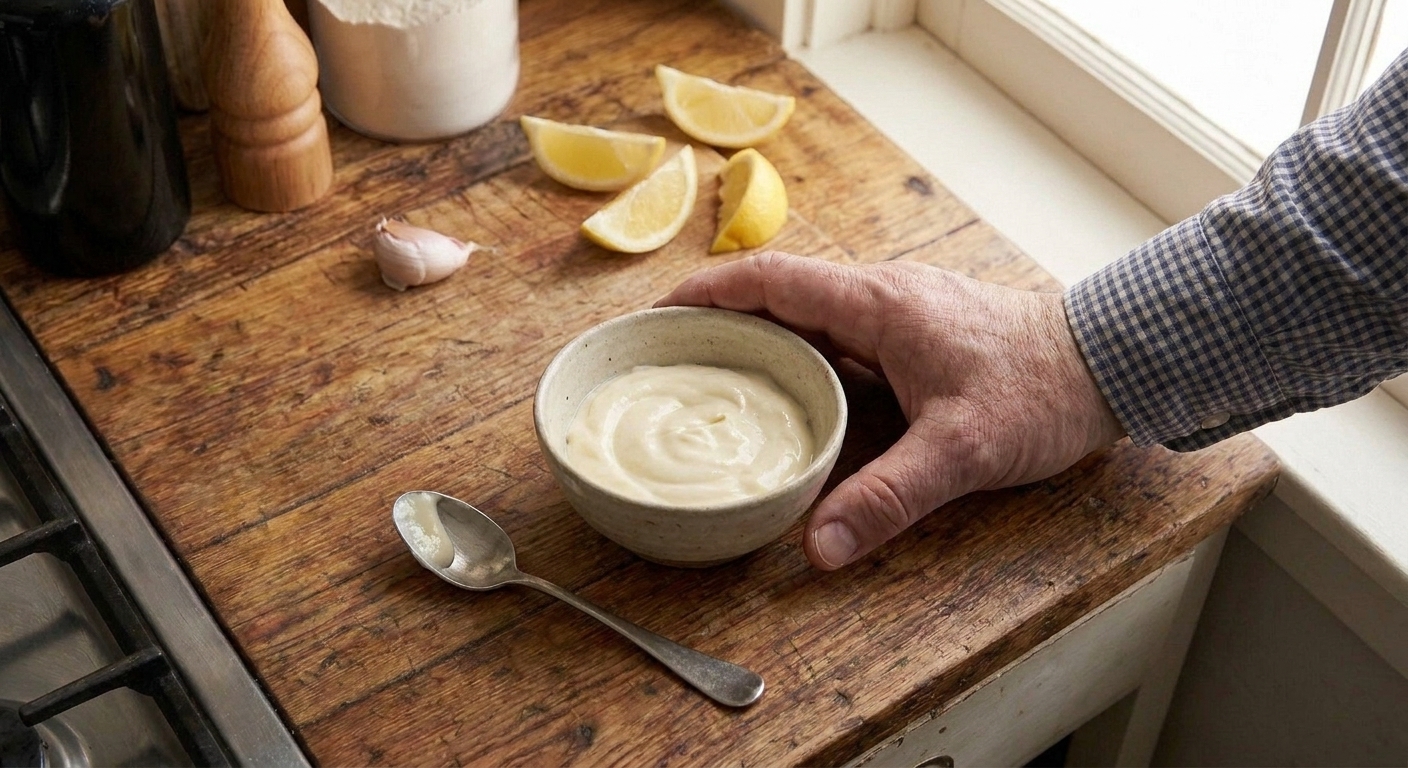
We are pairing it with a lemon garlic aioli that tastes like it belongs next to the ocean, even if you are eating it in sweatpants at your kitchen counter. Serve it as an appetizer, throw it into a sandwich, or do what I do and “taste test” half the batch before it ever hits the table.
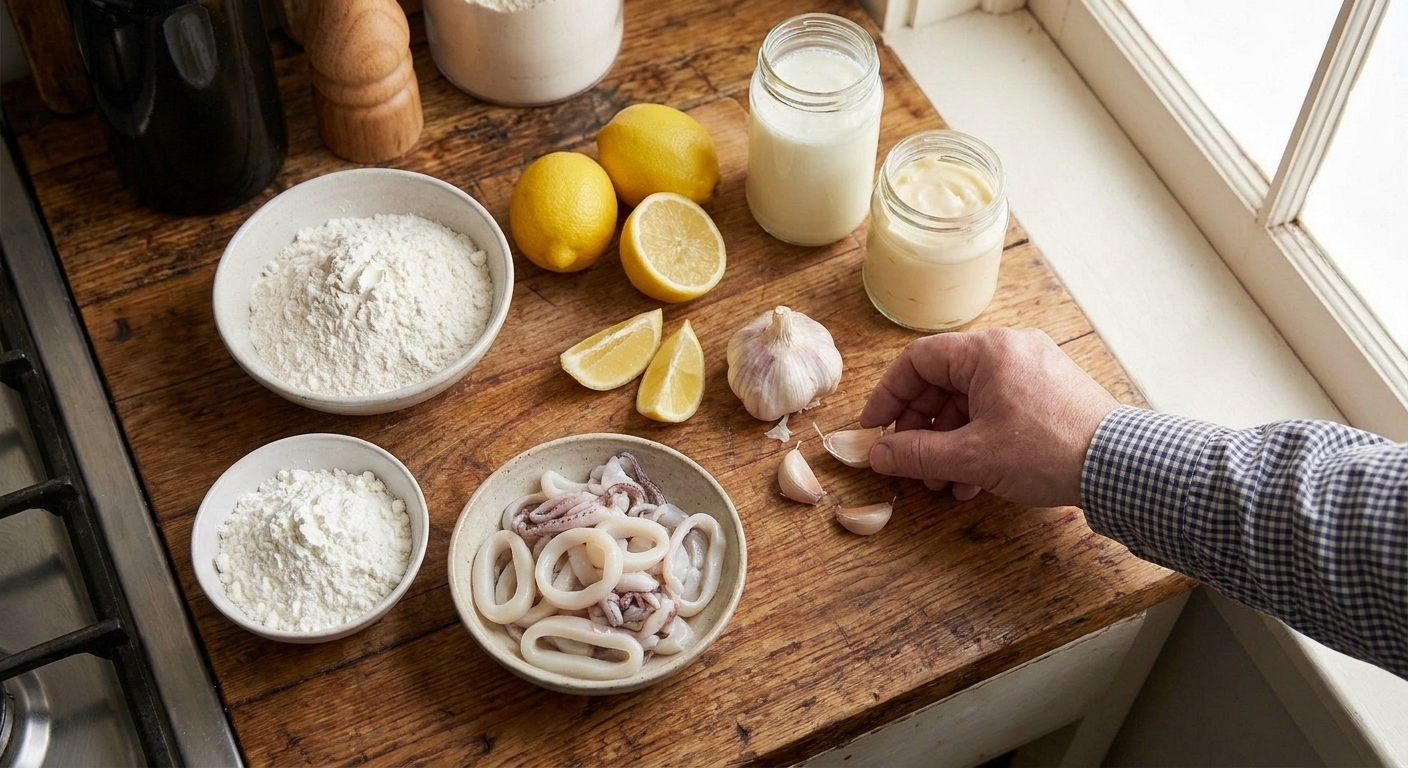
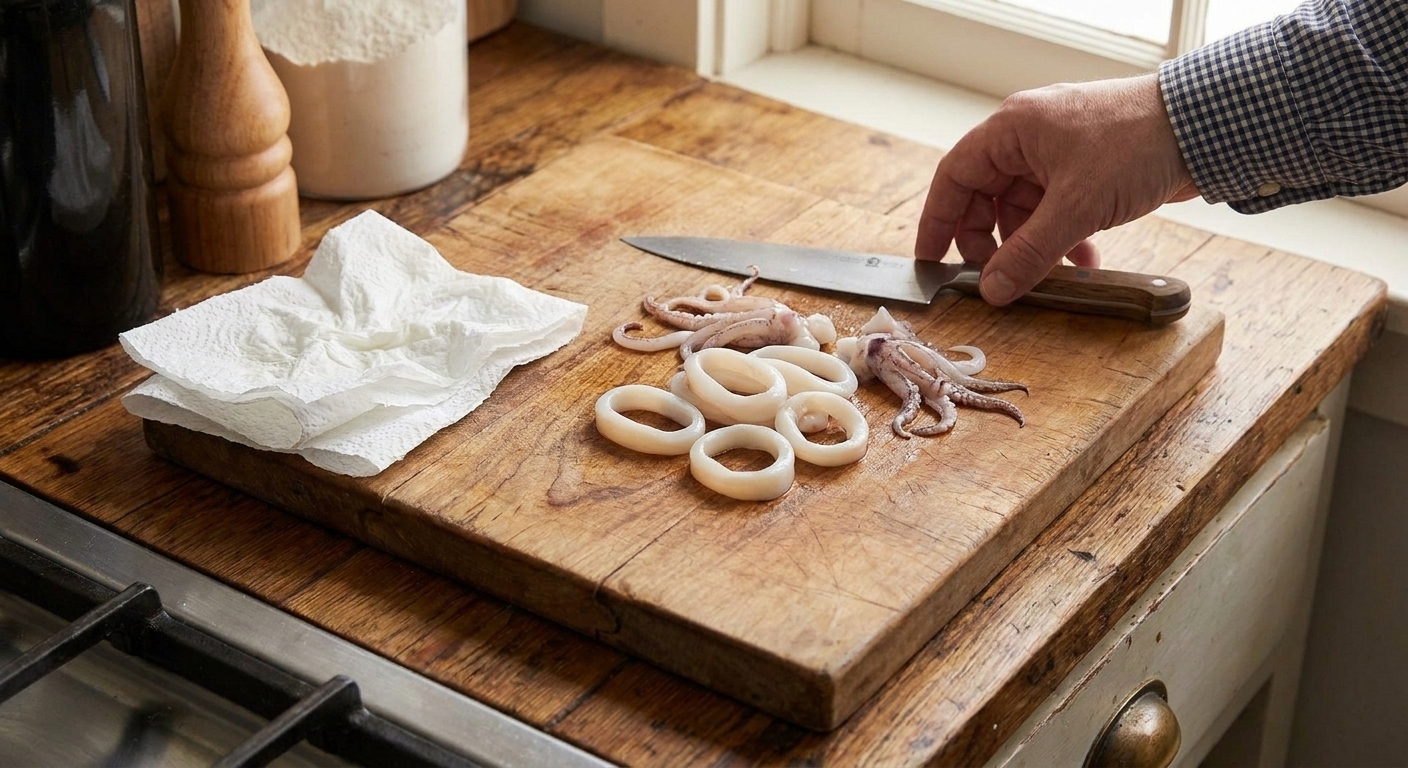
Fresh squid rings and tentacles, flour, cornstarch, lemons, garlic, buttermilk, and mayonnaise arranged on a bright kitchen counter

Why It Works

  • Tender, not chewy: a short buttermilk soak and a fast fry keep the squid in the sweet spot.
  • Extra crisp coating: cornstarch in the dredge makes a light, crunchy shell that does not get bready.
  • Flavor built in: seasoning in the coating plus a lemony aioli means every bite has a little pop.
  • Weeknight friendly: you can prep the sauce while the squid soaks, then fry in quick batches.

Pairs Well With

Storage Tips

Calamari is at its best right after frying, but if you have leftovers, you can still bring back some crisp.

Refrigerate

Cool completely, then store in an airtight container with a paper towel tucked in to absorb moisture. Keep for up to 2 days.

Recrisp

  • Oven: 425°F on a wire rack over a sheet pan for 6 to 10 minutes, flipping once.
  • Air fryer: 380°F for 3 to 6 minutes, shaking halfway.

Avoid microwaving unless you are okay with chewy. The aioli keeps well in the fridge for up to 5 days.

Common Questions

How do I keep calamari from getting rubbery?

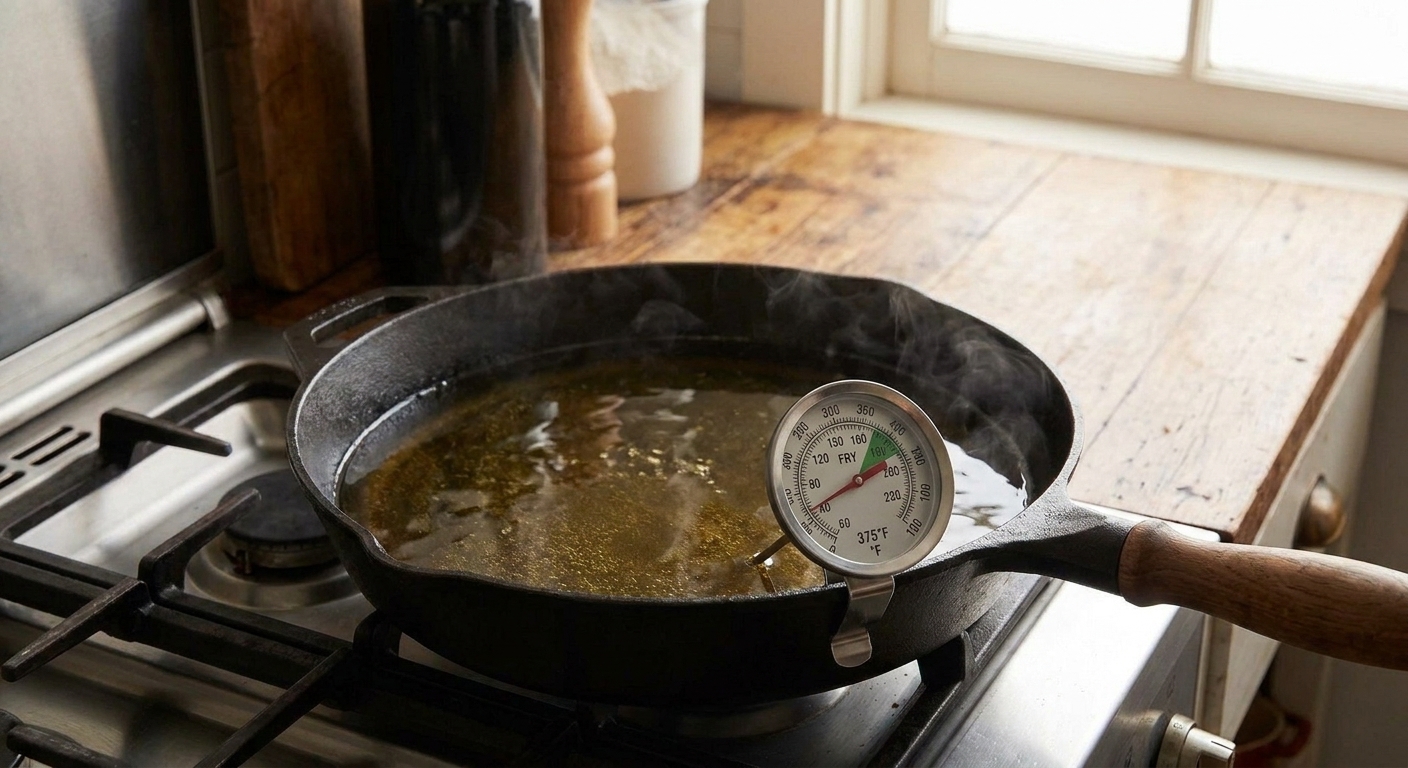
As a rule of thumb: cook it fast or cook it a long time. For frying, we do fast. Keep the oil around 350°F to 365°F and fry in small batches so the temperature does not crash. Start checking at 60 seconds. Most calamari is done by 90 seconds, but thicker pieces can take up to 120 seconds.

Should I use rings, tentacles, or both?

Both is classic and gives you variety. Rings are easier for timing, tentacles get especially crisp and craggy. If you are nervous, start with rings only.

Can I bake calamari instead of frying?

You can, but it will be more “toasty” than truly crisp. For a better non-fry option, use an air fryer at 400°F, spray lightly with oil, and cook 6 to 8 minutes, turning once.

What oil is best for frying?

Use a neutral, high-heat oil like canola, peanut, or avocado oil. Olive oil is not ideal here.

What if my coating falls off?

Make sure the squid is well-drained, then dredge and fry right away. Also, do not overcrowd the pan. Steam is the enemy of crisp.

Any frying safety tips?

Do not fill the pot more than halfway, and keep the oil at a steady temp with your thermometer. Keep kids and pets out of the splash zone, and never drop in squid that is dripping wet. Use tongs or a spider to lower pieces in gently, and keep a lid nearby in case you need to smother a flare-up.

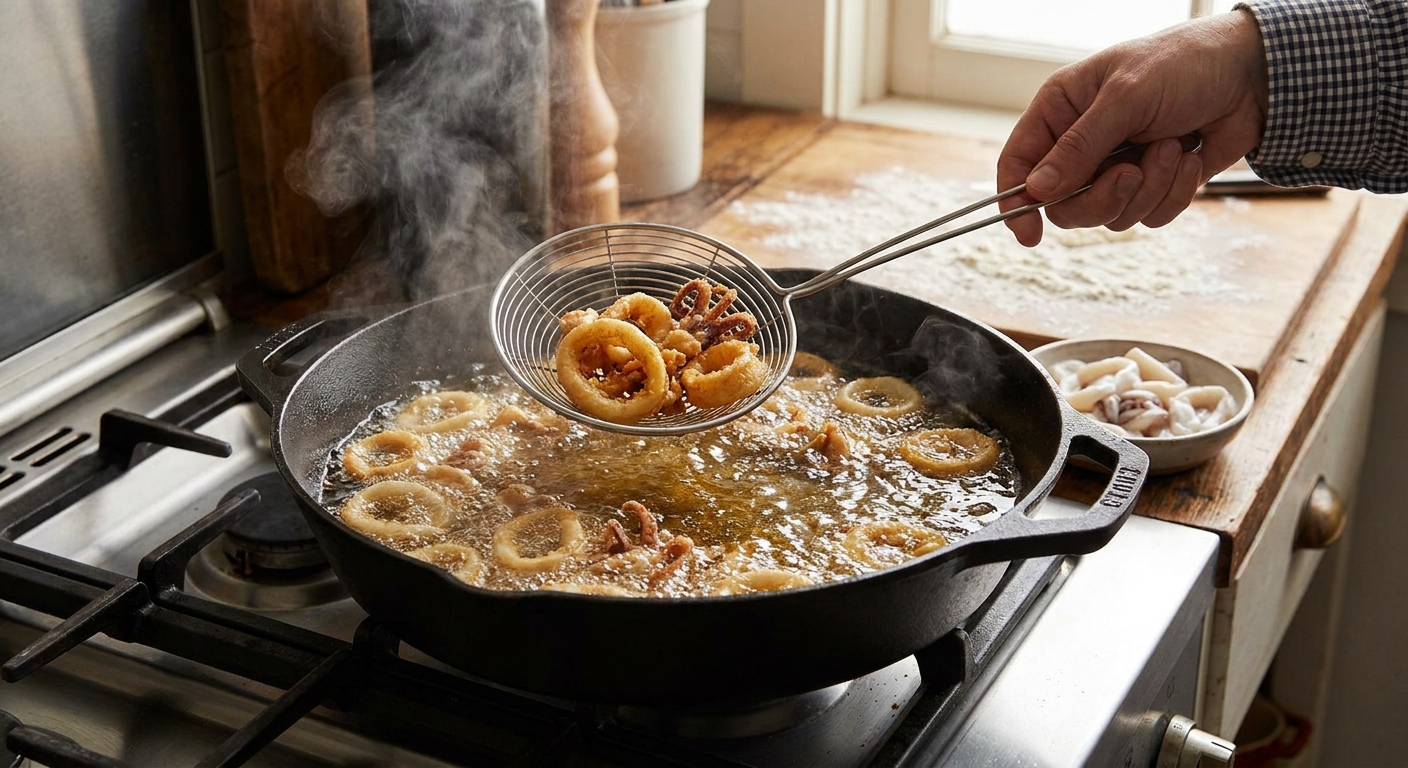
Calamari rings frying in hot oil in a wide skillet with a spider strainer lifting a golden piece

I used to treat squid like it was some restaurant-only ingredient, the kind of thing you order out because you are convinced your kitchen will somehow turn it into rubber. The first time I tried making calamari at home, I did every mistake: oil not hot enough, pan crowded, and I kept “checking” it like it was a roast. Shockingly, it was chewy.

Now I cook it like I am slightly impatient on purpose: hot oil, quick fry, calm confidence. The payoff is wild for how simple it is, especially when you dip a crispy tentacle into lemony aioli and realize you just made bar food at home with zero mystery.