Mom's Best Recipes
Recipe

Crispy Korean Rice Cakes in Sweet-Spicy Sauce

Chewy Korean rice cakes get a quick sear for crisp edges, then get tossed in a glossy gochujang sauce that's sweet, spicy, and deeply cozy.

Author By Matt Campbell
4.8
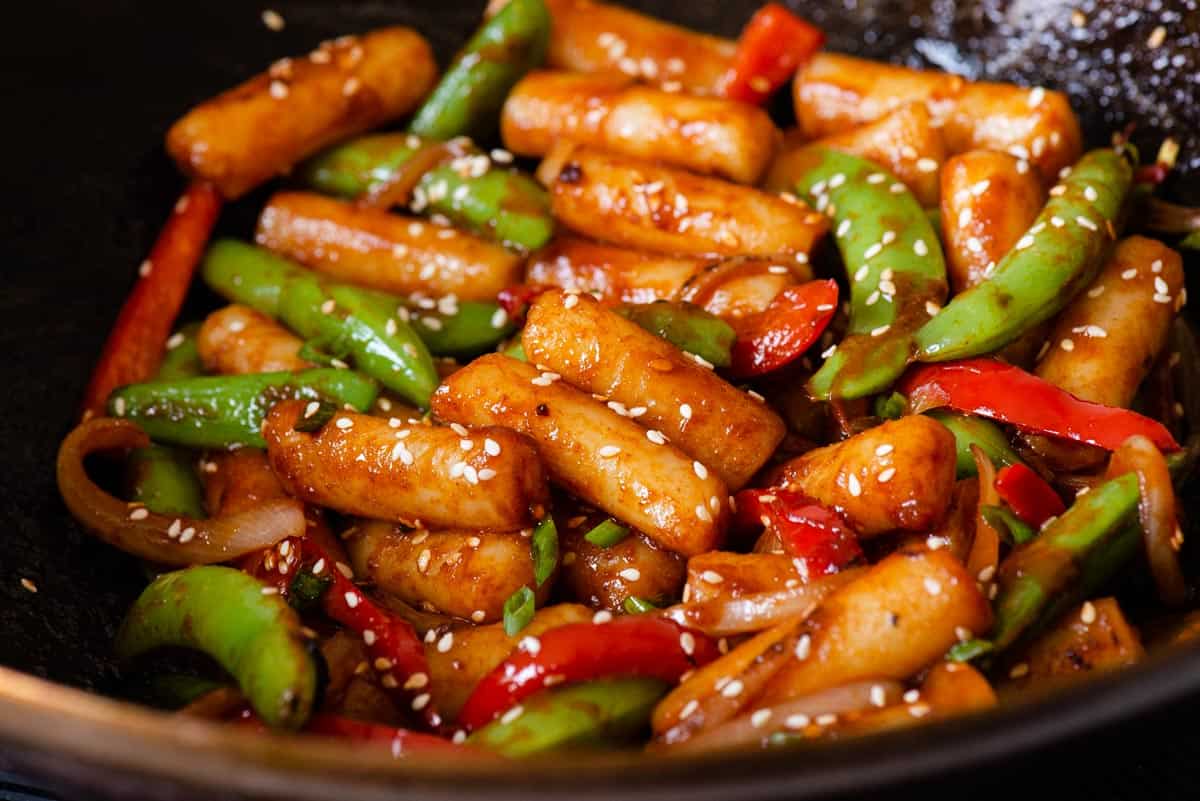
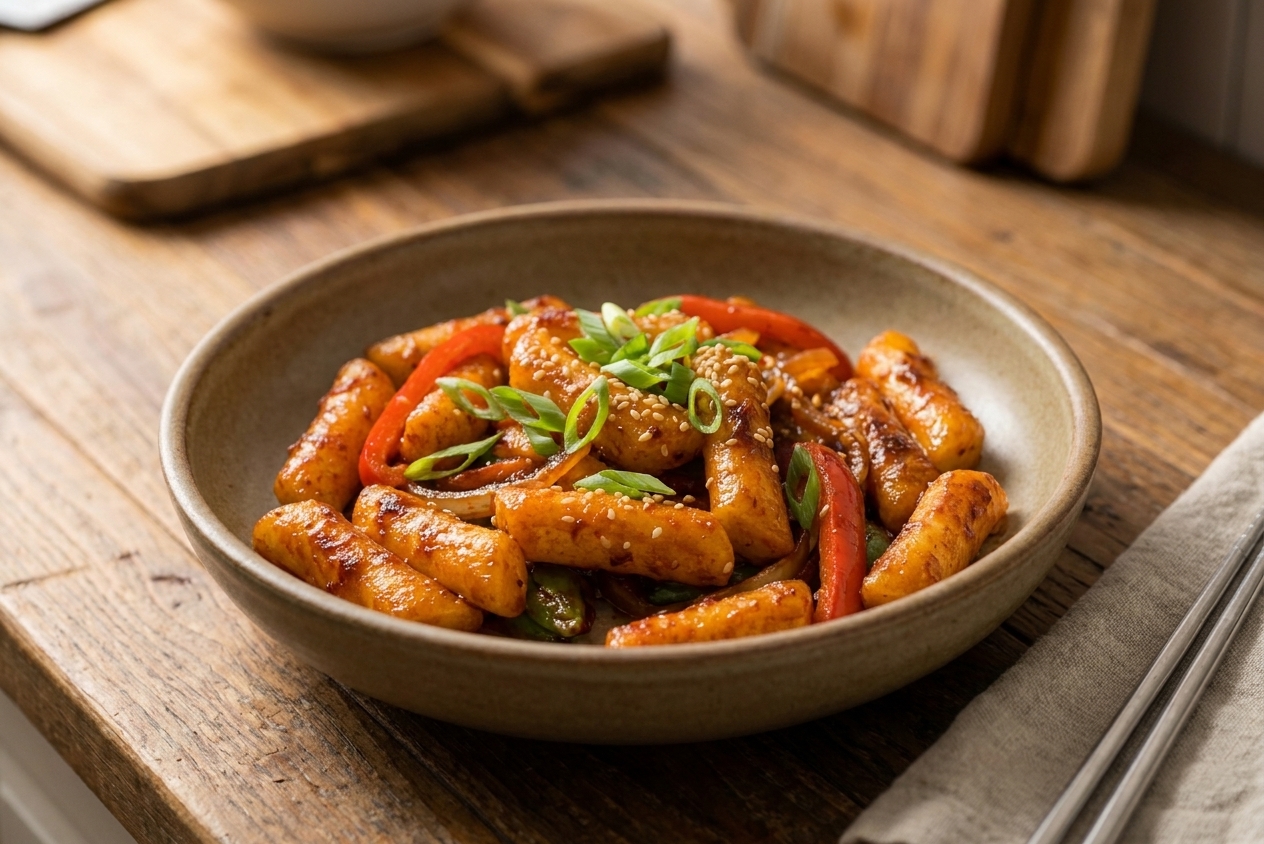
A shallow bowl of glossy red-orange Korean rice cakes with crisp edges, topped with scallions and sesame seeds on a wooden table with chopsticks nearby

If you've ever stood in front of a bag of Korean rice cakes at the grocery store thinking, what do I even do with these, I've got good news. You're about 20 minutes away from a skillet full of chewy, bouncy rice cakes with crisp edges and a sauce that tastes like it took way longer than it did.

This is my weeknight “I want comfort but I also want flavor” move. We pan-sear the rice cakes first so they get those golden spots, then we glaze them in a quick gochujang sauce that hits sweet, spicy, and savory all at once. No fuss, no rare ingredients beyond the gochujang, and yes, tasting as you go is encouraged.
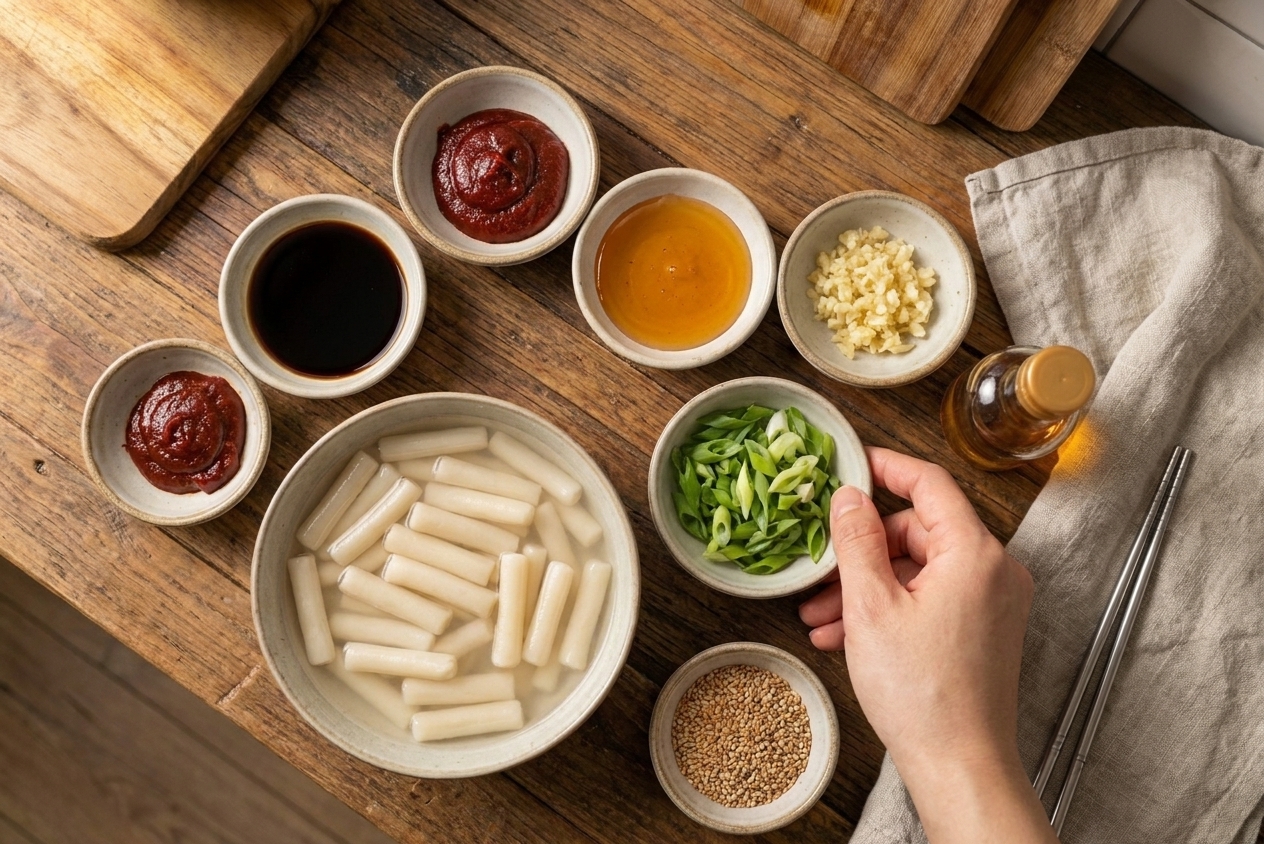
A kitchen counter with Korean rice cakes, gochujang, soy sauce, honey, garlic, scallions, sesame oil, and sesame seeds set out in small bowls

Why It Works

  • Crisp edges, chewy centers: Searing the rice cakes before saucing gives you that best-of-both-worlds texture.
  • Big flavor, small effort: The sauce is pantry-friendly and comes together in one bowl while the skillet heats.
  • Flexible heat level: You control the spice by adjusting gochujang and adding gochugaru only if you want extra kick.
  • Weeknight-friendly: One pan, minimal prep, and it still feels like a treat.

Pairs Well With

Storage Tips

Fridge: Store leftovers in an airtight container for up to 3 days. Rice cakes will firm up when cold. That's normal.

Reheat (best method): Add the rice cakes to a skillet with a splash of water, cover for 2 to 3 minutes to steam and loosen the sauce, then uncover and stir until glossy again. If you want the edges crisp again, let them sit undisturbed for 30 to 60 seconds at the end.

Microwave: Works in a pinch. Add a teaspoon or two of water, cover loosely, and heat in 30-second bursts, stirring in between.

Freezing: I don't love freezing sauced rice cakes because the texture can turn a little tough. If you want to freeze, freeze the rice cakes plain and make the sauce fresh later.

Common Questions

What kind of rice cakes should I buy?

Look for Korean cylinder-shaped rice cakes (tteok), often labeled “tteokbokki rice cakes.” They come fresh (refrigerated), frozen, or shelf-stable vacuum packed. All work here.

Do I need to soak rice cakes first?

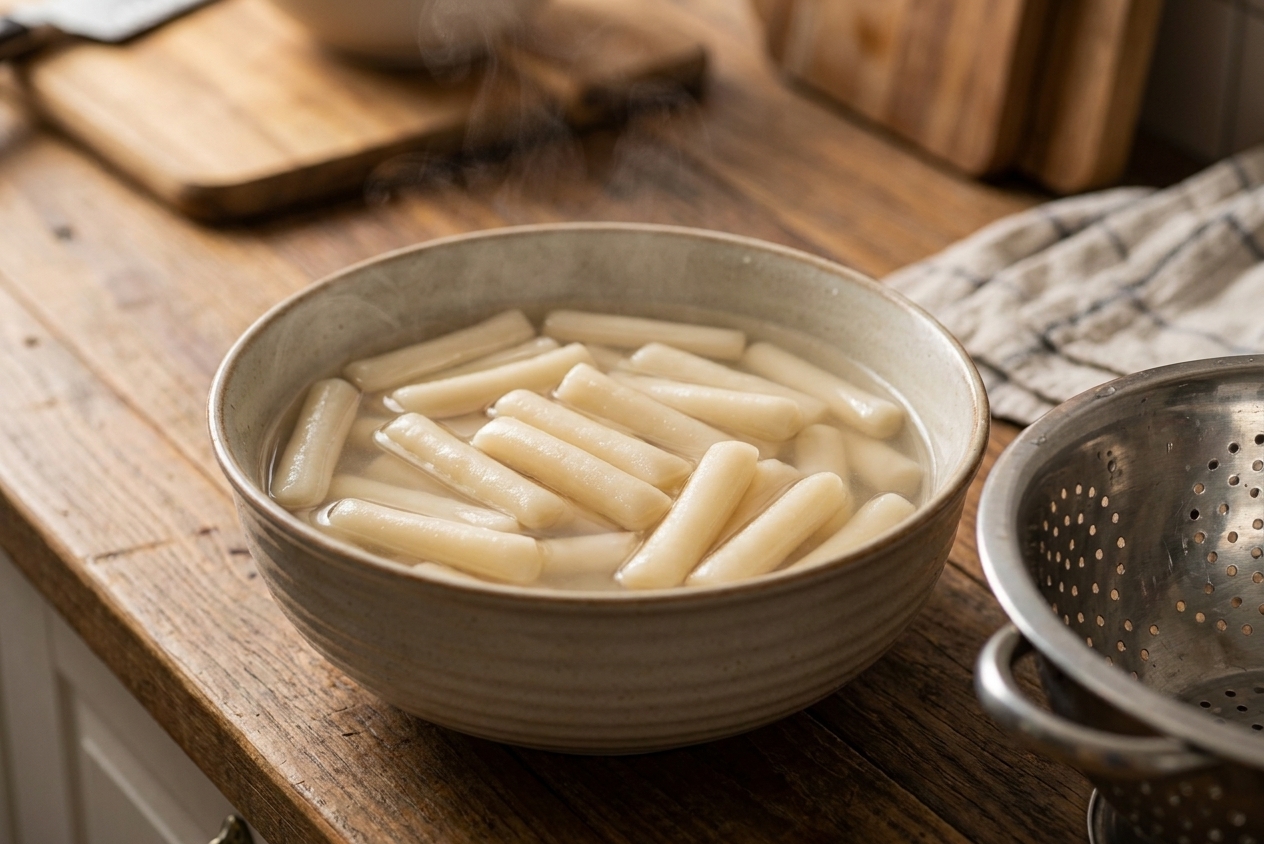
If they're frozen or very firm, yes. Soak in warm water for 10 minutes, then drain. If they're fresh and soft, you can usually skip soaking.

Is gochujang very spicy?

It's more sweet-spicy and savory than it is burn-your-mouth hot. Brands vary, so start with 2 tablespoons, taste the sauce, then add more if you want.

Can I make this without gochujang?

You can, but it won't taste quite like tteokbokki. In a pinch, mix a little miso or extra soy sauce with sriracha or chili garlic sauce and a touch of honey. Still good, just a different vibe.

What can I add to make it a full meal?

Easy upgrades: sautéed cabbage, mushrooms, or spinach; a fried egg; quick-cooked shrimp; or sliced rotisserie chicken. Fish cakes are classic too if you have them.

I love recipes that feel like you're getting away with something. Like, how is this this good for how little work it takes? Rice cakes are exactly that for me. The first time I cooked them at home I expected “chewy,” but I didn't expect how addictive they become when you give them a proper sear. Now it's one of my favorite fridge-cleanout dinners because the sauce is bold enough to make almost any leftover vegetable taste like it had a plan.