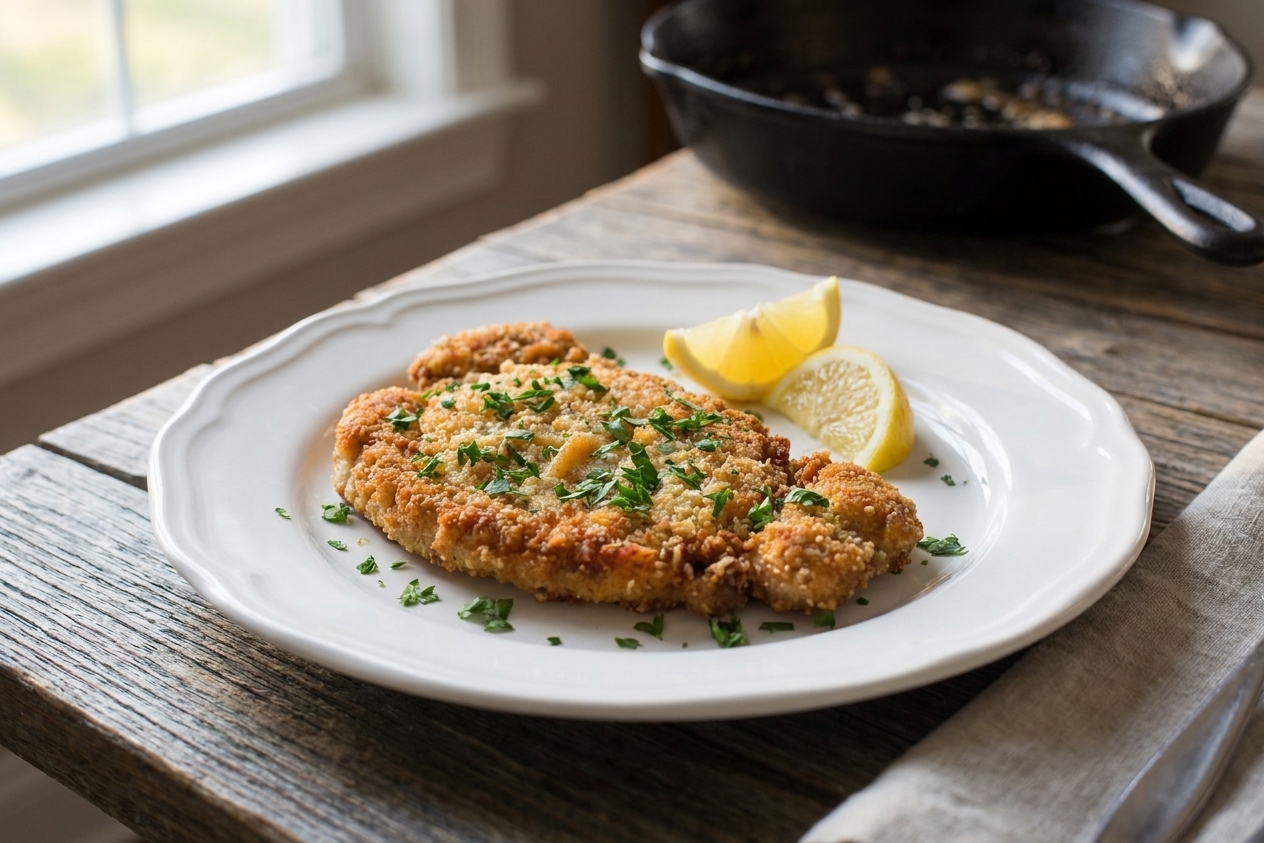
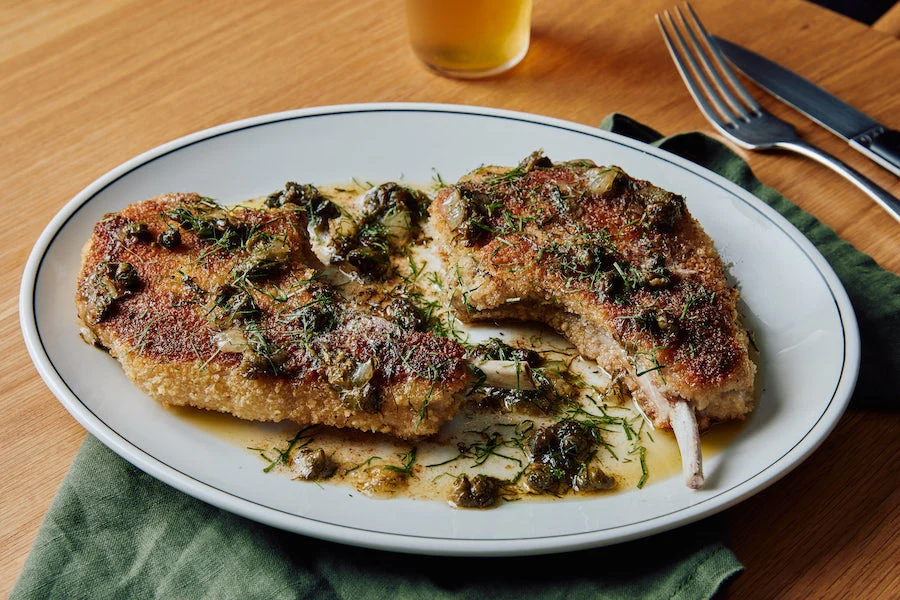
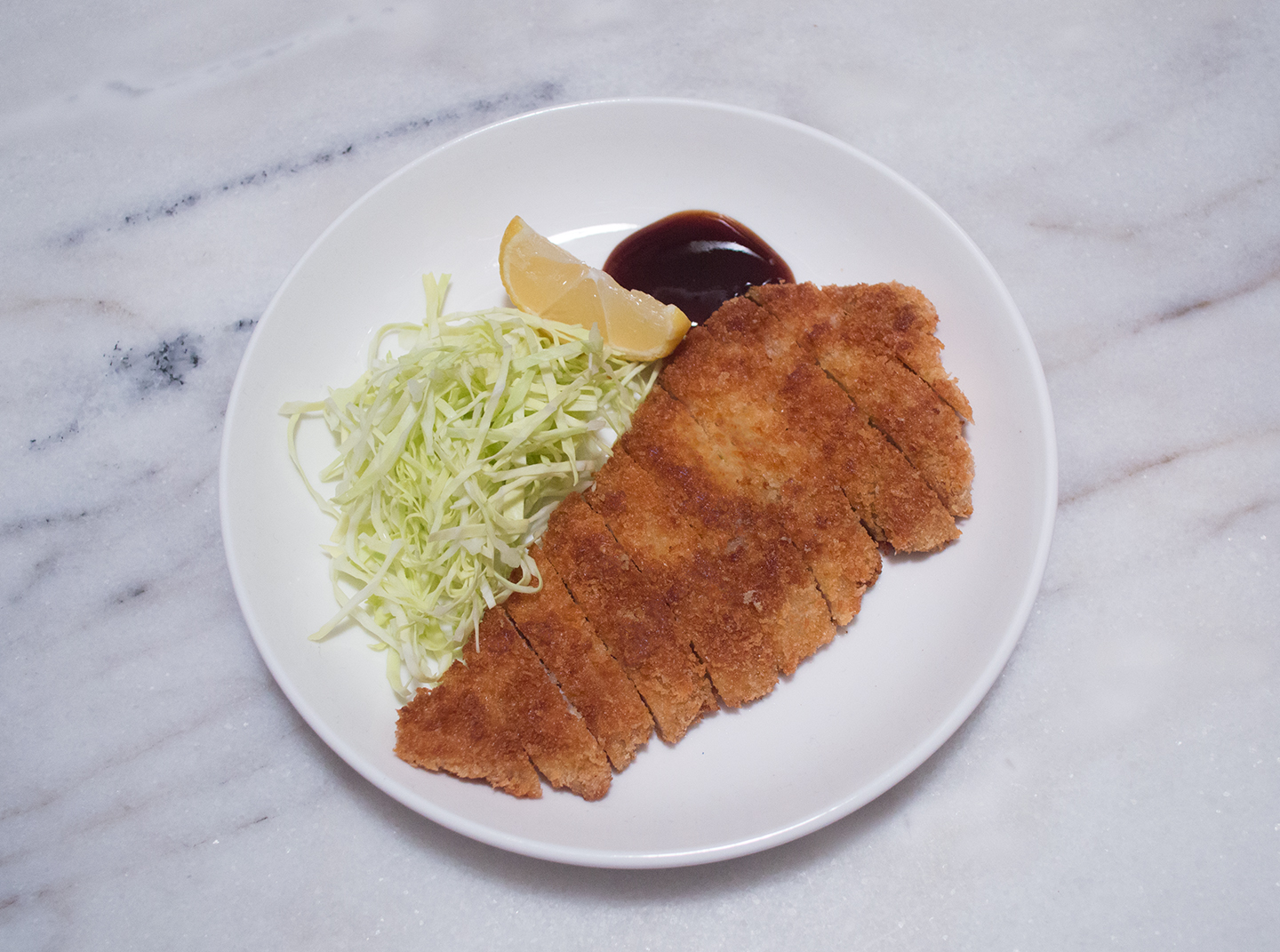
What cut of pork is best for schnitzel?
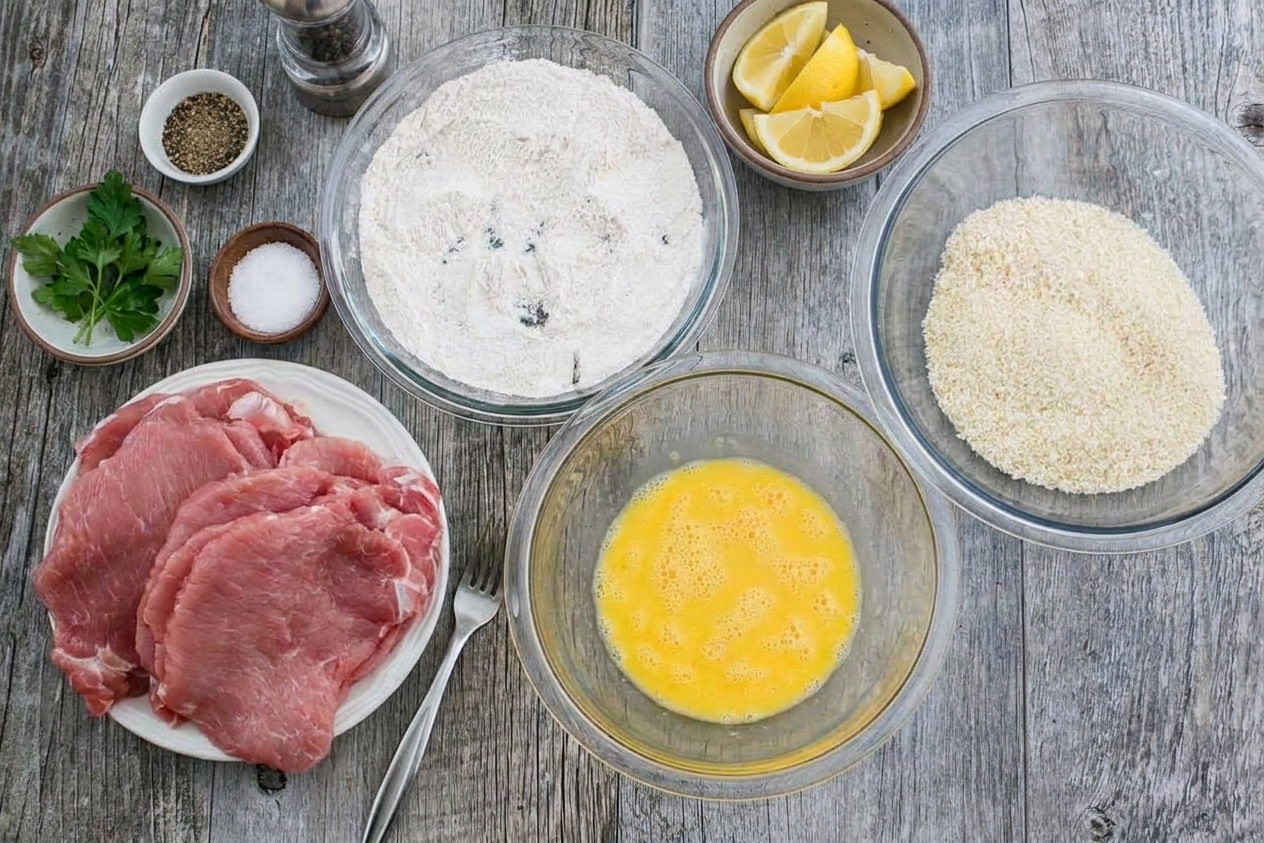
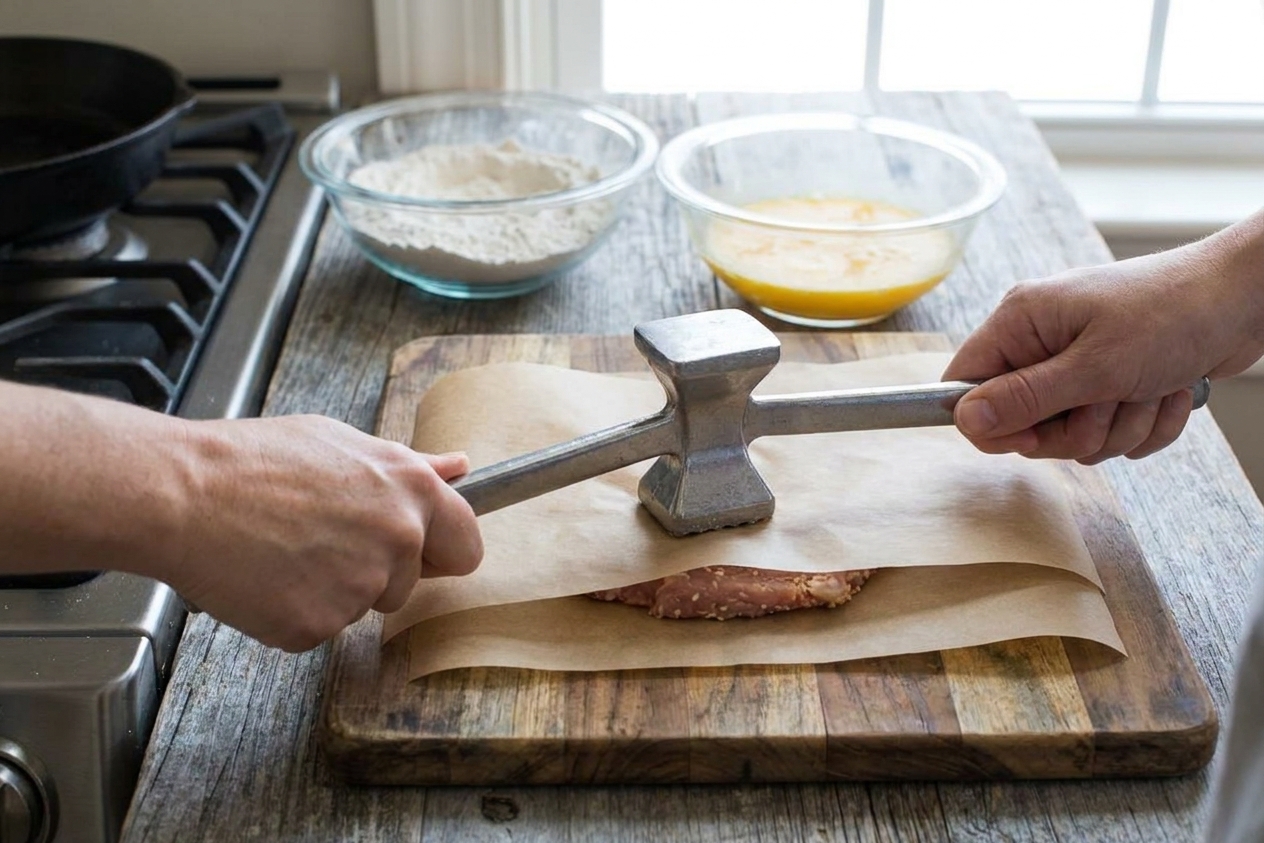
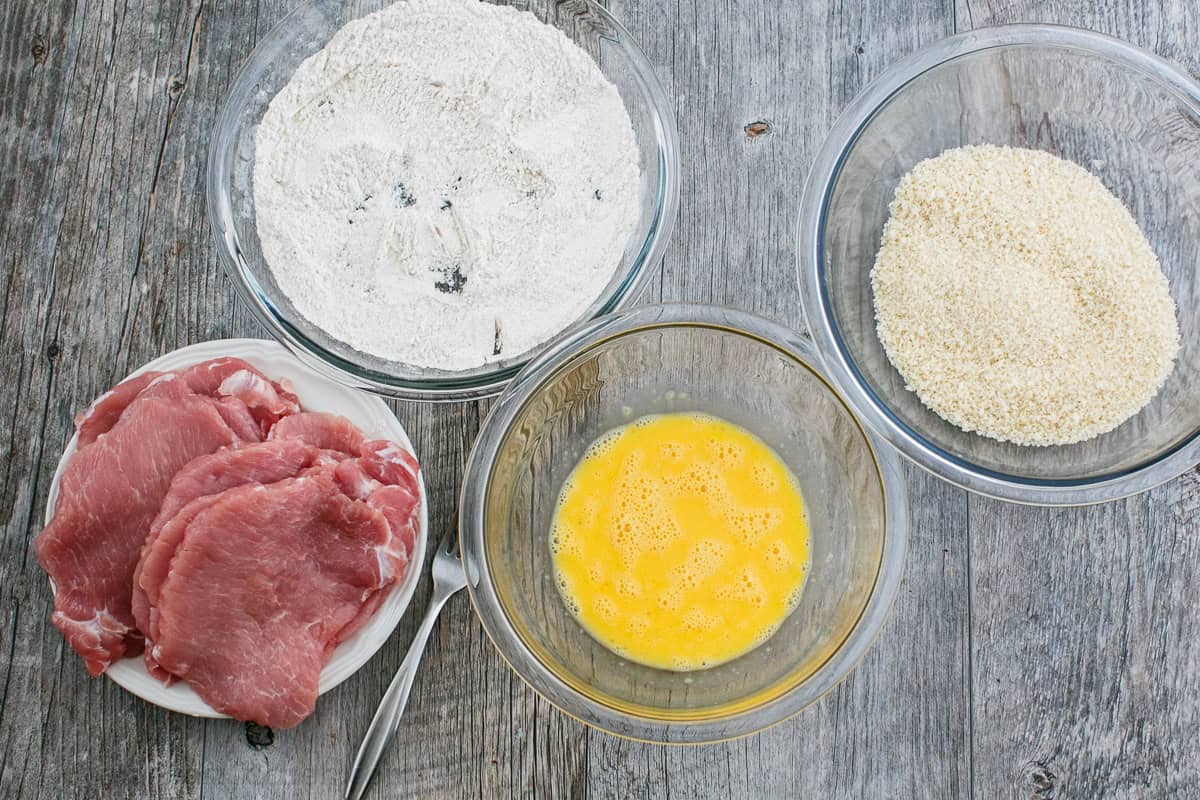
Boneless pork loin chops are the easiest to find and work great. Pork tenderloin also works, just slice it into medallions and pound thin. Avoid super fatty cuts like shoulder here. They are delicious, but they do not give that classic schnitzel vibe.
Is this traditional schnitzel?
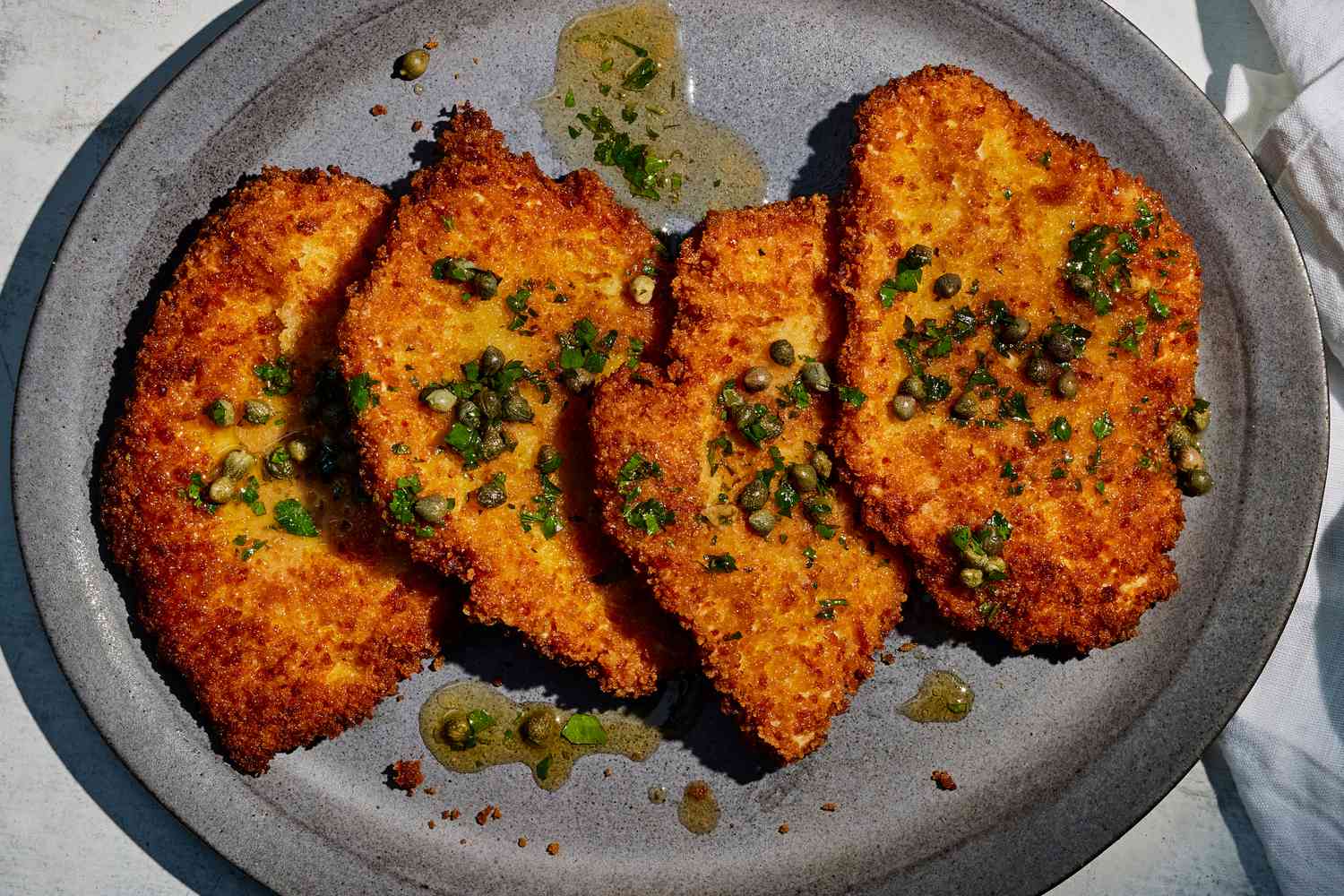
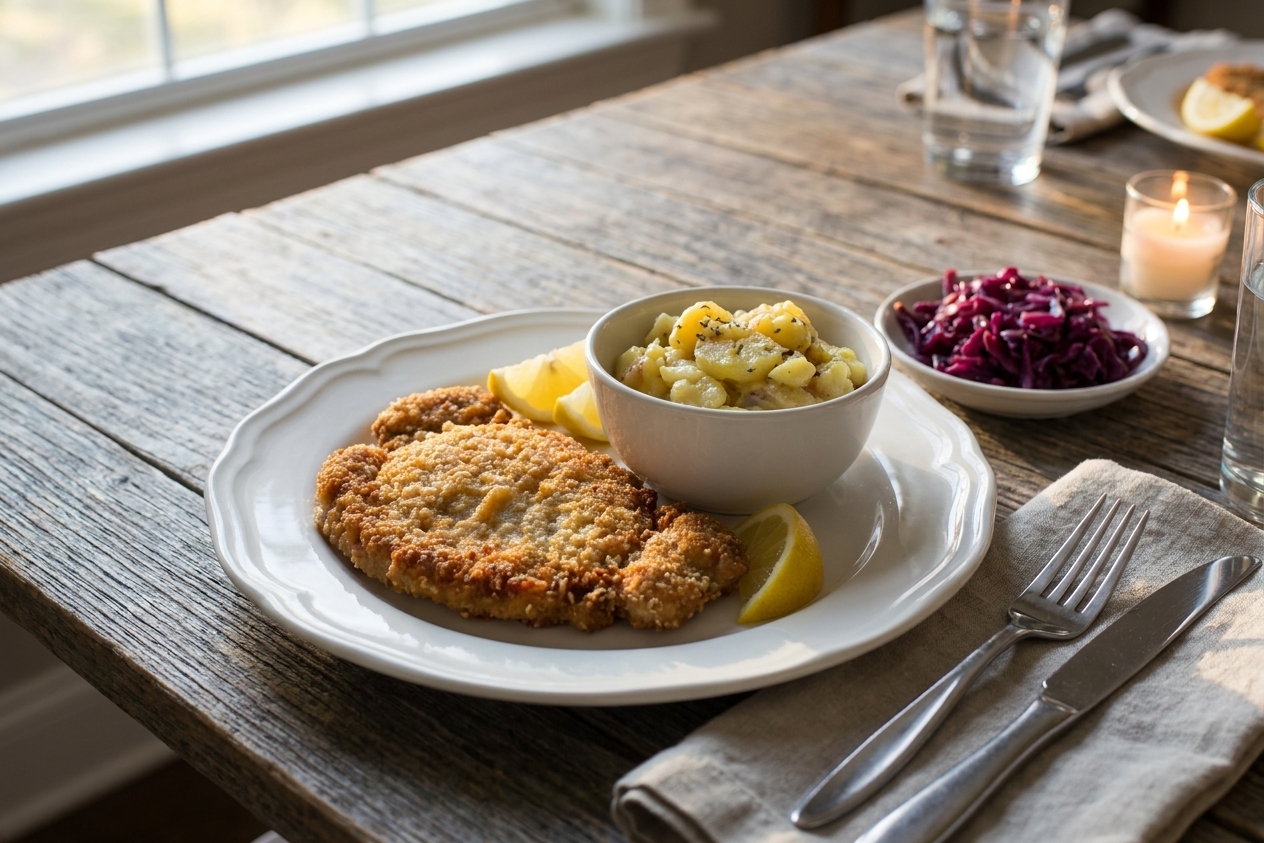
Classic Austrian Wiener schnitzel is veal and often uses finer breadcrumbs. This is a weeknight-friendly pork version that happily welcomes panko for extra crunch.
Why is my breading falling off?
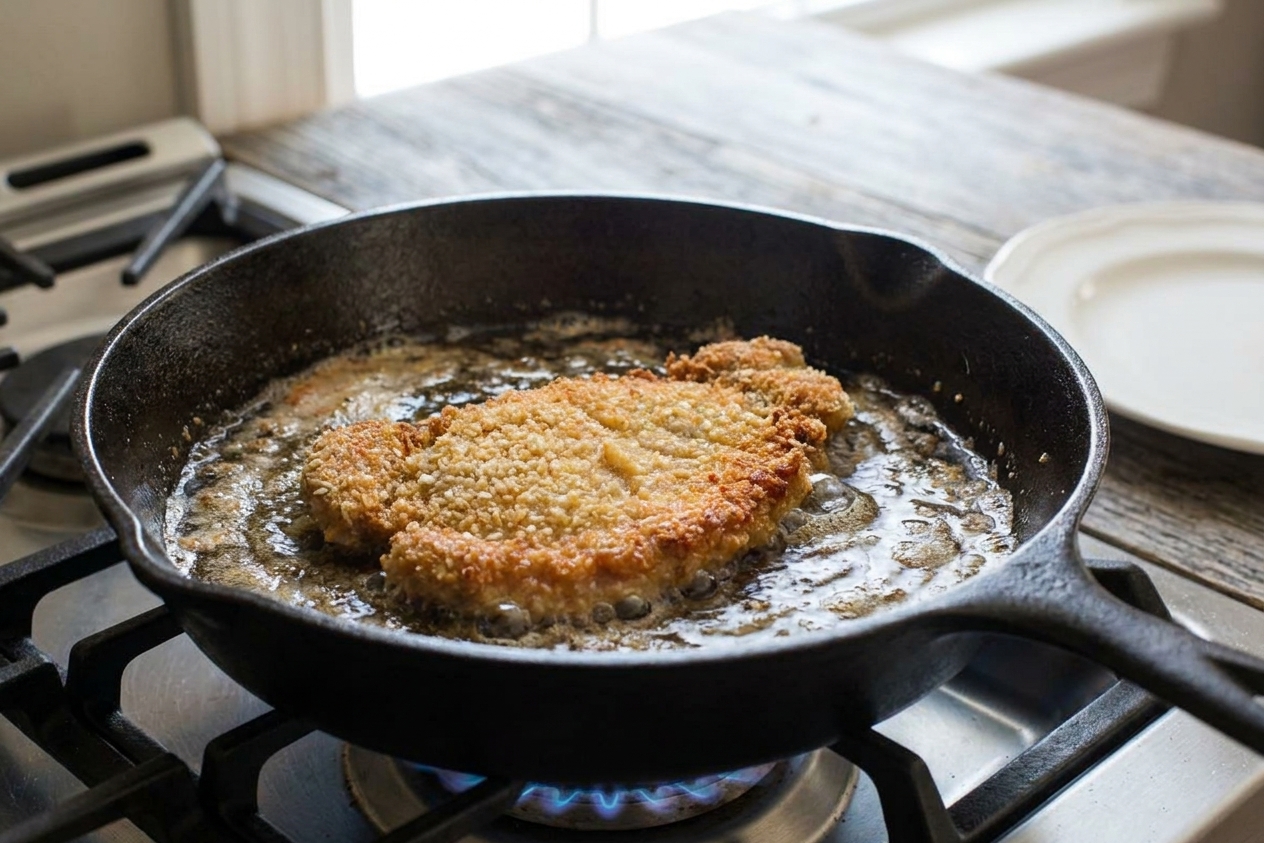
Usually one of three things: the pork was wet, the oil was not hot enough, or you moved it around too much. Pat the pork dry, let the breaded cutlets rest so the coating sets, and fry in oil that is properly hot. Then do not poke it constantly. Let it set a crust first.
Can I bake pork schnitzel instead of frying?
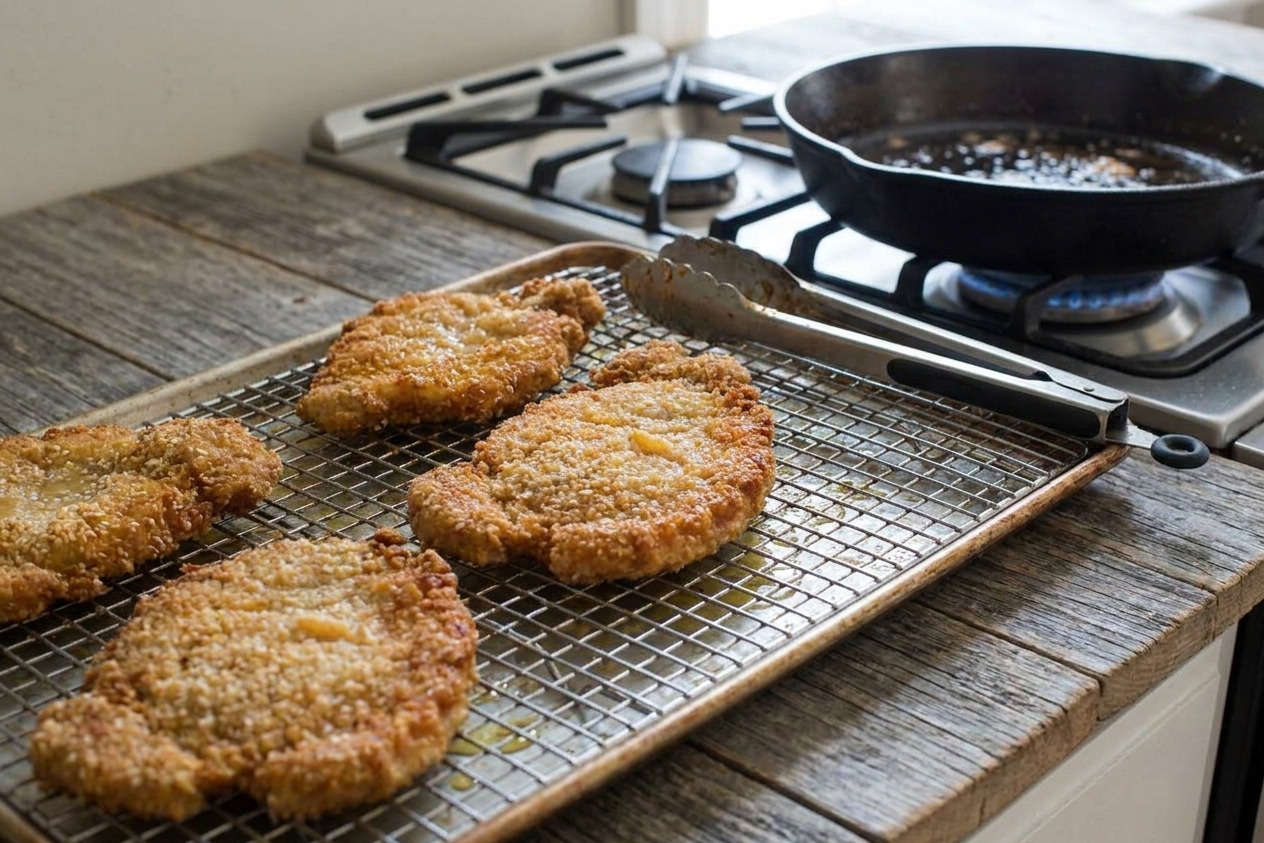
You can, but it will be more “crispy baked cutlet” than classic schnitzel. If baking, spray or drizzle generously with oil and bake on a wire rack at 425°F, flipping once. Start checking at 10 to 12 minutes. Pull when the thickest part hits 145°F.
What breadcrumbs should I use?
Panko gives the crunchiest crust. Fine dry breadcrumbs give a more traditional, tight crumb. Either works. If you use panko and want it extra golden, toast it in a little butter or oil for 2 to 3 minutes before breading.
How do I know the pork is cooked?
Thin cutlets cook quickly. The safest move is a thermometer: pull the pork at 145°F in the thickest part, then rest for a few minutes. If you do not have a thermometer, slicing into the thickest part is a backup. It should be opaque and no longer glossy in the center.