Common Questions
What cut of pork should I buy for pork cutlets?
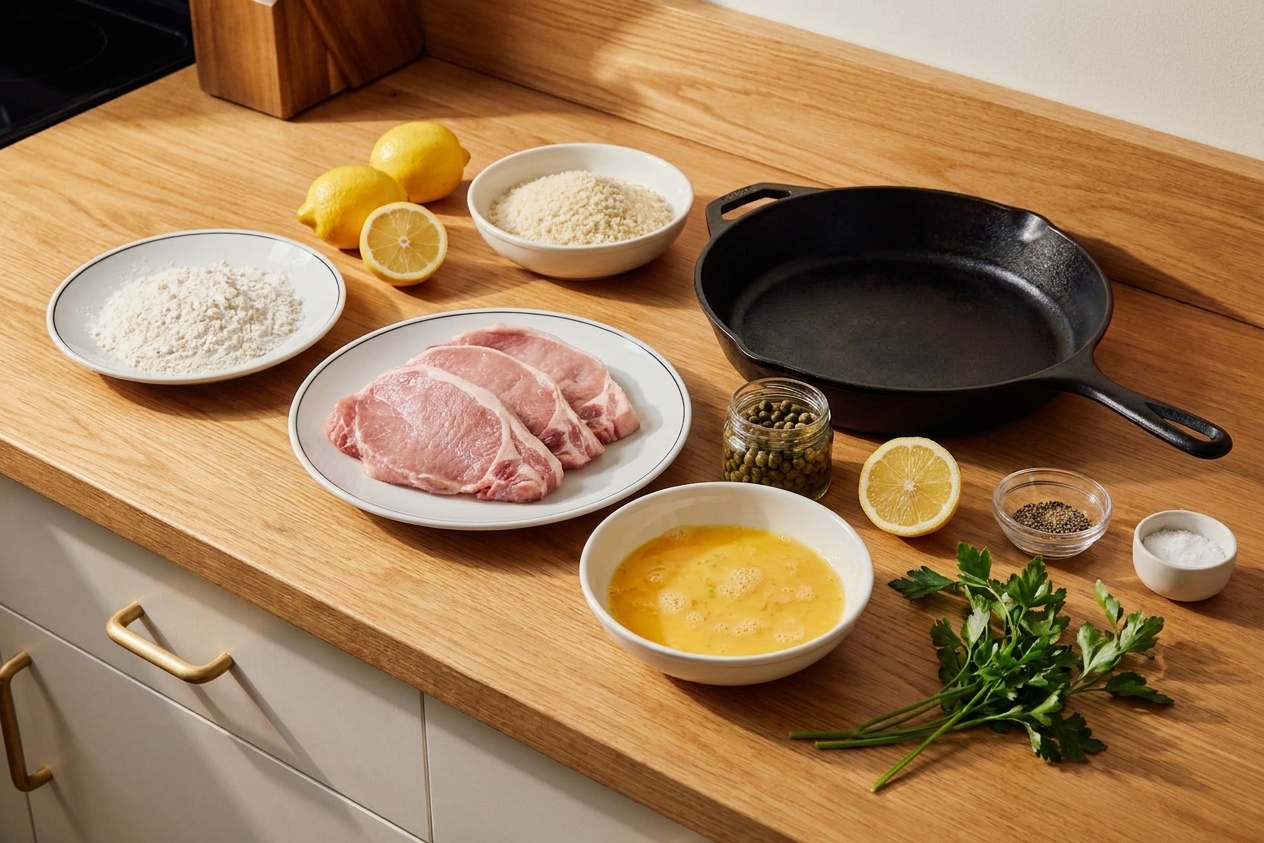
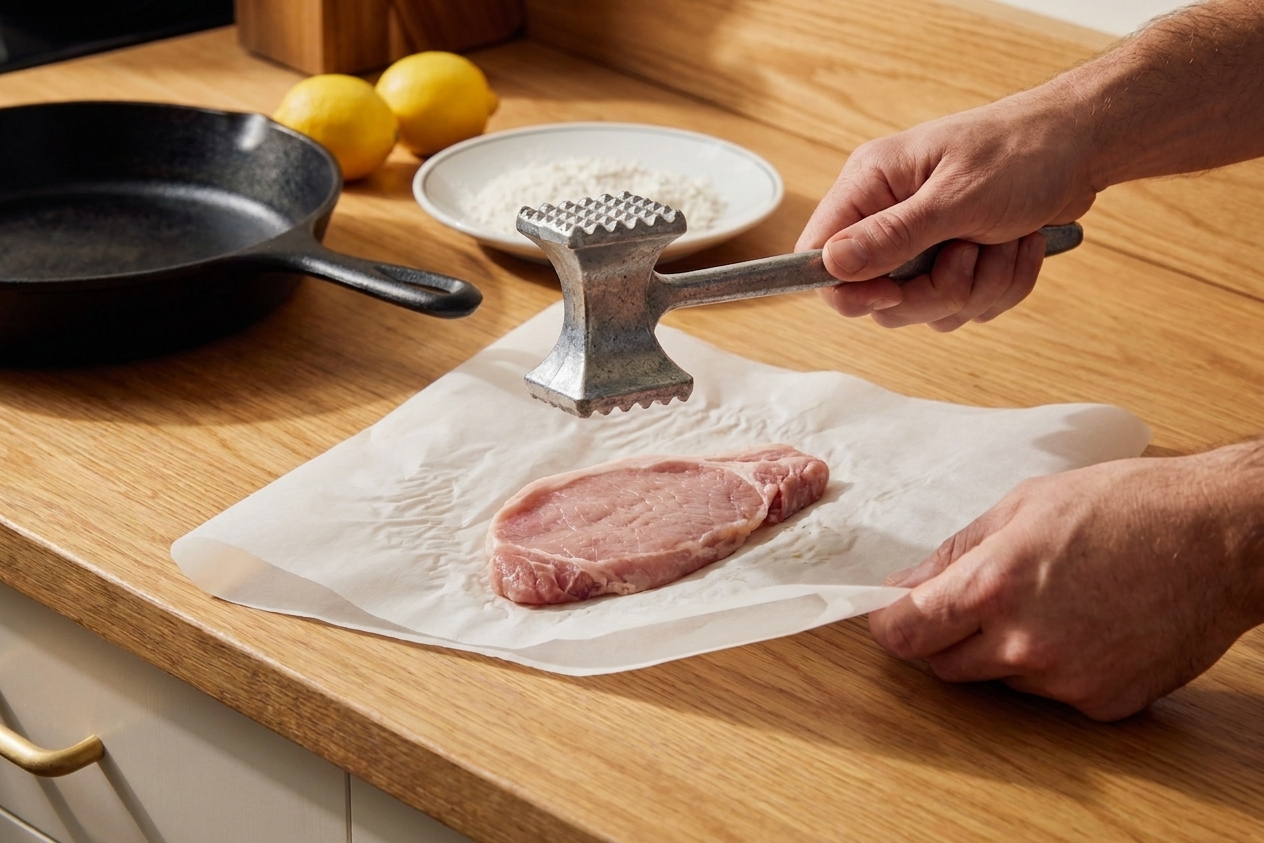
Look for boneless pork loin chops (not thick, super marbled shoulder chops). Loin is mild, tender, and perfect for pounding thin. If your chops are thick, you can slice them in half horizontally first to make two thinner cutlets, then pound. Pork tenderloin also works: slice into medallions and pound.
How thin should I pound pork cutlets?
Aim for about 1/4 inch. Thin means fast cooking, less chance of dryness, and more surface area for crunch.
How do I keep the breading from falling off?
- Pat pork very dry first.
- Season the flour and the crumbs so flavor is built in.
- After breading, let cutlets rest 5 minutes before frying.
- Flip once, do not fuss with them, and make sure the oil is hot enough.
Can I bake these instead of frying?
Yes. Put breaded cutlets on a wire rack over a sheet pan, spray lightly with oil, then bake at 425°F for 12 to 15 minutes (depending on thickness), flipping halfway. You will lose a little of that pan-fried crunch, but it is still solid.
What temperature should pork cutlets be cooked to?
Cook to 145°F in the thickest part, then let rest a few minutes. With thin cutlets, you will often hit this right as the breading turns golden.
My sauce tastes too salty. Help.
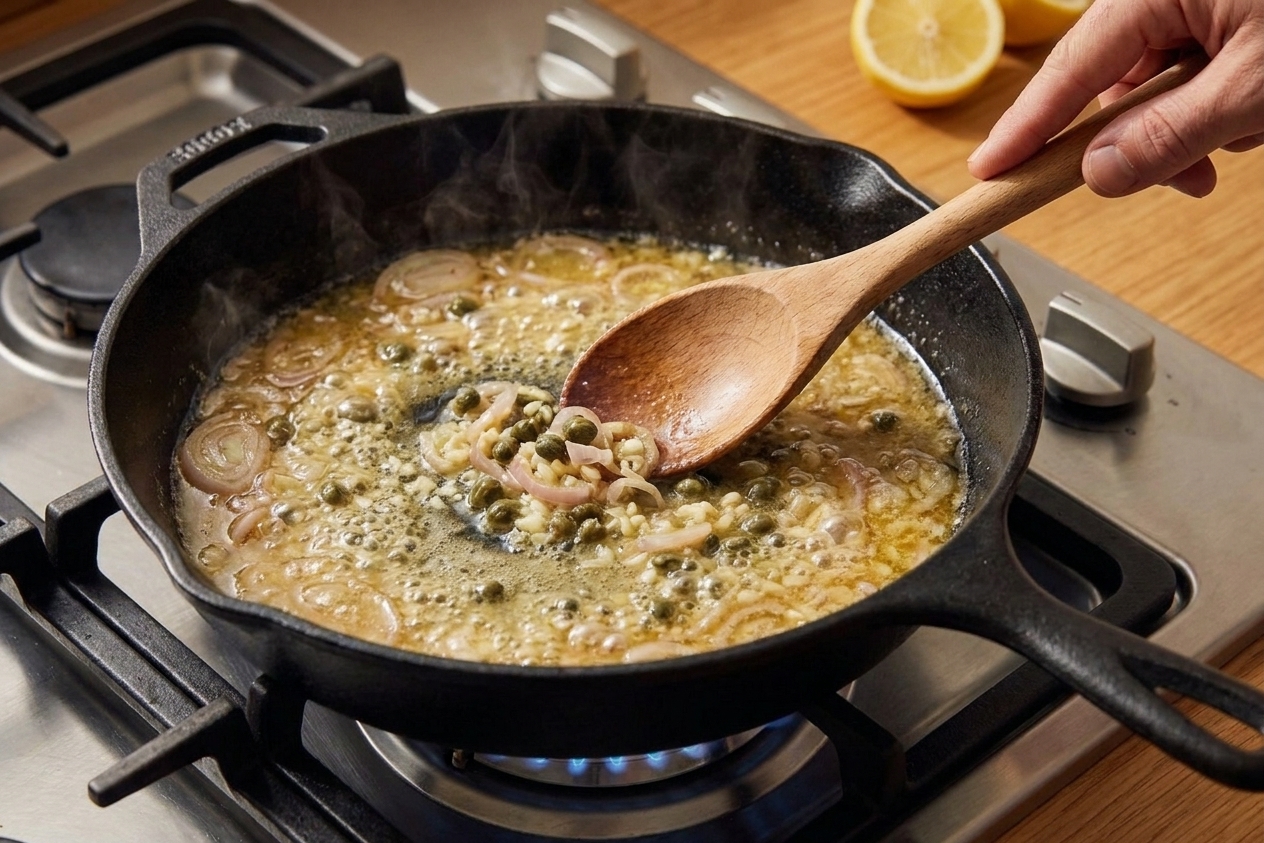
Capers can be aggressively briny. If yours are intense, give them a quick rinse and drain well. If the sauce is already salty, add a splash more broth and a small knob of butter, then taste again. A little extra lemon can brighten without adding more salt.
My sauce is too thin or too thick. What do I do?
If it is too thin, let it simmer 30 to 60 seconds to reduce. If it is too thick, loosen with a splash of broth or water and whisk.
Can I make these gluten-free?
Totally. Use a gluten-free all-purpose flour blend and gluten-free panko style crumbs. The sauce is naturally gluten-free if your broth is.