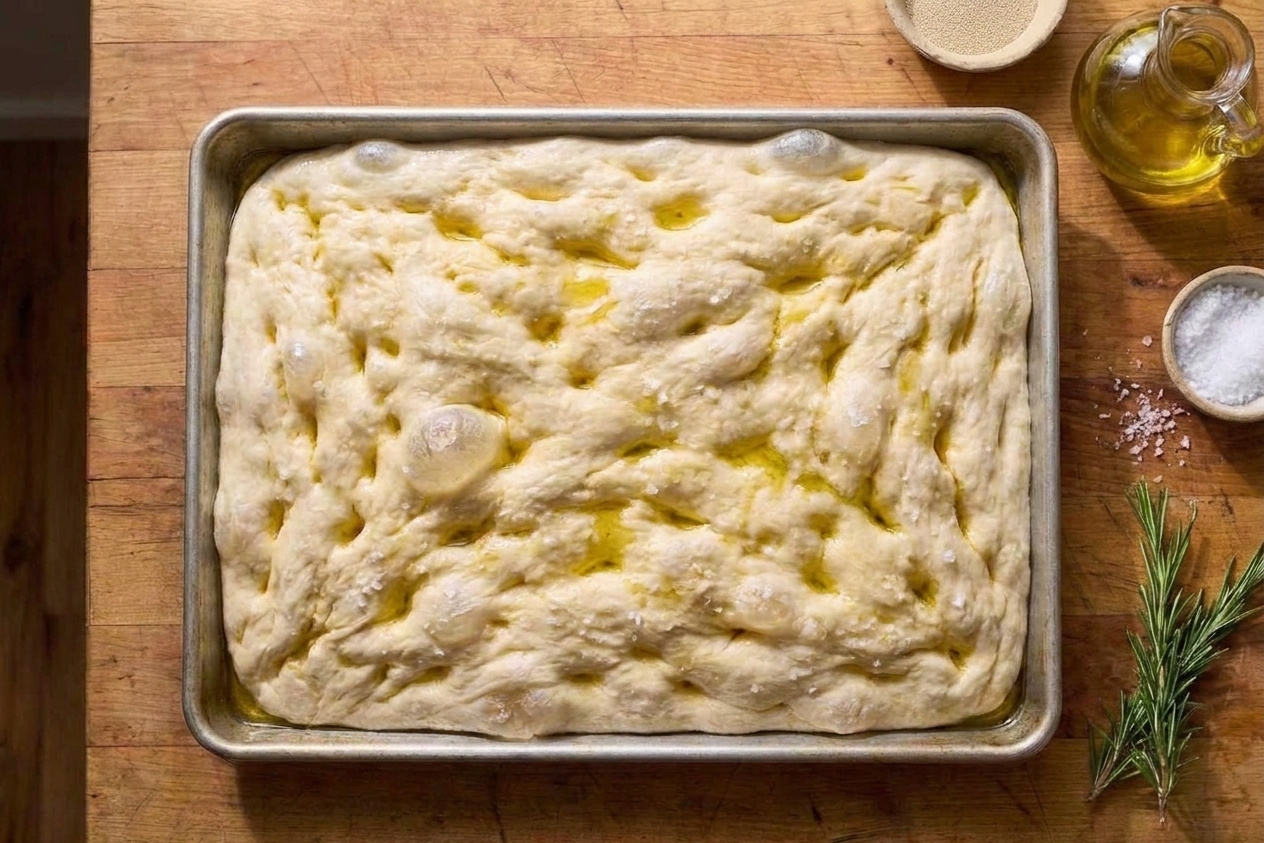
Why is my focaccia dense?
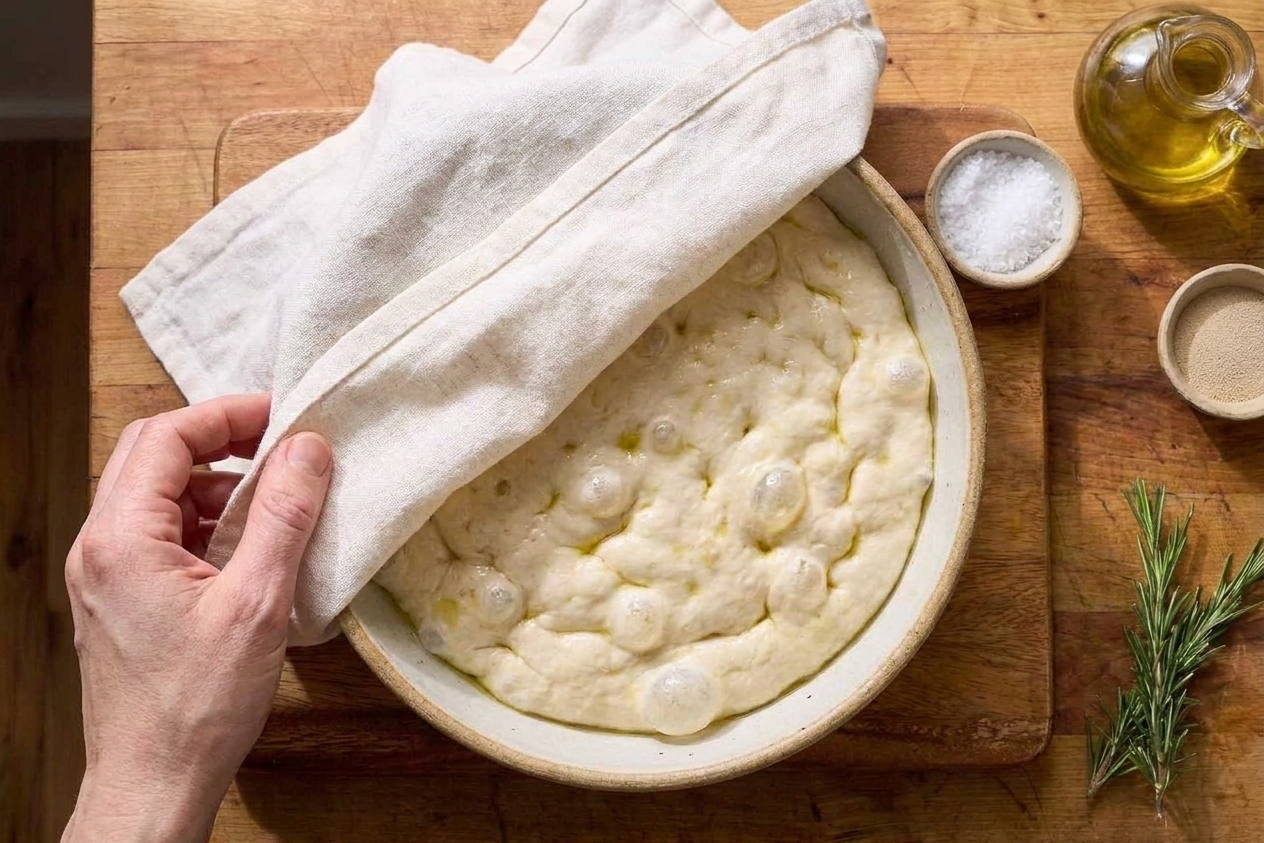
Usually it is under-proofed, the dough was handled too roughly, or the yeast got stressed by water that was too hot. Give the dough more time until it looks noticeably expanded, puffy, and jiggly with bubbles. Also, do not skip the second rise in the pan. That is where the airiness shows up.
Do I have to dimple it?
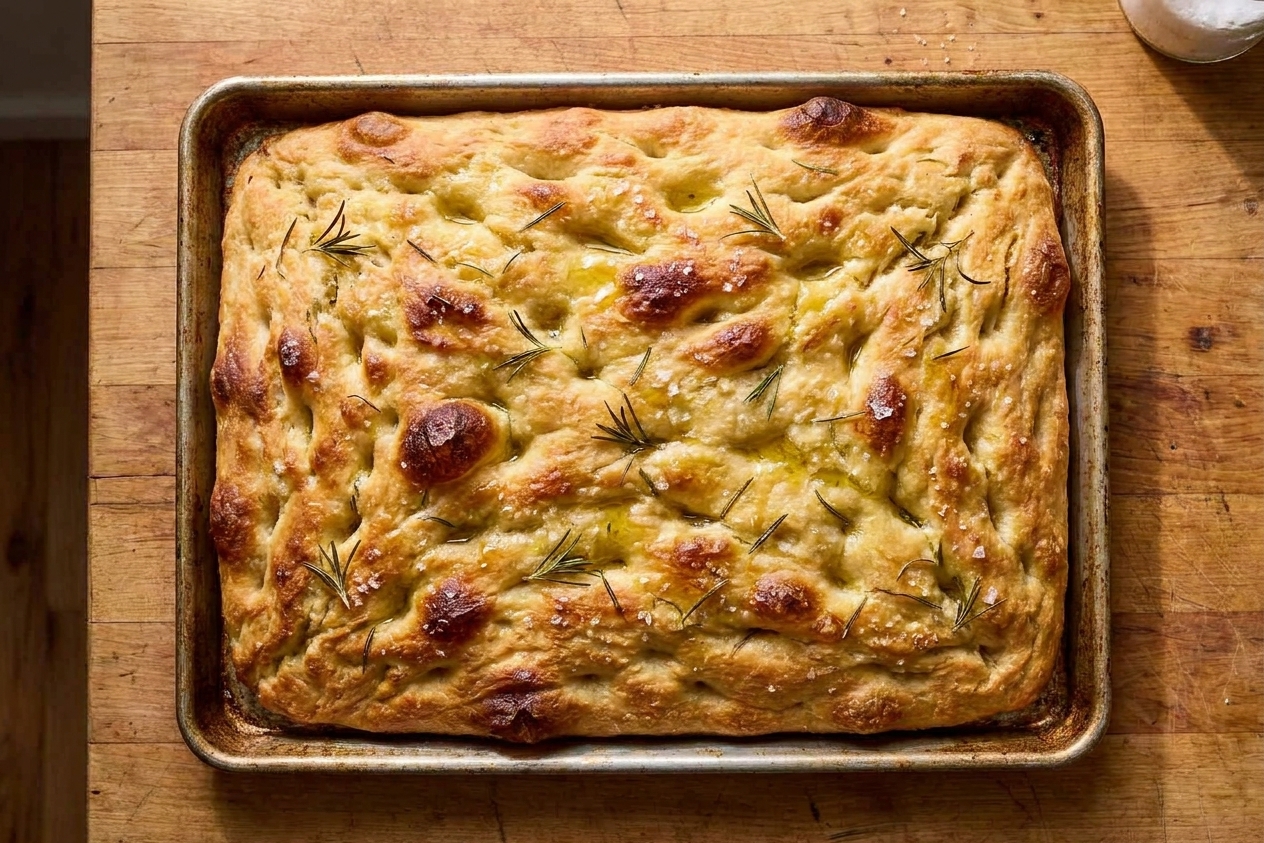
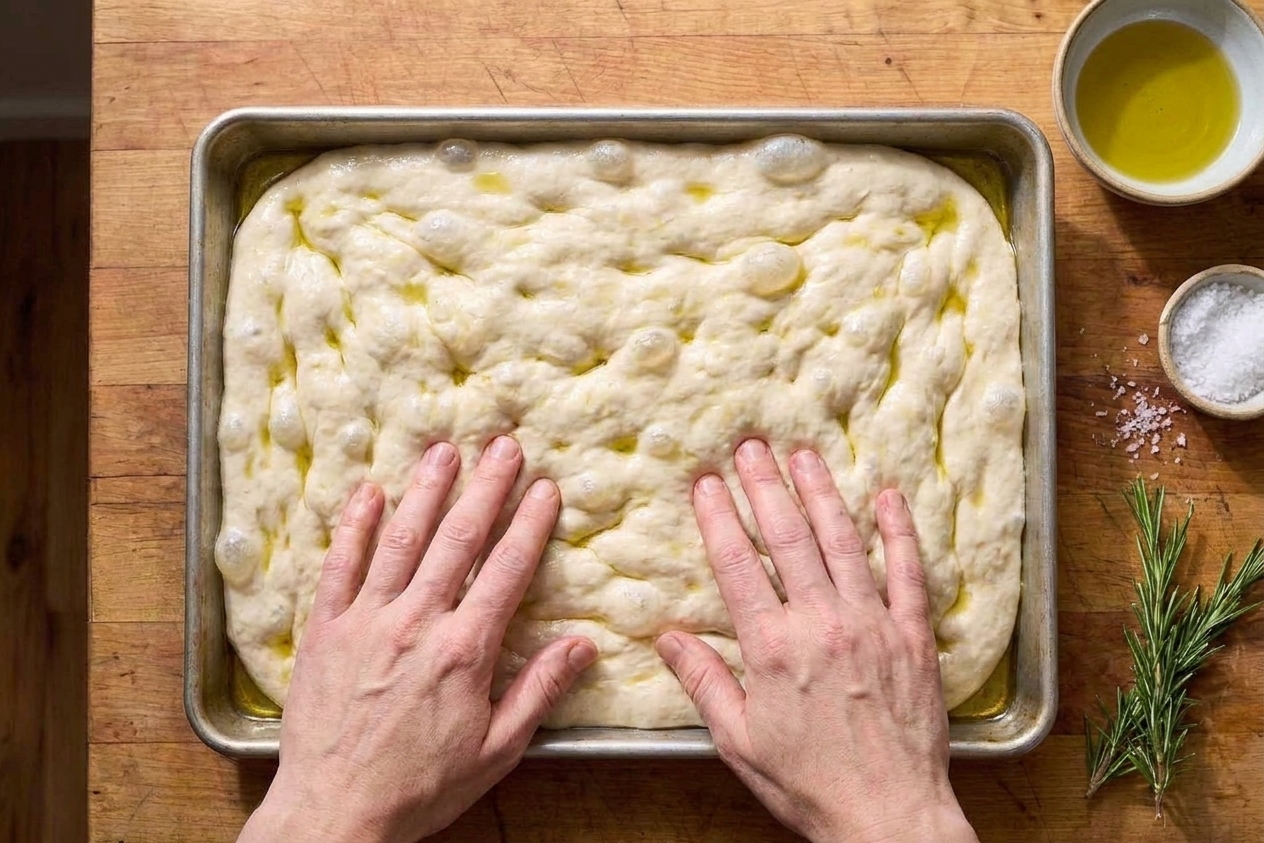
Yes, in the most loving way possible. Dimples help the dough rise evenly and make little pockets for olive oil and salt. Use well-oiled fingertips and press down firmly until you feel the pan.
Can I make it overnight?
Absolutely. Here is the least confusing way: mix the dough, cover, let it rest at room temp for about 20 to 30 minutes (it will start to puff just a bit), then refrigerate 8 to 24 hours. The next day, let it sit at room temp for 60 to 90 minutes before stretching into the oiled pan and doing the final rise.
What pan should I use?
A metal 9x13-inch pan gives the best browning. Glass works but tends to brown less aggressively. A rimmed sheet pan makes a thinner focaccia with extra crispy edges.
Can I add toppings like tomatoes or onions?
Yes. Keep toppings light so they do not weigh down the dough. Pat juicy toppings dry and add them after dimpling so they settle in. If using onions, thinly slice and toss with olive oil first so they do not burn.
My rosemary keeps burning. Help?
Some ovens run hot, and rosemary can get a little too toasty. Press the rosemary gently into the dough after sprinkling so it is protected by a little oil. If your oven is aggressive, add half the rosemary now and the other half in the last 5 minutes of baking.