Mom's Best Recipes
Recipe

Crispy Scallion Pancakes

Flaky layers, crisp edges, and scallion flavor in every bite, made with an easy hot-water dough and a simple fold-and-roll technique.

Author By Matt Campbell
4.8
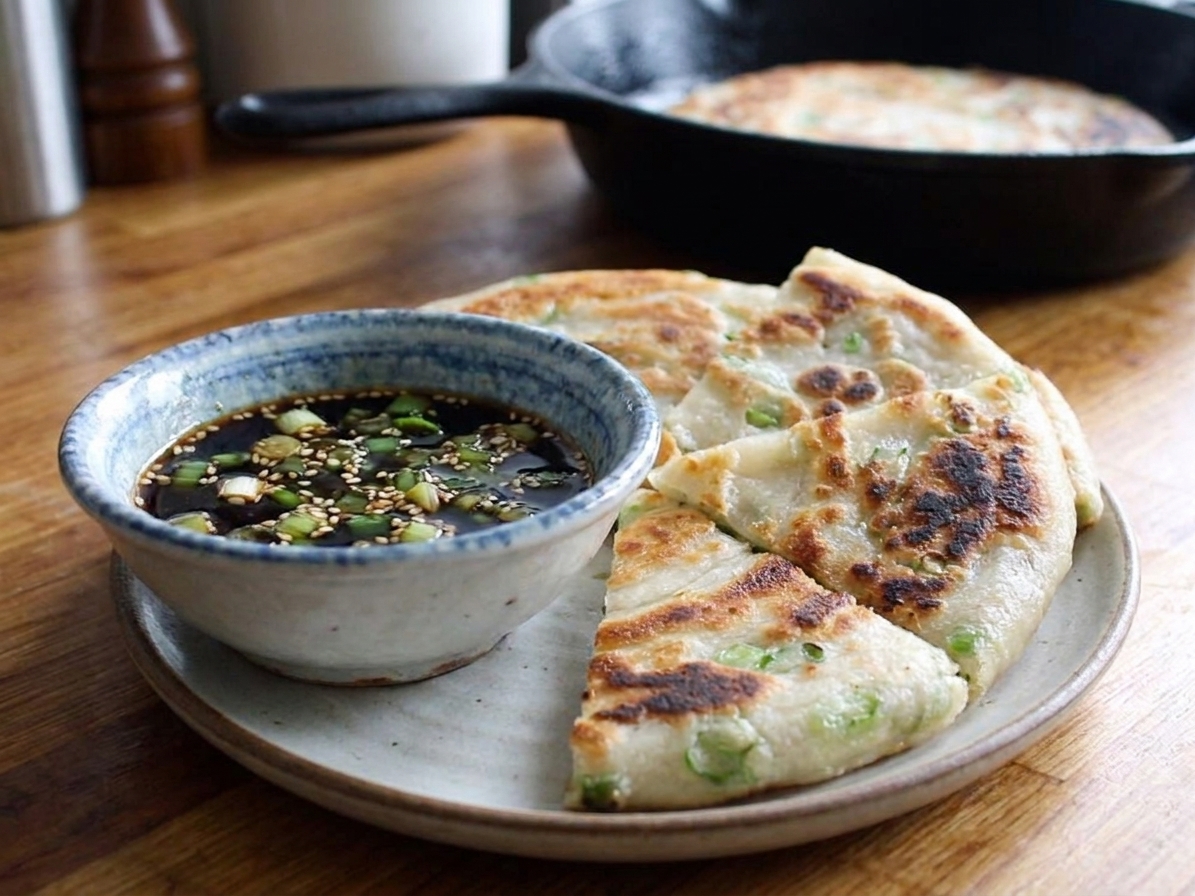
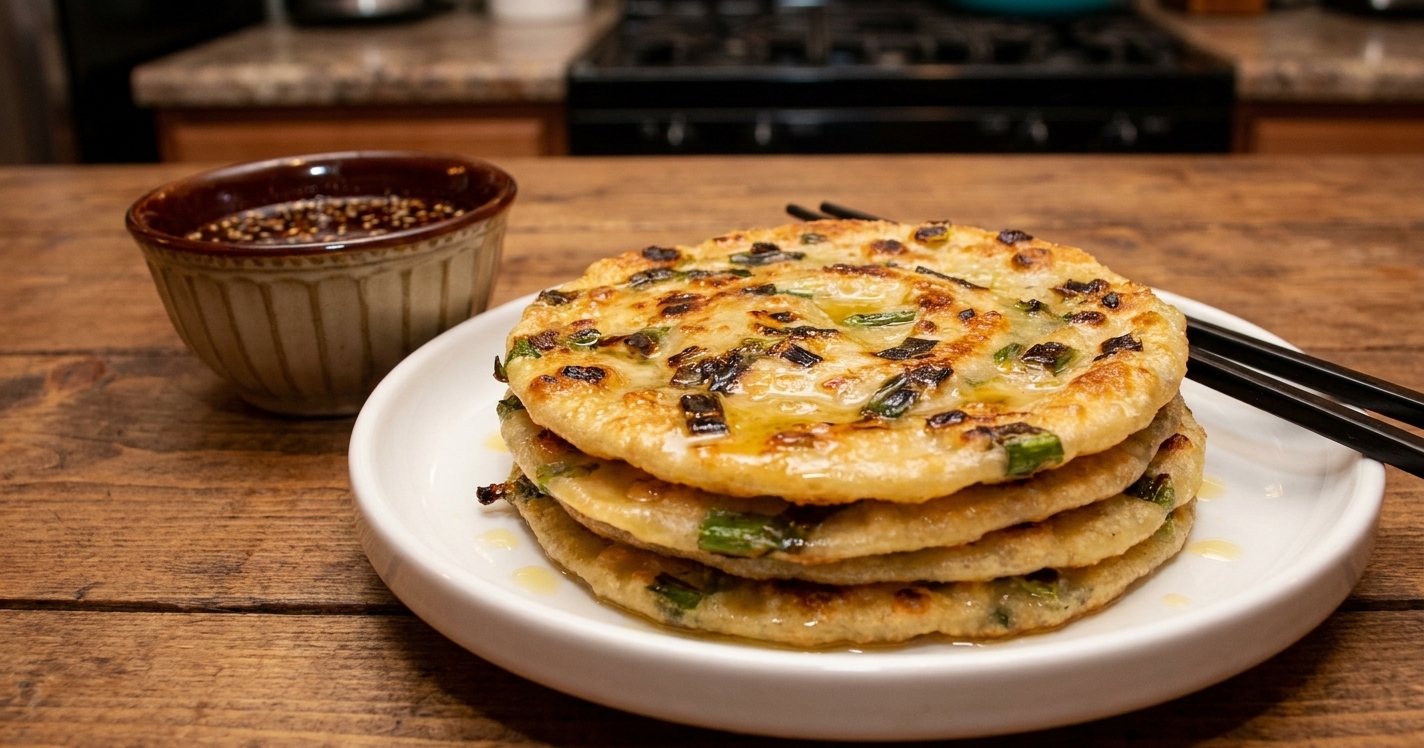
A stack of golden brown scallion pancakes on a ceramic plate beside a small bowl of dipping sauce on a warm-toned kitchen table

Scallion pancakes are one of my favorite kitchen magic tricks because the ingredient list is almost suspiciously short, but the payoff is loud. We are talking crisp, shattery edges, a chewy center, and those little green scallion pockets that perfume the whole thing.

This version is built for real-life home cooking: an easy hot-water dough (no yeast, no drama), a quick roll-up to create layers, and a skillet fry that turns everything golden and blissfully snackable. Make them for a cozy dinner side, a weekend project with the kids, or that exact moment you realize toast is not going to emotionally support you today.
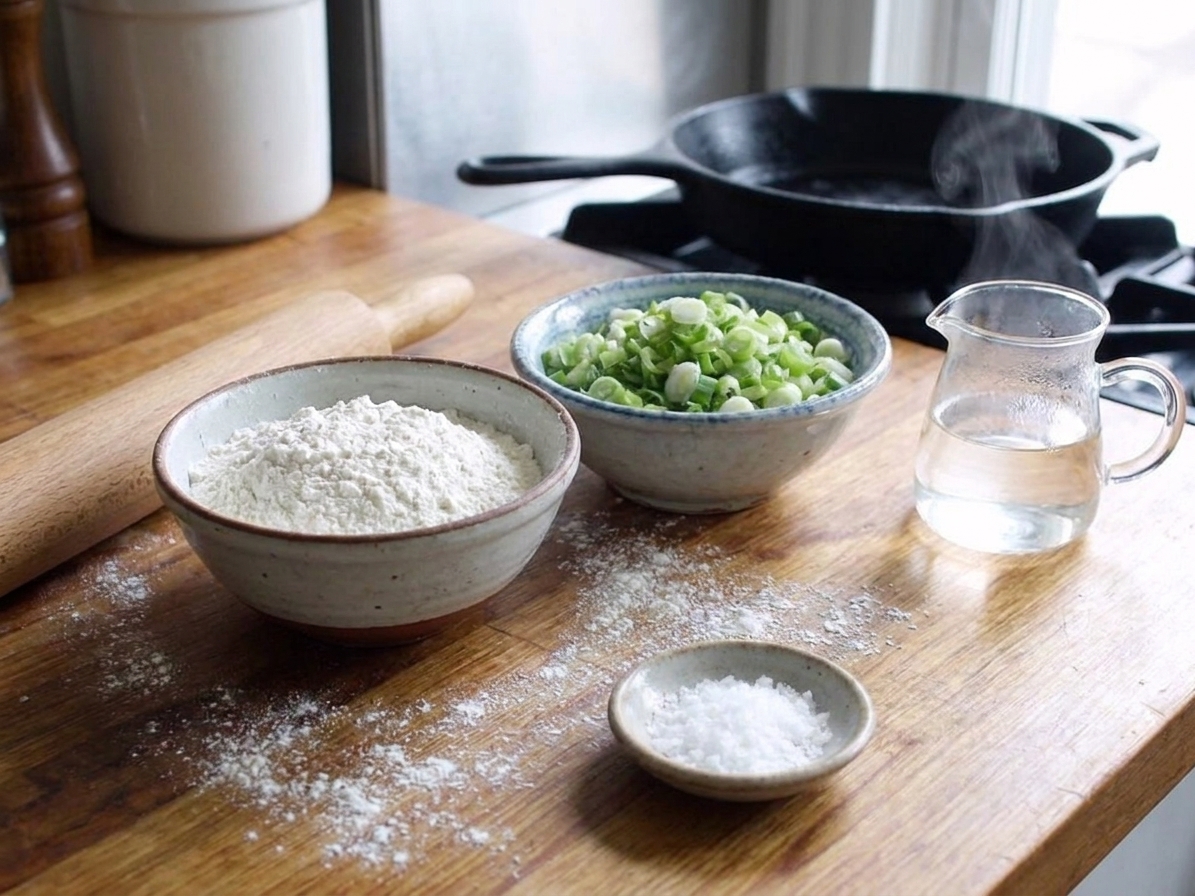
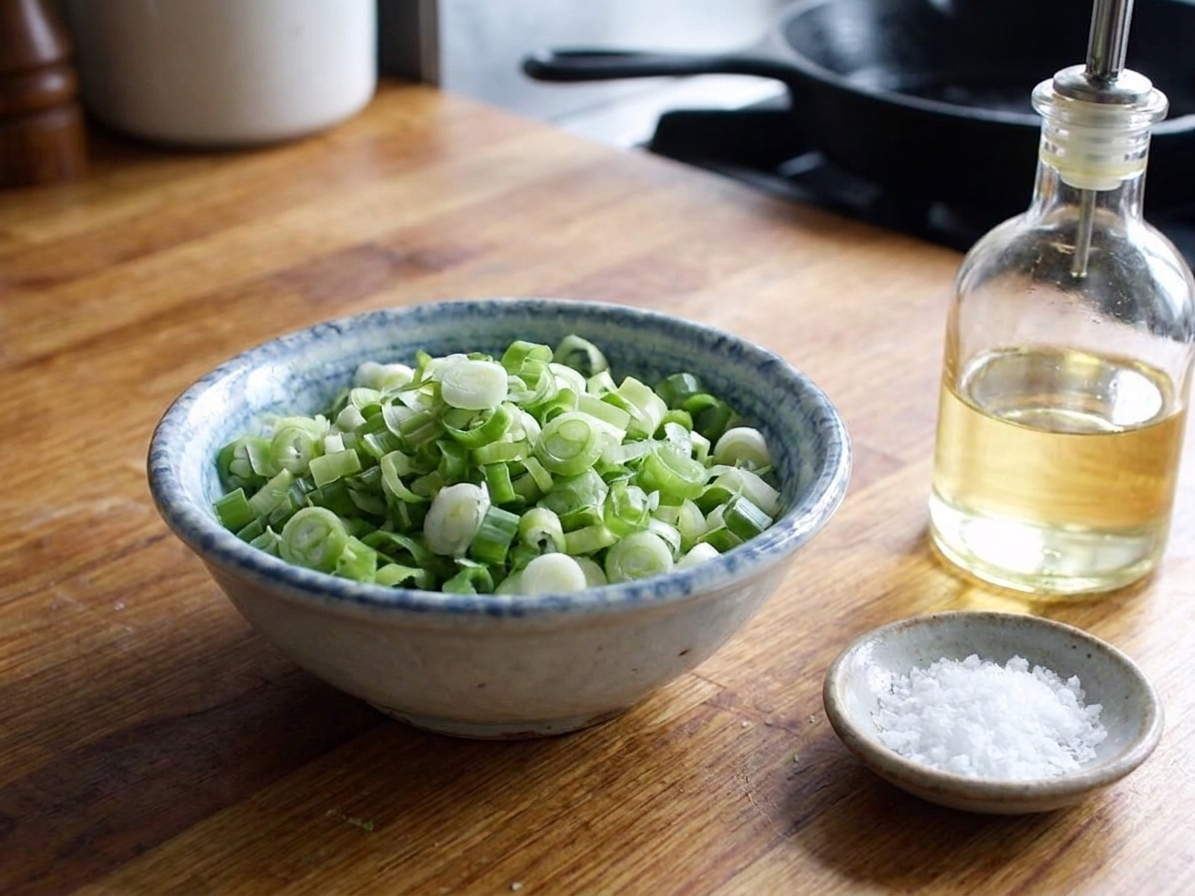
Bowls of flour, sliced scallions, salt, and a small pitcher of hot water arranged on a clean kitchen counter with a wooden rolling pin

Why It Works

  • Hot-water dough makes the pancakes tender and easy to roll, even if you are not a dough person.
  • The oil paste + spiral roll creates flaky layers without needing butter or specialty ingredients.
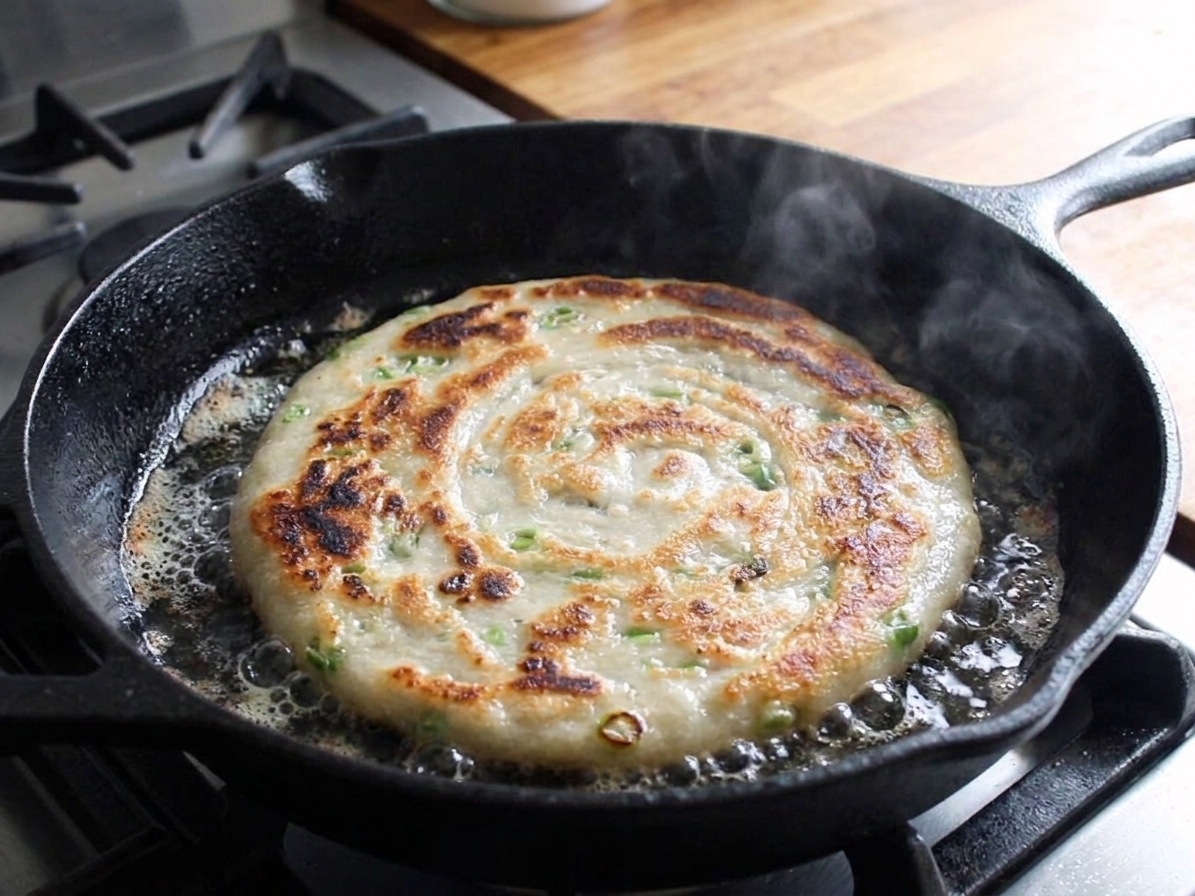
  • A moderate skillet fry gives crisp edges and cooks the centers through, so you get crunch and chew in the same bite.
  • They freeze beautifully, so you can make a batch once and pull out pancakes like a weekday hero.

Pairs Well With

Storage Tips

Fridge: Cool completely, then store in an airtight container for up to 3 days. Reheat in a dry skillet over medium heat until hot and re-crisped, about 1 to 2 minutes per side.

Make ahead (uncooked): Form and roll the pancakes, layer between parchment, and refrigerate in a well-sealed container or bag overnight. Cook the next day as directed. If the dough feels stiff from the fridge, let it sit at room temp for 10 to 15 minutes before frying.

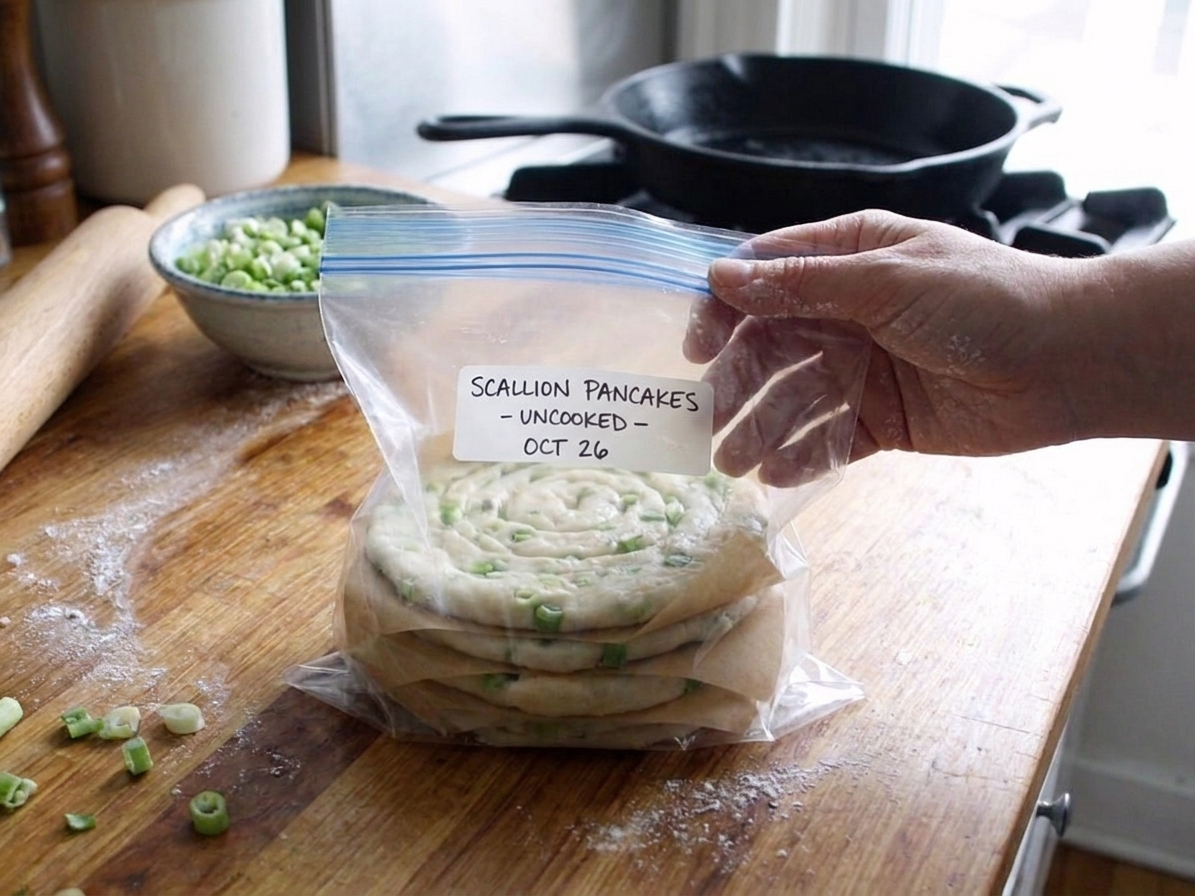
Freezer (best move): Freeze uncooked pancakes on a parchment-lined sheet pan until firm, then transfer to a freezer bag with parchment between each. Press out extra air and seal well to prevent drying or oxidation. Freeze up to 2 months.

Cook from frozen: Thaw at room temp for 15 to 20 minutes, then fry as directed. If you are impatient, you can fry straight from frozen on medium-low with a lid for 2 to 3 minutes to warm through, then uncover and crisp on both sides.

Uncooked scallion pancakes separated by parchment paper inside a labeled freezer bag on a kitchen counter

Common Questions

Why is my scallion pancake tough?

The usual culprits are too much flour during rolling or overworking the dough. Keep the surface lightly oiled instead of heavily floured, and let the dough rest. Resting relaxes gluten and makes rolling easier.

Can I use all-purpose flour?

Yes, please do. All-purpose flour is perfect here. All-purpose flour can make them chewier and slightly harder to roll, so stick with AP unless you love a workout.

What is the difference between scallion pancakes and regular pancakes?

Totally different universe. Scallion pancakes are savory, unleavened flatbreads with flaky layers, cooked in a skillet with oil. Breakfast pancakes are sweet, batter-based, and fluffy.

Can I bake them instead of frying?

You can, but you will lose that classic blistered crunch. If you want to try it anyway, brush both sides with oil and bake at 450°F on a preheated sheet pan, flipping once, for about 8 to 12 minutes total (watch for deep golden spots). The skillet still wins.

How do I keep scallions from tearing through the dough?

Slice scallions thin, pat them dry if they are wet, and do not overpack. If a scallion pokes out, just pinch the dough closed and keep rolling. This is not a museum piece.

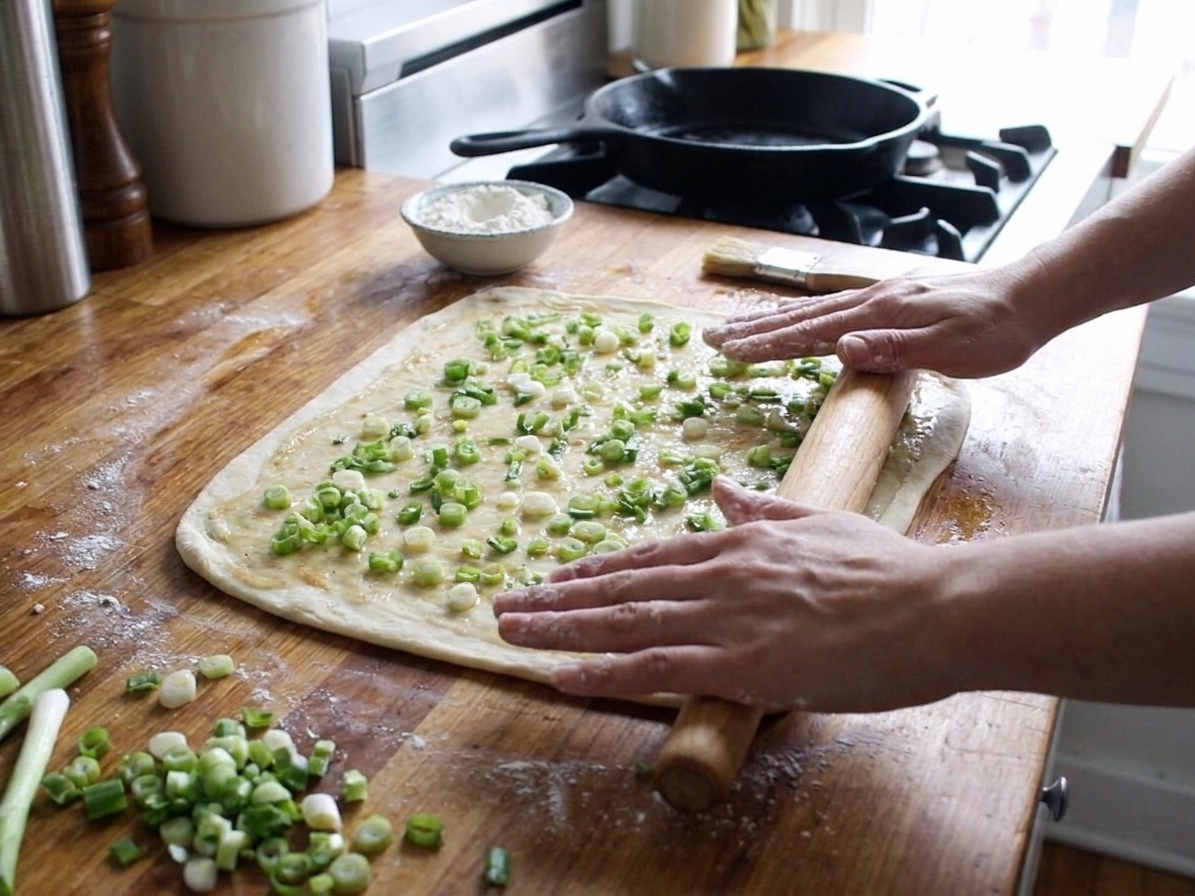
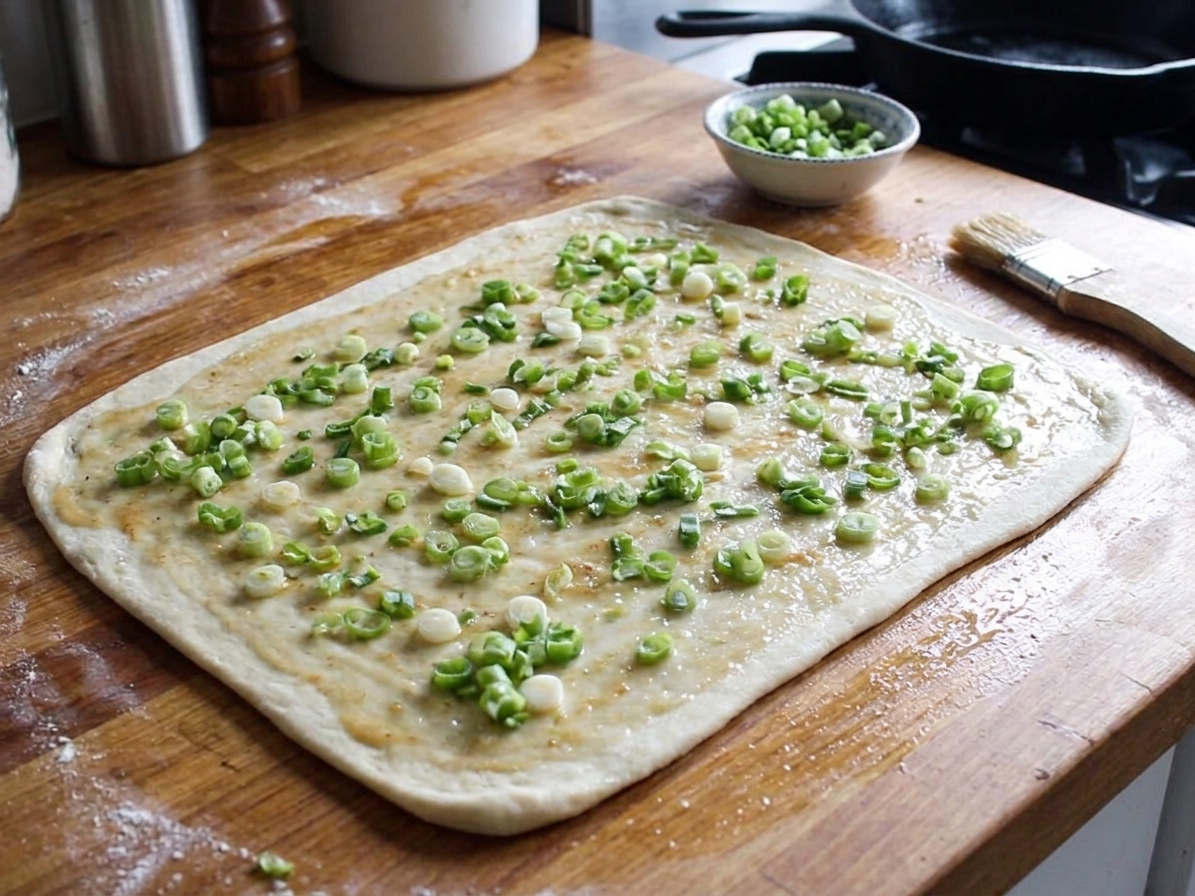
Hands rolling out scallion pancake dough on a lightly oiled countertop with scallions scattered across the surface

I started making scallion pancakes when I was chasing that perfect combo of crispy edges and chewy center without needing a deep fryer or a grocery run. The first time I nailed the layers, I stood at the stove eating one over the sink like a raccoon with standards. Now it is one of my go-to “I want something fun but not fussy” recipes. Also, it is a great reminder that the best kitchen wins are often just flour, water, heat, and a little bit of attitude.