Mom's Best Recipes
Recipe

Crispy Whole Roasted Chicken

Juicy meat, crisp skin, and a quick pan sauce, all from one pan and a handful of pantry ingredients.

Author By Matt Campbell
4.8
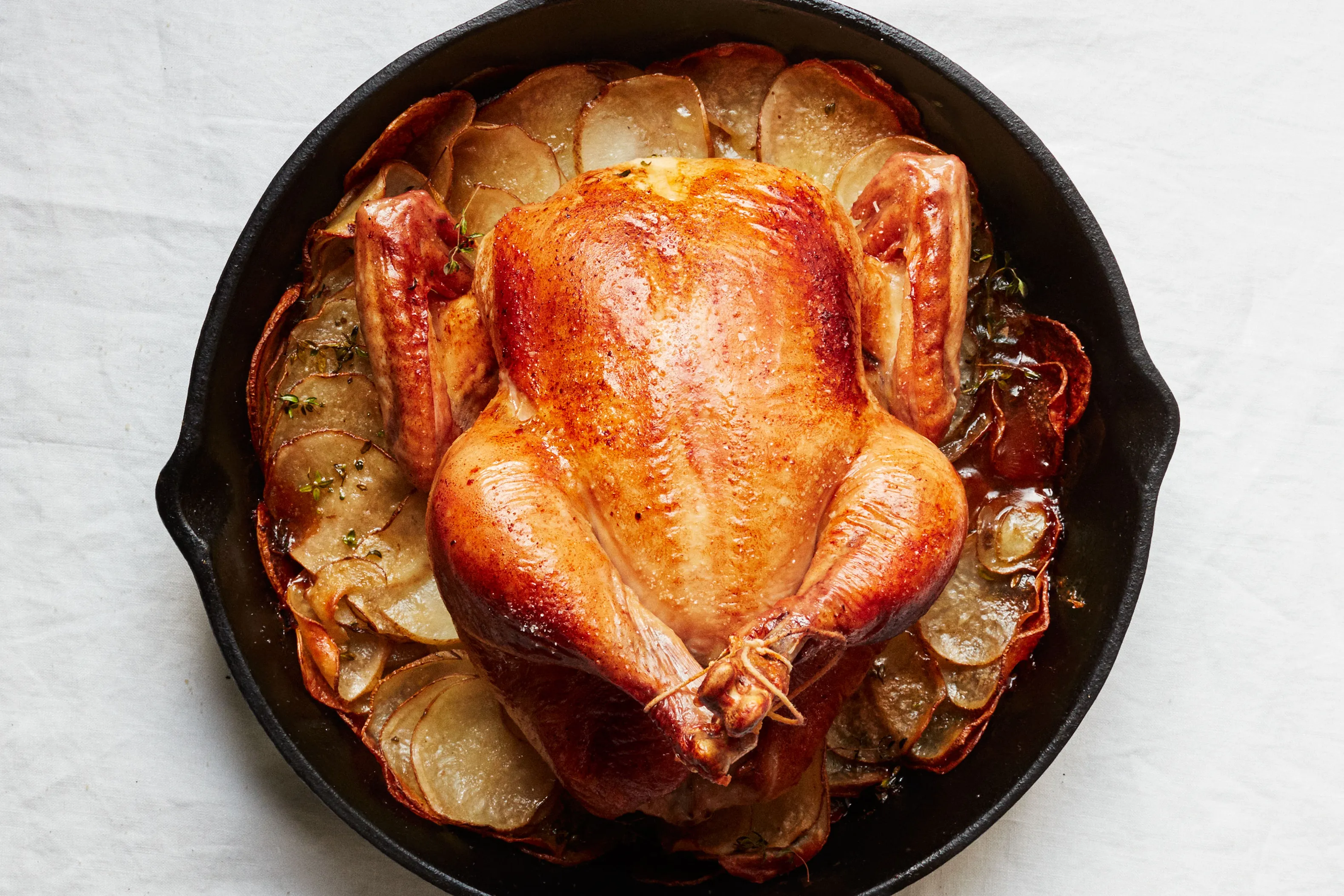
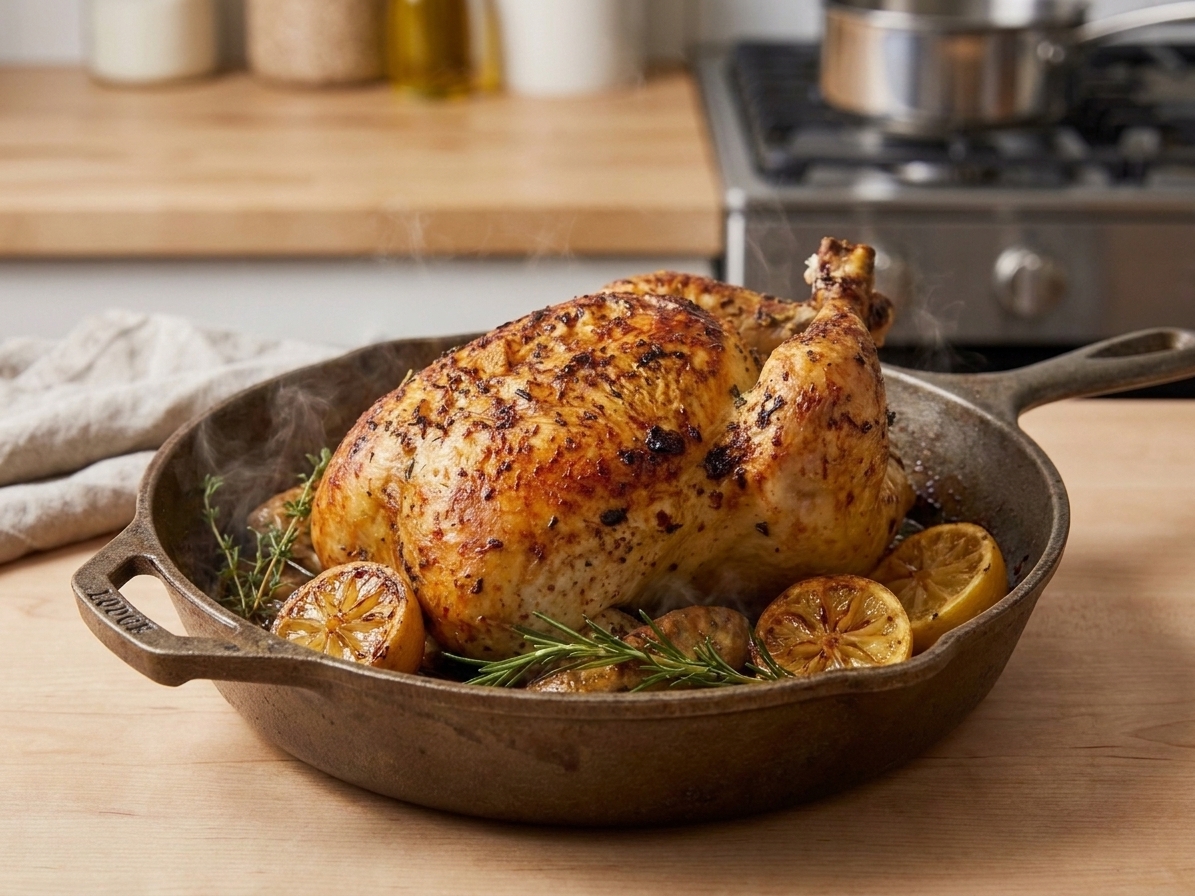
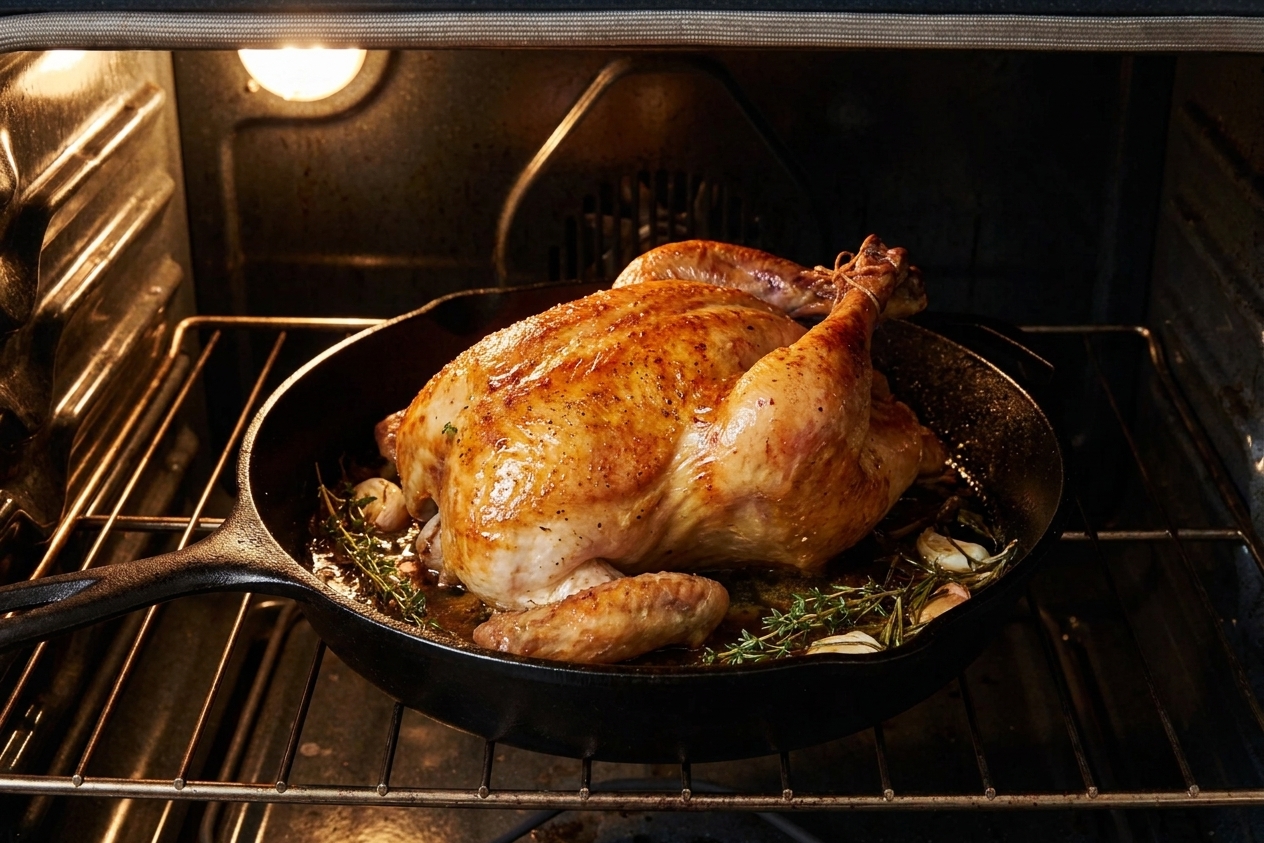
A whole roasted chicken with deeply golden, crisp skin resting in a cast iron skillet with roasted lemon halves and thyme sprigs on a warm kitchen counter

Roasting a whole chicken is one of those kitchen moves that looks fancy, smells like you have your life together, and is secretly very low drama. The goal is simple: crisp, crackly skin, juicy meat, and enough pan juices to spoon over everything like you meant to do it on purpose.

This is my go-to method when I want a dinner that feels like Sunday, even if it is absolutely a Wednesday. We keep the ingredients accessible, the steps clear, and the flavor bold with lemon, garlic, butter, and a little herb situation that makes the whole house smell like you should charge admission.

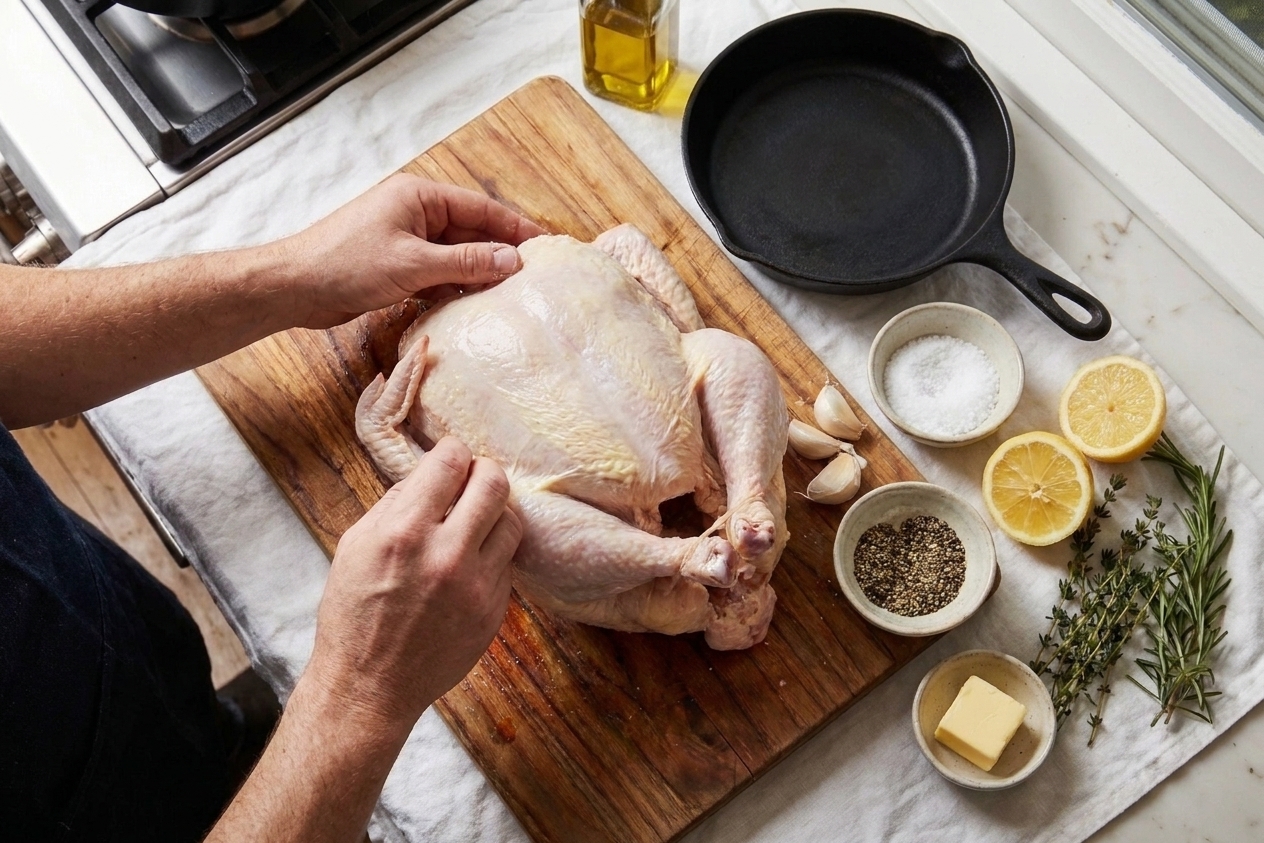
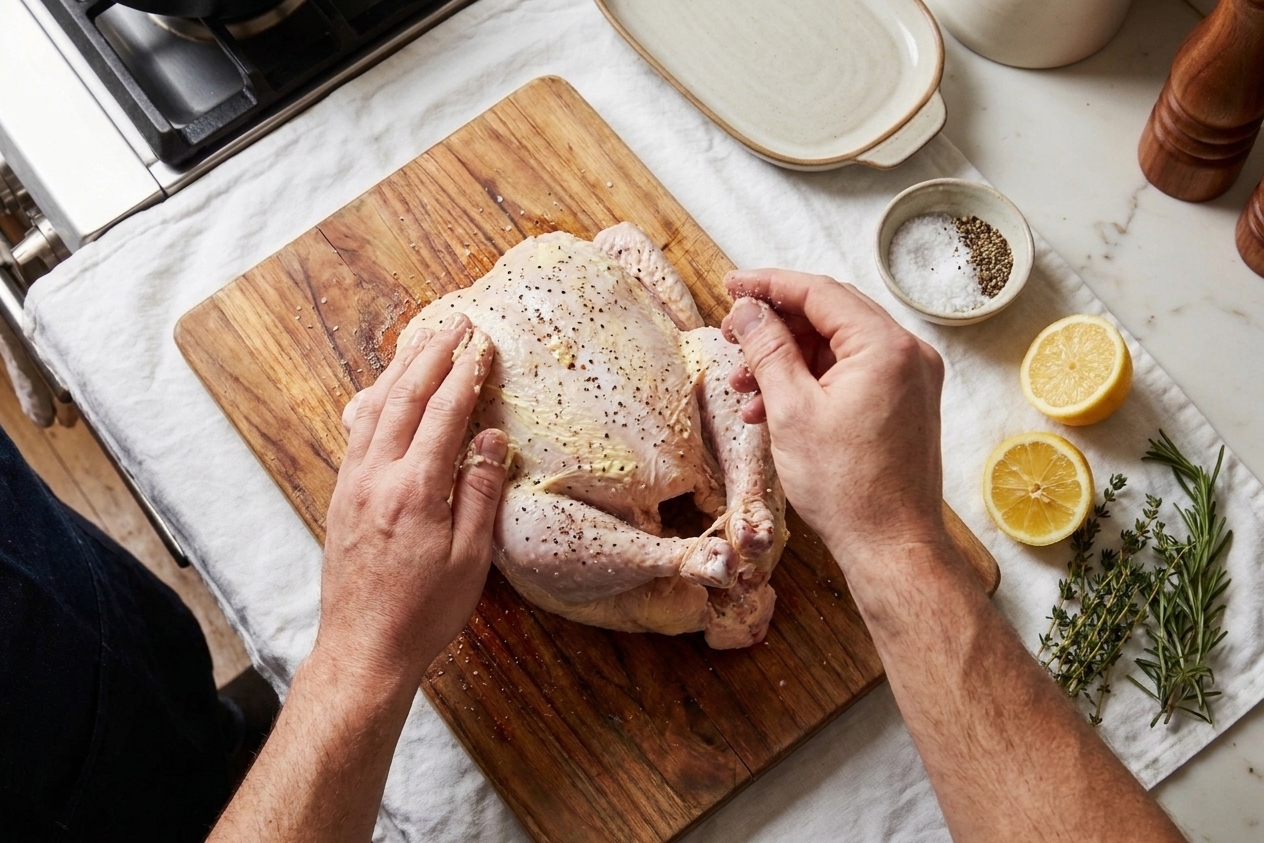
A raw whole chicken on a cutting board surrounded by kosher salt, black pepper, lemon, garlic, butter, olive oil, thyme, and a cast iron skillet on a clean kitchen counter

Why It Works

  • Dry skin equals crisp skin: patting the chicken dry and letting it air-dry in the fridge (even briefly) sets you up for that shattery bite.
  • High heat then steady roast: a hot oven jump-starts browning, then we finish at a gentler temp so the breast stays juicy.
  • Seasoning where it counts: salt under the skin and in the cavity seasons the meat, not just the surface.
  • Resting is not optional: 15 to 20 minutes lets the juices settle so your cutting board does not become a soup tray.
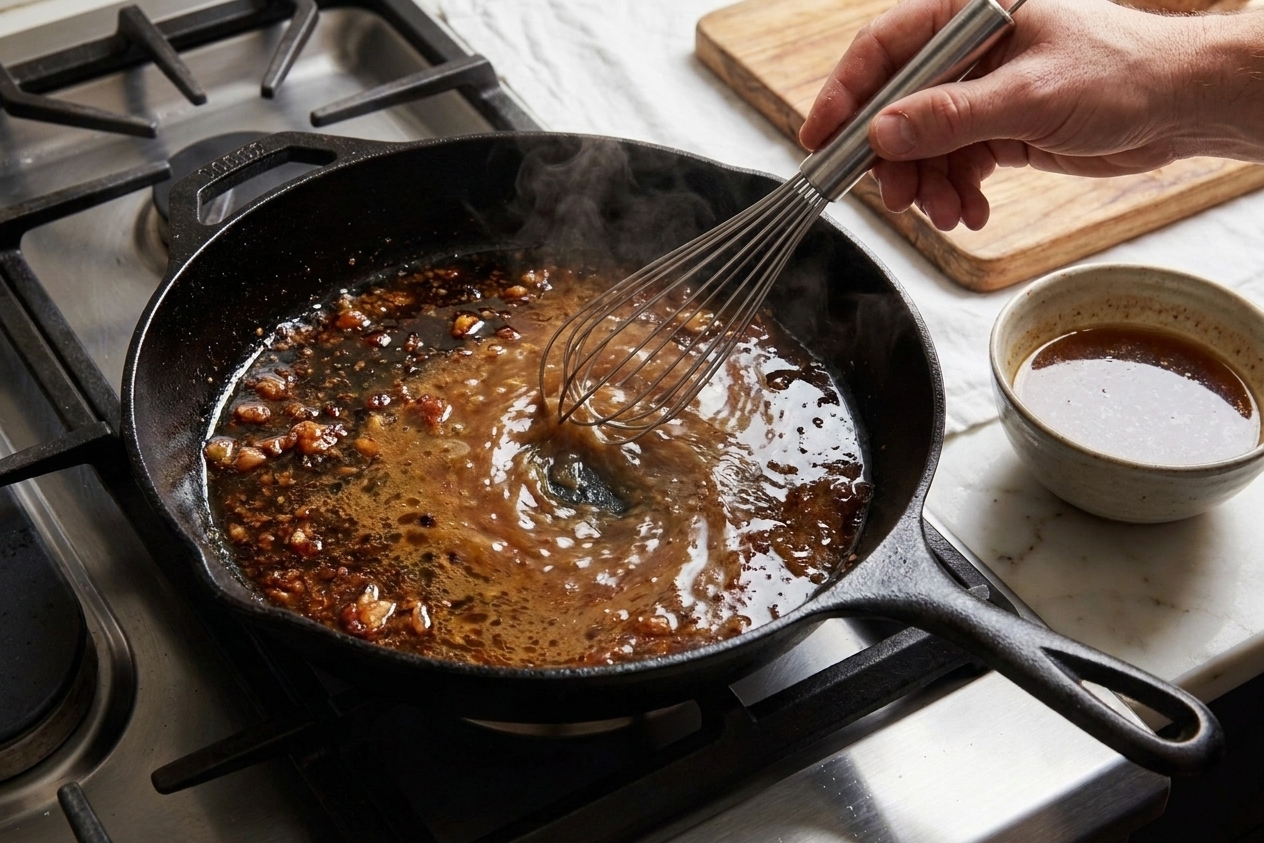
  • Built-in pan sauce: a splash of broth and lemon turns drippings into a bright, savory sauce in minutes.

Pairs Well With

Storage Tips

Refrigerate: Pull the meat off the bones within 2 hours. Store in an airtight container for up to 4 days. Keep skin separate if you want to re-crisp it later.

Freeze: Shred or slice the meat, portion it, and freeze up to 3 months. I like freezing some in small bags for quick quesadillas, soups, and fried rice.

Reheat without drying out: Warm chicken in a covered skillet with a splash of broth, or in a 325°F oven covered with foil. For crispy bits, finish uncovered for a few minutes.

Do not waste the bones: Toss the carcass in a pot with onion, celery, and water for an easy stock. It is the quiet flex of home cooking.

Common Questions

What temperature should a whole chicken be when it is done?

For food safety, chicken is done when the thickest part of the meat reaches 165°F. If you like a juicier breast, you can pull the chicken when the breast hits 160°F, then rest and confirm it reaches 165°F from carryover heat. Thighs are safe at 165°F too, but they are often best around 175°F to 185°F for tenderness.

Thermometer tips: check the breast in the thickest part (avoid bone), and check the thigh near the joint (again, avoid bone).

Do I need to truss the chicken?

Not strictly, but it helps the bird cook more evenly and look tidier. If you do not have kitchen twine, you can tuck the wing tips behind the shoulders and just roast it. It will still be delicious.

Why is my roast chicken dry?

Most of the time it is overcooked breast meat. Aim for 165°F in the breast, or pull at 160°F only if you will rest it and confirm it reaches 165°F. Also, avoid repeatedly opening the oven. It drops the oven temperature and can mess with browning and crisp skin.

Can I roast vegetables in the same pan?

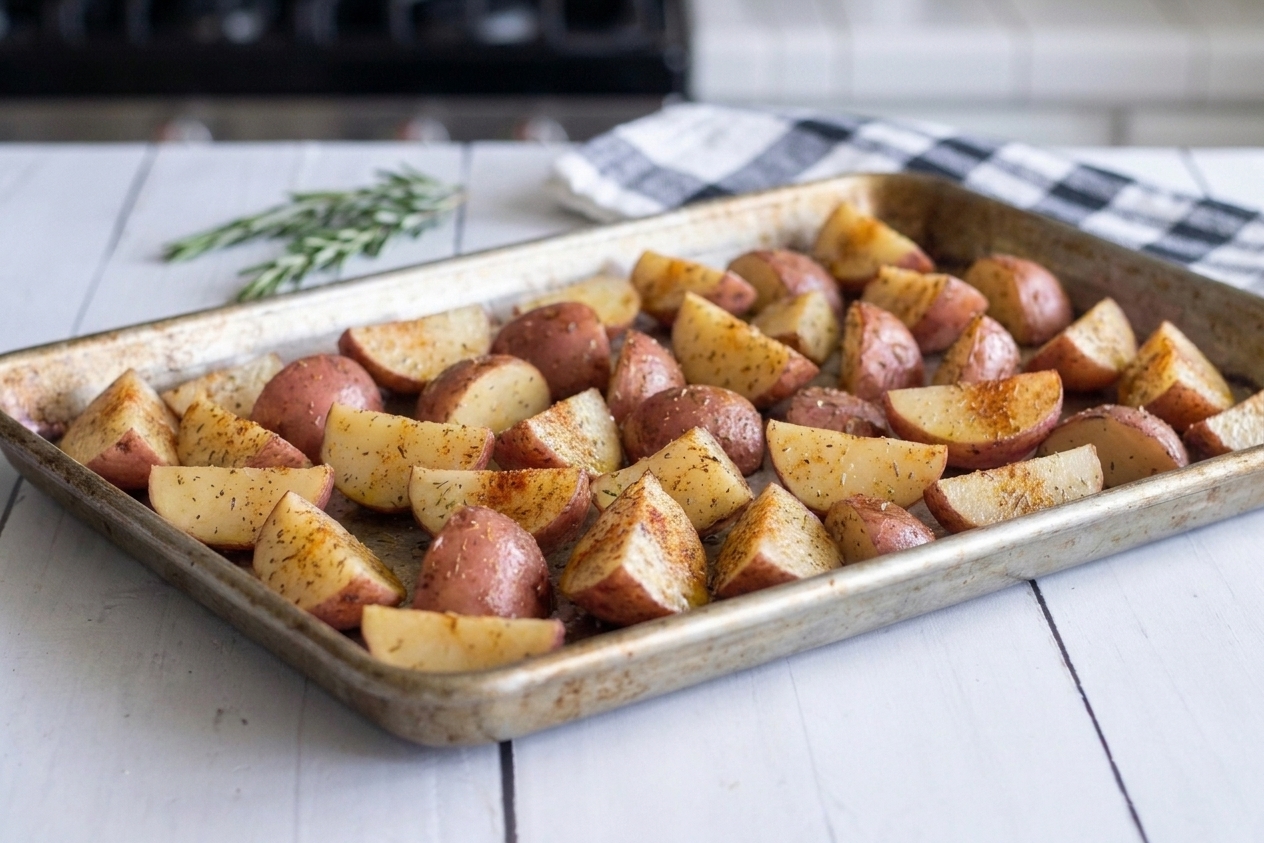
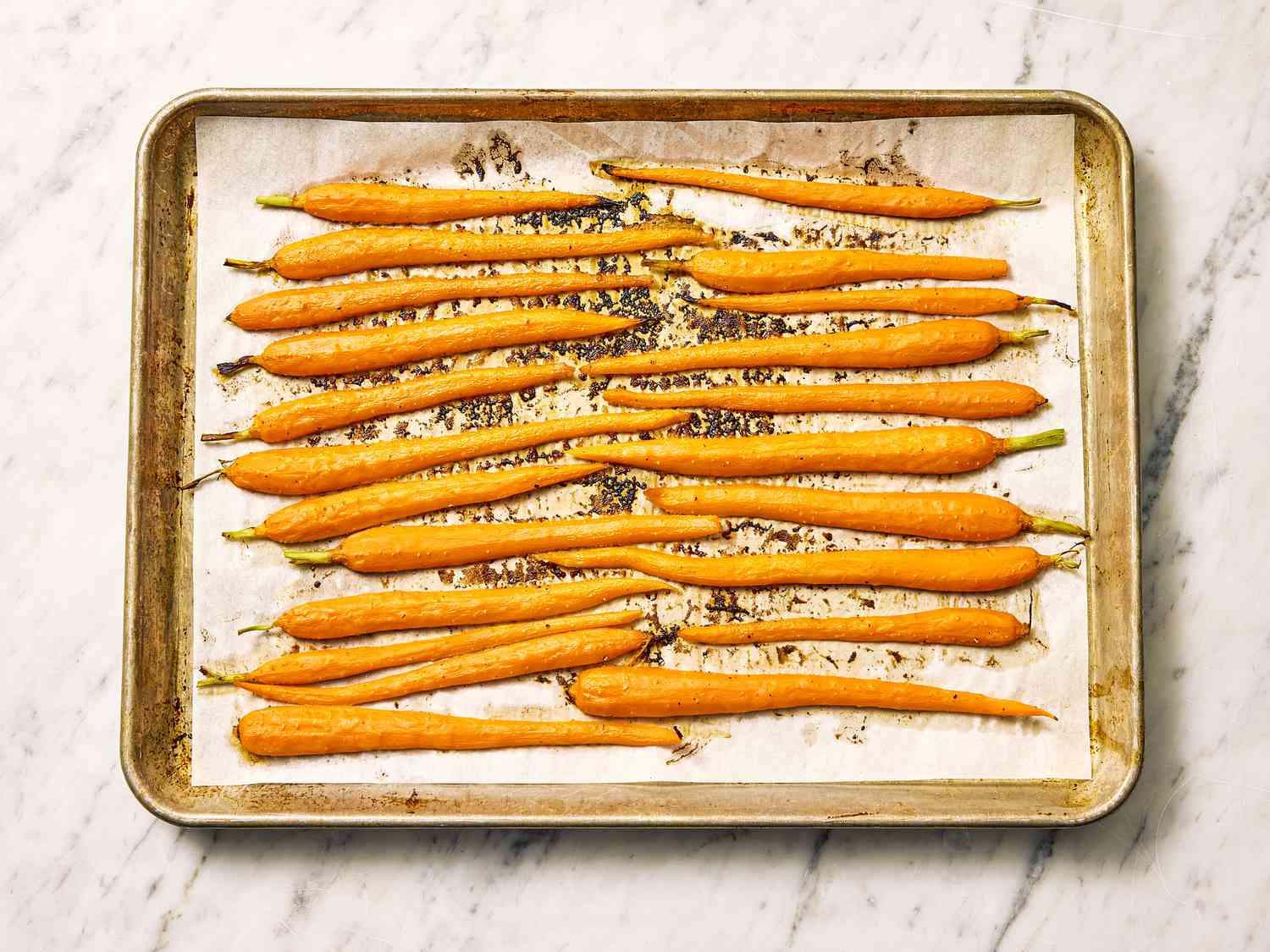
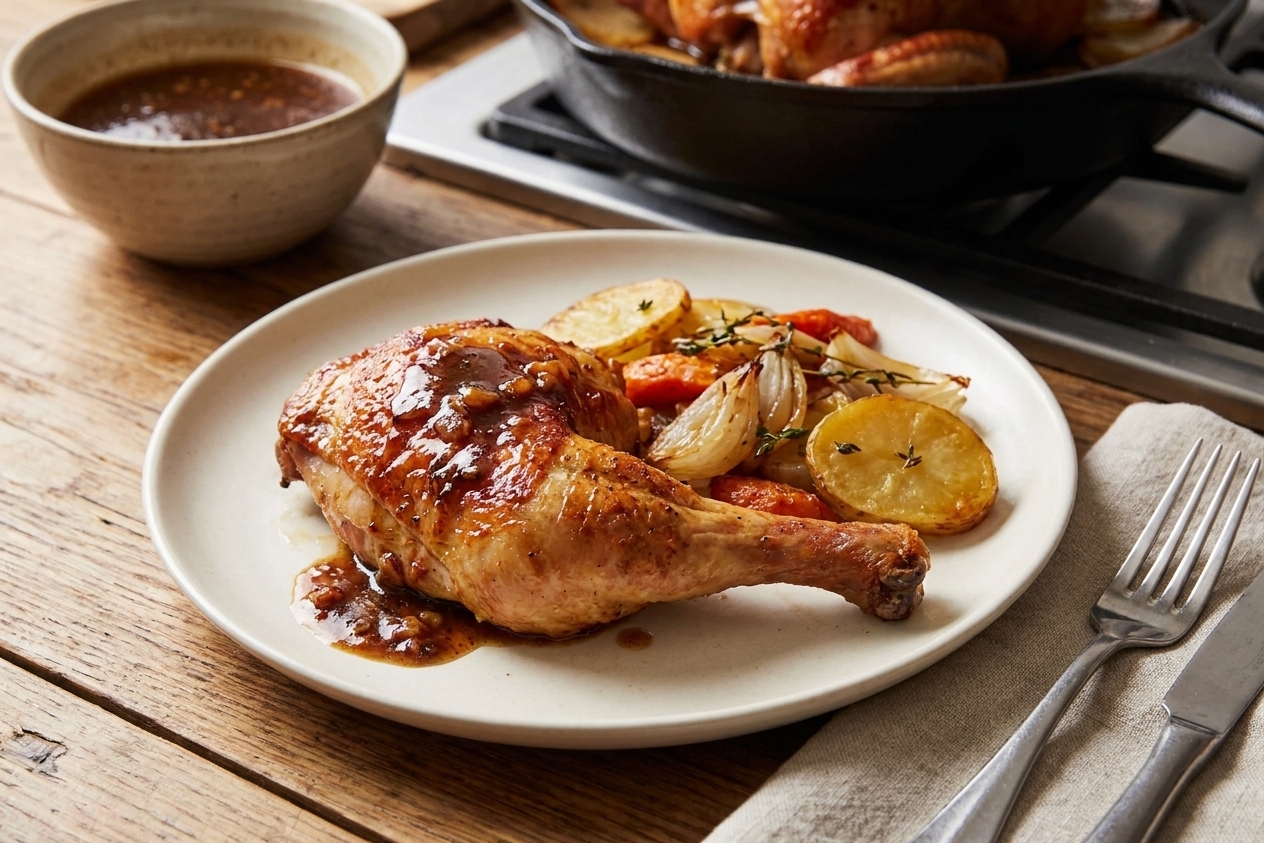
Yes. Add carrots, onions, or potatoes under and around the chicken. They will soak up drippings and get roasty and savory. Just make sure the pan is not overcrowded so everything browns instead of steaming.

How do I get extra crispy skin?

Pat the chicken very dry, salt it well, and let it sit uncovered in the fridge for at least 30 minutes, and up to overnight. Also, avoid basting. Basting is a crisp-skin buzzkill.
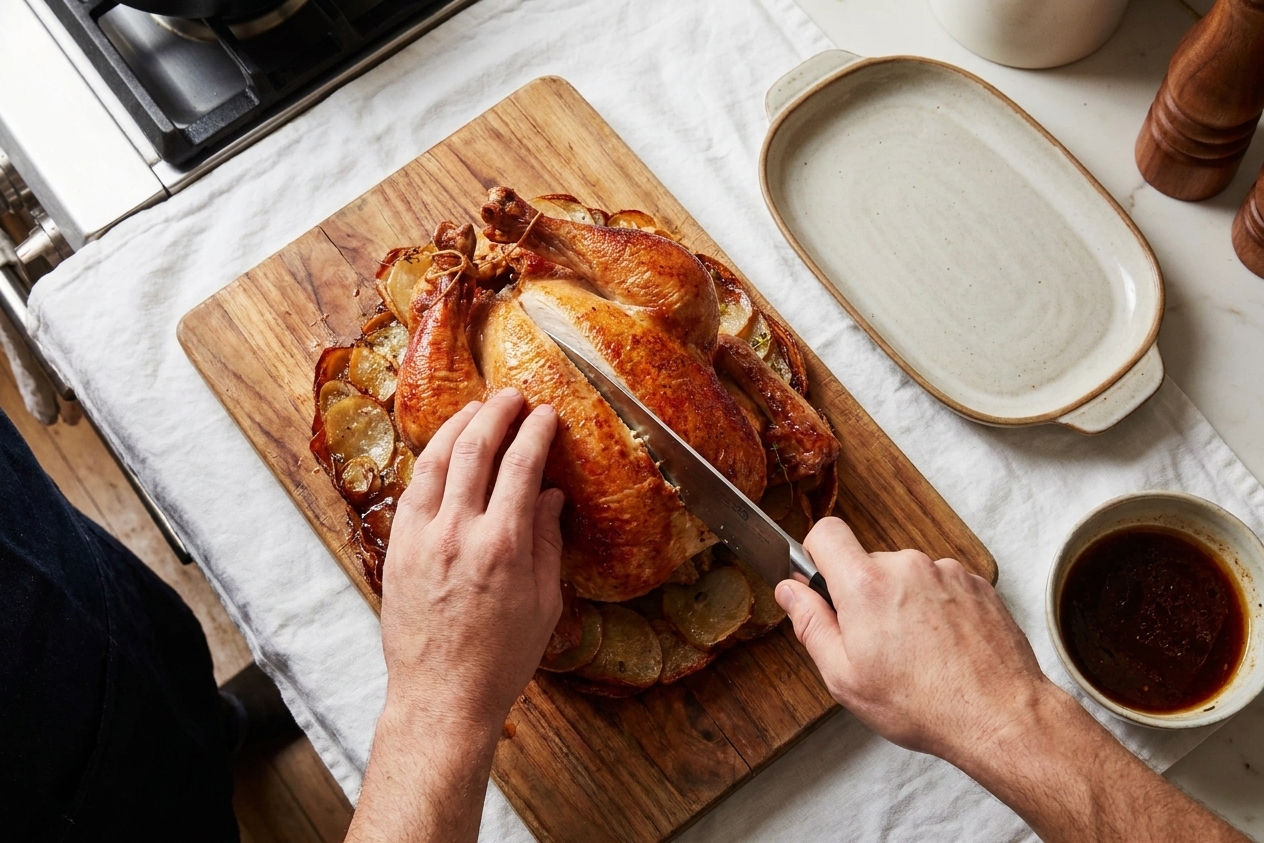

Hands carving a rested roasted chicken on a wooden cutting board with a chef knife, with a serving platter and small bowl of pan juices nearby on a kitchen counter

I love whole roasted chicken because it is the most honest kind of impressive. No fancy gadgets, no weird ingredients, just heat and a little patience. It reminds me why I leaned toward practical skills over perfect-on-paper cooking. You learn fast when the bird is in the oven and everyone is hungry.

Also, I like food that keeps giving. Night one is crispy skin and proud plates. Night two is sandwiches. Night three is soup from the bones, which feels like a magic trick you can do in sweatpants.