Mom's Best Recipes
Recipe

Oven Roasted Chicken

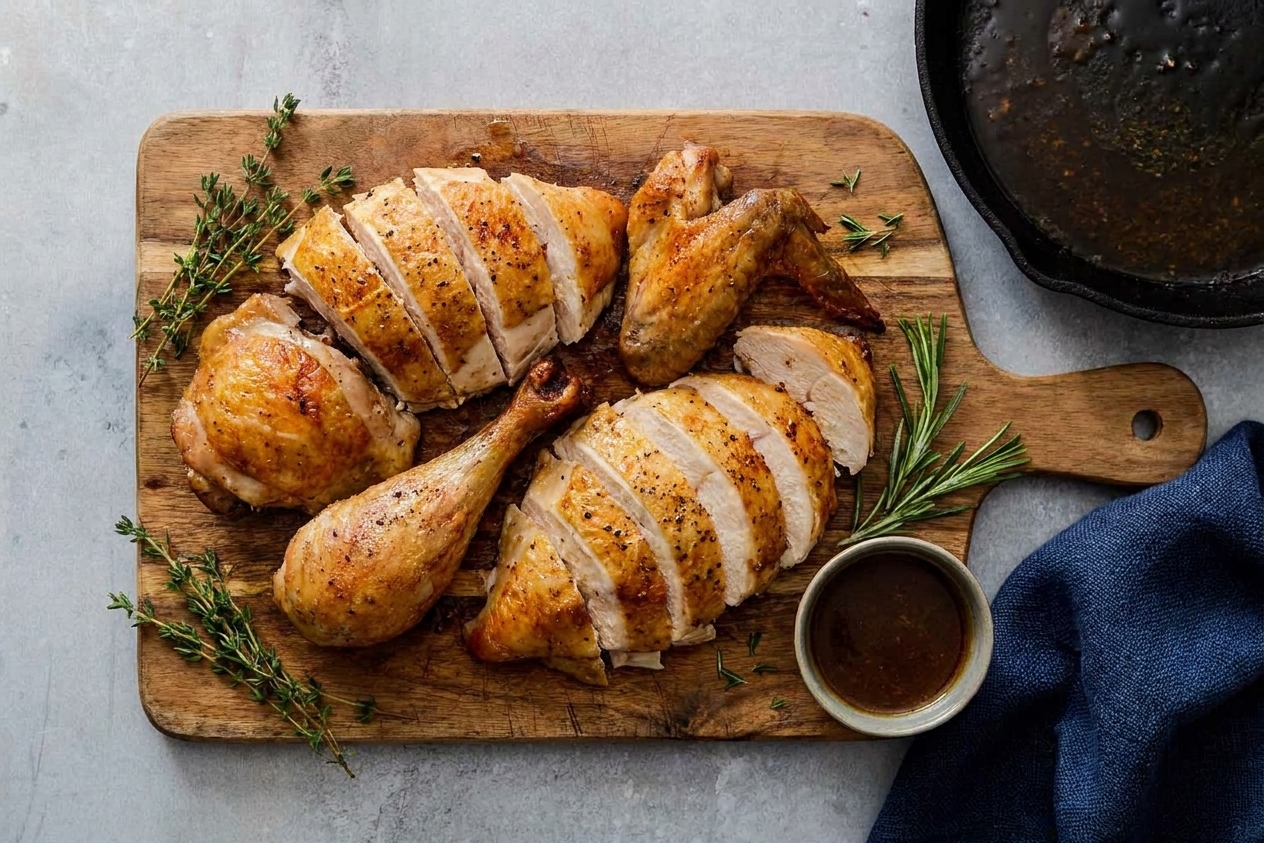
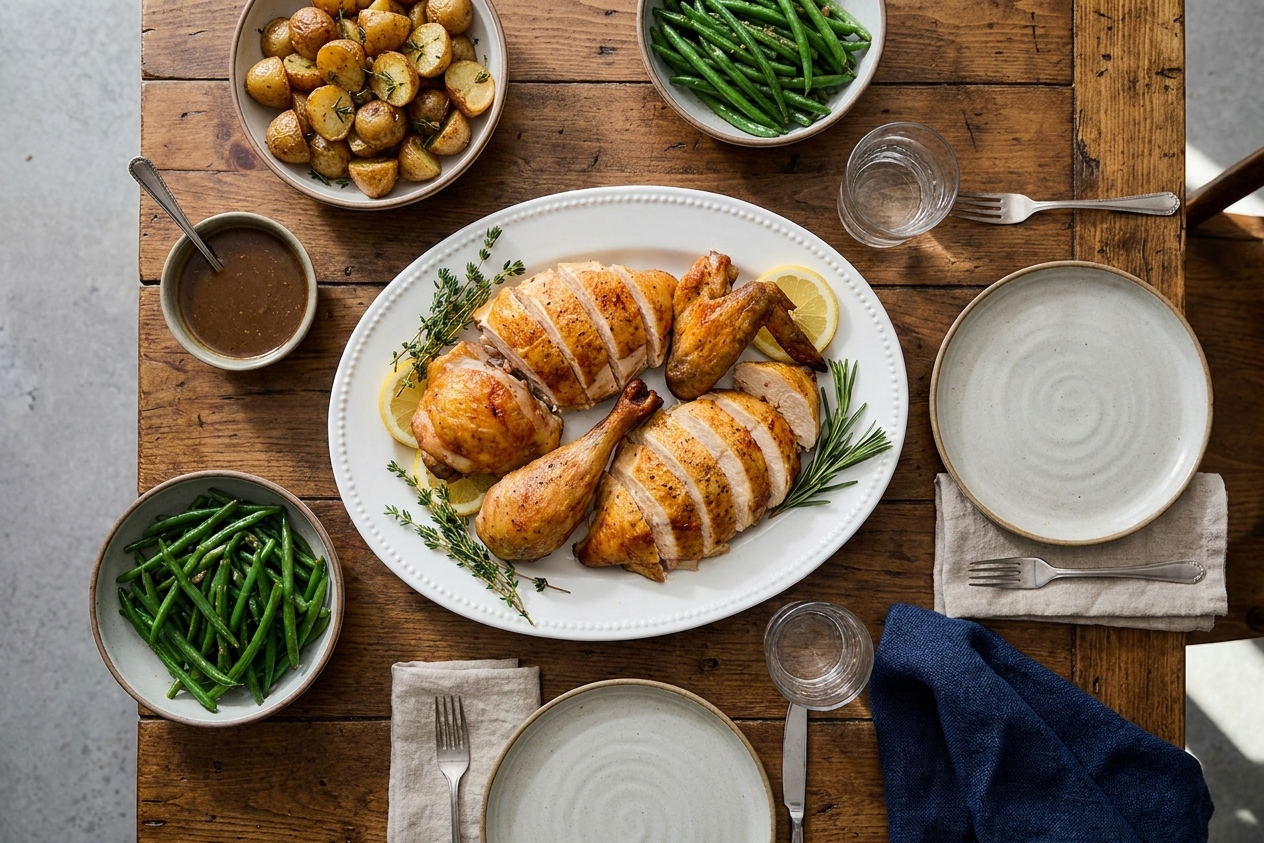
Crispy skin, juicy meat, lemon-garlic vibes, and a simple pan sauce made from the drippings.

Author By Matt Campbell
4.8
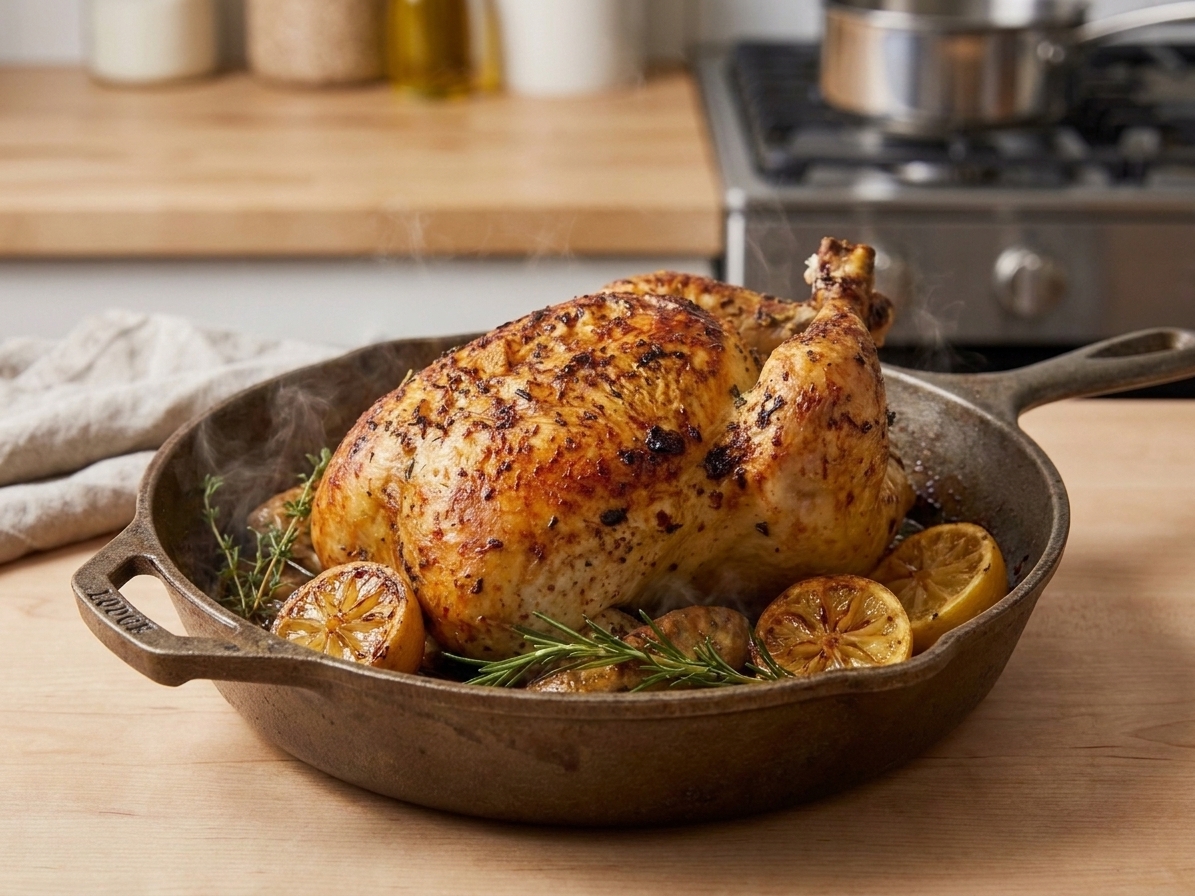
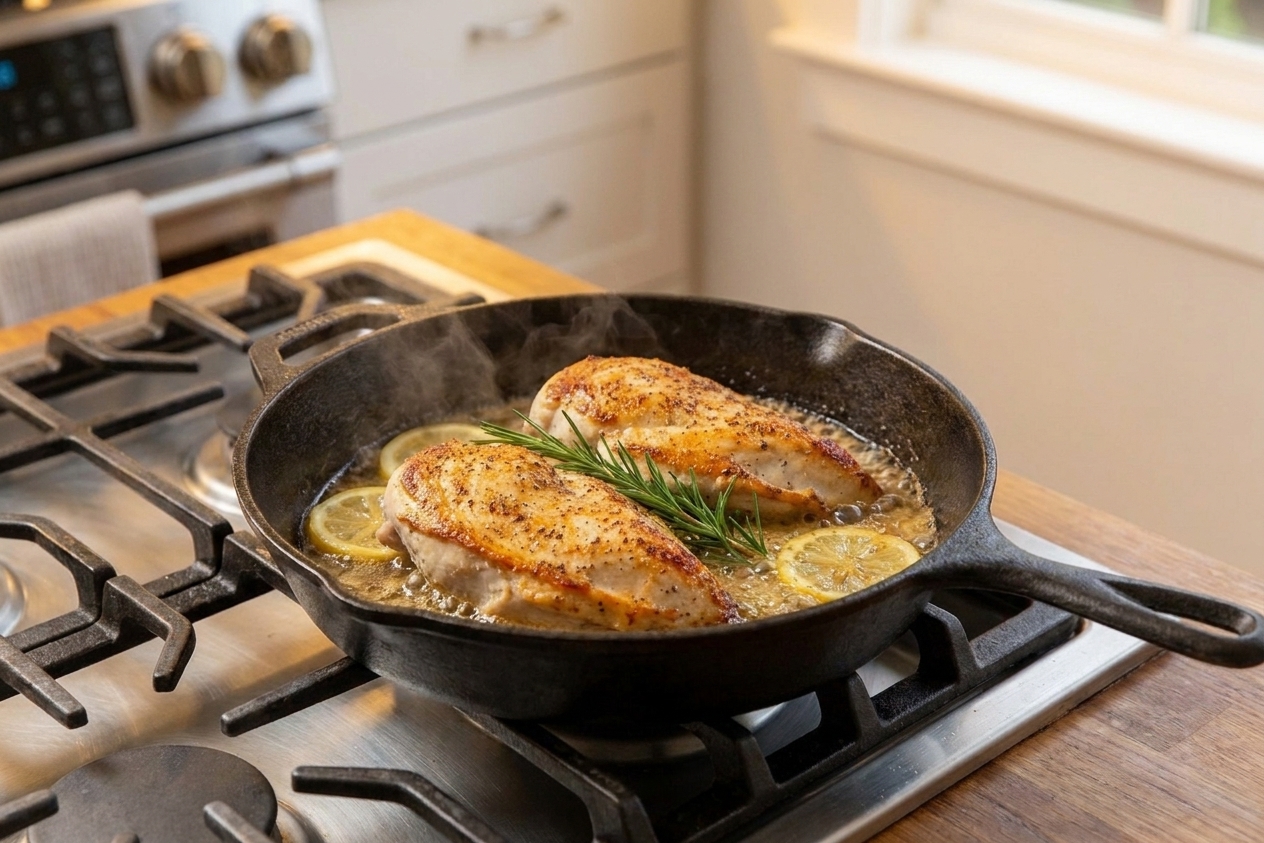
A whole oven roasted chicken with deeply golden, crisp skin resting in a cast iron skillet with lemon halves and herbs on a warm kitchen counter

Roast chicken is one of those meals that looks like you had a plan, even if you were kind of winging it at 5:47 p.m. This is my go-to oven roasted chicken: crisp skin that crackles when you tap it, juicy meat that does not need drowning in gravy, and a bright lemon-garlic finish that tastes like you did more than you actually did.

The trick is simple: dry the skin, season like you mean it, start hot for color, then finish at a gentler temperature so the breast stays tender while the legs catch up. Bonus: we turn the drippings into a quick pan sauce that tastes like the best part of Sunday dinner, but on a regular Tuesday.

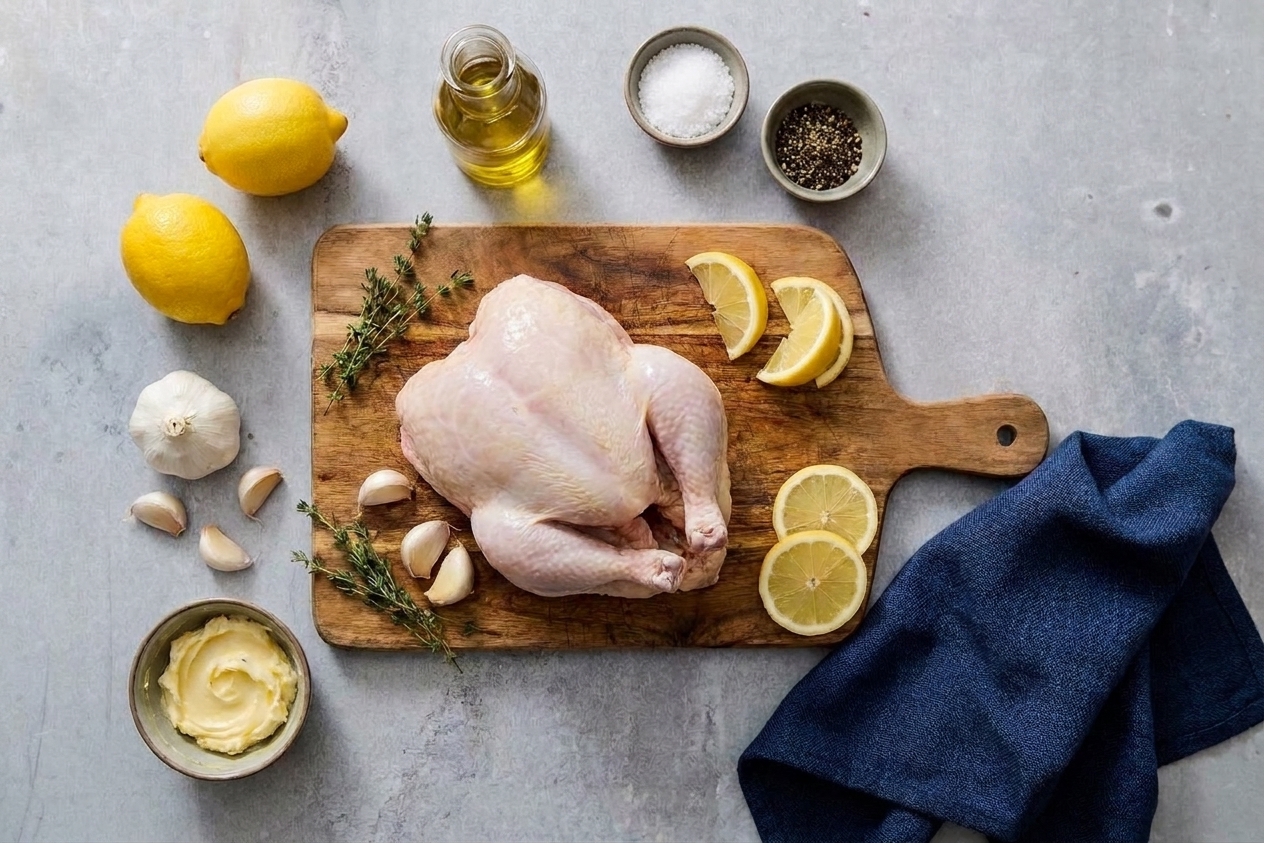
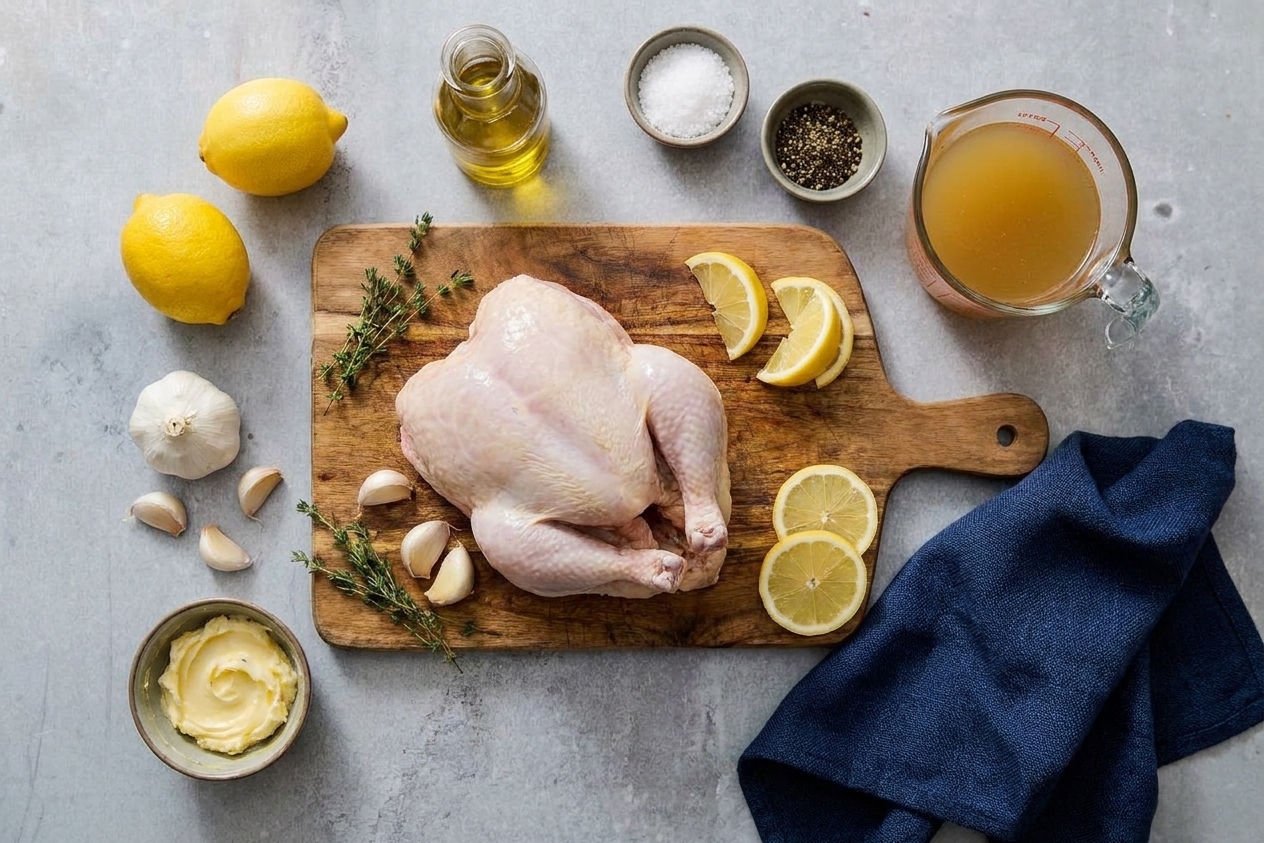
A whole raw chicken on a cutting board surrounded by kosher salt, black pepper, olive oil, lemons, garlic, thyme, and rosemary on a clean kitchen counter

Why It Works

  • Crisp, browned skin from starting at a higher temperature and using a light oil rub.
  • Juicy breast meat by monitoring temperature and resting before carving.
  • Legs that are actually tender because dark meat gets the time it needs (safe at 165°F, best texture closer to 175°F to 185°F).
  • Flavor everywhere with lemon, garlic, and herbs in the cavity and under the skin.
  • A no-drama pan sauce built from drippings, a splash of broth, and a little butter.
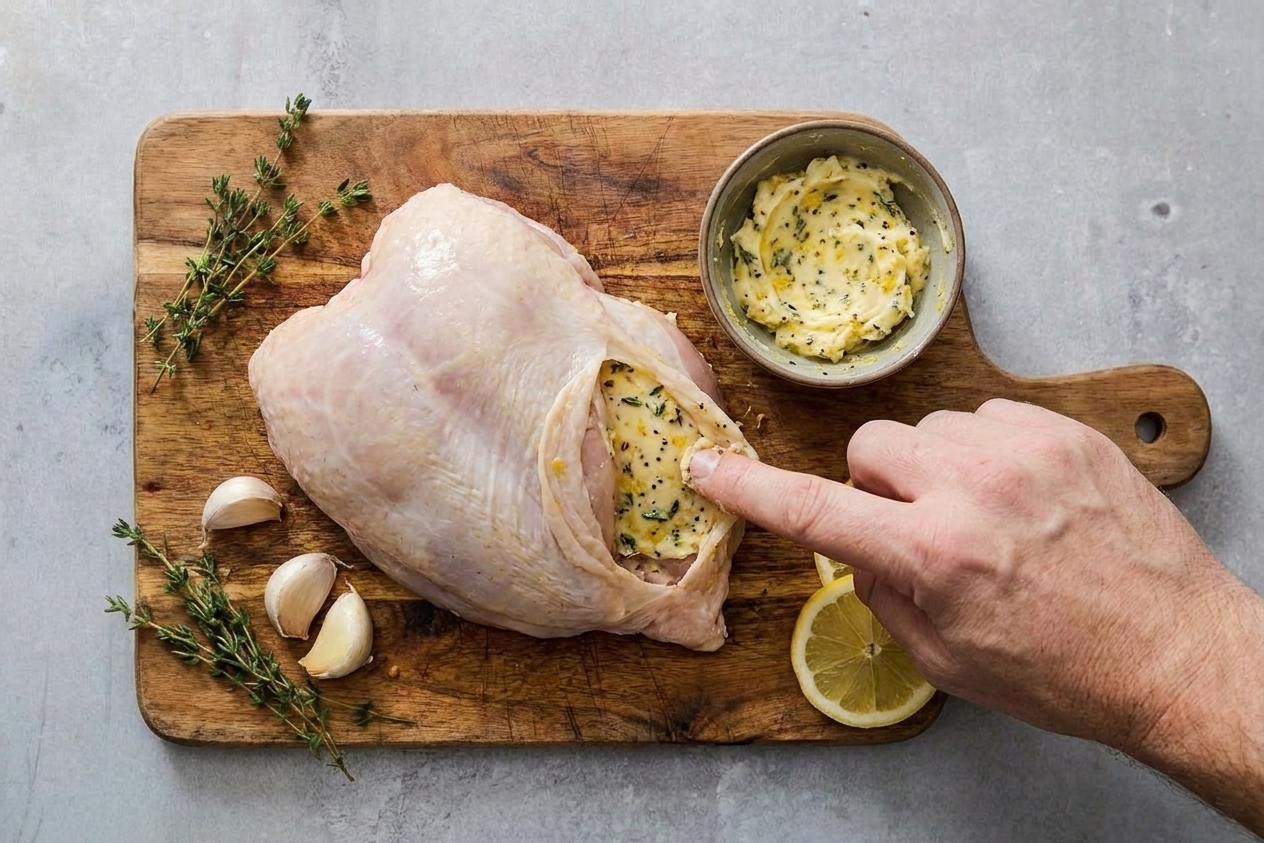
Seasoned lemon-garlic butter being spread under the skin of a raw chicken breast on a wooden cutting board

Pairs Well With

Storage Tips

How to Store Leftover Roast Chicken

Cool it safely: Let chicken cool just until it stops steaming, then refrigerate. For food safety, get leftovers into the fridge within 2 hours (within 1 hour if it is very hot out). I like to pull the meat off the bones while it is still a little warm, because it is easier and you get more yield.

  • Refrigerator: Store in an airtight container for 3 to 4 days. Keep sauce separately if you made it.
  • Freezer: Freeze shredded or sliced chicken for up to 3 months. Wrap tightly or use a freezer bag and press out the air.
  • Best reheating: Warm covered in a 325°F oven with a splash of broth for 10 to 15 minutes, or gently in a skillet. Microwaving works, but go low power and add a spoon of sauce so it stays juicy.
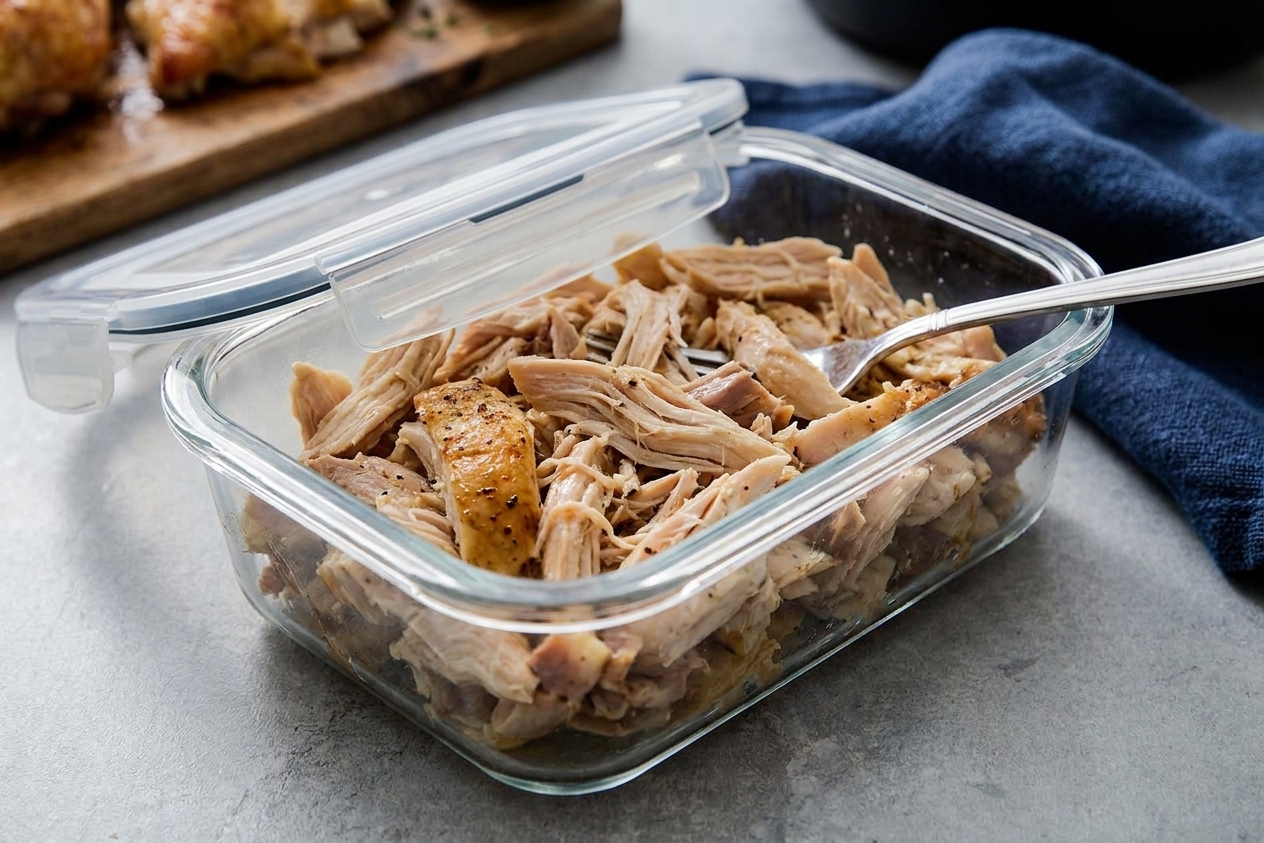
Shredded roast chicken stored in a clear glass container with a tight lid on a kitchen counter, ready for meal prep

Common Questions

Common Questions

What temperature should I roast a whole chicken?

I like a two-temperature roast: start at 450°F for 20 minutes for color and crispy skin, then drop to 375°F to finish gently. Times are a guideline, but temperature is the decider.

How do I know when the chicken is done?

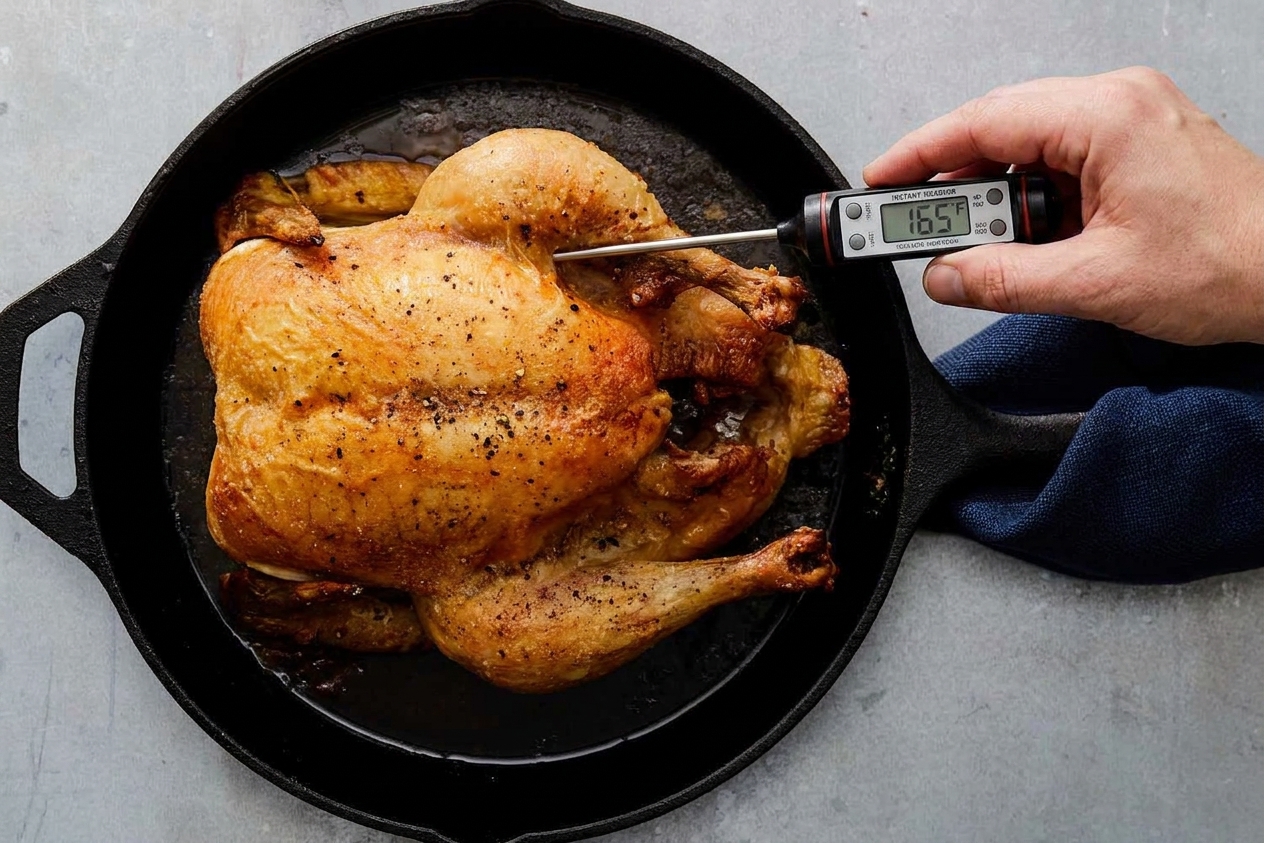
Use a thermometer, and aim for safe temps. The USDA safe temperature is 165°F in the thickest parts. I usually pull the chicken when the breast is around 160°F and the thigh is 165°F or higher, then let it rest so carryover heat can bring the breast up. Since carryover cooking can vary by bird and oven, confirm 165°F after resting if you want to be extra sure.

Why is my roast chicken dry?

Almost always overcooking the breast. Start checking early, especially for smaller birds. Also make sure you rest 15 to 20 minutes before carving so the juices stay put.

Do I need to truss the chicken?

Not strictly, but it helps it cook evenly and look tidy. If you do not want to mess with twine, just tuck the wing tips under the body and tie the legs loosely with kitchen string, or skip it and rotate the pan once during roasting.

Can I roast chicken without a rack?

Yes. A cast iron skillet or roasting pan works great. If you want a little lift, set the chicken on a bed of onions, carrots, and celery. That doubles as flavor for the drippings.

How do I get the skin crisp?

Dry the chicken well with paper towels, use a little oil, and do not cover it. If you have time, salt it and leave it uncovered in the fridge for a few hours or overnight for extra crackle.

Is 175°F to 185°F required for thighs?

No. Dark meat is safe at 165°F, but it gets noticeably more tender and forgiving as it climbs into the 175°F to 185°F range. Think of that range as “best eating,” not the minimum for safety.

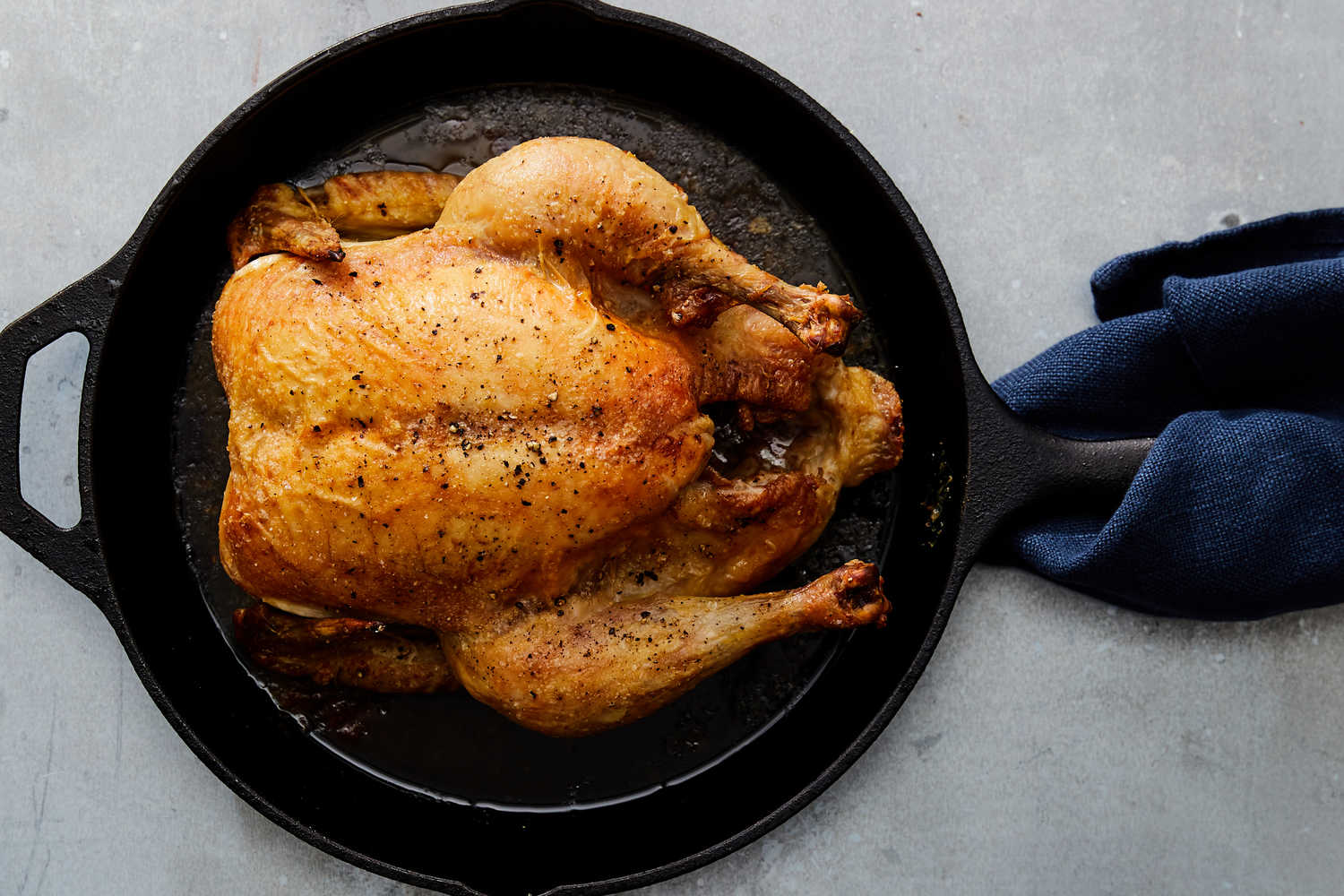
The first time I roasted a whole chicken by myself, I did the classic beginner move: I stared at it like it was going to tell me when it was done. It did not. A thermometer did. Ever since, roast chicken has been my favorite kind of kitchen chaos. It is simple, forgiving, and it makes your place smell like you have your life together. This version is the one I keep coming back to because it feels fancy but cooks like a weeknight: lemon, garlic, herbs, crisp skin, and drippings that basically beg to become sauce.