Common Questions
What is crème anglaise, exactly?
It is a stirred custard sauce made from milk or cream, sugar, and egg yolks, flavored most often with vanilla. Unlike pastry cream, it stays pourable and is not thickened with starch.
What temperature should crème anglaise be cooked to?
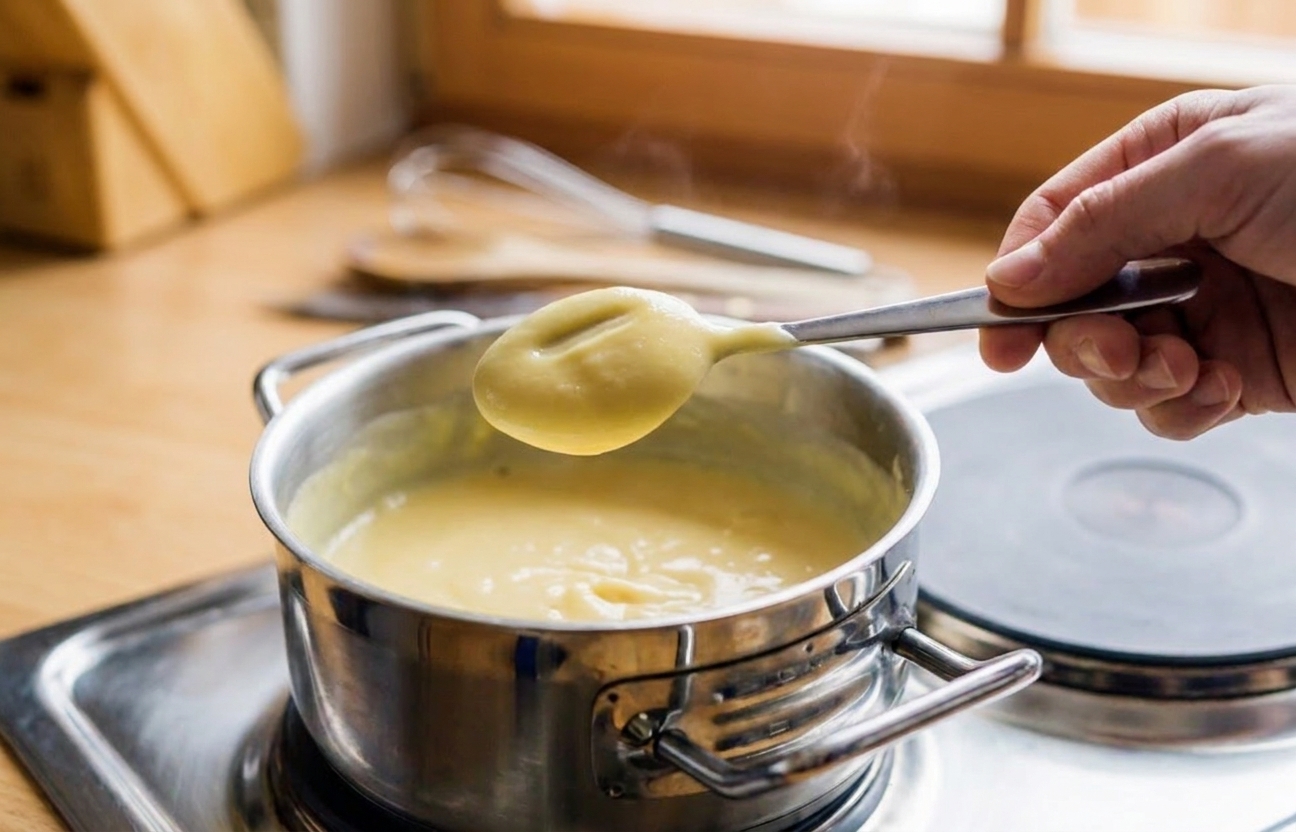
A reliable finish is typically in the 170°F to 175°F range, but it can start thickening a little earlier depending on your ratios and how gently you cook it. It should coat the back of a spoon, and when you swipe a finger through it, the line should stay clean. The curdling risk climbs fast as you approach about 180°F, so go low and slow.
How do I know it is thick enough without a thermometer?
Use the spoon test: dip a spoon, lift it out, and run a finger across the back. If the custard holds the line, you are good. If it immediately floods back over, keep cooking gently and stir nonstop.
My sauce curdled. Is it ruined?
Not necessarily. Pull it off the heat immediately and try one of these:
- Strain it through a fine-mesh sieve.
- Blend it (immersion blender works great) until smooth, then strain if needed.
If it is fully scrambled into chunks, you can sometimes rescue it with blending, but the flavor may be slightly eggy.
Can I make it with just milk or just cream?
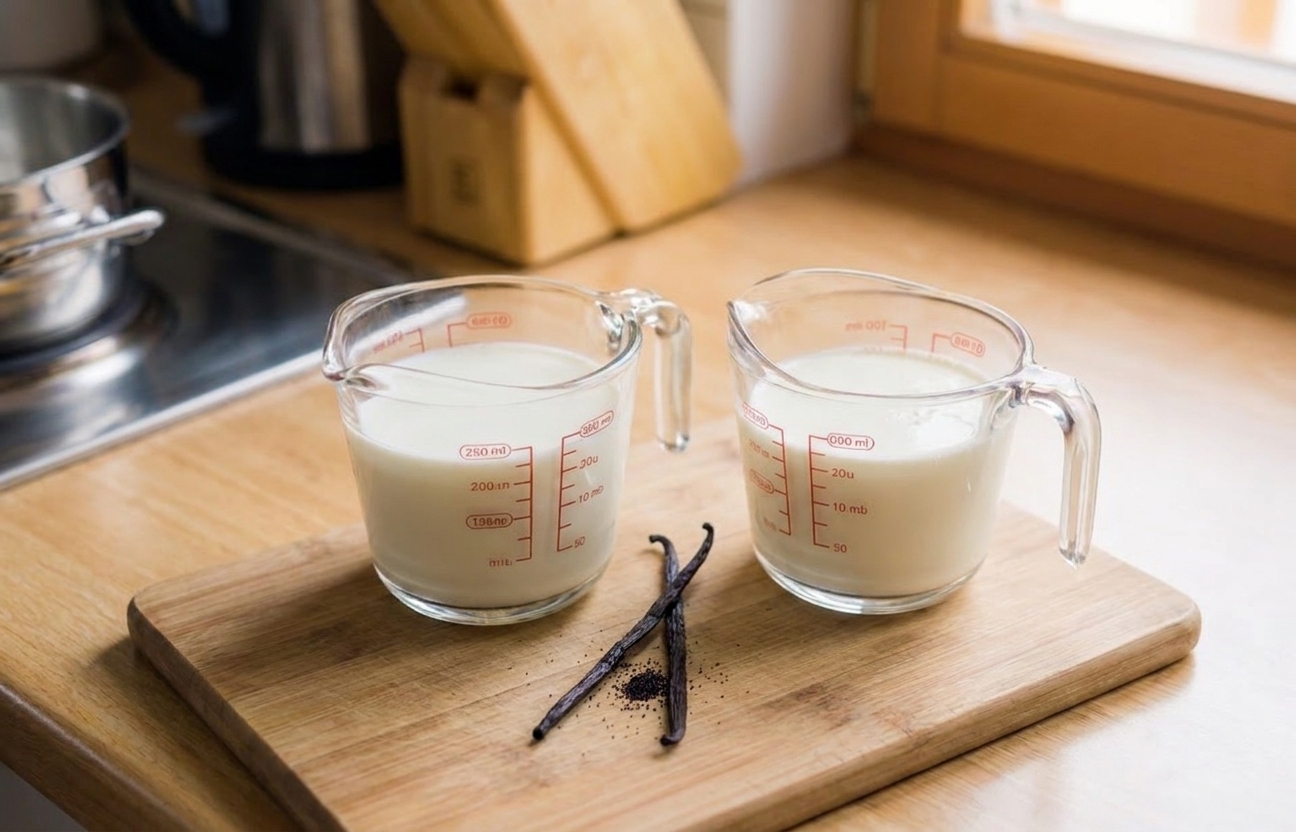
Yes. All milk makes it lighter and a bit less luxurious. All cream makes it richer and thicker, but it can feel heavy. The half-and-half approach is my everyday sweet spot.
Can I flavor it beyond vanilla?
Absolutely. Steep the dairy with coffee beans, citrus zest, cinnamon, or a tea bag, then strain before tempering. You can also finish with a splash of bourbon or rum once it is off the heat.
Is it safe to cool crème anglaise on the counter?
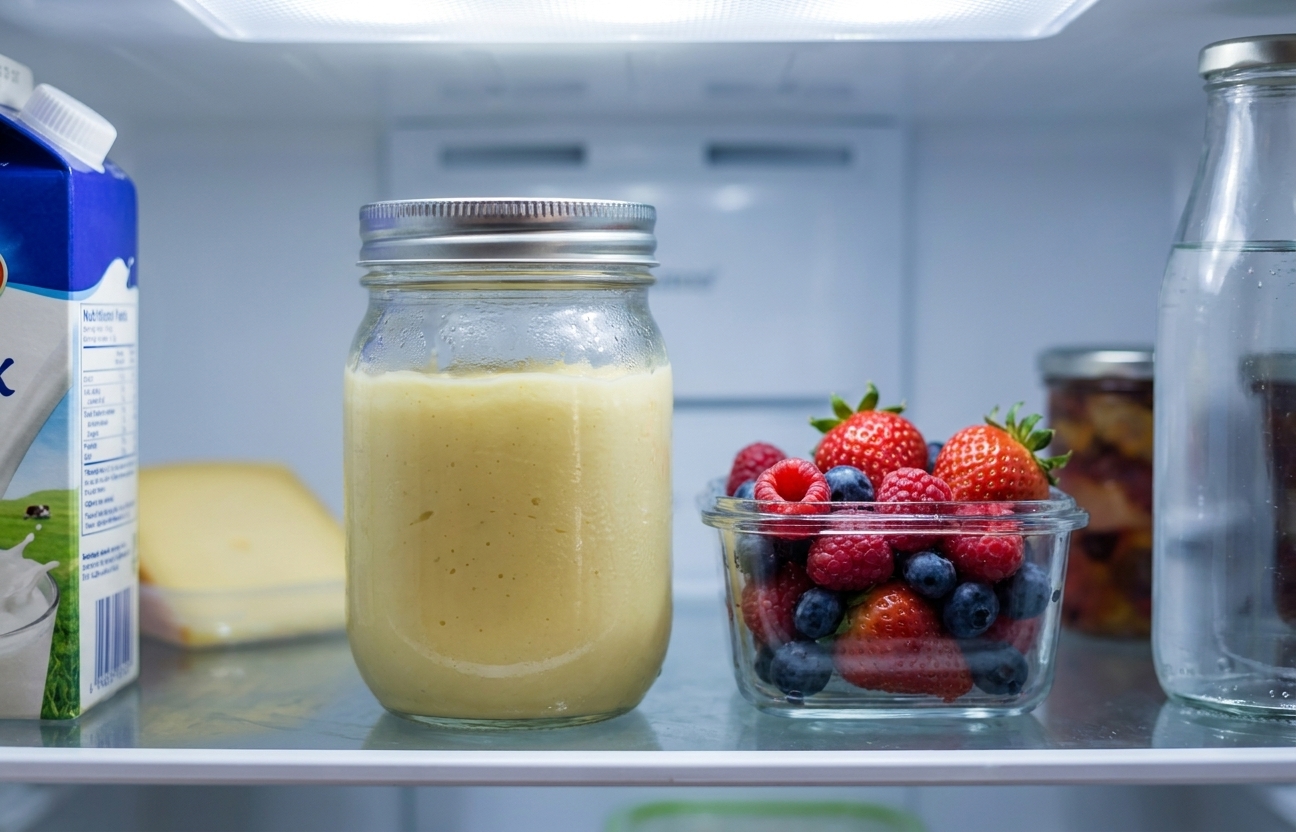
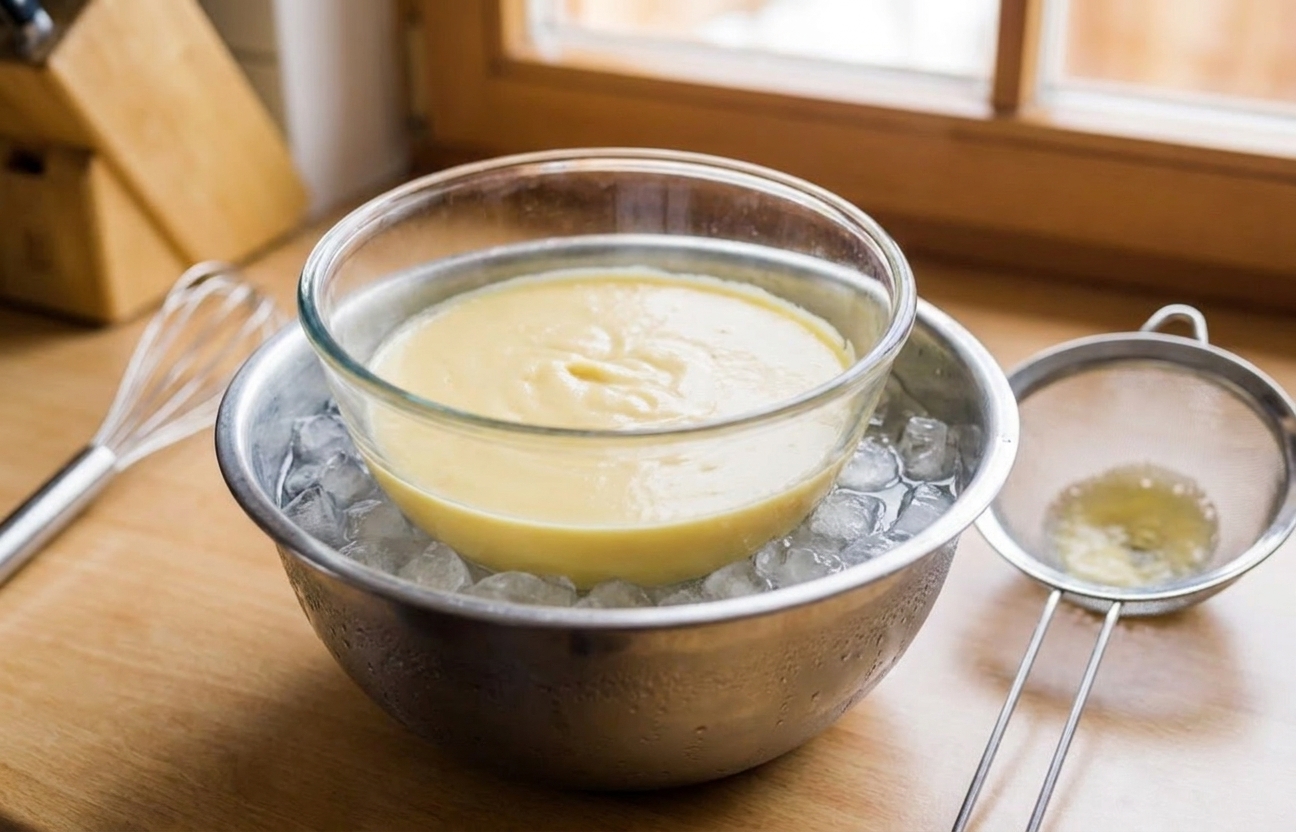
For best food safety, do not let it hang out at room temperature for long. I like to cool it for a few minutes, then refrigerate, or set the bowl over an ice bath to chill it quickly before storing.